
Translated material
Portrait of a school shooter
The word "sculpture" - translated from English "shooting at school" - causes panic and fear. It denotes an armed attack not only on schools, but also for kindergartens, colleges, technical schools and universities. The concept arose in the United States, where the problem has long been recognized at the national level
Today, unfortunately, the word has firmly entered international everyday life, including in our country.
In recent years alone, several large tragedies have occurred in Russia.
- In May 2021, the former student of the gymnasium No. 175 in Kazan attacked his school . Nine people died, 32 were injured.
- In September 2021, the student of the Perm State University arranged firing on the territory of the campus . Six people died, 47 were injured.
- In April 2022, a 26-year-old man attacked the Ryabinka kindergarten in the village of Veshkima, Ulyanovsk Region. Five people died.
- In September 2022, a graduate of school No. 88 in Izhevsk unhinderedly burst into the building and fired . 18 people died, 23 were injured.
The state, represented by the Ministry of Education, blames the Internet and computer games in all, is trying to take measures to ensure the physical security of schoolchildren, for example, conducts security exercises in schools . And he offers to qualify attacks on schools as terrorist attacks .
In 2019, the National Standard of the Russian Federation “Ensuring the Safety of Educational Organizations” was adopted. In particular, according to its requirements, the schools should have guards who have undergone special training, technical means of protection: checkpoints, stationary security posts, fences, controls (video cameras, alarms, alarm buttons).
Despite this, sculptures are not less common. Psychologists talk about the need to understand the very phenomenon of the sculpture and its thorough analysis to prevent such tragedies.
About the nature of the sculpture and what society can do in order to protect children, “such things” were talked with Ulyana Grinenko, teacher-psychologist, clinical psychologist, graduate student of the Department of Clinical and Moscow State Psychological and Pedagogical University, Svetlana Kotova, Psychologist of the Yekaterinburg Support Center “Dialogue”, and Professor Peter Langman, the author of scientific articles and books, in particular the bestseller “why children kill. What is happening in the head of the school shooter. ”
- When did the concept of “sculpture” appear?
Peter Langman: It is reliably difficult to determine when and where the sculpting arose. I usually determine the beginning of the 1966 incident. The armed man attacked the University of Texas in Austin, killed his mother and wife, and after barricaded at the top of the tower of one of the corps and shot people from above. 14 people died, 31 suffered .
However, this was not the first case in the history of the United States, rather the first case of the “modern era” of sculpture. Some determine other dates, much earlier. Sometimes attacks are not strictly firing - for example, they use explosives. So, for example, in 1927 in the United States, a man laid in the basement of one of the schools a huge charge of explosives . Only part of it detonated, but this case still remains the most bloody incident in the history of attack on schools in the United States.
Surely it is difficult to say why at a certain moment in history people began to come to educational institutions with weapons. Have you become easier to access weapons? The weapon in the hands of citizens has become more powerful and effective? The development of television and the Internet began to ensure fame to criminals? All these factors really exist and play a role.
Ulyana Grinenko: Around the mid-1970s, the phenomenon of sculpture appeared in the USA, at least he went beyond only the American public field. It is important to note that sculletes differ from incidents occurring due to domestic conflicts or self-defense. This is an attack on students, teachers and other school employees. The attackers are somehow connected with the educational organization that they attack.
- Do school attacks take place today more often than, say, ten years ago?
UG: US statistics show that the average period of time has declined between sculpting cases. In 1999, this period was 124 days, in recent years - 77 days.
In Russia, the number of incidents is much less common, thank God. But it must be borne in mind that sculpting is not only what happened, but also what they managed to prevent. Not all incidents get into the media. On the one hand, this distorts statistics, but on the other hand, in general, this is correct. Lighting in the media events around the attack attracts public attention to marginal people, giving them the status of celebrities. This is not a very good story.
- During the armed conflict in Ukraine, the number of cases of use of weapons in criminal crimes within Russia increased . In your opinion, does it have its influence on the situation within society?
PL: One of the factors affecting the number of any armed incidents is the level of stress in society. Stress puts people in a difficult position, which increases the risk of any forms of violence. A country in a state of armed conflict is experiencing extreme stress, which can encourage people to act cruelly. But at the same time, do not forget about the meaning of the personality of those people who attack.
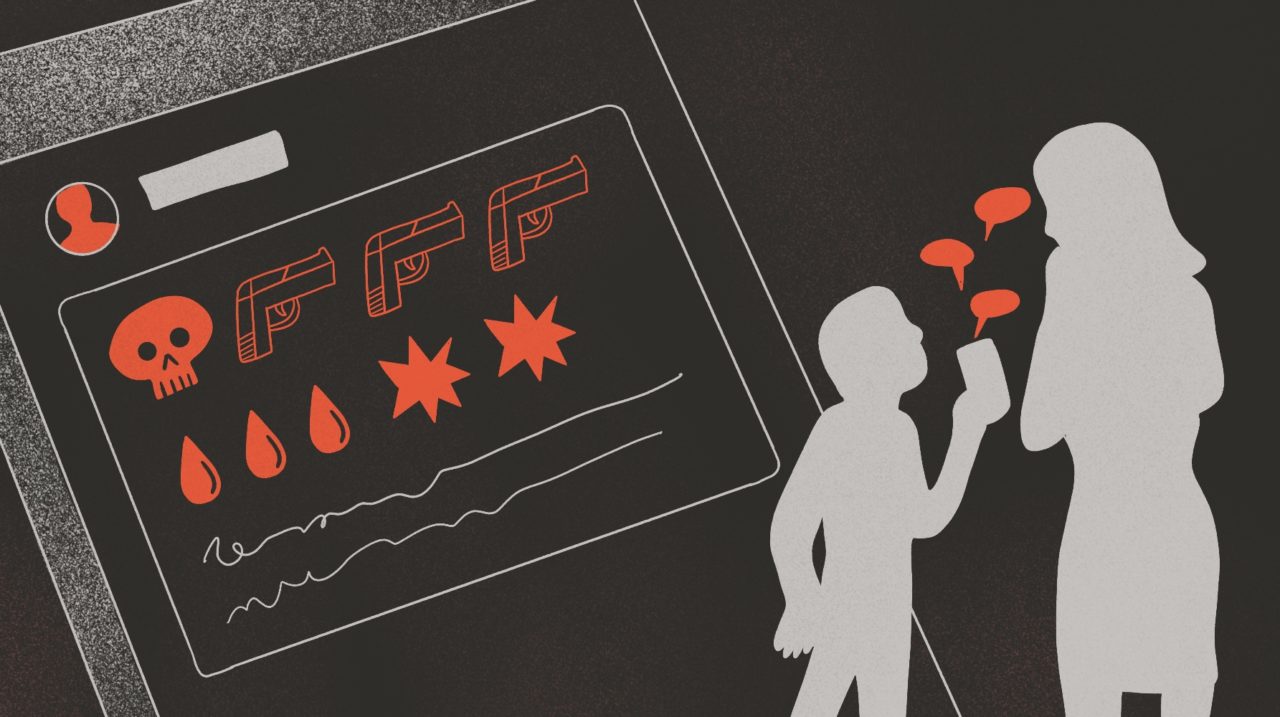 Illustration: Daria Akhmedova for TD
- After any military conflict in society, a large number of people inevitably appear with traumatic military experience who have children, as well as children who themselves survived the traumatic experience. Take at least Chechen wars-how in the early 2000s this problem was solved? Has the state and society helped children in such a situation and how does it help now?
Svetlana Kotova: I can’t say anything about how the state used to react to such things. According to my feelings, no way, although in those days psychologists worked and tried to do basic things.
Now the situation has changed. Since I work in a municipal organization, a center of psychological, pedagogical, medical and social assistance (PPMS), I know that some work is being carried out in this direction. In a recommendatory basis, psychologists can be aged more to study in crisis states, states of post -traumatic disorder in violence. But, unfortunately, all this is very conditional. And not every psychologist is ready to work with such a difficult topic. We [employees of the PPMS centers] try to prepare school teachers and psychologists to ensure that they can at least not be scared, not to stop and talk on these topics. But it is difficult.
An established effective system that could at least smooth out psychological damage (and it will certainly be huge), no. In your question there is the correct phrase “state and society”. In society there is such a phenomenon as voluntary assistance, for example, psychologists-volunteers. Even during the pandemic, I worked in the volunteer organization “We are nearby”, now there are also volunteers who provide assistance to those who were in a difficult situation in connection with their own. And this is very important.
I believe that the psychologist should be “out of politics”, like any doctor. He must help a person live terrible, crisis times and traumatic events, regardless of whose side he is. The psychologist needs to be cosmopolitan, because he is the one who helps a person survive and preserve himself, his family and his meanings.
In my opinion, today psychologists who work with children are not enough. The state should pay attention to this and allocate more funds for training specialists. Because the help of tens of thousands of people who suffered - both physically and psychologically - is needed. There will be more and more of them, and the post -traumatic syndrome for many years will remain a train of these events - in schools and in general in society.
- How do external circumstances affect the shooters : the passion for “wrong” music, aggressive video games, cruel films and videos?
UG: Here is an important question - what is primary: watching films with a cruel plot, aggressive video games or a person formed by violence that excites similar interests. Many experts are inclined to the fact that external incentives in the form of consumed content are far from always responsible for sculpting, this is just an indirect sign.
PL: External factors and internal factors influence. For example, in the USA, most teenagers play video games, watch films and a television show with cruel content. And only a few of them commit acts of violence, so you can not talk about the causal relationship of content and attack. You always need to analyze what personality is the criminal.
- Describe the conditional portrait of the shooter.
PL: Three types of school shooters can be distinguished. The first is a psychopathic type. People of this type are characterized by narcissism, lack of empathy and any regret about what happened. Some of them are sadists who have fun to show strength and aggression. The second is a psychotic type. These are people with mental disorders, such as schizophrenia. They may have hallucinations or delusional experiences, and the murder can inspire voices in their heads, which are falsely perceived by them as a danger. I call people of the third category "injured." Their psyche survived many traumatic events. Usually they grow in families with cruel treatment, alcoholism or drug addiction. Such children see violence at home, subject to him there, get used to him.
At the same time, many people who are suitable for a description of a particular type, nevertheless, will never make attacks. The personality of the shooter itself without the influence of social and innate circumstances is also not an exhaustive explanation of the causes. Sculshuting has a biopsychosocial nature.
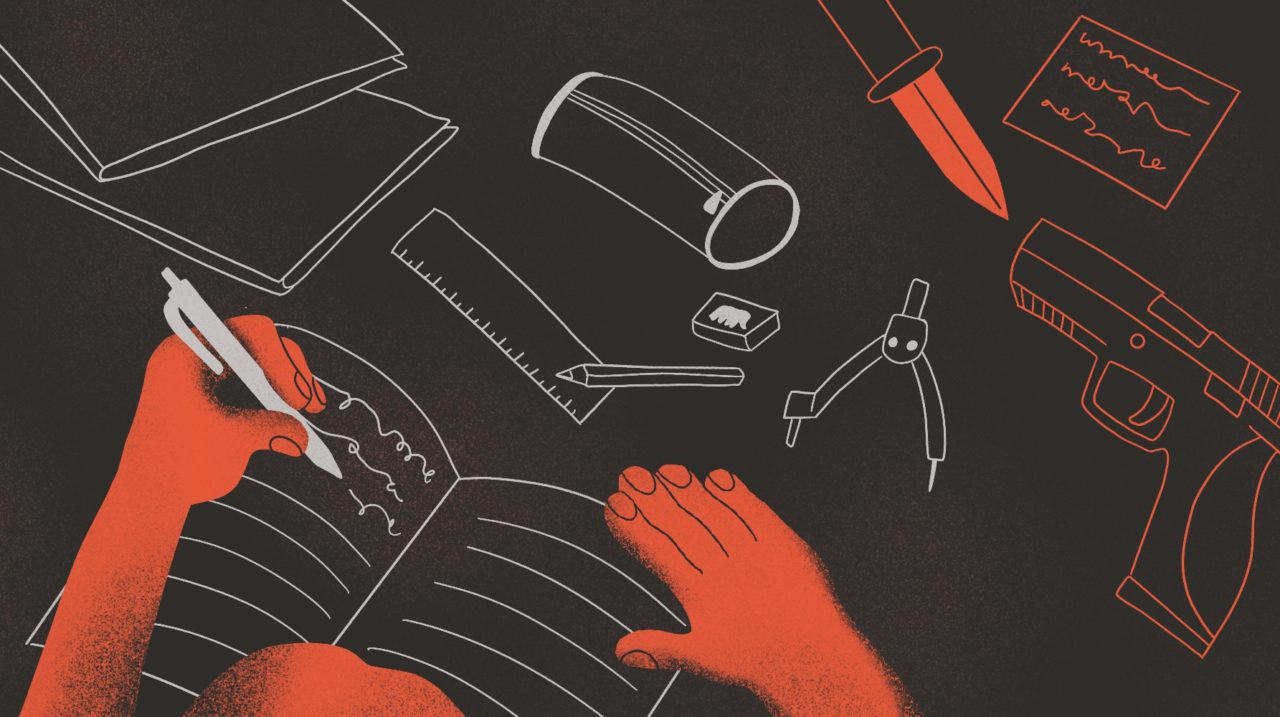 Illustration: Daria Akhmedova for TD
UG: If we build a portrait of a potential scullet, we will miss many points and details-this is first. Secondly, we will brand and stigmatize those who are actually not going to commit a crime, but whose portrait is similar to the described.
The scientific community is now trying to create a certain typology of sculptors to predict such incidents. However, the problem is that all studies are built on a retrospect, that is, they examine what has already happened. There are no specific personal signs or living conditions that will predict who will attack the school. For example, I believe that such a factor as bullying is exaggerated. Bulling itself is an insufficient condition for sculpting. Many students "isolated" from peers do not attack. Or, for example, the hobby of a child with a weapon does not make him a threat - everyone has different interests. Take a biathlon - a sport where shooting is of great importance, but we do not think that biathlonists are potential whores.
- Is it possible to notice that the child is going to attack? Maybe not personal features, but any signs in behavior can be a signal?
PL: For this, in the USA we use a model of threat assessment. Each school creates special groups involved in this analysis. They include ordinary school workers who have undergone special training on children's safety issues. If you are a teacher and your student says that his friend wrote on a social network about the desire to arrange shooting at school, then you can contact specialists from this group. They are prepared for such situations and will help determine how real the threat is or is it just a joke or misunderstanding.
The main idea is that this model should not include punishment. The work of teachers according to this model is not in order to cause troubles to students, but only to identify a potential violator, prevent violence and assistance that may be required. His life in society should be comfortable for him.
The threat assessment model is the best way to prevent an attack, because this allows you to find the arrow before he comes to school with weapons. And such a system works.
UG: There are obvious signs of behavior that can signal the situation. For example, reports of the planned attack - the broadcast of these ideas on social networks, the heroization of Columbine shooters. These are the dying notes that the arrows leave - there are frequent cases when the sculpture ends with a suicidal attempt. This fact is interesting: the attackers usually commit suicide abroad, and in Russia most often sculpting ends with detention.
Yes, obvious signs are visible to the naked eye, but no one knows whether there will be really sculpture. It is impossible to accurately predict human behavior. Therefore, in my opinion, prevention is so important.
- What can a society do to protect children?
PL: An important issue is the legislative regulation of weapons turnover. I don’t know what laws are in force in Russia now, but the state should know who has weapons, control its storage, also train families with children how to prevent tragedy because of weapons.
And most importantly, the state should take care of the mental health of society and an individual. If it becomes known that someone plans to attack, and especially if he has not yet violated any laws, a person needs help. Such a system, of course, should be united in the interaction of the federal level and local.
UG: The problem is not to predict the attack. The problem is to help the child who was at risk in time. It is necessary to change its social environment: the more friendly, more humane, warmer, the more mutual trust in it, the better. The child will have resources to cope with personal injuries and experiences. He will know that it is safe, regardless of what we are trying to prevent: sculpting, suicidal or other deviant behavior.
- Are there any features of the work of the media that can affect the cases of sculpture?
UG: We should not publish information with detailed information about the personalities of the attackers, photographs of their victims and places of tragedy, because secondary trauma occurs: those who are not related to the incident, but simply consumes information are also injured. This does not mean the creation of an information vacuum and concealment of information, this means very accurate coverage of sculpture cases in a public field. There are many recommendations for the media, journalists should understand that the media reaction to incidents, the spread of scenarios of mass executions can increase the likelihood that someone will repeat this.
PL: There is a simple rule: Donat name them, Donat Show Them, But Tell ABOUT EVERYTHING ELSE - "Do not call them, do not show them, but talk about everything else."
The main thing is not to make a celebrity out of the killer, not to talk a lot about the weapons used, about the scenario of the attack. It is worth talking about the victims, how the community is restored, the tragedy should be shown as a chance to once again discuss this in the future. Each of us can once find out that one of his friends wants to commit an act of mass violence. Everyone must understand what to do and where he can turn. And journalistic materials about the tragedy may be the opportunity for the country to learn how to prevent such cases in the future.
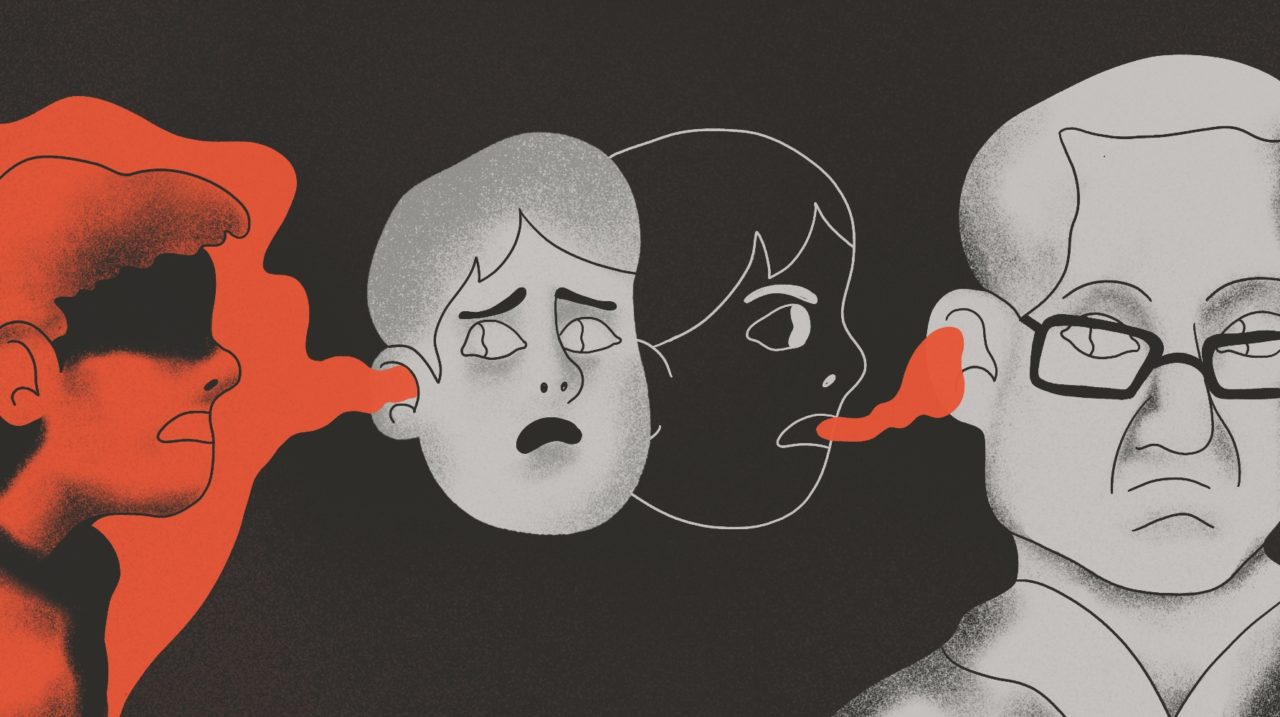 Illustration: Daria Akhmedova for TD
- If we know that there is thoughts of whining in the head of a child, how can we help him?
SK: The key phrase is “if we know” that such thoughts have in his head. As a rule, no one realizes this, and when he finds out, it turns out that people are often not ready for this. Aggression scares, and it is easier to turn away from this and not interfere, to remain in a certain illusion that “this will not touch us”, “he will carry it”. In the practice of a psychologist, there are often “soft” cases of an aggressiveness of a teenager, when he can speak hostilely, for example: “I want to blow them all up”, “I hate them”, “it would be better if they weren’t there” and so on. These statements themselves scare - both adults and children - and their reaction may not be the one that is needed to repay aggression and overcome it.
99% of cases of aggression will not lead to an extreme situation at school, but they are all dangerous: when the child is on the platoon for months, bearing hostility, his behavior becomes unpredictable. If this does not result in the shooting at school, this may result in not so traumatic, but violence against classmates, for example, fights using chairs, pencils and other things. Children are weakly able to control their impulses, and if they bring them to the line, they are capable of a lot.
In any case, whoever notes the hostility of the child, it is necessary to take care of providing him with a specialist. At least a psychologist. In many cases, the psychologist connects a psychiatrist, because a psychiatrist must distinguish the norm and pathology. Вся ситуация риска обсуждается с родителями ребенка, а в идеале еще и с педагогами, администрацией школы. Проблема должна решаться сообществом взрослых.
УГ: Рекомендации любого психолога в таком случае просты. Необходимо устанавливать и поддерживать доверительные отношения между детьми и учителями и человеческие отношения детей с родителями. Дети должны знать о ресурсах психологической помощи, куда они могут обратиться в сложной ситуации, ведь в некоторых случаях ребенок не может прийти за помощью даже к самым близким.
— В каком направлении должна совершенствоваться психологическая служба в образовании, чтобы профилактика агрессии была эффективной?
СК: Начнем с того, что психологическая служба должна хотя бы быть. Сейчас далеко не в каждой школе есть хотя бы один психолог, даже в крупных городах. Нормы нагрузки на ставку школьного психолога указаны Минпросвещения лишь рекомендательно. По ним на каждые 500 учащихся или 20 учащихся с ограниченными возможностями здоровья (ОВЗ) должен быть один психолог, а на практике все по-другому. Например, в Екатеринбурге один специалист в среднем приходится на 1000–1200 учащихся, плюс учащиеся с ОВЗ. Качественно работать психологу со всеми категориями учащихся, которые вменяются ему по профстандарту , просто нереально.
Поэтому возлагать надежды на то, что одинокий школьный психолог сможет вовремя заметить и адекватно сработать на предупреждение трагических случаев в школе, было бы наивно.
Для того чтобы система профилактики работала, на мой взгляд, важны три основных фактора:
- обеспечение школ психологами в соответствии с реальным контингентом учащихся;
- командная работа администрации школы и психологов, совместное создание эффективных алгоритмов реагирования в случае повышенного риска (буллинг в классе, признаки психического неблагополучия, агрессия или самоагрессия);
- повышение профессиональной компетентности психологов образования в этой теме.
Кризисная психология, диагностика и коррекция агрессивного и вообще любого деструктивного поведения — это непросто и эмоционально затратно. Но специалисты найдутся и будут оставаться работать в школах, если эта задача будет серьезно поставлена на государственном уровне.
ПЛ: Я бы добавил, что психологическое просвещение должно вестись не только среди школьников и студентов, но и по всей стране. В США, например, подавляющее большинство учеников и родителей знает о существовании анонимных горячих линий, куда можно сообщить о том, что они видели или слышали. Анонимность важна, потому что дело касается насилия, она дает человеку почувствовать себя в безопасности и облегчает ему обращение.
Создание таких горячий линий очень важно. Есть множество примеров того, как подобные сообщения предотвращали нападения. То есть трагедии удалось избежать не благодаря полиции или школе, трагедию предотвратили сами граждане — конкретный человек, который что-то заметил, воспринял всерьез и приложил усилия, чтобы этого не произошло. Поэтому в предотвращении скулшутинга каждый из нас несет дежурство.