
Translated material
"The most striking manifesto of feminism since Vainstein's work"
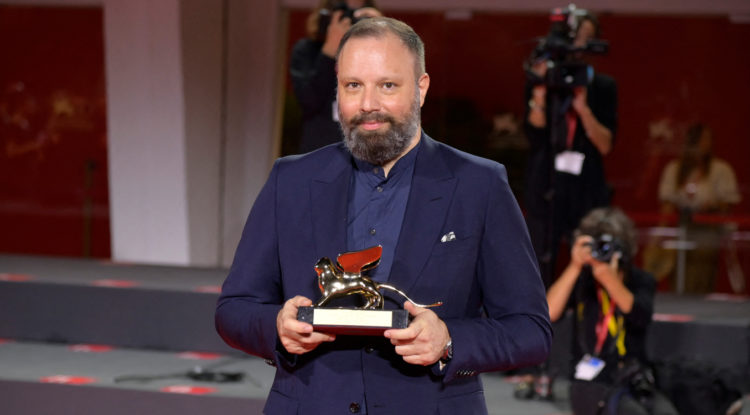
Zinaida Pronchenko sums up the results of the 80th Venice Film Festival
On September 9, the 80th Venice Film Festival ended. At the award ceremony, there were no surprises. The main prize-the Golden Leo-received a universally recognized favorite, the film "Poor Nednets" Greek Yorgos Lantimos ("Lobster", "fang", "favorite") with Emma Stone in the title role. At the request of the Cold, Zinaida Pronchenko tells about this and the rest of the victorious films.
In order not to miss the main materials of the "cold", subscribe to our Instagram and telegram .
The awards with difficulty found the winners, because in the anniversary year there were almost no one to choose from. In connection with this regrettable fact, the jury’s decision led by the golden boy Hollywood Damen Shazella (La La Land, Obsession) to give the main prize to the painting of Yorgos Lantimos “Poor-Nednets” looks absolutely fair. In fact, this is the only film of a review in which ethics is harmoniously combined with aesthetics, and personal - with political. The absurd and retro-futuristic plot of the “poor-unexpuncts”-about a scientific experiment in Victorian London over Emma Stone, returned from the other world thanks to the transplantation of the brain of his own unborn child-perfectly reflects the creative credo of Lantimos. He perceives man as a golem of God, as a victim of a failed and deeply unhealthy higher plan. The paths of this golem are non -incomprehensible, but most often lead to hell. “Poor-Snow-Units”, of course, is the most striking manifesto of Feeminism since Vainstein’s work, even if he was removed by an irony of fate. This is a film about emancipation and, most importantly, about the attitude to sex not as a sacrificial and suffering act, but as a tool for pleasure and struggle. A moviemanifest that surpasses any “portraits of girls on fire” (film Selin Syamma, one of the most famous feminist paintings of recent years. - approx. “Cold”) . And at the same time, the work that is clearly whole from a visual point of view, clearly inspired by Georgio de Kiriko, and Salvador Dali, and Orson Wells, William Gibson, and Gertrude Styin, and Ain Rand, not to mention Elsa Schiaparelli.
The Jury Grand Prix-the second most important prize-got a quiet and somewhat mournful picture “Evil does not exist” Ryusuke Hamaguti, who struck the Sinefils a couple of years ago by the philosophical elegy “Sit behind the wheel of my car” about the back of all and especially love. This time, Hamaguti did not turn to the lyrics, but to the economy, which, as we recall, should be economical. The heroes of the film, residents of rural areas, whose idyll intend to destroy the urban investors who are building in the neighborhood, are protesting against this statement. The struggle of characters, which is not always provided by the struggle of opposites, unfolds in the usual delayed rhythm for Hamaguti, the author is about to understand what is more important: the future or the past, feelings or mind - and whether the freedom of the market is written. All this with a clear ecological accent - of course, is more than ever: natural disasters of the last week in Hong Kong and Morocco are tragic confirmation.
The film “I am Captain” grabbed two awards for two awards - for the best directing and for the acting debut of Seydu Sarra - the statement of an acute -political, but purely speculative statement. The story of the two cousins from Senegal, who went for a worthy life to Italy, from classical cinema of moral concern about the fate of refugees, was turned by Garron into pure operational, which is unpleasant and dishonest, but the jury was apparently imbued with the obscene poetry of the Senegal Dali and at the same time by a genre pressure, during which much more statists die than the canon.
The jury special prize went to the veteran of the Polish cinema Agnishke Holland, who decided to arouse the conscience of the audience with the manipulative drama “Green Border” about the migration crisis in the area of interests of Poland and Belarus: in terrible torment, people who were once again recruited for the promises of politicians, mostly people from destroyed. Syrian war. Lukashenko pushes them into the embrace of the EU, more like a wolf's mouth more, for the official practices of officers protecting the Polish border are not much different from those that humanity remembers the documentaries of Claude Lancman. Holland does not skimp on the demonstration of ordinary fascism, violence here is not graphic, but pornographic-it is not surprising that the viewer has a reasonable question that once sounded to supporters of conservation and even restoration of concentration camps: is the preservation of the memory of an identical museum of violence? Yes, and in such a platform, spectacular vein?
Finally, the jury gave prizes for the best acting work - it seems, from hopelessness - successfully demonstrated the well -learned helplessness of Priscilla Kayly Spayni (the film of Sofia Koppola “Priscilla”) and Peter Sarshaarda, who detailed the symptoms of Dementia in the picture in Michelle Franco’s “Memory”. It is worth noting that Franco in his new film has reached unprecedented peaks in the cataloging of suffering and can now safely go to health ministers, it will turn out to be a bad sick -based technocrat.
As for good cinema, without rewards there were “foreboding” by Bertrand Bonello, who continues to explore the anxieties of modern society, the only medicine from which is love, and the “theory of everything” Timm Kreger, who removed the Hitchcock noir about the Congress of physicists in the Alps in the early 1960s, is a kind of arthaus Oppenheimer, which clearly refers to us and Tarkovsky, and to Thomas Mann, and to the books of Benkhamin Labatut, popular now, and even the “killer” of David Fincher, even if not the strongest work of the master, who proposed a thoughtful, albeit traditional view of the costs of the profession of a hired killer.
The main film of the festival shown outside the competition was Woody Allen's Great Irony - unlike his longtime colleague and peer Roman Polansky, he did not lose either humor or misanthropy in a conversation about the most important thing, that is, about the nature of the human. No matter how funny the subject of its more than half a century of interest is-the international bourgeois and global leftist, no matter how negligible the essence of their conflict is-most often because of the skirt, wherever they live: in Manhattan, in Kensington, on the right or left bank of the Seine-the river that shares them, it will absorb everyone and will not suppress any other. Relations towards this tragic inevitability, except for ironic, should not have a person. There is great beauty in the great irony that can reconcile us with what is happening around, with the fact that the noise and rage of which life consists, as a result, nothing means anything.
The author’s opinion may not coincide with the opinion of the editorial office.
Poll Help the "cold" to become better. Take a survey for 7-10 minutes.