Date
Author
Евгений Берман, Арсентий Тропаревский
Source

Preserved copy
Translated material
General of one battle
On the fiftieth anniversary of the most famous military coup. 17 years of reign Augusto Pinochet
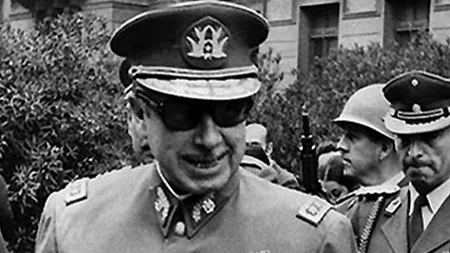
Augusto Pinochet and members of the military junta. Photo: AgitClub.ru
"History indicates that dictators always end poorly." This expression is attributed to the leader of the Chilean military junta Augusto Pinochet Ugart, who ruled the country for many 17 years. It is not known what he wanted to say this, but one thing is clear - for all his cruelty and intolerance to opponents, he was distinguished by prudence and an insightful mind that allowed him to seize, keep and peacefully transfer power to the democratic government in 1990 and, as a result, to maintain his life.
General-Chancellery
Pinochet was born in Walparaiso, a small coastal city on the shore of the Pacific Ocean, on November 25, 1915 in the family of a small customs employee. His fate resembles the hero of the films about inconspicuous people of the "middle level" who live without grabbing stars from the sky, forever in the shadow, forever in the background, and then by the will of chance they take off to heaven already at a serious age. Pinochet was a modest and obedient young man who entered the infantry school - one of the few options for the “way up” for immigrants from the lower Middle Class.
Interestingly, in its character, the character and hobbies did not correspond to the psychological portrait of a typical warrior:
He was a reader of reading, a collector of books, a faithful Catholic and a scientific research scientist who devoted a majority to the teaching and writing of scientific works on geography, international relations and military history.
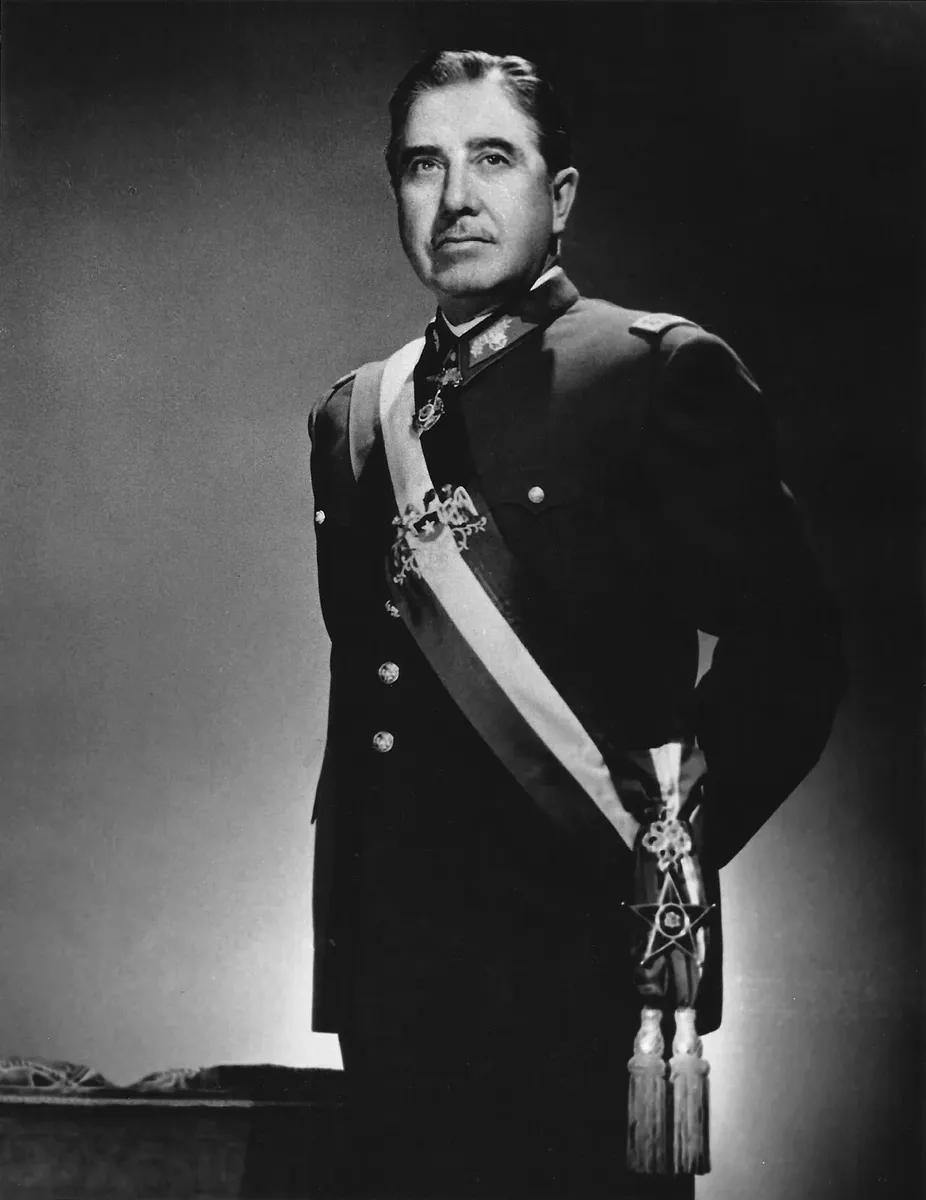
He was indifferent to sports, and he did not show courage and military talents almost until the very end of his career, somehow there was no case. In terms of its qualities, Pino, most likely, should become a philosopher or professor, but life has ordered otherwise.
The young Augusto step by step passed all the steps of the career ladder of the military personnel - and he managed to get used to the role that was not quite suitable for himself. Pinochet told about this stage of his life as follows: “Starting from the military school to the rank of general, I climbed the steps of the military hierarchy step by step, having no ambitious aspirations and wanting only to fulfill my official duties ...” A sort of “General-Chancetroaches”, the future lord of Chile was something similar to the “general of albertia”, the character, the character. The satirical story of the Brazilian writer Afonso Enrixes de Lima Barreto “The sad fate of Polikarpo KuAzem”:
“The high rank of a general, who caused the Titanic acts of Caesar, Tyurenna or Gustava-Adolf, was poorly approached by this peaceful, near, good-natured person who had only two worries: to marry five daughters and patting that his son passed exams to a military school.
At the same time, doubting his warlike inclinations would be inappropriate. He himself, realizing that he has a deeply civilian appearance, sometimes talked about some battles or gave a story from army life ... If they asked him: “General, did you participate in the battle?” - He immediately answered: "He did not have time ...".
But the impeccable service first led the teacher of the Pinochet Military Academy to work as part of the Chilean military mission in Ecuador, and then, in 1959, to the appointment of the chief of staff of the division. Pinochet became a brigade general in 1969, when he was already over fifty. And in 1971, Pinochet took a truly important post by Santiago's garrison, which was his first appointment under the government of popular unity, led by President Salvador Allende.
An educated, neat, disciplined Staff General with a professor’s background, unknown to anyone outside the narrow circle of armed forces of the second world countries: no one could imagine that in just two years Pinochet would challenge the mighty charismatics Allende, who, without exaggeration, knew the whole planet.
President of great hopes
To understand why half a century ago, a coup d'etat on the outskirts of the Latin American continent became an event of a planetary scale, and the Pinochet general general is a symbol of the bloody dictator, we must recall why the attention of the left intellectuals of the whole world has been riveted to Chile.
Just yesterday, in 1968, in France, demonstrations of students were held who rebelled against the older generation, accusing him of betraying freedom, equality and brotherhood - ideas of the Great Revolution. This led to a sharp rise in the popularity of the “socialism-ss-human face” and politicians who promised to finally build real socialism. In all intellectual centers, they then argued about the possibility of building a fair economic order. Without evil operators and speculators, but with full shops and tasty coffee with croissants. With regular “planned production”, but without hard labor and oil coupons. With the all -knowing government of wise technocrats, but without an extravagant leader, who orders now to dig channels, then build starships, then kill professors.
Attempts to build an ideal society have been made since 1917. And each time something interfered with a scientific distribution triumph.
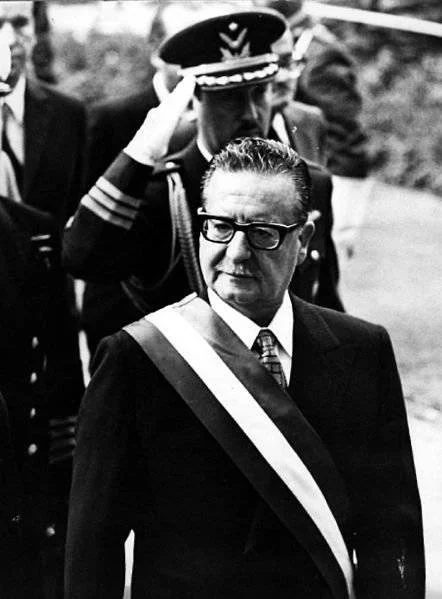
But now in Salvador Alende, many saw a person who was able to go between the Scylla of the “totalitarianism of the Stalinist pattern” and the Haribda of “dictatorial voluntarism”, characteristic of the third world countries.
In the presidential election, Salvador Allende ran for the socialist unit Unidad Popular, uniting various left -wing groups, but won with a minimum advantage: 36.6% of voters voted for it, and 35.3% voted for the nearest competitor. This was a direct evidence of the rigid polarization of the country's population, which was literally divided into two camps of each other.
And against this political background, the Allende government took up a large -scale economic reform.
Good intentions ...
The complex of economic events of the Government of "National Unity" in no case should be reduced to vulgar Marxism, says economic publicist Dmitry Prokofiev. It was a rather subtle plan, based not so much on the experience of the USSR economy, but on the results of studying the unsuccessful practice of economic conducting in Latin America and the latest ideas for economic management based on computer models (just in fashion).
The fact is, Dmitry Prokofiev explains that the Allende government was not faced with the task of accelerated industrialization of the agrarian country (as it faced the Bolsheviks in the early 1930s). No, the “popular unity” got a well -developed economy (developed by the standards of the “second world”, of course) integrated into the world market as a supplier of copper and other metals, with a developed mining industry, with the production of consumer goods, with a high share of educated urban population, with an experimental bureaucratic apparatus. Moreover, and this is important -
Chile's industry, with the support of the government, has already been guided by the “import substitution” since the beginning of the 1930s.
The reason for such an economic course was the experience of the economic crisis experienced by Chile during the Great Depression, when a sharp drop in demand for Chilean raw materials led to the collapse of the country's foreign exchange earnings and import deficiency, after which the government has conceded on the idea of developing “its own production”.
At the same time, the power in Chili changed democratically, supporters of left -wing ideas were not marginals, but regularly part of the government, strong trade unions were in force, social programs were implemented, and the military sat on the barracks, disciplined in the orders of the civilian authorities. It was a directly exemplary landfill to implement the plan for building a “correct state economy”.
The foundation of this “regular economy” was not the nationalization of enterprises, not the confiscation of Latifundia and not even the distribution of grocery rations to the miners. It seemed to advisers to Allende that they invented something like an eternal engine with which Chile's economy was supposed to rush to prosperity.
It is necessary to start with the fact that prices should be fixed, economists of “popular unity” reasoned. Then we “print money” (we loan enterprises at a minimum rate). How will enterprises be valid, deprived of the opportunity to manipulate prices, but gaining access to loans? They will be able to increase their profits only by expanding production. An increase in production will require investment, and investments will cause demand for goods and labor - hence the increase in salaries and a decrease in unemployment.
How about the dollar, skeptics asked if you print money? And will they find demand manufactured goods somewhere except Chile? The country's economy is small, which means that the demand for such goods will not be great, and there will be no sense in large investments.
Nonsense, the optimists answered, in Chile - half of the world copper reserves, the entire system of telephone cables in the United States is kept in Chilean copper export. "Medistollars" is enough to hold any course of Peso. In addition, the demand for a dollar is a derivative of the demand for imports, and we have been engaged in “import substitution” for forty years. We will also increase the duties for import - and everyone will “buy Chileskoye”, which means that the currency will not be needed.
... on the way to hell
At first, the distribution of money really revived Chilean trade and industry. This allowed statistics to note the growth of the economy, and Alende's supporters to triumph. In 1971, GDP chili grew by 8.5%, and in 1972 - by 5%. By the end of 1972, unemployment was reduced to 3%. (In fact, this success was just a continuation of the total trend of the 1960s, when Chilean export copper was expensive and imported oil was cheap.)
But further the economy did not behave at all as the Chile government expected. Deprived of the opportunity to determine the level of demand for products by manipulating prices, Chilean entrepreneurs began to reduce production, thus reducing their costs. And the instrument of determining demand for the goods was the level of its deficiency. In 1973, production decreased by 4.3%. It did not work out with price control. If in 1972 inflation was 260%, and in 1973 - more than 600%.
Copper prices also let down. They reduced almost double, having deprived the government of foreign exchange income, and the central bank - reserves.
The government of the Black Market government was the formation of the National Secretariat on Distribution, the main task of which was the formation of food rations for the Chileans.
For these purposes, Cybersin computing center was put into operation in Chile. Moreover, these rations were not distributed, but sold, and the products in them were more expensive than before Allende came to power.
The problems grew like a snowball and resulted in a mass strike in Santiago in 1972. During the dispersal of the demonstrations, Pinochet, who commanded the metropolitan garrison, was noted by the next phrase: “ I will not tolerate the instigators, sowing chaos - no matter what ideology they adhere to.”
In May 1973, President Allende said in a presidential message to Congress:
QUOTE
“We must admit that we were unable to create the management of the economy corresponding to new conditions ... that we do not have the necessary tools for withdrawing the profits of the bourgeoisie and that the revenue redistribution policy was carried out in isolation from the real capabilities of the economy.”
On June 29, 1973, the “Tanquetazo” (Tanquetazo) occurred in Chile. The commander of the 2nd tank regiment Roberto Super brought his people and equipment to Santiago's streets, besieged and fired at the machine guns the palace of La Moneda. However, the army leadership did not support him, and after a few hours Roberto Super surrendered to the authorities. An important role in the suppression of the putsch was played by Pinochet, which in August 1973 was appointed commander in chief of the ground forces.
On August 22, 1973, the opposition to the Government of the legalist majority in the Chamber of Deputies approved (81 against 47 votes) a long -prepared “agreement of the chambers” on the illegality of the government’s actions. Allende was charged with “authoritarian aspirations and the desire to destroy the role of legislative power; in neglect of court decisions and patronism to criminals related to the ruling party; In attempts to freedom of speech, arrests, beatings and torture of opposition journalists and other citizens. ” On the same day, the Constitutional Court of Chile accused Salvador Alende of violating several articles of the Constitution at once.
It rains in Santiago
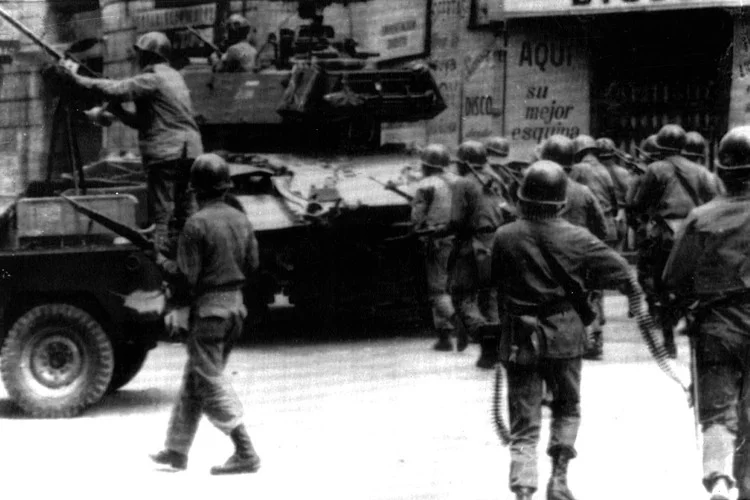
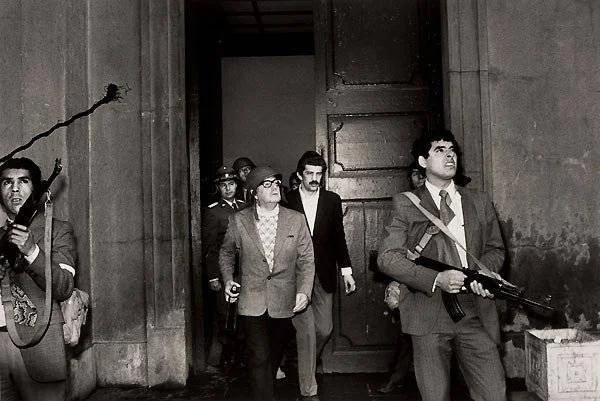
In the early morning of September 11, 1973, the commanders of the army companies stationed in Santiago turned to their soldiers. The meaning of what was said was as follows: the government of Salvador Allende, violating the constitution, leads the country to economic and social collapse. Responsibility for restoring order in Chile must take on the army. Who does not agree, may fail. (Disagreed, by the way, were found.)
A common signal to the rebellion was the phrase “It rains in Santiago”, sounding on the radio. The infantry and tankers took control of the key objects of the capital. The generals invited President Allende and his associates to leave the country. There is evidence that the shocked Allende said: “What will happen to the poor Pinochet? He was probably arrested! "
At 9.10 in the morning, the Magalianes radio station - the last radio, whose employees retained allende loyalty - transferred the president’s appeal to the Chilean people. The President rejected the military ultimatum.
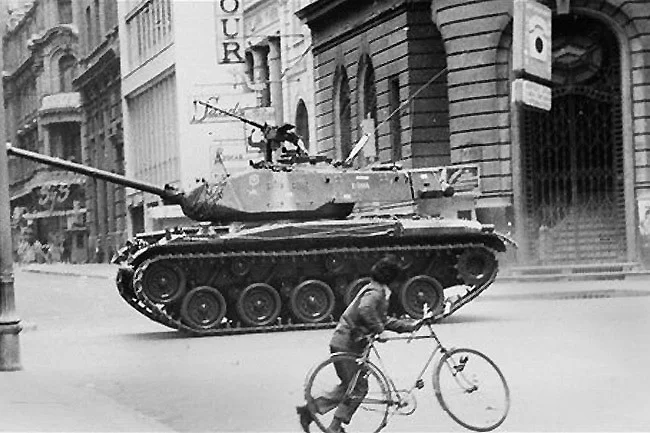
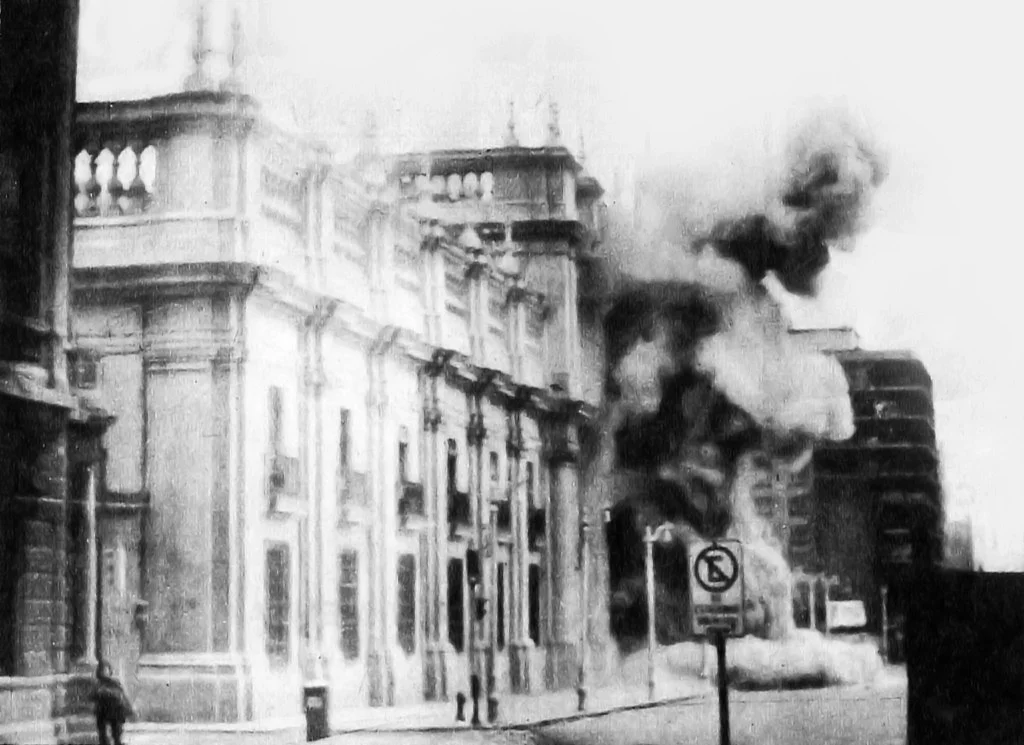
Five minutes later, General Javier Palasios personally led his soldiers to storm the palace of the La Moneda. The attack was supported by tanks and helicopters. The fierce shootout lasted five hours. At 14.20, the wounded General Palasios entered the office of Allende and ordered to transmit an urgent message for General Pinochet: “The task was completed. Mondom is taken. The president is dead. " But Allende did not die alone. In the days of the rebellion, about 2300 supporters of the overthrown president died.
The world was shocked.
The explanation that Salvador Allende took his post as a result of a complex parliamentary compromise and violated its conditions, could not convince anyone. Allende went down in history not a usurpator who tried to direct Chiles along the “socialist path of development”, but by a hero that confronting the attack of a military dictatorship.
Having come to power, the military deployed in the country the most severe terror, the degree of which did not decrease until December 1973: for this period the largest number of missing people, dead and tortured. Under the rink of repression, the entire left movement fell, which Pinochet considered guilty of the problems of the Chilean economy.
The main recipe from all troubles, according to Pinochet, was as follows: “Rice work, compliance with the law and no communism!”
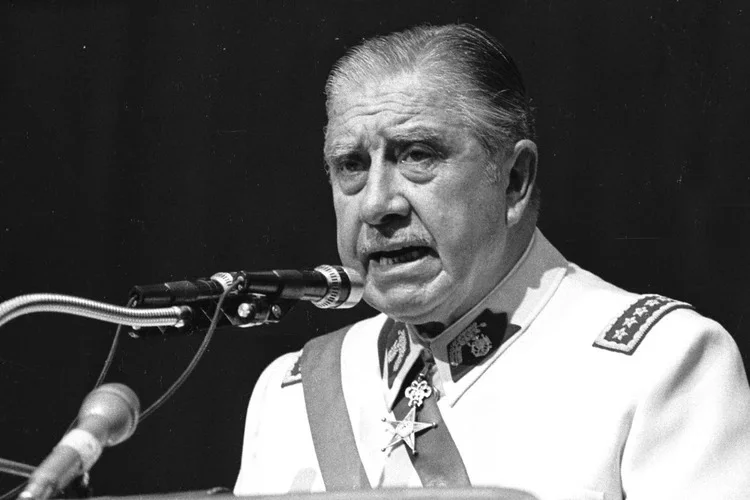
It is worth noting that among the participants in the conspiracy, Pinochet was not “on the forefront”. He was not just the leader of the coup, but became the last of the high -ranking military who joined the conspirators. Initially, the junta, formed from the head of the army, the air forces and navy, was conceived as an equal commission with alternate chairmanship. Pinochet became the first chapter only thanks to age - he was the oldest of the conspiracy participants. But, having become the interim head of the government, Pinochet immediately began to methodically move away from the rest of the coup. Thanks to the support of the army, he was able to usurp power, abandoning the original principle of rotation. By June 1974, the participants in the junta under pressure (how else?!) Signed a decree according to which Pinochet became the “supreme head of the nation”, and already in December 1974, Augusto became the president of the republic.
Executioners and victims
The establishment of the Hunda rule was extremely cruel. According to some estimates, more than 13,500 Chilean citizens were detained as a result of raids directed against the sympathetic political activists, leaders of trade unions, factory workers and residents of slums. The detainees were kept in several camps scattered throughout the country. The largest and most sadly known such objects were two converted sports areas - the National Stadium and Chile stadium in Santiago. According to statistics collected in the secret report of the New Junta, in the period from September 11 to October 20, a total of 7612 prisoners passed through the National Stadium. After brutal bullying, many were executed, and their bodies were either buried in secret graves, or dropped into the ocean, and sometimes simply left on the streets of cities to intimidate the dissatisfied.
On September 30, Pinochet began a series of mass killings, which became known as the “Caravan of Death”.
In the period from October 16 to 19, a detachment of five officers traveled to regional centers by helicopter for "working with political prisoners." During each stop, Caravan ordered him to give him all the opponents of Pinochet from among the prisoners. После передачи в руки «Каравана» все они подверглись пыткам, издевательствам и были убиты.
«Караван смерти» стал предвестником чилийской тайной полиции — Управления национальной разведки (DINA). С самого начала DINA прославилась чрезмерной жестокостью, чем выделялась даже среди других разведывательных подразделений чилийских вооруженных сил, которые в целом не страдали от гуманизма. Агенты DINA не только координировали и проводили допросы, но и организовывали постоянные тайные рейды и задержания. Спецслужбой была создана сеть из тайных тюрем, где содержались и подвергались пыткам сторонники бывшего правительства. Благодаря тайному характеру операций большинство населения Чили ничего не знало об откровенно пугающей деятельности DINA, в то время как ЦРУ начало сотрудничать с этой организацией с самого момента ее создания.
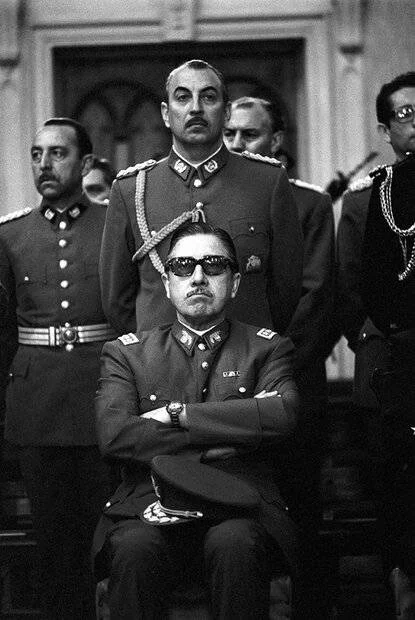
Под руководством DINA находилась как минимум дюжина тайных тюрем по всей стране. Все они работали по схожей схеме: жертвы задерживались сотрудниками в штатском, после чего с завязанными глазами доставлялись в одну из тюрем, где, в соответствии со «специализацией» конкретной тюрьмы, подвергались тем или иным пыткам и издевательствам. Один чилийский военный офицер однажды рассказал, что во время допросов DINA используют методы «прямиком из испанской инквизиции». Для психологического воздействия на противников режима, родственники задержанных подвергались сексуальному насилию на глазах у задержанных. Количество жертв агентов DINA исчисляется минимум сотнями жизней. Многие жертвы стали «исчезнувшими», некоторые из них не найдены до сих пор.
Полет стервятника
Режим Пиночета, впрочем, не ограничился репрессиями только внутри страны. В ноябре 1975 года в Сантьяго прошла секретная конференция, в которой приняли участие представители спецслужб нескольких стран Южной Америки. В официальном заключительном заявлении участники конференции одобрили концепцию и структуру новой организации совместной безопасности, получившей название «Кондор». Режим Пиночета в тот момент находился в международной изоляции и поэтому нуждался в поддержке и сотрудничестве со стороны соседних стран-единомышленников (особенно в борьбе с «распространением марксизма»).
Основателями организации стали Чили, Аргентина, Уругвай, Парагвай и Боливия, через несколько лет к «Кондору» присоединятся также Бразилия и Перу. Эта организация позже стала одной из самых зловещих полицейских структур в Западном полушарии. Ее деятельность распространялась на территории всех стран-участниц и включала слежку, похищения людей, пытки, допросы и устранение политических оппонентов.
Теперь противники режима Пиночета не были в безопасности даже за пределами Чили. Видные оппозиционеры, жившие в изгнании, исчезали, тайно вывозились на родину или же просто были убиты.
Нередко жертвы исчезали в одной стране, а их обезображенные трупы (либо выдаваемые за таковые) обнаруживались спустя время в других странах-участницах.
С целью сокрытия случаев систематического нарушения прав человека режимом Пиночета была начата операция «Коломбо», представляющая собой организованную кампанию дезинформации. Каждое из совершенных политических убийств выдавалось за результат внутреннего конфликта в стане оппонентов режима и коммунистов: на трупах оставлялись записки, указывающие на участие «красных» оппозиционеров, а средства массовой информации всех стран-участниц сообщали только официальную версию событий.
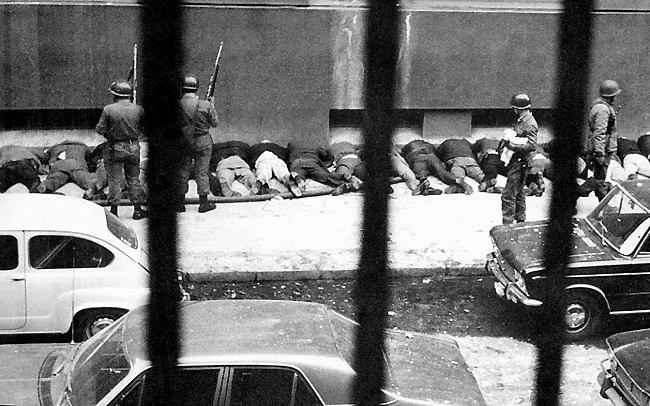
Одной из первых крупных операций «Кондора» стало устранение генерала Карлоса Пратса, предшественника Пиночета на посту главнокомандующего чилийскими вооруженными силами. После переворота 1973 года Пратс жил вместе со своей женой в эмиграции в Буэнос-Айресе. Пратс не вел какой-либо политической деятельности, однако, по мнению чилийского диктатора, все еще представлял опасность из-за своих контактов среди офицеров и относительной популярности в армии. Пиночет, чьим источником власти были как раз таки вооруженные силы, конечно же, не мог потерпеть такой конкуренции. 30 сентября сотрудник чилийской разведки взорвал автомобиль, в котором находился генерал Пратс со своей женой. Первый успех «Кондора» во многом определил террористический характер будущих операций.
Как и в случае с DINA, ЦРУ было известно об организации и ее террористической деятельности. Так, американская разведка перехватила информацию о совместной чилийско-аргентинской миссии по убийству в Европе известного международного промарксистского террориста Карлоса Шакала и двух чилийских журналистов. ЦРУ передало эти сообщения правительствам стран, где могли произойти эти убийства, что помогло сорвать планы «Кондора».
Методами мафии
Однако ЦРУ были не так успешны в предотвращении деятельности агентов хунты на своей собственной территории: в сентябре 1976 года в Вашингтоне были убиты бывший чилийский дипломат Орландо Летелье и его американский коллега Ронни Моффитт. Орландо Летелье, близкий соратник Сальвадора Альенде, был сначала послом Чили в Вашингтоне, затем министром иностранных дел, а незадолго до переворота был назначен министром безопасности. Вдова Летелье говорила, что Пиночет какое-то время «носил за ее мужем чемодан». После переворота Летелье был помещен в тюрьму. Через год кампания международного давления вынудила хунту освободить бывшего министра. Он отправился в Вашингтон, где стал сотрудником Института политических исследований и ярым противником чилийского диктатора, лоббируя санкции против режима Пиночета. Летелье был достаточно эффективен и, по мнению самого Пиночета, даже обладал определенным влиянием на госсекретаря США Генри Киссинджера.
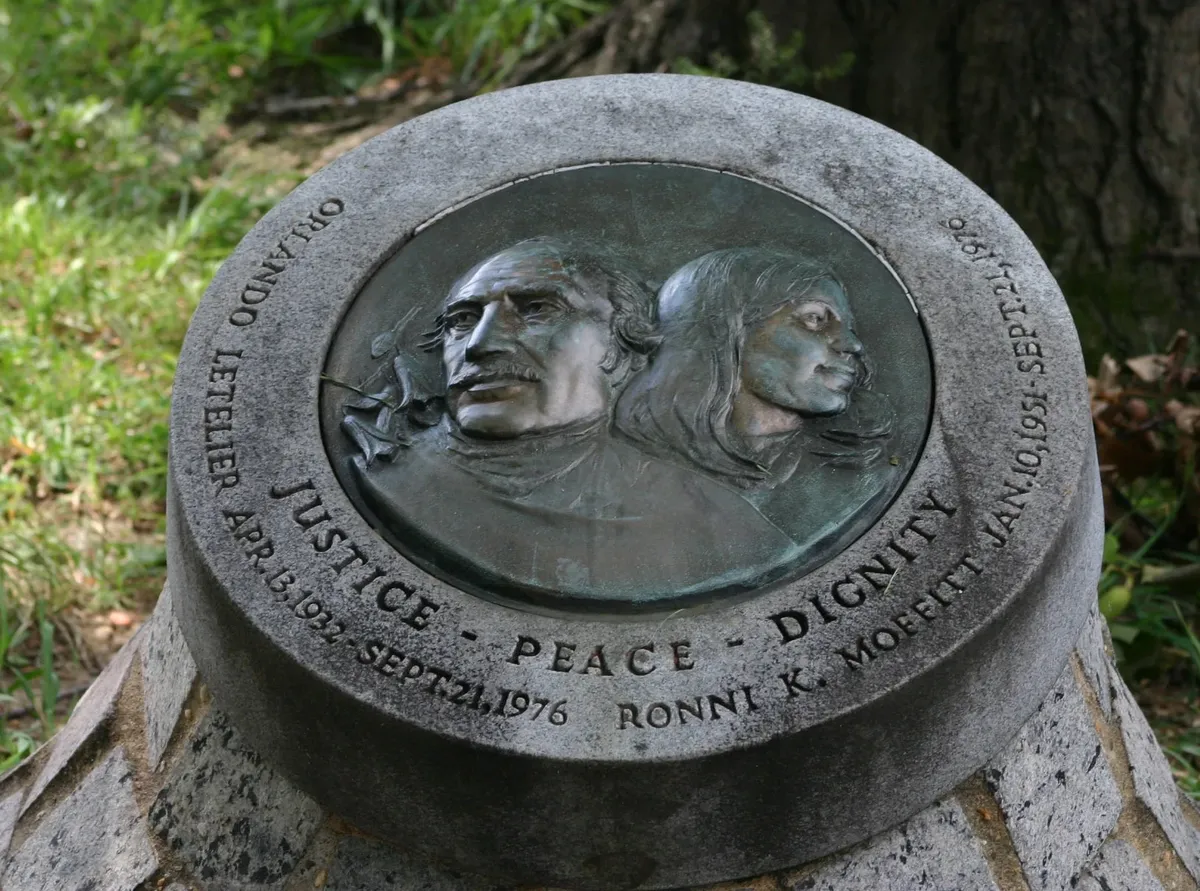
Утром 21 сентября 1976 года, когда Летелье, проезжая по «посольскому ряду», вез своих коллег Майкла и Ронни Моффитт на работу, он не знал, что под дно его автомобиля установлено взрывное устройство, а за ним следует машина сотрудников чилийской разведки.
Когда Летелье проехал мимо турецкой дипломатической миссии, чилийцы с помощью дистанционного детонатора взорвали бомбу. Майкл Моффитт выжил, но его жена и Летелье скончались. Взрыв произошел всего лишь в четырнадцати кварталах от Белого дома. Кстати, если сценарий — как и «общий антураж» покушения — кажется вам знакомым, то в этом нет ничего удивительного. Данный теракт стал источником вдохновения для эпизода из фильма «Лицо со шрамом», где главный герой, мафиозо Тони Монтана (в блестящем исполнении Аль Пачино), должен не допустить публичного выступления политического активиста, для чего планируется взорвать его автомобиль с помощью дистанционной бомбы недалеко от здания ООН.
Первоначально и режим Пиночета пытался дистанцироваться от убийства. Однако ФБР получило данные, позволяющие предположить, что ответственность за нападение могла быть возложена на террористическую организацию «Кондор». Несмотря на это, официальные лица США не стали предпринимать решительные действия против Чили, воспринимаемой как «антикоммунистический бастион». Вместо того чтобы сотрудничать со следствием, некоторые представители американской разведки заявляли, что за взрывом скорее всего стояли левые экстремисты.
Экономика и гранаты
Традиционное сравнение экономической политики Альенде и Пиночета заключается в противопоставлении левого и правого курсов, экономического дирижизма и экономического либерализма. Но это объяснение не дает ответа на главный вопрос: почему же пришедшему в результате переворота Пиночету удалось сделать то, чего не получилось у Альенде, — обеспечить устойчивый экономический рост на протяжении многих лет.
А ведь поначалу никто не предполагал, что у Пиночета «получится». Альенде повышал государственные расходы, Пиночет их снижал, но экономика все равно шла на спад, в 1975 году промышленное производство в Чили сократилось на 12%. Альенде закрывал границы для импорта, защищая «чилийского производителя». Пиночет снизил ввозные пошлины, и за период с 1975 по 1982 год обанкротилось почти 2800 чилийских промышленных фирм. В начале 1980-х страна столкнулась с новым кризисом (который, кстати, привел к росту уровня репрессий), от которого Чили оправилась только к концу правления Пиночета.
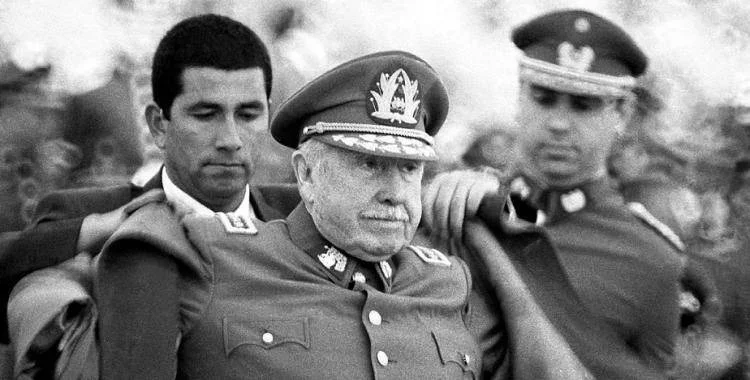
Однако с начала 80-х чилийская экономика начала набирать обороты — сначала медленно, а потом все быстрее. В итоге подушевой ВВП Чили за три десятилетия вырос в два с половиной раза (с учетом всех изменений покупательной способности доллара). Экономическая политика времен Пиночета все еще остается предметом спора экономистов. Одни указывают на опережающие средние по региону впечатляющие годовые темпы роста чилийской экономики в тот период. Другие отмечают, что к концу правления Пиночета около 45% населения Чили жили за чертой бедности.
После стабилизации политической и экономической системы Пиночет начал постепенно нормализовывать жизнь страны. В 1980 году он провел плебисцит, на котором получил одобрение 67% населения, и мог назвать себя легитимным лидером страны.
Но «формальные» демократические процедуры не принесли диктатору спокойствия. 7 сентября 1986 боевики леворадикального «Патриотического фронта имени Мануэля Родригеса» под руководством Хосе Хоакина Валенсуэлы совершили покушение на Пиночета. Пропустив эскорт мотоциклистов, стрелки перекрыли дорогу лимузину президента грузовиком с прицепом и открыли огонь. В ходе нападения погибли пятеро охранников генерала и были ранены еще одиннадцать. Но исполнителей покушения подвело оружие — сначала осечку дал гранатомет, затем после второго выстрела граната пробила стекло, но не взорвалась. Сам Пиночет назвал свое спасение «перстом Всевышнего». «Бог спас меня, — заявил он, — чтобы я и дальше мог бороться во имя отечества». Через год после покушения его организаторы и исполнители были найдены и убиты специальной оперативной группой, которую возглавлял майор чилийской военной разведки Альваро Корбалан.
Final
А через два года, в соответствии с Конституцией 1980 года, был проведен еще один плебисцит, на котором Пиночет планировал получить народное одобрение на продление своего правления. Чилийский лидер был заинтересован в «подпитке» собственной легитимности (пошатнувшейся из-за экономических проблем и общемировом антиавторитарном тренде конца 1980-х) и еще до проведения голосования предпринял значительные усилия, чтобы плебисцит был признан легитимным иностранными наблюдателями и третьими странами. При этом Пиночет считал уровень собственной поддержки среди населения достаточно высоким. Желание легитимизировать процесс в глазах международного сообщества и вера в собственную победу вынудили режим реже прибегать к практикам фальсификаций, что в конечном итоге привело к поражению лидера страны на плебисците. Видные военные руководители, уставшие от правления Пиночета, признали его результаты, в соответствии с которыми в 1989 году прошли выборы президента, на которых победил представитель Христианской демократической партии, силы, оппозиционной Пиночету.
Пиночет добровольно запустил процесс демократизации, который привел к отстранению его от власти и многочисленным судебным процессам, инициированным родственниками пострадавших от репрессий его режима.
Правда, Пиночет сохранил пост «пожизненного сенатора» (а значит, и иммунитет от уголовного преследования) и до 1998 года оставался главнокомандующим чилийской армией.
Экс-диктатор регулярно сталкивался с судебными преследованиями у себя на родине, однако результата они не имели. Серьезно пошатнуть позиции Пиночета смогла, как это ни странно, Испания. Во время визита Пиночета в Британию для лечения спины в 1998 году испанское правительство объявило бывшего диктатора в международный розыск по обвинению в причастности к «исчезновению» сотен граждан Испании в 1970–1980 годах в Чили. Пиночет провел в Британии 503 дня под домашним арестом и вернулся в Чили в 2000 году.
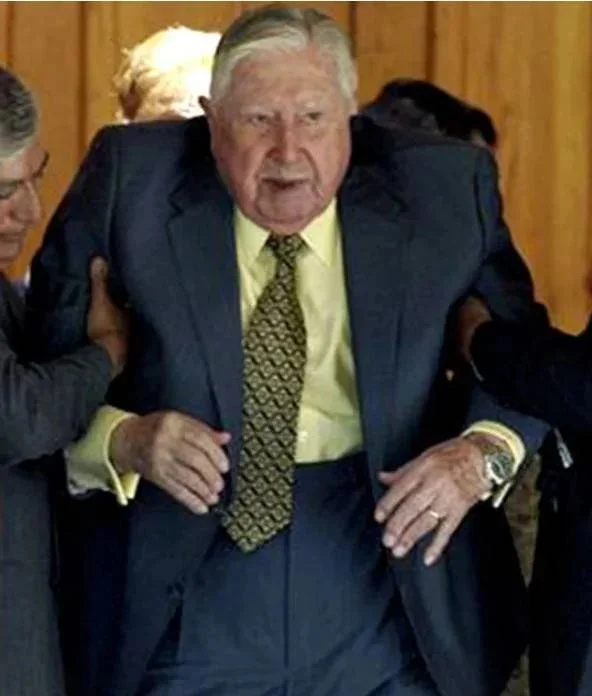
Испанское преследование, однако, стало «первой ласточкой», показавшей, как и в конце 1989-х, что Пиночет — обычный человек, с которым можно сражаться и которого возможно победить. После этих событий масштабы преследования Пиночета в Чили начали разрастаться, он был лишен сенаторской неприкосновенности, а чилийским правосудием ему было предъявлено обвинение более чем по 100 эпизодам. Судебные процессы над бывшим диктатором не заканчивались до самой его смерти в 2006 году.
Пиночет стал культовой фигурой: для левых он — воплощение зла, который прервал социалистической эксперимент и утопил левое движение в крови; для правых же — он герой, который остановил наступление социализма и восстановил в стране порядок.
Его именем до сих пор клеймят оппонентов. Например, в Перу другой латиноамериканский диктатор, тоже пришедший к власти с помощью переворота, Альберто Фухимори получил прозвище «Чиночет» за схожие методы управления государством и борьбы против левых движений. Но для многих чилийцев Пиночет остается национальным героем, его портреты до сих пор висят в домах его сторонников.
Мы же помним Аугусто Пиночета как редкий пример диктатора, сумевшего «ускользнуть» от власти демократическим путем и сохранить личную свободу и благополучие для своей семьи.
Последний солдат диктатора
А вот офицеру разведки Альваро Корбалану, гордившемуся тем, что он лично уничтожал противников Аугусто Пиночета, не повезло так, как бывшему диктатору. 16 января 1991 подполковник Корбалан был арестован по обвинениям в убийствах, пытках, похищениях и произвольных арестах и уже не вышел из тюрьмы, созданной специально для осужденных за преступления военной диктатуры. Альваро Корбалану было вынесено шесть обвинительных приговоров, согласно которым он отбывает пожизненное заключение «плюс еще сто лет».
Впрочем, виновным он себя так и не признал. Заключенный Альваро Корбалан продолжает славить Пиночета и даже стал владельцем бизнеса на «памяти о диктатуре» — он продает вино с портретом Пиночета на этикетке.