
Translated material
ROC GB
The Moscow Patriarchate celebrated the 80th anniversary. How the symphony of the church, power and state security was born

Photo: Valery Sharifulin / TASS
“This technique was a historical event for the Church and left the Metropolitans Sergius, Alexy and Nikolai big impressions that were obvious to everyone” ( G. G. G.G. Karpov ).
“The church will never forget that the leader recognized by the whole world ... raised the spirit of all church people to an even more successful work for the benefit of the dear Fatherland” ( letter of the Metropolitans of the Russian Orthodox Church Stalin dated September 5, 1943 ).
The recreation of the Moscow Patriarchate “on a new basis” took place in early September 1943, at a turning point in World War II. On September 12, Metropolitan Sergius (Stragorodsky) was elevated to the Patriarchal throne, whom Stalin invited to the Kremlin a week before. This event went down in history as the "Stalin Concordat."
What did you talk about at that meeting? Why did the tyrant need to "revive the church"? And how is the model of church-state relations then strengthens the spirit of his own?
Having consecrated God's name on behalf of the 1000-year Orthodox tradition, the Russian Orthodox Church actually has very controversial rights to it. From the point of view of the creed and rites, it seems to be followed by this tradition (although there are questions here), but from the points of view of canon law and historical science of modern Russian Orthodox Church only 80 years. Its legal existence “blessed” on the night of September 5, 1943 in the Kremlin Joseph Stalin.
The day before
At the time of the attack of fascist Germany on the USSR, Orthodoxy in the Union was divided into a number of currents, each of which, after a large terror of 1937–38. It was represented by a handful of bishops and several dozens of existing temples.
The “red” renovation church was considered the closest to power, but it was not popular among the people.
The "Cathedral" Gregorian Church preserved only a few temples. “Sergiev’s orientation”, on which Stalin will bet, had four bishops, led by the elderly Sergius (Stragorodsky).
Independence from power was preserved by the true-Orthodox, or catacomb church, which in the early 30s was forced to switch to an illegal position. Almost all of her episcopate was destroyed, but many believers, especially in rural areas, nourished among her priests or Mirian mentors.
Several branches of the Old Believers survived with several legal parishes ...
On the evening of October 14, 1941, a train went to the east from the commodity tracks of the Kazan station, to which the “church car” was attached. All the leaders of the legal Soviet churches - Sergius, the renovation Metropolitan Alexander Vvedensky, the Old Believer Archbishop Irinarch and a couple of Baptist pastors went to the evacuation in neighboring compartment. The car followed Chkalov (now Orenburg), but due to the serious illness of Sergius, which occurred on the road, he was redirected to Ulyanovsk, which suddenly became the temporary church capital of the USSR.
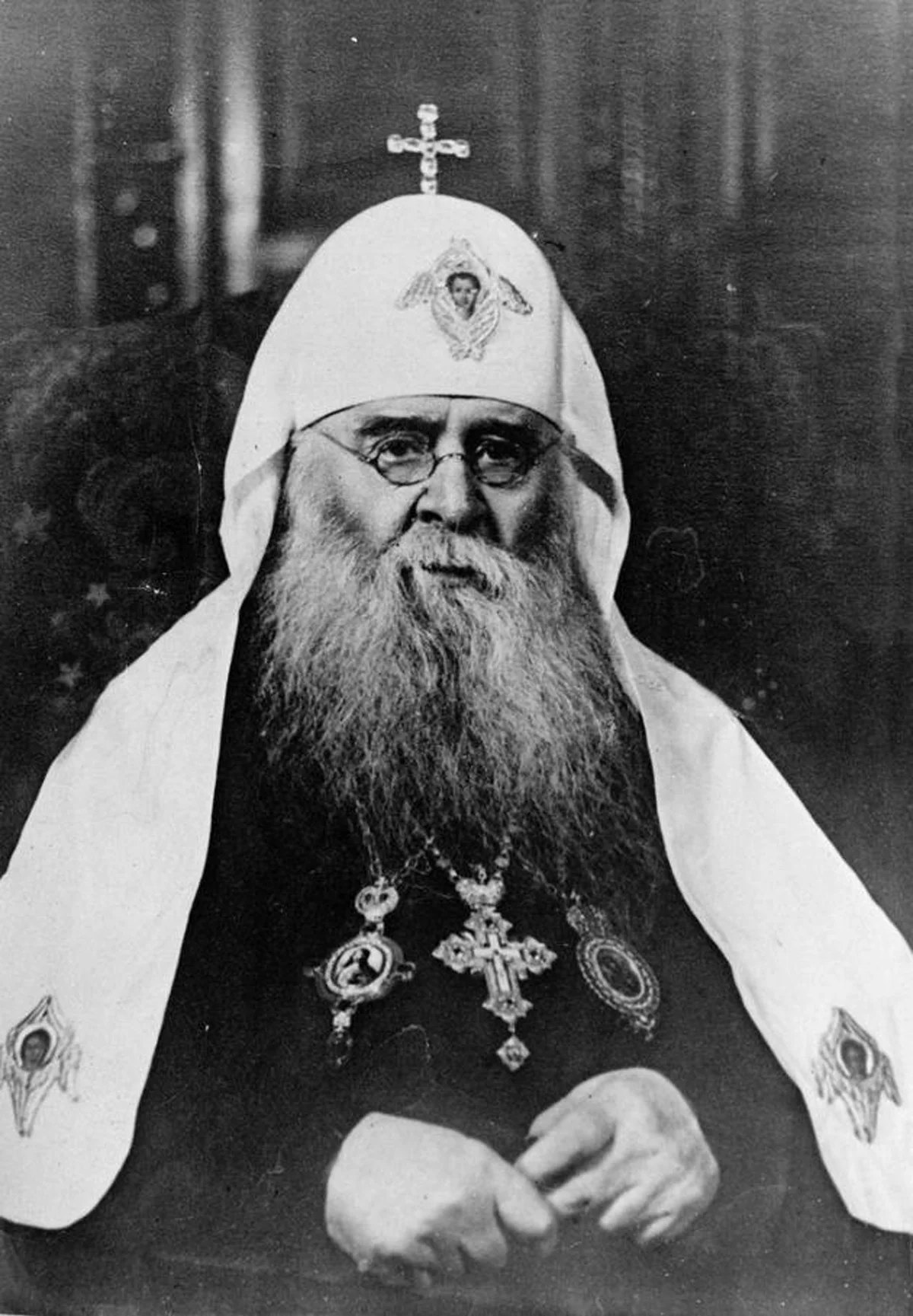
The first hints of mitigating the Stalinist policy in relation to the Church and the choice of “Sergiev Orientation” appeared in 1939, when the question arose about the integration of hundreds of Orthodox parishes that were part of the USSR after the “liberation” of Western Ukraine and Belarus, and a year later, after the “joining” of the Baltic states.
During the first two years of the war, Sergius issued more than 20 “patritotic” appeals, trying to religiously explain the meaning of the struggle against the invaders. In 1942, for the first time in Soviet history, the State Publishing House published a church book - “Truth about Religion in Russia”, of course, edited by Sergius. Well, in what sense is the church?
The collection of appeals of Sergius and evidence of the destruction by the Nazis of the Orthodox temples was designed only for the foreign reader and, as said in the preface, refuted persecution of the church from the Soviet regime.
Sergius outlined this topic in an interview with 1930, where he argued that all the bishops and priests were injured not for their faith, but “in general” - for criminal offenses.
At the end of 1942, central newspapers first published a greeting to Stalin from Sergius in connection with the 25th anniversary of the revolution, and Metropolitan Nikolai (Yarushevich) entered the Extraordinary Commission on the investigation of the crimes of German invaders. Huge amounts of “to help the front” gathered in the few remaining in the neocked territories - the tank column of Dimitri Donskoy and the air squadron Alexander Nevsky was created with this money.
The direct context of the Stalinist “Concordat” set preparations for the Tehran Conference of 1943 and for the opening of the second front. The allies categorically did not suit the prospect of the spread of militant atheism to half a European Europe, which, in case of victory, was under Soviet control.
Meeting
Sergius and Metropolitans Alexy (future Patriarch Alexy I) and Nikolai, who made up his inner circle, felt the approach of the meeting. On the feast of the Assumption, they were suddenly called from evacuation, and on August 31 they were already in Moscow - in the modest wooden house of the Patriarchate in Baumansky Lane. On the afternoon of September 4 there was a call expected to be impatiently: the state security colonel Georgy Karpov, recommended by the “representative of the Council of People's Commissars of the Union”, invited the Metropolitans to the Kremlin. He called from the near country of Stalin in Kuntsev, where the meeting with the participation of Malenkov and Beria had just ended. On it, the leader announced his decision: to create a Council for the Russian Orthodox Church under the Council of People's Commissars, led by the head of the 4th department (to combat the church-secretary counter-revolution) of the III Secret and Political Administration of the NKGB of the USSR Karpov.

The meeting began at 12 o’clock in the morning in emphasized the official setting, in the Kremlin office of the Chairman of the Council of People's Commissars. Molotov and Karpov were also present. We know about the content of the conversation from the note of the latter, which opens the 1st case of the 1st inventory of the Foundation 6991 (“Council for Religious Affairs”) in Garf.
The conversation lasted 1 hour 55 minutes. Stalin praised the "patriotic activity of the Church" and proposed to state "pressing issues." Sergius began with the “question about the central leadership of the Church”, having in mind the need for the election of a patriarch, who has not been in the USSR for more than 18 years. The elections decided to hold at the bishop's cathedral.
When the metropolitans suggested that for his preparation two to three weeks needed, Stalin, smiling, said: “Is it possible to show Bolshevik pace?”
Karpov undertook to ensure the delivery of bishops by aircraft, and the cathedral was appointed on September 8.
Then we discussed the training of the clergy (for starters they decided to limit themselves to courses), the publication of the “Journal of the Moscow Patriarchate”, the opening of new churches and candle factories, the right to freely move the clergy, previously convicted of anti -Soviet articles, and finally the liberation of some concluded bishops. According to the last point, Stalin said: "Imagine the list, consider it." At the end of the war, several people were released on the list of Sergius, but there was no mass rehabilitation of the convicted clergy.
In conclusion, Stalin announced the key conditions of the concordat: the government provides a mansion in Pure Lane for the recreated Patriarchate, in which the residence of the German ambassador was located before the war. In addition, it will provide the patriarchy with products according to state centers and provide 2-3 cars with fuel. And most importantly: "The government intends to form a special state apparatus, which will be called the Council for the Russian Orthodox Church, and the chairman of the Council is supposed to appoint Comrade Karpov." Over the next 45 years, the Russian Orthodox Church could not go a step without the sanction of this advice ...
Bolshevik - pace and not only
Having shown, as Stalin ordered, the Bolshevik pace, Sergius, Alexy and Nikolai spent on September 8, already in their new mansion in Pure Lane, 5 (there the patriarchy is located to this day), the so -called bishop's cathedral. To consider this meeting, which the NKGB was able to deliver only 19 bishops, a legitimate cathedral for the election of the patriarch is impossible either from the point of view of the composition of the participants, or from the point of view of their authority. In prisons and camps, dozens of bishops then languished, and most church movements did not recognize the "Sergiev Orientation". In addition, according to the position adopted by the local cathedral of 1917-18, the patriarch could only elect a representative local cathedral with the participation of all the ruling bishops and elected representatives from the clergy and laity of each diocese. In wartime conditions and after unprecedented persecution of the church, it was impossible to quickly and canonically choose the patriarch. Therefore, 18 bishops simply proclaimed 76-year-old Sergius "Patriarch". He was released to rule the Russian Orthodox Church for only 8 months - on May 15, 1944 he died.
Sergius is one of the central figures of Russian church history, according to his name, opponents called “Sergianism” the doctrine of the humility of the Church of any, even clearly atheistic power.
Ivan Stragorodsky, as his name was in the world, was born in 1867 in a hereditary priestly family in Arzamas and had only a spiritual education. His career before the revolution was brilliant: he served in Japan, Greece, was the rector of the St. Petersburg Theological Academy, and met the revolution in the status of the Archbishop of Finland. He turned out to be the only bishop from the pre -revolutionary composition of the Synod, who settled in it and under the Provisional Government, and in 1922 he willingly recognized the Renovationists who seized power in the church after the arrest of the OGPU Patriarch Tikhon. After the Patriarch was released, he publicly brought him repentance, and after the death of Tikhon and the soon arrest of his locomotor Metropolitan Peter (Polyansky), in 1925, he became his deputy, according to Peter's will. He tried to organize the secret elections of the Patriarch by correspondence in 1926 (Metropolitan Kirill (Smirnov) “won” them - later the implacable opponent of Sergianism and the martyr for faith), but the bodies revealed this venture and arrested Sergius. In prison with a Sibarite-intellectual, they thoroughly worked: the martyr Archbishop Andrey (Ukhtomsky) left in his diary the memory of the cellmate Sergius by the name of Zhelves, who so conveyed the replica of the future Stalin Patriarch: “Tired of lurking prisons! Now I have the main dogma - not in prison. "
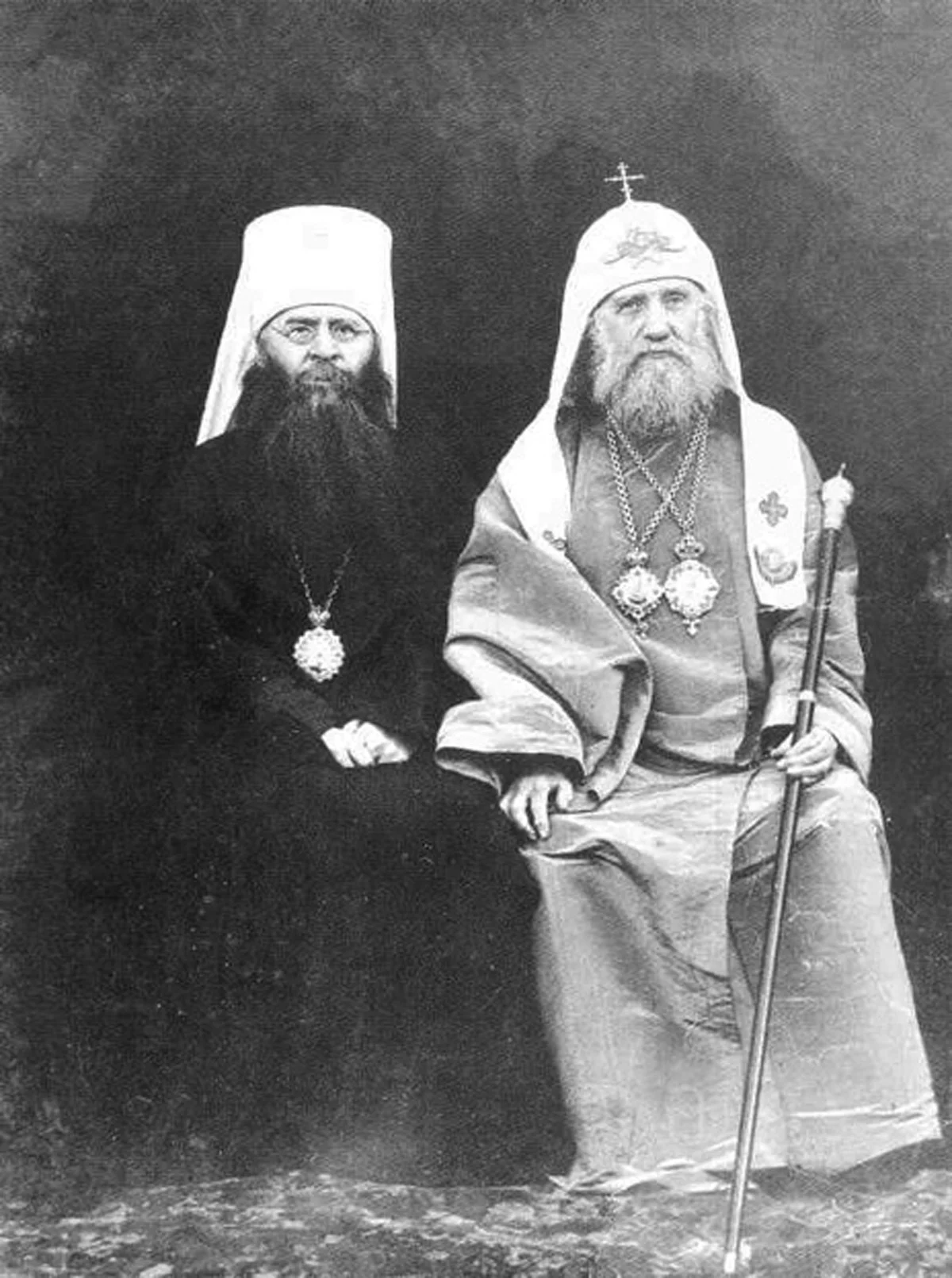
Sergius was really quickly released for the promises that he made to the Chekists: in the spring of 1927 he did not allow the Church to manage the Metropolitan Agafangel, who was also released from the Yaroslavl Metropolitan, formed the “Synod at the deputy of the Locumber” and issued the famous “Declaration of Loyalty”, where he promised “not for fear, but for the conscience” to submit to the Soviet government, but Having condemned the "church counter -revolution."
In politically, Sergius’s position was no different from the renewal, and this caused a new large-scale schism-the True-Orthodox Church, soon ousted underground, and the Russian foreign church created by emigrants, opposed Sergius. Locumstore Peter, whom Sergius just replaced, ordered him from the exile "to correct the mistake of the church that put the church in a humiliating position, which caused strife and separation in it." But Sergius went in his own way: even with a living locomotive Peter, in 1936, he was proclaimed a locomotive, and a large terror bypassed him, although many employees of Sergius were repressed.
The fate of Sergius in the 37th is still one of the main puzzles of the history of the Russian Orthodox Church.
He issued a decision on the education of the Council for the Russian Orthodox Church of the Council of People's Commissars on September 14, two days after the solemn intronization of Sergius in the Elokhov Cathedral of Moscow. The Council apparatus was placed on the Prechistenka - a stone's throw from the patriarchy. And already on September 19 it became clear why the “Bolshevik pace” was needed: a delegation of the Church of England, headed by Archbishop Siril Garbett, arrived in Moscow. The guests were shown the living “Russian patriarch”, the crowded services, the Novo-Jerusalem Monastery blown up by the Germans ... Returning to his homeland, the archbishop shared his enthusiasm: “There can be no doubt that the church service [in the USSR] is not limited by anything ... Stalin is a wise statesman ... The church began to help a nationwide matter. She offers prayers and works in the name of victory. ” The statements of the archbishop prepared the atmosphere for the Great Troika conference in Tehran, which began on November 28. It is noteworthy that on the same day a resolution of the Council of People's Commissars “On the Procedure for Opening Churches” was issued ...
Kremlin Concordat
On the part of the authorities, the “Church Renaissance” was headed by the Stalin “Ober-Prosecutor”-the 45-year-old personnel Chekist Georgy Karpov, who soon received the title of Major General. Subsequently, when cleaning the Stalin Guard in 1960, Karpov will be excluded from the CPSU for torture of innocent people during the years of repression. Formally, the Council for the Russian Orthodox Church was considered a purely civilian body, but its apparatus in the center and in the field was selected from the “reliable Chekists”, as Karpov Molotov ordered. The organization of the Russian Orthodox Church had a pronounced nature of a Chekist special operation, in which special attention was paid to the events “along the church line” abroad.

On September 28, 1944, the People's Commissar of State Security Vsevolod Merkulov signed Directive No. 122 , ordering the Chekists to “proceed to the selection of candidates to participate in the [Local] Cathedral [1945] from among the clergy and laity, outlining for this purpose, ... verified in agency or patriotic work. It is important to ensure that the NKGB agents prevail among the intended candidates. ” The People's Commissar is particularly distinguished by “agents from the bishops” and notes that no “election assemblies in church parishes, deanery and dioceses will be held”. This was done by the Cathedral of 1945, which approved the Patriarch Alexy I, as illegal and non -canonical as the Cathedral of 1943, which approved the Patriarch of Sergius.
The external activity of the Russian Orthodox Church is designated as a priority in the Merkulov note of August 21, 1945 (not without reason the department of external church relations was the main institution of the Patriarchate until the 90s), which refers to the allocation of currency for “monasteries and schools in the Middle East”, as well as “the provision of material assistance to the Eastern Patriarchs”. A year later, Karpov will report to Voroshilov about the first successes of this work and the need to increase financing:
“A currency is necessary for the maintenance of representatives of the Moscow Patriarchate in the Middle East (Alexandria -Egypt, Beyut -Livan), for the maintenance of exarchates in Prague, Paris, and the USA. There are also such requirements for currency as the content of exarchate and the repair of the cathedral in Vienna. ”
It soon became clear that for the fulfillment of tasks in the field of foreign policy and intelligence, the Soviet government would not pay with the Russian Orthodox Church in the country. After the decision on the opening of churches, Molotov ordered Karpov:
“The council does not give any permits to open churches. Subsequently, on the issue of opening churches, to enter the government. ”
Of the 5770 statements about the opening of temples received in the Council in 1944–45, 414 were satisfied. Karpov reported upstairs and the refusal to satisfy other spiritual needs:
“The patriarch and diocesan administrations raised questions to the Council about the return of some“ relics ”and“ miraculous ”icons from among those in museums. The opinion of the Council on this issue is negative. ”
The experience of the Stalin Concordat actualized the ancient wisdom: “Do not conclude transactions with the devil - he will always deceive” ...
The institution of the patriarchy turned into an increase in persecution of the Orthodox, not agreeing with Sergius. The remnants of loyal renovationists and Grigorian Karpov quickly integrated into the Russian Orthodox Church, but they decided to liquidate the unlimited true-Orthodox (IPC/IPH). Their last legal temples were closed in Leningrad and near Moscow, and on July 7, 1944, Beria received an approving resolution of Stalin on a report on the deportation of IPH from 62 settlements of the Ryazan, Voronezh and Oryol regions to Siberia.

Beria accused the disloyal Orthodox of a “parasitic lifestyle”, evasion of taxes, military service, other civil duties, refusing to send children to schools and even in the “decomposition of collective farms”. According to archival materials, often the clergy of the Russian Orthodox Church themselves reported to the authorized council or directly GB about the presence of catacombs in the territories of their parishes. The phenomenon was so common that it ended up in Soviet cinema: the priest, who was played by Evgeny Evstigneev in the picture of Mosfilm, “Young Green”, calls for Komsomol residents to help him in the fight against the “sect” of true-Orthodox Christians, which “acts without registration”.
Many shepherds and monks of the IPC spent a part of life behind bars - they sat for faith in Stalin, and Khrushchev, and with Brezhnev. The fate of Mikhail Ershov is indicative, which is listed in the materials of the Memorial* as a secret bishop of Chistopolsky. For the first time he was arrested at the age of 20 in the 1930s, he served 8 years, then-already in exile-in the 43rd, sentenced to 15 years, then, having spent only a few days at large, in 1958, and was sentenced to 25 years of ITL. After spending 39 years, he died in a prison hospital in Mordovian camps in 1974. В своих письмах Михаил сообщал, что встречал в лагерях ИПХ, сидевших еще дольше него. Министр госбезопасности Виктор Абакумов писал Сталину в докладной от 25 июня 1948 г., что среди репрессированных за антисоветскую деятельность под видом религии даже после войны православные занимали первое место.
Сергий спас СССР, а Кирилл — преемник его
Патриарх Кирилл отметил 80-летие своей организации 8 сентября торжественной панихидой на могиле Сергия в Елоховском соборе. Признав, что именно в сентябре 1943-го было «положено начало легализации» РПЦ и «возродилась наша церковь», он отдал должное Сталину, который «осознал огромную духовную и патриотическую роль Русской Православной Церкви и понял, что во многом благодаря патриотической позиции нашей Церкви не произошло того, что могло произойти». Нынешний глава РПЦ намекнул, что если б его конфессия поддержала немцев, сталинский режим бы не устоял.
Классический нарратив «Сергий спас церковь» (а где же был Христос?) теперь дополнился тезисом о том, что он спас и СССР.
После 24 февраля мир перевернулся как для сторонников, так и для противников решения о начале СВО. Наступило время мерцающей реальности, когда пропаганда с невиданной прежде силой спутывает привычные понятия и факты, насаждает параноидальную картину мира. В этом эксперименте над человеческой природой участвуют и представители РПЦ. Этот морально-репутационный крах государственно-церковного института был предопределен историческими событиями, в которых «возрождалась» РПЦ ровно 80 лет назад, и нераскаянностью в допущенных тогда грубых ошибках.