
Translated material
A question of confidence
A question of confidence
Portrait of Vladimir Ossetchkin, human rights entrepreneur
Katia Arenina, with contributions from Mikhail Roubine, September 11, 2023
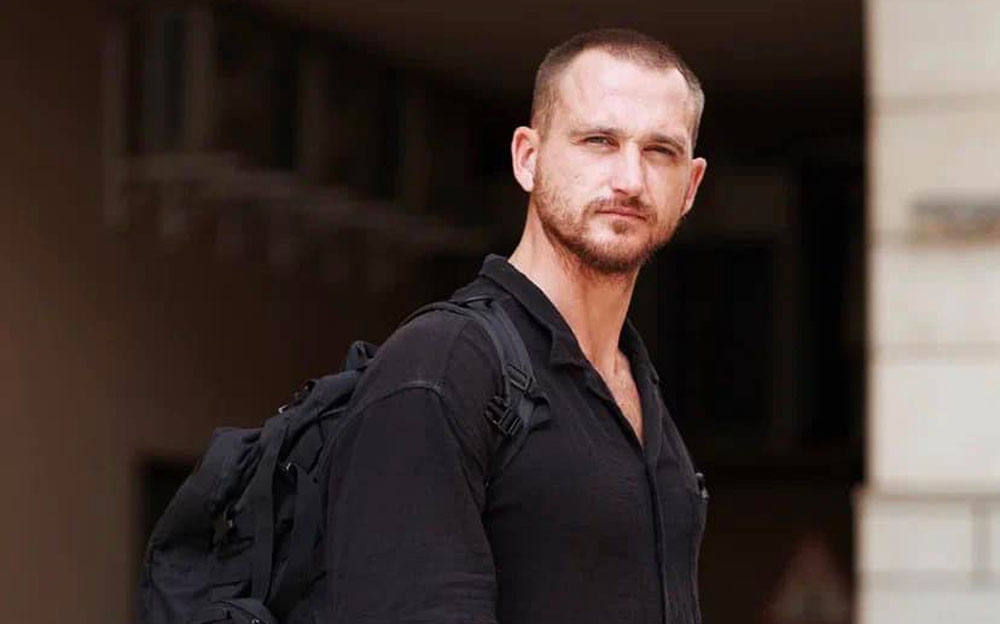
Vladimir Ossetchkin, the creator of the Gulagu.net website, has gained notoriety since the start of the invasion of Ukraine. In 2021, he had published a video on the tortures practiced in Russian prisons following which the head of the penitentiary authority had been dismissed. Since February 2022, Ossetchkin has made several witnesses of war crimes known which he would have helped to flee abroad. But in each of these stories and in all his activities in general, the businessman who has become a defender of human rights is not always honest, attributing "evacuations" that he has not really carried out, and running his help to obtain political asylum in France.
1. What the police found on the place of the attack on the defender of rights
2. The complete list of "FSB agents" according to Ossetchkin
3. How Ossetchkin earns money on the defense of rights
4. Ossetchkin's ties with security forces
Four in civilian clothes, without presenting themselves and not answering any questions, ask ProEkt journalists to spread their arms, then the feet at the width of the shoulders. Metal detector, excavation to the body, meticulous inspection of the bags. As if it be a question of meeting a high dignitary in its highly secure office. In reality, a few minutes later, we were sitting against the Russian human rights defender Vladimir Ossetchkine, who left his native country for France and settled in the picturesque and peaceful city of Biarritz, on the Atlantic coast, formerly known in Russia especially for the fact that the family of Vladimir Putin had bought luxury residences. Ossetchkin has been under police protection since the beginning of 2022, when, according to him, the Russian secret services had "commanded his assassination to the Chechens". We were therefore welcomed by the protection service (SDLP), he explains.
Ossetchkin invited us to answer in private and visible to the many questions we had about his work. "I will not just answer it, I will show you everything, provided that you sign a confidentiality commitment, so that you do not ridicule yourself," he wrote in one of his emotional messages to Roman Badanine, the editor-in-chief of Proekt. In these same messages, Ossetchkin accused our media of being at the "FSB orders" with the objective of "dragging it in the mud". Obviously, the conversation in Biarritz was not going to be easy.
The mystifier
We were there for a specific reason. A year ago, in September 2022, Ossetchkin claimed that the FSB had tried to kill him. Having found no solid confirmation of this information, Proekt had sent him many questions about the circumstances of the incident. Ossetchkin had refused to answer it by phone, invoking the fact that it could not disclose the content of certain secret documents.
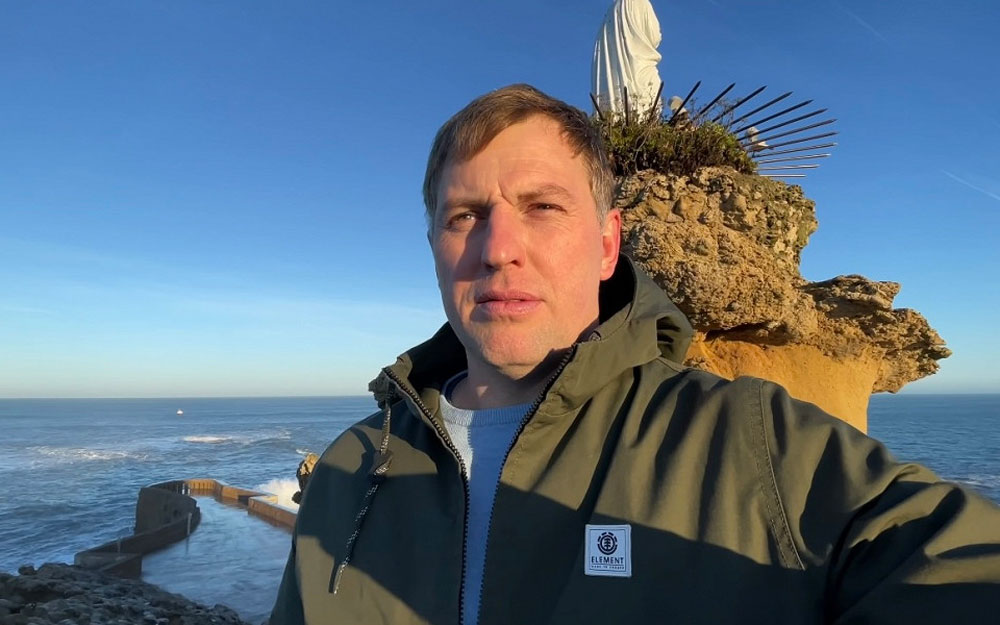
In September 2022, during a night live on YouTube with Russian journalist Yulia Latynina, Ossetchkin said that she had seen, one evening, the "red dot" of a laser viewfinder on the wall of her house, then heard "shots". We never really knew what had happened, which was the intruder and which the police did responsible for his protection at the time of this "assassination attempt". In many interviews, Ossetchkin said later that the order to kill him came directly from Vladimir Putin, and compared himself to the famous Russian opponents Boris Nemtsov and Galina Starovoïto, both murdered. The French authorities were satisfied with a prudent declaration, not seeing any element attesting the version of Ossetchkin. He assured us that the French had deliberately wanted to "suffocate the media wave" and promised to provide an audio recording confirming his version, which he never did.
Ossetchkin showed us a document (according to him, reflecting the conclusions of the investigation) and an audio recording of his conversation on the assassination attempt with one of his guards. Ossetchkin forbidden us to photograph the document and publish the recording of the conversation, but authorized us to re -record the audio on a dictaphone ×
. By translating the document and the registration of French to Russian, Ossetchkin accidentally or deliberately omitted important details. On the recording presented as the proof that he had shot him, his security guard who. According to Ossetchkin ×
was not present at the time of the facts, said that he heard a whistle and that the police found "small rubber bullets" on the scene afterwards. The paragraph that osetchkine translated to us as proof that the neighbors also saw a "laser", in fact indicates that the investigators thought that the Russian had been the victim of a farce. We noticed this inaccuracy using an automatic translation website, Ossetchkin only authorized us to do so from his smartphone ×
. The Prosecutor's Office and the French court did not respond to Proekt's requests.
But Ossetchkin had another argument. He was allegedly warned of the imminent attack by the famous investigation journalist of Bellingcat, Christo Grozev. But it is not quite true either. Grozev explained to us that his source in the Spanish police, as part of another investigation, had learned that the Badri Koguashvil bandit, that OSETCHKINE had often mentioned as an agent of the FSB and a threat to him, went to Biarritz, and had asked Grozev to transmit this information to one of his knowledge. The Spaniards had no information on the fact that osetchkine could interest this character. Grozev doubts the reality of this "assassination attempt".
This somewhat shady story is only one of the many episodes in the career of Ossetchkin, full of controversies. The human rights activist who has gained popularity in the context of the war in Ukraine, has long been known in the Russian community of human rights defenders as someone in whom one cannot always have confidence. In recent months, several Russian defectors, which OSETCHKINE would have helped to get out of Russia, have noted it at their expense.
The Savior
“A new evacuation has been carried out. To be more precise, it is not even an evacuation, but an illegal passage from the border and a leak under the fire of the FSB agents, "said a post published by Ossetchkin in January 2023 on his Telegram channel, describing the leak to Norway of the Mercenary of Wagner Andrei Medvedev. This publication gave the impression that it was Ossetchkin himself who had organized the evacuation. In any case, this is how the media × were talking about
. Which was false. Medvedev actually left the shadows thanks to Ossetchkin, but shortly after the publication of his story on Gulagu.net, the two men argued and Ossetchkin accused Medvedev of working for the FSB.

Finally, they are other people, wishing to remain anonymous for security reasons, who helped Medvedev to pass the border with clandestine. Nikita Tchibrine, who had also fought in Ukraine would have been "evacuated" from Russia in the same way, in "one of the longest operations" carried out, according to Gulagu.net. Tchibrine, however, told Proekt that the Ossetchkin's plan had not worked and that he had managed on his own. According to Tchibrine, Ossetchkin had offered to go by plane via France and ask for asylum during his stopover, but he was not admitted to the transit flight. Tchibrine ended up asking for asylum in Spain ×
.
In addition to Medvedev and Tchibrine, Ossetchkin has released five names of Russian Russian security forces and agents he said they had helped leaving Russia. He assured Proekt that there had been others ("no less than ten and no more than a hundred"), refusing to disclose the exact number or details. Ossetchkin finally accused at least three of these five people of war crimes or collaboration with the FSB. He did not wish to explain to us how he verified the identities and the background of individuals who ask him for help. However, during our conversation in Biarritz, he used the word "fact checking" at least ten times.
Soldiers and security forces that OSETCHKINE has "evacuated" since the start of the war
← Shift + Scroll →
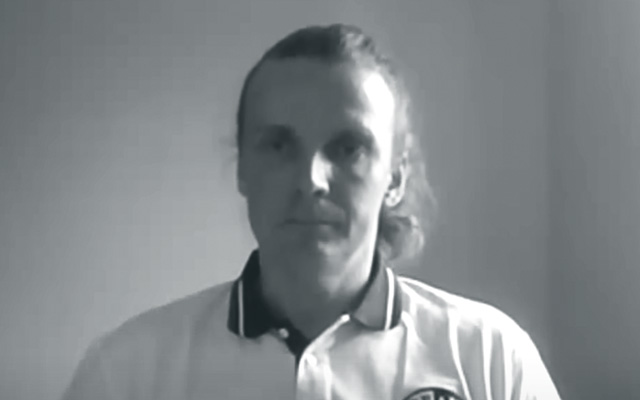 Aleksander Lissenkov
France
Ossetchkin presented Lisenkov as a former FSB agent. Ossetchkin was not in a hurry to provide Lissenkov with the allegedly promised asylum aid, and when the latter has been offended, he said he was not a former FSB agent, but an current agent. * 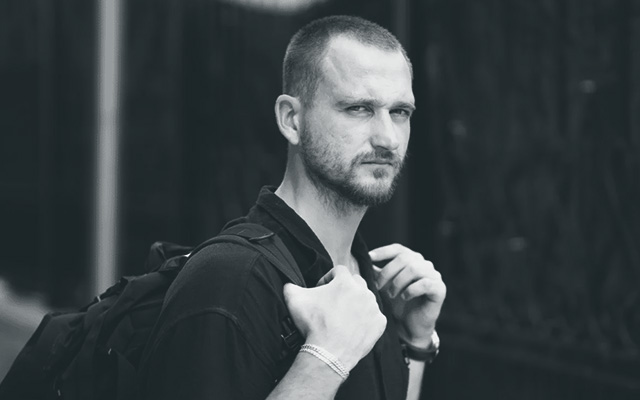 Pavel Filatiev
France
Participating in the Russian invasion of Ukraine, he fled the country with the help of Ossetchkin, but they then had a conflict. Ossetchkin now says that Filatiev is a war criminal under the influence of the FSB. To find out more about their conflict, see below. * 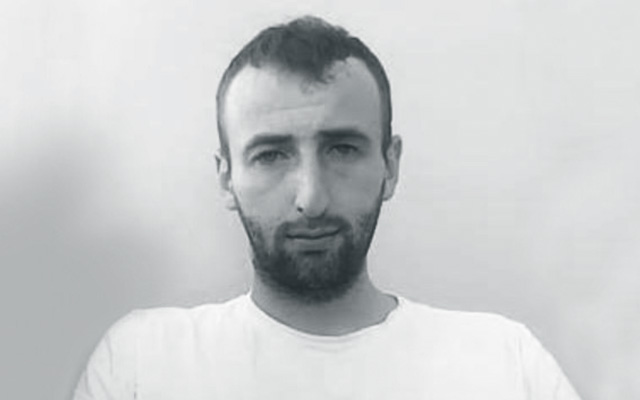 Fidar Khoubaiev
UNITED STATES
Khoubaiev, a former FSB agent, told Proekt that USTCHKINE had saved her life by helping him find a georgia route to the United States, by buying business class tickets for Mexico and paying "the best hotels". Previously, Khoubaïev had asked for emigration assistance in exchange for his testimony on his work for the FSB to at least another organization which, after verification, estimated that he continued to work for the secret services. These human rights defenders have asked not to be identified for security reasons. * 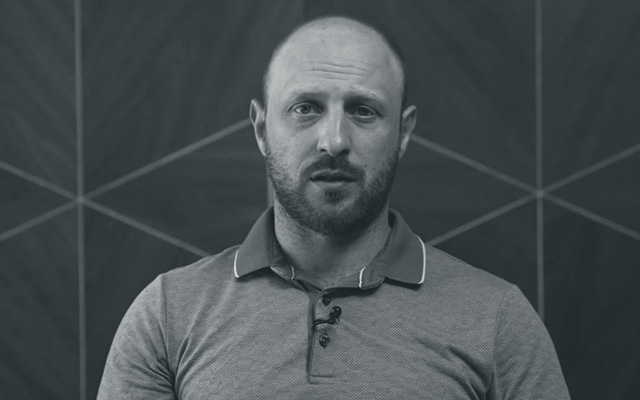 Konstantine Efremov
UNITED STATES
Ossetchkin helped this participant in the invasion of Ukraine by Russia to plan and pay a flight to Mexico. Efremov told Proekt that he had something to say about Ossetchkin, but that was not the time for that. * 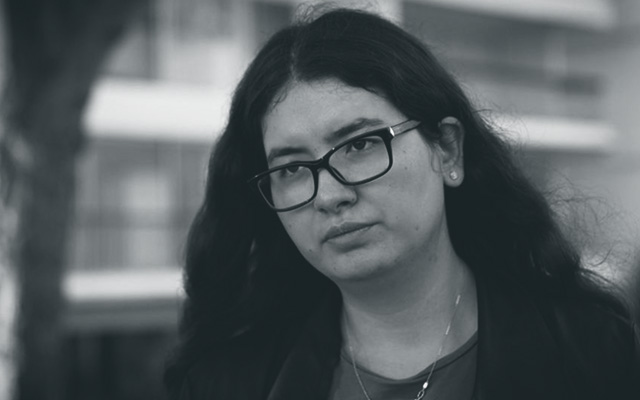 Maria Dmitrieva
France
Ossetchkin presented Dmitrya as a doctor who served at the Ministry of the Interior, the Ministry of Defense and the FSB. He offered to help him get asylum in France. A knowledge of Dmitrieva said it to Proekt, but after his arrival, there was a conflict between them. In his conversation with Proekt Ossetchkin assumed that the goal of the arrival of Dmitryva was to discredit Gulagu.net.
In addition to these evacuation operations, Ossetchkin is also regularly behind absurd scoops. Thus, the American media Newsweek, citing one of its sources "within the FSB", wrote that Russia was going to attack Japan in the summer of 2021 
Newsweek's article specifies, for more credibility, that Christo Grozev has shown Ossetchkin's "Source letter" to his FSB interlocutors, who would have understood, in view of the form of the letter, that the author was their colleague. Grozev told Proekt that Newsweek hadn't even contacted him. He has shown one of the letters of Ossetchkin's "source" to his contacts, but it was a completely different letter. Ossetchkin says he didn't mention Grozev in his conversation with Newsweek. Isabel Van Brugen, Newsweek journalist, told Proekt that she had actually not talked to Grozev, but that she had simply cited her tweet about another letter from the same "source" ×
.
In another interview , quoting a "source within the FSO protection services", Ossetchkin said that Evgueni Prigojine, the patron of Wagner militias, had cooked human meat for Vladimir Putin. The time after , Ossetchkine relied on an anonymous source to say that Russia was preparing to launch a nuclear attack the same night, then it disseminated a meme popular on the Internet on "the father of an knowledge of the FSB". This is a fake that quips on those who disseminate panic messages
. Ossetchkin told Proekt that he had not had the opportunity to verify this information, but that he had considered it important to make it public ×
.
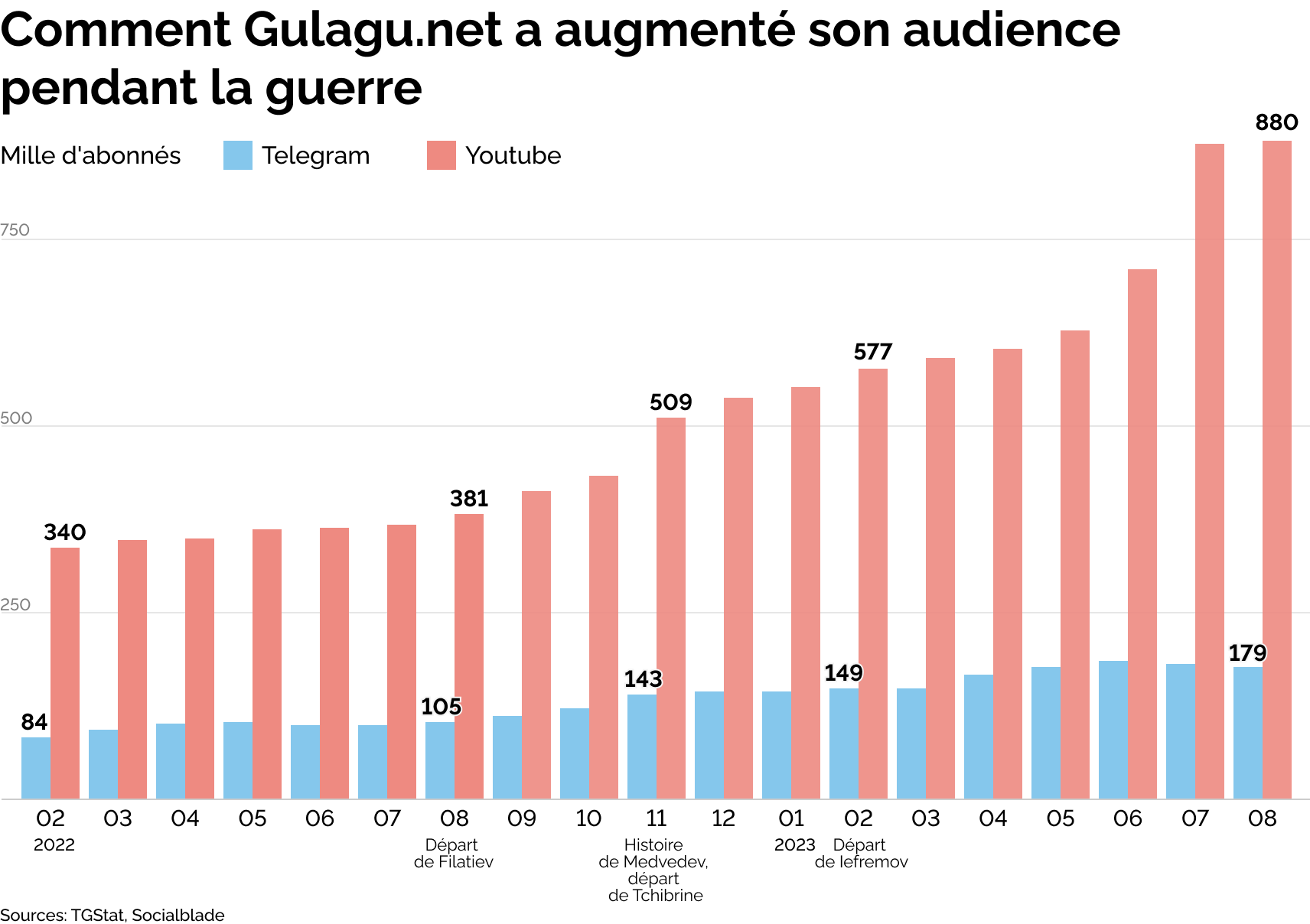
Against the backdrop of war in Ukraine and thanks to its widely disseminated "scoops", the audience of the YouTube and Telegram channels of Gulagu.net, in the Russian language, has more than doubled. From 325,000 subscribers in January 2022 to 880,000 in August 2023 on Youtube, and from 85,000 subscribers in February 2023 to almost 180,000 in August 2023 on Telegram ×
.
The apotheosis of the ossetchkin "factcheking" was its interview with two Russians who presented themselves as mercenaries of the Wagner group recruited in the prisons.
. Their service within the military company was confirmed by Evgueni Prigojine ×
. Alexei Savitchev and Azamat Ouldarov spoke in Ossetchkin via Skype while they were in Russia, which made their confessions all the more sensational: they said they had killed Ukrainian children and thrown grenades into a pit where Russian and Ukrainian soldiers were injured. These revelations have been widely taken up by Ukrainian media and certain international media, but have never been confirmed since. On the contrary, it turned out that at least one of these "sources", the homeless Alexei Savitchev, had received money from Ossetchkin for his "testimony"
. Ossetchkin acknowledged that one of its volunteers transferred 10,000 rubles to Savitchev, but ensures that it was not the condition of the interview. In the past, Gulagu.net had explicitly written that he paid his informants ×
. Savitchev complained that no one tried to ensure his safety, and shortly after, just like Oldarov, he disappeared from radars
. The two have ceased to answer calls and connect to social networks ×
. Ossetchkin assures, not surprisingly, that both are "closely controlled by the FSB".
The complainant
In fact, almost all those who conflict with Ossetchkin end up being designated as "FSB agents", "agents of the federal prisons" (FSIN) or "war criminals", without any evidence being never provided. Proekt has counted more than 20 accusations of this nature, which, for some, have had dramatic consequences.
The most resounding scandal in France was that between Ossetchkin and the first soldier he helped to leave Russia in August 2022, Pavel Filatiev. Member of a regiment of paratroopers of the Russian army, Filatiev spent two months on the front, at the very beginning of the invasion. Opposed to this war, he managed to leave the battlefield due to illness and, on his return, wrote an anti-war book (Zov was released in France at Albin Michel editions). Filatiev publishes his story on the Internet and at the same time asks Gulagu.net to translate it and manage publication rights abroad. All the recipes were intended for Ukraine and Filatiev feared that if he was arrested in Russia, his book would not seem abroad. Initially, Ossetchkine showed no interest in the editorial adventure, but when several publishing houses promised FILTIEV des à-Voir Voiroir, the eyes of OSSETCHKINE were "illuminated", in the words of FILTIEV. At that time, the Para had already managed to leave Russia and could have kept his rights, but Ossetchkin convinced that it would be easier to transfer money to the Ukrainians through his New Dissidents Foundation (NDF) foundation, recorded in France.
The collaboration did not last, in particular because the Ossetchkin Foundation failed to provide the various publishers with the documents necessary for money transfers. . The correspondence between the NDF and the literary agency Deborah Harris which represents Pavel Filatiev confirming this situation is available to Proekt. Denis PCHENITCHNI, the bone accountant, explained that for a long time he could not obtain an answer from the tax authorities on the way in which the profits of the foundation are imposed in France ×
. When Filatiev tried to terminate his contract with the NDF, Ossetchkin threatened to seize justice. In the end, it was the paratrooper himself who filed a complaint. It was then that osetchkin accused him of being a "war criminal". Although justice has given right to Filatiev and even ordered Ossetchkin to pay him compensation, the scandal obviously affected the fate of the book: many publishers did not wish to continue their cooperation with Filatiev. Ossetchkin's lawyers accepted the cancellation of the contract, but himself assures that he had not been made aware of it, and that he was going to contest this decision ×
. Ossetchkin went even further: he accused Ksenia Tserkovskaïa, the literary agent of Filatiev, of also working for the Russian secret services. According to him, she would have been engaged by the literary agency in the concrete goal "from preventing Filatiev from becoming a flamboyant dissident and to join the Gulagu.net team".
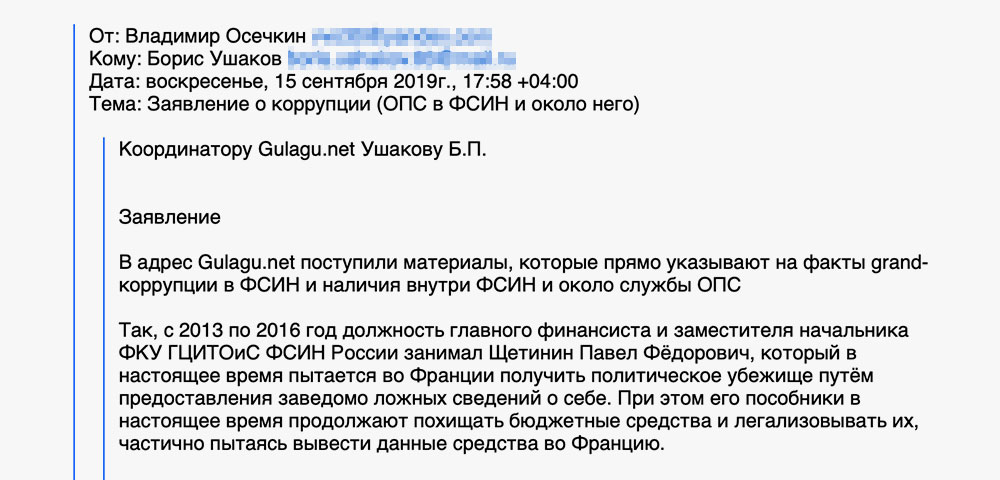
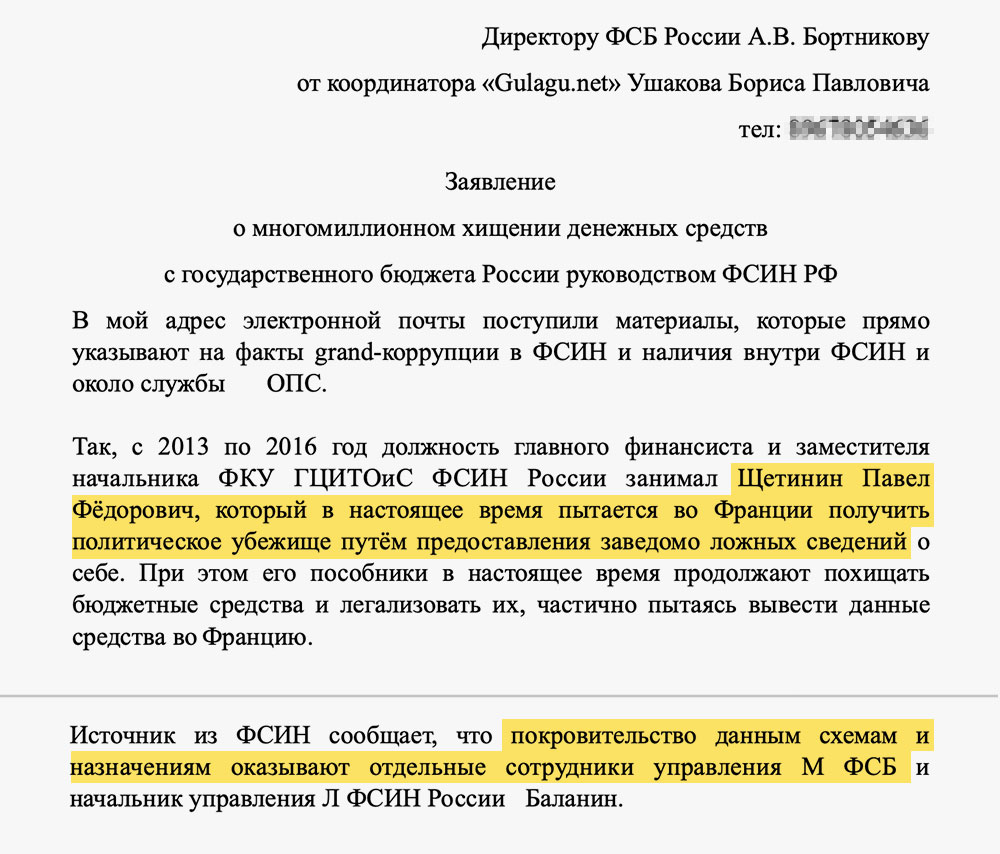
In another not very clear episode, Ossetchkin went personally to denounce the FSB one of his knowledge, which he accused of working for this same FSB. It is Pavel Chtchetinine, who came to France at the invitation of the human rights defender. Until 2016, Chtchetinine was employed in the FSIN where management would have tried to involve it in corruption patterns and, after his refusal, forced him to resign. Ossetchkin published this case on Gulagu.net and promised in Chtchetinine to get him out of Russia and provide him with international protection, says Shchetinin ×
. But when Chtchetinine was summoned to be questioned, the help of Ossetchkin was not there. The ex-agent of the FSIN had to flee Russia on its own. With a false passport that he claims to have obtained thanks to the help of his former colleagues from the Ministry of the Interior ×
. In France, Ossetchkin said that he had already found lawyers who would help Chtchetinine get asylum, managing 40,000 euros for a family of five, according to Shchetinin ×
. Having not seen the shadow of a lawyer after pouring part of the sum, Chtchetinine wrote a letter full of anger to Ossetchkin.
Shortly after, Chtchetinine was arrested by Interpol at the request of Russia. After investigating his case, the French services released him, and it was then that Chtchetinine discovered that it was Ossetchkin who had revealed his location at the FSB, following which Moscow sent an extradition request. Ossetchkin also complained of Chtchetinine to the French authority responsible for refugees (OFPRA). Chtchetinine was denied asylum at first, but won over call. Ossetchkin says today that Chtchetinine "was and is still in contact with the Russian FSB". He promised to provide an audio recording confirming it, but did not do it.
In each of these conflicts, the reason was money. Ossetchkin does not reason as a human rights defender, but as a businessman, says Anton Tsvetkov, of the Pro-Kremlin organization "The officers of Russia", who has known him for a long time. "He has always had in mind only money, money, money," confirms a former coordinator of Gulagu.net, Mikhail Senkevitch.
The entrepreneur
In the opinion of almost all those who have attended it, Ossetchkin is an enterprising man who knows how to set up any pins event and take the opportunity to foam. When he still lived in Russia, he was regularly invited on TV sets and to public events, "where he made very scathing remarks on the problems of the federal prison service", and sought to "capitalize" on this talent, recalls Igor Kaliapine, former director of the NGO Committee against torture (an "agent" of Kremlin, obviously).
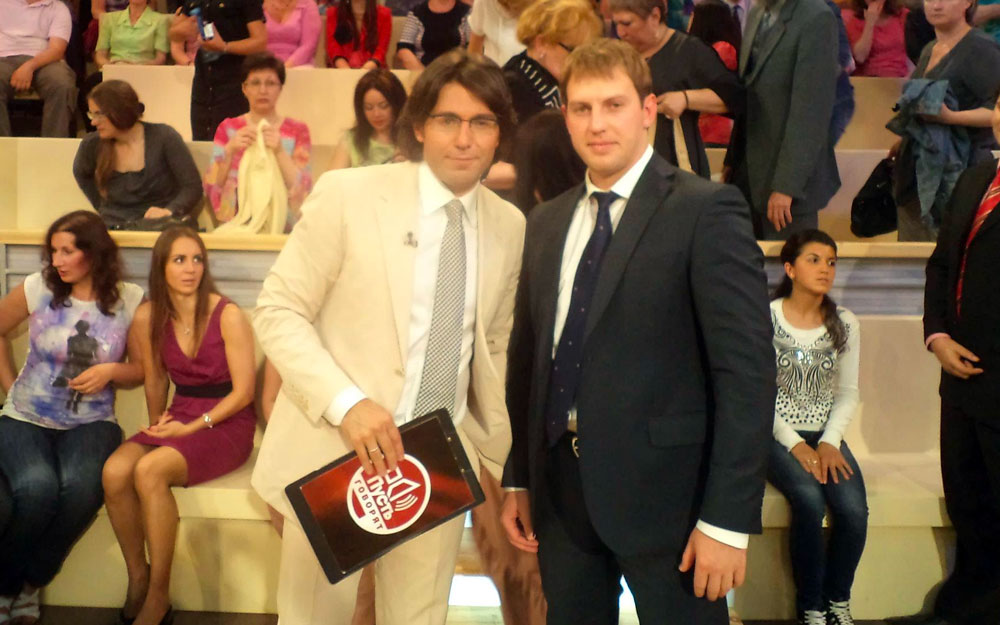
It is in a cell of the Medvedkovo remand center in Moscow, where he was detained for scam, that OSTTCHKINE found the name of his organization, GULAGU.NET ["No to the goulag"]. As of his release in 2011, he created the structure bearing this name. In pre-trial detention, he began to write complaints not only for himself, but also for his cell companions. After his release, the relatives of his fellow prisoners presented him to journalists and activists Olga Romanova and Zoya Svetova, specialists in the Russian penitentiary system. Encouraged by them, the ex-printed began to scour the TV sets and publish editorials in the Vedomosti newspaper. During one of these programs, he met Anton Tsvetkov of the association "The officers of Russia", then, on Facebook, of Mikhail Senkevitch, member of the Public Supervisory Committee, both already closely linked to the authorities, and not inspiring confidence in human rights defenders.
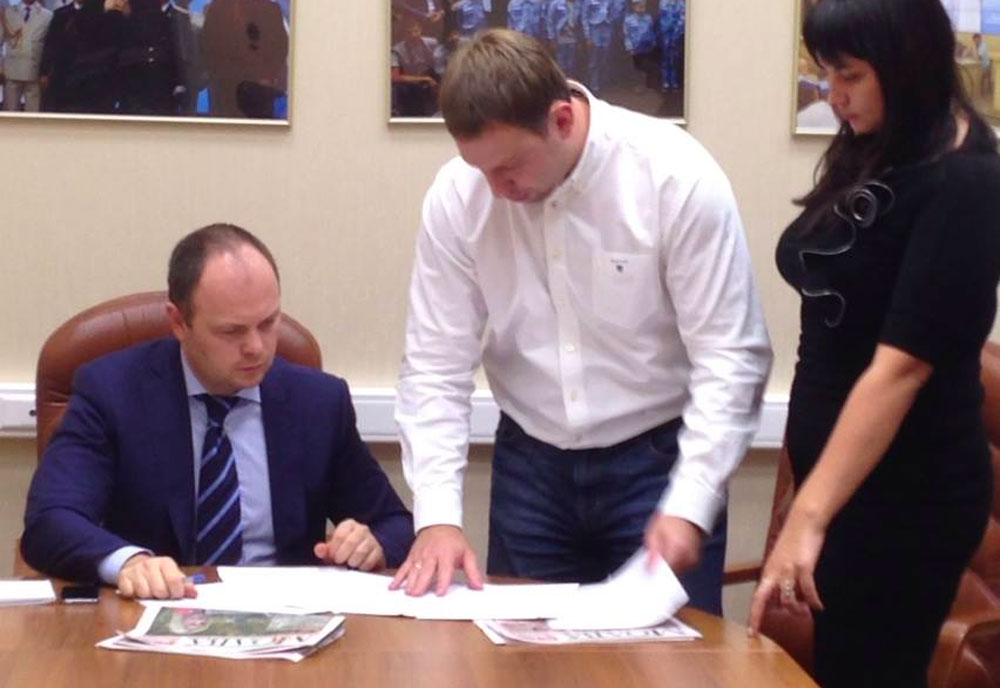
Tsvetkov remembers that at the time, Ossetchkin seemed to him to be "a rising star of human rights". It was Tsvetkov who introduced the new activist with the Fin and the Ministry of the Interior, and presented it to the deputy Iaroslav Nilov, who created the Council for public control at Duma and invited Ossetchkin to be part of it. Senkevitch, he presented it to the council of supporters of United Russia, the party of Vladimir Putin, to create a commission for the protection of the rights of the prisoners.
This is how Gulagu.net became known for the first time. To give more weight to its organization, Ossetchkin often presented as coordinators and members of Gulagu.net of active human rights defenders, who were continuing their regular work by also publishing on Gulagu.net. The site worked as a social network: relatives of prisoners and activists published information there, some became very publicized, the organization's volunteers transmitted these publications to government agencies, and Ossetchkin commented in the media, almost missing no opportunity to go to the antenna.
Having made the right meetings, he broke up with Romanova and other representatives of civil society and the opposition to the Kremlin, active in the years 2011-2012, that he did not fail to denigrate at the slightest opportunity. "He said at the time that he was going to point to the presidential administration every week," recalls the former coordinator of Gulagu.net Denis Soldov. One day he had been given the task of cleaning the field of human rights ”.
His new friends helped Ossetchkin start making money, finding him a job in the Maxim Nogotkov urban project, the founder of the Sviaznoi store chain, called Iopolis. He received a staggering salary of 500,000 rubles per month (around 12,500 euros according to the exchange of the time), which constituted the budget of the large Ossetchkin family and its organization. But the human rights defender also coined his services within Gulagu.net: publications on the website or an intervention about a case during a round table. Confirmed by Tsvetkov, Senkevitch, Soldov, another coordinator of Gulagu.net Boris Ouchakov, and the former detainee Mikhail Golikov. Ossetchkin nie ×
. "Such signals have started to reach us," recalls Tsvetkov. We then started to reduce its activities within the Council ”.
It is precisely because of an incident of this nature that OSETCHKINE left Russia. In 2013, he presented Denis Soldatov to Natalia Malinina, the daughter of Oleg Malinine, the vice-prefect of the Southeast administrative district, accused of passive corruption by solicitation. Ossetchkin has promised Malinina round tables at the Duma of State and publications on Gulagu.net and in the media, and asked Soldov to hire lawyers. Malinina paid not only for lawyers, but also for publications
. She declared it during interrogations and now confirmed it to Proekt. Ossetchkin claims that he did not receive money and that Malinina made this testimony under the stress ×
. Consequently, there were searches with Ossetchkin and Soldatov, Ossetchkin fled and soldotov was accused of having stolen part of the money intended for lawyers and was finally imprisoned for two and a half years.
In France, he first earned his life as he could: he provided legal advice for 50,000 rubles of the hour (1200 euros) without a specialized diploma. Database leaks show that osetchkine has been expelled from the university.) ×
, or sold real estate in Biarritz to wealthy Russians. Finally, he found a good vein and started selling his own experience in obtaining asylum. This is how his conflict started with Pavel Chtchetinine that we described above. This story is not the only one: almost the same thing has happened to the businessman Moscow Andrei Ivanov, who decided to flee Russia, to escape a racketeer. Ossetchkin offered him and his family a "turnkey" refugee status for 28,000 euros. Said Ivanov ×
. Still being in Russia, Ivanov says he paid a deposit of 5,000 euros to an associate lawyer of Ossetchkin. In France, Ossetchkin summoned Ivanov for a "non-standard conversation". In the words of Ivanov ×
, and accused it of working for the FSB. Ossetchkin offered to continue working only if he pays him "in cash", without received or contracts. Ivanov, disconcerted, gave OSSETCHKINE 6,000 euros additional, but the latter did not constitute the promised file to request the political asylum. Ivanov, nervous, has set a new appointment. After asking money, Ossetchkin turned on his camera and started filming the businessman saying: "Now we have discovered it, you are an FSB agent who wants to break our reputation". Tells the businessman ×
. Ossetchkin says that he did not receive money from Ivanov and that he decided not to help him because he realized that Ivanov co-opted with the FSB and that he was himself involved in corruption cases. Ossetchkin has not disclosed evidence of Ivanov's links with special services.
Other people that OSETCHKINE helped to go to France
← Shift + Scroll →
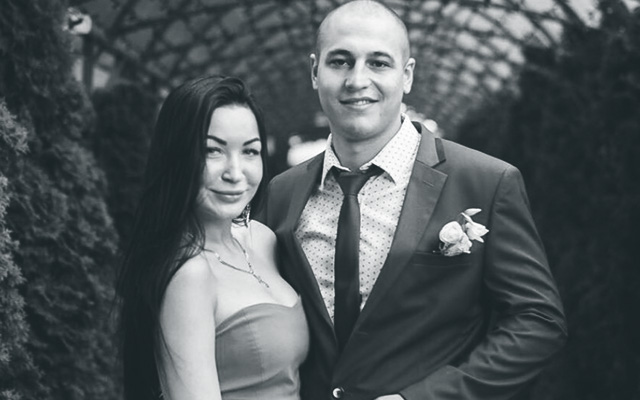 Elizaveta Zakamskaïa
The Kaliningrad resident whose husband died in a pre -trial detention center obtained asylum in 2019. She told Proekt that she had "unfortunately nothing to say about Ossetchkin". * 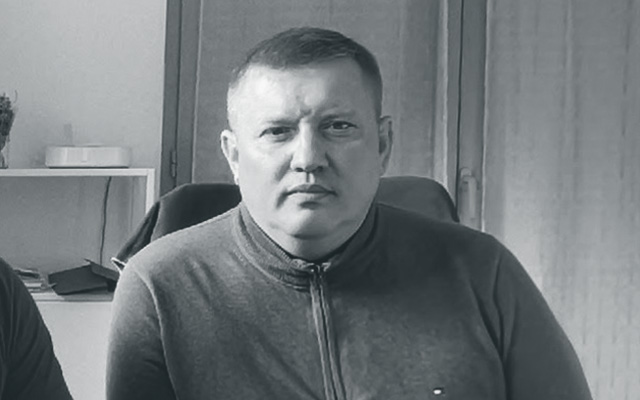 Sergei Khrabrykh
The former provider of the Ministry of Defense fled Russia and was wanted by Interpol, but he obtained asylum in France and now helps other people to obtain it. Khrabrykh told Proekt that OSETCHKINE had only presented it to his lawyers. He said he was aware of complaints against Ossetchkin, and he considered them just, but that he also knew people whom the latter had really helped. * 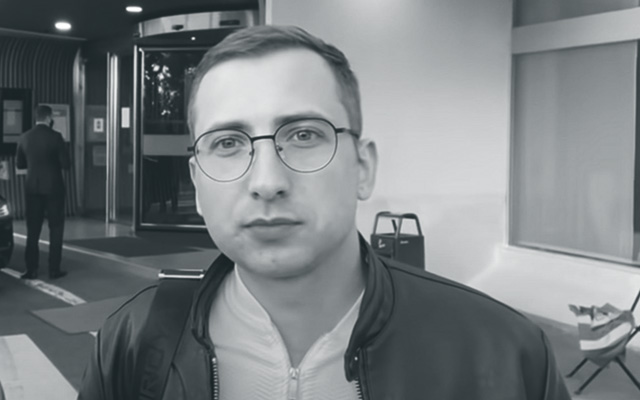 Sergeï SAVELIEV
Former detainee, he gave to Ossetchkin archives of torture videos in the Russian prison colonies. SAVELIEV is working today in GULAGU.NET. * 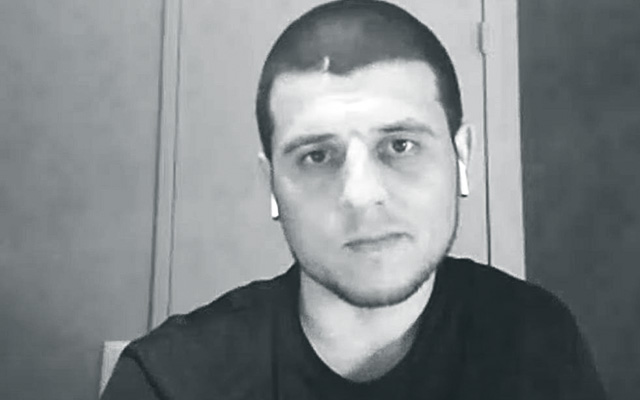 Rouguevitch novel
In November 2022, Ossetchkin said he had evacuated "a human rights defender and the author of the Antipytki [Anti-Torture] channel". Proekt has not been able to find references to Rouguevitch activities in terms of human rights defense other than on bone networks. * 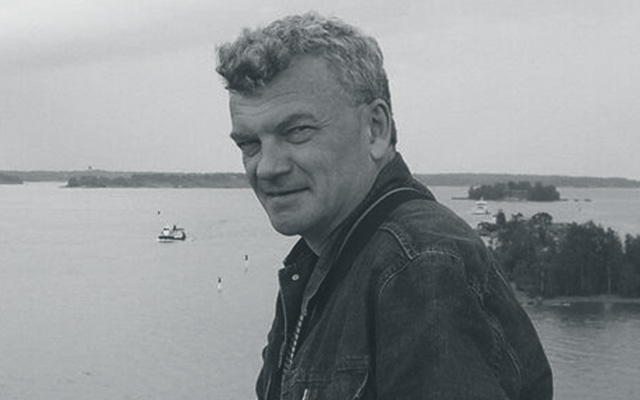 Valeri Pchenitchni family
Ossetchkin helped the businessman's family killed in a pre -trial detention center to obtain asylum in France. His son, Denis Pchenitchni, is working today in Gulagu.net. * 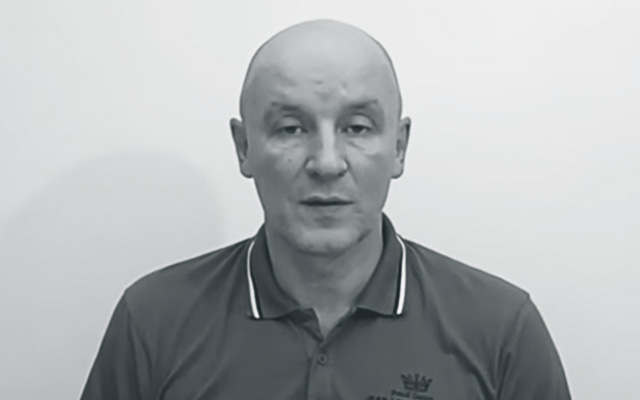 Nikolai Aplesnin
Ossetchkin helped this Donetsk resident, who had served a sentence in Russia for murder and theft and who revealed torture cases in his prison on the chain Gulagu.net, to obtain asylum in France.
In 2019, while osetchkine was already in France, a new criminal procedure was initiated against him in Russia, for insurance fraud. Ossetchkin had the idea shortly after his release from prison in 2011: if an inmate having subscribed to insurance was beaten until disability or death by FSIN agents, the insurance company would pay him compensation, to him or to his family, and then recover money from the FSIN through the courts. Having failed to pass a bill to this effect, Ossetchkin had managed to sell insurance contracts himself with an insurer friend, Mikhail Shneiderman. But to be compensated, the detainees had to do the impossible: to obtain documents from the prison confirming the facts of violence committed by the jailers. Ossetchkin, he explained differently the functioning of these contracts: the matons were afraid and the prisoners insured were not abused. It didn't always work. For example, despite the insurance, Rouslan Vakhapov and Leonid Razvozjaïev were beaten, but both actually escaped disability or death. Human rights defenders Piotr Kurianov and Igor Kaliapine say they know other detainees who have been beaten despite their insurance contracts ×
. Ossetchkin assures that he has never enriched himself with his contracts, all the recipes used to pay lawyers.
Like many other episodes in his life, Ossetchkin explained this case as a special FSB operation against Gulagu.net. However, many suspect that it is Ossetchkin who works for Russian services. Probably because osetchkin was actually in contact with influential security forces.
The agent
Ten years ago, Ossetchkin actively called on legislators not to hold back in the preparation of a new law on foreigners. He violently criticized the defenders of recognized and respected human rights, and in particular Valery Borchtchev, the head of the Moscow public observation committee, whose members have the right to visit detainees in prisons. It was Ossetchkin who, in 2013, contributed to the eviction of Borchtchev from the head of the Commission. "He fought very actively against human rights activists, say, pro-Western," recalls Tsvetkov. "He denounced them by saying that they lived with subsidies, when he was a real patriot." It was Tsvetkov, with the support of Ossetchkin, who then became the new head of the Moscow public observation committee.
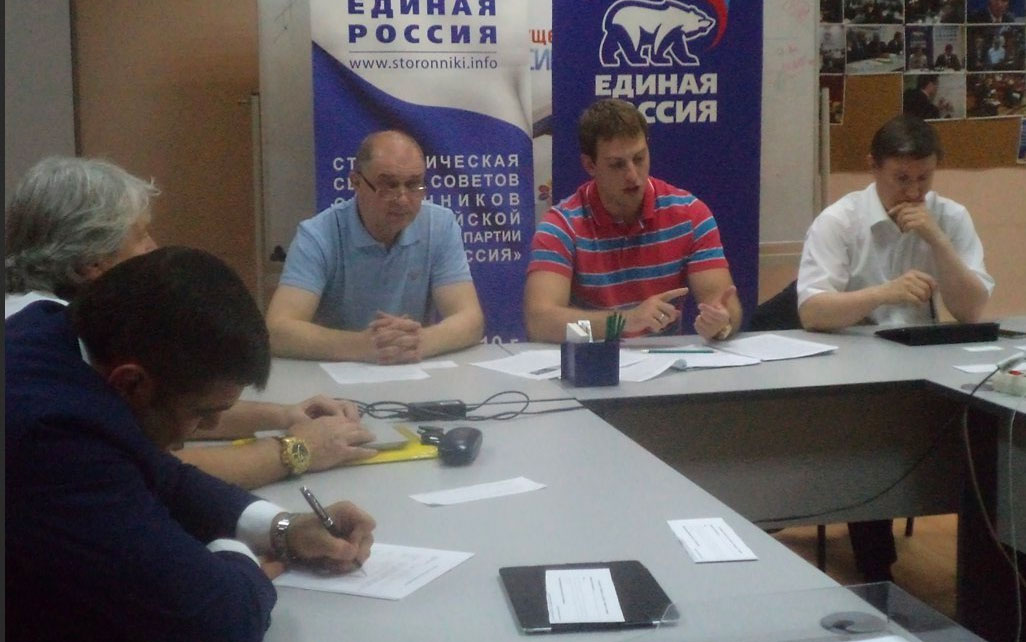
In 2014, at the time of the annexation of Crimea, Ossetchkin first supported him on social networks. We saw it in a rally of the “Antimaidan” movement. The pro-Puttines which were against the Maidan Revolution in Ukraine ×
Ossetchkin made a discourse "against any revolution and any mass disorder". Subsequently, he repented about Crimea, and advanced explanations for his presence in the ranks of supporters of the Kremlin: he was told that "armed men would hit the demonstrators", he was there to "prevent violence". Ossetchkin also defended himself from having been pro-power: "It was a strategy that consisted in using a Trojan horse to get into the system to change it," he said in an interview.
What emerges from his publications on social networks, even recent, is that osetchkine is very proud of his links with high officers of the security forces
. In 2017-2021, he spoke of his "friendship" with the general of the Fsin Anatoli Rudyï and remembered that the head of this service Guennadi Kornienko would have been "ready to work with him", while the general of the FSB Ivan Tkachev, whom he met in 2011, called him "old" × × ×
.
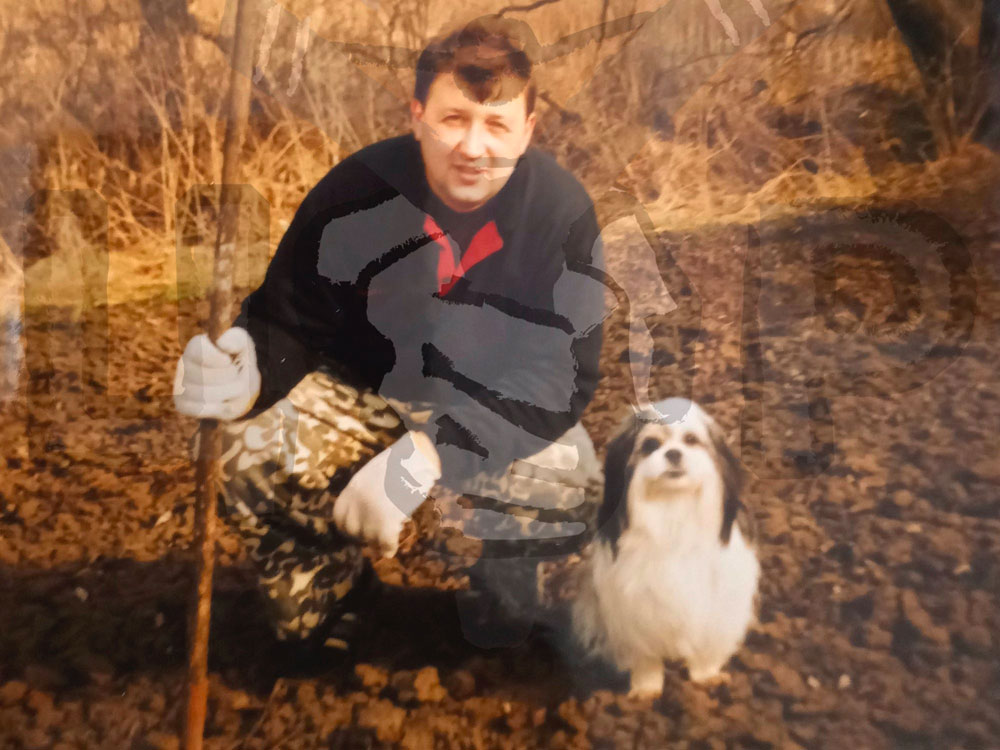
The greatest suspicion that OSTTCHKINE works for Russian services has been awake by the publication on GULAGU.NET of 2 TERRACTES of recordings from the surveillance cameras of the hospital for the prison tuberculosis of Saratov (OTB-1), in 2021. These "secret archives of the FSIN and the FSB", show detainees that torture and violate other detainees, of prison. The files were given to Ossetchkin by Sergei SAVELIEV. The latter served a long punishment in the OTB-1, where he was responsible for the computer network. For years, he collected and kept the recordings and, during his release, was able to take out the hard drive. A rare fact in Russia today, the publication of these files was quickly followed by a reaction from the authorities: several criminal cases, layoffs in the branch of the prison service of Saratov, and even the dismissal of the head of the federal penitentiary service Alexandre Kalashnikov. "I think this is a special FSB operation, the aim of which was to eliminate Kalashnikov," said Olga Romanova, founder of the NGO Rus Sidiashchaïa who defends the rights of detainees.

The investigation file on illegal access to digital information, which was opened after the first publication of torture videos can give an idea of what happened. SAVELIEV did not intend to reveal her identity or to leave Russia but the police had access to the emails of Ossetchkin after the first leak and discovered the identity of SAVELIEV. For a reason that has remained unexplained, SAVELIEV was arrested and then immediately released under judicial supervision. Then he fled to France, with the help of Ossetchkin. In their first exchanges, when he was still in Russia, SAVELIEV wrote that he was ready to hand over the recordings "at the request of FSIN agents against a monetary reward". Ossetchkin paid around $ 2,000 to SAVELIEV, but both claim that money was used to buy a laptop for the transfer of archives and that SAVELIEV would have spoken of "FINS agents" to diversion.
There is another curious element in the history of Saveliev. Between August and October 2021, when Ossetchkin made these "secret archives" public and organizes the evacuation of Saveliev, Gulagu.net receives several substantial payments in cryptocurrency. These are seven transfers for a total amount of $ 709,000. Or more than three -quarters of all donations paid to the organization over three years. In 2021-2023. Only to the accounts that Proekt was able to trace ×
. Ossetchkin said it was transfers from a large sponsor and that he had also transferred personal money from the sale of land in the Moscow region via the Gulagu.net accounts. Proekt is unable to check this information.
Tsvetkov, who has been working for the Russian authorities for years for years, speaks allegorically about the possible cooperation of Ossetchkin with the penitentiary service: “There have always been different groups and clans within the FSIN. And they used him as a sewer mouth: he never checked the information. ”
* *
Many of those with whom Proekt spoke for this text, including those who had a conflict with the founder of Gulagu.net, recognize him remarkable media qualities: he drew public attention to the violations of the rights of the prisoners, and for some, the interventions of Gulagu.net have undoubtedly had positive results. At least a few of the cases of torture or death of detainees described by Ossetchkin have given rise to convictions of prison service agents, while the "SAVELIEV archives" are probably one of the most convincing testimonies on torture in Russian prisons.
* * *
After the meeting in Biarritz, Proekt's correspondents tried several times to ask for Vladimir Ossetchkin the missing documents and evidence. The founder of Gulagu.net again accused the editorial staff of "working for the FSB" and said that he "did not allow the mention of his name". Proekt nevertheless considers that the account on the work of one of the defenders of the rights of the Russian men most in sight since the start of the war is a subject of general interest.
Editor - Badanine novel
Fact Checking - Alexey Korostelev