
Translated material
Pension special operation

The Russian authorities secretly carried out pension reform. They want to use 5 trillion rubles of savings in Russians
The Russian authorities conducted another pension reform in the strictest secrecy mode. The program of long-term savings will earn since 2024 and fundamentally change the pension status quo: the state will take off part of the liability for pension provision, and at the same time will be able to apply for the new money of Russians. According to various estimates, there may be savings from two to 15 million citizens, and the total amount of funds invested in a new program should reach five trillion rubles. Favorable conditions offered to potential participants in the program are easily reset and do not contain real guarantees, despite the promises of the authorities. "Cold" talks about a new pension reform, which is publicly prohibited about talking about.
In order not to miss the main materials of the "cold", subscribe to our Instagram and telegram .
Since 2024, an updated pension system will work in Russia - citizens may try to increase their income in old age with the help of the state program of long -term savings. The state needs reform to get a new source of so -called long money (aimed at large projects with a long payback period). Citizens may not see their money in old age.
The Russian authorities tried in every possible way to avoid the use of the term “pension reform” in the context of the introduced system. Employees of the Prochrevsky publications on the terms of anonymity told the Cold that comparisons of the program of long -term savings with a funded pension are prohibited. The materials on this topic should be focused on its pluses - the possibilities of increasing pension payments in the future.
The Kremlin is necessary for a positive tone of publications so as not to remind the previous pension reform, which still remains the most unpopular decision of the Russian authorities. Similar methods were used five years ago: in 2018, the wording “Raising the retirement age” was undesirable - instead, state media employees were supposed to talk about the program for increasing pension payments.
The government and the Kremlin have been preparing for new changes for a long time - in fact, from 2016 , when the discussions about the temporary freezing of pension savings have come to naught (at the moment, that program is frozen for an indefinite period) and the “individual pension capital” (IPC) appeared for the first time in public discussion.
The authorities were able to bring to mind the bill on the IPC only by 2019, but in March 2019 the programs decided to refuse from the three years being developed. True, for a short while: already in August, the coalition of the Ministry of Finance and the Central Bank announced a new law, which should regulate work with pension savings of citizens. The new program is called the “Guaranteed Pension Plan” (GPP), the key difference from the previous option is the complete voluntary of the accrual of contributions to the new system. However, it was not implemented: the discontent of citizens with coronavirus restrictions forced the government to wrap the program at the approval stage.
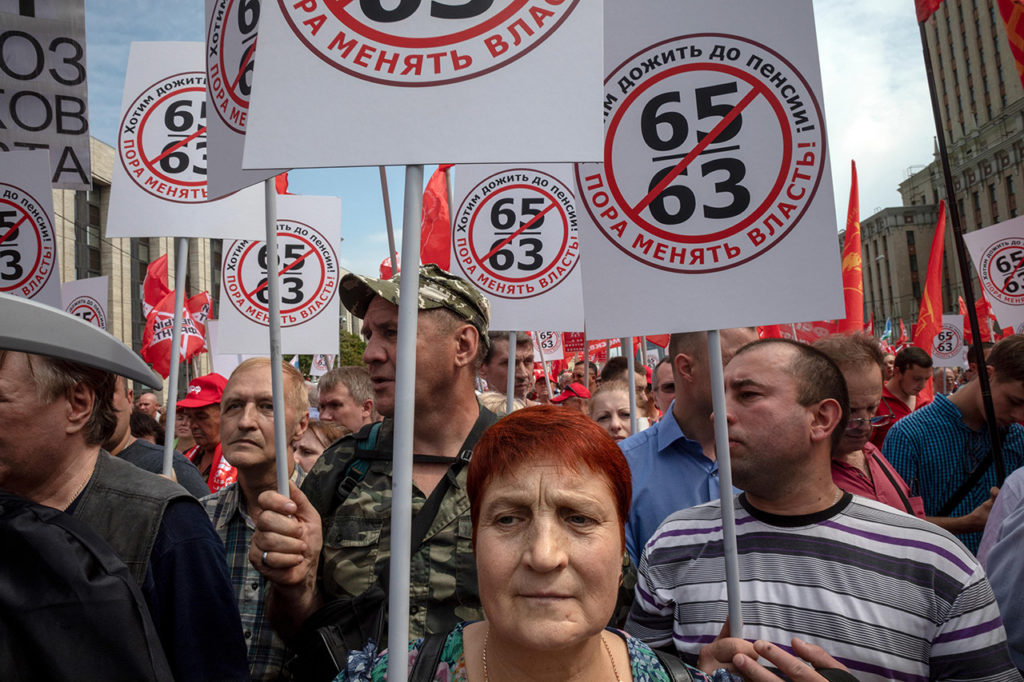
In order to get rid of public pressure during the third attempt to use the pension accumulations of Russians, the authorities decided to act for sure: the development of the bill was simply classified, literally. In February 2021, a draft federal law appeared in the plan of activity of the Ministry of Finance, which provides for “the possibility of citizens formed by personal contributions of additional sources of financing for pension income,” out of almost two dozen documents, only it turned out to be classified.
The Ministry of Finance himself did not comment on the secrecy of the document, but the decision was suddenly openly commented on in the State Duma. The head of the Financial Market Committee Anatoly Aksakov, with direct text, said that such a decision wants to get rid of associations with the new pension reform. “By and large, what is proposed is in the interests of people, but, apparently, they decided not yet to take out for a wide discussion, because they do not want excess excitement around this topic,” the deputy said then.
The “secret” vulture is introduced in the case of information sensitive to the state in the document, most often related to safety. That is, it is applied in bills of interest to foreign spies or, for example, authors of sanctions. As it became clear from the final text of the law, there were no secret points and information in it, and the only task that secrecy solved was the lack of public discussion and negative comments. And this had its fruits: a large -scale bill in just six months , without a wide public discussion, was the State Duma and the Federation Council, and after that was approved by President Vladimir Putin.
It was yours - our
The agent of the Pension Department, as in previous versions of the law, will be non -state pension funds (NPFs). Despite their low popularity, they have been working for a very long time - since the time of the USSR. The Soviet pension system was finally formed only in 1964, when the authorities included collective farmers. Prior to this, payments in the village were installed by the enterprises themselves, and often on neighboring collective farms they differed significantly. There was no pension fund then: the state received money from enterprises directly to the budget and paid pensions from it.
In 1990, pension reform, caused by an increase in the number of pensioners, led not only to an increase in the role of work experience, but also to the separation of the USSR Pension Fund from the state budget, so that the structure independently controls the deductions. In addition, for the first time, voluntary pension insurance was introduced. The state promised that if an employee on his own initiative to pay funds in the accumulative part of the future pension, then in old age he will receive an additional payment, half of which will be formed at the expense of the state budget.
But no one had time to evaluate the latest changes: in 1991, the USSR broke up into independent countries that encountered inflation, currency devaluation and budget deficiency. Nevertheless, the late Soviet pension system was taken as a basis in Russia. In September 1992, President Boris Yeltsin signed the Decree “On Non -State Pension Funds”, introducing a new type of financial organizations.
The system, however, remained marginal. Mostly large companies used it, for which its own NPF became part of a social package to retain employees. Over 10 years, the funds together attracted 51.4 billion rubles, or less than half a percent of GDP. As a result, at the start of the new millennium, the payment of almost all pensioners in Russia was formed exclusively at the expense of employees' contributions, and not their savings.
The authorities decided to change this practice in 2002. For the first time, the funded part of the retirement pension was first introduced into the system of compulsory pension insurance (OPS), in addition to the basic and insurance. Its essence was as follows: the employer of the total pension contributions (the base rate was 22%), which were transferred to the Russian Pension Fund (PFR), allocates part (in the general case - 6%) in favor of a particular employee so that he could dispose of it. But not completely, as a contribution, but through the right to choose a manager-the state VEB (there was also the money of those who did not make the so-called silents) or some NPF.
Citizens could change one NPF for another or return to the VEB, but could not take money from the system for their own needs: ownership of them belonged to the fund or the state, and not to people. By the end of 2015, 27 million people used the services of the NPF, by the end of 2018 - 37 million. The positive dynamics of involvement in the system was divided into its result, namely, the profitability, which remained low due to the conservative strategies of the NPF. They could not do otherwise because of hard regulation: the law demanded to demonstrate breakery work every year, the investment losses of the NPF were covered at their own expense, which inevitably led to losses.
In 2013, regulation weakened for NPFs - now the breakdown had to be demonstrated by the results of five years, not years. In turn, for citizens, the situation has deteriorated: for transferring funds from one fund to another application should be submitted in five years. If you leave faster, then the investment income has practically burned. The plus was only the creation of a fund for guaranteeing pension savings, which was supposed to compensate for the funds in the bankruptcy of the chosen NPF.
An attempt to disperse the system frankly failed. Revenues were still at the level of error: in 2014, not a single NPF overtook inflation. In 2015, only a third of the funds coped with such a task. In the period from 2017 to 2021, the last years before the war, the accumulated inflation was about 25%, and the average profitability of accumulations was 30%. Such a result makes the idea of a funded pension meaningless. A complex administration and regulatory system that requires considerable expenses, constant updating of the schemes, control, and in practice for five years of the accumulation of pensioners, taking into account inflation, have increased by 5%. At the same time, in dollar equivalent, pension savings were completely depreciated by 20%. And taking into account the year of the war, since 2017, the profitability of the NPF has completely lost inflation.
But the state itself dealt the main blow to the funded pension: in 2013, against the background of the first wave of sanctions, it was decided to “temporary” freezing of the funded part. In practice, this meant that those average 6%that citizens had to transfer to their own account were sent for current payments to pensioners. Then the officials assured that frost is a temporary phenomenon and it would not last longer than a year: in mid -2014, the Minister of Finance Anton Siluanov pointed out that he did not see the reason to extend the freezing for 2015. In reality, by 2023 the extension of the moratorium turned into an annual routine.
The second time in the same river
The new long -term savings program really looks like a substantially modernized version of the funded pension. There are enough positive differences. The main thing is that this time the assassinated funds still belong to a citizen, not a fund. In emergency situations, such as expensive treatment or loss of a breadwinner, they can even be taken without loss of accumulated. If you agree with the NPF about individual conditions, then it will be possible to pick up money in other difficult situations, although the fund has the right to refuse.
You can get your savings without the consent of the NPF, but then you will have to forget about investment income, return tax deductions and an increase from the state, and also be ready to pay a penalty for termination of the contract. Given the inflation, the amount in any case will be less than the initial investments. Also, it will not be possible to first transfer the funded pension into long -term investments, and then pick up funds at once.
Another innovation is the ability to conclude an agreement with several funds. Their number is unlimited, although it will still have to transfer funds from one to another no more than once every five years. The terms of the contract are also quite flexible. The size of the first contribution depends on the participant in the program, their frequency and the amount of regular replenishment, the terms of further payments. The main restriction remains the deadline - you can receive payments no earlier than after 15 years or when reaching 60 years in men and 55 years in women. If desired, you can sign an agreement for accumulation in favor of third parties, such as children. Payments can be either urgent (for at least 10 years), and become an increase in pension until the end of life.
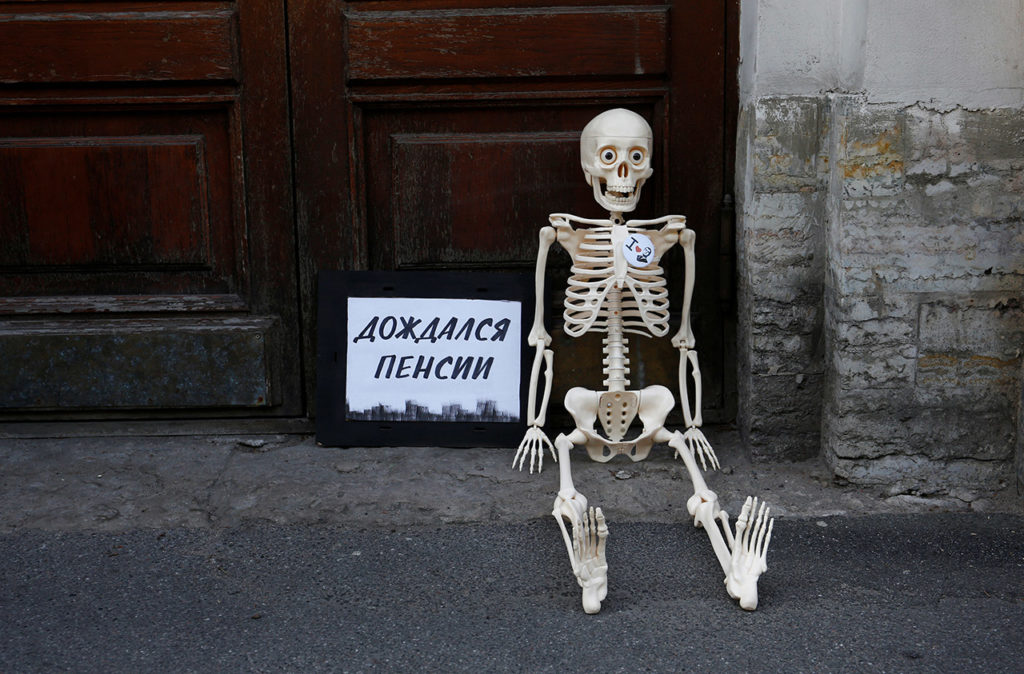
If there are few accumulations, so the amount of the monthly payment does not exceed 10% of the subsistence minimum of the pensioner, the money will be given at once. If the program participant has chosen urgent payments, but died ahead of schedule, then their balance will go to the heirs. In the case of lifelong payments, the accumulations will not work. The very amount of payments to the NPF will consider based on the accumulated amount (investment plus income from investment) and the expected life expectancy (73 years in mid -2023).
Accumulations are built up in the amount of 2.8 million rubles, which is two times higher than the guarantee for bank deposits (1.4 million rubles). In addition, in the first three years, from 2024 to 2026, the state promises a noticeable co-financing-the same method of attracting that was used in the Soviet and subsequent Russian versions of the law. The size of state co -financing depends on the income of citizens and the volume of contributions.
In case of contributions in the amount of at least two thousand rubles a year, the government will add 100% with income up to 80 thousand rubles per month, 50% with an income of 80 thousand to 150 thousand rubles, 25% with higher income. The total amount cannot exceed 36 thousand rubles per year. Thus, in three years you can get an additional 108 thousand rubles. Also, from investment income, the program will not be charged with personal income tax (personal income tax), and for contributions up to 400 thousand rubles a year you can apply for a tax deduction in the amount of not more than 52 thousand rubles.
The Minister of Finance, who promised not to freeze pension savings for a long time, this time promises that the profitability of the new system will exceed deposits in commercial banks, and should not be worried about reliability, because the state is given to the state - the most reliable issuer in the Russian market.
“Today, the state gives citizens a reliable tool to invest their own funds in financial instruments, which will be regulated by law. The state will, on the one hand, will control the use of these resources, and on the other, to provide appropriate guarantees, tax incentives - deductions and benefits, ”the minister said .
Beauty on paper
Russians will be able to feel all the advantages of the reform only with one scenario - positive, when the yield of the NPF regularly overtakes inflation. However, the law has no profitability guarantees, which means that over 15 years of investing by pension savings of Russians, NPFs can completely legally show even a loss, which no one will compensate for anyone. Moreover, no one will exempt from the obligation to pay for the work of the NPF program of the program either: the commission will be even more than that of management companies (Criminal Code) and share investment funds (PIFs).
But even these risks of the voluntary system fade compared to the basic conditions for investing pension savings that the authorities extended to the NPF. With the outbreak of war, hundreds of billions of foreign investment flowed from Russia, not only of Western countries, but even close partners of Russia, for example, according to BRICS. The Chinese authorities approve of investments only in those Russian projects that are delivering resources to their country, and Brix Bank, for example, completely turned all the investment projects in Russia.
In military conditions, the future of the Russian economy directly depends on the volume of investments that it can attract to large -scale import substitution projects. The problem is that Russia cannot attract money from outside, which means that it is necessary to look for money inside the country. Under these conditions, pension savings become an ideal tool for solving state problems - this is a scheme proven for years.
The law obliges the NPF to invest on the best available conditions in terms of risk and profitability. Compliance with these requirements is monitored by the Central Bank: the regulator evaluates fund strategies. The state, including through state corporations, will be the initiator of the largest projects in the field of import substitution and infrastructure. It will also give guarantees for the implementation of these projects and, accordingly, future profitability, which will allow the Central Bank to consider such papers to be one of the best in the market, and NPFs to invest in them the money of Russians. The problem is that there is no responsibility for the disruption of the project or the lack of profitability during its implementation, which leads to the collapse of the entire chain: the investments do not pay off, and a simple Russian who decided to join the program becomes the end victims.
The NPF itself, according to the law worthy of alternatives to the state and quasi -state (in state -owned company) investment is not provided. Funds can invest in government securities; bonds and shares of Russian issuers; mortgage securities; deposits in currency and rubles; Securities of international financial organizations allowed for placement or public circulation in Russia.
In conditions of sanctions about the last point, you can forget: investments in the yuan are unattractive in terms of profitability (in addition, Yuan is partially convertible currency, which complicates operations with it), and dollars and euros are closed to Russian investors. This means that the securities of the state and Russian issuers remain. Из-за проблем с доступом к иностранным рынкам наличие большого количества частных эмитентов, которые бурно растут и повышают свою капитализацию, невозможно. Значит, НПФ придется ориентироваться на наименьший риск, который обеспечивают госгарантии.
Оценить доходность российских проектов проблематично. Многие чиновники, участвующие в продвижении программы, избегают разговоров об отдаче тех самых «длинных денег», ради которых и придумана программа. Однако иногда проговариваются даже они.
«Мы можем бесконечно планировать крупные инвестиционные программы, заклиная, что это объем инвестиций, он нам нужен любой ценой и так далее. Но когда мы смотрим каждый конкретный проект, и у него там окупаемость 40–50 лет, или вообще даже не можем там найти никакой окупаемости, понимая, что это некие социальные вещи или наше видение, которое потом не оправдывается… Те же инвестиции в том числе в железнодорожную инфраструктуру — у нас гигантский спор идет сейчас, подо что это строим и кто это будет возвращать потом», — заявил министр экономического развития Максим Решетников в ходе выступления на Петербургском международном экономическом форуме (ПМЭФ-2023).
Деньги — государству, риски — гражданам
Нововведения снова меняют пенсионный статус-кво: если до заморозки пенсионных накоплений россияне тратили 16% своих доходов на нынешних пенсионеров, а 6% — на себя в будущем, после заморозки — сразу 22% на текущих пенсионеров и 0% — на себя в будущем, то теперь государство хочет убедить россиян сохранить 22% выплат на текущих пенсионеров и параллельно в срочном порядке создать систему для «длинных денег» в экономике. Другими словами, государство не только продолжает забирать столько, сколько забирало раньше, но создает дополнительный механизм, через который заберет в свое управление еще часть доходов россиян.
Отказавшиеся от участия в программе останутся лишь со страховой частью пенсии (те самые 22%, которые с 2012 по 2022 год проигрывают даже инфляции). Невзирая на обещания Кремля, поднять средние пенсии в России не помогли ни повышение пенсионного возраста, ни пандемия COVID-19, которая существенно сократила число пенсионеров в России. Тех же, кто хочет иметь в старости более высокий доход, власти будут направлять к программе долгосрочных сбережений.
Сколько бы ни удалось привлечь средств в программу, они в любом случае окажутся дополнительными сборами с граждан. Для примера: гражданин с доходом ниже 80 тысяч рублей вложил в систему 36 тысяч рублей за год и получил 36 тысяч софинансирования. На эти деньги были куплены государственные ценные бумаги. В результате там, где государство могло напрямую потратить на проекты только 36 тысяч рублей, у него появляется 72 тысячи. Да, их придется возвращать, но через 15–25 лет. А если участник программы захочет выйти из нее раньше, то вернут ему только 36 тысяч, обесценившиеся из-за инфляции. Та же ситуация с налоговым вычетом: государство получит больше средств на инвестиции без какого-либо риска для себя.
Более того, правительство имеет право, если сочтет необходимым, законно и не объявляя дефолт, обесценить сбережения. Для этого потребуется давление на Банк России и переход к мягкой денежно-кредитной политике, а если проще — обвалить рубль, что обесценит сбережения в рублях. Возможное банкротство НПФ — еще один риск для россиян: при подобном сценарии максимум, на который они могут рассчитывать, те самые 2,8 миллиона застрахованных рублей — все, что сверху — будут потеряны.
Таким образом, единственным шансом участника программы получить значимый доход становится успешность государственных проектов, что позволит НПФ заработать на уровне, существенно превышающем инфляцию. Если же что-то пойдет не так, то гражданин как соинвестор в программе, которая провалилась, принимает на себя все риски.
Целевая аудитория новой системы — верхушка среднего класса, эксперты оценивают это примерно в 2–3 миллиона человек. Низкий интерес к программе у населения аналитики объясняют подорванным доверием к государству и пенсионной системе в целом. Однако окологосударственные банкиры прогнозируют , что к 2030 году к системе присоединятся более 15 миллионов человек, а сумма в управлении программы достигнет четырех триллионов рублей. Сами власти нацелены на пять триллионов рублей, при этом на счетах в НПФ до сих пор заморожено около 4,5 триллиона рублей, которые предлагается перенаправить уже в новую систему. Таким образом, новая программа может позволить властям аккумулировать почти 10 триллионов рублей для своих нужд.
Well forgotten old
В разговорах о важности программы долгосрочных сбережений неизбежно проскальзывает значимость «длинных денег». В развитых экономиках за них действительно отвечают пенсионные фонды, которые выбирают наиболее надежные активы и конкурируют друг с другом за вкладчиков. Однако базовыми условиями для их существования и востребованности остаются высокий доход граждан, стабильность законодательства и широкий выбор активов по всему миру, в которые можно вкладывать.
В России нет предпосылок для выполнения хотя бы одного из этих условий, зато есть все признаки сходства предложенной схемы с той, что многократно проворачивали в СССР. Речь идет об облигациях государственного займа, которые начали выпускать в 1922 году, а пик их пришелся на 1951–1957 годы. Доходы граждан были невелики, как и сейчас. Заявленная цель совпадает — поддержка народного хозяйства в условиях конфликта с Западом. Правда, к мотивации — хороший процент и гарантии государства — тогда добавили негласную обязанность покупки облигаций на часть зарплаты.
Когда же в 1956 году оказалось, что эффективность экономики слишком низка, чтобы обслуживать долг, выплаты заморозили на 20 лет. В рыночной экономике это называется дефолтом, в СССР — удовлетворением просьб трудящихся. Окончательно по ценным бумагам, выпущенным в 1950-х годах, рассчитались только в 1990 году, когда покупательная способность рубля обвалилась.
Явным отличием от времен СССР остается заявленная добровольность долгосрочных сбережений. Но о том, что граждан нужно «мягко побуждать» вступать в программу, начали говорить еще до ее запуска. Так, первый заместитель председателя Центробанка Владимир Чистюхин признал , что пока мотивации не хватает, а потому надо бы «поработать с предприятиями». Что скрывается за этой формулировкой, он не уточнил, но предупредил, что менять программу могут начать оперативно. Ведь вряд ли государство откажется от «мобилизации» денег граждан в случае их острой необходимости.
Poll Help the "cold" to become better. Take a survey for 7-10 minutes.