
Translated material
A trap for the dodik
The leader of the Republic of Serbian behaves more and more defiantly: meets with Putin and rejects the decisions of the Constitutional Court. We explain whether the United States and the EU will be able to restore it
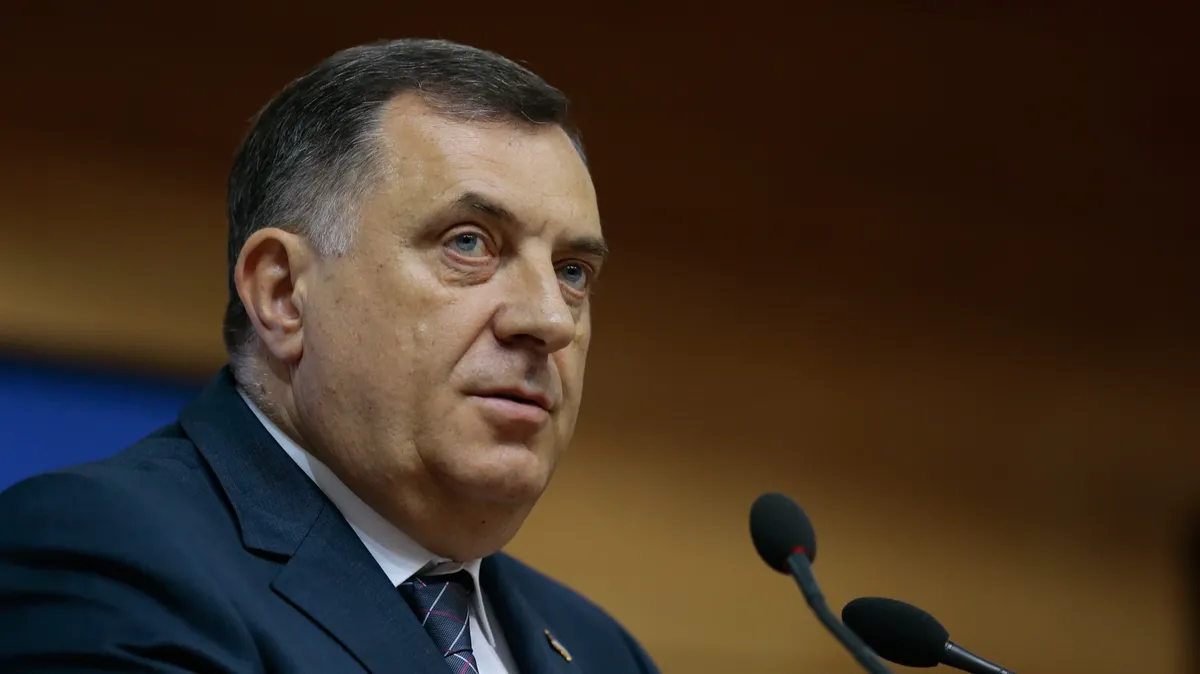
President of the Republic of Serbian Milorad Dodik. Photo: Mustafa öztürk / Anadolu Agency / Getty images
After the December decision of Brussels, to provide Bosnia and Herzegovina with the status of an EU candidate atmosphere in this complex Balkan state is gradually hesitating.
Six months after the election, the new government of the Bosnia and Herzegovina Federation was still formed. But under the leadership of the president from the Croatian minority, which caused the discontent of the Bosnians. At the same time, Milorad Dodik initiated the adoption in the Republic of Serbian Law, which makes it possible not to observe the decision of the Constitutional Court common for all parts of the country. In response, the authorities of Bosnia brought a criminal case against him and his ally. How in this chaos to cut the Gordians of the Balkan contradictions is trying to new Supreme representative in Bosnia and Herzegovina Christian Schmidt, political scientist Aleksandar Dzhokich was specifically sorted out for the New Evrope.
At the end of July of this year, the United States imposed sanctions against a number of senior associates of Milorad Dodik, the long-term National Populistic leader of the Republic of Serbian, one of the complicated state of Bosnia and Herzegovina. The sanctions were introduced against the Prime Minister of the Republic, Radovan Vishkovich, the speaker of the parliament of Nedad Stevandich, the Minister of Justice Milos Bukhailovich, as well as against a member of the Presidium of Bosnia and Herzegovina from the Republic of Serbian Zhelka Zviyanovich. These sanctions have already become the second package of measures that the United States take against Dodik and its environment. Earlier, on January 5, 2022, Washington imposed sanctions against Dodik himself.
The justification of fresh sanctions states that Washington made restrictions due to the law adopted by the Republic of Serbian (RS), allowing not to apply on its territory the decision of the Constitutional Court that is mandatory for all units of Bosnia and Herzegovina (BIG).
In Russian realities, an analogue of the same decision, for example, will be the intention of one of the Russian regions not to comply with the requirements of federal legislation.
Milorad Dodik personally initiated the adoption of this law, absolutely unacceptable both for the central authorities of the BIG, which see the next manifestation of the RS separatism and have already discovered because of this a criminal case against the leader of the Republic of Serbian, and for the West, who already considers the Bosnian state not very functional. If the first, personally against the Dodik, the US sanctions accused him of corruption, then the second package directly puts forward political accusations - of “creating obstacles to fulfill the Deyton Peace Agreement,” which put an end to the war in this territory in 1995. The displacement of the emphasis in sanctions demonstrates that Washington is really annoyed by the actions of the dodik and his environment, and shows how serious the new round of the political crisis in the Big turned out to be.
Echo of Deuton
The Deuton agreements not only ensured the world of Bosnia, but also laid the foundation for its complex, multi -component political system. It is based on the division of the country by ethnic principle into two political entities - the Federation of Bosnia and Herzegovina and the Republic of Serbian. At the same time, three ethnic groups live in two political units - bosses, Croats and Serbs. Each of these groups has the right to decisions that relate to the functioning of the entire united state of Bosnia and Herzegovina.
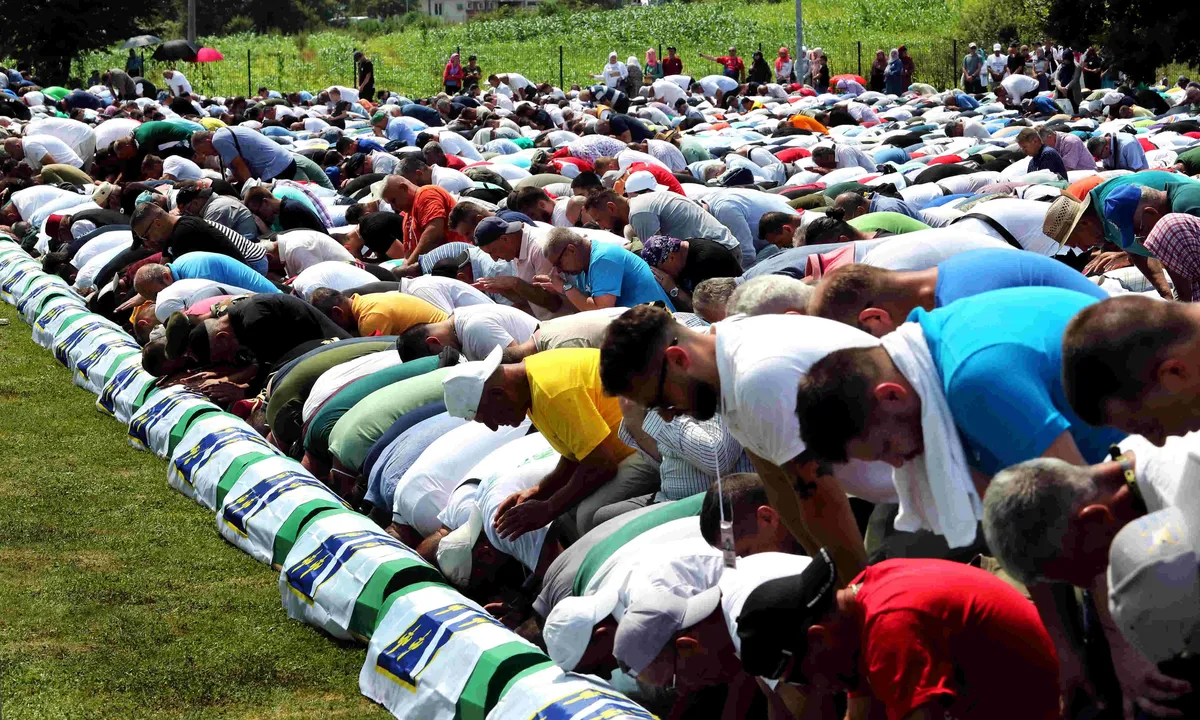
For 20 years that have passed after the bloody civil war, cases of violence on ethnic grounds in the BIG have almost come to naught , but the deep contradictions, which are supported by separate residence of ethnic groups, remained. These contradictions are poured into the actual impossibility of drawing a common solution supported by all parts of the country, since any of them is constantly vested with one of three ethnic groups.
Therefore, in order for Bosnia to develop economically and gets a real chance to join the EU , reforms of the political system are needed that will ensure such a separation of powers between its administrative units that the vesting of key political decisions will become impossible.
In addition, today, state posts in different political units of BIG are engaged in an ethnic principle. Such a scheme is outdated and prevents the next step to overcome contradictions. The transition to a civilian matrix of a political representative office - when any Bosnia citizen of any nationality can occupy any state positions and run for any posts - could support political reforms. Moreover, the foundations for such a transition have already been laid: in two cases of the rights of human rights recently considered by the European Court of Human Rights, where citizens of the BIG opposed the state due to discrimination when appointed to posts, the court sided with citizens.
The Deuton agreements also provided for the establishment of a figure that could bypass all the complex political restrictions of the BIG and achieve the implementation of at least part of the reforms. This is the supreme representative of Bosnia and Herzegovina , formally designed to ensure the observance of the 1995 peace agreement, but in fact performing the supervisory function in the BIG on behalf of guarantor countries-primarily the USA, the EU and Russia.
The Supreme Representative can recognize any law in the BIG invalid, as well as limit the activities of any politician in the country if it causes damage to the functioning of the state.
The current Supreme Representative Christian Schmidt from the moment of his appointment in 2021 and especially after the start of the Russian invasion of Ukraine launched active activity in the country. At the same time, Milorad Dodik does not recognize the legality of Schmidt’s appointment to this position, explaining this by the fact that Russia did not support his candidacy when appointing to the UN Security Council.
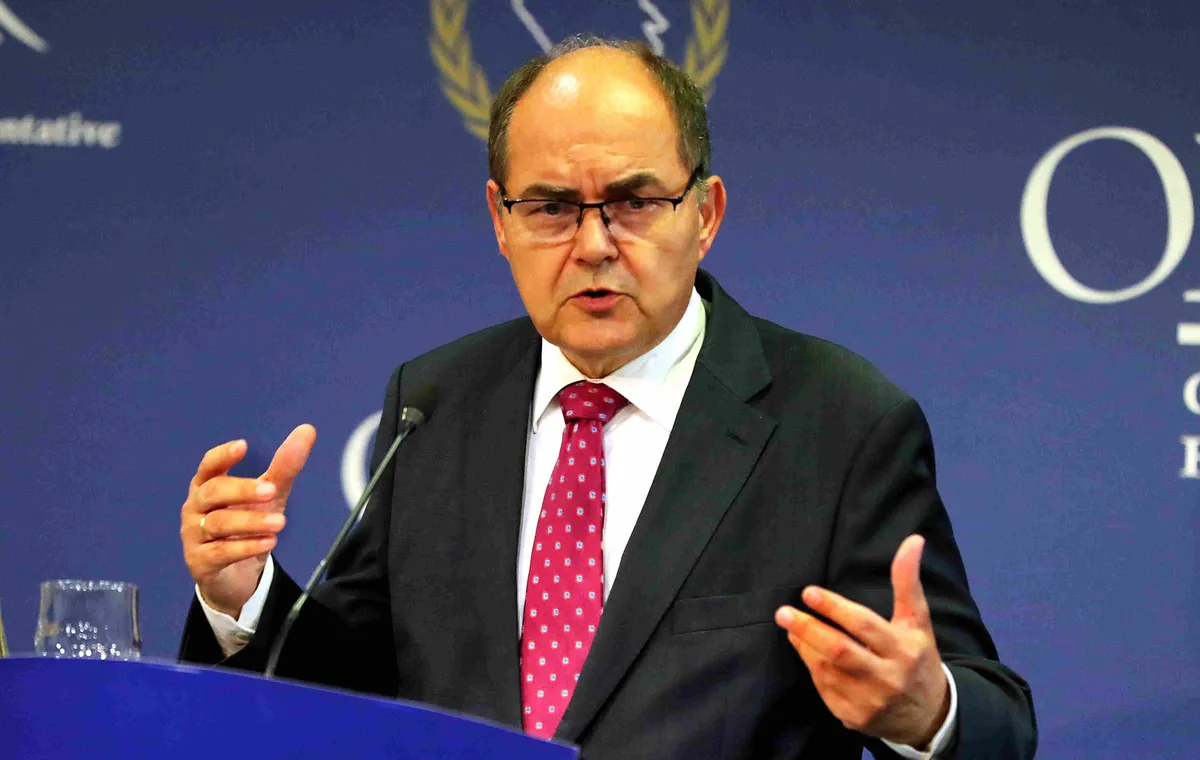
However, in fact, Dodik understands that Schmidt, unlike his predecessors, came to the position of the Supreme Representative to cut the Gordia knot of the political dysfunctionality of the Big, and the plan he proposed has every chance of implementation. Dodik himself has long been using this dysfunctionality of Big in his interests, including to keep his own power.
Schmidt flirting
However, a ball of ethnic and political contradictions in Bosnia does not come down to a simple formula “Dodik against all”. In this case, the leader of the Republic of Serbian would have long left the political scene.
At the moment, the interests of three ethnic groups in Big look as follows:
Croats would like the third ethnic territorial unit - Croatian to appear in the country;
Bosnaks strive to achieve an ethnic principle when appointing state and political posts in the BIG, which in practice will probably lead to greater centralization, and this is in the interests of the Bosnyatsky group;
Serbian elites would like independence, and for this they try to maintain dysfunctionality of BIG, so that over time a single state will finally lose its meaning and break up.
The palette of interests has now developed that Milorad Dodik supports Croatians' desire to find his own ethnic unit, which will probably complicate the decision -making process even more. And in return, the Croatian minority in the Big through its channels of influence in Croatia, which is a full member of the EU, blocks the sanctions of the European Union against Dodik itself.
Schmidt’s plan is to first play along with the Croatian minority and reduce the influence of Milorad Dodik on them, and then, having achieved the change in power in the Republic of Serbian, for example, by shifting the dodik from the post he occupied, to push all parts of the Big to other political reforms necessary for the EU. It was to maintain this plan that Brussels at the end of last year provided Bosnia with the status of a candidate. And American sanctions introduced against Dodik and his entourage work on the same plan, allowing to restrain the separatist aspirations of the leader of the Republic of Serbian and contrast him with the remaining two parts of the Big.
In order to play along with the Croatian minority in Bosnia, Schmidt proposed to carry out the electoral reform in the Bosnia and Herzegovina Federation, and in April , Big temporarily changed the Constitution so that the Croatian President of the Federation was able to finally form a government, the creation of which was already blocked due to contradictions between the Bosnians and Croats. This step of Schmidt is considered a concession to the Croatian minority in Bosnia.
However, in order for Croatia to accurately stop supporting the Dodik at the EU level, Schmidt should also help the Bosnian Croats achieve a new model of their representative office in the Bosnyatsk-Khorvat Federation. Such a model should also arrange fairly radically tuned Croatian nationalists.
At the moment, as a result of this strategy, Schmidt is really a rather Croatian minority.
But at the same time, both Bosnyatskaya and Serbian ethnic groups are opposed to him, although their interests regarding the future BIG are directly opposite:
The former want more centralization and functioning of the state, and the latter seek to separate. In general, such fundamental contradictions make the temporary union of the leaders of these two ethnic groups unstable.
Dodik exacerbates
Schmidt also works on the plan of the rating of Dodik in the Republic of Serbian. In the last elections in October last year, Dodik almost lost the victory: the opposition candidate Elena Trivich was the leader in the number of votes on the night of the voting of the night, but the next morning the results changed in favor of the subdick. This caused quite large -scale protests that showed the president of the republic that he no longer enjoys unconditional support of citizens and he needs to make efforts in order not to lose a dominant position in power until the next elections, which should take place in three years.
Dodik has two ways to increase their rating in the republic.
On the one hand, the Serbian minority of BIG is positive about Russia and personally to Vladimir Putin, even after the war unleashed by the Kremlin in Ukraine. It is the desire to earn additional glasses in the eyes of his electorate that explains Dodik's visits to Moscow, where he recently, for example, exchanged orders with the Russian president.
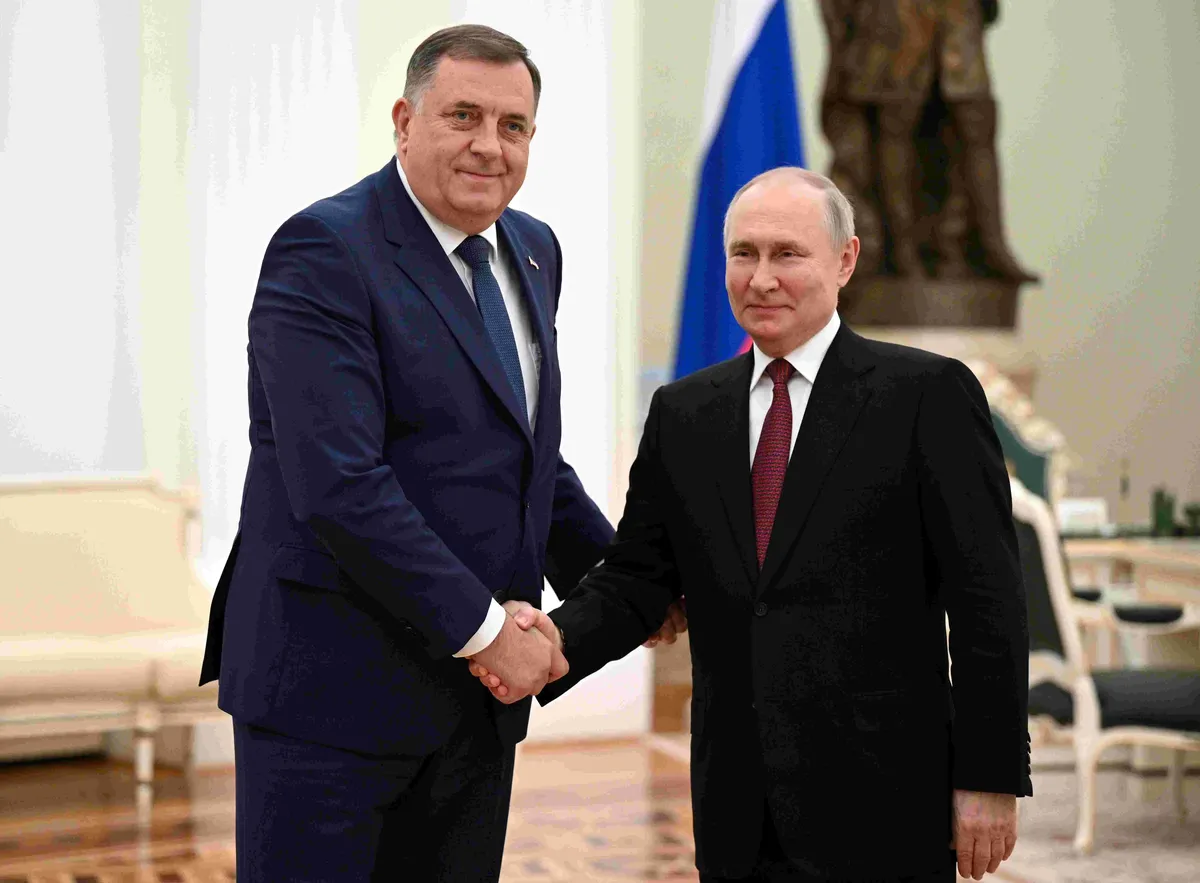
On the other hand, Dodik is trying to demonstrate progress to its most nationalist voters on the path of separation of the Republic of Serbian as an independent state. For this, the dodik and his environment are forced to take more and more radical steps, which cause a sharp reaction of the West and the Supreme Representative. The incitement of separatist sentiments and, accordingly, the conflict with Schmidt, Washington and the EU is one -way path: having stepped on it once, the Dodik will not be able to turn off without loss of the remnants of the rating.
Therefore, the last actions of the subdik - how this law, which allows not to comply with the decision of the Constitutional Court of the BIG in the Republic of Serbian, becomes frankly dangerous.
Dodik is trying to look for more accurate conflict issues and methods of conducting these conflicts, but the further it goes, the less he has space for maneuvering.
From the closest exacerbations to which Dodik can go - for example, to ban the Bosnian central power structures to carry out their work in the territory of the Republic of Serbian, since these departments carry out the decisions of the Big Constitutional Court. Another obvious, but also the most dangerous step is to appoint a referendum on the department of the Republic of Serbian from BIG. Both options can probably become the last political decisions of the subdick in his post, as the red lines outlined by both Washington and Brussels will cross.
Waiting for an error
Thus, Dodik is unlikely to flirt part of his voters with nationalist moods for a long time so as not to come into a real clash with the West. Now Christian Schmidt is clearly waiting for the dodik to make a mistake and decides on more radical actions. Then the supreme representative will be easier to act, and he will be able to slam the prepared trap.
Schmidt’s strategy can work in the case when, by responding to the next radical action of the subdik, Croatia will not block European decisions against him, making sure that the Croatian minority has sufficient chances to find a new model of political representation in the BIG. With this scenario, Dodik will lose power and, probably, freedom, and the path to political reform Big will be open.
On the contrary, if the consensus in Brussels and Washington does not work out on the dodik issue and Schmidt’s plan will not work, the disintegration forces in the Big will receive a new round. With this scenario, the state of Bosnia and Herzegovin will remain only on paper.