
Translated material
Caution, chairs under the government are leaving
The economy is formally growing. The question is in which direction. What will happen to the ruble, deficit, mortgage and inflation
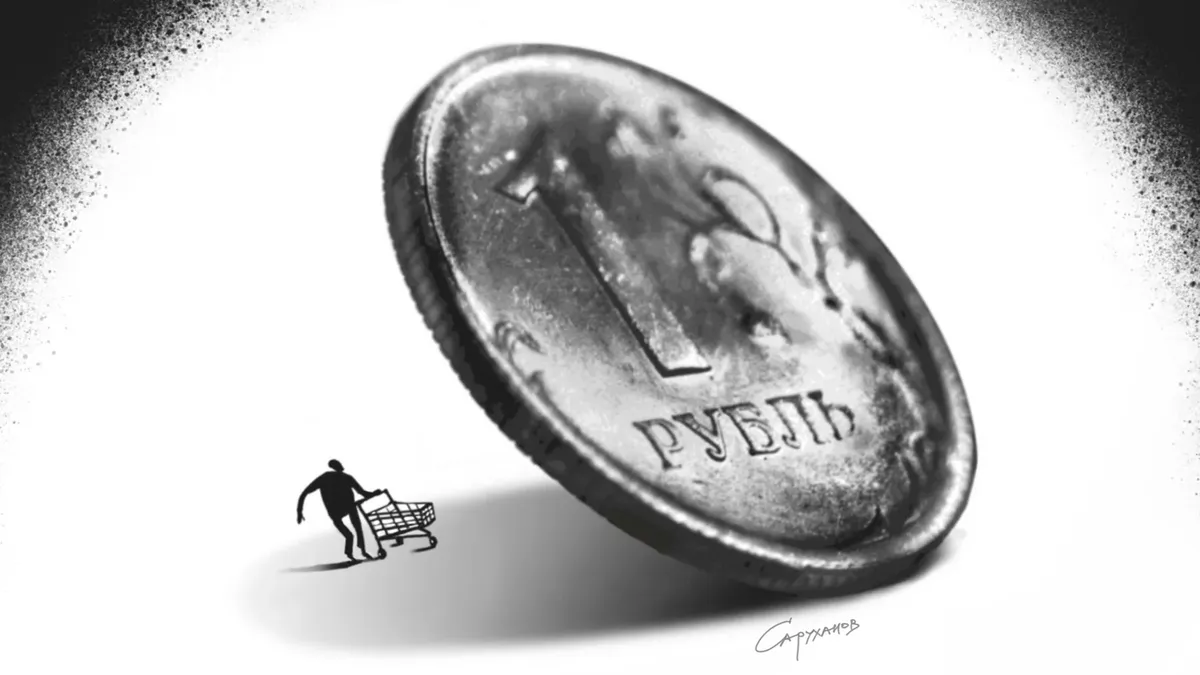
Peter Sarukhanov / "New Gazeta"
Secrets of statistics
The problem of assessing the current state of affairs in the Russian economy is primarily in terminology. The authorities insist that the country's economy is growing - and in evidence they present statistics on GDP growth.
According to the preliminary data of Rosstat, over the first half of 2023, GDP increased by 1.6% compared to the first half of last year (in the II quarter, growth amounted to 4.9% of the year by the year), and while maintaining the existing trends at the end of the year, the economic growth can significantly exceed 2%.
Product growth is observed in all sectors of the economy (except for oil and gas production). In January-July, growth in output
In agriculture it amounted to 1.4%,
in the manufacturing industry - 6.1%,
In construction - 8.7%.
In general, by basic activities, the release increased by 3.6%
What can be "wrong" here?
The fact that the “growth of production” in certain industries financed by the government and the “growth of economics”, understood as the welfare of people, is not the same thing. Positive (or negative) dynamics of the release of one or two quarters in a row is not identical to the state of economic growth (fall). At one time, this was well explained by the Nobel laureate in economics Robert Solou.
Robert Solou:
“... Most people think that GDP is designed to measure economic well -being. However, he is not for this. It is conceived as a measure of economic activity. And not as an indicator indicating whether this economic activity is aimed at the right goals ... "
Thus, arguing about the state of the Russian economy, we must remember that everything that Rosstat calls today “economic growth” is only “increasing the volume of output in individual industries”. And this increase, in turn, is a derivative of budget expenditures and a preferential loan to certain enterprises.
It could not be otherwise-the “ministers” pay for the costs associated with the fulfillment of tasks, which themselves set for themselves and compensate the “capitalists” with the consequences of their decisions.
What is the “growth of the Russian economy” at present?
To answer this question, it will be best to compare the current volumes of output of goods in industries with indicators of not 2022 (they are very distorted due to the decline in the second quarter), and with the indicators of 2021-by the time when the demand for the products of the Russian economy was determined by the market, not the government. And there are interesting indicators.
In the first half of 2023 compared to the first half of 2021:
production of “finished metal products, except for machines and equipment” - increased by 46% in two years (and plus 56% in July 2023 by July 2021);
production of other vehicles and equipment (includes equipment for the performance of tasks, let’s say) - an increase of 30.3% in two years (and plus 73% in July 2023 by July 2021);
The production of electrical equipment - an increase of 20% in two years (and plus 20% in July 2023 by July 2021);
production of computers, electronic and optical products - record growth of 47% in two years (and plus 54% in July 2023 by July 2021);
The production of “medicines and materials used for medical purposes” - increased by 20% over two years (and plus 21% in July 2023 compared to July 2021).
You can record “in plus” and “clothing production”, the production of “leather and leather products”-an increase of 11% and 18% for the first seven months of the 2023rd, but here we must take into account the effect of the low base of 2021.
From these completely official data available from the statistics of Rosstat, you can see the real “structural transformation” of the economy - the industrial sector funded by the government, focused on the production of “techniques to perform tasks”, is growing at a very high rate, but the rest of the economy is not. The only exception is the production of furniture is a growth of 25% in two years (and plus 29% in July 2023 compared to July 2021, respectively). But furniture is an explanatory story: the demand for furniture is a derivative of demand in the overheated housing market. Everything else is at best at the previous levels. About zero.

Secrets of imports
But, perhaps, we finally see the “TO-SMO-Import substitution” and “production-Russian-consumer-Tovars”, about which the Russian authorities are discussing for a quarter of a century?
No.
If this were so, then we would see a comparable growth of trade. But in a year and a half, “production growth” wholesale and retail trade has decreased by almost 10% - this is the most affected segment of the Russian economy. So everything that is “produced” is not “sold” to people. This is another.
And in the automotive sector - a symbol of Russian consumer production - compared with the indicators of two years ago, the release decreased by 44%.
Yes, and the demand for imports has not decreased, the economists of the Institute of National Economic Forecasting of the Russian Academy of Sciences in the “quarterly forecast of GDP. Issue No. 59 ":
“... the volume of imports remained stable. <...> In the dollar equivalent for January-July 2023 and 2021, the import of goods and services amounted to $ 218 and $ 205. ”
That is, the import has been preserved, and export? According to the RAS Inp.
“In physical terms, the drop in exports according to the results of the first quarter amounted to 15–20% in annual terms. At the same time, for the first half of the year, the value of exports was reduced by $ 120 billion compared to 2022 (returning to the level of 2018–2021), while the value of the import of imports turned out to be maximum since 2015. As a result, the account of current payment balance transactions, especially noticeable in recent months, occurred. ”
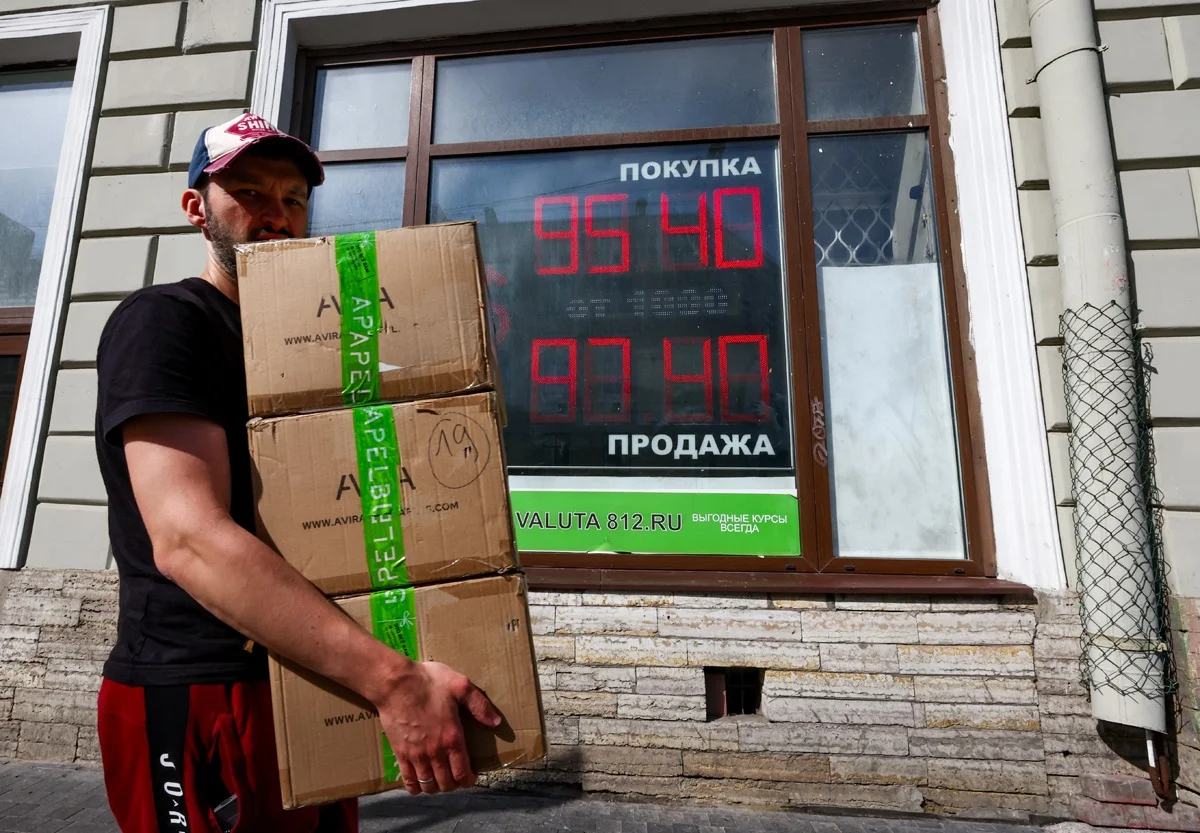
So this is where the ruble devaluation came from. If you have less currency on your market, and demand for it does not decrease, then the currency will rise in price.
But that's not all. Currency currency is different.
The struggle for the "dedollarization of export revenue" led to a shortage of dollars in the Russian Federation, and the deficit of dollars turned into a decrease in the ruble exchange rate, experts of the Inp RAS explain. This is even a more important factor of devaluation than the reduction in export and foreign exchange earnings in itself.
A serious weakening of the ruble exchange rate was the result of not so much the reduction of the value volume of exports as of significant changes in the structure of currency calculations for export and imports.
“In the last decade <...> the foreign exchange of foreign trade flows has remained stable: the share of dollars and euros in export revenues was at 85%, in transfers for imports - 65%.
But starting from the second quarter of 2022. These shares began to quickly decline in favor of the ruble and currencies of other countries. As a result, in June 2023, the share of the dollar and the euro amounted to only a third of the receipts and transfers for export and import, and the ratio of export and import flows in these currencies approached the unit (in 2013–2021, it changed in the range of 1.5–2).
Problems should also be taken into account using reserve currencies in the Russian market ... As a result, with a surplus of trade balance, a deficiency of currency in the domestic market and a surplus of rubles from foreign trade operations were formed ...
The currency market in the sale of reserve currencies has become extremely “narrow”, which makes it extremely sensitive to a decrease in the supply of currency, and the effect on it is extremely limited. <...>
Even a return to the mandatory sale of foreign exchange earnings with decreased export volumes will not be able to compensate for the currency deficiency in the domestic market. ”
At first, the authorities orders to “sell resources” behind Rupia and Yuan instead of dollars and euros, then it is surprised to go where the dollars and euros have gone, why they suddenly became expensive (you can’t deceive the economy).
The government, by the way, also understands that the key reason for the high cost of the dollar is its deficit.
QUOTE
The first amglava of the Ministry of Economic Development Ilya Torosov in the fields of the Eastern Economic Forum:
“We have a plan for how to return the currency to a normal corridor - this is from 70 to 80 rubles. <...> We predict inflation at the level of 5.3% by the end of the year, - the first said). ... First of all, we need to make an effort so that there are more offers in dollars in the market than now ” (cit.“ Izvestia ”).
And in the INP RAS, they also suggest another reason for reducing the supply of dollars in the market:
“... It is also necessary to take into account the fact that, refusing to sell currency revenue, exporters compensate for the increase in tax burden in the fuel and energy complex and a one -time tax on excessive income” (“quarterly forecast for GDP No. 59”).
And it is interesting that the ministers will make the capitals so that the “offers in dollars in the market” will be. Will the taxes in the fuel and energy systems? Refuse trading in the yuan, etc.? “Press” on exporters? “Press” on people?
Secrets of devaluation
At the same time, the devaluation of the ruble is not a bug, but a feature: a prerequisite for the economic model chosen by the authorities.
This is what academic economists say about this:
“... The economy still remains a deficit of imports in which the elasticity of demand for imports at the exchange rate has decreased.
If this is so, then devaluation can turn into a self -supporting mechanism - the depreciation of the ruble and the growth of the share of ruble payments due to export reduce the sale of foreign exchange earnings (it needs to be less to pay taxes and operating expenses), despite the domestic market cannot greatly reduce the demand for imports and, accordingly, continues to present demand for currency. Obviously, this vicious circle must be broken, which is possible only due to a change in the structure of both demand and currency proposals.
The key contradiction of the current situation is that the demand for imports, judging by indirect data, is primarily presented by enterprises. This applies to both investment and intermediate products. Without import resources and in high interest rates, tasks on structural restructuring of the economy are unlikely to be solved ... "
It turns out that "import is needed in order to get rid of dependence on imports." What? Yes!
That is, the main demand for currency does not go from the “consumers”, but from the “manufacturers”. And these enterprises buy currency for rubles, which they receive, most likely, at preferential lending rates or directly from the budget (and where else). And “the price of the dollar in rubles” (as well as the price of “production import”) does not bother such enterprises. By the way, this is at the macro level, the same as maintaining the “two” currency course - one, “preferential”, for “their own”, the other, “ordinary”, for “all the others”. And also at the macro level, the payback for such a policy is always the same - the degradation of consumption.
So, the demand for foreign exchange revenue is presented by two key groups of customers:
"Manufacturers" from the processing industry engaged in the implementation of the government order;
Importers of consumer goods (there are also exporters themselves, who are critical of the currency to “maintain in order” of their own infrastructure in the situation of “switching export“ east ”, but they are not so important for the government - the ministers are sure that there is money).
And now all the fluctuations in the course are a derivative of the government’s efforts to establish the “distribution” of the currency between the two groups of interests: “processing” and “importers”.
“Processing”, in general, is indifferent to what the course will be-firstly, the government will pay, and secondly, we actually have several “courses”-probably the same currency revenue that was allowed to leave abroad to the exporters, goes to pay for the same “industrial import”, which is needed to be processed on some special conditions.
But “importers” are more difficult, because their demand for currency is actually a derivative of the demand for “full counters” from the main groups of power support:
pensioners,
state employees,
Those who are busy fulfilling the government order (or earning on it).
Conventionally, the government “on their own” would not have scared either the “two hundred” or “empty shelves”, but the recipients of pensions, benefits, “capital” and “payments” will perceive it as an attempt on the most sacred, and the TV will not help here.
The government is difficult. Each ruble that goes to “payments” turns into “imported goods” and bakes a piece from foreign exchange earnings. And this revenue - in any case, is limited, no matter how you lay it out into pockets, offshore banks and crypto -rhms - this itself will not increase its volume. Therefore, the farther, the more difficult it will be to find the balance between the “full regiments” and the “completion of tasks”.
Therefore, by the way, the Central Bank increases the rate with one hand - to press consumer lending and bring down the demand for imports, and with the other hand the government already supports a preferential mortgage - to “withdraw” money from the consumer market and send them to the construction industry.
Secrets of the mortgage
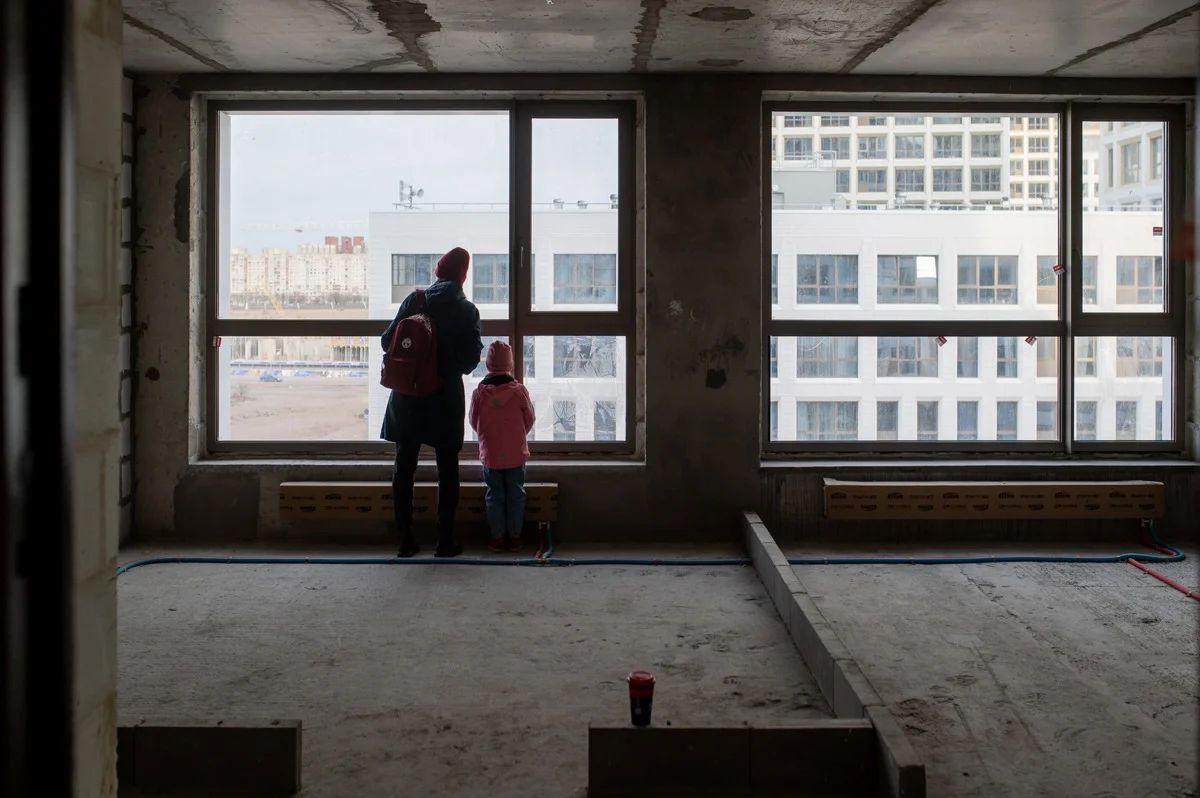
And this is what reasoning occurred in connection with a preferential mortgage, which will either be extended, or not extended (and if they extend, it is unclear, under what conditions).
The officially preferential mortgage was stuck as a mechanism for providing “affordable housing”. Perhaps only in practice the housing has risen in price by half, and its availability in terms of annual salaries even decreased.
But in any case, the preferential mortgage warmed up the housing market and threw the risks of the construction industry from developers to buyers.
But the main thing is not this.
But what if the “preferential mortgage” was originally “about another”?
Look.
We have already explained that all that Rosstat calls today “economic growth” (in fact, this is “an increase in the volume of release in individual industries”) is a derivative of budget expenditures and a preferential loan to certain enterprises. As a result, the economy has an increase in aggregate demand due to budget and credit cash pumping - everything is fine, as in the macroeconomics textbook.
But!
Further in the textbook it will be written that in the case of expanding aggregate demand, existing enterprises can increase production by loading idle capacities and hiring new employees (that we are just observing in the Russian Federation).
Experts of the Central Bank of the Russian Federation in the September issue of the ballot "What Trendes are talking about":
“The increased demand in the economy by the budget in some sectors partially replaced the fallen export demand (for example, in metallurgy), and in others - led to the excess of production capabilities, taking into account logistics restrictions (for example, in mechanical engineering). Together with a high credit impulse, this factor to date has led to the excess of GDP of its new potential level. This gives an answer to the question why, with the general restoration of GDP, only to the pre -crisis level the demand that has developed in the economy exceeded the supply of goods and services and created a significant inflationary pressure. ”
But when the capacities are loaded, the employees are hired, and demand continues to expand, investments will be needed to increase labor productivity and create new capacities.
But there may be problems with investments.
No, with regard to “investments for the performance of tasks” - everything is clear there, the government makes it clear that it will not stop in front of expenses and costs.
Problems can be with investments in the production of everything else - because consumer demand in a situation of growth of salaries provoked by government pumping of demand cannot be calculated.
Maybe people will want to buy cars, or maybe computers. (The Soviet Union came across this problem, where, with the beginning of the growth of real incomes of people in the 1960s, it was not possible to calculate the volume of consumer goods. Here, of course, you can add that in the conditions of closing the domestic market the company may not rush with investments at all-and where to the consumer to go.)
In general, bubbles of unsatisfied demand (with all consequences - deficiency and inflation) will be inflated on the market. So people can also begin to buy dollars - and there will not be enough foreign exchange earnings for everyone.
What to do?
In developed countries, for such situations, there is a stock market that can absorb “extra money”. But in Russia, the stock market is a good story for multimillionaires and professional players, and for the vast majority it is a casino, and not with the highest chances of winning (it is no coincidence that most brokerage accounts in the Russian Federation are either empty, or there are several tens, not even hundreds of thousands of rubles).
Now put yourself in the government’s place. If you understand (and even better - you know) that the policy being carried out leads to a situation when you will have to support the economy by “increasing aggregate demand” (distribution of budget money and preferential loans “manufacturing industry”),
Then you will need to either normalize consumption (as was done in the USSR during industrialization), or create some kind of mechanism in advance that will “take extra money from the market”.
And what could be better than a “overheated real estate market”? All that people suddenly receive “over the expected”, they will take it to developers - instead of carrying to shops and exchange points. "They did not wait, but prepared."

What will happen next?
The growth of production, which is reflected in economic dynamics and which the government is proud, stimulates employment and growth of wages. But this production does not create goods that the economy and citizens could consume. This enhances the discrepancy between demand and supply; Other indicators - such as employment or income dynamics.
In other words, prices will grow, and stable. Согласно обновленному социально-экономическому прогнозу Минэкономразвития, по итогам этого года министерство ожидает роста цен на 7,5%, а в 2024 году цены должны вырасти на 4,5%. В «апрельской версии» прогноза было так: «инфляция-2023» должна была составить 5,3% и достичь 4% в следующем году.
Согласно актуальным показателям ценовой динамики, о публикованным ЦБ РФ, инфляционный импульс, который начал реализовываться с июля, соответствует 10,8% годовой инфляции (т.н. Seasonally Adjusted Annualized Rate (SAAR) — сезонно сглаженная динамика в пересчете на год). При этом инфляционный импульс формируют те товары, на которые российские домохозяйства тратят 75% своих расходов.
Цены на продукты разгоняются в темпах 16,2% SAAR, при этом быстрее всего дорожают мясопродукты и плодоовощная продукция. Темпы роста на непродовольственные цены достигли 13,4% SAAR с июля 2023-го.
Так что даже если деньги есть, то купить… будет «что купить», но дорого. Как объясняет эксперт по продовольственному ритейлу Михаил Лачугин.
QUOTE
Михаил Лачугин:
«если ассортимент в условном «магазине для среднего класса» действительно сокращается, то для тех, у кого есть деньги на покупку более дорогих товаров — не важно, машин/квартир или сыра/вина, — ничего особо не меняется.
Да, в премиальных магазинах заметны некоторые изменения ассортимента. Но именно изменения, а не сокращения. И вина из Новой Зеландии, и рыбное разнообразие со всех концов света, и различные «ушедшие» из России бренды — всё в наличии. Как и в ряде других сетей. Дороже, но в наличии.
Поэтому я бы скорее говорил о том, что широкий ассортимент сосредотачивается в премиальных и близких к таковым сетях для определенной публики, которая не готова отказываться от него.
В прежние годы многие магазины, даже низкого ценового сегмента, ставили себе на полки все подряд просто «чтобы было» — тогда люди шли на ассортимент (хотя 90% из них все равно покупали одни и те же массовые марки). Проще говоря, само наличие в ассортименте множества позиций в каждой категории привлекало трафик. Сейчас этого нет, соответственно, необходимость в таком отпала. Кому нужен ассортимент, пойдет в определенные магазины, а кому нужны продовольственные наборы — в любой сетевой супермаркет…»
Сложившийся баланс между производством и потреблением останется устойчивым до тех пор, пока у правительства есть под рукой ресурсы, позволяющие и «выполнять задачи», и «наполнять прилавки». То есть валютная выручка.
А как же ключевая ставка ЦБ РФ? Будет ли финансовый регулятор снижать ее, чтобы участники «потребительского рынка» получили доступ к кредитным ресурсам. No. Снижение ставки будет означать рост потребительского кредитования и рост спроса на потребительском рынке. Если «производство» крутится исключительно вокруг выполнения задач, то растущий спрос может транслироваться разве что в рост импорта и цен. Рост потребительского рынка будет означать рост спроса на ресурсы, которые нужны самому правительству для выполнения задач. Сейчас оно будет искать новую точку равновесия между объемами ресурсов, задействованных «в производстве техники» и т.п., и уровнем потребления людей. Собственно, правительство уже дало понять, где этот уровень, в базовом варианте прогноза социально-макроэкономического развития на следующий год и плановый период 2025 и 2026.
Минэкономразвития ожидает, что в 2024 году один доллар будет стоить в среднем 90,1 руб., то есть на 13,3 руб., или на 17% выше, чем ведомство прогнозировало в апреле.
В 2025 году доллар, по прогнозу, будет стоить 91,1 руб. (что на 13,5 руб. выше, чем «апрельские» 77,6 руб.), в 2026 году курс российской валюты снизится до 92,3 руб. за доллар вместо 78,8 руб. в предыдущем прогнозе МЭР.
На всякий случай фактический курс рубля по состоянию на 13 сентября приближался к 96 руб./долл., цены на нефть марки Brent превышают 90 долл./барр.
Выраженные «в долларах» зарплаты за год уже снизились в полтора раза, соответственно, снизилась и возможность покупать «импортное».
Прогноз Минэкономразвития предполагает, что среднегодовая цена на нефть марки Brent в 2024 году составит $85 за баррель, а затем снизится до $80,2 в 2025-м и до $76,2 — в 2026-м. Прогноз валютной выручки также снижен с $484 млрд до $471 млрд на 2024 год и с $496,2 млрд до $481,1 млрд на 2025 год.
То есть валютная выручка не увеличится, и перераспределять ресурсы в пользу «производства», а не «потребления» правительству придется все активнее. Цифры выпуска продукции будут расти, занятость поддерживаться, но роста потребления не будет.
Как долго правительство рассчитывает продолжать свою политику? Ответить на этот вопрос можно будет не раньше, чем мы увидим проект федерального бюджета.