
Translated material
Kunder and Bandera
Modern Russian -speaking culture as a bastard of "Soviet universalism"
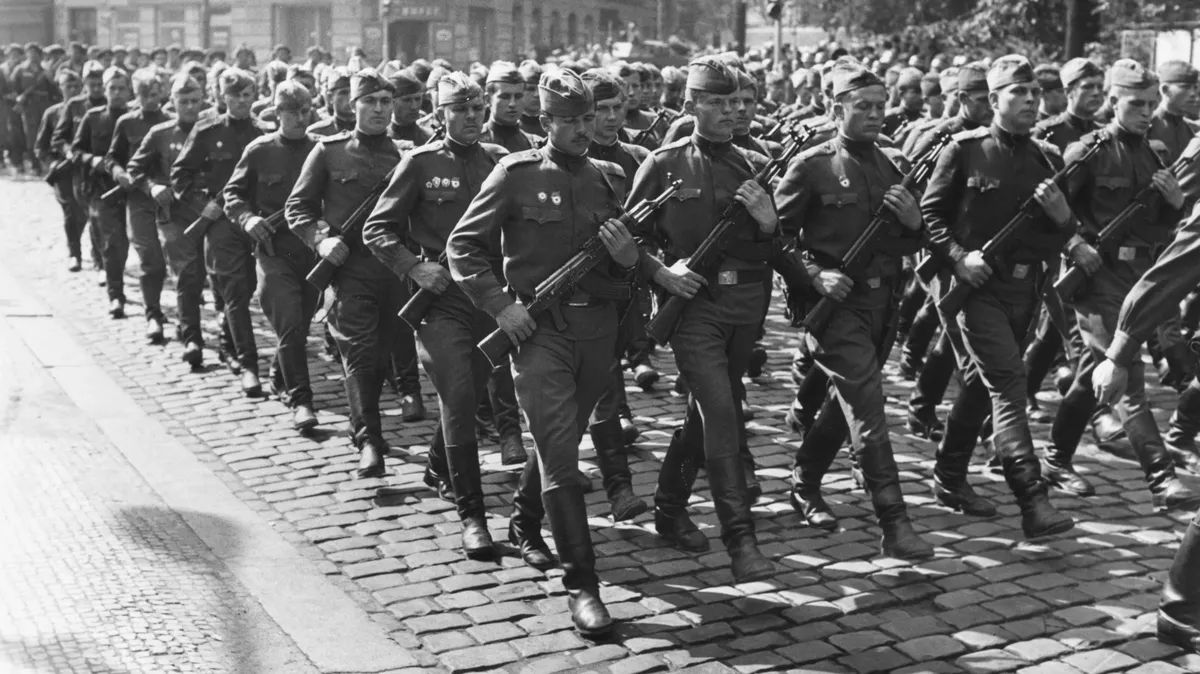
September 10, 1968: Soviet troops march along the streets of Prague, Czechoslovakia. Photo: Getty images
Frankfurter Allgemain Zeitung published an article by journalist Nikolai Klimenyuk “They want us to love them”, dedicated to the reception of modern Russian culture. According to Klimenyuk, this culture is based on the concept of violent love, destructive universalism, which does not recognize the boundaries: neither personal nor state. A discussion unfolded around the text; In particular, criticism of publication on the pages of Colta.ru was made by philologist Ilya Kukulin. The editors of Novy-Europe asked to analyze the context of the "New Russian Universalism" by political scientist Alexander Morozov.
As a result of several waves of processing by the first half of the 60s. Soviet culture - here this refers to culture in the broad sense, that is, all the environments of cultural production, not only literature and cinema, but also education and ideology - came to the form of universalism, which is the "home" of my generation. The class struggle ended, and everyone who was in the USSR became "Soviet people." In its concept, the “Soviet man” was much wider than the “citizen of the USSR” by the passport, it was not equal to the “civil nation”.
This concept was arranged so that the “Soviet man” extended far beyond the borders of the Soviet Union, and at the same time was rooted in history much deeper than the history of its own state. The Soviet man counted himself from the uprising of Spartak and considered his whole world history the so -called free thought. By this word, the most diverse thinkers and figures of different countries and eras, which could be united by one: they opposed any hierarchy, both secular absolutism and any religious hegemony.
The Soviet man built his world literature, the world history of painting, and the history of technology. It was a very wide cultural canon, which was assigned - of course, with some re -accentivation - almost the entire world heritage, except for "political conservatism and religious obscurantism." The Soviet man considered Tila Ulenspigel a hero of his everyday life along with Pavka Korchagin. But did not know de Mestr and Thomas Aquinas.
The Soviet cultural canon did not just claim universalism, it existed as universalism.
Moreover, as a universalism, opposed to “bourgeois universalism” and has already defeated this past claim against universalism.
I’ll name several main projections of this Soviet universalism. First: a clear contrast of the "people" and "ruling classes." Second: the heroization of all "fighters for folk happiness." Third: the emphasis on the “power of the spirit” - it could be both the literary heroes of Jack London or the conquerors of the Arctic, and their heroes of different wars. Fourth: since the “peoples” are the same everywhere in their “aspirations” (like “ruling classes”), these peoples were embraced by “internationalism”, that is, a special understanding of “Brotherhood”. This fraternity was taken from the slogan of the French Revolution and reached the “Kiss of Brezhnev and Honecker” in the famous visual meme of Dmitry Vrubel. After World War II, the Slavic Brotherhood was cultivated. Fifth: The Soviet man relied on the "accessibility" of thought and art form. Art and in general the expression of thought should be understandable, that is, “folk”. And the sixth: a Soviet person should be thought of as the best way to combine collectivism and individualism.
As Alexei Yurchak correctly showed in his famous book (“It was forever until it ended”), as well as sociologists who studied the “Soviet man”, all this worked well at the same time and did not work at all. This is the paradox.
All this machine was designed to strengthen in the Soviet man an idea that his life was based on the only possible universal grounds. And she did it.
Based on this universalism, a huge society put on a public panel not only “propaganda of communism”, but also “trench truth”, not only cheerful Komsomol songs written to mobilize youth to build BAM, but also “Ivanovo childhood”.
But in parallel, the second universalism was also formed. When Grossman in 1950 began to write “Life and Fate”, he himself believed that his novel would fit into a new post -war turn of “Soviet Universalism”. But this turned out to be wrong, and the manuscript was seized by the KGB. A group of historians in the sector of the world history of the Academy of Sciences mistakenly considered that “Soviet world history” should be rewritten and dispersed in 1969.
Plus, there was a constant “leak of groundwater”: a silver age came to the Soviet man, a completely crowded out Russian religious philosophy, plus a culture of emigration free from the Soviet framework, poetry in typewriting. Like it or not, the Soviet disciplinary machine had to constantly replace something as “non-imperial”, “bourgeois”, “modernist”, “abstract-humanistic” or simply “absurd”.
And on this basis, a second universalism was formed inside the Soviet world - it was entirely individualistic. He not only rejected the Soviet disciplinary frame, but built his pantheon of freedom,
Based at the same time on everything at once: on the radicality of the artistic form, on Christianity, on the tradition of complete autonomy of poetic speech, on aesthetic dendism, and ultimately, the concept of “reflection” (“introduction”), that is, to understand a person as a freely becoming continuous recycling of experience with tools of thinking, which are also constantly subjected to free criticism within this tradition.
Between 1968 and 1988 The whole large environment of carriers of cultural universalism from the Eastern Bloc countries led to each other, translated each other, tried to monitor the iconic figures of her circle inside different countries of the Eastern Bloc, supported its contour with mutual reviews, cross -country publications, polemicized with each other.
Of course, this pantheon of freedom was attached in the minds of its carriers, who grew up in the Soviet world, to the cultural history of Europe. Those who left, and those who remained in internal emigration in their countries, relied on this universalism.
The incredibly bright episode of this cultural universalism was the polemic of Brodsky and the Kunders. Both of them were - in their cultures - the embodiment of literary dendism, supports on the ironic prison, belonged to one circle of successful writers who left the Eastern Bloc and successfully stood on the shoulder of the second language: in Kunderi - French, in Brodsky - English. Brodsky left in 1972, Kunder in 1975.
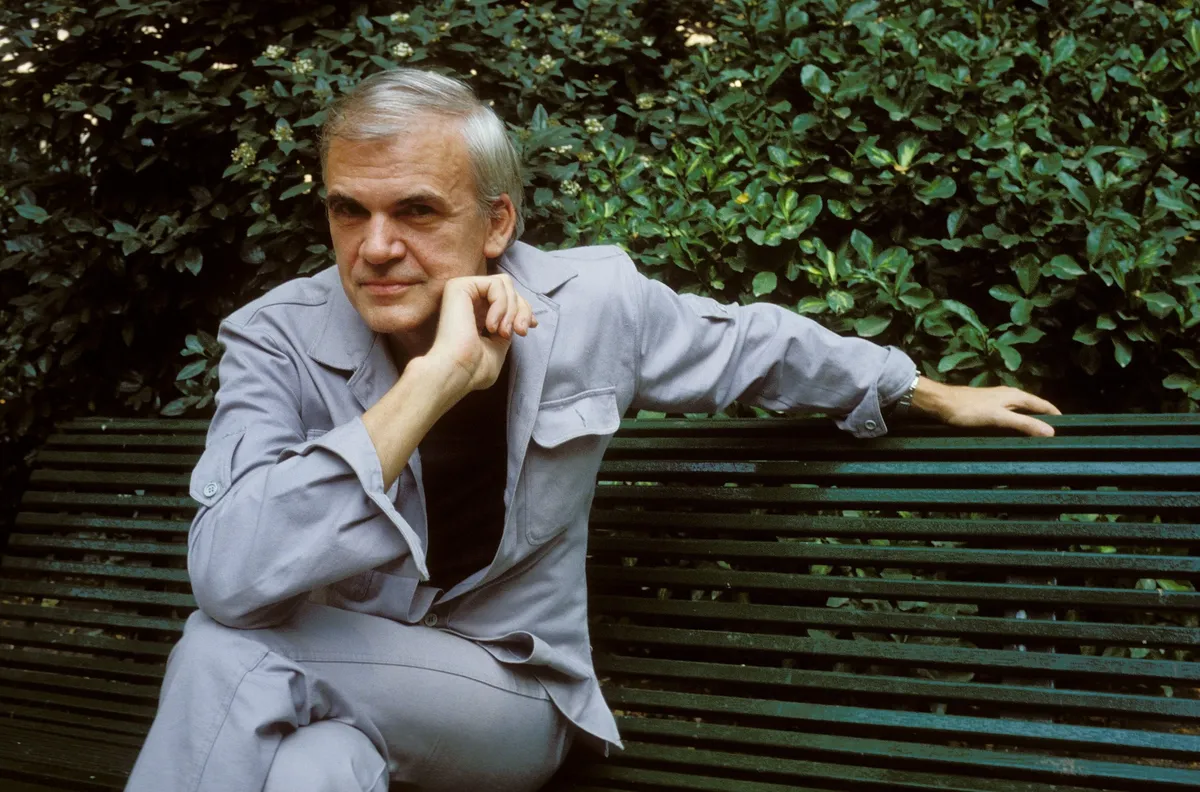
In 1985, Kunder published a small essay written as an announcement to the production of his play in Boston. The core of this essay is the manifestation of the cunder of his understanding of Europeanism through the figure of Didro. In order to shade his understanding of the “erotic rationalism” of Didro, Kunder polemically contrasts him with Dostoevsky; Emphasizing that this does not apply to Russian culture as a whole. Dostoevsky Kunder denotes as a manifestation of a directly reverse - "anti -erotic sentimentalism." The heroes of Dostoevsky swim in “muddy feelings”, and these feelings are deeply abusable.
Kunder, of course, read Bakhtin and knew about his influential concept in European circles that the “carnival dialogism” of Didro was an important source of the formation of Polyphony Dostoevsky. The Kunder in the essay briefly describes a special type of dialogue in Didro - a description of a certain situation from different points of view, where the author is taken out of the brackets, and the event and plot itself are formed exclusively due to “dialogism”.
Apparently, the Kunder decided in a hidden form to polemicize with Bakhtin and, as it were, to unhook Dostoevsky’s car from Didro (and from French rationalism as a whole).
A mystery is why Brodsky decided to go into a rather ornate polemic with specifically this small essay. Probably, he was not hurt by the Kunderi attitude to Dostoevsky, but by the fact that he threw a too wide bridge between Dostoevsky's sentimentalism and the “feelings” of the Soviet officer during the invasion in 1968. But for the whole environment of the Eastern Bloc intellectuals, 1968 was an important unifying event.
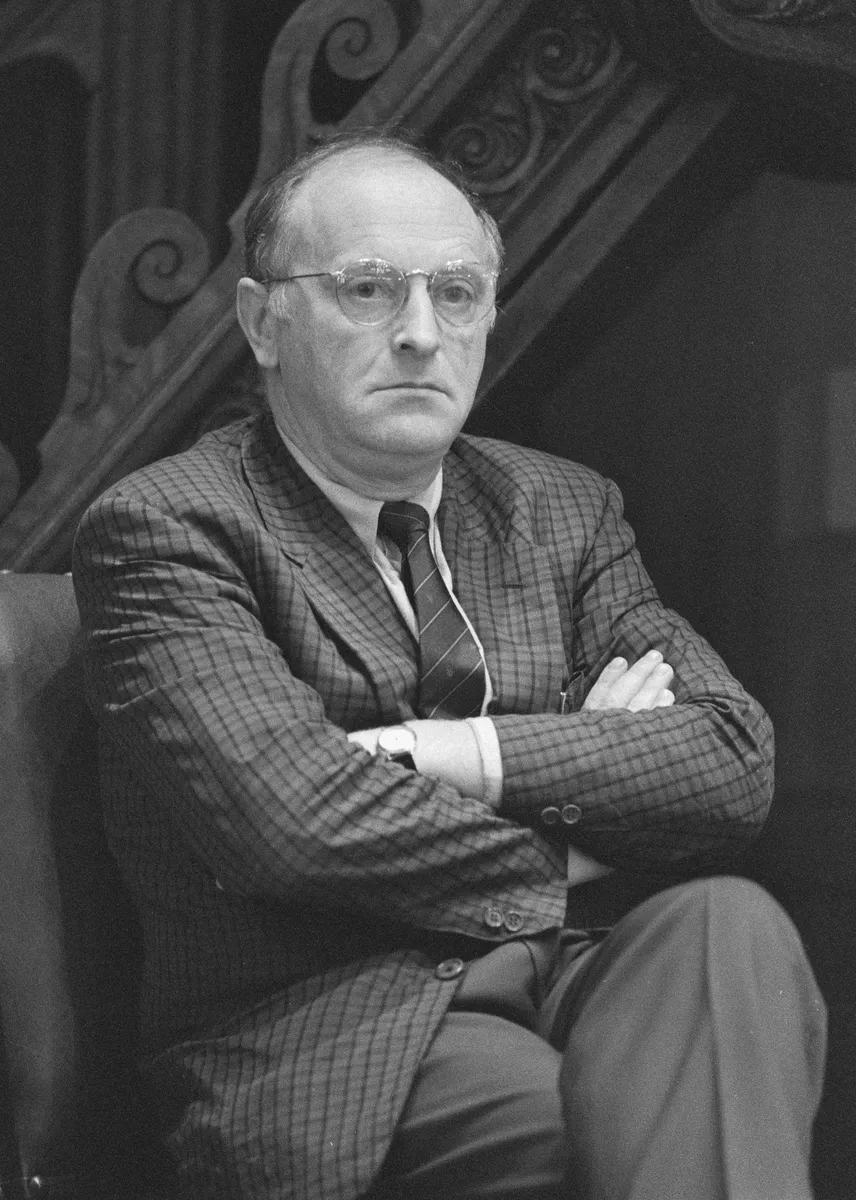
Brodsky answers Kundere from the standpoint of even more refined cultural universalism. Brodsky responds down, although there is nothing in his response, except for the long -deployed thesis that the aesthetics is autonomous and beyond any ideology.
That is, he meets "school wisdom." It is clear that Kunder knew very well: the line of “muddy feelings” does not run right from Dostoevsky to “Soviet sentimentalism” of the 1968 occupiers.
This is a very vivid episode of the intellectual polemic of two cultural universalists who left the dandy of the Eastern Bloc - around the European tradition of reflection, self -understanding.
And now we have a problem. The problem is the reception of this polemic. And not only this polemic.
The fact is that after the collapse of the Eastern Bloc, all peoples who formed or restored states have done a great work to process their “Soviet” past and create new plugs in national cultures to recover to modern European and global culture.
They formed new pantheons of freedom. They left the “post -Soviet” space and began to quickly settle in their own cultural boundaries and in their rethought connection with the global context.
But trouble happened to us. Russia, having received new next borders after the collapse of the USSR, continued to live inertia inertia into the old “sub -Soviet” (expressed by Solzhenitsyn’s words) “cultural universalism” inside these borders. Three generations that are actively living in the post-Soviet 30th anniversary in Russia swim in the wreckage of the Soviet cultural canon. This porridge is even worse than the so -called “Kremlin propaganda”.
Propaganda is rude, aggressive and openly abusivist. Today she persistently introduces something obviously “exclusive”: “Russian world”, the fraternity “Orthodoxy or death!”, Gopnic neglect of all peoples in general, and not just those who were part of the Russian Empire or the USSR. And it is easy to move away from her.
But where? To the “general cultural past”, that is, to Dostoevsky, Cheburashka, Stirlitsa, to Vysotsky and Tarkovsky, to Gagarin (and what about the cosmos?), To the “correct immortal regiment”, to the “brilliant age of Peter and Catherine” (the victims of which the speakers of Pope Francis fell, so that we have to prioritize us). Brilliant jokes Ostap Bender and the social utopia of the Strugatsky. On the basis of this porridge, a cry rushes: “We are a European nation! You do not allow us to cross the border of the European Union with our suitcases and cosmetics, and we gave you, Gadam, Tchaikovsky and Prokofiev! We are against violence, we are for cultural universalism! ”
But who says that? Who and why was the bearer of cultural universalism in the countries of the “Soviet bloc” is understandable. And how it transformed in other countries, we know. And in Russia now, who claims cultural universalism?
This is a consciousness abandoned in the post -Soviet porridge, which does not have any tools in the development of the world, except for the inherited and non -reflected Soviet “anti -fascism”, domestic “sentimentalism”, and, as the Italian Slavist Ricardo Nikkolosi, based on “imputed memories”, that is, on the dining of children's childhoods. Impressions of stories about how grandfather fought with Bandera.
The problem is that Russians who have received humanitarian education in the post -Soviet period think that they speak on behalf of Brodsky, and Brodsky, as it were, speaks on behalf of their cultural universalism. Nothing of the kind! Kunder and Brodsky rely on cultural universalism in a completely different historical context, both of them did a huge job in their generation: the work of reflection, the use of the depths of the language, and work with tradition. And today-when the war goes uphill, it is not visible, and it is not clear how the post-Soviet transition for the Russian Federation will end at all-we cannot hide into the house of this quasi-Soviet “cultural universalism”, only because we also “love” Goya and Rembrandt. All this should be processed, reborn. It is unlikely that this can be done now. War is a time of disaster evidence. But after the war, you will have to answer the question: who do we have, for example, Brodsky?