
Translated material
Extraneous imports are prohibited
Novyevropa talked with those who have already encountered cars with Russian numbers, and those whom this problem will be affected soon
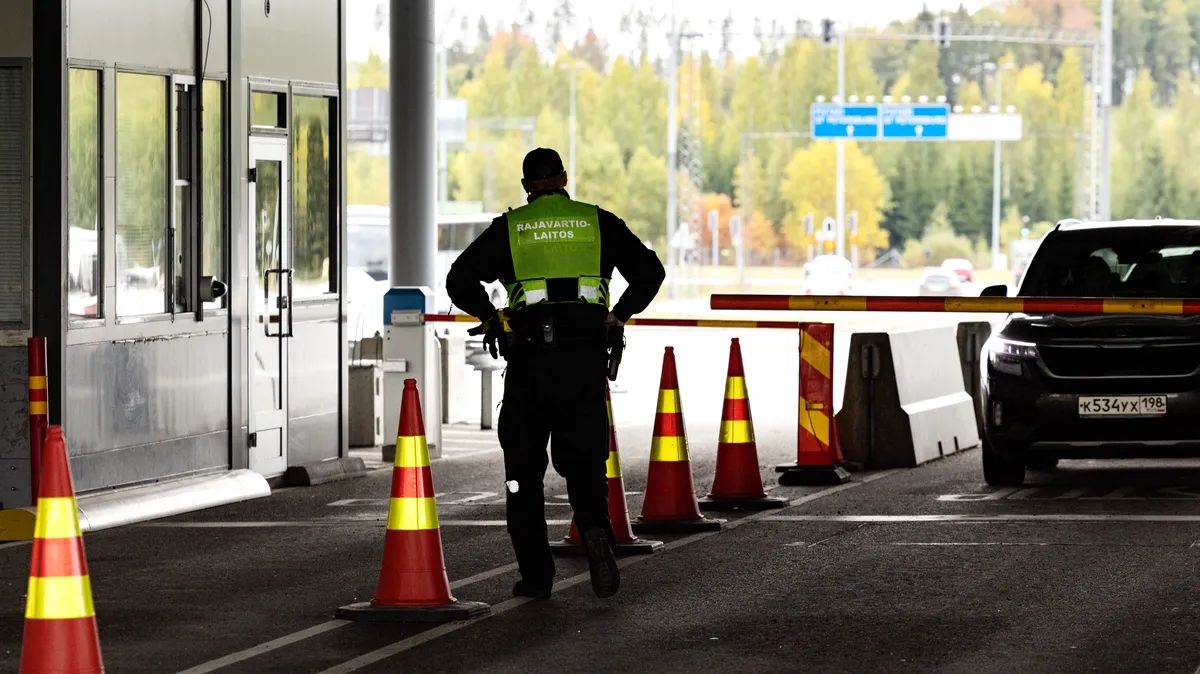
The border crossing point between Russia and Finland. Photo: EPA-EFE/Roni Rekomaa
Last week there were clarifications of the European Commission of sanctions legislation, according to which citizens of the Russian Federation are prohibited from importing cars registered in Russia to the EU. In addition, 150 types of goods were banned, including mobile phones, laptops, cosmetics, clothes, shoes and so on.
This news caused a stormy discussion both on social networks and among politicians. The Russian authorities expectedly promised to think about mirror restrictions on EU citizens in order to influence “enraged Euroborlars”, and the Baltic countries even announced that they stopped passing cars with Russian numbers. At the same time, Finland promised not to follow the recommendations of the EC.
Russian opposition politicians turned to the European authorities with an appeal to revise the restrictions introduced. The same appeal was addressed by the deputy of the European Parliament from Germany Sergey Lagodinsky. He stated that the European Commission discredits the instrument of sanctions and embargoes with similar measures. In his opinion, only goods should fall under the ban, which can bring significant incomes of Russia to continue the war, and not personal items purchased before leaving the country.

Against the background of the ongoing discussions, the representative of the European Commission Daniel Sheridan Ferri said in response to the request of the Novo-Europe that the European Union countries may not confiscate the clothes of Russians entering the EU, even if it is prohibited by imports.
“The clothes that a person wears when crossing the border is unlikely to be directed or used to circumvent sanctions - unlike, for example, from cars or other valuable goods,” he said.
On the evening of September 12, EC softened the ban on the import of personal things by the Russians. In a new clarification, officials recommend that the EU customs services evaluate each case separately, as well as concentrate on imported cars. The document emphasizes that machines can be used to circumvent sanctions.
For other categories of goods that “cause insignificant concern from the point of view of bypassing sanctions,” such as personal hygiene items or clothing, it is recommended to use the ban “in a proportional and intelligent way”. It is important to note that in the new explanations of the European Commission, there is no approval of the ban on the import of smartphones, laptops and cameras.
Germany
The first cases of the arrest of a car with Russian numbers in the European Union became known at the end of May. The media write that the Russians were faced with the confiscation of cars, however, as the lawyer and human rights activist Alexei Dimitrov explained, in this case, it is about the property arrest procedure: “Confiscation-from a legal point of view means that the ownership has already been selected.”
In June, when there were several such cases in Germany (there were no arrests in other countries), the Customs authorities of the Federal Republic of Germany explained that they were carrying out a ban on the import of cars from Russia to the EU countries introduced in the fall of last year.
The Customs Service refers to the Council of the Council (EU) No. 833/2014 dated July 31, 2014, which is published on the website of the German customs, and on amendments of October 7, 2022 - the so -called eighth package of sanctions, which really has a ban on the EU from Russia that bring Russia “significant income”. At the same time, the concept of “import”, according to the interpretation of the German authorities, covers almost any movement of goods, including ordinary cars on cars.
One of the first who was in such a situation was Eugene (the name changed) from Hamburg.
“In fact, I am the first person who faced such a situation. I followed the chats, which of the Russians also arrested the car, and for a long time there was a lull. Only at the end of June similar stories began to appear, ”the man said in a conversation with the New Gazeta Europe.
At that time, cars with Russian numbers were arrested only in north of Germany, as there is the largest seaport in the country.
“Then I realized: it is better to warn compatriots that the path through Northern Germany is fraught with the possibility of arresting a car.
And I began to try to spread this information, communicate with the media in order to warn people about this situation, ”recalls Eugene.
The Russian Embassy in Germany advised to refrain from importing vehicles with Russian registration numbers “before clarifying the situation” into the territory of Germany.
“The arguments that in this case are not about goods intended for sale, but about private property used for personal purposes and temporarily imported into the territory of Germany on legally, are not taken into account. Moreover, Rosgrazhdans warn of the possibility of criminal prosecution in connection with violation of the legislation of Germany, ”the embassy said in a statement.
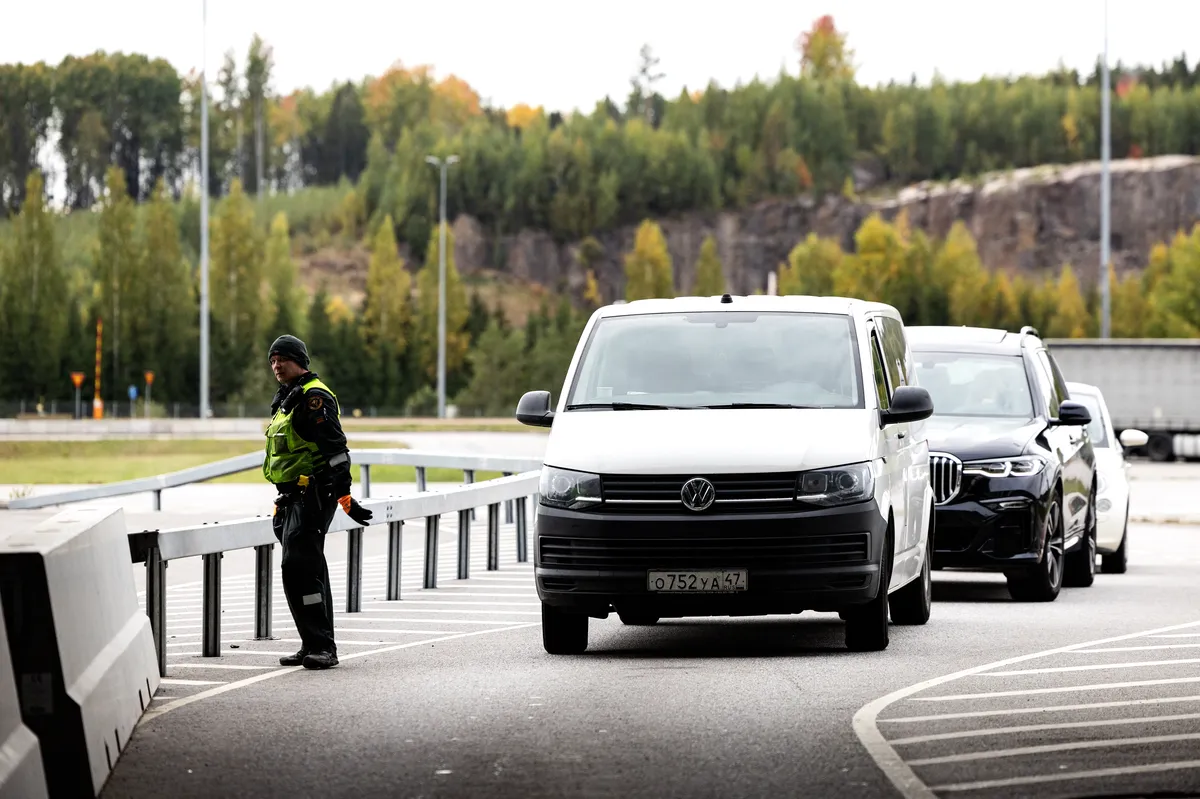
Eugene himself, faced with the arrest of the car, did not turn to the Russian embassy: according to him, “this is quite pointless”, since they cannot help there.
Eugene was looking for a lawyer for about a week, because “no one wanted to take on this business” or asked for too much fee - up to 6 thousand euros.
The lawyer filed a complaint against the customs decision and a month later I received an answer that the prosecutor's office decided to return the car. It soon became clear that, in addition to the lawyer, the arrest of the car also asked to cancel the customs itself, coming to the conclusion: he was unlawful. Customs conducted a trial and admitted that such cases do not fall under sanctions.
“As a result, I haven't had a car for more than a month. A couple of weeks ago I received a letter that I have the right to demand compensation from German customs for the services of a lawyer and for the rental of another car during this period ”,
- says Eugene.
According to Eugene, the customs police are engaged in the arrest of cars. At the same time, the man notes, he faced the fact that the customs officers were surprised at such an interpretation of sanctions. When Eugene came to register the car, the employees of the department did not understand why he was arrested by a car.
According to him, after several cases of the arrest of cars in the first half of the summer reports about similar situations in groups and chats almost disappeared.
“The last case was, in my opinion, on July 12, then the post of a woman on August 29, who was confiscated by a van (we are talking about a Russian Irina Belyaeva, who told Komsomolskaya Pravda that her car was confiscated on the way to Port Travemynda in northern Germany, leaving her alone with several dogs on the highway.-Ed.). That is, in fact, for almost two months no arrests were reported. Although, perhaps, they were, but I am not in the know, ”the man said.
Criminal liability
A lawyer who is conducting several cases of the arrest of cars with Russian numbers told Novy-Europe that there are many such cases-mainly in Hamburg-but she does not know their exact number. According to her, in August there was a lull, and then again they began to arrest cars of Russians.
In several cases, the court sided with car owners, but the prosecutor's office appealed this decision. In the text of the appeal, the prosecutor refers to the answers of the Ministry of Economics and Control of Bafa (BAFA) and the European Commission, the lawyer notes.
“The response of an employee of the European Commission says that she confirms the arrests of Russian cars, but indicates that this is only her point of view, and the final decision of the interpretation of the norms of the new package of sanctions remains with the European court. Therefore, the court of second instance in Lubeck must decide and write what he will personally be guided by the decision: the norms of the legislative act, that is, directly by the articles of the European Resolution, or the answers of individual lawyers from the German Ministry of Economy or the European Commission, which are personal opinion and personal interpretation of legal norms, ”she said.
At the same time, as the lawyer notes, criminal proceedings in connection with violation of European sanctions are being starting on everyone who was arrested by the car.
On the basis of the arrest of the car, the “New Evrop”, on the basis of anonymity, was anonymous, who has a residence permit of Latvia, about the criminal case, initiated after the arrest of the car.
In June, she was stopped by a police patrol when she left the port of Travemunde.
“The police asked for the documents, asked how much the car drove into the EU territory. After that, we were asked to give the keys, as we, according to them, violated the law. The case was sent to customs, the car was arrested ",
-recalls the interlocutor of the New-Europe.
According to the girl, customs officers could not name the reason for the arrest:
“Only a post-fact in the document was written that the car was arrested due to a violation of“ sanctions legislation ”.”
Problems, as the girl indicates, arose due to the interpretation of European legislation.
“My lawyers are surprised and say that there is a certain loophole in the law that is associated with difficulties in translation. There is “import” - an English word, but in German legislation this word is translated as “import”. That is, importing my car, I violate the "sanctions law." However, I crossed the border of Latvia a month before, the Latvian border guards allowed me without problems. I planned to be for no more than three months (this is the permitted deadline for the car with Russian numbers in the EU.-Approx. Ed.) On my car in the EU, ”the interlocutor of Novo-Europe shares.
The trial lasted three months, and only last week the court confirmed the legitimacy of the arrest of the car.
“The judge claims that I have violated the law intentionally, and this is criminal liability. I have to spend a lot of money on a lawyer. Even if the car is returned by some miracle, now there will be great difficulties with its export,
Since after the new recommendations, the Baltic European Commission introduced a ban on the entrance and give some short time to leave. Every day I read the news, letters from the court, communicate with a lawyer, and my anxiety is growing because they are trying to convince me that I am a criminal, and this is very unpleasant experiences for me, ”the girl complains.
But not all meetings with German police officers ended in the arrest of Russian cars this summer: they write in chats and groups of retains that they either traveled to Germany and other EU countries on Russian numbers, or the drivers were immediately released after a small check by police.
So, Maria Solenova, who was also stopped in Germany because of Russian numbers, and twice, managed to convince the police to let her go.
“There were two such cases. And both times on the tracks along the way from Warsaw to Berlin. The last time I was driving with the children, they slept on the back seat. First, customs police asked the documents, then asked if I took cigarettes or alcohol with me. There was nothing like that in my car, but they still searched. I think I was saved by the fact that I chose tactics to say more than them. They did not explain the reason for the stop. In my opinion, I was released due to the fact that the car was clogged with children. And because of my humanitarian visa, ”Solenova told Novy-Europe.
"They are not waiting for you until Ukraine achieves victory"
After new clarifications of the European Commission appeared that entry into the countries of the European Union on vehicles registered in the Russian Federation will be regarded as prohibited imports bordering the countries of the countries of the country began to discuss the ban on the entry and confiscation of Russian cars that were already located in the EU.
On September 12, the head of the Ministry of Internal Affairs of Lithuania Agne Bilotai said that Russian cars entering the country will confiscate at customs. The Deputy Minister of Foreign Affairs of Lithuania Jovita unlocked that Lithuania would not skip cars with Russian numbers on the border.
“At the moment, Russian citizens can cross the border only if they have rights to this - either by bus or on foot,” she said.
The exception, according to Neluphenen, will be made only for cars traveling in Kaliningrad. At the same time, a person should have documents with him confirming that he is in a transit in the country.
In addition, the Lithuanian customs threatened that soon the authorities would begin to seize cars with Russian numbers that are in Lithuania.

“I think that every Russian who own the car registered in Russia should beware and leave with this vehicle in the third countries, that is, to the Russian Federation, the Republic of Belarus or other countries,” said the head of the Lithuanian Customs Service Darus Zhironas.
Latvia and Estonia subsequently also banned the entry of cars with Russian numbers. As reported in the customs department at the State Revenue of Latvia, such vehicles will be deployed back to Russia or Belarus. They promised to confiscate cars only if the requirements of the border guards were not fulfilled.
At the same time, the authorities of Latvia will not when crossing the border confiscate from Russians personal belongings, including smartphones that are in the recommendations of the European Commission, told the Russian BBC service in the press service of the Latvian tax service. They also clarified that already
The authorities with Russian numbers are not planning to confiscate in the EU: problems can arise only when crossing the border.
Estonian Foreign Minister Margus Tsakhkna recalled that the Russian citizens in this country "are not waiting until Ukraine will achieve victory." Drivers of cars with Russian license plates will have to either leave the car in Russia or leave the border with it.
In Estonia, the ban extends so far only to cars with a capacity of up to nine people - buses and motorcycles can freely cross the country's border. The customs service specified that restrictions will affect both the EU citizens owning Russian cars and Ukrainian refugees who cross the border in cars with Russian numbers.

At the same time, cars with Russian numbers can still leave Estonia through the internal boundaries of the EU - in the customs service they promised not to prevent this process.
There is no direct ban on using cars with Russian numbers in Estonia yet.
“Until another decision has been made, you can temporarily continue to use the car within the rules in force in Estonia,” the customs service said .
According to the latest data , Lithuania has not missed more than 40 cars with Russian numbers (it is worth considering that this Baltic country borders Russia only in the Kaliningrad region). On the border with Latvia and Estonia , one car was deployed so far.
"The era of trips from Russia by car ended"
What to do with their cars was thought by many Russians who moved to the European Union. According to the rules, a car on Russian numbers can be in the EU for no more than 90 days, and then must be either exported or registered in one of the EU countries. Several owners of Russian cars, who were asked by New Evrop, say that no one particularly monitored the implementation of this rule, so many years left their cars on Russian numbers in order to “do not pass all circles of hell”, taking off the car from the register in Russia, paying duties and registering in the EU.
“I have been living and working in Riga for two years, I did not change a car with Russian numbers, since it is new and did not want to pay income tax in Russia. I spent the whole weekend in stress, but I decided that next Saturday I would take out the car to sell, ”a resident of Latvia named Oleg told Novy-Europe.
After February 24, the situation changed, and, for example, in Latvia, Russians massively complain that they cannot re -register the car.
“Formally, this is possible in Latvia, but over the past year and a half, when it has become relevant to many, no one actually passed this procedure. Not only is it very difficult, even local officials themselves do not know how to do everything right. No one is taking it up for this. Opinion in Latvia is this: sell your car in Russia and buy here, do not fool your head, ”Sergey-Europe told Sergei, who lives in Moscow, but works in Riga and regularly drives his own car between cities.
At the same time, in neighboring Lithuania, car owners with Russian numbers if there are local residence permit can easily register the car. Whether this will change against the background of the latest news is still unknown.
Sergey says about the new rules prohibiting the import of cars on Russian numbers: “The era of trips from Russia ended by car. Now I will get on foot or by bus. ”
With the participation of Ilya Andreev