
Translated material
Europe breathes deadly air

400 thousand people die annually. Where is the worst of all?
Almost all of Europe breathes deadly air - 98% of the continent population live in areas where the air contains too many solid particles: chemical compounds formed as a result of various environmental pollutions - from construction to exhaust gases. Only a few countries and regions of Europe fit into the permissible standard from the World Health Organization (WHO). Ecologists and doctors warn that the problem must be solved now, since solid particles fall into all human organs and are the cause of mortal heart disease, lungs and other organs. "Cold" talks about a study, according to which only 2% of Europeans breathe clean air.
In order not to miss the main materials of the "cold", subscribe to our Instagram and telegram .
Almost two -thirds of Europeans live in regions where the concentration of solids in the air exceeds the permissible norm by half. The study was conducted by the British newspaper The Guardian, together with the unification of scientists who analyzed the data of more than 1,400 ground -based air monitoring stations in Europe.
Data was collected by scientists from the University of Utrecht in the Netherlands and the Swiss Institute of Tropical Medicine and Public Health as part of the Expanse project, funded by the EU. They used both satellite data of high resolutions, and information of pollution monitoring stations and land use information for modeling the average annual levels of solid particles throughout Europe in 2019. According to their estimates, at the moment, this is the most accurate and complete data on the state of air in Europe.
What are the hard particles?
Solid particles are chemical compounds formed as a result of fuel combustion, with domestic heating, electricity production or car movement. In addition to fuel burning, particles can form as a result of chemical exposure to other particles in the air.
At the moment, the WHO shares solid particles depending on their size. The Guardian study is about particles in the size of not more than 2.5 micrometers in diameter (1 micrometer is 0.001 millimeters), the WHO also releases particles in size of 10 micrometers. Both types of particles are not visible to the eye, penetrate the human body and blood and can cause serious damage to the body. The maximum allowable amount of solid particles, according to WHO estimates, should not exceed 5 micrograms (1 microgram is 0.001 milligrams) per cubic meter of air.
According to recent studies, solid particles are the cause of many diseases and disorders of the body: from diseases of the lungs and heart to diabetes, cancer and premature birth. For millions of people, solid particles are the cause of chronic diseases - for example, to asthma. According to experts, annually, solid particles cause premature death of more than 400 thousand people - half of them could be saved if the air in Europe was cleaner and corresponded to WHO standards.
In Eastern Europe, the situation is much worse than in the Western, with the exception of Italy, where more than a third of the inhabitants of the Valley of the River Poe and the surrounding territories in the north of the country breathe air, in which the WHO indicators are four times higher in the most dangerous particles.
“This is a serious crisis of public health. We clearly see that almost everyone in Europe breathes unhealthy air, ”says Roel Vermyulen, professor of environmental epidemiology at the University of Utrecht, who headed a group of researchers who collected data.
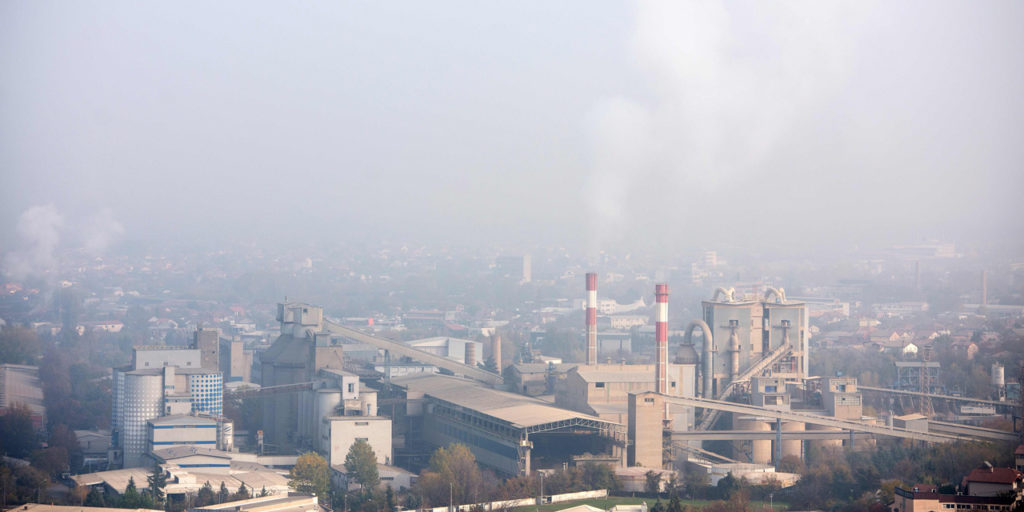
The situation among European countries was the situation in North Macedonia, where almost two -thirds of people live in areas with a content of solid particles more than four times higher than WHO norms. In the four regions of North Macedonia, the number of solid particles exceeds the permissible value by almost six times, and this also applies to the capital of the state - Skopier. Close to it in Serbia, Romania, Albania, Poland, Slovakia and Hungary are the norm of solid particles in these countries is twice as high as the permissible level according to WHO estimates.
The industrial leader of Europe - Germany - has not far away from Eastern Europe: approximately 75% of the country's population also breathe air, in which the content of solid particles is two times higher than the permissible. In Spain, this figure is 49%, and in France - 37%. In the UK, the level of air pollution by 75% of the territory exceeds the permissible one or two times. At the same time, in Scotland, the level of solid particles was significantly lower than the permissible level of pollution, a similar situation in Sweden, Norway and Finland. For example, in Sweden there is not a single zone at all where the level of pollution would exceed the set near the norm by half.
Key sources of air pollution are industry, household heating and agriculture. Extremely low air quality was recorded in Eastern Europe not by chance - it is here that many production are located on which environmental standards are lower than in Western Europe. This creates an unpleasant precedent for Europe - it turns out that the poorer European countries, in addition, are even more suffering from the fact that more economically developed countries are forced to catch up with.
The publication notes that the bill, which is now under consideration of the European Parliament, should partially solve the problem. We are talking about the introduction of the maximum permissible volume of solid particles in the air in accordance with the requirements of WHO. That is, the EU will have to introduce programs to reduce emissions into the atmosphere and focus on air purification - otherwise this may lead to an increase in the number of deaths in Eastern Europe, caused by precisely toxicity of air. According to this law, the maximum permissible norm of solid particles in a cubic meter of air in the EU should be reduced by five times: from current 25 to 5 micrograms per cubic meter.
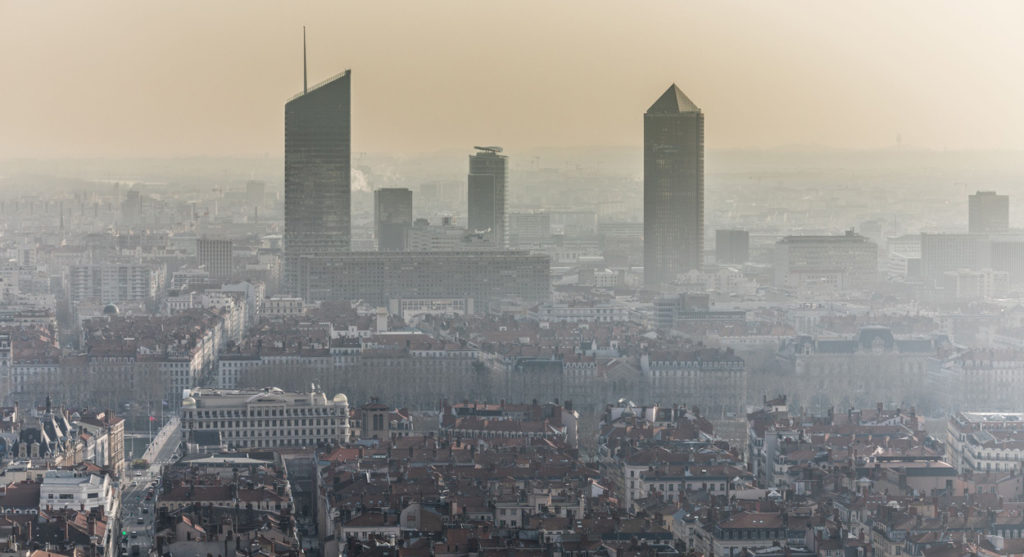
However, the law requires to achieve such indicators only by 2035, while The Guardian experts insist that changes are necessary now. They indicate a growing amount of evidence that air pollution affects almost every organism in the human body and is associated with a huge spectrum of health problems: in addition to the already mentioned heart and lung diseases and cancer, low -quality air can be the cause of diabetes, depression and mental illness, as well as cognitive impairment.
Moreover, recent studies indicate that air pollution affects demography: scientists note the growth of stillbirth (up to 1 million per year), as well as the birth of children with insufficient weight. In addition, in children born from parents who lived in large cities, after birth, billions of toxic particles in the heart and lungs are detected, which can negatively affect the development of the child in the future. Dr. Hannah Bugaard, an air pollution expert in Europe from the Institute for the Study of US Health, insists that all new evidence prove that air is the main cause of hundreds of thousands of deaths a year.
“These deaths can be prevented, and the assessment does not include millions of cases of non -commercial diseases, years lived with disabilities associated with this hospitalization or health consequences from other pollutants,” she says.
Doctors and ecologists note that some large cities, for example, London and Milan, are already introducing programs to reduce the level of emissions into the atmosphere, which should positively affect the quality of air in megacities. However, these measures are not enough in the context of the entire continent. The authors of the study insist that politicians should take more decisive measures in order to reduce the mortality rate of toxic air.
Poll Help the "cold" to become better. Take a survey for 7-10 minutes.