
Translated material
Separate grains from shells
The Front of the Eastern EU members exposed the limits of European solidarity with Ukraine
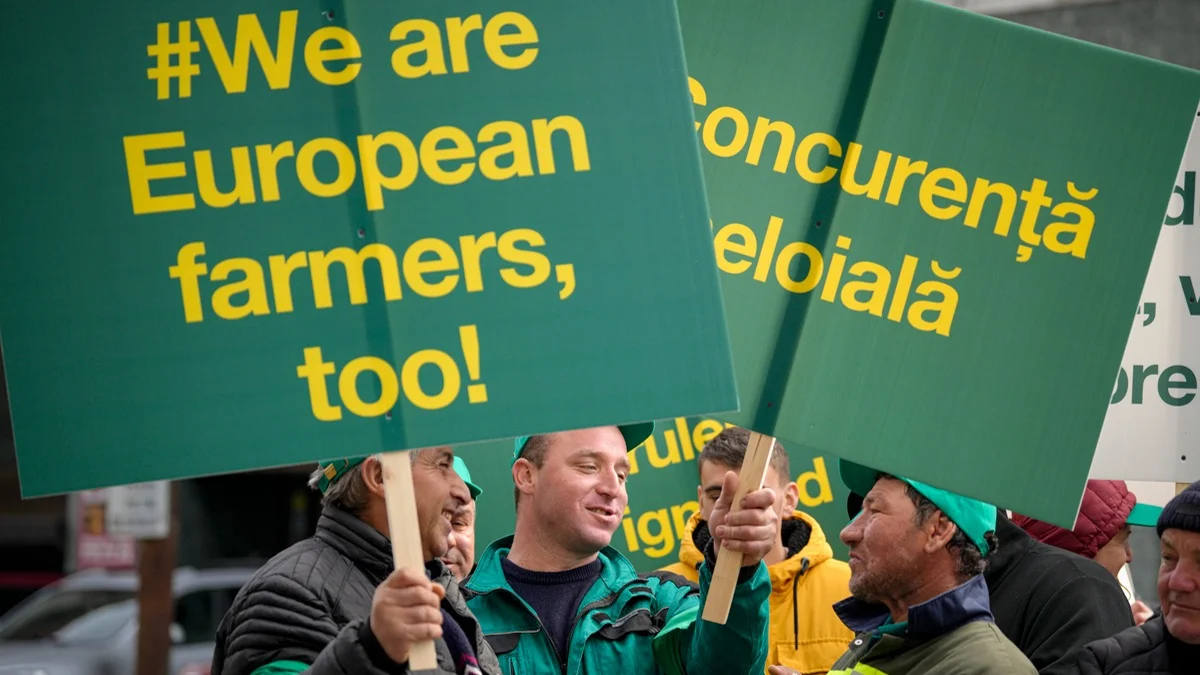
The protest of farmers in Bucharest against the import of Ukrainian grain. Photo: AP / TASS
Last week, two events took place that gave rise to doubt the unshakability of European solidarity with Ukraine. Three countries of the eastern flank of the European Union - Poland, Hungary and Slovakia - announced to maintain a temporary ban on the import of agricultural products from Ukraine, which acted by decision of the European Commission. Almost simultaneously, Warsaw, the closest to the EU ally of Kyiv, announced the termination of military assistance after the fulfillment of obligations under already concluded contracts. The Poles explained this by the need to arm and strengthen their own army.
Many political observers immediately saw a causal relationship between these two steps of Warsaw. Like, Ukraine, which has lost the possibility of exporting its grain on the Black Sea, failed them the Polish market, caused the protests of the Polish farmers, and the government in Warsaw was forced to react to the end of military supplies to Kyiv. Participation in the "Grain Front" of neighboring Hungary and Slovakia led to a wider conclusion that the European United Front of Solidarity with Ukraine cracked from fatigue.
In Brussels, following the legalist principle, they divided agricultural and military problems. On Thursday and Friday, at briefings, representatives of the European Commission as an executive body of the EU and the guarantor of union legislation explained this difference. Military assistance to Ukraine is provided on a voluntary manner of the country - members of the EU, and the Union partially pays for them these deliveries from a special fund.
The decision on the “unshakable help of the EU” was made at the highest level by all members of the Union, and each country is fulfilled separately by its own strength and capabilities.
Therefore, in Brussels they do not comment on which country, what, when and how much it put or put. This is her voluntary work.
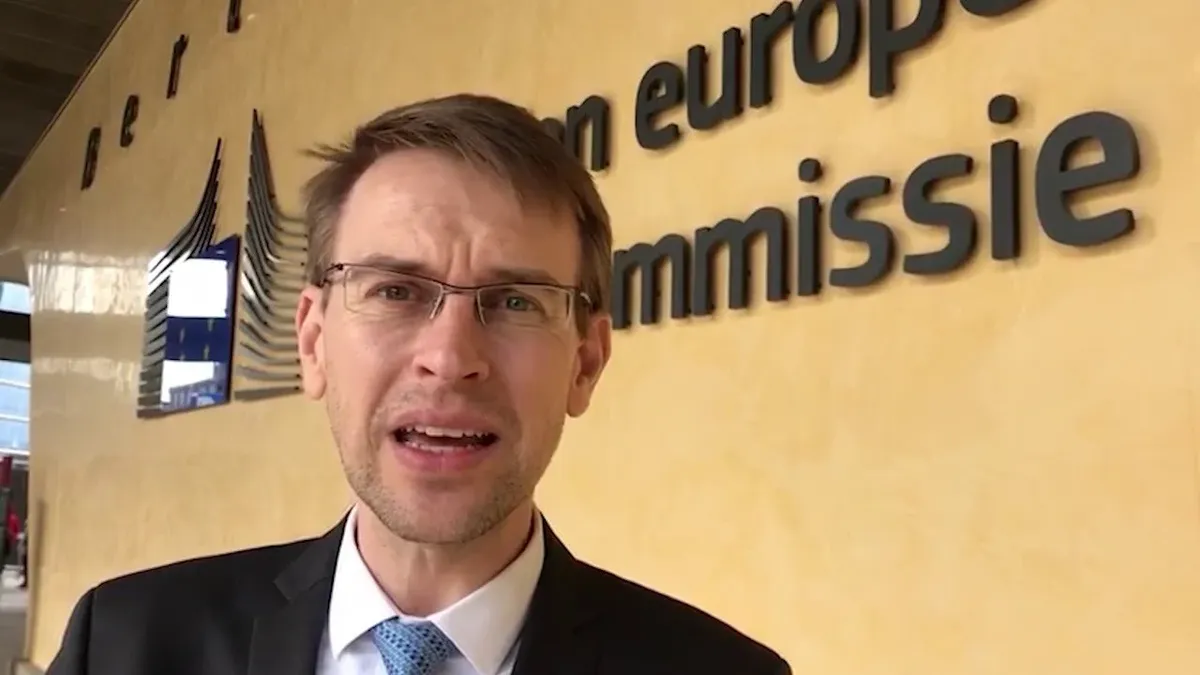
“The main thing is that all 27 (EU members) agreed to provide full support to Ukraine <...> by all means that we can contribute to this,” said Peter Stano, representative of the European Commission for Foreign Affairs.
On the contrary, in trade for the outside world there is neither Poland, nor Germany, nor Portugal. And there is a European alliance with its single market, and foreign trade is in the exceptional competence of the European Commission. Governments of the EU countries cannot take unilateral measures without her consent.
Ukraine as a country associated with the EU, and since last year - a candidate for EU members, has broad preferences in trade with it. But it is not a member of the Unified EU market, so access to it for Ukraine is nevertheless limited.
With the beginning of the Russian military operation, Ukraine actually lost its traditional ways to export its agricultural products, primarily grain. The European Union, along with negotiations on the "grain transaction", began the search for parallel opportunities for their export to the world market through its territory. But a significant part of the products of Ukrainian exports settled right at the threshold - in neighboring EU countries, where the total agricultural policy and prices for similar products are above Ukrainian. Local farmers lost in competition, began to rebel and put pressure on the governments.
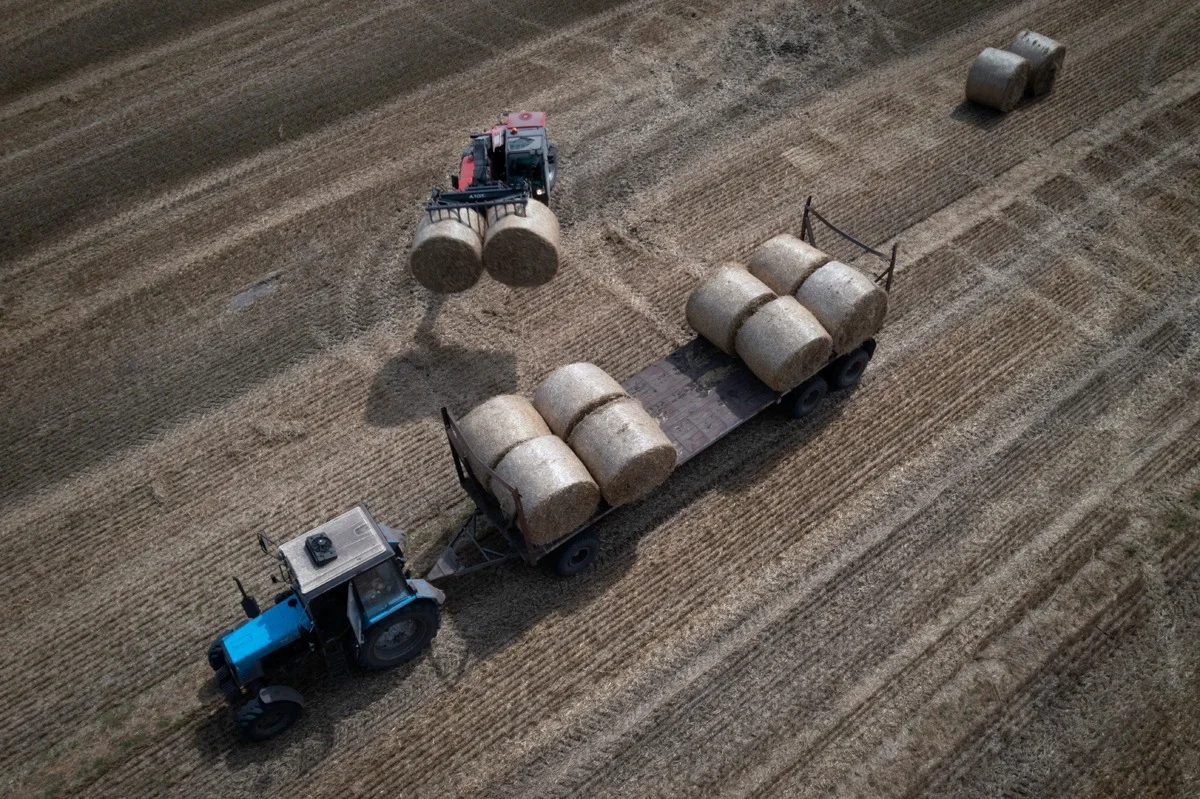
Under this pressure, Brussels imposed a ban on the import of Ukrainian agricultural products into Poland, Slovakia, Hungary, Bulgaria and Romania, whose agricultural industry could not withstand competition with Ukrainian. Ukrainian products should have followed through these countries only in transit, without unloading.
He introduced temporarily, as an exception, until the situation adapts to new realities and will return to the Rules of the WTO. On September 15, when the next limit for the ban has expired, the European Commission decided not to renew it. Warsaw, Budapest and Bratislava threatened to introduce unilateral restrictions. And this would already be a violation of European legislation, which entails consequences up to sanctions. In turn, Kyiv filed a complaint to the WTO and expressed his readiness to sue this three.
Officials in Brussels said on Thursday that so far there were no official appeals, and the statements of individual politicians and publications in the press are not commented here. However
Brussels recognizes the problem and plans to solve it amicably, not bringing it to the WTO trial, where Ukraine will sue the EU, neither to the EU sanctions in relation to Poland, Hungary and Slovakia for violation of allied legislation.
In Kyiv, also for a loved and compromise decision.
Last Monday, Ukraine initiated a meeting of the coordination platform in Brussels (a special interaction body between it and the European Commission). There, she introduced her plan of action to control the export of wheat, corn, rapeseed and sunflower seeds to prevent any market distortion in the border countries. According to sources, the plan involves regular data exchange between countries - EU and Ukraine members, tracking the purpose of the purpose of goods in the electronic queue system and creating an export licensing system with verification and authorization. Kyiv is ready to take responsibility so that export from Ukraine does not cause food tsunami in neighboring countries.
Brussels hopes to resolve the conflict, forcing Kyiv to introduce its own export restrictions in case of sudden sharp growth in export. The representative of the European Commission stated that at the moment Brussel’s task is to interact with all parties and look for “constructive solutions within the framework of changed conditions”. After all, if it reaches trial in the WTO, then in a paradoxical way in this process the EU formally must represent Poland, Slovakia and Hungary as its members against the claim of Ukraine, which is not a member of the Union.
But, having splashed into a public space, the agricultural problem was intertwined with the accumulated mutual resentments and irritations, which were restrained by the general mood of sympathy and political correctness.
Just against the backdrop of an agrarian scandal on Wednesday, Poland Prime Minister Mateusz Moravesky said that Poland, a member of NATO, would no longer arm Ukraine and focus on replenishing his own weapons reserves. Its representatives clarified that Warsaw will fulfill only pre -agreed supplies of ammunition and weapons. They made a reservation that Poland did not stop supporting Ukraine in conflict with Russia, but it just needs to replenish her own reserves of weapons. And they reminded that Warsaw was “very generous” and “very quickly” at the first stage organized supplies to Kyiv. Poland put to Ukraine, among other things, the T-72 tanks and the Leopard, armored vehicles and howitzers.
It is probably true that Poland no longer has weapons for transferring to Ukraine. But Moravetsky could not help but realize that now his statement would produce the effect of a grenade thrown into a cesspool.
President of Ukraine Vladimir Zelensky on Tuesday slightly veiledly criticized the introduction of grain prohibitions, saying the UN General Assembly: “It is anxious to see how some in Europe, some of our friends in Europe play solidarity at the political theater, creating a thriller from scratch.” Although Zelensky did not call specific countries, the Poland Foreign Ministry called Vasily Zvarich to the carpet of Ukraine.
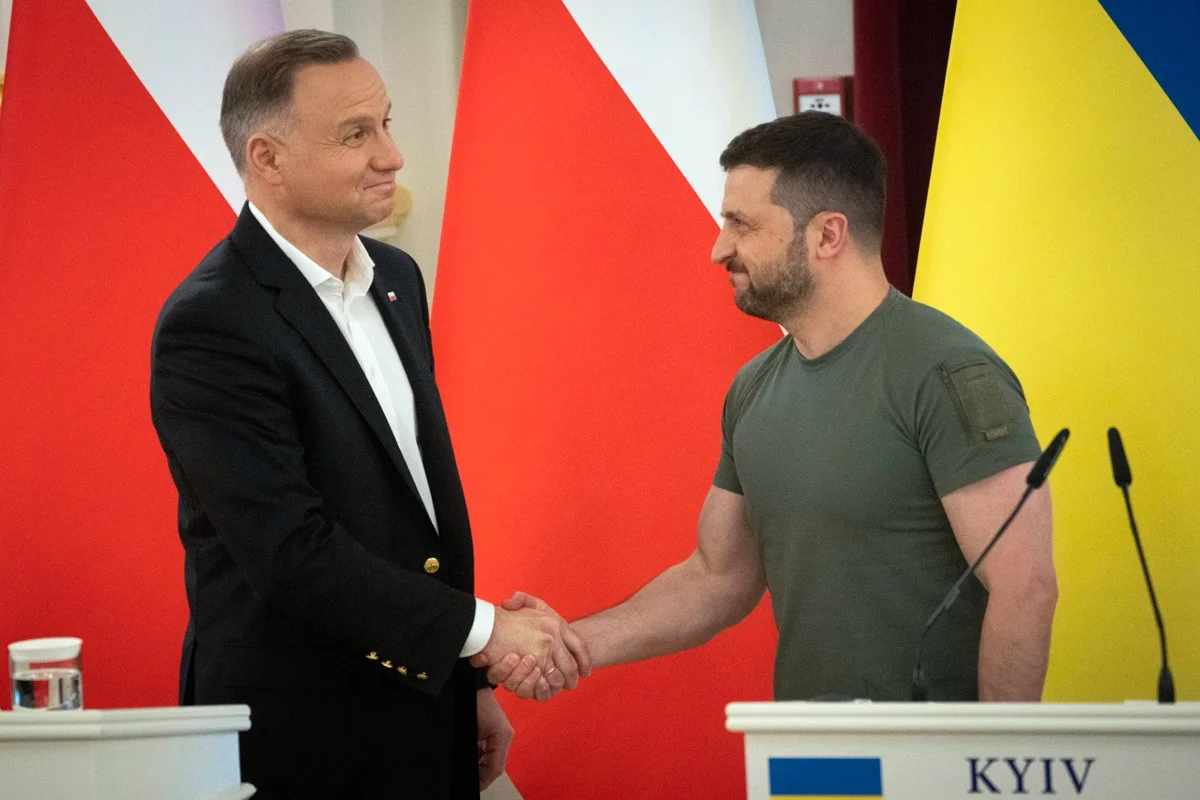
This statement of Zelensky responded with an indignant choir. The President of Poland, who played at the same session of the UN General Staff, compared Ukraine with a sinking person who is “incredibly dangerous”, grabs everything that he can “can pull you to the depths.” The meeting of Duda and Zelensky planned in New York at the last moment was canceled.
Further - more. Polish Prime Minister Polish Moravetsky threatened Ukraine to expand the list of Ukrainian goods prohibited for import to Poland. Kyiv does not imagine to what extent he destabilizes the Polish agricultural industry, he reproached. His Ukrainian colleague Denis Shmygal warned that Kyiv would introduce response restrictions on the import of certain categories of goods from Poland and Hungary if they do not remove unilateral prohibitions. In the case of Poland, the Ukrainian embargo will be introduced into apples, cabbage, onions and potatoes ...
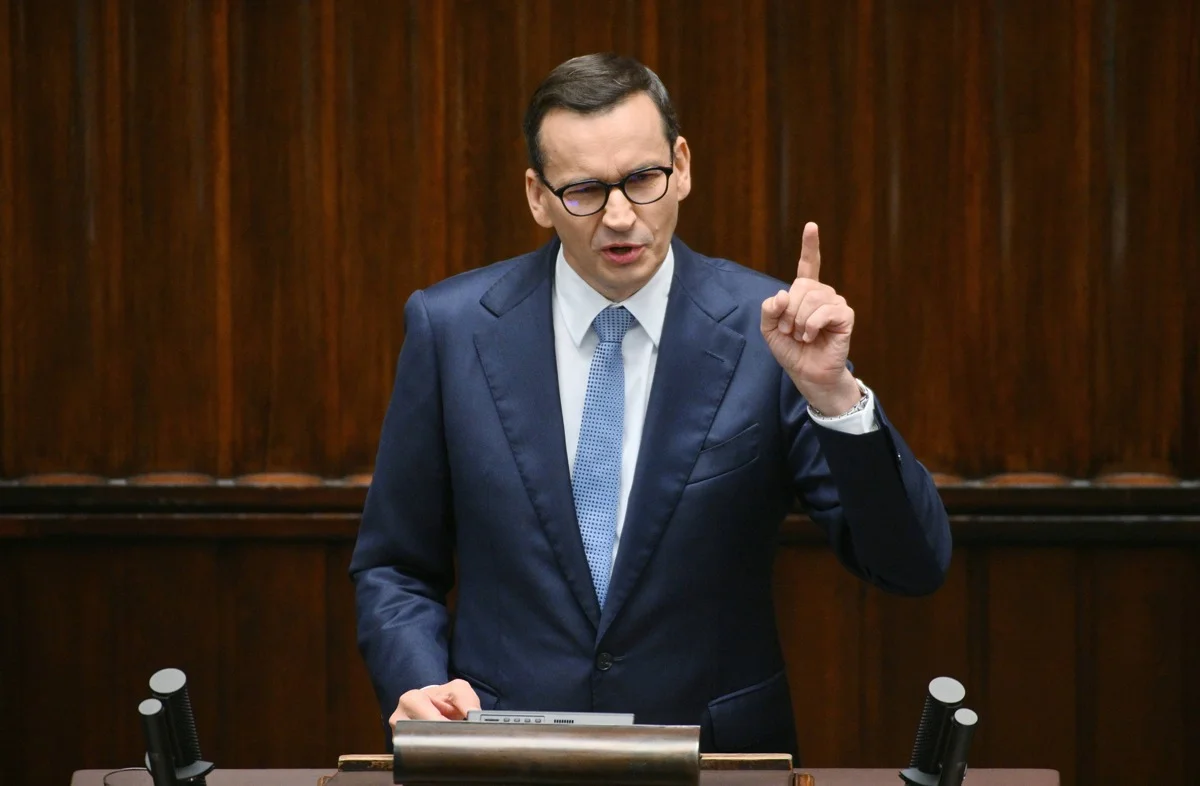
This scandal has made a split into the EU ranks and may complicate the process of accepting Ukraine to the Union. But most likely this is a surge in accumulated emotions, sometimes inevitable in the intense time. Moreover, against the backdrop of preparation for parliamentary elections in Poland, as well as in Slovakia. Politics with sharp statements and hyperbolic conclusions even before decision -making, not necessarily as sharp, tend to mobilize the electorate. Especially the one who is tired of instability, in which both Ukraine and the EU are irritated.
In Poland on October 15, parliamentary elections will be held, and the ruling nationalist party “Law and Justice” (PIS) is criticized by the extreme right. For the fact that they call subordination the unconditional support of Ukraine by the government.
The right recall the difficult history of the relations of the Poles with the Ukrainians, including the "Volyn massacre", which was not properly condemned by Kiev and whose perpetrators are glorified there.
The Confederation Party, which voiced anti-Ukrainian sentiments, takes third place in many surveys and, as often happens in democracies, plays a decisive role in the formation of the coalition government, when the winning party does not have enough mandates. Pis tightens anti -Ukrainian rhetoric under the influence of the growth of the popularity of the Confederation. In addition, the government needs to keep the voices of rural residents in order to win the unprecedented third term in power. Therefore, the ban on Ukrainian products with a call of Brussels is so important.
September 30-elections in Slovakia, and a favorite for the victory in them, the former prime minister Robert Fitzo. He appears under the slogan: "We are a peaceful country, we will not send a single shell to Ukraine."
His victory could mean a radical turn for Slovakia, which was still a faithful ally of Ukraine.
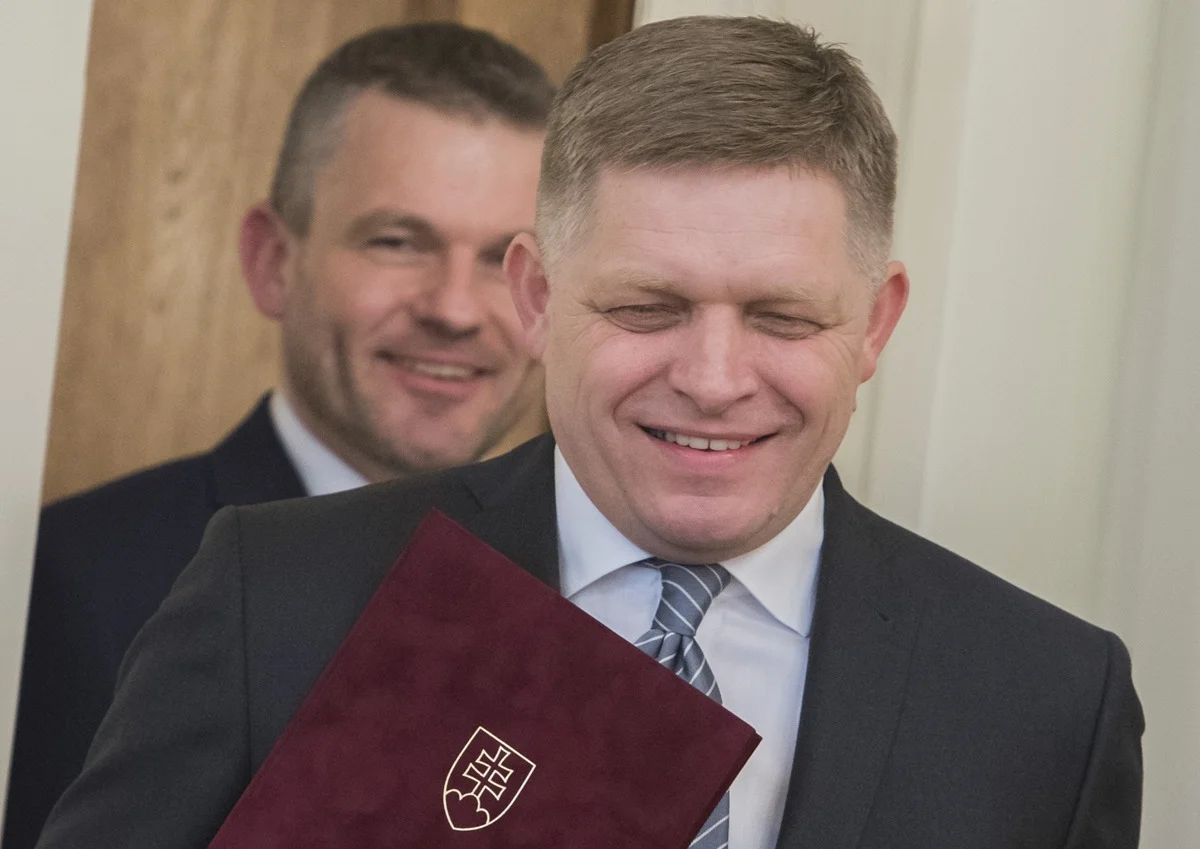
Bratislava supplied weapons and provided Kyiv with powerful political support in the EU and NATO. But the victory is not guaranteed.
No party is able to provide the majority, and the formation of a coalition government may be a difficult task.
Diplomats and officials in Brussels are worried that the fifth can also unite with the Prime Minister of Hungary Viktor Orban, a long-standing headache and Enfant Terrible Europe, who is closely connected with Russia, conflict with Brussels about the rule of law, supporting Ukraine and attitude to migration.
The Front of the East Troika of the EU can hardly be regarded as a serious crack in European unity around Ukraine. The agricultural dispute will be adjusted in love, as it was more than once in the history of the EU. Nevertheless, Poland, Hungary and Slovakia are too much dependent on financial injections from Brussels to climb into the wolf. Excessive intensity will subside after the elections and the formation of new governments. But the events of the week revealed fatigue from the crisis and the weak links, which the EU leadership should be taken into account.