
Translated material
Tokyo drift
Having invaded Ukraine, Russia simultaneously finally spoiled relations with Japan. Tokyo prefers to support the injured Kyiv, not an aggressive neighbor
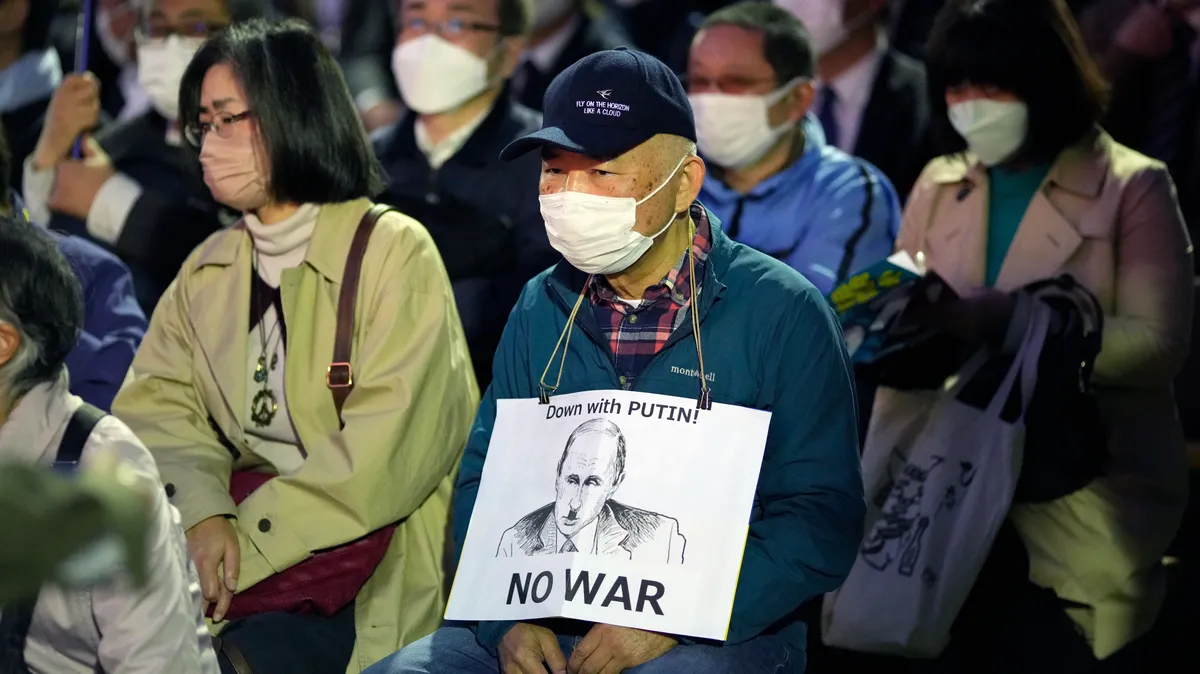
A rally against Russia's invasion of Ukraine in Tokyo, Japan, April 8, 2022. Photo: EPA-EFE/Franck Robichon
Even after the annexation of Crimea in 2014, Japan continued to actively cooperate with Russia, and many experts called the “symbolic” sanctions against Russia. But everything changed with a full -scale invasion of Ukraine on February 24, 2022. From now on, Russian officials and propagandists are forbidden to enter Japan, and Vladimir Putin now recalls Japanese militarism.
Especially for Novaya Gazeta Kazakhstan, Kira Kutskkan sorted out why Japan's reaction in 2022 is so different from its own actions eight years before. New Europe with minor changes reprints this text.
From the editorial office
This material was published on the website of Novaya Gazeta Kazakhstan. The original can be read here.
Islands of bad luck
Throughout the 2010s, the discussion of the Kuril problems, as the Russian side called them, or the northern territories, as the Japanese side calls them, did not stop between Russia and Japan. Countries still cannot decide who owns the islands of Iturup, Kunashir and a group of the islands of the Malaya Kuril ridge. Initially, they were part of Japan, being part of the northern northern prefecture of Hokkaido, but during the Second World War they became part of the USSR, and then Russia.
How did Russia have the islands?
In World War II, Japan performed in the coalition of the Triple Union, along with Germany and Italy. Even after the surrender of its allies, Japan continued the war, and on August 8, 1945, the USSR officially announced a war at war with Japan. By the beginning of September, Soviet troops completely occupied the Kuril Islands. Six years later, on September 8, 1951, Japan entered into a San Francisian peace treaty with part of the countries of the anti-Hitler coalition. According to the agreement , the state of war is terminated between the parties, and “Japan refuses all rights, law enforcements and claims to the Kuril Islands and to that part of the island of Sakhalin and the islands adjacent to it, the sovereignty over which Japan has acquired under the Porkmut Treaty of September 5, 1905”.
But the Soviet Union refused to sign the contract, since the sovereignty of the USSR over the territories captured by Soviet troops - South Sakhalin and the Kuril Islands was not fixed in it. Moreover, from February 2, 1946, according to the Decree of the Presidium of the Supreme Soviet of the USSR , the South Sakhalin region was formed in the territory of South Sakhalin and the Kuril Islands, which became part of the Khabarovsk Territory of the RSFSR.
So between the USSR and Japan, the state of war was legally preserved, which was terminated only in 1956 by the Moscow Declaration. But the peace treaty between countries has not been signed to this day.
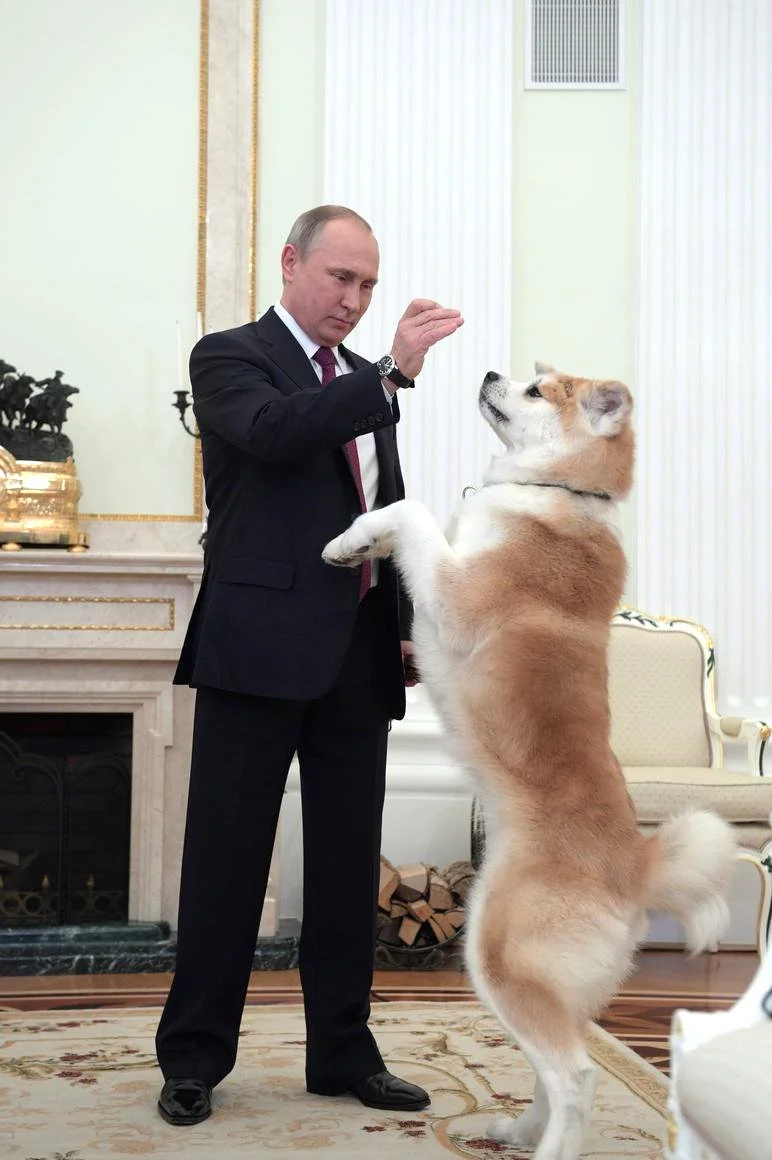
To solve this problem, the then Prime Minister of Japan Shinzo Abe very often visited Russia and made gifts to Vladimir Putin: for example, in 2012 the president was presented to the puppy Akita-Inu-this breed is considered a national treasure of Japan. Many Japaneseists agree that the signing of the contract was the personal project of Shinzo Abe. The fact is that his father Sintaro Abe was the Minister of Foreign Affairs of Japan in 1982-1986 and was actively trying to conclude a peace treaty between countries and, as a result of the decision of the territorial dispute. But nothing came out for him, and his son Shinzo Abe, taking the post of Japanese Prime Minister in 2006, continued his father's course.
“From the very beginning [this ABE course] caused, if not resistance, then a significant skepticism in Washington, and in the ruling liberal-democratic party of Japan, and among the high-ranking officials of the Japanese Foreign Ministry,” says Japanist Maxim Krylov. -Neither the head of the Cabinet of Ministers Yoshihide Suga, nor the Fumio Kisida, who replaced him as the head of the Cabinet of Ministers, was not divided at Russia's address at Russia, and Japanese-Russian relations returned to the initial level.
Even before the end of the second period of ABE premier, it turned out that it would be impossible to reach an agreement on islands.
- I think that around 2018-2019 it became clear that the parties would not agree and there would be no peace treaty between Russia and Japan.
Amendments to the Russian Constitution in 2020 actually put an end to discussions about a peace treaty, ”said Vladimir Nelidov, candidate of historical sciences.
In addition, during the pandemic, interstate contacts between countries have practically stopped.
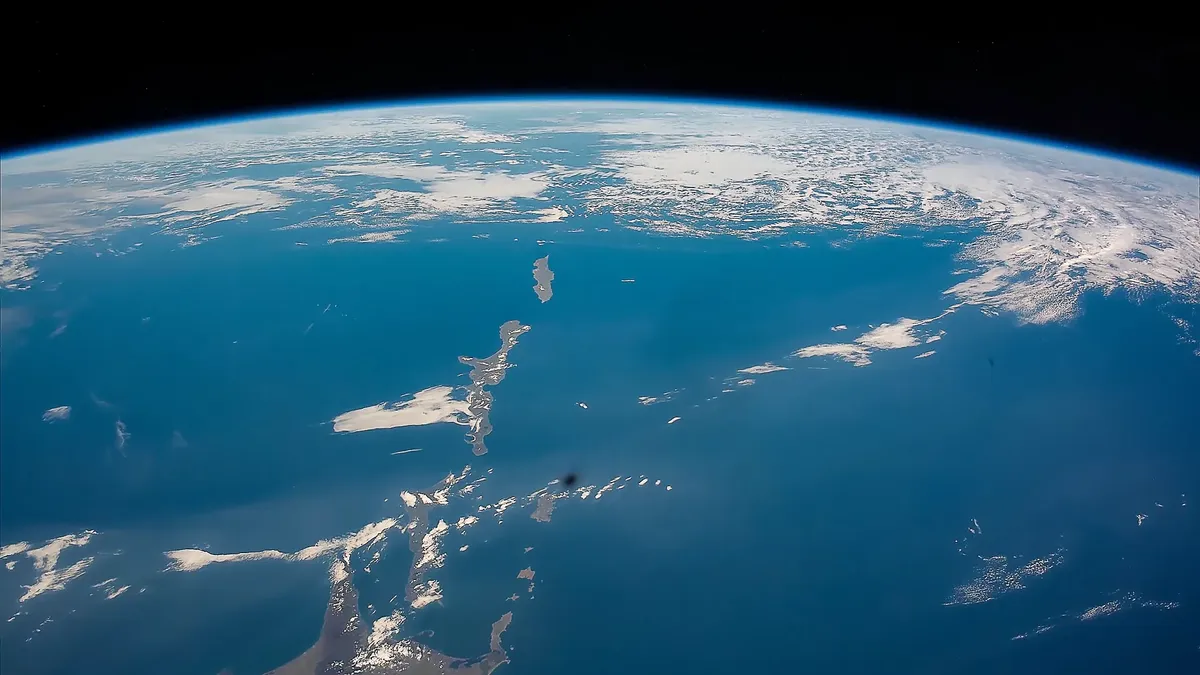
However, the problem of the Kuril Islands could not be resolved not so much due to changes in the legislation of Russia, but due to the fact that the most acceptable concessions of one side were too small for the other. According to Japanist Maxim Krylov, Japan has nothing to offer Russia in exchange for potential territorial concessions. At the same time, neither the Japanese nor the Russian side can publicly abandon claims to the islands, since for politicians this would mean political suicide.
Nevertheless, territorial disputes between countries, as a rule, are not a limiting factor for Japanese business. For example, Japan has a territorial dispute with China about who owns the Sancak archipelago (which no one lives on). Despite this, China is the largest trading partner of Japan: in 2021, Japan exported $ 153 billion to China.
-It seems to me that our trade and economic ties with Japan are not developing not because we do not have a peaceful contract, but because Japanese companies simply do not consider it beneficial for themselves to invest [in Russian companies]. And even if we conclude a peace treaty, then nothing will change radically, ”says Vladimir Nelidov.
And since 2022, it has become completely impossible to invest in Russia for Japan.
Japan's reaction to Russia's invasion of Ukraine
On February 21, Vladimir Putin gathered an extraordinary meeting of the Security Council and that evening announced the recognition of the independence of the self -proclaimed LPR and the DPR . Many countries, among which was Japan, immediately reacted with a sharp rejection of this step. Japanese Foreign Minister Yoshimas Hayashi made a condemnation of Russia's actions. On February 24, the Japanese government imposed sanctions against Russia, the DPR and the LPR, and also made a request for the immediate withdrawal of Russian troops from the territory of Ukraine.
Against the backdrop of the war in Ukraine, the discussion of a peace treaty between Russia and Japan became impossible , moreover, eight Russian diplomats were expelled from Japan. And in 2023, Japan tightened the sanctions list , introducing another 60 individuals and 78 organizations from Russia. Nevertheless, Japanese journalists found that some companies are trying to circumvent the measures introduced by the Japanese government. Nikkei media corporation employees have published an investigation according to which the semiconductors of Japanese manufacturers are still bypassing sanctions through third countries.
What sanctions did Japan impose after February 24?
February 2022
Personal sanctions were imposed with freezing of assets against Vladimir Putin, Sergey Lavrov, Sergey Shoigu, Valery Gerasimov, Nikolai Patrushev and Dmitry Medvedev;
Assets of the Central Bank of Russia, Promsvyazbank and the State Corporation VEB.rf are blocked ;
The issuance of visas for people from the Donetsk and Lugansk republics was suspended and assets of these persons in Japan are frozen;
Import and export are prohibited to the Donetsk and Lugansk Republics;
The release of Russian bonds in Japan is prohibited and assets of some Russians are frozen.
Personal sanctions were imposed against 22 Russian individuals, including against the Hagagic court suspected by the Hague Court of the illegal deportation of Ukrainian children to the territory of Russia, Maria Lvovo-Belova, philosopher Alexander Dugin, Ella Pamfilova, relatives of the oligarch from Putin Suleiman Kerimov, military leaders Sergei Ryzhkov and Mikhail Mismev;
Personal sanctions were imposed against 14 persons related to the annexation of Crimea and events in eastern Ukraine;
sanctions against three organizations were imposed : the Irkut aircraft building, the Avangard machine -building plant and the manufacturer of diesel trucks and engines KAMAZ;
Import of goods of 49 Russian companies is prohibited : the supply of vaccines and medical products, chemicals, oil exploration, natural gas and processing of radioactive materials, X -ray sewing equipment and portable generators were prohibited.
Personal sanctions were imposed against 17 Russian individuals, including against the journalist Olga Skabeeva, weapons of weapons of Igor Zimenkov and commander of the airborne troops of the Russian Federation, Colonel General Mikhail Teplinsky;
Personal sanctions were introduced against seven other persons related to the annexation of Crimea and events in eastern Ukraine;
sanctions against 78 Russian organizations have been imposed , and 80 Russian companies import are forbidden .
Earlier, Japan has already imposed sanctions against Russia in response to the annexation of Crimea in 2014. However, many experts noted that then the sanctions package was purely symbolic in nature, and the highest Japanese leadership tried to close his eyes in order to continue economic cooperation. Even after 2014, the then Prime Minister Sinzo Abe repeatedly visited Russia and tried to find a solution to the problem of the northern territories, and a plan of economic cooperation from eight points was implemented between the countries. However, after February 24, 2022, the reaction of the Japanese government to a developing military conflict became tougher.
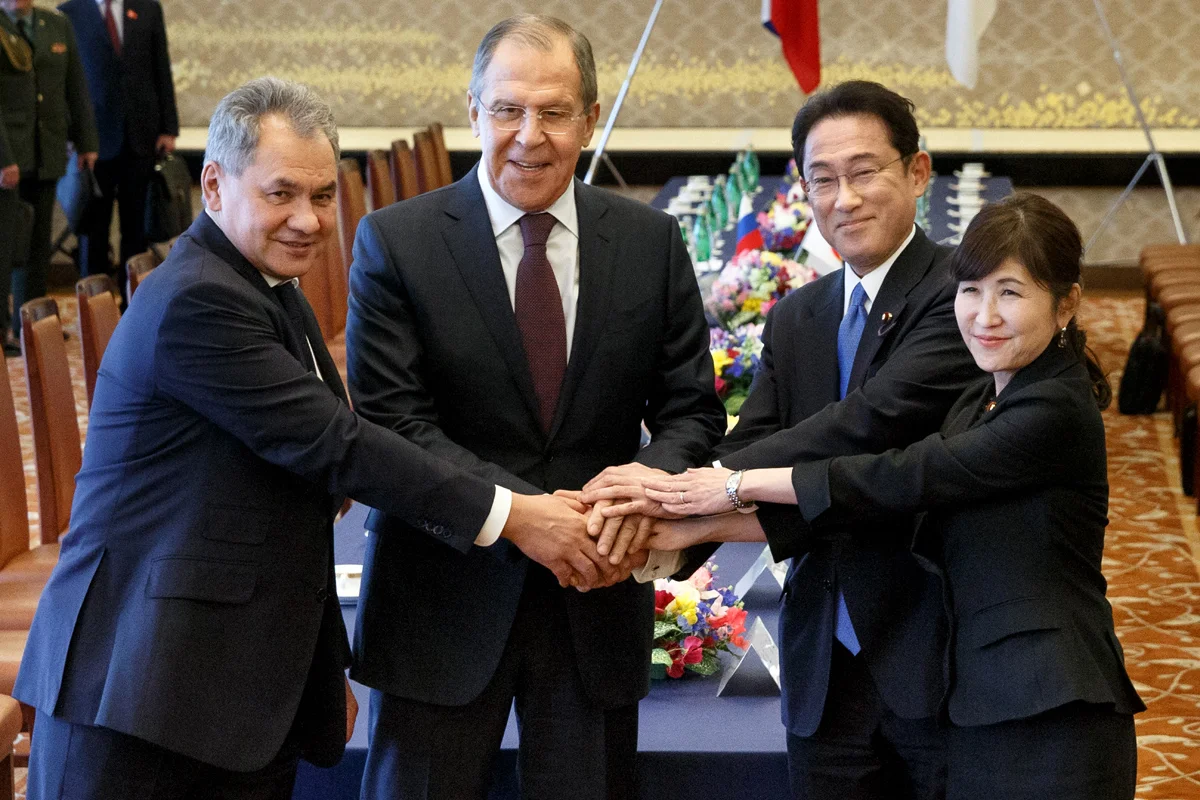
First of all, the current government of Prime Minister Kisida does not consider relations with Russia in such a priority as the government under Shinzo Abe did. By 2022, it became clear that it was impossible to conclude a peace agreement on the Kuril Island.
In addition, that picture of violence committed by Russian troops, which was broadcast from the scene of different media outlets, caused direct associations within Japan with the historical experience of the country itself. The consistent policy of pacifism is actively pursued in the country after the tragic experience of Japanese militarism, which, according to the estimates of the American political scientist Rudolf Rummel , destroyed more than six million inhabitants of Southern and Eastern Asia from 1937 to 1945.
- The situation of the armed conflict in eastern Europe is very resonated with the historical memory of the Japanese, who developed a kind of allergy to everything related to armed conflicts,
- says Vladimir Nelidov. -Pacifism was in every possible way promoted by mass culture, and the education system, and the media for three or four generations.
One of the most famous Japanese animators Hayao Miyazaki throughout his career promoted pacifist motifs in his works, and his last film, released in 2013 , is the anti -war drama “The Wind Fights”.
In general, the entire political center of Japan took an anti -Russian position and condemned Russia's full -scale invasion of Ukraine. This position is held by both the ruling liberal-democratic party, and the whole opposition: the Communist Party, the Left-Gentric Constitutional Democratic Party and the Law-Nationalistic Party “The Society of the Renaissance of Japan”.
In response to the Japanese unanimous condemnation of the invasion, Russia recognized Japan as an unfriendly country and imposed response sanctions , forbidding the entry of Japan to 63 citizens, including the Prime Minister Fumio Kisida, parliamentarians and media leaders. And in September, by order of Prime Minister Mishustin, a visa-free entrance to the southern Kurils for Japanese citizens who lived in disputed territories and members of their families was canceled . The agreement on a simplified visit to the islands has been in force since 1999.
- In the picture of the world that exists in the head of the highest Russian political leadership, there is a certain monolithic collective West, in which only the United States is the subject, and all other countries - and Japan, including dependent.
In their opinion, today's Japan does not make decisions independently, and these decisions are imposed on the United States, hence, as it seems to me, such a neglect of Japan, ”says Nelidov. - But Japan was earlier and remains a country that is conducting an independent policy and pursues its own interests. It is simply unprofitable to cooperate with Russia from a pragmatic position.
The departure of Japanese companies from the Russian market
According to the Japanese Foreign Trade Organization (Jetro) , the Russian invasion of Ukraine had a negative impact on 77% of Japanese companies. With the outbreak of full -scale war in Ukraine, they began to quickly leave the Russian market. According to Nikkei Compass , to date, 34 Japanese companies announced the withdrawal from the Russian market or a significant reduction in their activities in Russia.
“I would not overestimate the importance of bilateral economic ties either for Japan or Russia,” says Maxim Krylov. - Of course, for some sectors of the Russian economy - for example, for construction, loss of access to products of Japanese engineering - a sensitive blow, but in general, nothing critical happened. On the one hand, Japanese export to Russia fell by 2022 by 50.5%, Japanese import from Russia - by 21.5% ( Jetro data). On the other hand, even in the prosperous 2019, the turnover between countries did not exceed $ 22 billion, of which Japanese imports accounted for more than $ 14 billion. These are very modest figures for both countries.
For comparison, the turnover between Russia and China in 2022 amounted to almost $ 200 billion, and with Kazakhstan, whose economy is far from Japanese in scale - comparable $ 10 billion.
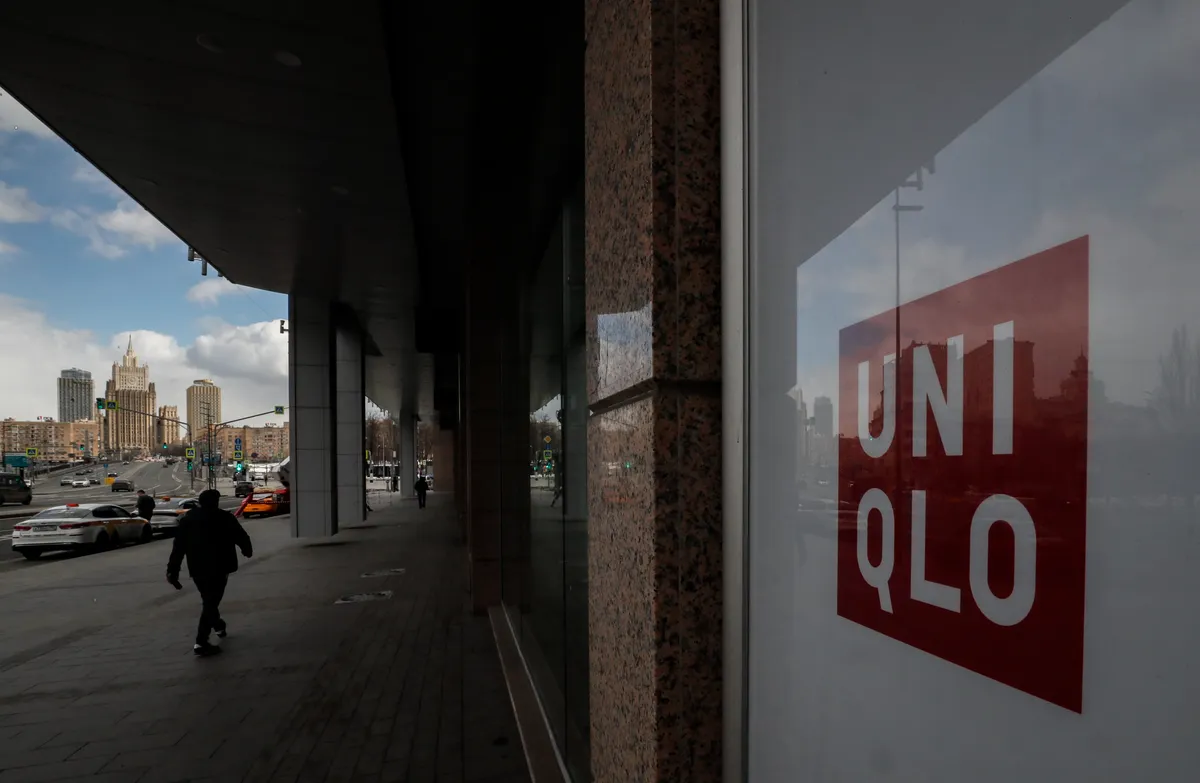
For Japanese business, as well as for the country's foreign policy, pragmatism is characteristic. That is why, for example, Tadashi Yanai is the head and largest shareholder of the Japanese Fast Retailing Co. [ Maternal company Uniqlo. - approx. aut. ] - first stated that Uniqlo will remain in Russia: “Clothing is a vital necessity. The people of Russia have the same right to life as we are. ”
“Japanese economic pragmatism is the tradition of Japanese foreign economic cooperation, and an example of the same Uniqlo is not a consequence of some special love for Russia or hidden consent with the position of Moscow,” says Vladimir Nelidov.
Nevertheless, the company decided to suspend its activities in Russia, and then began to reduce the network around the country.
The Japanese public and its attitude towards Russia
Although for many Japanese a military conflict in Ukraine, indeed, is far away there, but Ukrainian experience makes us think about threats emanating, for example, from North Korea, which declared itself a nuclear power, and from China, with which Japan continues its territorial dispute. The Prime Minister of Kisida often compares the aggressive trends of Russia and China: "Today is Ukraine, tomorrow is East Asia."
Russia as a whole was perceived and perceived as an unpredictable and dangerous neighbor. However, this public assessment did not appear in 2022. A survey of public opinion conducted by the Japanese government in October 2022 shows that only 5% of the Japanese experience good feelings against Russia. For comparison, in September 2021 there were 13.1%. But such figures are in the order of things: the peak of the Japanese sympathy for Russia - 25.3% - was recorded in October 1991. Since then, this indicator rarely overcame a twenty percent barrier.