
Translated material
Hacked code
Polit.ru introduces readers with books included in the long list of applicants for the Enlightener. Transportation Award of 2023. The prize for the fourth time notes the best works of editors and translators of popular science literature into Russian. In total, twenty books were included in a long list. A short list of the Enlightener. Transportation Prize will be announced until the end of September.
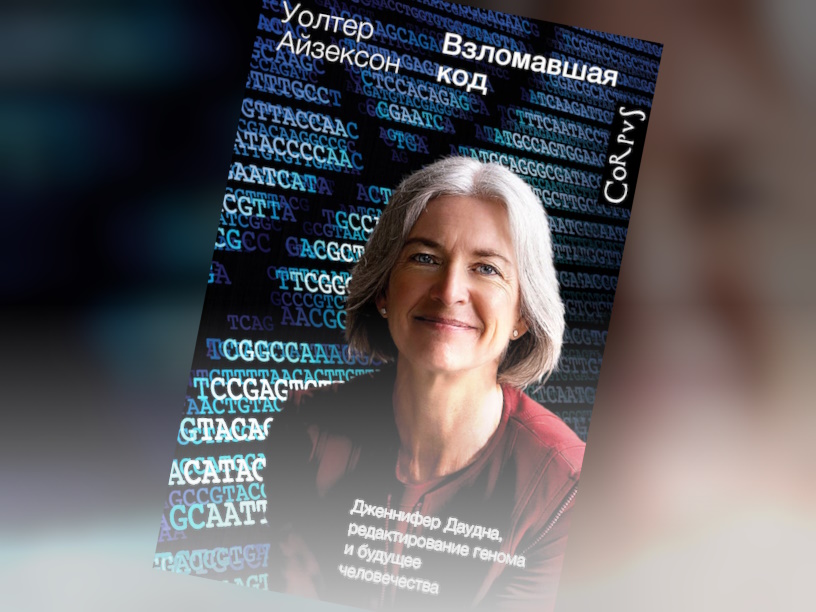
Corpus Publishing House presents Walter Aiseksson's book “Haste Code. Jennifer Dawdna, editing the genome and the future of mankind ”(translation by Zaur Mamedyarov).
The biography of Jennifer Dawdna, a specialist in biochemistry and genetics, who was one of the creators of the genome editing technology. Her work shows that the key to innovation is a combination of interest in fundamental science with practical activities to create tools that find use in our lives.
Walter Aisekson, the author of the bestsellers of the biographies of Steve Jobs, Albert Einstein, Leonardo da Vinci and many others, tells how Jennifer Dawudna and other scientists began the revolutionary process that would allow us to fight diseases even more efficiently, win viruses and grow more healthy offspring. A genome editing tool developed by Dowed and its colleagues, CRISPR, is already used in the treatment of sickle -cell anemia, cancer and blindness. In 2020, Daudna began to study with her teams how CRISPR could be identified and destroyed by coronavirus. In the same year, Daudna and its co -author Emmanuel Charpentier received the Nobel Prize in Chemistry.
We offer to read the chapter that describes the methods of treating various diseases using CRISRP-CAS9.
Methods of treatment
Sickle -cell anemia
In July 2019, a doctor from the Nashville hospital introduced a large syringe needle into the hand of a 34-year-old African-American from a small city in the central part of the state of Mississippi and made it an injection of stem cells that were released from her blood and edited using the CRISRP-CAS9 system. Now they were returned to the body, trying to cure a woman from sickle -cell anemia, which from infancy caused her severe pains. So Victoria Gray, the mother of four children, became the first man in the USA for the treatment of which the CRISPR genome editing tool was used. Crispr Therapeutics, founded by Emmanuel Charpentier, conducted clinical trials. After the injection, Gray sharply became more frequent, and for some time it was difficult for her to breathe. “At that moment I felt a little scary and hard,” she told the NPR journalist Rob Stein, who received permission to monitor her treatment. - Then I cried. But these were tears of happiness. "
Today, attention to CRISPR is largely explained by the potential of the system to make inherited changes to human cells or to edit the embryo line. Such changes are transmitted to the cells of all future descendants of a person and can transform the human family in the future. Gametes of embryos at the early stages of development are exposed to editing. That is how CRISPR in 2018 was applied to the twins from China, and this topic requiring a separate discussion, I will touch later. In this chapter, I will focus on the methods of using CRISPR, which (at least for the time being) will be most widespread and attractive: on such cases as the treatment of Victoria Gray, when CRISPR is used to edit only some body cells that do not transmit their genes to the next generation (such cells are called somatic). Changes in the genes of somatic cells are not inherited. To do this, you can take cells from the patient and then edit and return them to the body (ex vivo), or you can place the instrument for editing on the CRISPR base into the patient's body (in vivo).
Sickle -cell anemia is one of the most suitable cases for editing the EX Vivo genome, since the disease is affected by blood cells that can be easily taken from the body and returned back. The disease is caused by a mutation of a single letter of more than three billion paired bases in human DNA, as a result of which an anomaly occurs in hemoglobin protein. Normal hemoglobin forms round and smooth blood cells that can easily pass through the vessels and transfer oxygen from the lungs to the rest of the body. But abnormal hemoglobin forms long fibers that distort red blood cells, which is why they stick together and bend in the form of a sickle. Oxygen does not enter the tissues and lungs, which causes severe pain. In most cases, the patient dies, not living up to fifty years. More than four million people around the world suffer from sickle -cell anemia, and about 80 % of them live in Africa and about 90 thousand residents of the United States, mainly African American.
The simplicity of the genetic error and the seriousness of the syndrome make him an excellent candidate for treatment by editing the genome. Working with Victoria Gray, doctors selected stem cells from her own blood and edited them, using CRISPR to activate the gene that usually works in blood cells only during embryonic development. Such embryonic hemoglobin is normal, therefore, if the genetic modification is effective, patients begin to produce their own good blood.
A few months after the introduction of edited cells, Gray arrived at the Nashville hospital to find out if treatment helps. She was optimistic. After receiving edited cells, she never needed a blood transfusion and the attacks of pain also tormented her either. The nurse introduced the needle and filled with blood a few test tubes. Gray was nervous, waiting for the results. In the end, the doctor came to inform her of the news. “I really liked the results of your today's tests,” he said. “It is clear that you began to develop embryonic hemoglobin, and this is wonderful.” Her blood now about half consisted of embryonic hemoglobin with healthy cells.
In June 2020, Gray received even more joyful news: apparently, an improvement is long. After nine months, she did not experience a single attack of pain due to sickle-cell anemia and never needed a blood transfusion. The tests showed that 81 % of the cells of its bone marrow produced normal embryonic hemoglobin, which means that the changes in the genes were preserved.
“School and university graduations, weddings, grandchildren - I thought that I would not see anything,” she said, learning about the results. “Now I can help my daughters choose wedding dresses.” It was the most important milestone: obviously, the CRISPR system cured a human genetic disease. While in Berlin, Charpentier listened to the recording of the felt interview, which Gray gave the NPR correspondent. “Listening to her, I joyfully realized,” she says, “that the child that I helped create, editing CRISPR, saved her from suffering.”
Accessibility
Such methods of using CRISPR will probably help save lives. But they are undoubtedly worth a lot of money. A million dollars can take the treatment of a single patient, or even more, at least at first. In this regard, the use of CRISPR for the benefit of people can bankrupt the healthcare system.
Daudna took up this problem after a conversation with a group of American senators, held in December 2018. The meeting in the Capitol took place a few weeks after the announcement that CRISPR twin was born in China with inherited changes in the genome, and Daudna expected that this loud news would be discussed there. At first it was. However, to her surprise, the participants in the discussion very quickly switched from the dangers of the inherited editing of the genome to the potential for applying the genome for the treatment of diseases.
Daudna informed the senators that the therapy of sickle -cell anemia would be developed on the basis of CRISPR, and the audience revived, but immediately threw it on questions about the cost of such treatment. “From sickle -cell anemia in the USA suffers 100 thousand people,” said one senator. “Can we afford to spend a million dollars on a patient?” So we don’t have any money. ”
Daudna decided that her institution of innovative genomics should ensure the availability of therapy for sickle cell anemia. “The hearing in the Senate was a turning point for me,” she says. “I thought a lot before about costs, but not so closely.”
Returning to Berkeley, she held a series of meetings at which she discussed with the members of her team on how to make a wide access to the therapy of sickle -cell anemia with a new main task of their mission.
Focusing on a public-private partnership, thanks to which a polio vaccine became accessible, Dowdna contacted the Bill and Melinda Gates Foundation and National Health Institutes, which recently announced the conclusion of the partnership as part of the initiative to “cure sickle-cell anemia” and the allocation of funding in the amount of 200 million dollars. The main scientific goal of the initiative is to find a way to edit a sickle cell mutation in the patient’s body without a bone marrow fence. To do this, you can introduce a molecule editing the genome into the patient’s blood, supplying it with an target marker in advance, which will direct it directly to the bone marrow cells. The most difficult thing is to find a suitable delivery mechanism for such a molecule, for example, using a virus -like particle that does not provoke the body's immune response.
If the initiative turns out to be successful, a lot of people will be able to heal from a terrible disease, and health care will become more fair. Africans and African -Americans mainly suffer from sickle -cell anemia in the world. Medical service of these population groups traditionally leaves much to be desired. Although the genetic cause of sickle -cell anemia was established earlier than the cause of any such disease, new methods of treatment did not appear. So, to the fight against cystic fibrosis, from which the white Americans and Europeans suffer for the most part, it allocates eight times more funds from the state, charitable organizations and funds. It is assumed that, having a great future, editing the genome will transform medicine. The danger is that as a result, the gap between the rich and the poor in the field of healthcare will increase. The goal of a neglected dowry initiative to ensure the availability of therapy of sickle -cell anemia is to avoid this.
Cancer
In addition to the treatment of blood diseases, such as sickle cell anemia, CRISPR is used to combat cancer. A pioneer in this area is China, which for two to three years is ahead of the United States in the development of methods for treating and conducting clinical testing of their effectiveness.
The first therapy was the patient suffering from lung cancer, a patient from Chenddu, a 14 millionth city in the province of Sichuan in the west of China. In October 2016, a team of doctors took a certain amount of T-lymphocytes, or white blood cells from the patient’s blood, which help the body fight diseases and maintain immunity. Then the doctors used the CRISPR-CAS9 system to turn off the gene that produces the PD-1 protein that stops the cell immune response. Sometimes cancer cells activate PD-1, protecting themselves from the immune system. When using CRISPR, to edit the gene, the patient's T-lymphocytes begin to kill cancer cells with greater efficiency. Over the year, China conducted seven clinical trials using this technique.
“I think this will become the reason for the Biomedical duel of China and the USA, resembling the space race of the past,” said Karl June, an authoritative researcher of cancer from the Pennsylvania University, who at that time could not receive approval from the authorities to conduct such a clinical study. In the end, he and his colleagues launched the study and reported preliminary results in 2020. Their method, used to treat three patients suffering from cancer in the later stages, was more difficult than Chinese. They turned off the PD-1 gene and also introduced the gene into T-lymphocytes, which took patients with tumors.
Although patients were not cured of cancer, the tests showed that the technique is safe. Dawdna co -authored with one of her postdrods published an article in the Science journal, in which she explained the results obtained by researchers from the University of Pennsylvania. “It still remained unknown whether the human body was ready to take T-lymphocytes edited using the CRISPR-CAS9 system and returned to the place,” they wrote. “The data indicates an important breakthrough in the field of therapeutic application of the genome editing.”
CRISPR is also used as a detection means to determine what kind of cancer the patient suffers from. The company Mammoth Biosciences, founded by Dowed and two of its students, creates diagnostic tools on the basis of CRISPR, which are applied to tumors in order to quickly and easily detect DNA consuming with different types of cancer. After that, precision therapy can be developed for each patient.
Blindness
The third area of application of genome editing based on CRISPR, which was developed in 2020, is associated with the treatment of one of the forms of congenital blindness. In this case, the procedure was carried out in vivo - in the patient’s body - since the eye cells cannot be taken and subsequently returned to place, unlike blood cells and bone marrow. Clinical trials were carried out in partnership with Editas Medicine, founded by Zhang and his colleagues.
The goal was to cure Leber's hereditary Amaurosis, a frequent cause of childhood blindness. In patients suffering from this disease, a gene mutation is observed, which is critical of the survival of photosensitive cells of the eye. As a result, there is a deficiency of the most important protein and light that enters the cells, is not converted into nerve signals.
For the first time developed therapy was used in March 2020, right before the closure of most hospitals due to coronavirus, at the Casey Eye Diseases in Portland (Oregon). During the four-hour procedure, doctors with a tiny tube with hair thickness introduced three drops of liquid containing CRISPR-CAS9, in a layer located directly behind the retina, where photosensitive cells are located. To transport CRISPR-CAS9, a modified virus was used in the necessary cells. If the editing passes according to the plan, the adjustment will be permanent, since the eye cells, unlike blood cells, are not divided, and their number is not replenished.
On the way
More bold methods of applying the editing of the CRISPR genome are also developed, which can make us less vulnerable in the face of pandemium, cancer, Alzheimer disease and other diseases. For example, the P53 gene encodes a protein that suppresses the growth of cancer tumors. It helps the body respond to DNA damage and does not allow cancer cells to share. As a rule, people have one copy of this gene*, therefore, if something happens to it, they develop cancer. There are twenty copies of this gene in the body of elephants, and they almost never get sick with cancer. Currently, scientists are looking for ways to add another P53 gene in the human genome. The APOE4 gene in a similar way increases the risk of Alzheimer's destructive disease. Researchers are looking for ways to convert this gene into a safe form.
Another gene, PCSK9, encodes an enzyme that launches the formation of low density lipoproteins (LDL), or “bad” cholesterol. In some people, a mutation is observed in this, which leads to maintaining such cholesterol at a very low level, which is 88 % reduces the risk of coronary heart disease. Before He Jiankui decided to edit the HIV receptor gene in the CRISPR loans created by him, he studied ways to use CRISPR to edit the germline in the PCSK9 gene in embryos to produce “designer children” with a much lower risk of heart disease.
At the beginning of 2020, more than two dozen clinical tests of various methods of using CRISPR-CAS9 were going on. Among them are potential methods for the treatment of angiodeema (hereditary disease causing severe edema), acute myeloidal leukemia, extremely high level of cholesterol and male baldness.
However, in March of that year, most research laboratories were temporarily closed due to coronavirus pandemia. The exception was made only for those of them where scientists were looking for ways to combat the virus. Many CRISPR researchers, and primarily Dowdna, switched attention to the development of tools to identify and treat the disease, and some used techniques that have mastered when studying how bacteria had immunity to protect against new viruses.
* One gene on the genome means that one gene P53 is one of the chromosomes for one set of chromosomes. But in each cell of our body there are two sets of chromosomes, we inherited one from mom, the other from dad. In the cells of the elephants, there are also two sets of chromosomes, but in each set of twenty P53 genes. - approx. scientific editor.
Earlier, in the section “Slow Reading”, the following books were presented, included in the long list of the Enlightener. Transportation Prize:
Peter Godfri-Smit. Metazoa: The origin of the mind in the animal world / Per. from English: Galina Borodina; Scientific editors Anna Vinkelman, Mikhail Nikitin; Editor Andrey Zakharov. M.: Alpina Non-Fikshn, 2023.
Siddhartha Mukerji. Gene. Very personal story / Per. from English: Olga Volkova, Ksenia Saifulina; Editor Olga Volkova. M.: Corpus, 2023.
Sarah Manning Peskin. In the molecule from madness: stories about how the brain breaks / per. from English: Anastasia Smirnova; Scientific editor Olga Ivashkina, editor Ekaterina Ivankevich. M.: Alpina Plisher, 2023.
Marta Nussbaum. Political emotions: why love is important for justice / Per. from English: Sofya Porfiryeva; Scientific editor Dmitry Turko, episode editor Arseniy Kumankov. M.: New Literary Review, 2023.
Roland Paulsen. What if? .. Anxiety: how she controls us, and we - she/ per. from the Swede: Elena Teplyashina; Scientific editor Polina Tsygankova, editor Alexei Andreev. M.: Livibuk, 2023.
GERLLINDE PAUER-STUDER, J. David Welleman. Conrad Morgen: Conscience of the Nazi judge / Per. from English: Yuri Chizhov; Scientific editor Dmitry Gurin, editor Natalya Narcisssoa. M.: Alpina Non-Fikshn, 2023.
Anil set. Be yourself: a new theory of consciousness / Per. from English: Maria ten; Scientific editor Olga Ivashkin, editor Natalya Narcisssoa. M.: Alpina Non-Fikshn, 2023.
Nicholas Stargardt. Mobilized nation: Germany 1939–1945 / Per. from English: Alexander Colin; Scientific editor Anton Zakharov, editor Anna Zakharova. M.: Hummingbird, ABC-Atticus, 2023.
Yan Chunnyan. Millennium of imperial ceramics / Per. from Kit.: Olga Fituni, Dmitry Khudyakov, Viktor Stepanenko, Maria Sukhorukova, Anastasia Korshunova; Scientific editor Vera Belozerova, editor -in -chief Alexander Matveeva, responsible editor of Delgir Lidzhieva. M.: LLC "International Publishing Company" Chance ", 2022.
Robin George Andrews. Supervolkans. The unexpected truth about the most mysterious geological formations of the Universe / Per. from English: Valentin Frolov; Responsible editor Anna Zakharova, editor Oleg Bocharnikov. M.: Hummingbird, ABC-Atticus, 2023.
David Anthony. A horse, a wheel and a tongue: as a bronze age riders from the Eurasian steppes formed a modern world / Per. from English: Andrey Fomenko; Scientific editor Anton Ryabov, Literary Editor Konstantin Zalessky. M.: Ed. House of Higher School of Economics, 2023.