
Translated material
Branches of a tree uprooted by a revolution
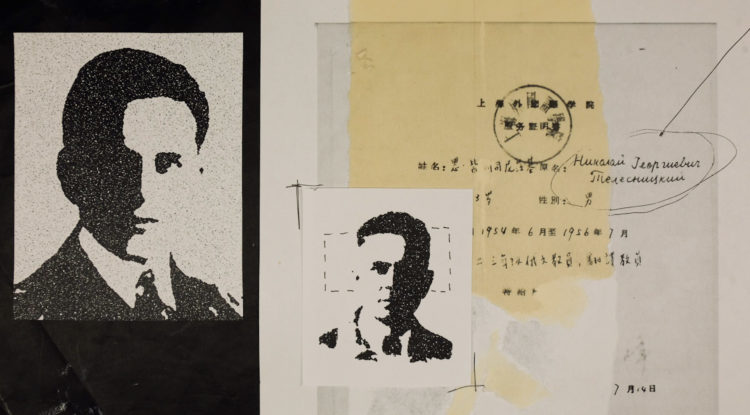
Having survived the war, emigration and deportation, Nikolai Teleznitsky came to Australia. He was to build life again and pull out his family from Chile. Here is his story
After the revolution, the son of the White Colonel Kolya Teleznitsky and his family went through the whole country to Vladivostok, the last center of the White movement in Russia. The evacuation from there in 1922 separated Teleznitsky and his family. He spent several years as a pupil in the Chinese monastery, then he was adopted by the Japanese family; He lived in Korea, found a revolution in China. We talked about all this and much more in the first part. The further life of Teleznitsky was no less interesting and dramatic: he ended up without a penny in his pocket in Australia, starving, working who he had to and simultaneously tried to transport his family from Chile, where his wife went crazy. "Cold" tells how a person whose life has repeatedly broken the history of the twentieth century, managed to start all over the other edge of the world - and find a vocation and happiness.
In order not to miss the main materials of the "cold", subscribe to our Instagram and telegram .
Hunger is a terrible force
The steamer, on which Nikolai Teleznitsky left China in 1957, took away the deported foreigners (communist China began to get rid of those whose activities fell under the description of counter -revolutionary or anti -communist, including foreigners) in Hong Kong, where the Migrant distribution center was located. While still in Shanghai, Teleznitsky found out that when asked where she would like to go, his wife Irean replied that she was "completely indifferent." When she got to the same center in Hong Kong, to help a Russian woman without money and consul Chile volunteered with two children: two months later they were put on a ship to Santiago. When Teleznitsky reached Hong Kong, they temporarily did not give out visas in Chile, there was no money except 10 dollars that could be taken, he had no choice but to continue his way to Australia - he chose this country, filed an application for a visa in the spring of 1956 and received it a year later. He decided to get there and write out his family to him.
Emigrants from Russia in Australia
Natives of Russia got to Australia before: according to the census of 1891, their number amounted to 2881 people. After the 1905 revolution, about 500 political activists turned out to be here, including Comrade Artem (Bolshevik Fedor Sergeyev, subsequently in honor of his party pseudonym, Soviet power was renamed the Ukrainian Bakhmut in Artemovsk), a member of the Socialist Revolutionaries of the Socialist Revolutionaries, Alexander Zuzenko and one of the leaders of the unacceptable Chita Republic of Experienced in 1905-1906 Pavel Clark. By the beginning of the First World War, immigrants from the Russian Empire, according to various estimates, in Australia there were from five to 11 thousand.
In May 1957, 45-year-old Nikolai Teleznitsky was in Sydney, the largest and oldest city in Australia. The very next day, the employee of the Department of Immigration put him on a train to Brisben, a large city in the east of the country. “The wagons were already filled with passengers of different nationalities - Greeks, Italians, Dutch, Yugoslavs,” recalls Teleznitsky. - Everyone rode to clean the harvest of sugarcane. At that time, it was a very hard work, requiring great physical strength and endurance, but well paid. ”
At the Brisbane station, Teleznitsky was met by his only acquaintance in Australia, who acted as a guarantor for a visa,-Evgeny Zavalishin, a former cadet (member of the Constitutional Democratic Party, after the October Revolution-Anti-Bolshevik) from Vladivostok. He lived in a small old house with his wife and worked in a furniture factory. They could not help Nicholas with the work of the rubble, but sheltered him while he would get acquainted.
It was difficult to master Teleznitsky. Without money, ties, without English and working specialty, he ended up in a country experiencing an economic decline. The foreign experts were required either to pass exams in English, or to take training again: foreign diplomas were not recognized. Therefore, most Russian -speaking immigrants, who used to live in Harbin with a servant, had to become cleaners or handymen themselves here. At the same time, there were already Russian churches, schools and clubs. Wullungabbu, the Brisben district, where emigrants settled, they called Rashengabboha among themselves.
There was no work for a long time, says Teleznitsky: “Physically, I was healthy and was ready to turn stones at a construction site, chop trees or build roads. But everywhere I met the refusal: “But the skirt!” ”
Once, a carpenter named Bob from the small city of Mount Aiza went to visit Zapovalishin, three days from Brisben. There were large deposits of copper and lead ores and a mining company in which there could be work. Teleznitsky went there, in the office “Mount Aiza Minz” he heard “But Vorka” and lived on the street for three days. “There was not a penny in his pocket,” he describes his wanderings around the city. - Hunger dawned, the hope of finding a job melted. At the gate of one of the houses, I noticed a cash tank. I opened the lid, saw a piece of bread wrapped in paper. There was no longer up to sentiment: hunger is a terrible power. ”
In the end, the passerby helped him find a police station. The employee called somewhere, and after 15 minutes a pastor came to the station, who spoke a little Russian. He took the dirty, overgrown with Teleznitsky’s beard home, gave him to wash and fed, and then helped to find the first housing and place of work in Australia - the construction of the hospital on the edge of the city. Here, for several months, Teleznitsky worked as a digger - he holled rocky land for 16 pounds per week with a brick. At that time it was a minimum official rate for workers. At the same time, for housing - a small room with a simple bed, a table and a chair, however, with breakfast, lunch and dinner - Teleznitsky paid eight pounds a week.
On the first working day, he learned the phrase “Harry Ap” and fell in love with the word “Smoke”, which meant a 10-minute break, although he himself did not smoke. Despite the hard work, every evening Teleznitsky wrote down on a strip of paper and memorized 20 English words, and then during the day, waving a picking and running with a wheelbarrow, repeated them to himself. After some time, the boss raised his salary and allowed him to work on the weekend, for which he paid at a double rate.
Divine comedy. Hell
Two years have passed since Teleznitsky separated from his family. While still in China, he entered into a correspondence with an activist of the Russian -speaking diaspora in Santiago - “Mr. Kurakin” (apparently, we are talking about Konstantin Evgenievich Kurakin - a prince of the famous Kurakins family, one of the founders of the Union of Russian White and Russian emigration leaders, the creator of the home museum and the public library). Through Kurakina, Teleznitsky was able to contact Irena and regularly send her money. In Chile, no one met her: like her husband, she ended up in an unfamiliar country without money, connections and language, but with two small children in her arms. All these two years, Teleznitsky turned to Australia and Chile, the Red Cross, non -profit organizations and religious missions for help. Australia then had no diplomatic relations with Chile, and the British consul helped with the private affairs of the Australians in the country. Teleznitsky was in correspondence and with him; He visited his wife and met with Kurakin.

Judging by the letters, the condition of Irene was difficult. Kurakin and the consul called her behavior inadequate: she refused to go to her husband, lived in a tiny room two by three meters with two children who slept on naked mattresses, did not pay rent and did not let anyone in of her. The eldest son Gerard could not appear at home for several days. Irean’s husband accused that he arrived in Australia on the instructions of the Chinese Communists, wrote that she was being followed and trying to kill. In one of his letters, the British consul said that Irena spent 16 thousand Chilean pesos on a telegram to US President Eisenhower that local communists were pursuing her.
Trying to come up with a way out of the situation, Teleznitsky continued to work at a construction site and send money to Chile, but after a few months the construction ended and it was again left without earnings.
His next work was still Mount Aiza Minz, where he turned when he only arrived at Mount Aiza. For the first time, the employee refused him: "The work here is hard and you are not years old." A week later, Teleznitsky arrived at the office with dyed hair and in a cowboy hat. As he writes, the same employee did not recognize him and designed it: in the melting furnaces the melting furnaces, it was necessary to select a slag and pieces of lead ore, which fell into the conveyor’s conveyor, load them into a car and put them back on the conveyor. “Each shovel weighed near Pud (16 kilograms. - Approx.“ Cold ”) ,” recalls Teleznitsky. - The roof and walls of the workshop were made of roofing iron, which was heated in the sun, inside the hot temperature was supported by the hot lead ore. Dante, “Divine Comedy. Hell”. ”
Two months later, Teleznitsky had no strength for such work and he decided to quit, but at the next night shift he suddenly heard the noise of the falling links of the conveyor. The shift supervisor, writes Teleznitsky, as usual, was drunk, so Nikolai hacked the door of the box with the chip and turned off the conveyor. He had already warned the head of the change of the melting workshop about the equipment malfunction, but he did not listen to him.
Later, when the investigation of the incident began, Teleznitsky showed those notes on faults to the head of the geodetic department. “He was very surprised that I was entrusted with such unskilled work, and asked if I could draw,” Teleznitsky describes this fateful meeting. - I answered with great confidence that yes. He immediately gave me the address of his office and said that he was waiting for me on Monday at 10 a.m.
The whole day on the eve of Teleznitsky washed the fingers of the fingers of the fingers. At the interview, he received a task - to draw the projections of underground workings in three dimensions. Since Teleznitsky translated the textbook in the marketing case, he coped with the task and was accepted to the position of the draftsman: “When the next day I came to work in the drawing, I intuitively felt that another page of my life was turned up and the gloomy period of stay in Australia was left behind.”
It was in the spring of 1958. A year after the arrival, having gone through the somersault and miner, Teleznitsky decided to buy a house in installments, got a used car and, making friends with his colleagues, began to play golf with them.
By that time, Irena stopped responding to her husband’s letters. She stated the British consul that she divorced Teleznitsky. Nikolai came up with finding a Russian -speaking psychiatrist in Santiago, who could correct her condition: in order for her to leave the country, she had to get her consent to this, and she had to undergo a medical examination. In November 1959, the doctor was found, and six months later he wrote out the conclusion that the state of Irena improved: she was ready to fly. Director of Mount Aiza Minz volunteered to help with visas and vehicle expenses.
However, three months passed, and the visas were still not ready. “For the sake of the whole saint,” wrote Teleznitsky on the 24th in the migration service. - What happens to visas for my wife and children? Maybe something is wrong with my family? " In this letter, Teleznitsky once again listed, through which they all had to go through over the years, adding what he learned from Irena’s letters. In May 1960, 740 kilometers from Santiago, a great Chilean earthquake occurred, whose victims were about six thousand people. The city was badly damaged, and Irena wrote that their clothes were stolen and they were frozen with a dank and wet Chilean winter (which in Chile in the Southern Hemisphere lasts from June to August).
Finally, after five years of separation, September 5, 1960, Irena and Gerard landed in Sydney. The youngest son Leonard died of Scarlatina a month before.
“Irena met me indifferently, as a completely stranger,” Tyesnitsky describes that day. - Hera had already grown, he was 12 years old ( in fact 11. - approx. “Cold” ), in appearance - a real ragged man. His movements were fast, sharp, thieves' gaze. In Russian he spoke poorly. "
After 60 years, Gerard Teleznitsky tells the “cold” that in Chile it was not as bad as it seemed from his father’s letters. “It was a great adventure,” he says, recalling how he drove around the city on the bus bumper. On the streets, he said, there were many homeless people, "but I did not run with gangs, was not a criminal, and we always had a roof over our heads." Until his 11 years, he really did not begin to study and had no education. “I generally did not fully understand this concept and, having arrived in Australia, thought with horror:“ Oh my god, I have to go to school, ”Gerard recalls. But gradually he joined the process, and to the Spanish, which he owned freely, quickly added English.
Calligrapher
Until 1969, Nikolai and Irena lived in Mount Aiza. Her mental state, according to Teleznitsky, improved: “She began to cook, we went shopping, went shopping. I often drove her to the cinema. On Sundays, we went to lake picnics, caught fish and bathed. ” Gerard was sent to study in a closed Catholic boarding house - a prestigious school of 500 kilometers from the house with etiquette lessons and ballroom dancing.

Since the second half of the 1960s, the economy of Australia was going through, the country began to actively cooperate with other states, including Japan. The need for Japanese specialists increased so much that in 1966, the Japanese language department opened at the Brisben University. From the announcement in the newspaper Teleznitsky found out that the teachers were recruited there, and sent a request. The dean of the faculty, the Englishwoman Professor Accred, invited him to an interview (later she will do it for Teleznitsky to write her memoirs). At the interview, he, according to him, struck the professor with an analysis of the hieroglyphs, who was taught by the mentor Zhang in the monastery “Eternal Calm”: “Thank you again, dear teacher and friend, you again helped me in life,” Talesnitsky writes in the book.
Two weeks later, he began to teach the analysis of Japanese and Chinese hieroglyphs. His position was called “Calligrapher) in a personal file. By the end of the school year, his textbook was ready, which can now be found in the university library.
On his first teaching holidays, Teleznitsky went to Mount Aiza to sell property and pick up his family. Upon his return, he bought a house on the banks of the river in Brisben. Gerard went to the last grade of the school, and Irene became worse: she scattered things around the house, laughed loudly, cursed and talked to herself. “She never returned to an absolutely normal state,” writes Teleznitsky.
Three years after moving to Brisben Nikolai and Gerard, Irena was settled in a separate apartment, later she began to live in the Russian Nursing House open at the expense of the Russian diaspora in Brisben. From there in 1988 she was transferred to the Australian hospital with full care: she completely lost her memory and stopped recognizing anyone.
In 1969, Teleznitsky received the post of teacher, and in 1976-a senior teacher. He wrote another textbook, “Interpretation and explanation of the key signs of Chinese hieroglyphs”, achieved the opening of the Chinese language section, and then compiled a Chinese textbook for beginners. Among his colleagues were several teachers from China, one of whom, according to him, loved to sing Russian songs and drink Russian vodka.
The Languagehat.com blog dedicated to languages preserved the mention of the teaching of Teleznitsky. One of his former students writes on July 10, 2020: “When I studied Japanese in 1972, we had an elderly teacher Mr. Teleznitsky. He had a strong Russian accent, and he taught us Kanji (Chinese hieroglyphs used in modern Japanese writing. - Approx. “Cold”) . He was a refugee from the Russian white emigrant community in China. I assume that he came from a family who did not support the Bolsheviks. But I don’t know anything about his background and probably never know. ”
In 1972, a group of Russian inhabitants of Brisbane raised money and bought a house at Rashengabbe at 19 Lotus Street, there was a Russian Center there. Banks and banquets spent evenings in it, a dance, theatrical and choral mugs worked, and the ladies' circle produced tens of thousands of dumplings a year. In October 1973, Teleznitsky gave a lecture there about the industrial revival of Japan after the Second World War.
At one of the balls in this Russian center in 1973, Teleznitsky met a woman named Tatyana, 16 years younger than him. Her parents came to China in 1902 to build an CCH, and after the sale of the road returned to the USSR and disappeared. The 65-year-old Teleznitsky fell in love, as he writes in his memoirs, "completely without memory." They began to live together. “Tatyana’s direct and cheerful character, and also a love of communication, friends, holidays filled my life with holidays, evenings, techniques and visits of friends, travel and adventure,” says Nikolai. В 1979 году они вдвоем отправились в круиз на теплоходе «Феликс Дзержинский», побывали в Гонконге, Таиланде и Сингапуре.
В 1981 году Телесницкий вышел на пенсию. Он дописал свои мемуары в 2005-м, когда ему было 93 года: «Мне хотелось завершить свой рассказ — если не для читателей, то хотя бы для моих внуков, уже, к сожалению, не говорящих по-русски».
Милый дедушка с добрым взглядом
Сын Николая и Ирэны Герард Телесницкий в 1974 году окончил колледж по специальности «электрик» и открыл свое дело. В 1986-м он женился на Кэтлин из Новой Зеландии, служащей банка. «В отличие от своего отца, я очень недисциплинированный, — говорит Герард Телесницкий. — У него все было настолько по часам, что, когда он простужался, он говорил себе: “Я буду болеть две недели”. И болел две недели. Завтрак, обед, ужин: все по расписанию. А я ем, просто когда голоден». Вместе с Кэтлин и двумя сыновьями они живут в Брисбене. Герарду Телесницкому 74 года, он на пенсии. «Думаю, что отец взял эту строгость из японской культуры, — размышляет он. — Посмотрите на фотографии японцев 1920 годов: они все там очень суровые!»

Через год после свадьбы Герарда и Кэти родился первый внук Телесницкого — Тарик. Компания Тарика Riksky Design занимается архитектурой и интерьерами. Его младший брат Илай работает электриком, как отец, и любит путешествовать .
«Теперь в Австралии живет три поколения Телесницких. Словно ветви, отломанные с большого, выкорчеванного революцией дерева, мы выжили и пустили корни в благодатную австралийскую землю», — записал 93-летний Николай Телесницкий в своем доме в Брисбене в 2005 году.
Герард рассказывает, что встречал людей, которые, узнавая его фамилию, говорили: «О, ваш отец учил меня японскому». Он объясняет, что отец не очень хорошо говорил по-английски, а «мой русский тоже не особо хорош», поэтому они были не слишком близки. «Он был хорошим человеком, — говорит сын. — Но, послушайте, мне было шесть, когда мы разлучились. Я знал, что у меня где-то есть отец, но мне было сложно представить его в своем воображении». «Он был очень решительным человеком», — добавляет Кэтлин. «О да, — соглашается Герард. — Это тоже часть японского характера. К тому же он был сыном военного, а я вот в армии не служил, и военных вообще мало в моем окружении».
«Став взрослее, я стал понимать, насколько сильно мне повезло оказаться в Австралии в том возрасте: я легко наверстал упущенное», — продолжает Герард. На вопрос, злился ли он когда-нибудь по поводу того, что политика так сильно вмешалась в его личную судьбу, он отвечает, что на него это особо не повлияло. «Вы понимаете концепцию laid-back? — интересуется он в ответ. — Непринужденность — это мой подход. Занимайся своими делами и наслаждайся жизнью».
Телесницкий-старший редко предавался воспоминаниям о своей жизни в кругу семьи. «Многие вещи я впервые узнал из книги [отца]», — говорит Герард. Перевести мемуары на английский было идеей Кэтлин: ей хотелось, чтобы внуки знали историю деда. Но по-английски книга издана не была. В России 500 экземпляров мемуаров Телесницкого на свои деньги выпустил россиянин Юрий Каменский в благодарность за помощь: в 1993 году он случайно познакомился с Николаем Телесницким, и тот поселил его в своем доме в Вуллунгаббе бесплатно.
Точно так же за пару лет до Каменского в доме Телесницкого жил Юрий Фирсов, профессиональный яхтсмен, приехавший в Австралию после развала Союза. Судя по воспоминаниям Каменского и Фирсова, вне семьи Телесницкий был гораздо разговорчивее. «Он любил рассказывать о себе, — говорит “Холоду” Юрий Фирсов. — Рассуждать на тему монархии». Фирсов запомнил Телесницкого милым дедушкой с добрым взглядом, энергичным и щедрым человеком, «у которого с мозгами все в порядке». Вместе они путешествовали по Австралии и несколько раз бывали в казино. По его словам, ел Телесницкий исключительно палочками и пил из деревянной посуды. Говорил он на особенном русском — «может быть, гораздо более русском, чем у многих россиян», — описывает Фирсов.
Распад СССР Николай Телесницкий, судя по мемуарам, воспринял как возрождение России, к которому стремился еще его отец, «боровшийся за идеалы страны всю свою жизнь». В начале 1990-х Николай Телесницкий ездил в Украину и Россию. «Помню, он был в шоке от России 1990-х », — говорит Юрий Фирсов. Телесницкий рассказывал ему, что в поездке его везде пытались угостить пивом, но русское пиво напоминало ему мочу. На обратном пути он посетил Нагасаки и привез на пароходе из Японии «тойоту»: эту машину они чинили вместе с Фирсовым, а потом катались по окрестностям.
Телесницкий умер в 96 лет. Судя по соцсетям, русскоязычное комьюнити до сих пор есть в Брисбене , но оно, по словам Герарда Телесницкого, теперь гораздо малочисленнее. «Я бы сказал, что оно почти испарилось, — говорит он. — Новые поколения, которые здесь рождаются, как мои сыновья, полностью перенимают австралийский образ жизни, и многие совсем не говорят по-русски».
Sources:
Телесницкий Н. Г. «Обломки шторма Революции» / пред. Каменский Ю. — СПб.: Европейский дом, 2005; Цветков В. Ж. «Белое дело: 1920–1922 гг.» , 2019; Петров П. П. «От Волги до Тихого океана в рядах белых» , 1930; Головин Н. Н. Российская контрреволюция в 1917–1918 годах. Том 2, 2017; Филимонов Б. Б. «Конец Белого Приморья» , 1971; Попов Ф. А. «Вторая сессия Несоциалистического съезда во Владивостоке (11–25 июня 1921 г.): основные проблемы Приморья после антибольшевистского переворота и дискуссии вокруг них» , 2021; Смирнов С. В. «Русские эмигранты в Маньчжурии и японский новый порядок: крушение надежд» , 2022; Чащин К. «Русские в Китае. Генеалогический индекс. 1926 – 1946» , 2014; Материалы выставки «Русский Харбин», Государственный архив административных органов Свердловской области , 2019; Центрнаучфильм. «Русская эмиграция в Китае после революции» , 1991; Государственный архив Хабаровского края ; Национальный архив Австралии ; Открытый государственный реестр документов Австралии ; «Эмигрантика» : сводный каталог периодики русского зарубежья; Форум проекта «Всероссийское генеалогическое древо» .
Poll Help the "cold" to become better. Take a survey for 7-10 minutes.