
Translated material
Evil is unmeasured
History, life and secrets of the “Vladimir Central” - perhaps the most famous and sung prison of Russia
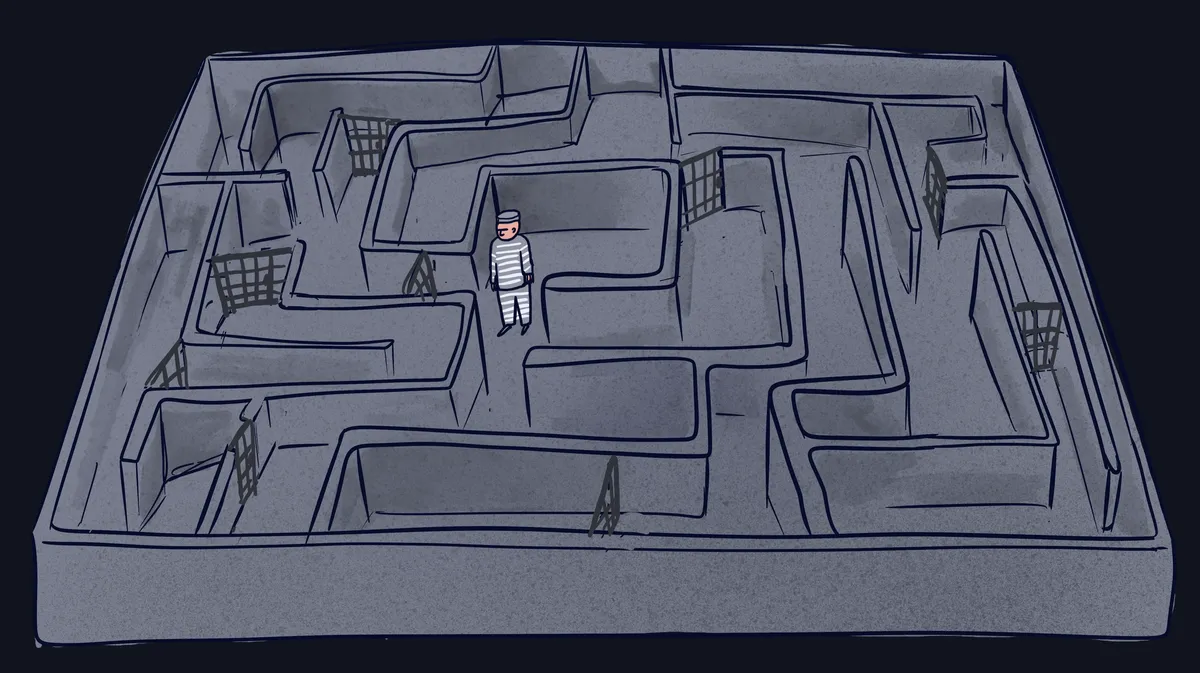
Illustration: Alisa Krasnikova
A prison for especially dangerous criminals, Vladimir Central, is considered perhaps the most famous Russian prison. Someone believes that thanks to the famous hit of Mikhail Circle. But those who spent more than one year behind bars are sure that the opposite was the contrary, and it was the circle that was famous for the fact that they sang about the famous prison. In the “Vladimir Central”, the architectural project of which is the rules of Catherine II itself, poems and books were written, discoveries were made, the skill of famous singers and actors was honed, and new directions of scientific and philosophical ideas were born. And for thieves in the law of the Soviet era, passing through a prison in Vladimir was akin to combat baptism for the front -line soldier.
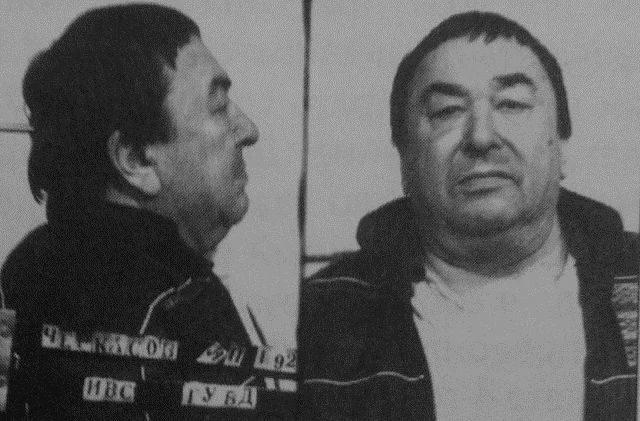
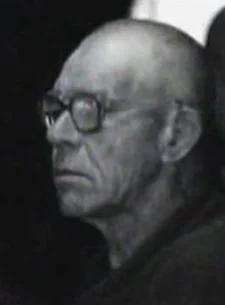
Bogdan Syryan named the gypsies was in this cell due to the fact that he was a connoisseur of prison folklore and played at the guitar masterly. The heart of the already mature sitter froze with delight. And not because you stretch your hand - and you can eat that even in the wild he never had a shone to try. Although the table really hit the imagination, the gypsies stared at the thieves in law, talking about something at the head of the table. In all Soviet zones, they knew perfectly well that these two mastodons of the thieves' world were at war with each other. But now they drank cognac peacefully. Anatoly Pavlovich Cherkasov, a thief in the Law of Tolya Cherkas, a reformer of the thieves' law, a man who has ceased the “bitch wars”, the hero of the Patriotic War and the holder of the Russian common fund, poured another portion of cognac not into aluminum circles, but into piles of Czech glass, and handed one to his interlocutor. Vladimir Petrovich Babushkin, a thief in the law of Vasya Diamond, the keeper of old thieves' traditions, who lived in jail, sparkled with the lenses of thick points and nodded gratefully, taking the stack.
The gypsy, knowing very well that for the story of this feast he will be thanked in any zone with cigarettes, tea, and if he wants, then a marathot with vodka, tried not to miss the slightest details of what was happening. But then opposite him, a pretty drunken, just crowned thief in law, 29-year-old Pasha Sinecura, had already sat down. During the coronation, the nickname was changed, but the gypsies still mentally called him as before.
“But tell me the gypsies, are you really gypsies?” - he asked merrily in honor of whom the clearing was covered, holding out a mug with his native Moldavian wine.
“True,” Bogdan smiled, taking a mug with Isabella.
“So tell me the future,” Pasha suddenly asked.
“It is better for a person not to know what will happen,” the gypsy tried to get away from a direct answer.
“So I did not understand,” Synekura began to start, “I fell to me - the thief!” - To tell the truth?!
“Okholoni, Pasha,” the diamond said quietly. - Gypsies are right, it’s better not to know the future, otherwise it will be uninteresting to live. Sing is better than the "Alexander Central", maestro.
“But I'm interested in,” Cherkassy said, waiting for the last chord and silently drinking a stack of cognac in memory of pre -revolutionary prisoners. - There is a song about Taganka, about the Irkutsk cover too ( “Alexander Central” is located in Irkutsk. - Approx. Aut. ), But about the most famous zone in which we all met - about “Vladimir Central” - there is no song. Why?
“It will still be,” the gypsy answered confidently, “and such that it will not only be sitters, but they will sing with all the people,” and immediately bit his tongue, glancing at Pasha. But he, apparently, forgot about his desire to find out the future and was busy with a vivily discussed thief in law by the Japanese who came to Vladimir from Moscow at the invitation of Cherkas.
Bogdan looked at six thieves in law, two of which were “legends” during his lifetime, two were just crowned, and two more came to the cell from his will to freely leave closer to the morning, and exhaled in relief.
Very Bogdan did not want to tell the quick -pointing Sinecure that he had only 13 years left to live.
In 1992, Pasha will be shot from two machine guns, by order of the one who is now clouding with him with a brandy and bite with black caviar.
I went out, and got lost
The Pugachevsky uprising of the 70s of the XVIII century, as we already wrote in previous materials about Russian prisons, produced the leadership of the Russian Empire on the indigenous reform of the penal system in the country. After the rebellion “in the arms” of the military, there were several tens of thousands of people who seemed to be executed - because they rebelled against the tsarist authorities - but on the other hand, it seems like to execute and for nothing, because they were sure that they were just following the king (Pugachevy gave themselves back to Peter III). And just destroying so many working hands would be squealed. Therefore, it was decided to send them to Siberia for hard labor.
The movement of such a large number of people in custody was not carried out in Russia before. Immediately, the problem of the lack of transshipment points was displayed, in which the convicts could accumulate in anticipation of the transfer or just relax. In Siberia, this problem was solved quite simply: some fortresses were converted into transit prisons. But in the European part of Russia, “sending” had to be built from scratch.
Initially, the main transit prison of Russia was planned to be built in Moscow. But then the clergy opposed. Despite the fact that the capital of the Empire Pyotr I transferred to St. Petersburg, church power was located in Moscow.
Church hierarchs did not really like the possible neighborhood with thousands of prisoners. Catherine II did not aggravate the situation and ordered the construction to neighboring Vladimir.
The prison was immediately planned as a temporary habitat of a large number of people, and about 3 hectares of land were allocated for it right on the “Vladimir” (one of the roads connecting Siberia with the European part of Russia). Since Catherine II showed interest in the construction of a transit prison (it was she who allowed the dispute between Count Peter Panin, on whom she entrusted the organizations of the prisons, and the Holy Synod in the issue of the location of the central transit prison), it was she who at the end of 1780 presented the drawing of the future prison.
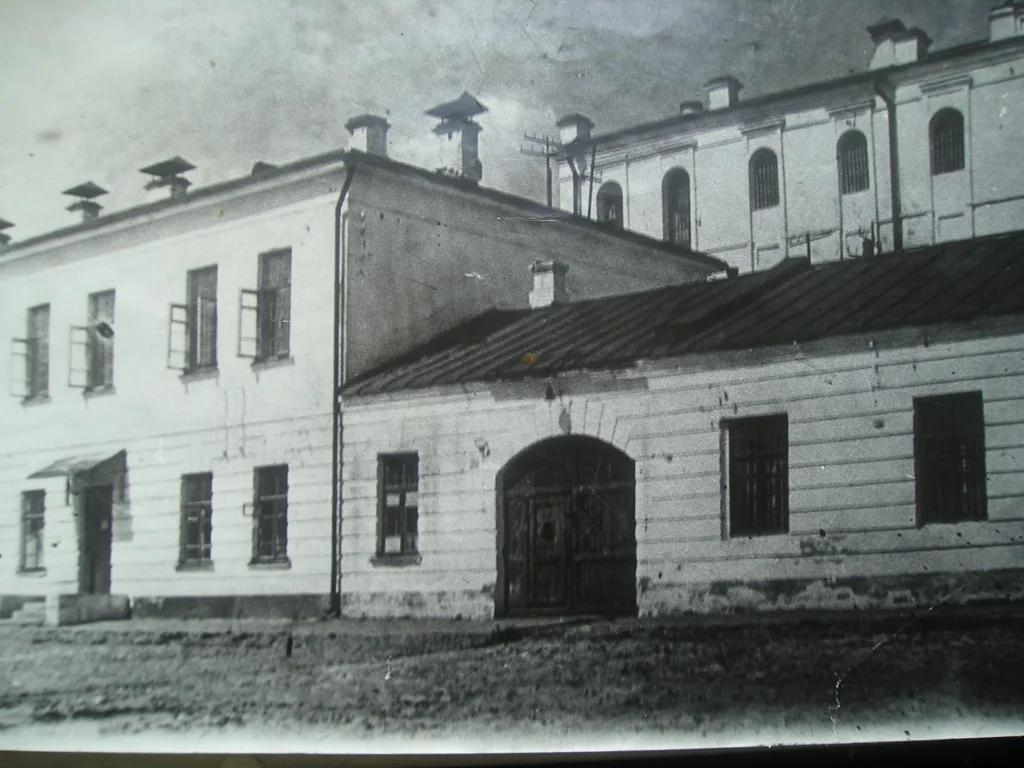
In its original form, the plan did not represent anything special: 10 two -story wooden barracks surrounded by a brick wall. Usually, Catherine signed such projects without reading. But then His Majesty intervened. The then favorite of Empress Alexander Lanskaya drew attention to the drawing. The 25-year-old officer of 54-year-old Catherine II was introduced by Grigory Potemkin, who knew her tastes very well. Lanskaya was beautiful, staten, well educated and loved to read. Among the other favorites of the empress, he stood out by the fact that he had never climbed into state affairs, and did not even dare to be jealous of Catherine to other men, but "... only very nicely lamented, which aroused maternal pity and love in the empress ..."
According to legend, Lanskaya was surprised at the simplicity of the project and invited Catherine to "play architecture." Initially, they, together, and this way rearranged the future hulls of prison on paper. The empress was so fascinated by this game that she attracted other courtiers to her. And Lanskaya brought a justification for this game. Like, a large prison should be built in such a way that the prisoner, even having left his hut, could not get out of the wall. And he proposed to create a real maze from the proposed drawing.
In 1781, the project entered the Moscow governorship more than once, and in 1783 the prison house (as they called the Vladimir prison) accepted his first “guests”. Over time, brick buildings will grow on the site of wooden barracks. But even at present, a person who first got into the territory of the Vladimir prison will certainly get lost in its buildings.
The shoots were, but this is a secret
The name of the Vladimir prison has changed more than once. It was “Central”, that is, the central transit prison, that she became in 1906. Three years later, the future commander in chief of the Red Army Mikhail Frunze was delivered there. He was accused of attempting to kill the police officer, for which one punishment was supposed to be in the Russian Empire - the death penalty.
But in the “Vladimir Central” he is not remembered as a fiery revolutionary, but as the only prisoner who managed to escape from the most famous Russian prison.
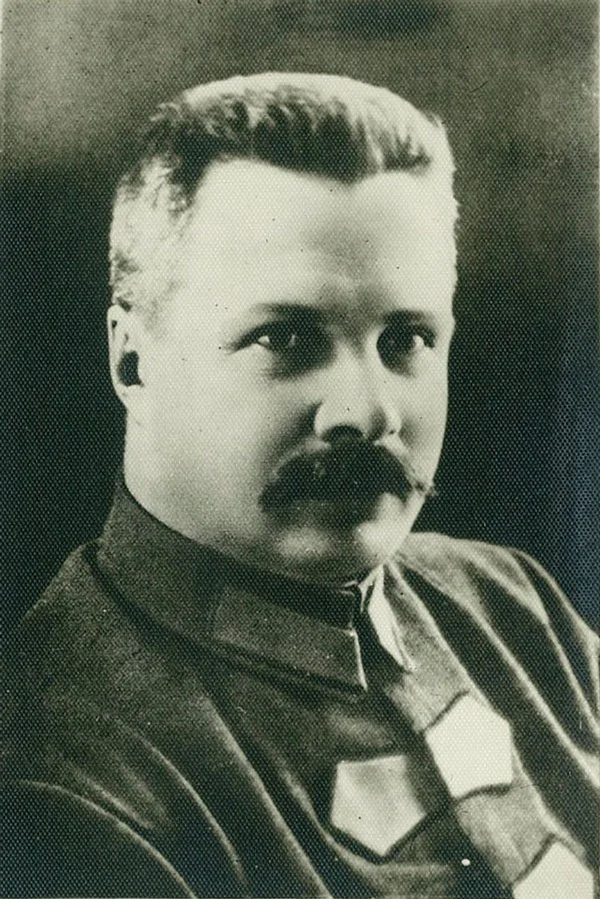
“Frunze did not run from the corps of prison buildings, but from the court, which is located across the road from the prison,” the historian and local historian Vladimir Khimichev told Novy-European (the surname was changed due to ensuring the safety of the respondent). - Now this is the Frunze District Court of Vladimir. The FSIN of the Russian Federation claims that this was the only successful escape from the "Vladimir Central". In fact, from the Vladimir prison, even after it became super-preserved, successful shoots took place at least four times. But the leadership of the prison never recognizes this. It is beneficial for them to support the legend of the impossibility of escape, so that every new prisoner, arriving in prison, is psychologically ready for the fact that it is impossible to run from here.
After the October Revolution, the Vladimir Forem Executive Committee decided to close the prison. In February 1918, an appropriate resolution was even issued. But after a few months, the “Vladimir Central”, called the “provincial professional”, again accepted the prisoners. Those who were sentenced to correctional work for non -serious crimes, as well as various “former” (nobles, priests, merchants, officials) were sent there, who were not seen in crimes against the working people. The prisoners swept the streets, cleaned garbage, were engaged in small repair of buildings.
In 1921, in one of the buildings, a speculator was opened for political prisoners. Anarchists, Socialist -Revolutionaries, Mensheviks, Cadets are taken there. Since 1904, a member of the RSDLP, Grigory Polezhaev, arrested in 1921 for public criticism of the authorities, and completely hit the Vladimir Central for the second time. From 1906 to 1912, he sat there like a fighter with tsarism, but after the revolution, as an anti-Soviet.
After the construction of the Suzdal special forces isolator, the number of political prisoners in Vladimir prison decreased.
However, already in 1938, the construction of a new corps was being completed in the “Vladimir Central”, and the prison is again clogged to the eyeballs.
“In the fall of 1941, when the Germans advancing in Moscow, the prison administration was preparing for evacuation and destroying all archives,” says Khimichev. - Therefore, it is difficult to now establish not only the data of pre -war prisoners, but even their number. From the reports of Beria, it can be judged that in 1936–1940. The Vladimir Central was contained in different months from 400 to 2500 prisoners; Moreover, the nominal occupancy of the prison was a little more than 1,700 people. It is reliably known that it was from here that in Ivanovo, the first chapter of Komsomol Efim Ketlin in 1937 was taken away in Ivanovo for execution. 16 years, from 1938 to 1954, the second secretary of the Central Committee of the Communist Party of Uzbekistan Suleiman Azimov spent here. It is noteworthy that when he was released in 1954 and he came to the Central Committee of the CPSU with a request to restore him in the party, it turned out that no one from the party was expelled and in the apparatus of the Central Committee did not know that Azimov was arrested. According to some reports, in the period from 1938 to 1942, four successful shoots were made from the “Vladimir Central”. There is no documentary evidence of this, but taking into account the mess that was happening in Vladimir at the end of 1941, this was quite possible.
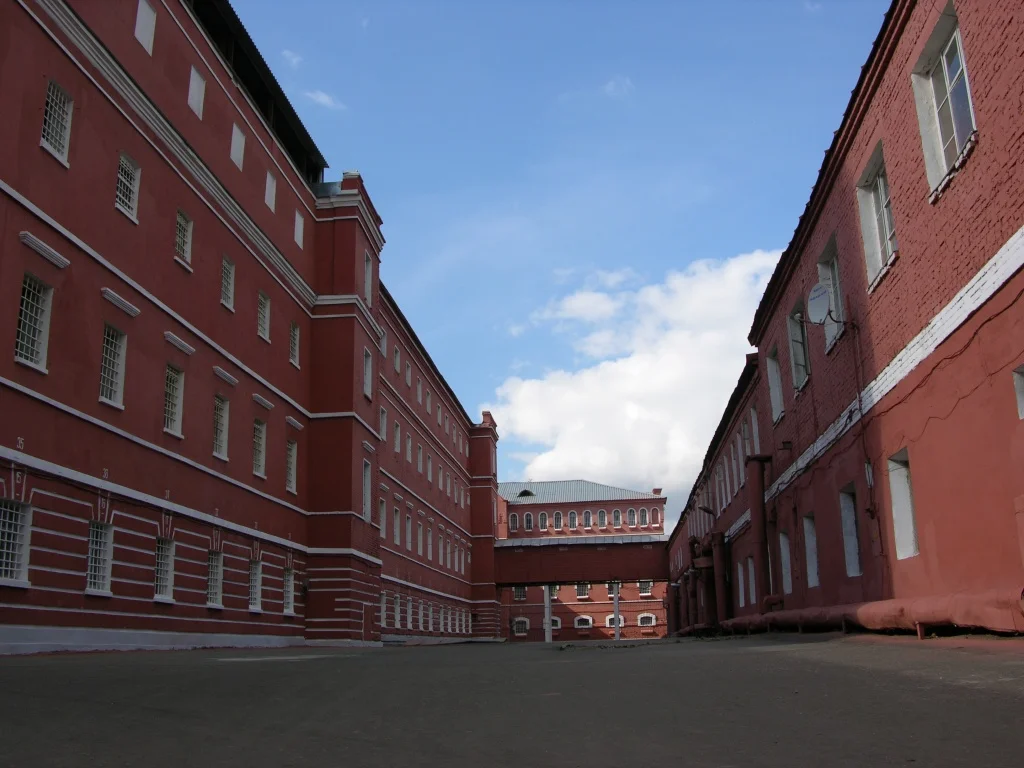
In 1948, “Vladimir Central” was transferred to the MGB Office for Supervision of “Special Camps and Prisons”. According to the Decree of the Council of Ministers of the USSR of February 21, 1948, the following categories of citizens should have served in such places of imprisonment: “Spies, saboteurs, terrorists, trotskyists, Mensheviks, Socialist Revolutionaries, Nationalists, Belomigrants and participants in other anti -Soviet organizations.”
“In those days, there were almost no criminals at the Vladimir Central,” says the 89-year-old thief in law, which introduced himself as “New-Europe” Ivan Ivanov. - Only the service staff, the convicts that distribute food, the floors are washed and the sheets are erased. Most often these are first -day, and with not very long time, a maximum of 5-6 years. In the 82nd, to me in the same cell, Tolya Lapot was sitting, so he was in the 50s in the “Vladimir Central”. He said that in neighboring chambers, the generals of the three armies were sitting. Every morning, near these three cameras, one could hear an amazing concert.
In the middle, two Soviet generals perform the “International”, the Germans bark something bravuria on the left, and the Japanese sing on the right.
Despite the fact that it was forbidden to sing prisoners at the Vladimir Central, these six prisoners were allowed in the morning, along with the radio, to sing something. “International” was sang by the Lieutenant General of the MGB Pavel Sudoplatov, the organizer of sabotage work in the rear of the Germans and the founder of the Soviet special purpose, and his neighbor, Major General MGB Naum (Leonid) Eitingon, developer of sabotage operations, led the liquidation of Leo Trotsky, “punishing the Stalin sword”. Both were arrested at the end of 1953 in the “Beria case”, sentenced to 15 years in prison and rehabilitated in 1992.
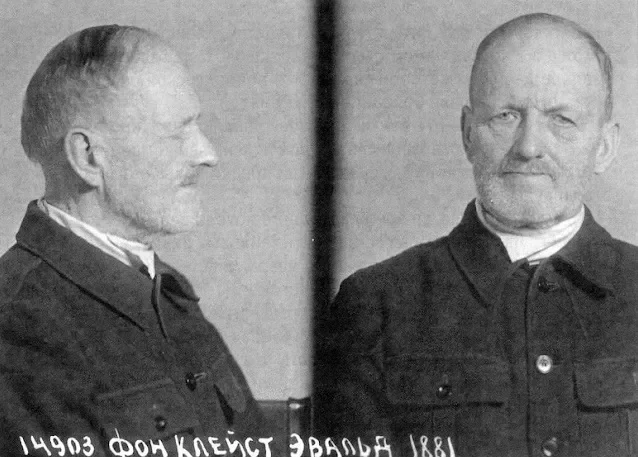
To the right of the Soviet generals sat Deputy Minister of Justice Manchuria Mino Siger and Lieutenant General of the Japanese army Yu and Ji. Well, on the left were not even generals, but feldmarshals: Ferdinand Schurner and Evald von Kleist.
Prison creativity
After the war ended in the “Vladimir Central”, a special category of prisoners appeared, which were contained alone, and their names and surnames knew neither the service staff nor security. After 1991, it was possible to restore the list of “license plates” of prisoners. These were mainly politicians of Lithuania, Latvia and Estonia, who in 1940 were interned in the central regions of the Soviet Union, and after June 22, 1941 they arrested.
Until the end of the war, they sat in prisons, not knowing either a sentence or their own period of imprisonment. In 1946, they were remembered and sentenced to 15 years in prison for espionage.
Under No. 1 in the “Vladimir Central” was the Prime Minister of Lithuania Antanas Merkis, under numbers 2 and 4-his wife and son. Under No. 30 - Alexander Stulginskis, President of Lithuania. The Minister of Foreign Affairs of Latvia Wilhelm Munters and his wife Natalia, military Minister of Latvia Janis Balodis and his wife Elvira, had their numbers. Prisoner No. 11, commander of the Estonian army, Johan Lydoner, could not stand the test: he went crazy and died in prison.
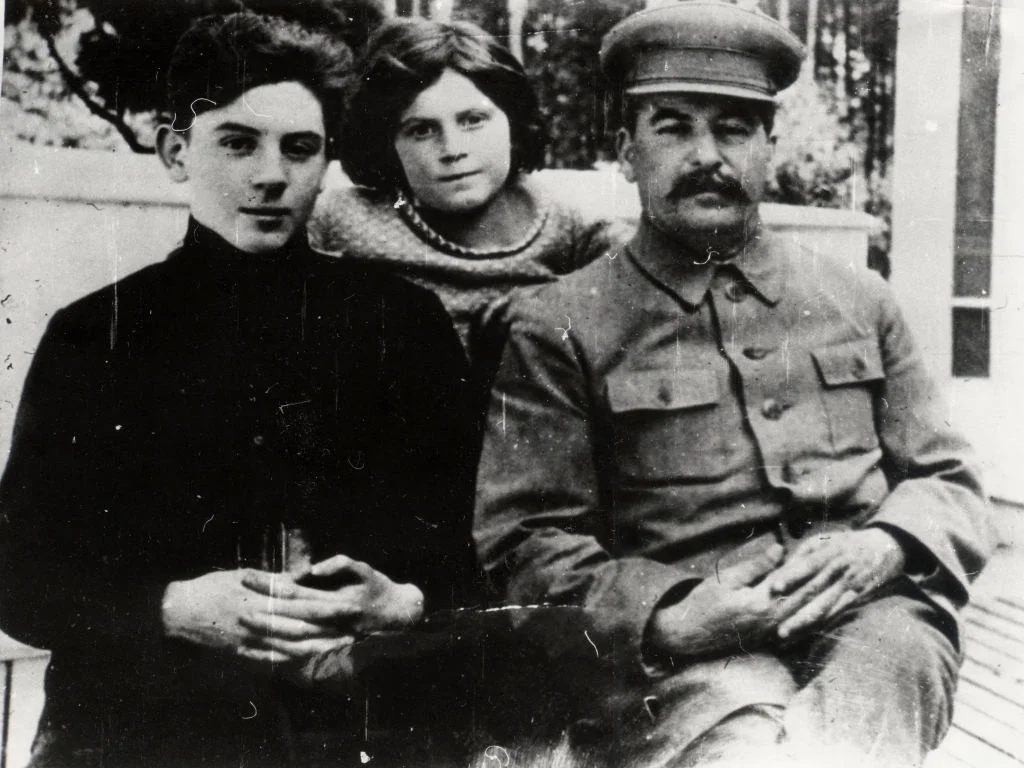
Under the numbers 22 and 23, relatives of Nadezhda Alliluyeva were hidden: the sister of Anna and the sister -in -law Eugene. But Vasily Dzhugashvili, who was sitting in Vladimir prison from 1956 to 1958, had no number, but was listed under the surname Vasiliev. His loner was not at all like a camera. Paul covered the carpet, there was a chair, every day fresh flowers were placed in a vase. But it was forbidden to enter into conversations with Vasily, and he himself did not seek to communicate with security and service. He did not sit in the cell, worked as a turner and instrumental. He personally assembled a cart for breaking food with the ability to easily rotate in the corridors.
The “Vladimir Central” was visited by actress Zoya Fedorova, singer Lidia Ruslanova, opera diva (second wife of Semyon of Budyonny) Olga Mikhailova, writer Galina Serebryakova-Sokolnikova-the author of books about Karl Marx and the wife of two People's Commissars: Leonid Serebryakova (along work) and Grigory Sokolnikov (on finances); Both were shot in the same case in 1937.
It was there that fate brought down in one cell of the poet, writer, philosopher Daniil Andreev and the creator of the first exposition about the blockade Leningrad Leo Rakov, arrested in 1947, just because of his exposition, which "incorrectly displayed the role of Comrade Stalin in the organization of the defeat of Germany." The third participant in this “circle” was an academician of medicine, an inventor of a hemporator who saved tens of thousands of wounded, Vasily Parin.
Together, they wrote on small shreds of paper the satirical story “The Newest Plutarch”. But the top of the joint work of Andreev and Rakov became the metapilosophical work of the Rosa of the World.
“It was not forbidden to write in prison,” says Khimichev, “and besides, from the late 50s, the Vladimir Central began to massively get poets, writers, and journalists. Here were the ancestors of the dissident movement in the USSR: Daniel, Sinyavsky, Lubarsky, Bukovsky, Sranisky, Begun, Nekipelov, Marchenko. The mathematician Revolt Pimenov, the future deputy of the Supreme Council of the RSFSR and the co -author of the text of the Constitution of the Russian Federation, wrote in the prison a candidate dissertation, for which books were brought from the Lenin library. And once an amazing parcel came to the Central, in which there were no products, no warm things, but only 2 kg of scribbled paper. The package was intended for Vasily Shulgin, a State Duma deputy, who personally accepted the renunciation of Nicholas II. Василий Витальевич много писал в тюрьме, но большинство его рукописей было уничтожено администрацией.
Хочу в тюрьму, готов платить
В середине 70-х город Владимир был включен в один из самых популярных туристических маршрутов для иностранцев. Поток туристов постоянно увеличивался, иностранцы всё чаще задавали вопрос о том, кто сидит во Владимирской тюрьме, которую во время ознакомления с владимирскими достопримечательностями обойти никак не получалось. В 1977 году было принято решение политзаключенных отправить в лагеря, а во «Владимирский централ» направлять особо опасных рецидивистов, к которым относились воры в законе.
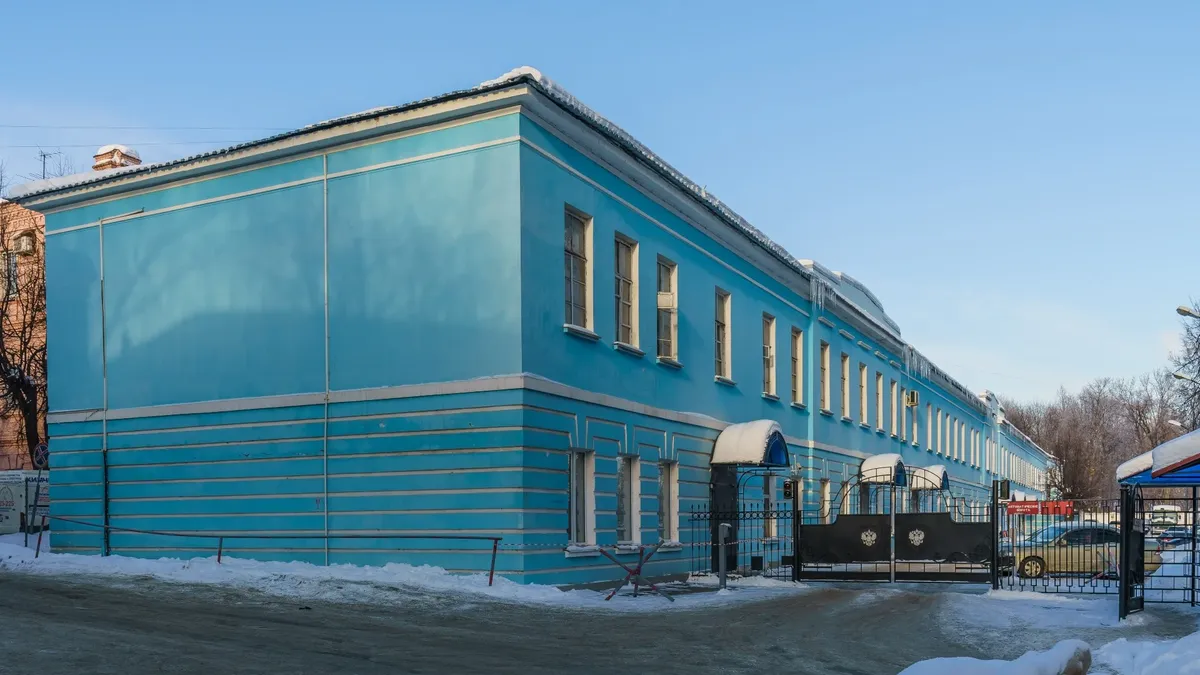
— Это может показаться бредом, но я лично знаком с двумя арестантами, которые платили немалые суммы денег, чтобы попасть именно во «Владимирский централ», — рассказал «Новой-Европа» Иван Иванов. — В 80-ые годы там был этакий «дом знакомств», в котором авторитеты знакомились друг с другом вживую, а не при помощи маляв. Да и короноваться во «Владимирском централе» считалось очень престижным делом. Вот люди и платили, чтобы туда попасть. Но с развалом СССР всё это быстро ушло в небытие, так как поменялись не только власть и строй, но и уголовный мир. Сколько через эту «крытку» в начале 90-х «апельсинов» ( воры в законе, получившие звание за деньги, порой даже не имея за плечами ни одного года, проведенного за решеткой. — Прим. авт. ) прошло, вообще не сосчитать. До смешного доходило: в одной камере какого-нибудь «лаврушника» коронуют, а в соседней уже строчат маляву, что никакой коронации не было. А сейчас туда вообще туристов на экскурсии водят. Так что всё, чем славилась самая знаменитая тюрьма в России, осталось в прошлом.