
Translated material
"Why should I apologize?"
Portrait of Gerhard Schroeder is a policy who did not abandon Vladimir Putin, even after Russia's invasion of Ukraine
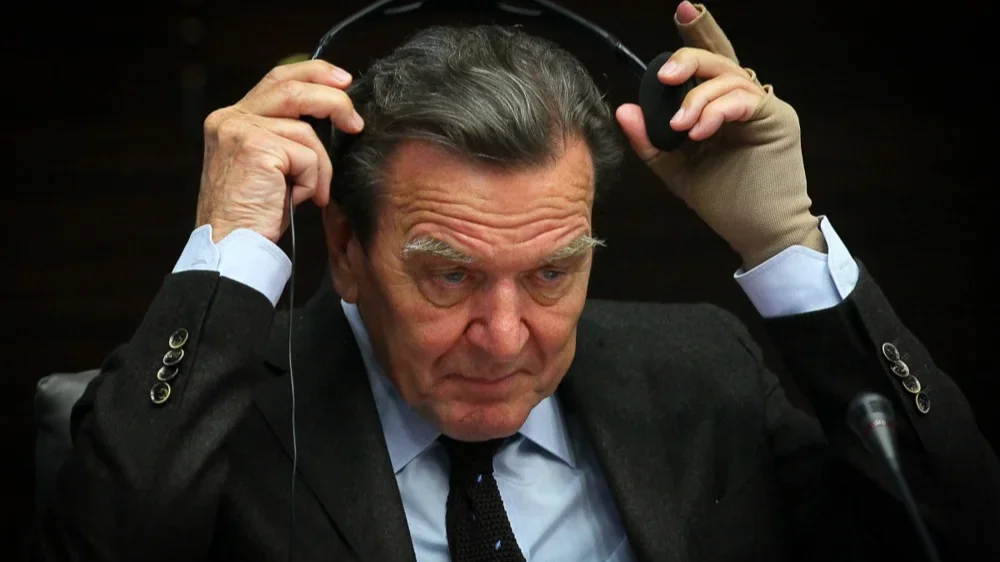
Gerhard Schroeder took office in Germany in 1998. And he held a post until 2005. Under him, the government carried out key reforms in the German economy, which also brought the country to the eurozone. However, most in the German and Russian society Schroeder is more likely to be known for their friendship with Russian President Vladimir Putin.
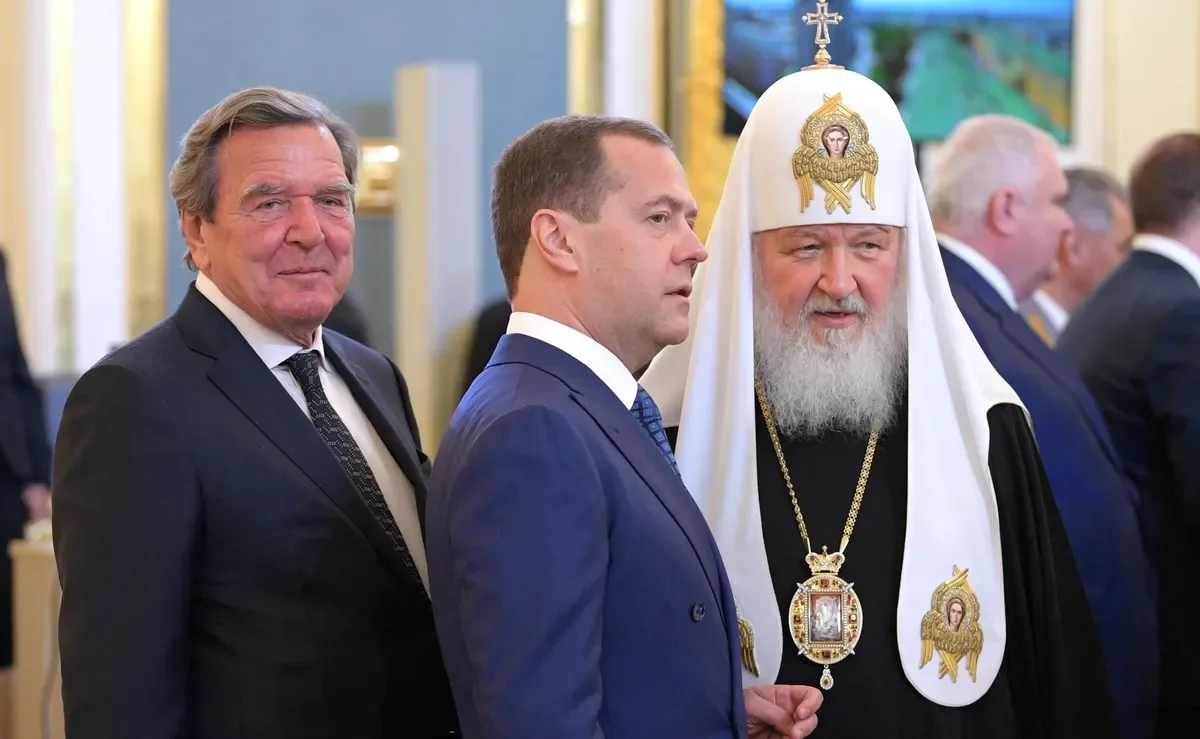
Today, the former chancellor is considered one of the most high -ranking supporters of the Kremlin in the world arena. Despite the indignation of the public in Germany and beyond, from the moment of Russia's invasion of Ukraine and so far he refused to condemn Russian aggression. We tell how the relations of Shreder and Putin developed, why the friendship of Germany and Russia was at least partially determined by the Soviet legacy “Ost Politician”, and how modern German leaders are forced to fight this heritage and decisions taken by Shreder. This material “New Gazeta Europe” continues the cycle of publications about key allies of the Kremlin in Europe.
In March 2022, all employees of the Herhard Schroeder office in the Bundestag resigned in protest against the position of a politician on Russian invasion of Ukraine. Later, cooperation with the former chancellor was stopped by the Swiss Media Company Ringier and the German machine -building company Herrenknecht AG. And the favorite football team of Shreder Borussia Dortmund withdrew his honorary membership in the club .
In May 2023, German lawmakers deprived the policy of most privileges laid down to him as a former chancellor. In response, Schroeder sued the German government . Politics even tried to exclude from his own party-the Social-Democratic Party of Germany (SDPG)-but the fuss.
Schroeder did not retreat from his position. After the start of the war, he refused to leave high -ranking posts in Russian energy companies for several months and only in May 2022 he finally left the Rosneft Council.
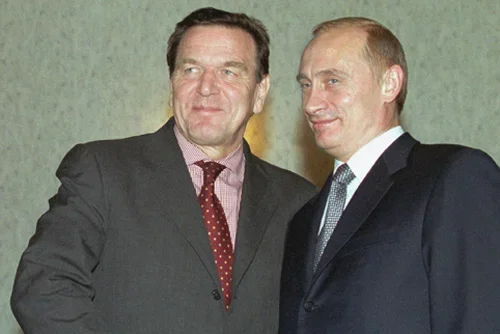
Two months after that, he arrived in Moscow - apparently to try to agree with Putin personally about the end of the war. And although Schroeder returned to Germany empty -handed, he claimed that the trip was needed. “Will personal distance from Vladimir Putin really benefit anyone? I made decisions, I adhere to them, and I made it clear: maybe I can be useful again, ”he said in a five -hour interview with Stern and the German RTL channel after returning to Germany. “So why should I apologize?”
Schroeder met Putin at the beginning of his first presidential term in 2000. A fairly close relationship was immediately established between them: at that time it was considered a pragmatic solution and a logical continuation of the connections between the former Chancellor Helmut Kole, Mikhail Gorbachev and Boris Yeltsin.
Schroeder and Putin were in many ways similar - both politicians tied their career on the image of a “harsh man”, and therefore friendly relations between them were quite expected. Many even approved their close connection, seeing in it the touched to improve relations between Russia and Europe.
However, twenty years later, after Russia's invasion of Ukraine, the situation has fundamentally changed: now few people consider this friendship harmless. Journalists Reinhard Bingener and Marcus Venus even suggested that Putin “recruited” Shreder, as he did during the years of service in the KGB in Dresden.
In an interview with Stern and RTL, Schroeder repeated the key Kremlin theses that the Russian invasion of Ukraine is a reaction to the alleged threat from NATO.
In the future conversation with The New York Times, when discussing massacres in Buch, he spoke out in defense of Putin and insisted that these orders could not be given personally by the Russian president. Although only a month later, Putin awarded the honorary title of the 64th brigade suspected of committing war crimes in Buch.
Such statements guaranteed the Schroater the status of a political outcast.
In addition, the name of the former chancellor began to be associated in Germany with an erroneous political course, which led to the country's total dependence on Russian gas supplies. As a result, Germany looked through her fingers for years at the growing cruelty of the Kremlin regime.
Comrades in arms
Gerhard Schreder was born on April 7, 1944 in the town of Blomberg in West Germany, a year before the collapse of the Third Reich. His father died in the war six months after the birth of his son. Schroeder's mother had to raise children alone.
The family always had problems with money, but, being ambitious, Schroeder combined the work during the day and study in the evening in the hope of entering the university. As a result, in 1966 he ended up at the University of Gettingen at the Faculty of Law.
By that time, the future Chancellor managed to join the SDPG and took an active part in the work of the youth department of the organization. In the 80s, he was already moving along the party ladder: at first he was a member of the parliament, and then became the leader of the opposition and Prime Minister of Lower Saxony.
Oddly enough, Schroeder began his career, appealing to the ideas of the Marxists and the radical left. Only then he will become known as “Friend of the Bosses”, whose main goal is to please the big business.
In 1998, Schroeder was appointed chancellor and headed the coalition of the SDPG and Green. The new chancellor was young and full of energy. After the sixteen -year reign of Helmut Kolya, this impressed the Germans.
In the book “Moscow Relations” , written by Bingener in collaboration with Marcus Venus, journalists understand the confusing economic and political relations between Germany and post -Soviet Russia and call them “the largest mistake in German foreign policy since the Second World War”.
“[Schroeder] was a courageous, young, fit politician, a real hedonist. He looked profitable against Kolya, writes Bingener. “He was very popular, especially among women.”
However, despite the fact that Schroeder was associated with the Germans with the opportunity to start everything from the clean sheet, his political course was not so much different from Kolya’s policy. After the election, Schroeder said that he would not build a warm relationship with the Russian leader, as Helmut did with Boris Yeltsin. But the promises of the new chancellor quickly came to naught, and the Germans themselves did not see anything bad in the proximity of the leaders: in practice, many associated them with the unification of Germany.
“The Germans compared good relations [between Schreder and Putin] with the relationship between Helmut Kole and Mikhail Gorbachev,” says Daniel Siemens, professor of European history of Newkasl University. - That is how Schroeder explained this friendship to people: he continues the policy of his predecessor, reinforcing it with male friendship between two strong leaders.
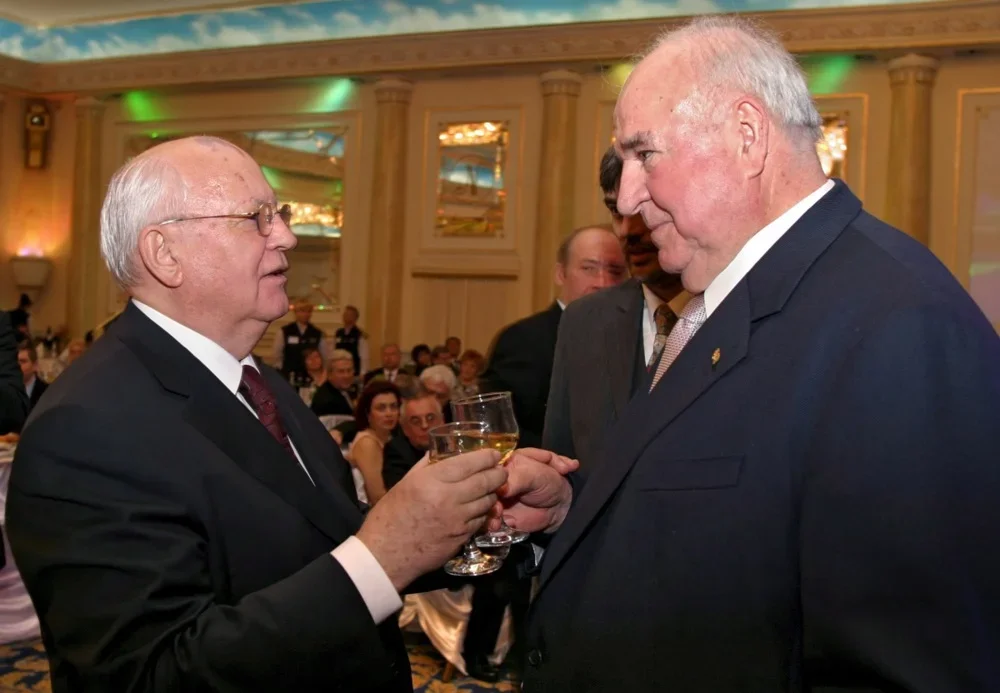
To reproduce the relationship of Kolya and Gorbachev in the 21st century with the new President Vladimir Putin seemed an obvious step for Schrief. Many Germans would like this, who still supported the “Ostapolitical” - a policy that the Federal Chancellor of the Federal Republic of Germany Willy Brandt pursued since 1969 in order to normalize relations with the Soviet Union and Socialist states.
The Ost Politician also gave economic advantages: it was within the framework of this political course that the Soviet Union began to export gas to Germany in 1973. However, Siemens claims that at that time, the safety of Germany was given more attention. Trade with the USSR was welcomed not only because Germany received resources, but also because it was believed that countries with common economic interests would be less likely to fight each other.
- I was born in 1975. During my childhood in Germany, there was a firm belief that if [during the Cold War] a military confrontation begins, then it will occur on German soil, says Siemens. - The Germans sought to avoid it with all their might.
So Schroeder simply continued this political course.
Chancellor of Germany and President Putin together drank beer and celebrated birthdays, Putin even helped Schroeder adopt two children from Russia.
Not at all like relations of the leaders of the countries on the verge of war.
But with the end of the Cold War and the collapse of the Soviet Union, the security guaranteed by the Ostapolitical has ceased to be such an important factor - attention switched to trade. And just the trade between Russia and Germany brought Schreder a huge personal benefit.
Gas friendship
The export of Russian gas to Germany began in 1973, and the benefit of this decision became obvious almost immediately: in the 70s, the global crisis of oil production led to a significant increase in prices for it.
By the beginning of 1989, a third of gas in West Germany was imported from the Soviet Union. At the beginning of 2022, on the eve of the Russian invasion of Ukraine, this figure reached 55%, bringing Russia about 200 million euros daily.
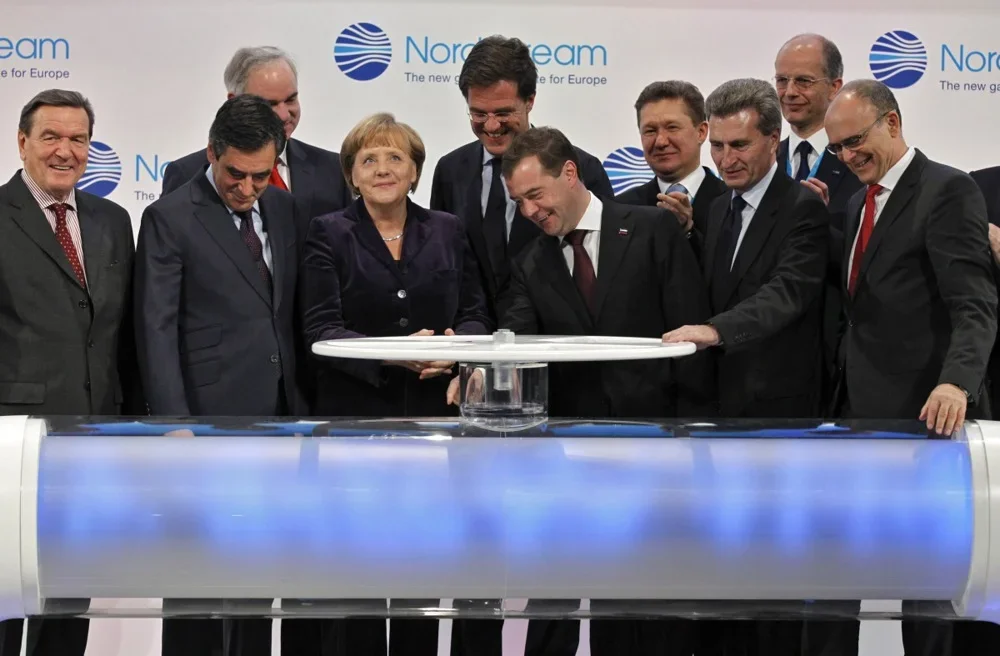
In the establishment of these trade relations, Schroeder played a significant role. Although negotiations on the construction of the first “northern stream” began back in 1997, before Shreder came to power, it was he who lobbied the contract in the German government and signed it in 2005.
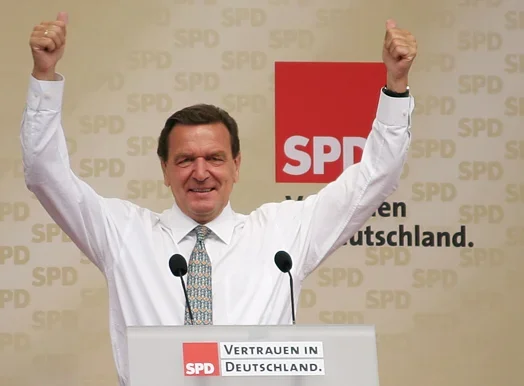
And just a few weeks after leaving the post of Chancellor, Schroeder took the position of head of the shareholders of the North Stream - a company controlled by Gazprom. This post was the first in a whole series of appointments to similar positions in energy companies related to the Russian government.
In 2017, Schroeder also became the chairman of the Supervisory Board of Rosneft and left this post only three months after the start of the war in Ukraine due to growing pressure from Germany and other countries.
Despite the fact that as a result, the Schroeder’s reputation suffered greatly, he earned well: according to official documents, Russian companies paid him hundreds of thousands of dollars.
“It is believed that the former chancellor is not supposed to do such things,” says Siemens.
The German government not only paid Schreder a good pension that allowed him to be financially independent, but also provided him with an office, employees and security,
Adds an expert.
-In a sense, Schroeder behaves as a private citizen and business owner, and not as a statesman. Only in his case, the business that he owned was all of Germany. This is an outrageous and ugly act, ”Siemens continues.
However, the point is not only that such behavior is "ugly." Journalist Reinhard Bingener says that Shreder’s connections with Russian business are much deeper than it seems at first glance.
“When Schroeder was the Prime Minister of Lower Saxony, he controlled the purchase by the regional government of Salzgitter AG, a local pipe production factory,” the journalist says. -It was here that part of the pipes was made by Russian gas to Germany in the 90s. The same factory produced pipes for the Nord Stream. In addition, there were plans for the supply for the South Stream.
Schreder’s connection with Russian business was beneficial to entrepreneurs in the near Chancellor circle, says Bingener.
“One of his close friends, Gunther Papenburg, owns a successful construction business in the countries of the former USSR,” says the journalist. - Today, Papenburg has the largest private share of Salzgitter AG.
Strong legacy
Today, many perceive Schreder as a politician who was ready to look through the fingers at the cruelty of the Kremlin for the personal benefit of the supply of Russian gas. But he was by no means the only statesman with such a position.
Although some German politicians warned of the turn of Russia towards the dictatorship, before the start of the war, their voices were practically not heard, Siemens says.
- For decades in Germany, there was an opinion: whoever said about the Russians, they are reliable trading partners. From the point of view of the German economy, democracy in Russia is not as important as the observance by Russian partners of their obligations,
- says Siemens.
Bangener, on the contrary, believes that Russia has never been a reliable partner. The journalist recalls how in the early 90s Gazprom threatened to stop gas supply to East Germany and the situation was resolved only after the intervention of the German government.
As a result, according to Bingener, a whole generation of politicians who are ready to turn a blind eye to many things and not ask difficult questions grew up in Germany. They were quite satisfied with access to cheap Russian gas, which contributed to the prosperity of German industries, which in turn increased the chances of these politicians to be re -elected.
- It would seem that the influence of Shreder should have come to naught after he ceased to be a chancellor. But the SDPG remained a partner of the Merkel government, and Schroeder still had great connections in the party, ”the journalist explains.
Bingener believes that Schroeder had the most noticeable influence on the policy of the current president of Germany Frank-Walter Steinmeier. At one time, Steinmeier was the closest ally of Schrief, and in 2005 he was appointed by him the Minister of Foreign Affairs.
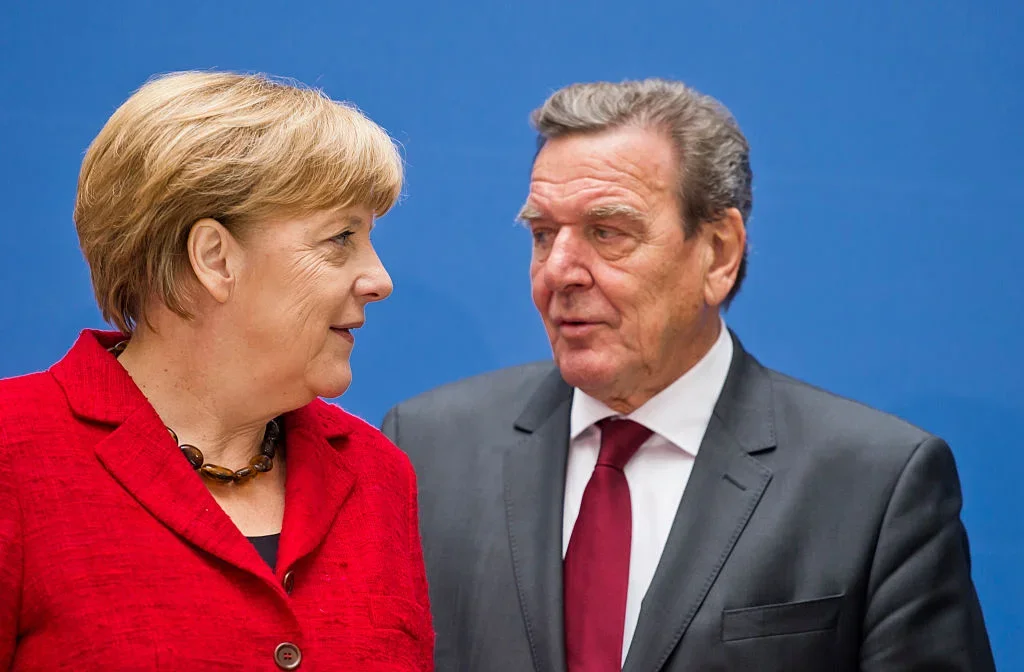
- Steinmeier paid great attention to Russian politics. And Angel Merkel, especially in the first years of his reign, mainly allowed the minister to determine the political course against Russia, ”says Bingener. -Such a strategy gave her the opportunity to stay in power: she did not conflict with the Social Democrats and won the election.
German politicians did not take into account only the fact that in such a course Germany can suffer greatly as a result of Moscow’s actions.
So it happened in 2022: in June, Russia reduced gas supply to Germany through the North Stream to 40% of the planned volume, and in July up to 20%. This threatened the German industry and violated the supply of millions of German households shortly before the start of winter.
While Gazprom officially justified its solution with repair work and problems related to Western sanctions, the European Union accused Russia of "energy blackmail".
In connection with this situation, the question arose:
Why did Germany allow itself to become dependent on Russian energy? Why did not the German government assumed that this resource could be turned against Germany?
To some extent, such a naivety is explained by the history of the relationship between the two countries. During the Second World War, 27 million inhabitants of the Soviet Union died at the hands of the Germans. About 3 million Soviet prisoners of war died in German camps. This inevitably entailed the emergence of a sense of collective responsibility among the Germans, which still affects the relationship between Berlin and Moscow, suggests Siemens.
After the turbulent XX century, everything that Germany dreamed about is stability. Many German politicians believed that their Russian colleagues value stability in the same way as they were.
- Most of the population of Germany has removed for themselves the main lesson from the Second World War: the war should never be repeated. The Germans are ready to pay a very high price, just to avoid escalation. Many of them will turn a blind eye to problems in the hope of preserving at least the appearance of the world, ”explains Siemens.
But there is another, less pleasant explanation: everything is to blame for the erroneous faith of the Germans into their own exclusivity.
“I see such a pattern: until recently, the security of the countries located between Germany and Russia was not taken into account,” says Siemens. - Poland has repeatedly tried to warn its neighbors about the danger emanating from Russia. Germany’s answer has always been about the same: do not panic. Over the years, the Germans had a rather naive belief that for Russians they are key allies and that this will never change.
Turning moment
On February 27, 2022, three days after the Russian invasion of Ukraine, the German Chancellor Olaf Sholts made a speech in the Bundestag, announcing Zeitenwende - a “global fracture” in Germany and Ukraine.
“Having invaded Ukraine, Putin not only wants to erase an independent country from the world map. It destroys the entire European security system, which has lasted almost half a century since the time of Helsinki agreements, ”the Chancellor said .
Although in the next months, a lot of criticism will fall on Germany because of delay in the supply of weapons of Ukraine, this speech certainly marked the end of the era-the era, which still resembles the personality of Gerhard Schroeder.
But why has Schroeder still have not reviewed his attitude towards Putin and Russia?
“The more I find out about the Schroeder, the more understandable it becomes that this person is a mystery,” says Reinhard Bingener. - What drives them? There are several possible explanations, but I do not want to guess. Я бы просто сказал, что он все еще придерживается своей прежней точки зрения.
Ясного объяснения поступкам Шредера нет, согласен Сименс.
— Возможно, он думает, что антироссийская позиция вредит интересам Германии, и пытается что-то этому противопоставить. Или что отношениям с Россией нет альтернатив, а поэтому они должны оставаться хорошими.
Также не до конца понятен характер отношений Шредера с Путиным.
Возможно, они и правда хорошие друзья — на протяжении многих лет они занимались бизнесом и политикой вместе, говорит Сименс.
— Но все же должен настать момент, когда тебе придется сказать своему другу, что он зашел слишком далеко. Путин и российские войска убили огромное количество гражданских. Военные преступления задокументированы. Что еще должно произойти, чтобы Шредер открыл глаза?
Так или иначе, навряд ли в скором времени Шредер исчезнет из поля зрения общественности. Его мнение все еще находит отклик у определенных слоев немецкого общества, например, у тех, кому интересы Германии важнее, чем благополучие европейских соседей, или у тех, кто выступает против Америки и НАТО, тем самым создавая плодородную почву для российской пропаганды.
Также сложно сказать, как долго продлится «поворотный момент» в российско-немецких отношениях.
— Я думаю, что Германия больше не вернется к политике потакания России, — говорит Сименс. Он также считает, что война в Украине показала немцам, что Германия намного более уязвима, чем предполагалось. — Скорее всего в долгосрочной перспективе мы снова увидим улучшение отношений с Россией, но даже тогда немцы уже не будут так наивны, как прежде.