
Translated material
Left home. They did not return
More than 20% of its inhabitants left Nagorny Karabakh per day. Who are these people and how they are met in Armenia
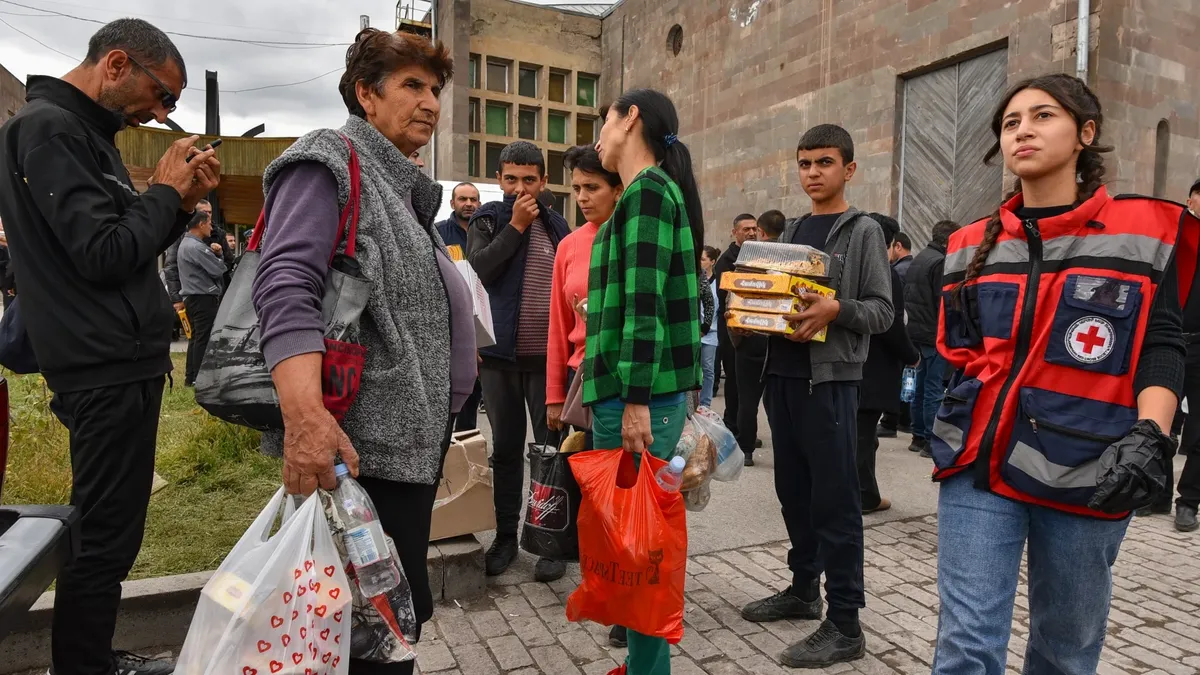
Point of reception A refugees at the Heris Theater. Photo: EPA-EFE / Narek Aleksanyan
After the surrender of the government of the unrecognized Nagorno-Karabakh Republic (NKR) and its consent to the complete disarmament of the Karabakh defense army, in Stepanakert, the capital of the NKR, Armenian refugees from all over the region began to flock. They left their villages from shelling of Azerbaijanis, whom many local in the old memory call only the Turks. However, they had nowhere to escape from Stepanakert, since the Lachinsky corridor connecting Nagorny Karabakh with Armenia is still closed by Azerbaijan, and the government of the unrecognized republic continues painful negotiations with him.
Already at the weekend in the Russian and Armenian media there was information that infrastructure for receiving refugees is being created in the border cities. In particular, it became known that one of them were equipped in the Goris Theater in the East of the Syunik region, and the mobile point was defeated near the village of Kornidzor 25 kilometers from Goris.
On Sunday, September 24, the first group of refugees arrived there, only a few families. It was a great event. This meant that the road was finally open and in the near future Karabakh would be able to leave tens of thousands of people whom all of Armenia was waiting. On the same night, the Armenian government reported that up to 1050 people arrived in Armenia, and by the morning of Monday there were already about three thousand.
Until now, the outcome of the Armenians from Nagorno -Karabakh, which has become the largest humanitarian disaster for Armenia, has overshadowed another tragedy. On the evening of September 25, an explosion in the fuel warehouse thundered in the Askuransky district, not far from Stepanakert. Here, refugees could get fuel to get to Armenia, but that evening many of them became victims of the strongest explosion.
According to media reports, about 100 tons of gasoline exploded. About three hundred people were injured. The Russian media, citing the Aliyev administration, said that the authorities of Azerbaijan sent help to the victims, and a group of doctors left Armenia. In addition, the Armenian government managed to achieve permission to send helicopters to evacuate seriously wounded.
On the evening of September 26, it became known that the bodies of all those killed in the explosion were delivered to Armenia. This is 125 people.
"I had a machine gun"
Many volunteers rushed to the aid of refugees, many people threw everything and went to meet their relatives. I ended up in one of these civilian cars. In the morning we left Yerevan and moved towards the cornidzor, where buses and cars from Stepanakert arrived every hour.
The road to Stepanakert is surrounded by mountains, and in the morning, while the sky is clear, you can see the snowy top of Ararat, where it seemed to have a Noah a couple of thousand years ago - and was surprised to find Armenians here (they love to joke here). Another hour of driving - and you can see the border with Azerbaijan: this is Nakhichevan, the Azerbaijani exclus between Armenia and Iran.
“Do you see the booths on the mountains? These are Turks. They look and see everything, ”says the man at the wheel when we drive past the Azerbaijani checkpoints located on the tops of the mountains.
“We have a legend connected in the Tavtevsky monastery, which is located very close to Goris,” the driver continues. -A long time ago, when the Turks attacked Armenia, and it became clear that the battle was lost, people went to this monastery.
Our monk prayed and told the Turks: do not kill those who fit in this monastery. They agreed, and people began to enter. Ten people, then twenty, then a hundred, and everyone met, because inside the monastery there was a secret move where they went down. And so thousands of people were able to escape. "
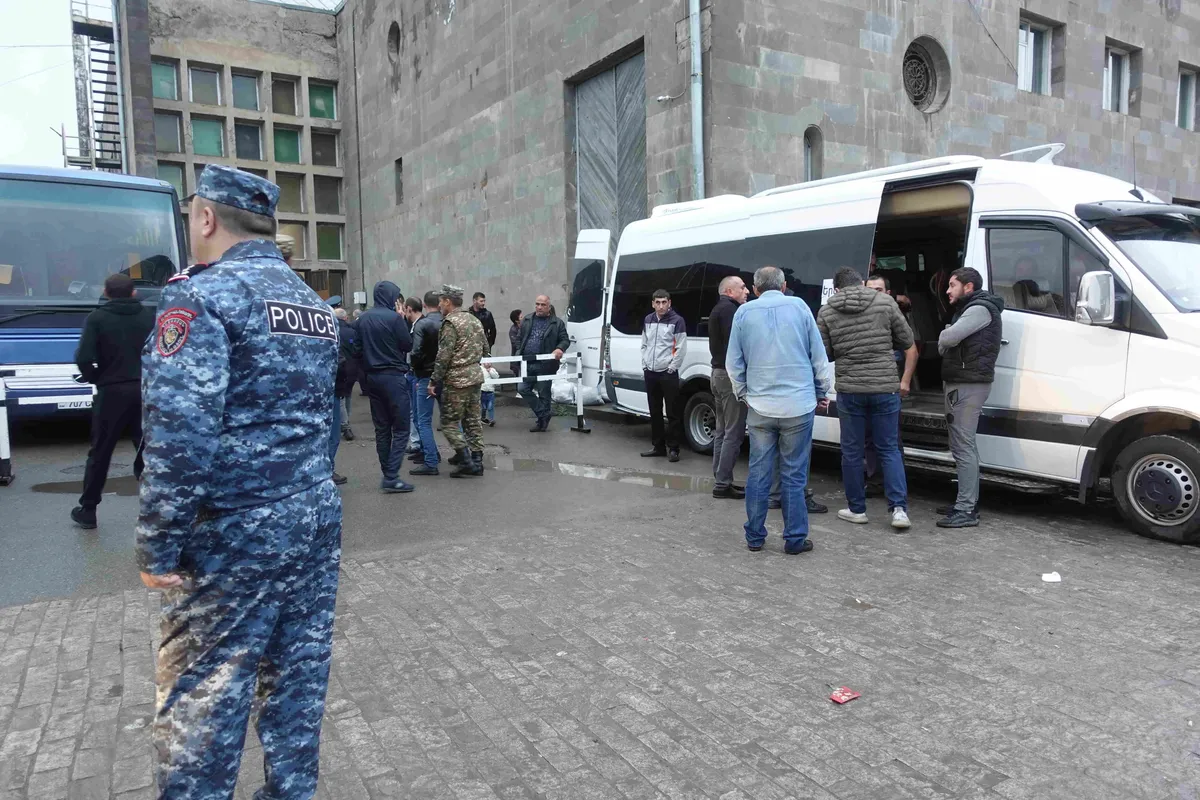
A couple of hours on a mountain serpentine, laid down by memorable stones about the dead - and we are in Gorisa. The city at an altitude of 1300 meters is shrouded in fog, and on the street the real chaos. No one is sitting in place: people go out with packages from stores, carry things and call someone all the time. Here, right in the city theater, there is a refugee reception point near which the police and volunteers of the Red Cross are on duty.
Journalists are not allowed inside, but sometimes you can meet people on the street, with bags and colored folders in which the documents are. Often it is all that refugees manage to take with them.
A man in a leather jacket introduced himself as Alexander. He is excited and barely finds words. He just managed to get out with the whole family from the besieged fortress, where he, who fought, threatened not at all a joyful prospect.
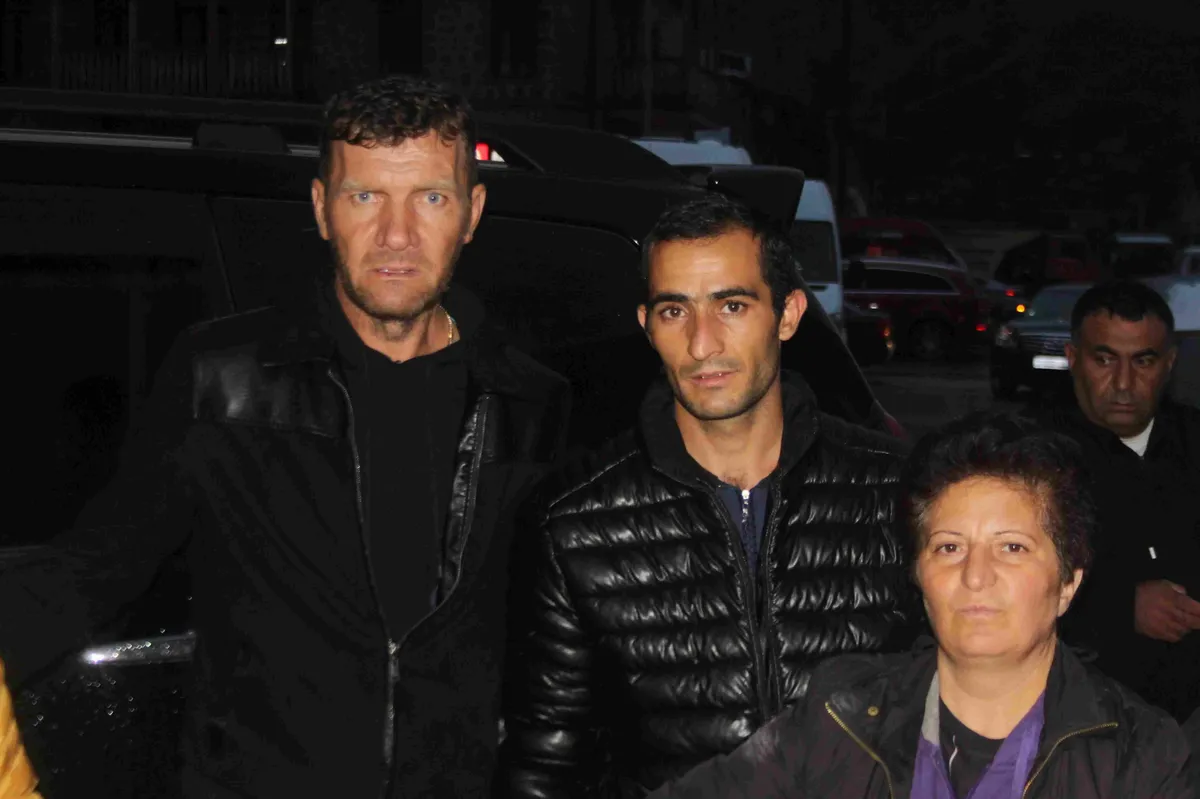
“We have just been released. We arrived what were. Everything is left there. House, car and all things. They left everything. Everyone leaves, very hard. The last nine months were especially bad: the blockade was very terrible, there was nothing. No bread, no food. If something was dug up from the garden, then they immediately ate-that's all. No more food. Survived. You can’t buy anything, just grow your own: watermelons and grapes. For bread, I had to stand in a huge line. You stand, and then throw it, and go home. There is no bread.
We have long decided that we would leave. Let's leave forever. I have a sister in the distribution. Let's go to her. Or we will go to Russia. We were bombed, there was a constant threat. Recently, my nephew died during the shelling. He was killed by a bomb. My sister and nephews are now everyone who is here (to Armenia from Karabakh). Here we arrived on the bus that the state provided. On the road were Russian peacekeepers and Azerbaijanis. Everything is fine. We were missed.
I used to serve as a volunteer, but when the war ended in the village, Azerbaijanis came and said to take weapons. I had a machine gun. I gave it and they said: all, now leave. "
My interlocutor did not finish his story, grabbed his bags and hurried to his family. A minute later they got on the bus and left.
"Grandma, look: sweets!"
I met another family of refugees behind the theater building. They were going to go to the point of temporary accommodation, because they had no relatives in Armenia. They said that with the whole family (husband, wife, children and grandmother) they arrived from the village of Martran of the Martakert district.
“We got normally. On the road are Russian peacekeepers and Azerbaijanis. They ask a minimum of questions: how many people are in the car, how many children. They inspect the car and say “go,” the man says. His name is Gaga.
Julia, which the whole family calls the grandmother enters the conversation:
“We were not going to leave, and did not even know that there would be a war, and on September 19 it began. Tanks, guns, planes. The children began to scream. I left the house when our village began to bomb. The neighbor ran out and says, Julechka, leave! Now Azerbaijanis will come. We took the children and went to Stepanakert. Before that, we experienced four wars and were not going to leave anywhere.
I lost my husband in 1993. My husband is Grigoryan Anura. Hero of Artsakh. In 2020, my nephew, son -in -law died, and on September 20 our neighbor died. ”
“We didn’t want war. We want to live together,” Gaga says again.
“We had nothing for nine months in a row. Imagine, the child wants tea, but there is no tea. There is nothing. The bread was baked from the remains of flour. So nine months. And today they came to the store - and my granddaughter was so surprised: grandmother, look: sweets! ”, Says Julia and looks at children who are carefully running around the park.
"Our people do not want to live in Azerbaijan"
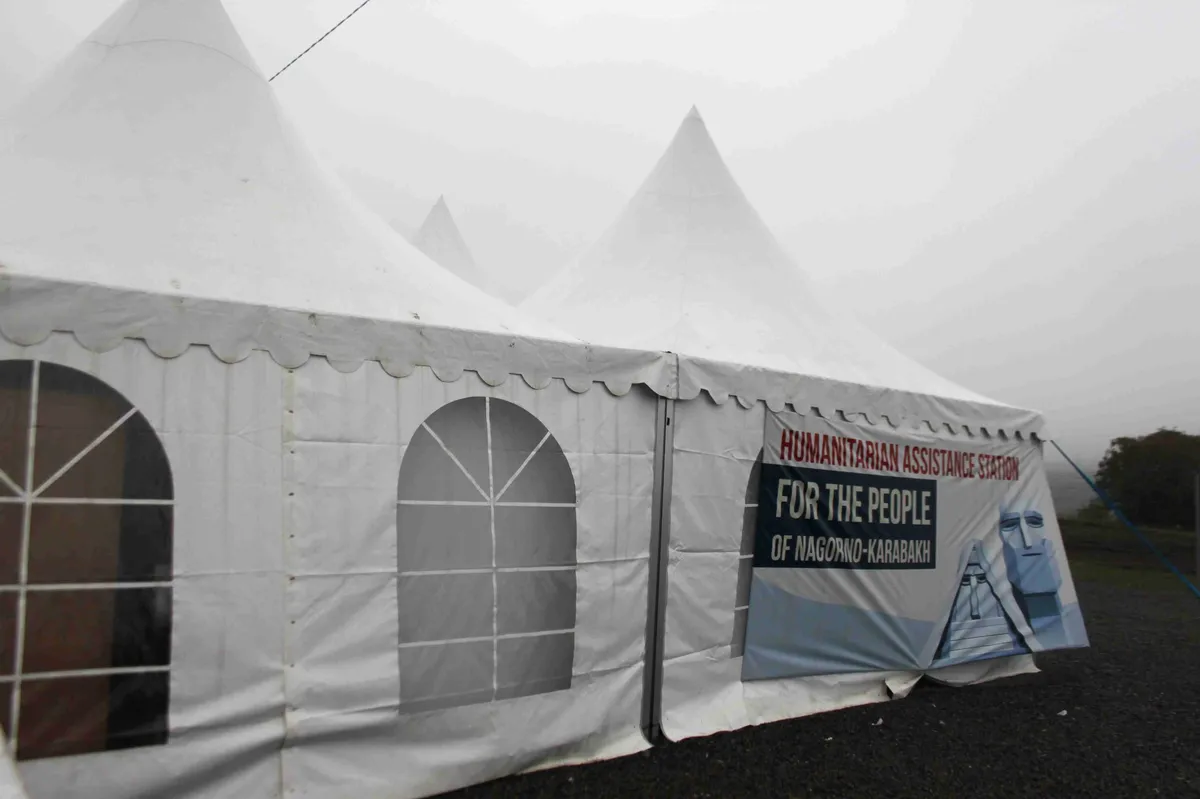
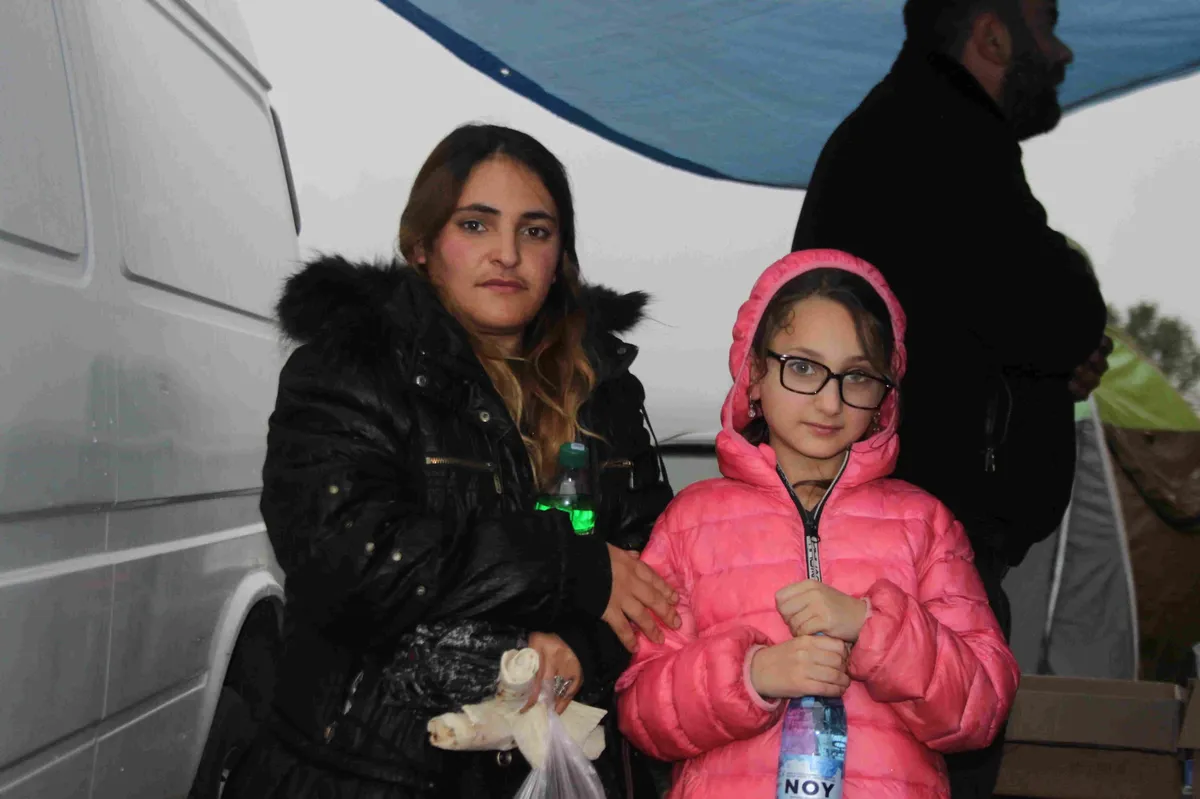
25 kilometers from Goris, on the road near the village of Kornidzor are the white tents of the Red Cross. First of all, those who travel from Stepanakert are directed here. Here, refugees are recorded and provided with primary necessity. They are non -stoply approaching volunteers sitting at the computers and submit their documents. They are helped to find relatives, find out their addresses and phone numbers. In addition, here you can get food, water, tea, sweets and warm clothes. All that was so lacking in the inhabitants of Nagorno -Karabakh during the blockade.
Closely in tents, work is in full swing here. Men calls fathers, brothers and friends, and women are pushing the chopped children in blankets. It rains on the street, and those who have not yet had time to leave are standing under the tent.
“People are in a hurry, and any conversations are prohibited here,” the girl explains to me that I was photographing everything that was happening.
This is a coordinator.
“We now have more than six thousand refugees, there is a huge traffic jam from Stepanakert, and it is not known how many more people will come. People are nervous. They all need to go further, ”she explains.
The work of the center continues day and night, but the flow of refugees does not run out. During the day, the number of registers increased six times, and by the evening of Tuesday reached 28 thousand people. This means that every fifth resident of the region left his house and went to Armenia. And, it seems, this is not the limit. According to local residents and politicians, Karabakh is preparing to leave almost all of his Armenian population, fearing ethnic purges.
“Our people do not want to live in Azerbaijan. 99, 9% prefer to leave our historical lands, ”said David Babayan, adviser to the President of the President of the Unrecognized NKR on Sunday, when the first refugees arrived in Armenia.
According to the Government of Armenia, out of 28 thousand refugees, 3253 are provided with housing: 1,305 people in Sunika, 700 in Vioz Drud, 833 in Garkunika, 268 in Tavusha, 147 in Armavir. It is likely that in reality these figures can be higher, since in social networks people themselves offer help. Refugees can, bypassing the state, turn on the phone to those who offer a sleeping place in their house, in a hotel or at a camp site.