
Translated material
Bifrontal disorder
Konstantin Bogomolov released the play "Dachers at Bali, or" Assa "30 years later." Who and why Konstantin Bogomolov wanted to make fun of, and who was actually ridiculed
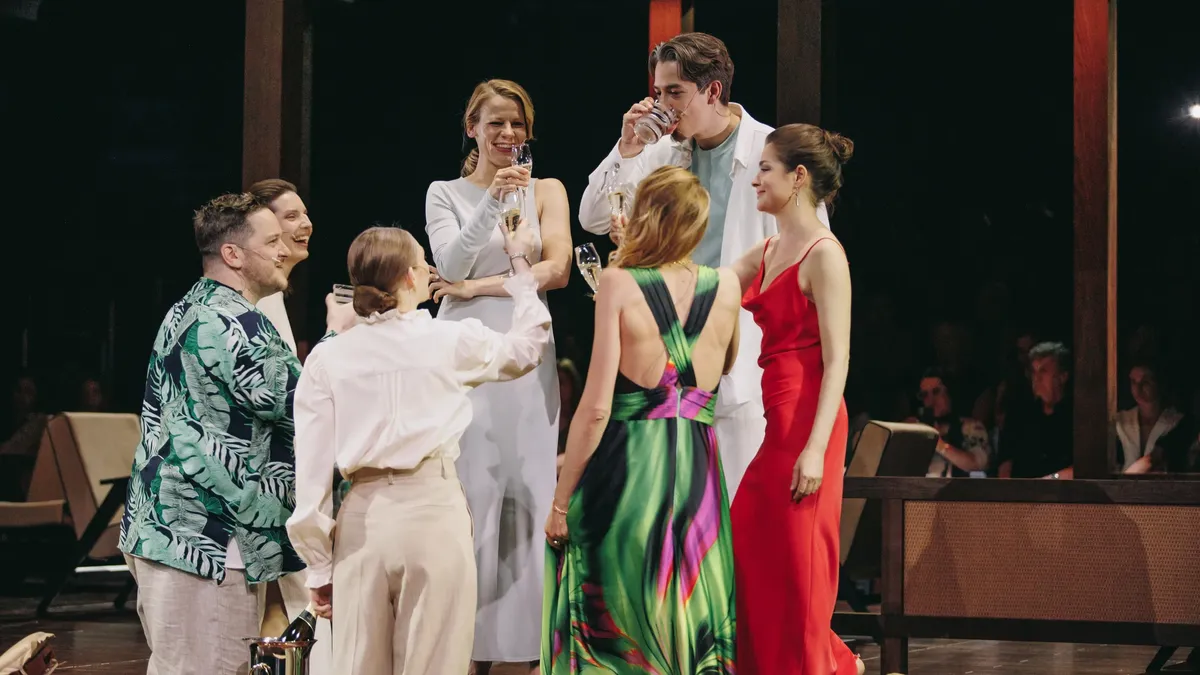
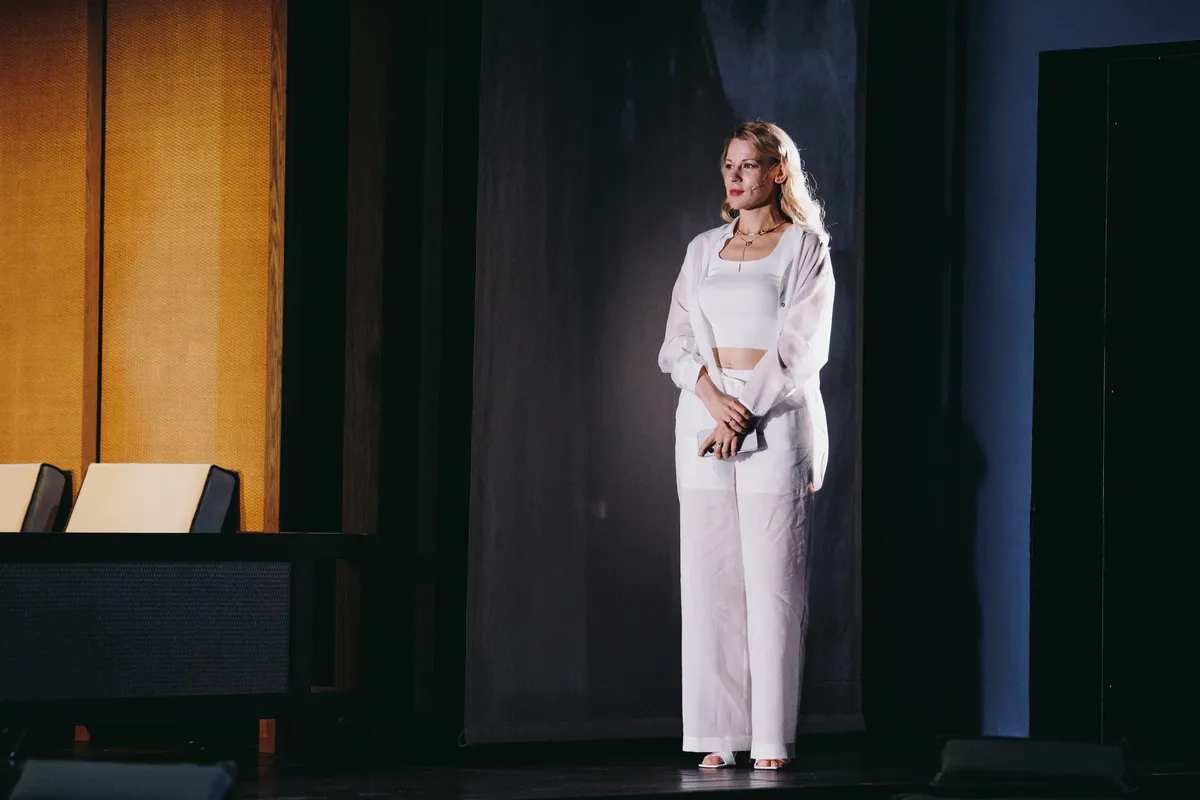
The scene from the play "Dachers in Bali, or" Assa "30 years later." Photo: Theater on Bronnaya
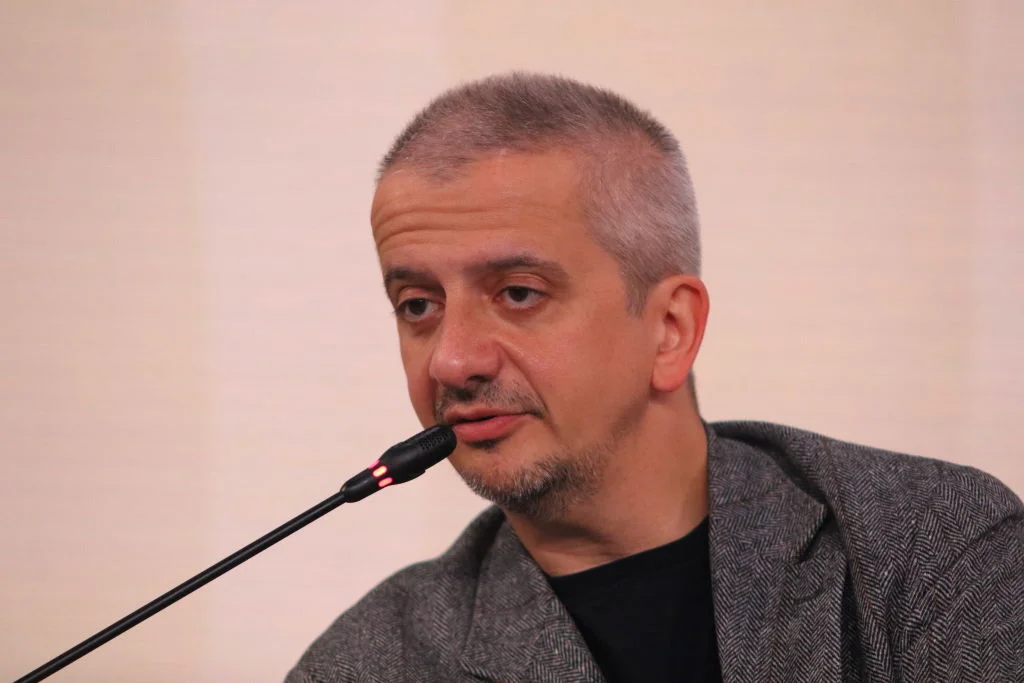
Over the past few years, the theater on Bronnaya, led by Konstantin Bogomolov, managed to become one of the main sources of the news of theatrical Moscow. However, more often it is remembered not in connection with creative successes, but in combination with the shocking near political antics of the artistic director - the husband of Ksenia Sobchak and the author of “manifestos”: from the “abduction of Europe” to angry tirads to the emigrants.
But the real successes of the theater director - and his theater - not in the media, but on stage. Perhaps those are right, then indicates the need for a “compromise” for the sake of performances - so what does Konstantin Bogomolov show on the stage? We asked the theater critic, who visited the premiere of his fresh work, to share impressions.
If you decide to see the "summer residents in Bali", do not grab Gorky, trying to refresh the play in your memory or download the next retelling in 8 minutes. Instead, repent of the July Opus of Bogomolov "I will die, will you stay?" The manifesto bubbled by Paphos is a summary of directorial thoughts about the new "summer residents". It is not easy to read it, you have to skip paragraphs copied from Soviet editorials. But reading will take less than three hours twenty minutes: exactly so many actors of the theater on Bronnaya broadcast almost the same thoughts from the stage.
If the KB manifest, accompanied by some of the readers with acute physiological reactions in the form of nausea, migraines, etc., will not repel you to enjoy the game of actors, it means that the first level is passed: go to the theater.
Bifrontal seedlings, that is, the audience is planted on both sides of the stage. Tickets are expensive, they are not called critics. Tairy intellectual mines will not spoil your mood. If you are Vladimir Pozner, Andrei Malakhov, a friend of the wife of Konstantin Bogomolova, a friend of your husband Ksenia Sobchak or Ksenia herself, you will be removed against the background of a banner and put right on the stage: the actors will play at your feet. If you are not quite celebrity, your place is in the auditorium. If not at all, take the Birkin bag to the theater: you will be a little more comfortable with it.
In the mentioned article by Bogomolov there is only one passage, which is worth reading in: the author reasons and recalls how Stalin, having destroyed and expelled all thinking people from the country, entrusted to represent the intelligentsia of the lyceum - “people of one of the best -selling professions” - and thereby committed a “cynical substitution”. These words are confession: Hudruk Bronnaya itself, who loves to play not only in its own performances, but also outside the theater - Par Excellence lyceum.
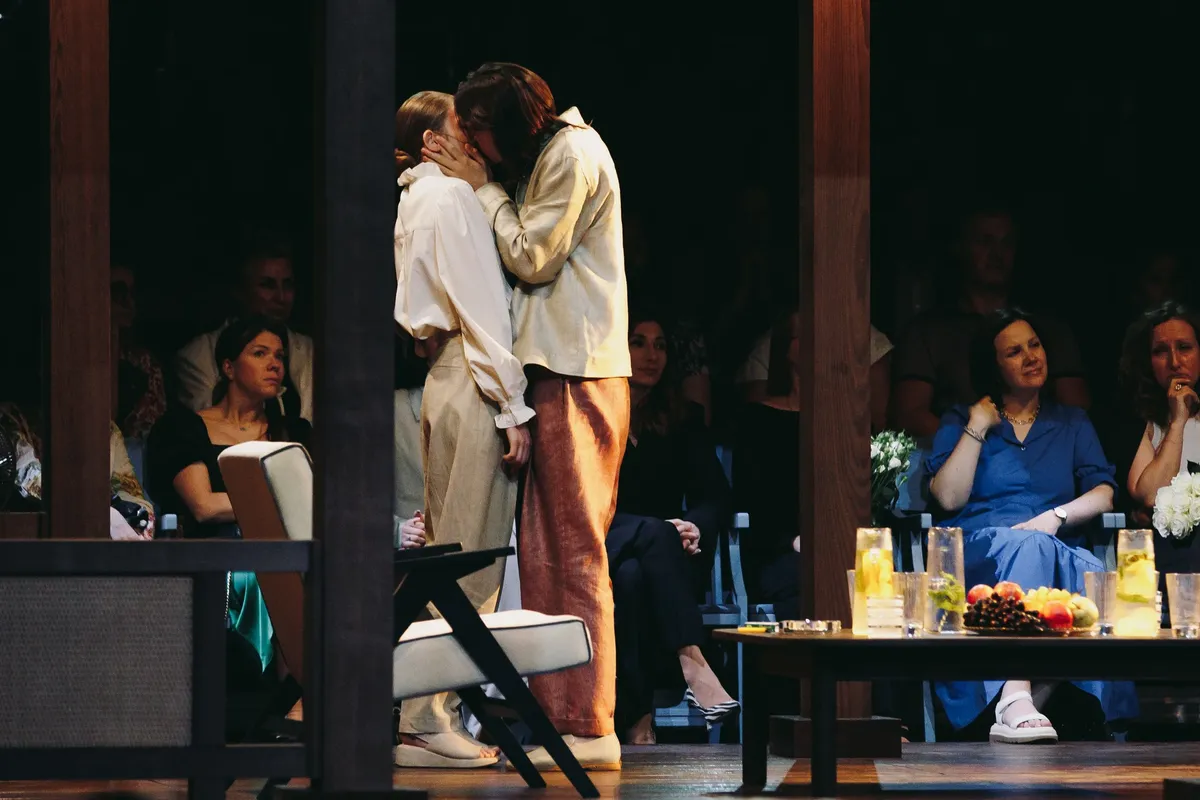
The new "summer residents" have beautiful scenery. A large terrace, followed by a VIP tribune, hidden in a dense blue light, giving the feeling of southern night. On the side and from above - screens with the projections of palm trees. The design of Larisa Lomakina became even more exquisite - in proportion to the take -off of the technical capacities of Bronnaya.
“Stupid cottage” (as in the play Gorky called the Basov engineer rented for the summer) emigrated from Central Russia to Asia along with the inhabitants. Persuading his wife Varia to stop sniffing and whining, the Bogomolovsky Basov complains that he also “did not come up with this Bali”, but we must endure! Gorky raznochintsy, who had difficulty breaking into people, and therefore did not want any revolutions, served as engineers, entrepreneurs and doctors. At Konstantin Bogomolov, they are busy alone: they save money stolen from the sanctions from the Russian people.
For this, they are shameless of middle -aged Marya Lvovna (young Anna Patokina). The future revolutionary at Gorky, with Bogomolov, she turns out to be the only ideological emigrant - a woman of a complex fate, a former prostitute living in the house of a certain Lopakhin, who bought the whole of Bali and set up on the island of cottages.
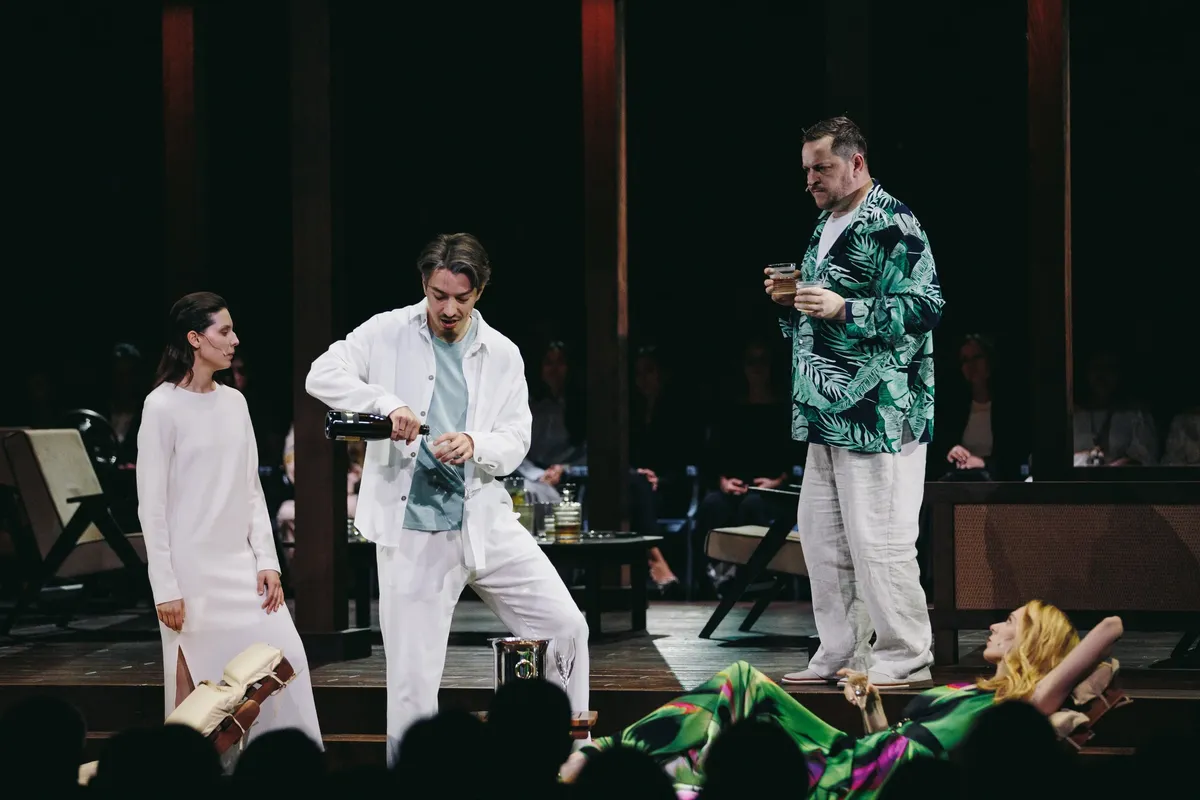
Five pounds of love (that is, the ridiculous love of heroes), the manner of the characters to speak, and even the rhythm of speech, one hundred and twenty years ago, incorrectly stolen by the Petrel of the revolution at Chekhov, in the hands of the director become an even more awkward parody. In this holy fairy tale (the action was transferred to the New Year), they change everything, drink, sniff, forget to accept antidepressants - in a word, they rot and smell. A smart childless barbar is infuriated by a too active husband, a nymphomaniac Julia - too drinking. Highly many children Olga are children, from whom a rowing wave will save her in dreams.
The cabbage becomes across the throat when Olga complains about the Balian nanny, and receives the advice "take the Ukrainian". The mention of Ukrainians causes the heroes an attack of a panic attack and an inferiority complex at once. Trying to reduce the degree, they call them "crests." The “crests” are scared by their appearance - then in the Bali dachas, then in Curses. Barbara hisses with jealousy, seeing a black -eared wonders, hired by her husband to portray a Snow Maiden. Of course, to the Jews, it turns out: it turns out that the Kharkov anti -Semitite Marya Lvovna was terrorized for many years, the late husband, fabulously rich Alexander Solomonovich Gugenenstral.
Investing the Bogomolov in the mouth of the heroes The word “katsap”, there would be a chance to write off everything on his special black humor, which does not spare neither “Jews” in gas chambers, nor children dying of cancer. No Khokhlov, on the houses of which, while we are discussing about the jokes of Bogomolov, “Katsap” bombs fall.
But no war or even their heroes mention. The word "front" is pronounced only once: a Russian nationalist, beloved of the daughter of Maria Lvovna, is gathered for the front.
And the ideological girl, the only one who is not ridiculed here, is eager to follow him.
At a time when the design bureau was very advanced and left, and for the first time dared to the stage rebellion, putting the play “Lear. Comedy ”, I called for his performance a good musical critic - to evaluate this rebellion from the outside. He, laughing, called the KB “talented moonshine” - they say, he drives his darling and cannot stop. Sometimes funny and talented, sometimes not on business. 12 years have passed. Today, something clearly prevents the design bureau to compose with courage and brilliance. The reason is understandable: he learned to “drive”, to overthrow and hooligate in specially designated places and strictly verified frames.
The monstrous verbity of his "summer residents" can be explained, but it is difficult to endure. The jokes rush around the hall, like ball lightning, looking for where to explode. But they never explode. If it laughs, then in unsuitable places. And it's not only about the director. The fact is that he now has another audience. These people are very well dressed and even somewhat similar. Returning his remark to the director that poor plastic makes the faces of those who left equally vicious, we note that the premiere audience on Bronnaya is very good, and the faces are equally joyful. At times it seems that the same master worked with acting faces.
However, we will pay tribute: no one knows how to teach the actor so convincingly to carry the blizzard (well, or “play the phone book”, as they said earlier), like Bogomolov. It is about a certain system of working with the actor, which he himself gave rise to. And it seems to be destroying.
Alexandra, the child in the role of Barbara perfectly simulates languid decay. Lera Gorin - hiding from the depositors of the financier of the Suslov, mocking conscience, jealousy and oncological pain with vodka. The eccentric Alexander Vinogradov in the role of Suslova says the trolling feminist monologue that a woman is a vampire, and a man must catch this vampire and drive a stake into him. No one else could pronounce this game without bringing the hall to bewilderment or indignation. Suslov at Vinogradova weaves, drunk from his own nonsense - and even breaks the applause. Actually, this pair is a ruined actress and a thief dying of cancer is the only ones who cause empathy.
But there is another character. The famous writer Shalimov (as Gorky) turned into a cult musician, whom everyone here is called Boris Grigoryevich, or BG. Enterprising Basov hired him to amuse the company for the New Year.
The BG plays the main expressor of the ideas of the director and his alter ego - Igor Mirkurbanov. This time he does not sing - this makes a video and a phonogram with a real BG time of the ASSU. The audience claps emotionally, and the credits report the stunning investment of Bogomolov in terms of copyright payments: “There are compositions written and executed by the ino -agent - the theater does not expel the copyrights and uses them as an archaeological artifact.”
However, there is no evil parody of Grebenshchikov. In Mirkurbanov, he is quiet and almost shy, dissatisfied with himself and prone to confession. He says that for the young he has become something like a paveph. And then he tells how “he put on a covid mask on his face, pulled the hood,” and walked unrecognized in Moscow or Peter, making the discovery that his public was not left there. He is not needed there. Then he took a ticket and went to wander ....
And then it finally becomes clear what he wanted to say, but Konstantin Bogomolov restrained for so long. The fact that his viewers disappeared: flew away, disappeared, sit in the corners. And he has no more to sing for anyone.
It remains to wait, as one fine evening, KB, according to tradition, will decide to replace Mirkurbanova and will come out in the role of Shalimov. He will begin his confessional monologue, and spectators with beautifully ironed faces will clap out of place.
You will laugh at this, Konstantin Yuryevich?