
Translated material
Man of the day: Ivan Pavlov
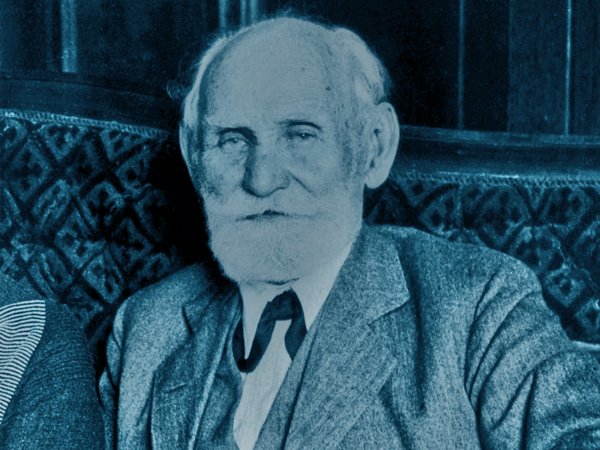
On September 26, 1849, Ivan Pavlov, physiologist, first Russian Nobel laureate, was born.
Personal business
Ivan Petrovich Pavlov (1849 - 1936) was born Ryazan, in the family of a parish priest. He was the eldest of ten children, five of whom died in early childhood. In 1860, he immediately entered the second grade of the Ryazan Theological School. After graduation in 1864 he entered the theological seminary. Under the influence of Sechenov’s book, “Reflexes of the brain” decided to become a scientist. Since graduates of the seminary could only enter certain faculties of universities, Ivan Pavlov in 1870 became a student of the law faculty of St. Petersburg University, but a year later he achieved a transfer to the natural department of the Faculty of Physics and Mathematics.
Pavlov early chose the physiology of animals as the main sphere of his research. In this choice, not only the works of Sechenov, but also Professor Ilya Zions , who from the third year became the scientific director of Pavlov, played a role. Soon he received a gold medal for the study of the physiology of pancreatic nerves performed together with M. Afanasyev. In 1875, Pavlov completed his studies at the university, having received the degree of candidate of natural sciences, and at the suggestion of Ilya Ciona became his assistant at the Department of Physiology of the Medical and Surgical Academy. Also, on the advice of Cyon, Pavlov decided to receive an additional medical education (“not with the goal of becoming a doctor, but in order to subsequently, having a doctor of medicine, have the right to occupy the department of physiology. However, justice demands that this plan seemed to be a dream, because its own professorship thought about something unusual, incredible). In the same year, he entered the third year of the Medical and Surgical Academy and graduated from it in 1879.
Still completing their studies at the academy, Pavlov became an assistant to Professor Ustimovich at the Department of Physiology of the Veterinary Department of the Medical and Surgical Academy. In 1878, Ivan Pavlov began working in the Botkin clinic, where he led the physiological laboratory and prepared a doctoral dissertation. In 1881 he married Seraphim Karchevskaya. In 1883 he defended the dissertation “On the Central Nerves of the Heart”, then gave two trial lectures at the conference of the professors of the Academy and he was awarded the title of Doctor. After that, Ivan Pavlov went abroad with his wife for more than two years, where he trained in Breslau and Leipzig clinics, in the laboratories of the leading physiologists of that time Wilhelm Wundt, Rudolf Heydengain and Karl Ludwig. After returning, he continued to work in a physiological laboratory. In 1890, he was elected professor and head of the department of pharmacology of the Military Medical Academy, and in 1896-the head of the Department of Physiology, which was led until 1924. Since 1890, he also headed the physiology department of the Institute of Experimental Medicine, which he led until the end of his life.
In 1897, Pavlov’s fundamental work “Lectures on the work of the main digestive glands” was published, already next year it was printed in German, in 1901 - in French, and in 1902 - in English. Work on the physiology of digestion brought the scientist universal recognition. In 1903, Ivan Pavlov made a report at the XIV International Medical Congress in Madrid. Since 1901, Pavlov became a corresponding member, and in 1907 a full member of the St. Petersburg Academy of Sciences. In 1904, Ivan Pavlov became the Laureate of the Nobel Prize in Physiology and Medicine.
At the beginning of the 20th century, Pavlov moved to the study of the processes of higher nervous activity. In 1913, a special building with two towers was built on the development of conditioned reflexes in 1913, in which experimental cameras were originally equipped. They received the names of the “towers of silence”, as they were soundproof so that the reaction of animals to extraneous sounds would not bring distortions to the results of the experiment. In 1923, the first edition of Pavlov’s book “Twenty years of experience in objective study of the highest nervous activity (behavior) of animals” was published. In 1925, a physiological institute, the director of which he became, was created on the basis of the Pavlov laboratory. In 1926, a biological station was created near Leningrad in the village of Koltushi.
In February 1936, during the next trip to the laboratory in Koltusha, Pavlov caught a cold. He began severe pneumonia of the lungs, from which the scientist died on February 27, 1936.
What is famous
 Ivan Pavlov
The most fame to Ivan Pavlov was brought by studies of higher nervous activity, which led to the creation of the doctrine of the conditional reflex. The conditional reflex, in contrast to the unconditional, is not innate, but is acquired as a result of the accumulation of individual life experience and is an adaptive reaction of the body to life conditions. Pavlov investigated the processes of excitation and inhibition of the nervous system, the problems of sleep and hypnosis. Pavlov also created a doctrine of the types of nervous system, which made it possible to give an objective physiological explanation to the idea of four temperaments to the well -known antiquity. Pavlov studied many issues of pharmacology of higher nervous activity, the doctrine of analyzers was created, the localization of functions in the cerebral cortex, and the systematic in the work of large hemispheres. Finally, Pavlov developed the theory about the activities of the first and second signaling systems. To the first system, in animals, he attributed the signals of the external world, which are recorded by the senses organs, to the second, specific to humans, speech and letter.
What you need to know about
It is often believed that the Nobel Prize was awarded to Ivan Pavlov for research on the physiology of nervous activity and the creation of the doctrine of reflexes. But this is not so. At the time of the award, he only started this work. And he became famous scientists earlier, thanks to the work on the physiology of digestion. It is interesting that before Pavlov’s works, many scientists considered this area the most backward section of physiological science.
Direct speech
What would I like to wish the youth of my homeland who devoted himself to science? First of all, sequences. I can never talk about this most important condition for fruitful scientific scientific work without excitement. Sequence, sequence and sequence. From the very beginning of your work, accustom yourself to a strict sequence in replenishing knowledge. Study the basics of science before trying to rise to its vertices. Never take up the next one without having learned the previous one. Never try to cover up the shortcomings of your knowledge at least the most daring guesses and hypotheses. No matter how this soap bubble is amending your gaze with its overflows, it will inevitably burst, and you will have nothing left but embarrassment. Accustom yourself to restraint and patience. Learn to do black work in science. Study, compare, accumulate facts. No matter how completely the wing of the bird, it could never raise it up without relying on the air. Facts are the air of the scientist. Without them, you can never take off. Without them, your “theories” are empty attempts. But studying, experimenting, watching, try not to stay at the surface of the facts. Try to penetrate the secrets of their occurrence. Insistently look for the laws that are governing them. The second is modesty. Never think that you already know everything. And no matter how high they appreciate you, always have the courage to say to yourself: I am an ignoramus. Do not give pride to master you. Because of her, you will persist where you need to agree, because of it you will refuse useful advice and friendly assistance, because of it, lose the faith of objectivity. In the team that I have to lead, makes the atmosphere. We are all intents in one common cause, and each moves it as much as their strength and capabilities. You often won’t get it out - that “mine” is “mine”, but from this our common cause only wins. Third is a passion. Remember that science requires a person of his whole life. And if you had two lives, then they would not have been enough for you. Great tension and great passion is required by science from man. Be passionate about your work and your searches.
Pavlov I.P. "Letter to Youth"
Let me once again turn to you with a request to release from punishment and to return to them Leningrad very few of the large group without guilt, a few because I have known these for a long time, even a very long time, and I know well. This is expelled in the spring. They were in no way and nor Malyash were not harmful to our current regime and, honestly working, therefore were useful. And in exile, as stamped by the government, they cannot find any work for themselves and almost, or completely poverted.
Letter of Academician Pavlov Molotov on December 8, 1935
When I proceed to the experience connected at the end with the death of the animal, I feel a difficult sense of regret that I interrupt the jubilant life, which I am an executioner of a living being. When I cut, I destroy a living animal, I mock me a caustic reproach that I break an inexpressibly artistic mechanism with a rough, ignorant hand. But I endure this in the interests of truth, for the benefit of people. And I, my visual activity is offered to put me under someone else's constant control. At the same time, extermination and, of course, the torment of animals only for the sake of pleasure and satisfying many empty whims remain without due attention. Then, in indignation and with a deep conviction, I say to myself and allow me to say to others: no, this is not a high and noble sense of pity for the sufferings of all living and feeling; This is one of the poorly disguised manifestations of eternal enmity and the struggle of ignorance against science, darkness against light!
I.P. Pavlov about vivisection
Ivan Petrovich was good, well -built, dexterous, mobile, very strong, loved to speak and spoke hotly, figuratively and fun. The conversation was affected by that hidden spiritual power, which all his life supported him in his work and the charm of which all his employees and friends involuntarily obeyed. He had blond curls, a long brown beard, a ruddy face, clear blue eyes, red lips with a completely childish smile and wonderful teeth. I especially liked smart eyes and curls, framing a large open forehead.
From the memoirs of S. V. Karchevskaya (Pavlova)
Before Pavlov, studies were conducted using the so -called The “acute experience”, the essence of which was that the body of interest to the scientist was exposed by cuts on the body of an anesthetized or immobilized animal. The method was unsuitable for studying the normal course of life processes, as it violated the natural connection between the organs and systems of the body. Pavlov was the first of the physiologists to use the “chronic method”, in which the experiment is carried out on a practically healthy animal, which made it possible to investigate physiological processes in an unequipped form.
Artem Movsesyan
11 facts about Ivan Pavlov
- Ivan Pavlov was very fond of playing towns, was a passionate collector of butterflies and postage stamps.
- In the first year, at the University, Pavlov, on a special petition, was exempted from training fees due to poverty, in the second year he had already received a scholarship (180 rubles a year) for successes, and the so -called imperial scholarship was awarded to the third (300 rubles a year).
- In the 1880s, the Pavlov physiological laboratory was poorly equipped, once he had to independently solder the thermostat from tin canning boxes, attach it to an iron tripod and heat it with a small kerosene lamp.
- Ivan Pavlov was immersed in research all his life, but according to the memoirs of his brother Dmitry, there was one period when science retreated somewhat in the life of a scientist. Caring for his future wife, Ivan Pavlov devoted more time to writing letters to her than laboratory work.
- The brother of Ivan Pavlov Dmitry worked as an assistant with Mendeleev, and later became a professor of chemistry.
- From the catalog of the Nobel Committee, you can find out that Ivan Pavlov was nominated as a candidate for the award from the first year of presentation, and these nominations continued after receiving the award in 1904. In total, the candidacy of Pavlov was offered 62 times, sometimes more than ten scientists a year.
- Since the presence of the researcher should not create additional incentives for experiments on the development of conditioned reflexes in the dog, scientists observed dogs in experimental chambers through periscope, and the supply of light and sound signals, as well as food, were produced using a special apparatus.
- It was suggested that it was thanks to Pavlov that the Nobel Prize is called the Prize “On Physiology and Medicine”, and not just “Medicine”. Alfred Nobel, who knew Pavlov and highly appreciated his achievements, wanted a scientist who did not engage in clinical medicine, to receive the opportunity to receive a premium.
- Herbert Wells, who arrived in 1934 in the USSR, visited the laboratory of Pavlov.
- In honor of Ivan Pavlov, a crater on the moon and the asteroid Pavlovich are named.
- In one of the issues of the animated series “Pinky and Brain”, whose heroes are laboratory mice, the action takes place in St. Petersburg in the Pavlov laboratory.
Materials about Ivan Pavlov
Article about Ivan Pavlov on Russian Wikipedia
Ivan Pavlov on the website of the Nobel Fund
Ivan Pavlov in the Encyclopedia "Krugosvet"
Ivan Pavlov in the project "Chronos"
M.K. Petrova from the memoirs of academician Pavlov
Pavlov biography on the website of the Institute of Experimental Medicine
Institute of Physiology named after I.P. Pavlov
"Petersburg Ivan Pavlov" - a book about places related to the life of a scientist