
Translated material
Monodum. Abroad through the eyes of Alexander Solzhenitsyn
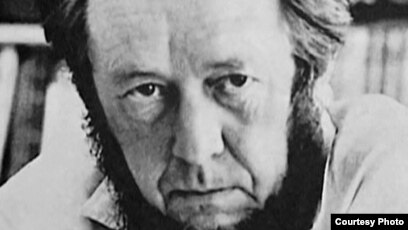
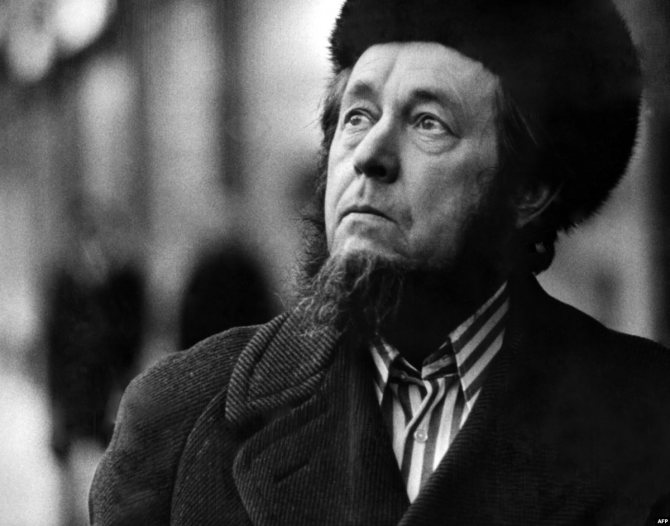
The hero of the next podcast “Zarabezhye” is Alexander Solzhenitsyn, who described his relations with the West and Russian emigration in the memoir book “A grain fell between two millstones.” The first separate edition was published by the Moscow publishing house "Vremya".

How to bypass the blocking?
read >Ivan Tolstoy: Today’s episode of our podcast could be called “Angle of Reflection.” We will not talk about the Abroad of our interlocutors, but about the Abroad of the absent hero, about his views, that is, to judge a person in his absence. Seems unethical. However, this hero is already in the best of all worlds. His name is Alexander Solzhenitsyn.
The hero of the next podcast “Zarabezhye” is Alexander Solzhenitsyn, who described his relations with the West and Russian emigration in the memoir book “A grain fell between two millstones.” The first separate edition was published by the Moscow publishing house "Vremya".
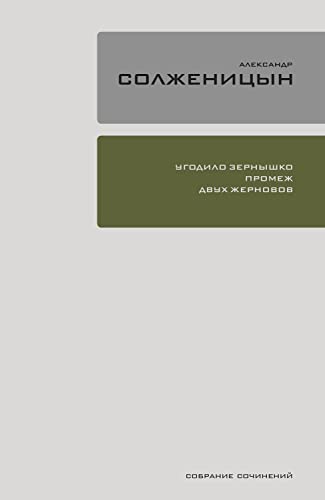
In the late 90s - early 2000s, the magazine "New World" published chapters of his book "A grain landed between two millstones." This is a memoir sequel to "The Calf". And now, a quarter of a century later, the Moscow publishing house “Vremya” released “Zernyshko” as a separate book. With such a large and solid volume, it again makes an impression - almost more than before. I judge, of course, only by myself.
I read this nearly 900-page tome voraciously. “I read it and just blinked”: Solzhenitsyn’s most dramatic, implausible misunderstanding of the West, and from his point of view, the West’s misunderstanding of its position, tasks, and views. A deadlock situation that every now and then led to conflicts. “The deaf man called the deaf man to trial.”
Alexander Isaevich does not like almost everything about foreign countries: the persistence of journalists, their understanding of their editorial task, the behavior of crowds of people on the streets and train stations at the sight of a famous writer, the leisurely ritual of service in restaurants (and in life there is not a minute for any nonsense), and how Western people gather - they eat their “colored food” and make speeches, call themselves democrats, and the real democrat is me.
We invited two emigrants with half a century of Western experience to talk about the phenomenon of Solzhenitsyn in exile; each of them was closer to Solzhenitsyn than a mere mortal.
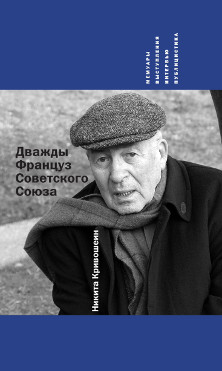
Our first interlocutor is translator Nikita Krivoshein. He was born in Paris, as a teenager he was taken by his parents to the Soviet Union, experienced a long-term trauma of alienation there, ended up in a political camp during Khrushchev’s times, served time, tried for a long time to leave for the West, and in the early 70s he ended up in Paris again. Nikita Igorevich Krivoshein twice had the privilege of being Alexander Isaevich’s translator.
Solzhenitsyn writes in Zernyshka that from the very first day in Europe his relations with journalists did not work out. He wanted silence to think and look for housing, and the press wanted details about the celebrity that had fallen on their head. Can such mutual misunderstanding be called typical for a Russian person in the face of spotlights?
Nikita Krivoshein: Generalization is inappropriate here. There are many examples of famous people who perceive the harassment of journalists in completely different ways. Andrei Amalrik, Vladimir Bukovsky, Alexander Zinoviev willingly met with journalists, held press conferences and appeared on television, and Solzhenitsyn shied away from the stage lights in the USSR, even after the release of Ivan Denisovich.
Ivan Tolstoy: By the time Solzhenitsyn was expelled, you, Nikita Igorevich, were already back in Paris. How did your environment feel about his figure? Parents, for example, French people you know, colleagues in the translation workshop?
I had the honor of translating Solzhenitsyn on French television
Nikita Krivoshein: My late father served his sentence in the Marfinskaya sharashka at the same time as Alexander Isaevich and Lev Zinovievich Kopelev in 1951–52. My father was friends with Kopelev until the end of his life. The parents breathed a sigh of relief when Solzhenitsyn was expelled. After he moved to the West, they began to correspond. I had the honor of translating Solzhenitsyn on French television. This happened twice for Bernard Pivot's famous literary show "Apostrophes". The first meeting took place immediately before the presidential elections in France. There is no doubt that as a result of everything that Solzhenitsyn said, the majority of the French voted against the social-communist candidate after everything they heard. Giscard d'Estaing won. The second time I translated Solzhenitsyn was shortly before his return to Russia. This was also for the program “Apostrophes”. Solzhenitsyn aroused deep respect and curiosity among both translators and the entire French intelligentsia.
Ivan Tolstoy: Was Solzhenitsyn really read in the West at that time, or was he simply the subject of small talk? Was there a serious analysis of his texts, his philosophy?
Nikita Krivoshein: We read, and we read a lot. “The Gulag Archipelago” was published in huge editions in translations into all languages, and a lot of analytical articles about the Solzhenitsyn phenomenon immediately appeared in magazines and newspapers. The famous French Slavist Georges Nivat has been writing analytical and literary books about him since the first days of the appearance of Alexander Isaevich’s works in France.
Ivan Tolstoy: I wonder what character traits or intuitions a Russian person needs in order to settle down in a foreign land?
Nikita Krivoshein: A detailed answer to these questions was given by the late, great Vladimir Nabokov. He was the rarest émigré writer who wrote in Russian and English, who became famous not as an émigré writer, but as an American one. There is a special conversation about the first and second waves, but the third wave lived in self-isolation, without the languages of the countries in which they found themselves, without knowledge of Western culture, without even the desire to penetrate it.
Ivan Tolstoy: Can I ask you how you yourself would explain Solzhenitsyn in a conversation with some Frenchman, literally in five minutes?
Nikita Krivoshein: I would answer: the great Russian writer, Nobel laureate, who was expelled from the USSR in 1974 and who told the whole world the truth about the Land of the Soviets.
Ivan Tolstoy: What does the Soviet camp turn into a person with a soul, with intellect, with morals?
Nikita Krivoshein: According to the great writer Varlam Shalamov - into “camp dust”. But I will add: not everyone.
Ivan Tolstoy: Did the French at one time have a certain love affair with Russia, or is this a myth? And what do Parisians say about Russians today?
The French cannot accept that they have been deceived
Nikita Krivoshein: Yes, this legend about Russia arose among the French, partly under the influence of Chekhov and Dostoevsky, the myth of the so-called Slavic soul gradually formed. Today, after February 24, 2022, they talk about Russia differently. Over the past year and a half, hundreds of books have been published about the situation in Russia, about Putin, and about his entourage. The French cannot accept that they have been deceived. They condemn Putin's attack on Ukraine.
* * *
Ivan Tolstoy: Our next interlocutor is journalist Masha Slonim.
Masha, when we were discussing the plot - Solzhenitsyn’s book “The Grain” - you, thoughtful and historically half-fascinated, told me a wonderful story about how you took part in the expulsion of Solzhenitsyn from Moscow. Well, they didn’t directly take part, but they played a side role, behind the scenes. Would you mind telling our listeners?
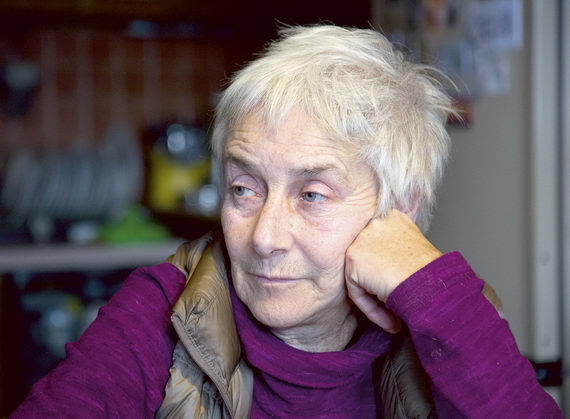
Masha Slonim: I did not take part in the deportation, of course, I took part in the notification of the deportation. I was the happy owner of the Information Moscow directory, it was compiled by Victor Louis, a KGB guy, strange, dubious, muddy, with his English wife Jennifer. And there were all the telephone numbers and all the addresses of the foreign correspondents' offices in Moscow. And I had one of the issues, I think they came out once a year. Probably, Ekaterina Ferdinandovna, Solzhenitsyn’s mother-in-law, Natasha’s mother, with whom I was friends, knew about this. So she called me from a pay phone at night or in the evening and simply said: “Sanya was taken away.” And I realized that they arrested me because everyone was waiting for it. And I started calling everyone using this directory. I don’t know who else she called, but partly I think it was the first time I showed some journalistic savvy.
Is there a vacancy for a prophet in England?
Igor Pomerantsev: Natasha is Solzhenitsyn’s wife Natalya Svetlova. In 1983, Alexander Solzhenitsyn came to England, met, gave interviews, I even remember his interview with Malcolm Muggeridge. He is a journalist, a conservative religious thinker and a satirist. Two lumps met on the BBC, and the lumps talked about global problems. How did it all look from the outside? Is there a vacancy for a prophet in England?
Masha Slonim: Then, after all, Solzhenitsyn applied for this role. Of course, everyone was terribly interested in him; he was the first such voice from Soviet Russia who declared the horrors of the Gulag to the whole world. Of course, they were ready to listen to him. I remember that he gave an interview to the Russian section of the BBC, Janis Sapiet was from our second emigration, post-war, Latvian, and they had a long, also atypically long for the Russian section and for the BBC in general, interview with one person, without discussion. Alexander Isaevich broadcast. I think there was some kind of shock - this doesn’t happen every day in the British information space, especially when such personalities, newsmakers from the Union, were still rare.
You can call them whatever you like, just not English “youth”
Igor Pomerantsev: I remember this interview, and not only that. On the same days, Alexander Solzhenitsyn spoke at a private school in Eton. Then they asked him his opinion, he said in Russian, and then I was very surprised: “I was very glad to meet with English youth.” This word “youth” struck me, because this is a boarding school, a private school for the cream of society, they can be called anything you like, just not English “youth”.
Ivan Tolstoy: Can I also add what they call some of my English impressions? That summer I was sitting in the Pushkin Mountains, I was leading excursions there, this is 1983, and for the first time on the BBC (it was superbly audible, as if the Mayak station or radio station) I heard Solzhenitsyn’s voice. And he struck me with the youth of his sound. And, of course, goosebumps simply ran down the spine when he said: “People have forgotten God!” And this is “God!” It sounded almost like a tenor given his baritone voice. It was an unforgettable experience.
Masha, you said that you warned journalists in Moscow. This is, accordingly, February 1974. Two and a half hours to Switzerland, and Solzhenitsyn’s plane, or (as Vladimir Matusevich, our then commentator, said) “Aeroflot’s funnel,” landed in Switzerland. Two and a half hours later, Solzhenitsyn was free, free. And his behavior in the very first minute completely amazed the entire Western world, the entire Western information space. What happened to Isaich, why did he suddenly begin to erect a wall between himself and the journalistic world?
He didn’t understand at all how Western journalism works
Masha Slonim: He didn’t understand journalists at all, how Western journalism works, he was afraid that his words would be distorted. He carried the Word! And he needed one hundred percent time. No matter how much time he gives, they should convey his thoughts. He was wildly infuriated, even before landing, by the way Western journalists worked. They are not ready to give a newsmaker several hours of airtime or several pages. Therefore, they, of course, tear out the sweetest, biting, interesting things that will attract readers and viewers, cutting off some things that he obviously treasured.
In this book of memoirs, he recalls an interview with Janis Sapiet on the BBC and says with irritation that, of course, this is the Anglo-Saxon manner - fifty-fifty. He was given 45 minutes on the occasion of the fifth anniversary of the deportation, and after this interview they also gave some English “experts,” as he says, experts who tried to interpret this very interview. This infuriated him: it seemed to him that he should be given a platform and listen with his mouth open.
People are not used to being dictated to, lectured, lectured
Because he is the messiah, he considered it his mission to convey to the West, to the world, the horrors of communism, to explain to them that this is the trouble, what’s the matter, and not the Russians. Russians are good, but communism is so alien to them, therefore, throwing off the yoke of communism, everything will be fine. And he tried to warn the West, and it irritated him terribly that the West only listened half-heartedly, because the journalists were not used to it, and the people who listened were not used to being dictated to, lectured, lectured on. I think that’s why journalists annoyed him.
Igor Pomerantsev: Masha, Solzhenitsyn sometimes collaborated with the BBC Russian Service, but at the same time, I think, he avoided Radio Liberty. However, he had business correspondence with our superiors, he even recommended someone for work, and on his recommendation someone was hired. But why did he avoid Radio Liberty from a public point of view?
Masha Slonim: He always tried in every possible way to separate himself from other emigrants, he was not an emigrant, the BBC was a British radio station. Through the BBC he spoke to the world, among other things, in addition to the fact that he spoke to Soviet listeners. And Radio Liberty is an emigrant radio station. He did not want to be associated with emigrants at all, and he wanted to be perceived in the world as a separate entity, he is not an emigrant, he is an emissary from the Soviet Union who arrived in the West in order to teach the West wisdom and that it is not the Russians that need to be feared, but communism, while other emigrants...
He fought with Sinyavsky, with Chalidze, with Westerners, with Sakharov, although they were friends and comrades-in-arms, but he was irritated by the liberalism of these migrants who arrived in the West and adopted Western values. He did not want to participate in any meetings with other emigrants; he insisted on being received separately and greeted separately.
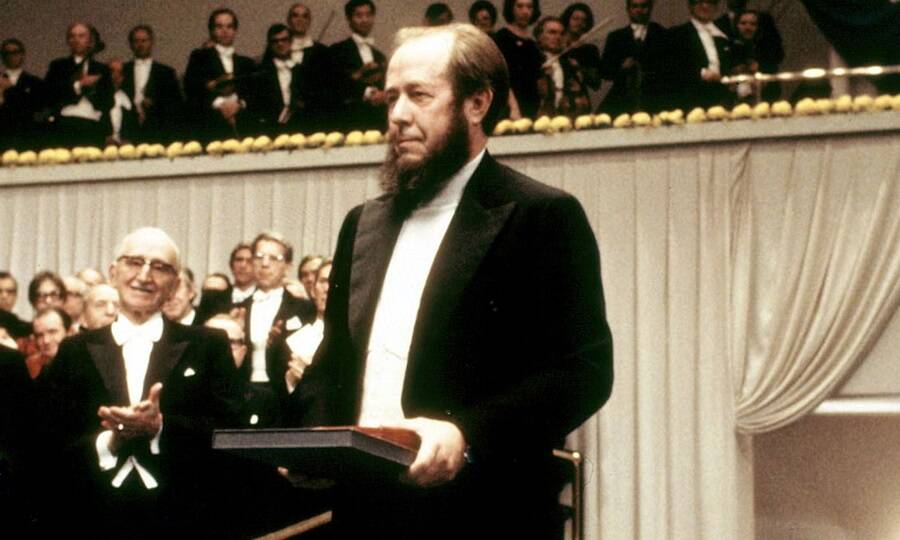
Ivan Tolstoy: It’s interesting that Solzhenitsyn, in his book and in general, does not hide a huge number of things; literally in the first chapter he reports that on the first 24 hours he received a telegram from Munich, which read: “All radio transmitters of Radio Liberty are at your service, open for you. Director Reynolds.”
And Solzhenitsyn adds: “Wow! Speak to the whole USSR as much as you want. Yes, probably, it’s necessary, but will they even give you a minute to figure it out?”
That is, he needs to prepare for a monologue, not for a discussion, you are absolutely right, Masha, he doesn’t want to argue with others, the other 45 minutes cannot be given to anyone, only to me.
Radio Svoboda, from Solzhenitsyn’s very first day in the West, from the very first correspondent he met, and this was Yuri Melnikov (Yuri Schlippe), offered Solzhenitsyn the widest platform; there was no such speech by Alexander Isaevich in all 20 years of his emigration that would not have been broadcast over the waves of Svoboda; all the books were read many times, by many voices and by many announcers. Only he is an exile, everyone else is some kind of insignificant, pygmy fugitives.
Masha Slonim: After all, he later received a platform where no one argued with him or asked questions. It was the First Channel of Russian television, ORT, when it had weekly lectures, which were unbearable to listen to, because no one was used to this format and no one was ready to listen to a whole hour lecture on how to develop Russia, roughly speaking. In the end, even Channel One stopped this cycle because the numbers were very low.
Igor Pomerantsev: Masha, the poet and professor Lev Losev, who lived in America, has the following poems:
Among the damp hills
What houses are not hidden,
What kind of monastery you won’t see there:
The unsociable grandfather hid in one,
He's wearing a Tolstoy beard
And in a Stalinist paramilitary jacket.
A recognizable portrait. Did you know anything about the writer’s private life? Was there any creaking of the floorboards coming from Vermont?
Masha Slonim: I didn’t know anything. Although Natasha and I were on good terms, I didn’t even dare, because I was in a dual position: I was a journalist and a friend, and it seemed that maybe I was trying to sneak in under the guise of a friend and find out something like that. No, they held the defense tightly. And rightly so.
He believed, judging by “The Grain,” that as soon as “The Red Wheel” was released, the world would shudder and understand that communism is a terrible evil
His idea was that he had to finish “The Red Wheel” at all costs, because he believed, judging by “The Grain,” that as soon as “The Red Wheel” came out, the world would shudder and finally understand that communism is a terrible evil that needs to be gotten rid of. Therefore, they lived locked up, in an absolutely tight family tangle, and everyone worked, judging by the memories, for the Red Wheel. This was the meaning of his whole life.
Ivan Tolstoy: I read “Zernyshko” in the New World version 25 years ago and now, re-reading it in a separate edition, I always caught myself with one Pushkin quote spinning in my head: “Seeing one Russia in the world...” But the second thought overtook her: this Russia is only Solzhenitsyn’s Russia and no one else, he would not accept another Russia.
From a long time ago I remember his phrase that old Russia “was filled with Orthodoxy.” And this falsity of the idea of Russia, this fictitiousness of this supposedly drunkenness, it still really repulsed me. What a monodoom, however.
Masha Slonim: Monodum. But he admits in this book that he sees Russia completely differently from the way we and many Western liberals see it. He admitted that Russia would be authoritarian, but this is ideal authoritarianism, from his point of view, because Russia is not ready to move to a form of liberal democracy, free authoritarianism, because it allowed some kind of elections. He assumed that someone would have the right to choose. Who is not entirely clear.
Maybe there are some of his works that I haven’t studied, where he explains this in more detail. But also some kind of amazing idealistic picture of how it all should have been arranged. And maybe that’s why in his later years he became so fond of Vladimir Vladimirovich Putin, who also shared with him – or, conversely, Solzhenitsyn shared with Putin – this idea of Russia. Not liberal, not democratic - I can’t even say that this is enlightened authoritarianism, and in general Alexander Isaevich was very suspicious of education and education - but, in general, the beautiful Russia of the future, in his opinion, is somehow strange, frankly speaking.
Ivan Tolstoy: Masha, thank you very much for your thoughts, for your ideas, for the fact that they are so similar, for example, to mine.
Igor Pomerantsev: Masha, thank you very much! In my opinion, you still accomplished a feat of reading and, in preparation for our recording, read “The Grain” in its entirety.