
Translated material
Influential from the Lord
The fascinating story of the Jesuits Order: He frightened Europe with his power, was banned for 40 years, and then helped Russia defeat Napoleon - and committed an impressive Cumbek
Illustration: Anastasia Kshishtof
Last Wednesday, September 27, one of the most mysterious and powerful organizations since the time of medieval Europe-the Jesus Society, the Order of St. Ignatius, or the Jesuit community celebrated its 483rd birthday. Thanks to their principles and motto (“the end justifies the means” and “to the Vying Glory of God”), the Jesuits in a short time became the most powerful church organization, which intervened in all spheres of the life of Catholic countries. Considering that in order to achieve the main goal, it is permissible to do any actions in general, up to crimes, the “Ignatians” became a formidable weapon, the personal special forces of the Pope. By the end of the 18th century, the Jesuits managed to announce to all the royal houses of Europe, and Pope Clement XIV in the fall of 1773 (exactly 250 years ago) banned the activities of the Order. The Jesuits who managed to avoid the arrests or basements of the Inquisition found a new refuge in Russia. And they paid off the new “headquarters” by the fact that they helped the Russians defeat Napoleon.
"... I indulged in luxury ..."
The founder of the Jesus Society of the Spanish noble of the Basque descent of Yinigigo de Loyola was born in 1491 in the province of Guipyuskoa (Baskonia and Navarra). He was the thirteenth child of the owner of the Loyol Castle, but Yinigo was lucky with the godfather. He became the future royal treasurer Juan Velazquez, to whom Yinigo was forced to leave after the death of his father in 1505. According to some reports, the reason for the urgent departure of the 14-year-old Idalgo to Castilia to the Cross was friendly relations with young girls, which turned out to be a noticeable increase in the stomachs of some of them.
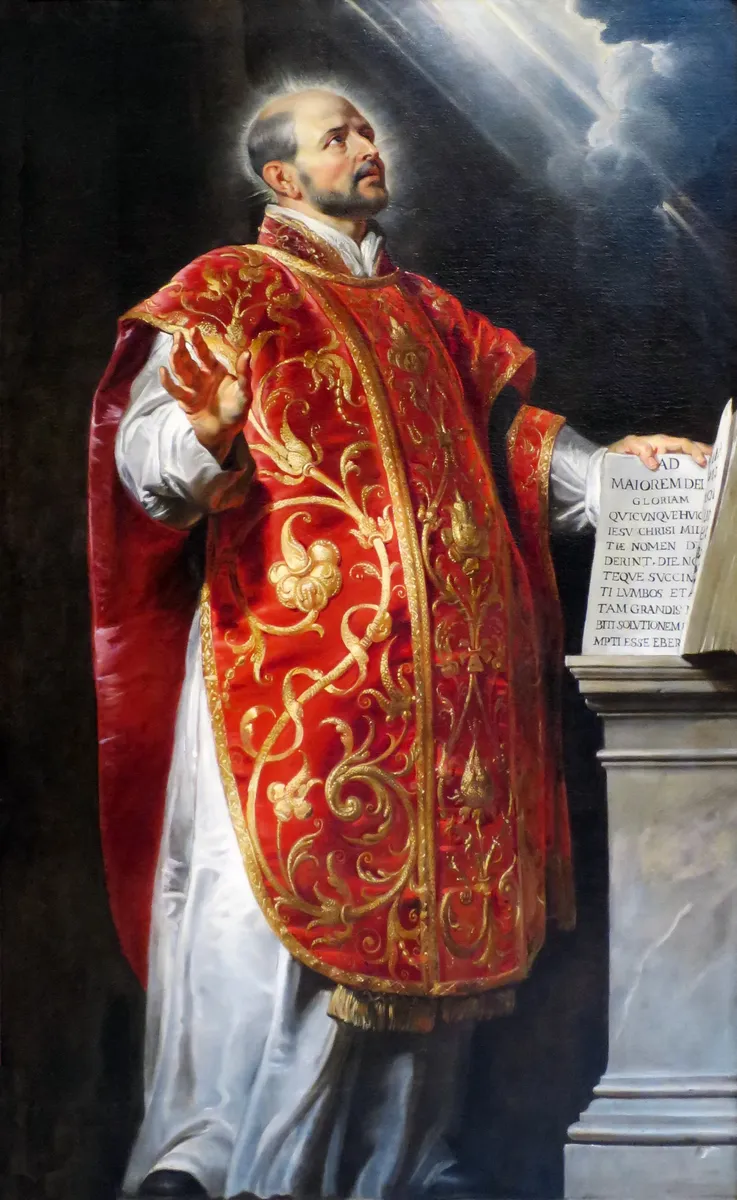
Be that as it may, this move can be considered luck for Yinigo de Loyol. Despite the fact that the former treasurer was forced to leave Madrid because of a certain story with a conspiracy, Velazquez remained at court. The former courtier did not take the godson immediately to the court. Yinigo was staten, tall, well complicated, but somewhat rustic. In his native castle, along with his brothers, he studied fencing, shooting from onions, crossbow and arquebus, voltage, a spear and a heavy spoke. But at the same time he thought somehow and barely knew the letters of the alphabet. So, before going to the court, Yinigo was forced to sit at the desk, comprehending the letter, learning to proper speech and etiquette, dances and singing, poetry and rhetoric.
When the letters of Yinigigo began to take shape in words, the young man was addicted to reading knightly novels, in which the knights chose a lady of the heart and went to perform feats in her honor. After Don Quixote, which was written by Cervantes in 1605 just in the form of a parody of this genre, knightly novels quickly lost their former popularity, but when Yinigigo read them, these were the most common and popular books, among which there were truly talented works.
At the age of 15, Yinigo de Loyola was introduced to the court, where he made a favorable impression and became a page in the retinue of King Ferdinand Aragon. The court life came in Yiniigo to their liking. Much later, in his conversations with the spiritual father, Gonzalez de Kamara, de Loyola will describe himself as he was at that time: “A attentive to his appearance, who is fallen for the success of women, brave in his courtship, picky in matters of honor, not afraid of anything cheaply appreciated his life and others, I indulged in luxury ...”
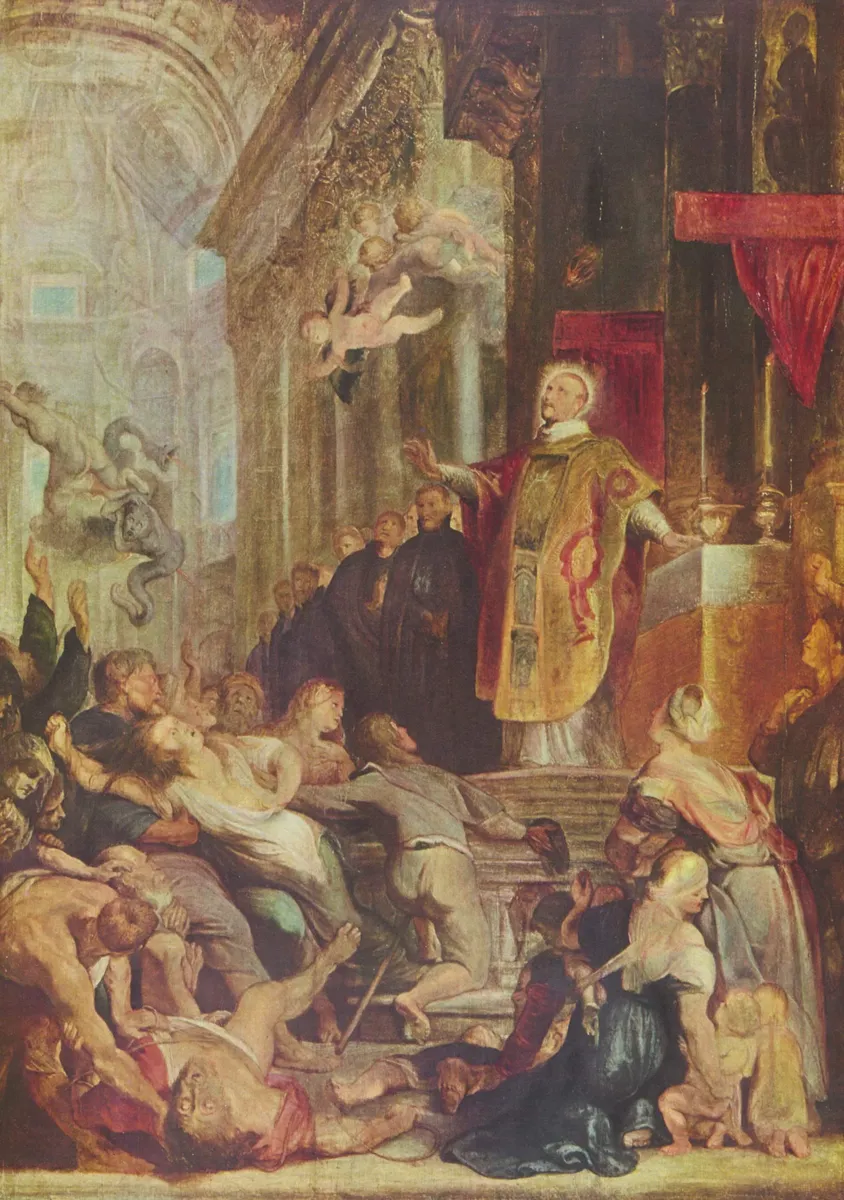
After the death of King Ferdinand in 1516, Inygo decides to switch to military service. In 1521, he finds himself among the defenders of the castle of Pamplon, besieged by the French troops. During the assault on the castle of Yinigo, he was wounded in both legs. The French, admiring his courage, plunged the wounded and delivered him to the clan castle, where Yiniigo spent the next year.
The fracture of the left leg was so complicated that the leg had to be operated on three times. The first time the fragmented bones was gathered in Pamplon as a French doctor. But when the Spanish healer examined the wound in the family castle, it turned out that during the transportation of the bones were damaged additionally, and the leg began to grow up incorrectly. I had to re -break my leg that had already begun to heal. But even after the second time, some bone formed an ugly growth, so that the leg was broken for the third time. On the third attempt, the bones were still connected successfully, but still the left leg became shorter than the right, and de Loyola remained lame for life.
Obsession
In those days, a wooden kiyanka was necessarily included in the "medical set" of the doctor. The doctors were brought into the unconscious state of the patient before moving on to surgical intervention. When the operation ended and the patient was conscious, the pain drowned out with wine and prayers. The more wine was and the more passionate prayer, the less tangible the pain became. Later, such a state will receive its explanation as a division of consciousness and self -hypnosis. Loyola, forced to transfer operations on his leg three times without any anesthesia, so well mastered the technique of transferring consciousness from the physical to the fictional world that when he needed it, absolutely did not experience pain. This will later serve as a reason for the fact that his followers will call the first general of the Jesuit the Jesuit to be a saints during his lifetime.
When the main operations were done and it was time for simple expectation, while everything heals normally, Yinigo frankly bored. He tried to occupy himself by reading books, but in the wilderness in which his castle was located, there were too few competent people. And therefore, Loyola managed to get only a few knightly novels, a couple of books with a biography of the saints and a couple of works of the Cartesian monk ( a monastic Order, called from the first monastery of a great chartresis, in French La Grande Chartreuse, in Latin-Cartusia; the main income receives from the sale of the Liker “Sharret”. Approx. It is after reading the books of the Cartesian to Loyol that the first thoughts come about the organization of a monastic order consisting of wandering monks-monks who make exploits not for the glory of the lady of the heart, but in the name of the Lord.
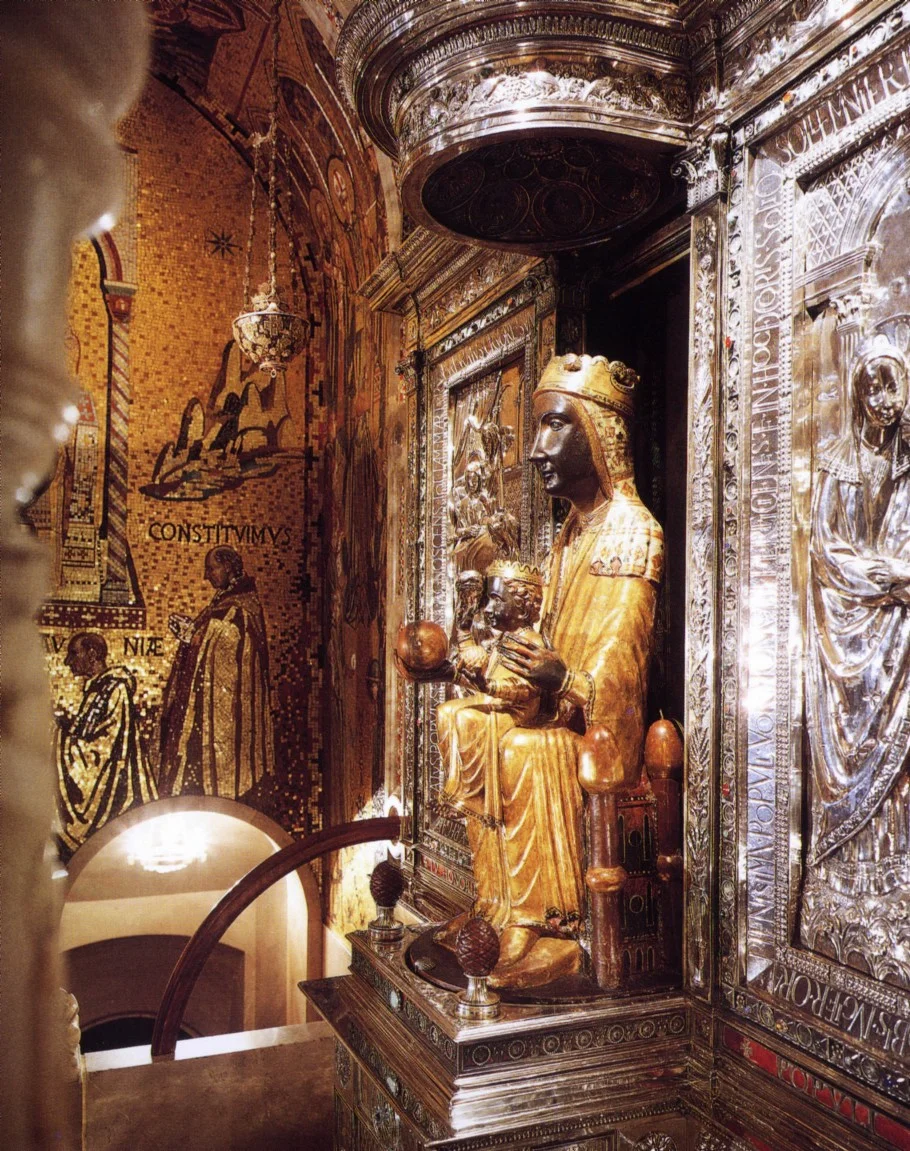
After the leg was finally healed, Yinigo de Loyola goes to the vicinity of Barcelona, to Montserrat, where the miraculous statue of the Virgin is stored. On March 24, 1522, Yinigo confessed, changed into clothes made of rough fabric (rubble) and began the “night guard”. “Night Guard” - the time preceding the dedication to the knights, consists of washing, complete confession, communion, the remission of sins, blessings and ends with the delivery of the sword. After confession, de Loyola handed over the sword and dagger to the monk-supervisor, punishing them to hang them in the chapel as an offering the Virgin, and began to consider himself a knight of the Blessed Virgin.
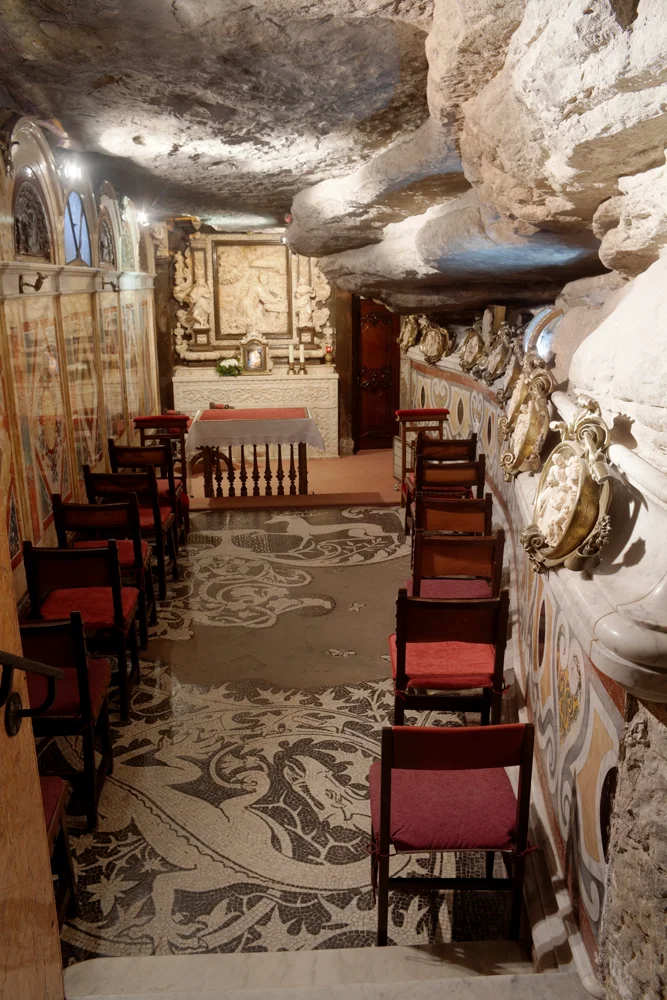
The next stage was a visit to Rome, the audience with Pope, a blessing for a pilgrimage to Jerusalem. There, pilgrims were met by the Franciscans, who drove them along Jerusalem, Bethlehem and Jordan. At the end of the “tour”, Loyola expressed a desire to stay in the order, but he was denied due to ... illiteracy. Iniigo returns to Spain, where Latin is studying for two years. Feeling that he knows the language enough to understand lectures at the university, Loyola goes to the University in Alcal.
In addition to classes at the university, Yinigo teaches children to the catechism (the basics of creed) and prayers. But not by the fact that everyone knows, but to the special, which he invents himself. Loyola proposed to imagine himself Adam, the fallen angel, Cain, other sinners and “live” their sins. Then “move” to Jesus Christ and atone for these sins. Later, on a par with his sermons, Loyol, will call this technique “spiritual exercises”, which will subsequently become the main weapon of the Jesuits. In fact, it was a technique of neurolinguistic programming, with the help of which totalitarian sects will be much later eliminated in their ranks hundreds of thousands of followers.
Of course, such experiments could not pass by the Inquisition. Loyola was detained and placed in prison, and his case went to the church court.
In his book “The History of the Jesuits”, which saw the light in 1858–1859, Priest Vladimir Gette claimed that “... the Dominicans, of which the first church courts consisted of inquisitions, could not understand how Loyol practically fascinates the flock on their sermons. Yinigo (Ignatius) prayed so eagerly, with such faith that this simply could not but find a response in the hearts of the audience, and they followed his example. But some skeptics began to say that Loyola was becoming obsessed during prayers. The only question remained - the driver or the Lord is obsessed with the preacher ... "
In the end, Loyola was released, but forbidden to preach. In addition, he actually did not have the right to do so, since he was not ordained a priest. Iniego leaves for Paris, where he continues to study. In 1532, he receives a master's diploma, two years later a doctoral degree and right "... teach, participate in disputes, determine and perform all school and teacher’s actions ... both in Paris and all over the world." At that time, six young students who were able to master the “spiritual exercises” and, like Yinigo, wanted to devote themselves to missionary service. In 1537, the group grew to 12 people, and in the same year most of them were ordained a priestly dignity.
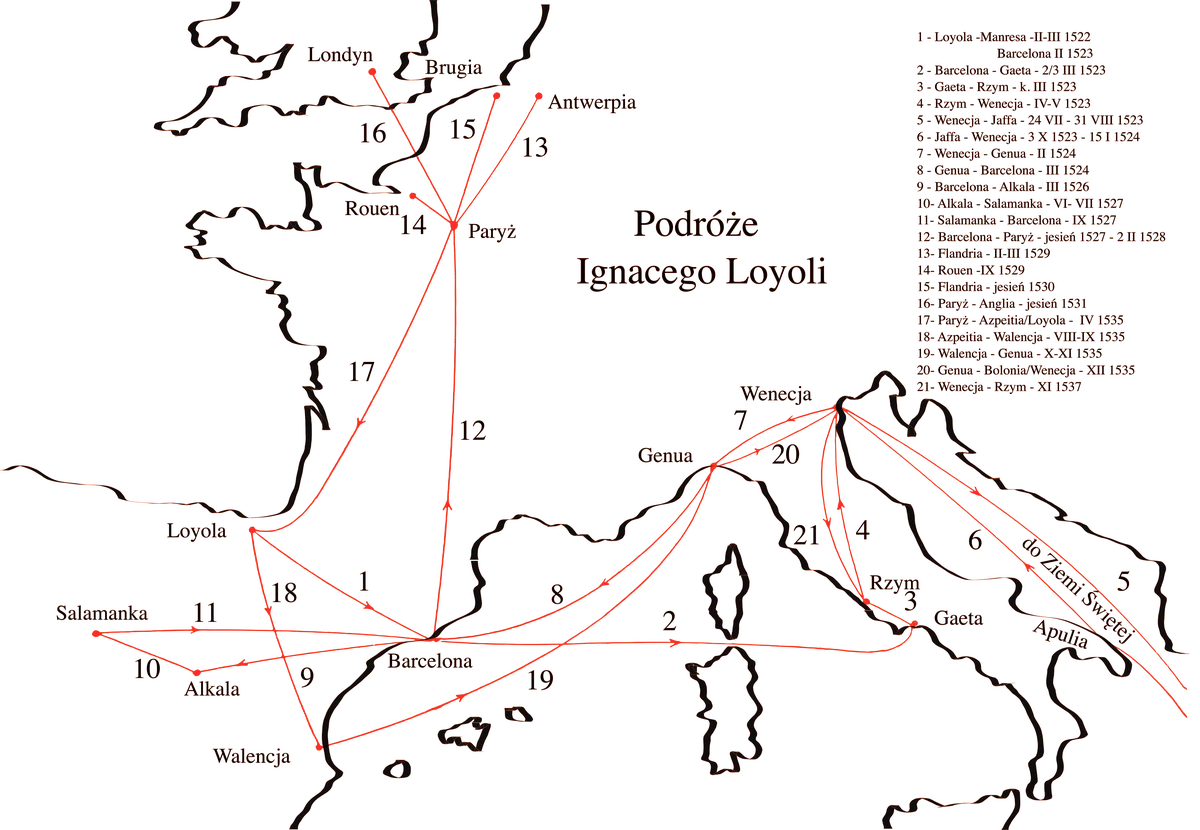
At the suggestion of Loyola, now called the father Ignatius, the entire group goes to the papal throne to continue training, where young but well -educated priests accept heat. Two become teachers at the University of Roman, six are distributed through the Roman churches, Loyola himself is appointed to the Church of St. Mary, and they all get full access to libraries and archives to continue education.
And again, a demonstration of the methodology of “spiritual exercises” causes conflicting feelings in the cardinals and Roman aristocracy. Loyola's gloomy and his followers scares them, and Ignatius again tries to declare the obsessed devil.
Ignatius seeks an audience with Pope Paul III, who explains in detail not only the methodology, but for what (according to Loyola, for successful missionary work among wild tribes and peoples), these “exercises” were invented. Pavel III was imbued with, and on September 27, 1540 he published Bull, which approved the charter of the new Catholic Order of the Society of Jesus. This one differed from other orders in that its members, except for three main vows (chastity, non -misunderstanding, obedience), also gave the fourth - absolute subordination to the holy throne.
The first general rector of the order was the Loyola, who wrote the internal charter of the organization. Hard discipline, submission to the youngest to the eldest and a constant increase in the level of education were put in the chapter in the order. The Jesuits recognized the power of only the pope and their own leadership. The laws of the countries in which the Jesuits worked did not apply to them, and the local bishops, and even more secular authorities, the “Ignatians” did not obey.
Got it!
By the second half of the 18th century, the Jesuits became the most powerful church organization in the world, which affects not only the church, but also the political and economic life of Catholic countries. The technique of “spiritual exercises”, applied to a variety of nations, fully justified itself. The missionaries of the Order of Ignatius were a great success in Asia, Africa, Latin America, whose indigenous peoples, convinced by the Jesuits, accepted baptism and carried rich offerings to the new God. Gold and precious stones received in the provinces served as a good lever to solve many issues in Europe.
In addition, the special charter developed by Loyola also helped the success of the order. Some Jesuit monks who accepted the tonsure were allowed to lead a completely secular life, hiding their belonging to the order. In order to communicate with these people affecting political and economic processes in Europe, a whole network of secret shelters was developed, secret assistants helped them, they could identify each other with the help of secret signs, secrecy and other ciphers.
In his book “The History of the Jesuits”, Vladimir Gette describes such a case. At the beginning of the 18th century, a promising young diplomat at the English court was sent with a mission to Austria. Upon arrival at the place, the diplomat realized that he could solve the protracted problem, but this needs a large amount of money. Being a secret Jesuit monk, the Englishman goes to an unremarkable tavern, leaves a request there and receives the entire required amount in a week. The mission is successfully completed, the messenger returns to England as the winner, and his career goes abruptly uphill. Of course, no one requires the Englishman to return the money he had taken, since they are spent to achieve the main goal: "To the Vying Glory of God."
In the end, the global intervention of the Jesuits in all spheres of life (in the middle of the 18th century, they even started a campaign for the fact that only an enlightened monarch could occupy the royal throne, directly hinting that precisely the Jesuits would be determined) began to cause strong fears among European royal houses. In 1758, the activities of the Order were banned in Portugal. In 1762, the Jesuits were expelled from France, and their monasteries with all the contents were transferred to the treasury. After that, the monks were exposed from Italy, Austria, as well as Latin America. Gette in his work claims that their wealth, accumulated in monasteries and resulting in the prey of secular authorities, became the true cause of persecution of the Jesuits.
At the end of the summer of 1773, Clement IV, chosen by Pope, only thanks to the support of the Bourbon dynasty and King Louis XV (both died exactly a year after the prohibition of the Jesuits), promised to “resolve the issue with the Jesuits”, publishes the bull, according to which the activities of the Jesuits are prohibited throughout Europe. Only the Russian Empire did not obey this decree. Moreover, Catherine II invited the Jesuits to move to Russia - but provided that they will not intervene in the internal affairs of the country. The Jesuits promised and restrained their word. For the next 40 years, Russia has become the headquarters of the Jesus Society, which helped the Order preserve as a single organization.
Close cooperation and quick gap
In Russia, the Jesuits in politics, as agreed, did not intervene, but at the beginning of the 19th century the authorities themselves asked for help from the monks. After the conclusion in June 1807, the Tilsitsky world shameful for Russia between Napoleon I and Alexander I, the French emperor believed that he excluded from European layouts of the main player capable of (England in the continental blockade) to prevent his plans for the complete conquest of Europe. But the Russian autocrat was not going to adhere to the contract clauses. In particular, the Russian Empire (however, through intermediaries) continued to supply raw materials for the construction of ships, and personally Napoleon was twice refused his request for marriage with the sister of Alexander I. The clash of the two armies became inevitable.
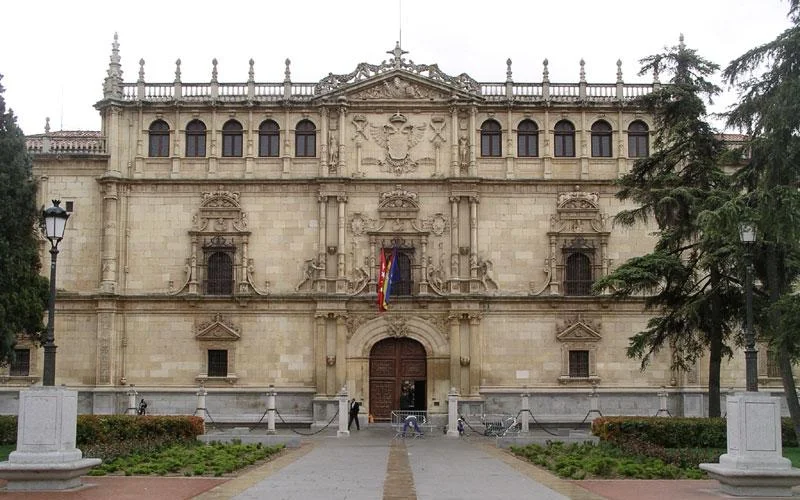
In January 1810, Barclay de Tolly became the military Minister of Russia, who begins to prepare the Russian army for a future war with the Napoleonic coalition. The number of the army is increasing, a corps organization is introduced, which made the army more mobile, maneuverable and better controlled in peacetime and wartime. Several new departments are being created, as well as a special office, whose activities immediately became secret, because the "Chancellery" was engaged in collecting intelligence data about the French army and prevented the French with the same in Russia.
The number of this “department” was only seven people: the Dutch Baron Fedor Serazkerken, a descendant of the Scottish immigrants to Russia Robert Renny, the Austrian Wilhelm Brendel, the son of the Baltic, Pavel Grabbe, the hereditary Russian nobles Grigory Orlov, Pavel Brozin and Alexander Chernyshev. The latter became the head of a special office.
In Napoleon, intelligence and counterintelligence was in charge of the real AC of this case Rene Savari, who had long looked at the young communication officer Chernyshev. This officer constantly ran between Alexander I and Napoleon I, delivering letters to them. In 1810, when 25-year-old Chernyshev was promoted to colonels, Savari turned to Napoleon with a request to allow the “development” of a Russian officer to recruit him, but the French emperor banned. Neither Savari nor Napoleon was unknown that Chernyshev has been collecting intelligence information about the French army for three years, and among his agents, a modest official of the Military Ministry of Moris Michelle, who was a general certificate for Napoleon about the situation in the French army twice a month (he passed the copy of Chernyshev). Но главным поставщиком секретных сведений для русских стал министр иностранных дел Франции Шарль Морис де Талейран-Перигор.
Большинство историков уверены, что Талейран сам предложил свои услуги Александру I, потому что разуверился в гении Наполеона и в будущем столкновении двух держав заранее выбрал победителя. Но всё-таки более реальной видится версия, что Талейрана, приверженца богатого образа жизни, тривиально купили — что подтвердили швейцарские банкиры, обнародовавшие информацию о счетах Талейрана, на которые в 1810–1812 годах из России поступали крупные суммы денег.
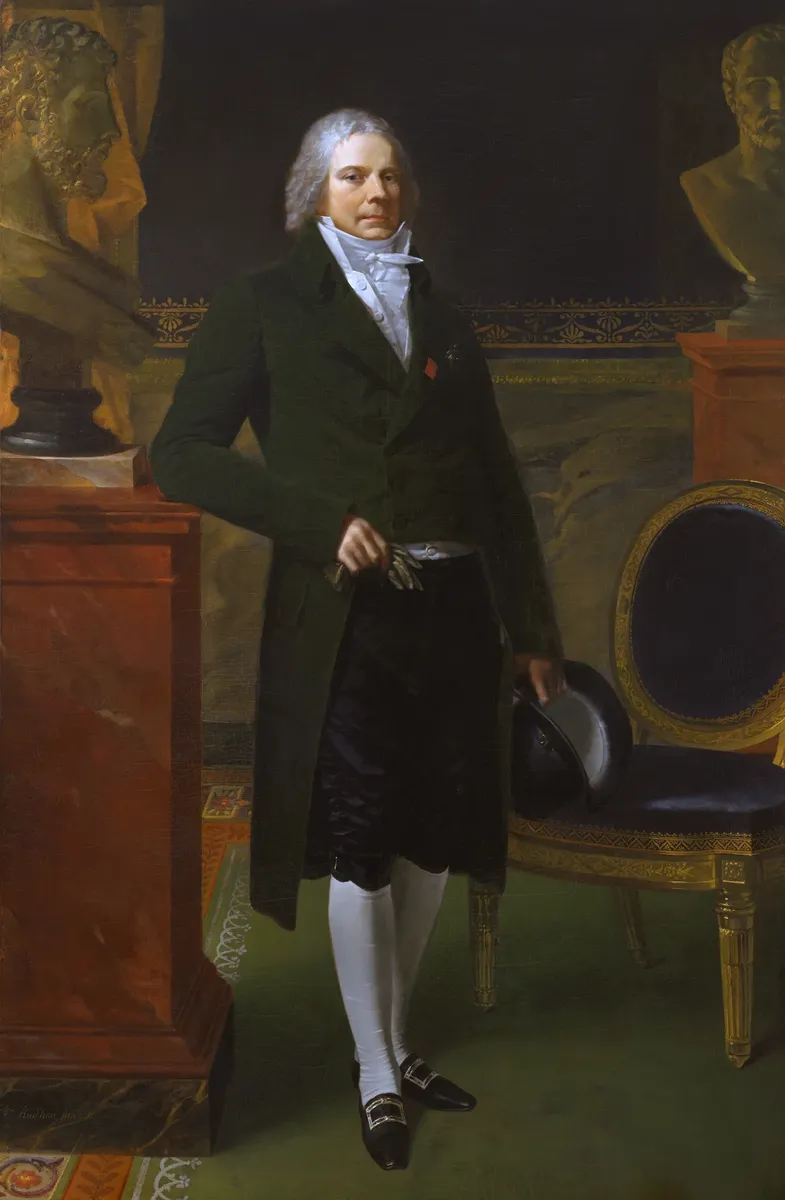
Завербовать дипломата, ставшего символом хитрости и изворотливости, русским помогли именно иезуиты. В период с февраля 1810-го по декабрь 1811-го де Толли не менее четырнадцати раз наведывался в иезуитский коллегиум на набережной Грибоедова в Петербурге (даже не всем представителям высшей российской аристократии было известно, что кроме коллегиума в этом доме расположена штаб-квартира ордена иезуитов). К самому Барклаю довольно часто захаживал католический священник польского происхождения Тадеуш Бжозовский (генерал Общества Иисуса с 1805 по 1820 год).
Иезуиты предоставили русским разведчикам собственную сеть осведомителей в Европе, с помощью которых Особенная канцелярия в короткий срок наладила сбор информации. Благодаря этому Барклай де Толли разработал план будущей войны с Наполеоном. Министр убедил Александра I не встречать французов на границе и как можно дольше не давать генерального сражения. Позволить им занять западную часть России, максимально растянув коммуникации, создать препятствия для снабжения фуражом и провиантом, развернуть партизанские действия. И только после того, как французская армия будет деморализована и ослаблена недостатком провианта и постоянными нападениями, дать им генеральное сражение.
После победы союзнических войск над Наполеоном министр Талейран продемонстрировал свое знаменитое искусство убеждения и коварство. Именно он настоял на передаче французского престола представителю Бурбонов, злейших врагов иезуитов.
Французский министр этим решением убивал сразу двух зайцев: он лично соскакивал с крючка русской разведки и иезуитов, а еще вбивал камень преткновения в отношения Александра I и иезуитов. И эти отношения, действительно, быстро испортились. В 1814 году иезуитам удалось наконец добиться того, что папа римский Пий VII восстановил Общество Иисуса во всех его правах и привилегиях. Бжозовский становится не просто главой русской ветви иезуитов, а полноправным генералом ордена, получает доступ к закрытым ранее ресурсам, возобновляет агрессивную миссионерскую деятельность. Это приводит к тому, что число обращений в католичество в России только за 1814 год выросло в 18 раз. В конце 1815 года российский император под усиливающимся давлением православного духовенства издает указ о запрещении деятельности иезуитов на территории России и передаче их имущества казне. Впрочем, особых сокровищ в миссиях и коллегиумах иезуитов в России обнаружить не удалось.
Наученные прошлым опытом, иезуиты больше не хранили ценности в собственных монастырях и миссиях. Вообще, 40-летний запрет пошел Обществу Иисуса только на пользу. После возобновления деятельности иезуиты перестали активно вмешиваться в светскую жизнь государств. Они сосредоточились на миссионерской деятельности, а также на просветительстве и добились впечатляющих успехов. В настоящее время учебные заведения иезуитов считаются одними из лучших не только среди церковных, но и среди общеобразовательных. А десять лет назад, в марте 2013 года, впервые в истории католической церкви папой римским стал монах-иезуит Хорхе Марио Бергольо. После избрания он принял имя Франциск.