
Translated material
The fees are expensive!
The Russian Foreign Ministry proposed to increase visa fees for Europeans to $ 50-300
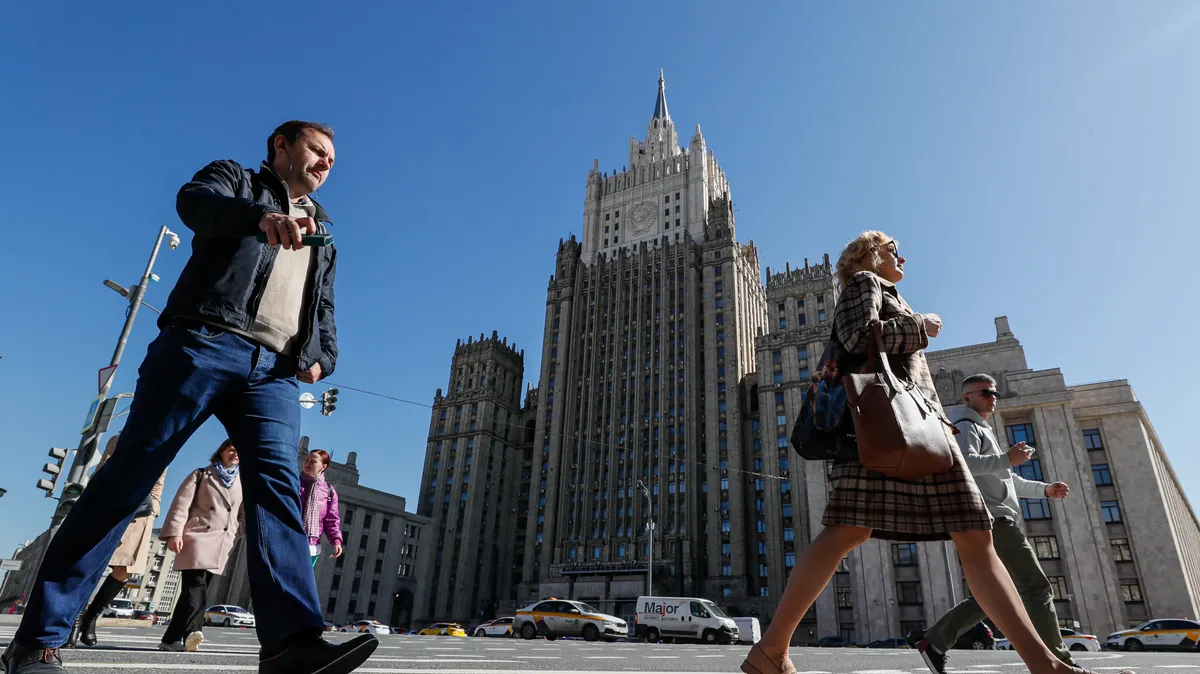
The main building of the Russian Foreign Ministry in Moscow, Russia, May 2, 2023. Photo: EPA-EFE/Yuri Kochetkov
The Ministry of Foreign Affairs of the Russian Federation introduced a bill to the government on raising visa fees and canceling visa benefits for citizens of the EU, Denmark, Iceland, Liechtenstein, Norway and Switzerland. According to sources of RBC, the government approved this bill.
As a result of changes, the cost of Russian visas can increase from 35–70 to 50-300 US dollars. Novyevropa was versed in a new bill, the reasons for its appearance and the consequences of its adoption.
What does the Foreign Ministry offer?
The purpose of the bill is to synchronize Russian visa fees with EU established by the EU, Denmark, Iceland, Liechtenstein, Norway and Switzerland, the explanatory note said. In other words, give a symmetrical answer.
The Russian Foreign Ministry proposes to completely suspend in agreements with these countries an article regarding visa fees. In the event of the adoption of the bill, all citizens entering Russia from these countries will pay increased visa fees. In the agreement with the EU, for example, it was established that the collection for registration of a visa is 35 euros, and in the case of urgent registration - 70 euros.
Now the cost of Russian visas can increase depending on urgency and multiplicity within 50-300 dollars, the document says. The Foreign Ministry believes that such changes will increase income from the issuance of visas by 2.8 times.
Who will affect the changes?
The article proposed for deletion in agreements with the EU, Denmark, Iceland, Liechtenstein, Norway and Switzerland established the categories of citizens exempted from the payment of visa fees.
This list included:
close relatives (spouses, children, parents, grandparents and grandchildren of Russian citizens living in the EU);
members of official delegations;
officials (members of national and regional governments and parliaments, constitutional and supreme courts);
Schoolchildren, students, graduate students and teachers accompanying them, heading for study or educational internship;
persons who have confirmed the need for a humanitarian trip, including for receiving urgent medical care, as well as for the presence of a seriously ill relative relative at the funeral;
participants in youth international sports events and their accompanying persons;
persons participating in scientific, cultural or creative activities;
Participants in official exchange programs between interminent cities.
If the bill is adopted, all these citizens will also be forced to pay for visa fees.
How many Europeans go to Russia?
In the first six months of 2023, citizens of 27 countries that are part of the European Union made 251.6 thousand trips to Russia, RBC calculated on the basis of FSB border services.
This is 42% more than for the same period last year, but still less than before the pandemia of Covid-19 and the wars in Ukraine.
The FSB border service in its statistics takes into account all trips: with business and private goals, for work or study, tourist, moving to permanent residence, trips for “maintenance of vehicles” and business trips of “military personnel”.
At the same time, the Vice-President of the Association of Tour Operators of Russia (ATOR) Alexander Kournosov told RBC that
“A significant part of the so -called German and American tourists are our former fellow citizens who made a visa in a lighter tourist way.”
Also, according to him, businessmen or relatives of Russian citizens often come to Russia on tourist visas to Russia.
Why do you need to increase the visa fee?
As Alexander Kournosov notes, an increase in the cost of visas now has “no economic meaning”, since there is no huge tourist flow to Russia.
“In this case, the decision to increase the visa fee seems to be coming contrary to the rational approach of our policy and can damage these citizens to the interests of these citizens,” says MGIMO Associate Professor Nikolai Topornin.
According to him, the flow of tourists decreased due to the fact that the governments of European countries do not recommend going to Russia, as well as because of difficulties with organizing trips due to non-working banking cards and difficulties with flights.
In Latvia, when trying to get a tourist visa in the Russian visa center, the Novo-Evrop correspondent was explained that it cannot be issued without the available confirmation of the reception of a foreign tourist (one of two parts of a tourist invitation.-Approx. Ed.). The visa center with a similar request is recommended to contact a travel company.
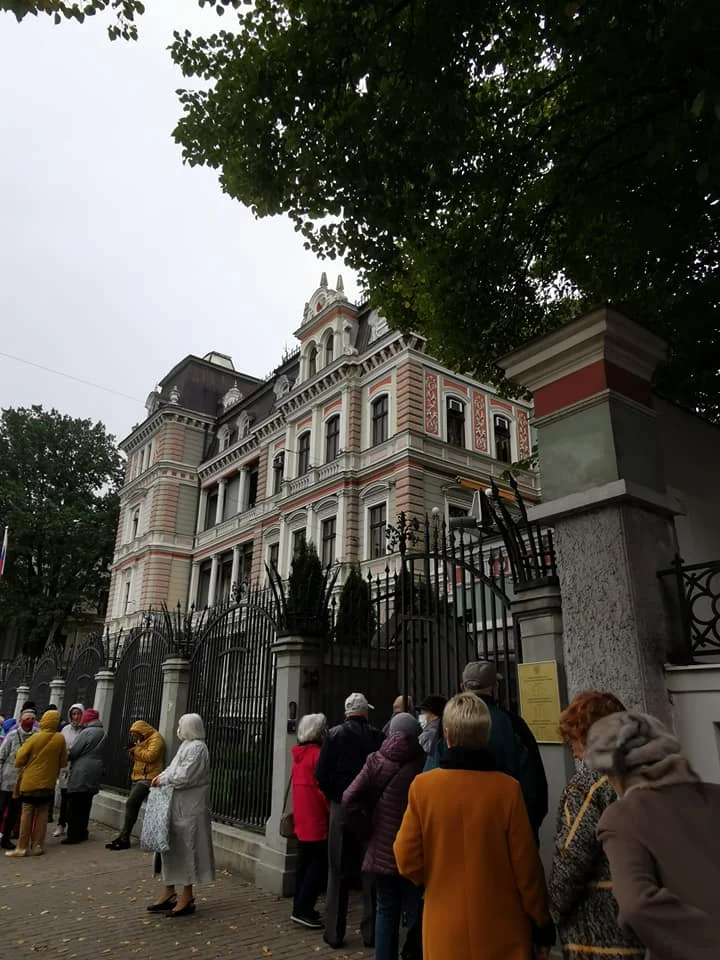
In the Vlissa travel agency, for example, the design of a single tourist visa to Russia costs at least 135 euros. For such a visa, they asked to provide only a photo and passport. During the consultation, the Novo-Europe correspondent was also proposed to issue visas for a period of three to 12 months, this would cost at least 165 euros. The travel agency officer also recalled the possibility of independently issuing an electronic visa.
The head of the Russian network of travel agencies, who wished to remain anonymous, in a conversation with the New Evrope suggested that
With the help of a new bill, Russia is just trying to push tourists to use an electronic visa.
According to him, they increase the visa fee in order to stop Europeans to travel to Russia. He notes that after the opening of the opportunity to arrange an electronic visa, many people continue to choose the old version only because it is more familiar. In order for people to forget the previous ways and open visas in electronic form, they decided to “move” them with money to this idea.
“They are trying to convince them by force. There are 300 dollars, and here [with an electronic visa] - two and a half times cheaper. They came up with this option. This is the most effective method, ”the expert says.
At the same time, the interlocutor of Novo-European Europe used to often encounter complaints about the difficulty when applying for a visa for a trip to Russia. For example, tourists did not like that it takes a lot of time.
“Of course, in a good way you need to act like Belarus. At first, for five days they made an entry without a visa, now the entire European Union is allowed for 30 days. Why don't Russia adopt this experience? " - argues the head of the network of travel agencies.
He relates himself to supporters of visa -free movement around the world.
“People must travel without visas. It’s funny to me that these passport ratings exist. Passports should be equal. Any resident of any country can go anywhere. And by the way, I think the world will sooner or later come to visa -free travel ",
- the expert is sure.
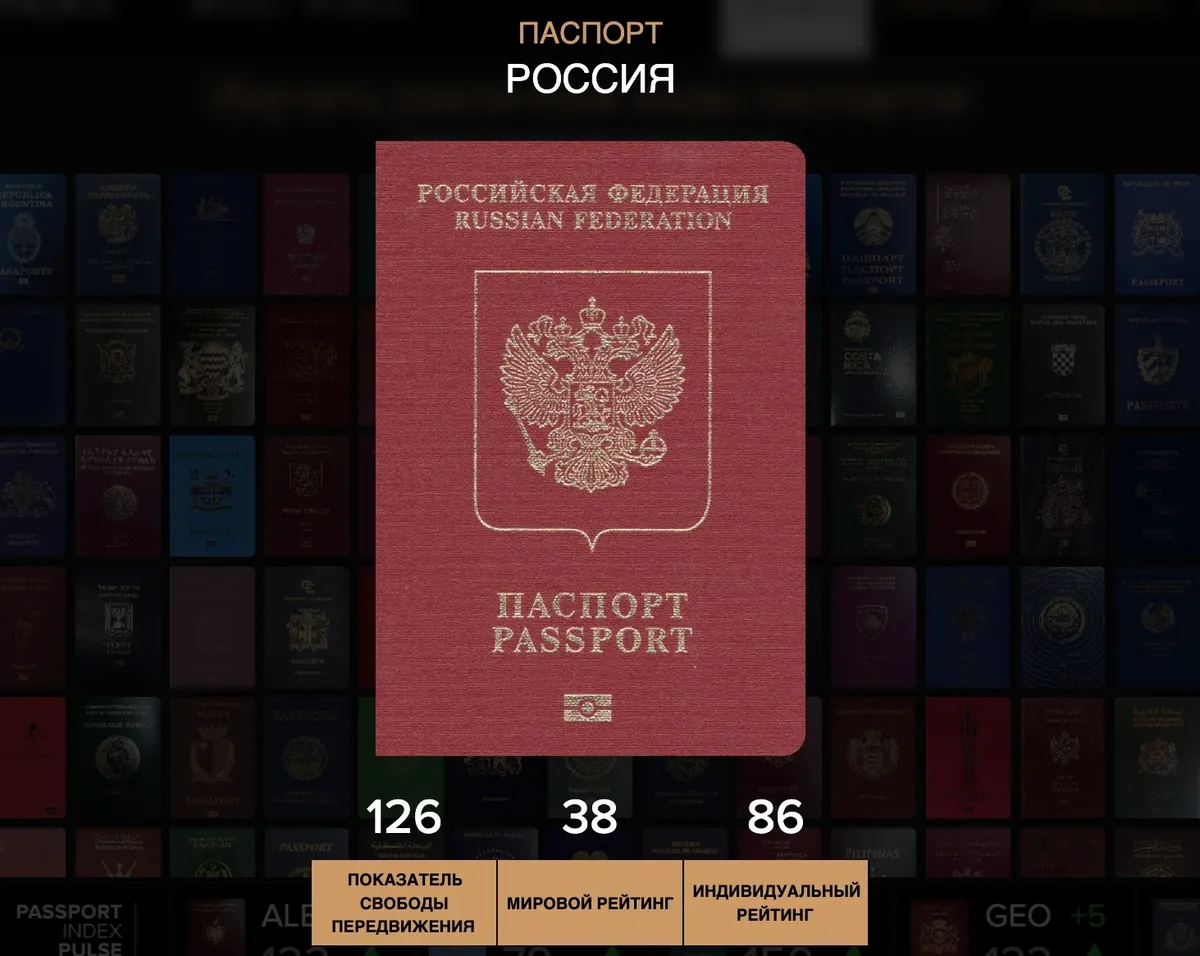
Now Russia is in 86th place in an individual passport force rating.
Electronic visas
Since August 2023, citizens of 55 countries can receive an electronic visa for a visit to Russia. Its cost is $ 52, which is comparable to the price of a short -term single visa ($ 50).
An application for registration of such a visa must be submitted at least four days before the trip. To consider the application, only a photograph and scan of a passport of a foreign citizen are needed.
A single electronic visa gives the right to a single entry into Russia. It can be issued for a guest or business visit, a tourist trip, as well as to participate in scientific, cultural, socio-political, economic, sporting events and the implementation of relevant contacts.
The visa operates 60 days from the date of registration and gives the right to be in Russia no more than 16 days from the date of entry.
In 2022, the former Head of Rostourism Zarina Dogusova personally convinced the Russian Foreign Ministry to extend the effect to European countries.
“Tens of billions of dollars earn on foreign tourists in the world. These are large incomes for our country, it is external demand, which stimulates the development of infrastructure, jobs ",
- said Dogusova.
According to her, Russia is “strategically important” to convey its position to the world, so it is necessary that tourists from other countries have the opportunity to see Russia with its own eyes. “When you spent the time in Russia perfectly, you know the country, it’s hard to convince you that evil people go here,” says Doguzova.
At the same time, in the summer of 2023, the director of the consular department of the Ministry of Foreign Affairs Alexei Klimov pointed out that the cost of an electronic visa is significantly underestimated compared to the amount that Russian citizens are now paid for the registration of the Schengen visa.
“The preserved opportunity for citizens of the EU countries to issue an electronic visa, as well as its low cost (compared to a visa gathering of 80 euros, which is now charged with Russians for the design of the Schengen visa) are our asymmetric response to the EU’s clearly unfinished steps to tighten visa policy to our fellow citizens, expressed in the terms of consideration of visa applications, sharply growth of both the number of refusals in the design of visas and reducing their multiplicity, ”Klimov said .
How the visa regime between Russia and the EU has changed
In 2006, the EU and Russia signed an agreement on simplifying the mutual issuance of visas to citizens. Thanks to him, since the summer of 2007, citizens enjoyed the simplified procedure for issuing single visas. It was also provided for a simplified procedure for obtaining multiple visas for members of official delegations, entrepreneurs and representatives of commercial organizations, drivers and members of train brigades engaged in international transportation, journalists, cultural figures, science, education, students and schoolchildren, and participants in international sports events.
On September 12, 2022, more than six months after the start of the full -scale invasion of Russia to Ukraine, the European commission approved the suspension of the agreement on the simplification of the visa regime with Russia. Since that time, new rules for issuing visas began to apply to the Russians: their value increased to 80 euros, the consideration time of the application increased to 45 days, additional documents were needed. Germany, for example, requires issuing medical insurance in a European company and providing an extract from an account with a foreign bank that works in the EU countries.
In general, the European Union countries began to issue visas for a short time and for one -time trips. Urgent visas that could be done before in three days, now you can’t get at all.
The European Commission also recommended that tourism be considered a priority reason for the issuance of visas.
Then Denmark, Iceland, Norway and Switzerland unilaterally completely suspended the effect of international treaties with Russia on the mutual simplification of the issuance of visas.
Also, Latvia, Lithuania and Estonia agreed to restrict the entry of Russians with current Schengen visas through land borders with Russia and Belarus. The exception was made for drivers of trucks, diplomats and entering family and humanitarian reasons. The entrance to the Russians on short -term visas also banned Poland, Finland and the Czech Republic.