
Translated material
Sow the Fatherland
"Black October" of the 93rd year. Part 3: Sturm "Ostankino". The shooting of the White House. Results and consequences
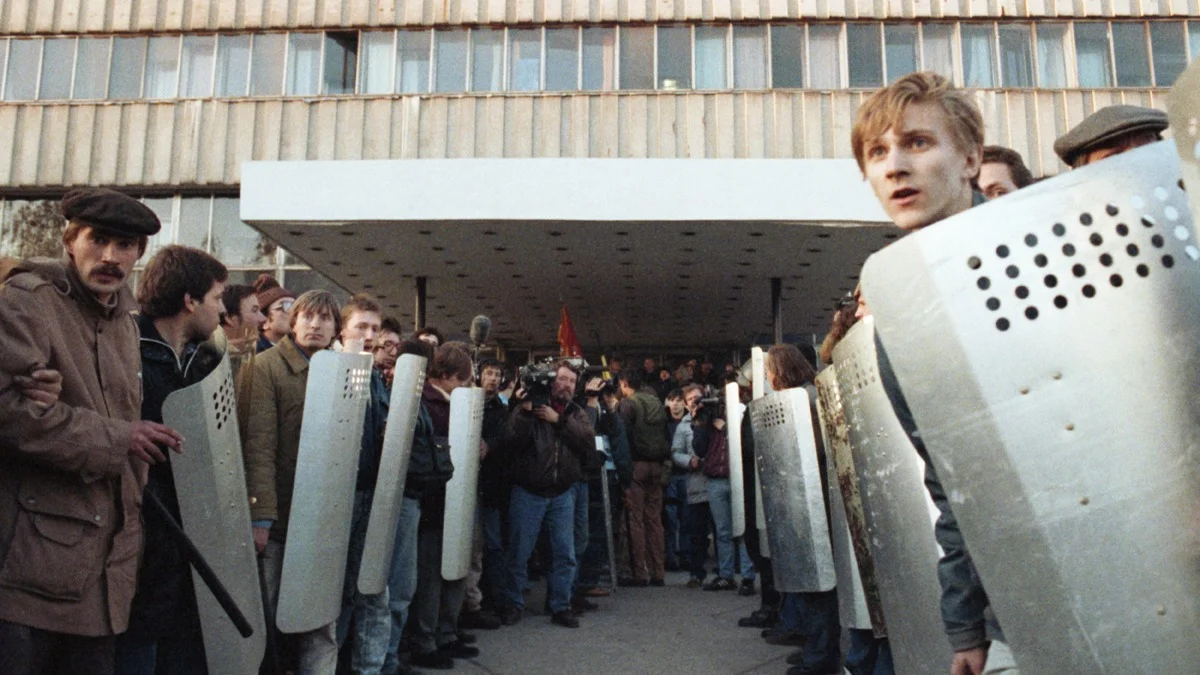
Fighting squads of supporters of the Russian parliament during a rally near the building of the Ostankino television center. Photo: Igor Zotin / TASS
18+. This material (information) was produced, distributed and (or) sent by foreign agent Schlosberg Lev Markovich or concerns the activities of the foreign agent Schlosberg Lev Markovich.
Blood for blood
On October 1, at the appeal of Patriarch Alexy II, the last attempt to search for a compromise was made: negotiations between the authorized representatives of the Supreme Council began in the Holy Danilov Monastery ( Veniamin Sokolov -chairman of the Council of the Republic and Ramazan Abdulatipov -chairman of the Nationality Council) and Boris Yeltsin ( Oleg Vyoskovets , Yuri Luzhkov and Sergey Filatov ).
The parties discussed the possibility of returning to the “zero option”: holding the simultaneous elections of the president and parliament and the disarmament of illegal armed groups. The agreement on the return to the "zero option" was reached. The information passed that it was approved by R. Khasbulatov and A. Rutsky.
But the Supreme Council, which by that time was under the control of the most radical part of those present in the building and prone to the “war to the victorious end”, perceived the agreement as an unacceptable assignment, by a majority vote refused to approve the agreement and strengthened the work with the regions to support his position.
The agreements reached through the mediation of the Patriarch in the Holy Danilov Monastery were disavowed by the congress, formally-because they were signed “without prior consistency with the congress” and “preliminary conditions of entry into the constitutional field in accordance with the decision of the X Congress”, in other words, in accordance with the decisions on the departure from the position of B. Yeltsin. It was, in fact, "an ultimatum on the contrary."
The protocol on the rejection of agreements was signed, which is characteristic, not by the political leaders of R. Khasbulatov or A. Rutsky, but by members of the so -called “Power Troika” - Vladislav Achalov , Viktor Barannikov and Andrei Dunaev - appointed by A. Rutskiy Ministers of Defense, Security and Internal Affairs, respectively, and among other decisions demanded “entering the post of ministers appointed by the congress”.
The Supreme Council sought to radicalize the positions of regional leaders (it was generally known since September 18) and its publication to strengthen its political status.
The president and his environment sought to keep the regions under control, demonstrating the armed force and the readiness of its application.
After the failure of the negotiations in the Holy Danilov Monastery, it became clear that not only the personal political resource of participants in negotiations was exhausted, but, which was the most terrible in the current situation, there was no moral authority throughout the country at that moment, for which both sides were ready to listen to. And retreat at the last moment from the fatal line.
On October 1, the head of the Moscow Central Internal Affairs Directorate Vladimir Pankratov said that there are about 1,600 machines, more than 2000 pistols, 18 machine guns, 10 sniper rifles and 12 grenade launchers, plus, about 300 machine guns, several grenade launches and a stinger missile.
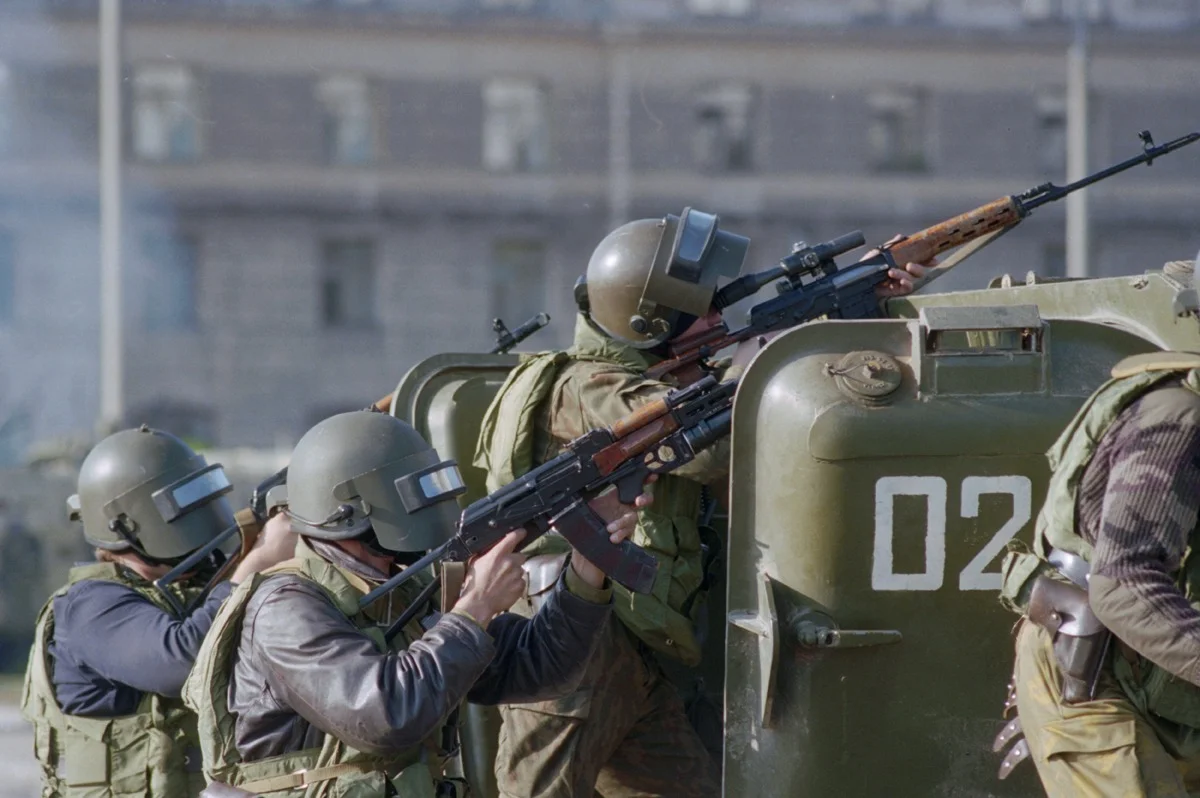
After taking the White House, 163 automatic machines, 5 manual machine guns, 2 sniper rifles, 1 grenade launcher, 420 pistols, 248 gas pistols, 12 min-traps, 1 explosive device, 23 units of other weapons were discovered there; The defenders of the building themselves stated that from the warehouse of the Department of Protection of the Supreme Council they issued 74 assault rifles and 5 hand machine guns.
On October 2, the then correspondent and future editor -in -chief of the Echo of Moscow radio station Alexei Venediktov* went to the House of Soviets. The White House was disconnected from stationary telephone communication. According to his memoirs, there were three satellite phones for the entire building (weighing eight kilograms weighing) - from foreign journalists. He asked the phone from one of the colleagues for two minutes and suggested Alexander Rutsky: "Alexander Vladimirovich, do you want an interview with" Echo of Moscow "?" It was then that Rutsky shouted his famous and photographed also on the video film: “Comrades, raise the planes, fly to bomb the Kremlin!” He had the opportunity to directly turn to the country. And Rutskaya said exactly what he said, on the air of the Echo of Moscow.
The smell of impending bloodshed was already hung in the air. Among the direct participants in the conflict there were many who longed for blood and precisely on this planned to change the situation in their favor.
Nevertheless, before lunch on October 3, there was a chance of peaceful development of the situation, since the idea of early elections of the president and parliament (according to the then existing constitution, of course) supported more and more people and representatives of the authorities. By this moment, if not yet predominant, then the opinion was dynamically growing about the need to leave both sides of the conflict from the political scene of both sides of the conflict as a threat to the country.
On October 4, a statement of the Federation Council (acting informally, ahead of the adoption of the Constitution, but de facto representing the position of regions) was expected about the need for early elections.
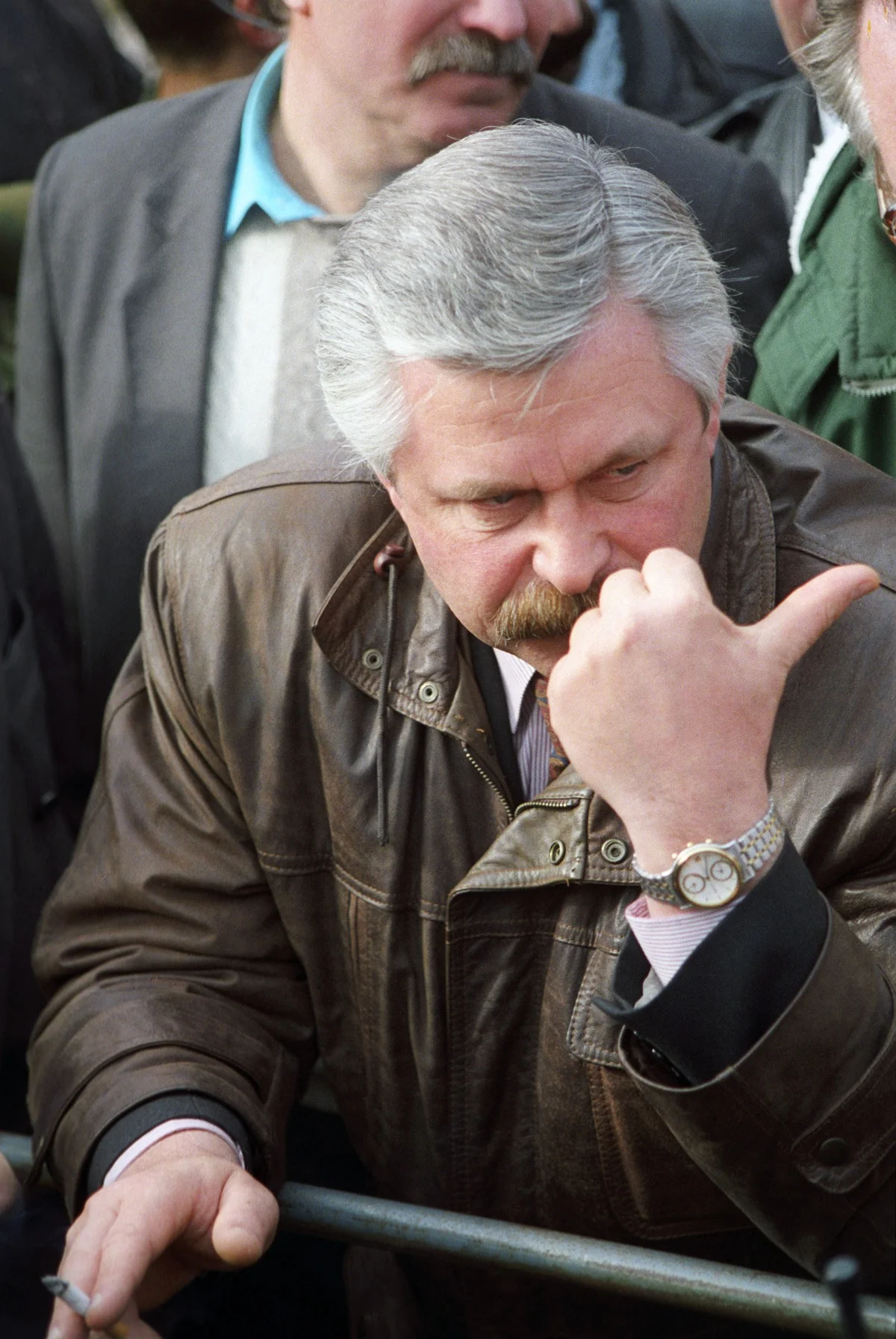
At that moment, this was acceptable for all political forces and politicians who were not involved in the conflict directly, but did not suit almost any of the active participants in the conflict: many of them could lose power after extraordinary elections. This assumption fully applies to B. Yeltsin and (to an even greater extent) A. Rutsky and R. Khasbulatov. A loan of public confidence in them as responsible leaders of the country was melting by the hour.
At 15.25 on October 3, participants in the demonstration in support of the Supreme Council, breaking through the cordon on the Crimean bridge, unlocked the House of Soviets. According to one version, the security simply parted, assuming that the society had a final advantage in favor of the Supreme Council. But at the same time, killed and wounded from among the participants in the manifestation, employees of the Ministry of Internal Affairs and riot police appeared. One of the dead, according to some reports, was a colonel who tried to ban the troops to shoot. Each of the parties accused the other of provocation and firing to defeat.
At 16.00 on October 3, Boris Yeltsin introduces a state of emergency in Moscow.
After that, Alexander Rutskoy, speaking from the balcony of the House of Soviets, calls on those gathered at the building of the Supreme Council: “I ask you to attention! Youth, combat -ready men! Here, on the left side, to be built! To form units, and today we must storm the city hall and the Ostankino! ”
Ruslan Khasbulatov at the same time said: “I urge our valiant warriors to bring here troops, tanks in order to storm the Kremlin and the Uzurpator of the former - the criminal Yeltsin. Yeltsin today should be enclosed in the "sailor silence." All his corrupt click should be concluded ... "
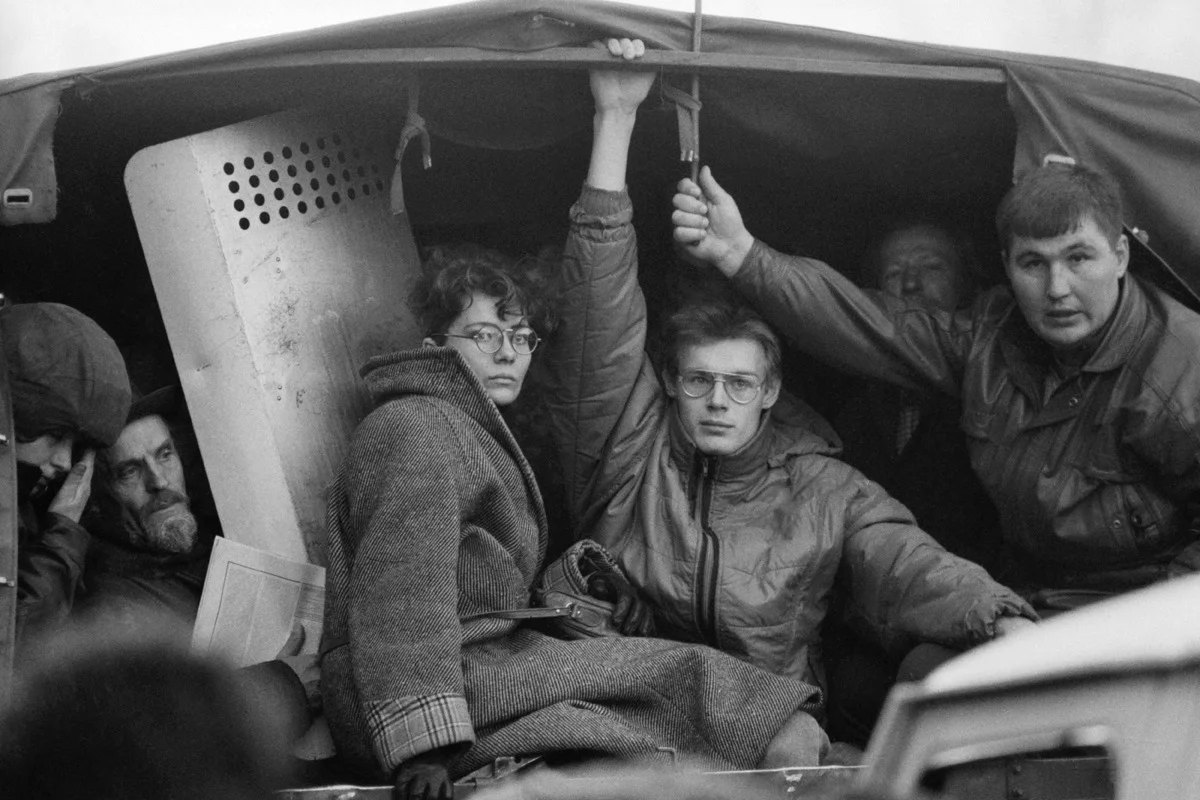
After that, the phrase of A. Rutsky “Try not to use weapons ...” looked at least meaningless.
Military units, controlled by the Supreme Council, except for the ministers of the “power troika”, was also commanded by General Albert Makashov , the leader of the “Russian national unity” Alexander Barkashov , the leader of the “Union of Officers” Stanislav Terekhov , the leader of “Labor Russia” Viktor Anpilov , as well as the less -known figures from among the militias. There was no single command. Among the weapons, except for small arms, there were axes.
Speaks and shows Ostankino
By 17 o’clock, the building of the Moscow City Hall and the Mir Hotel was busy next to it (later repelled), after which the assault center was moved towards the Ostankino television center. Some groups moved on trucks abandoned by troops at the City Hall. The police missed the crowd to the Ostankino.
Demonstrators were refused to provide a live broadcast, which they demanded. Supporters of the Supreme Council attempted to get into the building, rammed glass doors with one of the trucks left by the troops.
The shot from the roof of one of the buildings (the weapon belonging is still not reliable) was wounded by one of the protesters, then an explosion occurred at the gap at the site of the doors, and at the same time an unidentified device explosion occurred inside the building, during which an ordinary special forces died. This was another key point that still causes fierce disputes.
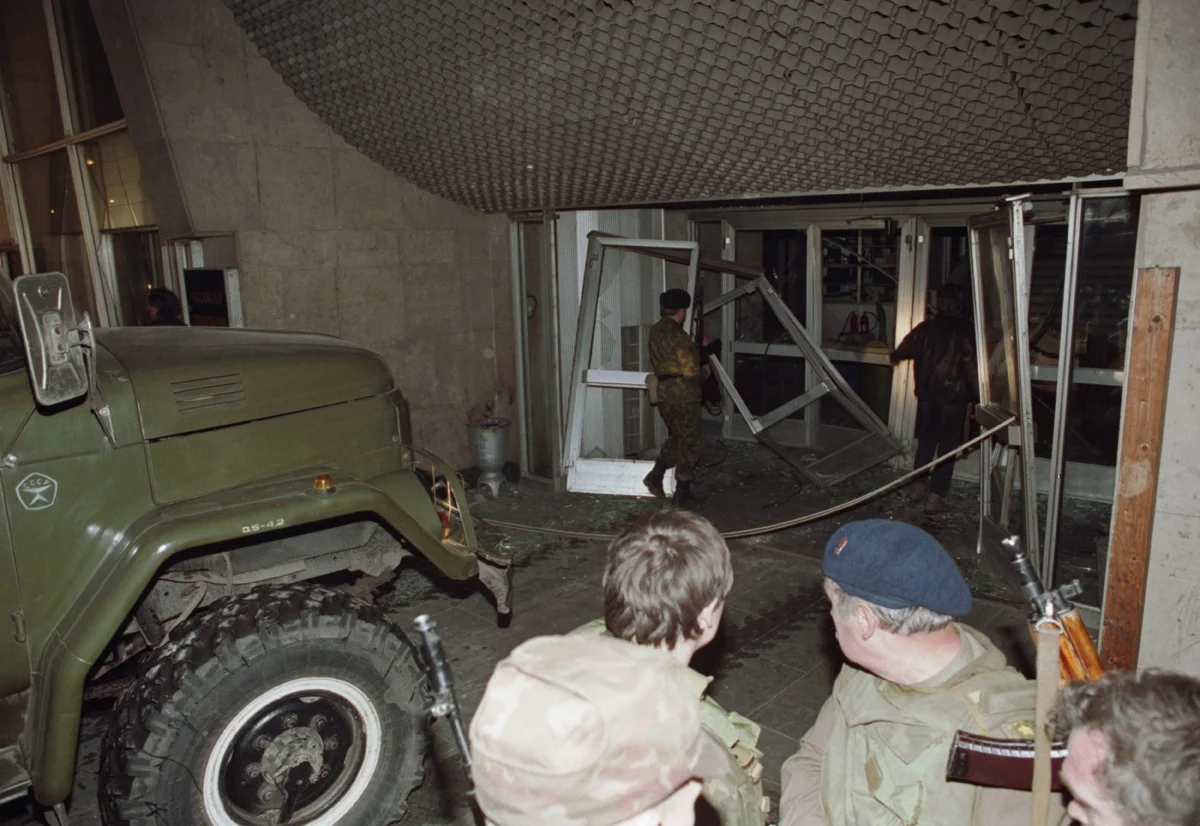
According to the presidential supporters, it was a shot from the RPG-7 B-1 grenade launcher, made by the demonstrators. Some opponents of the president stated that a shot from a grenade launcher that had the attackers was not carried out at all and was not found at the place of death from the explosion of the military unit of the grenade (but there were some fragments of the shell). Thus, he was killed by a shock wave of an unidentified explosive device, possibly located in the building of the television center. Who in this case has driven an explosive device inside the building? There is no answer.
Other participants in the Ostankino assault stated that the grenade launcher was brought to the television center by a certain citizen who took the only shot and disappeared in an unknown direction, i.e. He played the role of the provocateur.
At 19.12, after the explosion, special forces and armored personnel carriers opened fluid fire from automatic weapons along the crowd gathered at the television center, which led to the death of at least 46 people. Broadcasting from Ostankino was temporarily discontinued. All television channels, except the Russian state, were disconnected from the air. The special forces units that were not previously in contact with demonstrators in the city received a command to open fire to defeat and completed it.
The bloodshed of Ostankino was a turning point in October 3. The dynamics of positive (from the point of view of an advantage) of actions by the Supreme Council (a breakthrough by the crowd of the blockade of the House of Soviets, the quick capture of the Moscow City Hall) broke off. All television channels, who resumed broadcasting late at night showed the assault on the television center and attempts to the pogrom of the building. Everyone could see that supporters of the Supreme Council went into armed storm and became the initiators of the largest bloodshed from the moment the confrontation of the parties began. It was clear that there were many victims, and the initiator of the assault is always responsible for the blood.
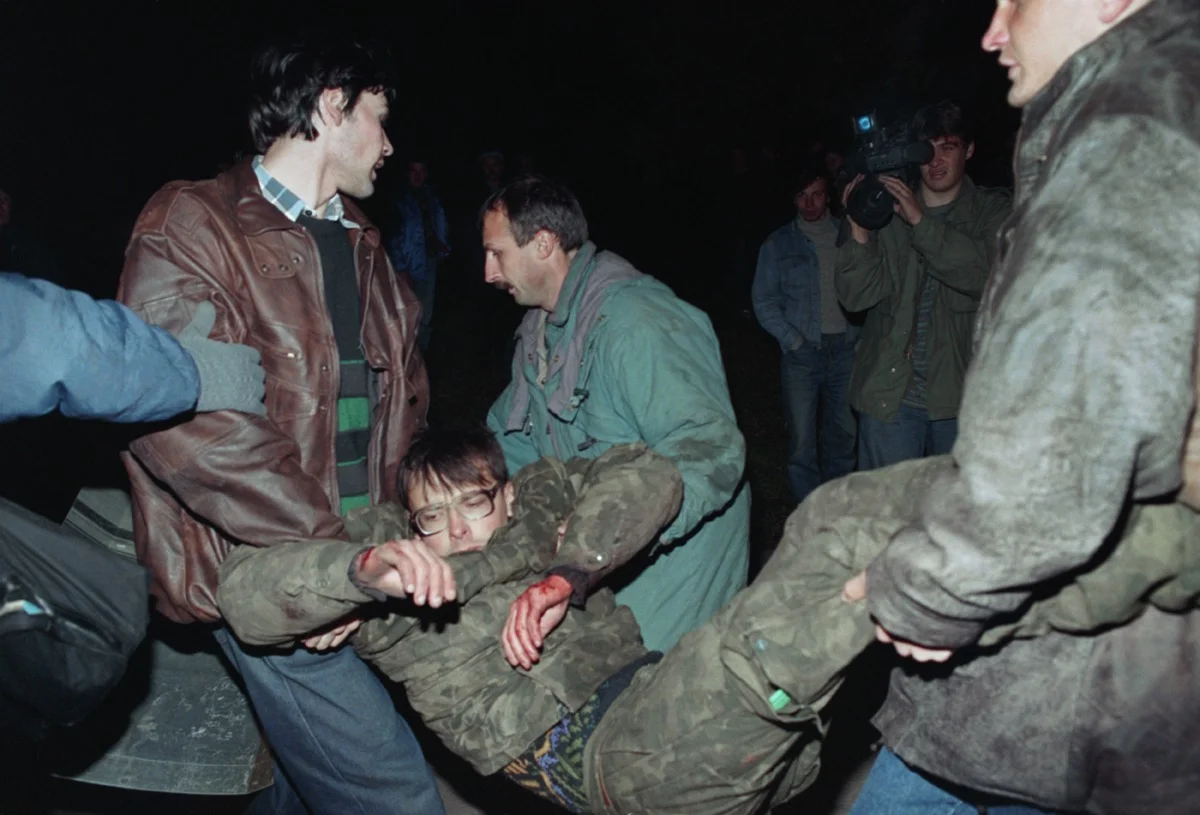
So the Supreme Council and its leaders are almost instantly, wanting to seize power completely and publicly, in fact under the television cameras, they lost both a political and military positional advantage.
At 20.45, Yegor Gaidar on Russian television turned to the supporters of President Boris Yeltsin with a request to gather at the Moscow Council building, taken under control of the Ministry of Security. E. Gaidar received a guarantee from Sergey Shoig that if necessary, the weapon will be distributed to the president’s supporters to directly participate in the hostilities in Moscow. According to Gaidar, only after that (about two in the morning) the military began to comply with the orders of the Supreme Commander -in -Chief. In any case, the bloodshed in Ostankino made the development of events irreversible.
According to the deputy of the Supreme Council, Sergei Baburin , after the evening events at Ostankino, both Minister of Defense (appointed by B. Yeltsin Pavel Grachev and the Vladislav Achalov appointed by A. Rutsky) "began to raise the troops, and some troops rose and walked by order of Grachev, others rose and walked by order of Achalov."
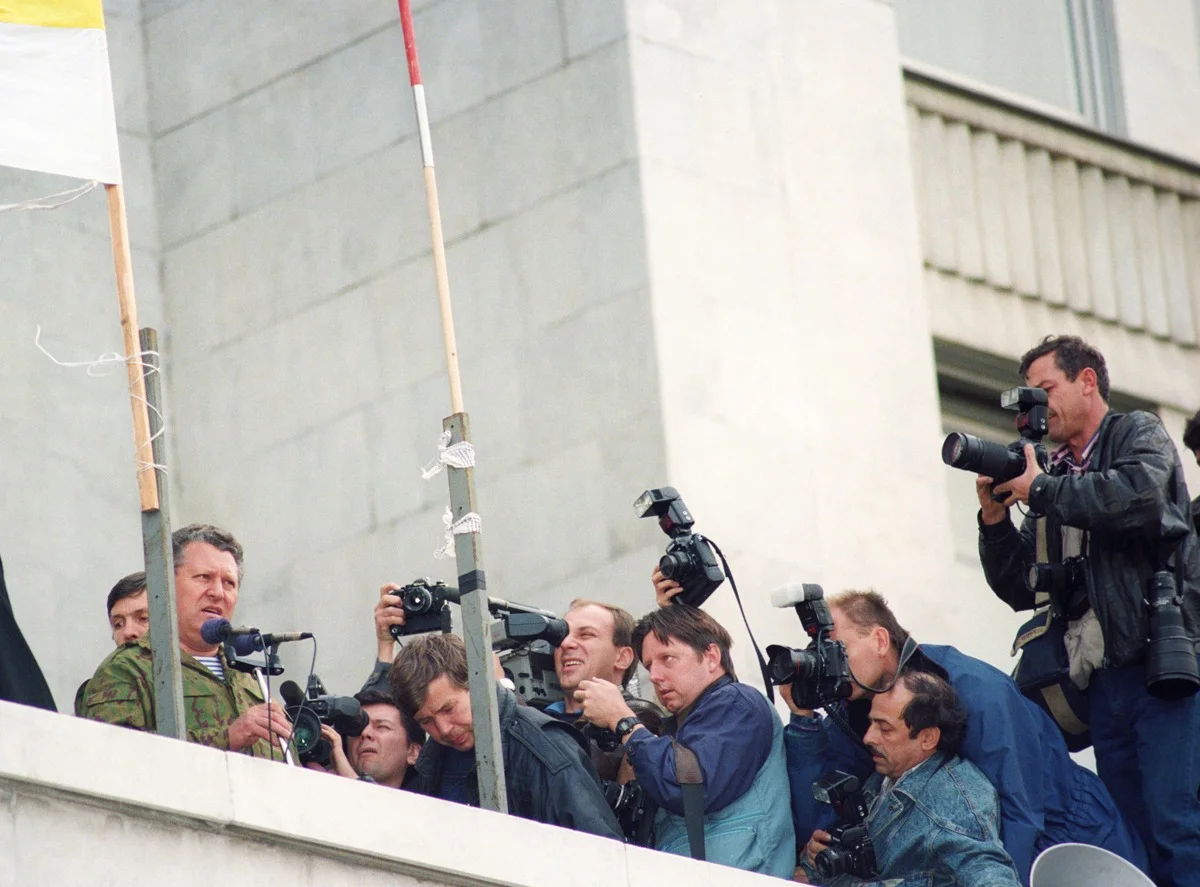
According to Igor Bunich , nominated by him in the book “The President’s Sword” (1994), V. Achalov, who headed the analytical center under the chairman of the Supreme Council of the Russian Federation since August 1992, claimed the role of the country's military dictator: “... Achalov had his own plan, which he did not even want to coordinate with the“ president ”, which he despised no less than Khasbulatov. The plan consisted in the quick seizure of the Kremlin, the General Staff, GRU and state television. Further, the arrest of Rutskiy and Khasbulatov was supposed to follow, conducting an emergency law on the remnants of the Supreme Council (or without it) with a “temporary” transfer to him, Achalov, dictatorial powers. And then, as it seemed to him, everything would already be a “work of technology”. Many actions were supposed, up to the reconstruction of the Warsaw Pact and the Berlin Wall. ”
Storm
On the night of October 3 to 4, Boris Yeltsin personally decided to storm the House of Soviets.
There are several audio recordings of radio contexts on the Moscow air on police frequencies on October 3 and 4 - until 5.43 in the morning of October 4, 1993. In this air, in addition to the police officers who are on both sides of the confrontation, A. Rutskaya, the chairman of the Krasnopresnensky district council of Moscow A. Krasnov , the commander of the 21st Sofrinsky separate brigade of the operational appointment of internal troops V. Vasiliev , are trying to discuss the seizure of the building of the Mir Hotel.
But the main part of the decoding is the conversations of anonymous armed participants in the confrontation, waiting for the decisive battle and, possibly, death. Short remarks sprinkled with selected obscenities and zoological hatred of each other, a thirst for blood and a thirst for revenge, fear and anger, now show, as a little document of those days, not only the measure of the insanity of participants in the October events, but also the measure of hate of people to power - both of the opposing sides: neither you, nor Khasbulatov, nor Yeltsin. You ... goat, why did you send people there, huh? You are a chmoshnik. Whom you pushed, gray mass, foreheads. For what? For your chairs, so that we fight, the asshole you ... - We outweigh them on the flagpole everywhere ..., we outweigh on each pillar, bastard ... I would have enough cartridges for all cattle! - And we are with their hands, hands ... - We do not say, we will now hang you cattle, as you promised us. We will hang on all pillars. ”
Only a few hours will pass - and these people will begin to consciously and with the knowledge of the matter to kill each other and to kill those who accidentally fall into the zone of their fire.
In October 1993, the most influential participants in the conflict on both sides became the detachments of the “party of war”, supporters of a forceful solution to problems. They, like homing shells, stubbornly moved towards each other, towards a deadly clash, the victims of which will be mainly ordinary citizens. The funnel of the Civil War, like a giant bloody vacuum cleaner, expanded and delayed people. After the events of the evening of October 3, no other other than armed people, none of the parties, had no longer relying. Only for strength, only for blood.
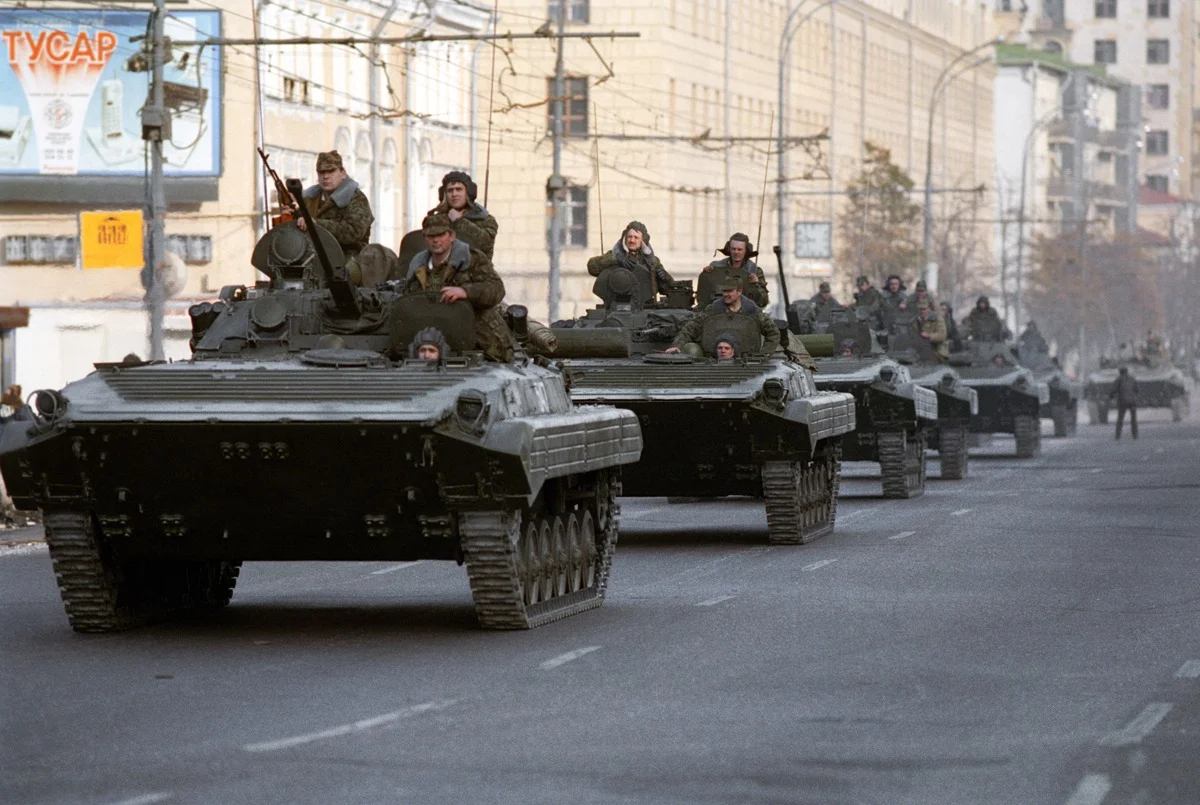
At the direction of the Minister of Defense Pavel Grachev, tanks of the Taman division arrived in Moscow. Early in the morning, in the area of the Krasnaya Presnya stadium, due to the inconsistency of the actions, armed clashes between the Tamans and the armored personnel carriers of the Dzerzhin residents, as well as between the Dzerzhinos and armed people from the “Union of Afghanistan Veterans”, who took part in the conflict on the side of Yeltsin, occurred. There were dead and wounded among both soldiers and among random passers -by. One of the BTRs of the "Dzerzhin" caught fire from the shot of the fighters of the Taman division, the commander died.
Until now, there is no reliable information about the belonging of snipers who fired on representatives of both warring parties from the roofs of buildings located in the area of the House of Soviets.
According to some reports, about 1,700 people, 10 tanks and 20 armored personnel carriers took part in the assault on the building of the Supreme Council. Many soldiers and officers, according to the evidence, refused to take part in the operation, the composition of the assaults were recruited from five divisions, half were recruited from officers and junior commanders; According to some reports, tank crews formed almost entirely from officers.
The then chairman of the Central Bank, Viktor Gerashchenko, recalled that before the assault, on the night of October 3 to 4, the First Deputy Minister of Finance Andrei Vavilov , accompanied by Colonel General, at the Zhiguli, arrived in the Central Bank. He demanded that the Ministry of Finance be issued in cash and received the required money. According to Gerashchenko, "tank commanders shot for this money."
The assault was scheduled for early morning, but was postponed for three hours: it was planned to fire with direct fire, but in idle shells, “boobs” (the fighting would have smashed the building of the House of Soviets completely), but there were no such shells for a long time.
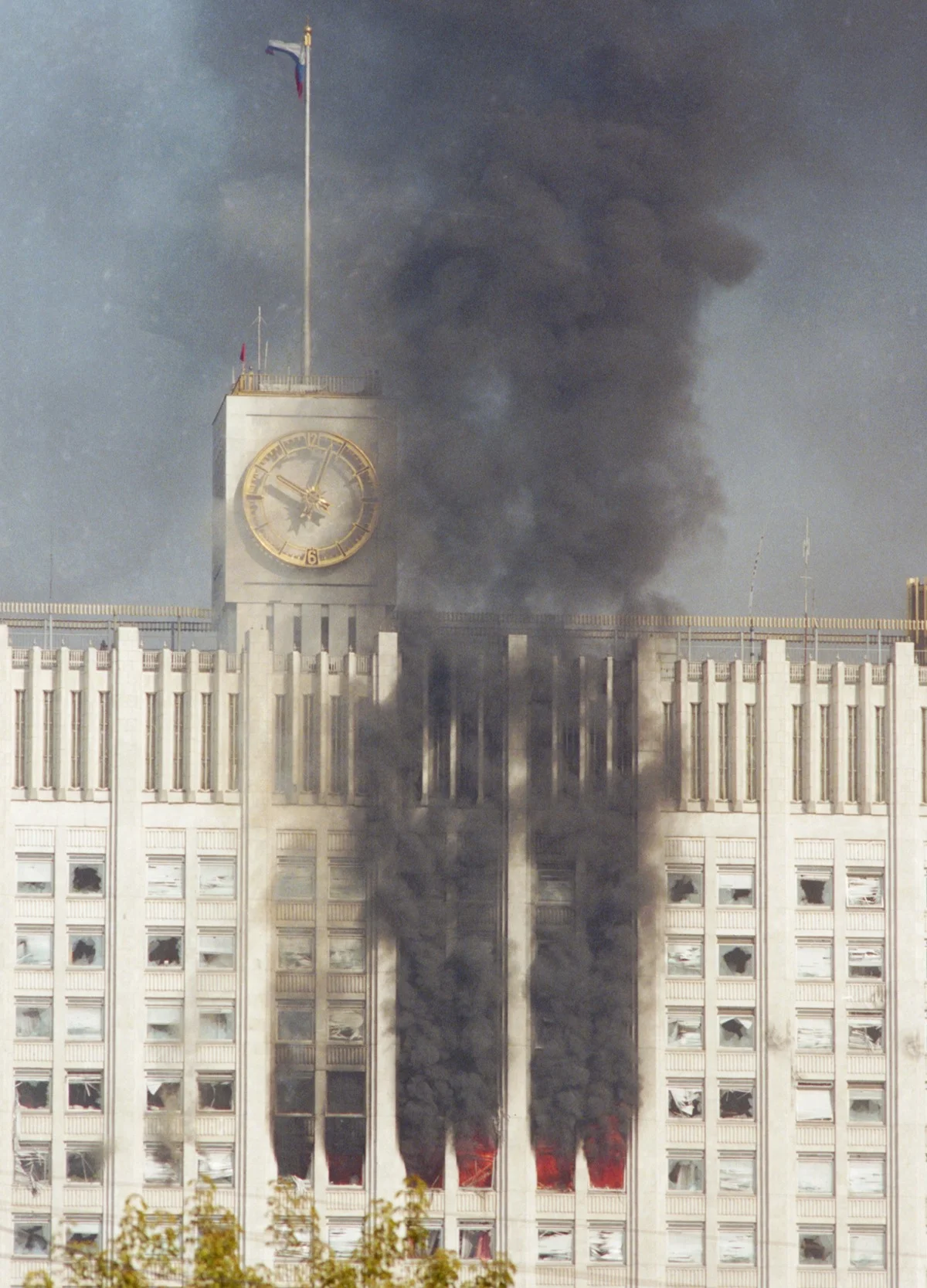
At 9.20 in the morning, the tanks located on the opposite shore of the Moscow River began shelling the upper floors of the Supreme Council building. In total, six T-80 tanks participated in the shelling, which produced 12 shells. According to some reports, the last 3-4 shots were still made by combat shells, which was to finally demoralize those in the building.
This episode became forever the main “picture” of Russian events of the Autumn of 1993: tanks leading from the embankment of the Moscow River Fire on the building of the Supreme Council of Russia.
The CNN television company conducted several hours a live broadcast of events, hundreds of millions of people in the world in real time monitored the fighting in the center of the Russian capital.
Foreign journalists for a long time tried to understand who the numerous people gathered on the banks of the river - storming or defenders, approached them with questions, tried to find out their position. И были шокированы, узнав, что люди просто наблюдают за зрелищем. Среди «наблюдавших» в итоге боевых действий также были жертвы.
В 15.00 отрядам специального назначения «Альфа» и «Вымпел» было приказано взять Дом Советов штурмом. Но командиры обеих спецгрупп отказались вести боевой штурм и попытались договориться с руководителями Верховного Совета о мирной сдаче, чтобы избежать жертв.
Руководитель группы «Альфа» полковник Анатолий Проценко , лично знавший А. Руцкого и вошедший в здание без оружия, выступая в зале заседаний, гарантировал защитникам и сидельцам Дома Советов безопасность под свою ответственность и к 16.30 уговорил их сдаться.
Спецподразделение «Вымпел», чье руководство отказалось выполнять приказ о боевом штурме, впоследствии было передано из ФСБ в состав МВД, что привело к массовому уходу в отставку более 80% его бойцов.
После 17 часов начался массовый выход оборонявшихся из Верховного Совета. По заверениям штурмовавших, обстрелов не должно было быть. Часть депутатов, в том числе руководители Верховного Совета, вышли из здания беспрепятственно. Рядовых участников сидения отпустили около метро (люди в тот момент психологически были готовы к расстрелу), руководителей арестовали и отвезли в СИЗО в Лефортово.
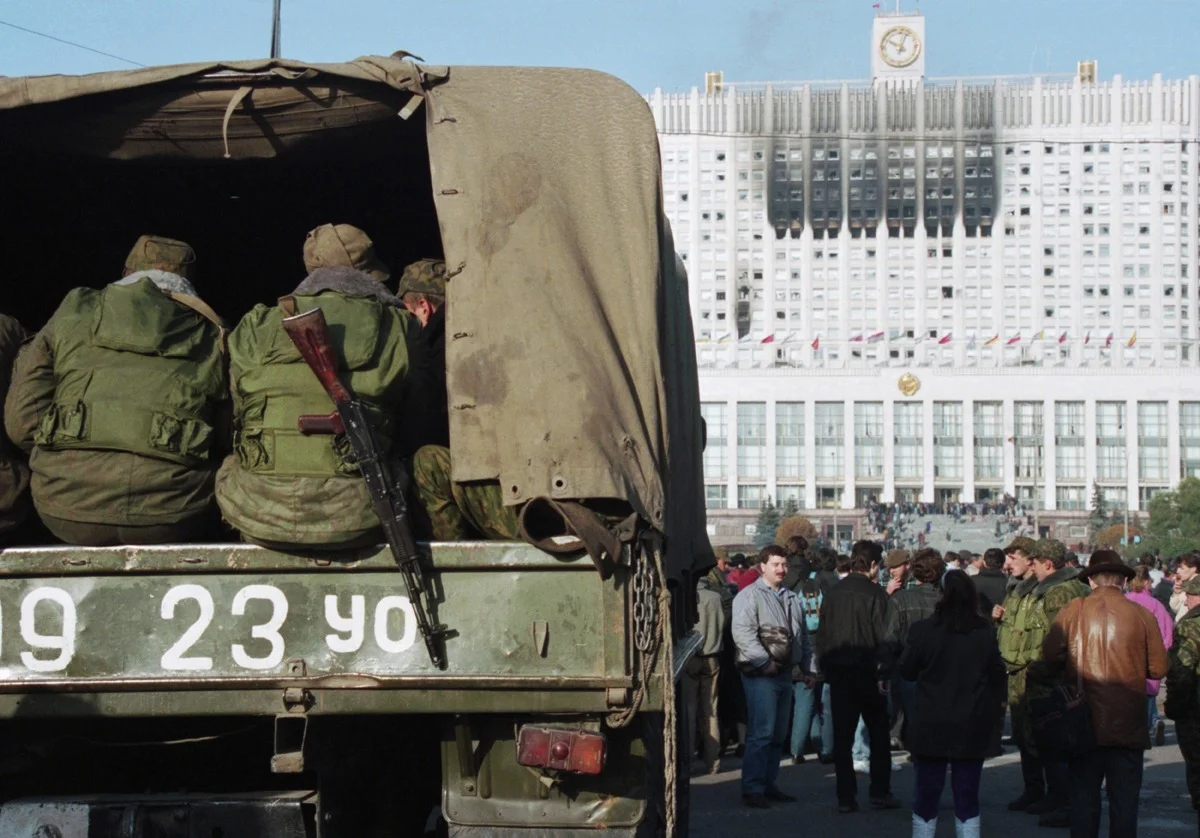
Однако, по свидетельству некоторых очевидцев, показания которых потом неоднократно опровергали представители следствия, по части людей, выходящих из Дома Советов во вторую очередь, был открыт огонь поверх голов, после чего покидающих здание стали расстреливать чуть ли не в упор.
По показаниям тех же очевидцев, именно в этот момент было наибольшее число убитых. Не подтверждено документами (на что ссылается следствие), но и не опровергнуто, что пришедшие на следующий день родственники пропавших людей увидели на одном из ближайших стадионов («Красная Пресня») уложенные вдоль стены трупы — до трех рядов. По тем же сведениям, на многих из них были пулевые отверстия по центру лба, как при контрольном выстреле. Никаких подтверждающих визуальных материалов по этим эпизодам нет.
Но есть видеоматериалы, на которых омоновцы после выхода осажденных избивают в кровь милиционеров, местом работы которых была охрана Дома Советов и которые оставались в нем до конца.
Перед тем как покинуть здание Верховного Совета, А. Руцкой демонстрировал перед телекамерами свой личный автомат Калашникова, из которого не было произведено ни одного выстрела («Смотрите, он в масле!»).
Также он продемонстрировал кассеты с записями переговоров, в том числе с голосами Б. Ельцина и Ю. Лужкова. Была включена запись, на которой слышен голос, похожий на голос Лужкова, призывающий ОМОН и подразделение спецназа «Альфа» «расстреливать беспощадно».
В видеоряде неоднозначно принятого в обществе фильма «Тайная Россия» присутствуют кадры, снятые в одном из залов Верховного Совета, на которых на уровне груди человека мерцают более 30 выстрелов из снайперских винтовок. Также А. Руцкой заявлял, что в коридорах Верховного Совета находилось к завершению штурма более 400 тел защитников Верховного Совета. Кто убил этих людей, были ли на самом деле эти жертвы и где похоронены эти люди — неизвестно. Фото- и видеоматериалы отсутствуют. Поименного списка погибших, который превышал бы официальные данные, также нет.
Есть отдельные свидетельства, например, Сергея Скворцова , выведенного сотрудниками «Альфы» из Дома Советов с одной из последних групп, через запасной выход: «Проходя мимо выстроившихся вдоль улицы машин ОМОНа,
я услышал крики и увидел окровавленного человека, которого зверски избивали, судя по всему, пьяные бойцы ОМОНа. Они били его и руками, и ногами, крича: «А, защитник! Скольких ты наших убил?», избиваемый же умолял своих мучителей, чтобы они… убили его и прекратили издевательства.
Вся сцена продолжалась буквально несколько секунд, потому что избиваемый вдруг вырвался и побежал. Он забежал за угол машины и потому дальнейшего я не видел. Но судя по тому, что оттуда раздались автоматные очереди, его просьбу удовлетворили…»
По официальным данным правоохранительных органов, с 21 сентября по 5 октября 1993 года погибли 130 гражданских, 28 военнослужащих и сотрудников милиции, ранены — 321 гражданский и 102 военнослужащих, сотрудников милиции и органов госбезопасности.
To the end
5 октября 1993 года указами президента был распущен Московский совет и районные советы, снят с должности генеральный прокурор Валентин Степанков и на его место назначен Алексей Казанник , сняты с должностей главы администраций, публично высказавшиеся против указа № 1400.
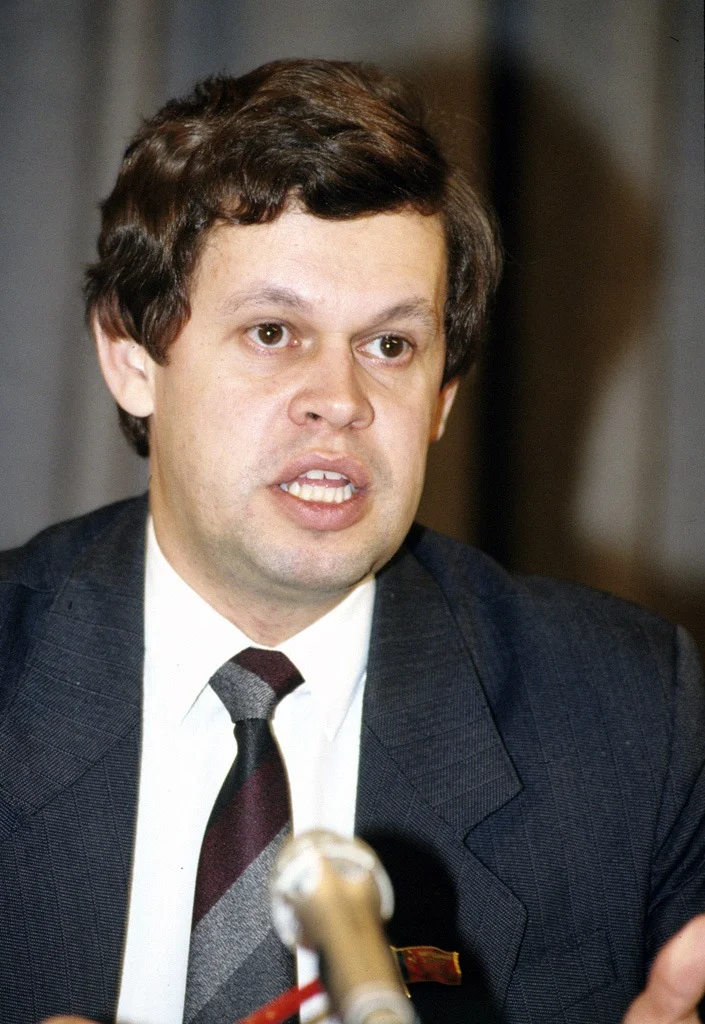
6 октября «Известия» сообщили, что указом Б. Ельцина при Министерстве печати России создано управление по предварительной цензуре. Это решение оформило существовавшую де-факто практику: еще 29 сентября о цензуре написал «Коммерсантъ», приводя многочисленные свидетельства: «В России появились запретные темы».
7 октября президент подписывает указ «О правовом регулировании в период поэтапной конституционной реформы», которым фактически принимает на себя полномочия законодателя.
Председатель Конституционного суда Валерий Зорькин под угрозой уголовного преследования по обвинению «в правовом обеспечении конституционного переворота» уходит в отставку (сохранив полномочия судьи). В новую Конституцию было сначала включено положение о полной замене судей Конституционного суда, однако в последний момент это положение из опубликованного проекта было удалено.
9 октября Борис Ельцин прекращает полномочия советов всех уровней.
11 октября он отказывается от идеи формирования Совета Федерации из глав регионов (многие главы субъектов Федерации открыто критиковали указ № 1400) и назначает выборы в Совет Федерации.
15 октября Ельцин своим указом назначает всенародное голосование по проекту Конституции на 12 декабря. 22 октября он принимает указ об основных началах организации государственной власти в субъектах РФ, 26 октября — указ о реформе местного самоуправления, также предполагавшие расформирование представительных органов власти.
Голоса и цифры
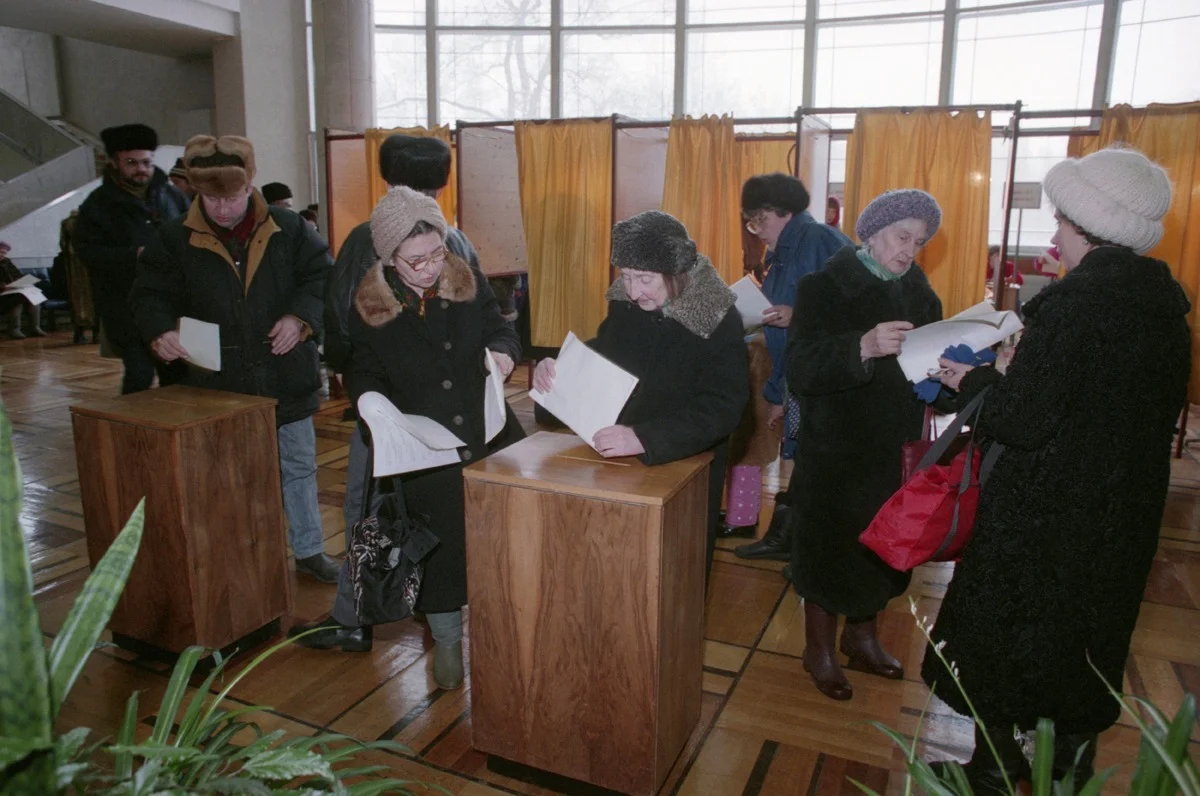
По официальным данным, 12 декабря 1993 года на всенародном голосовании за проект новой Конституции проголосовали 58% участников референдума.
Известно, что цифра 58% была написана рукой Бориса Ельцина на листе бумаги, внесенном в его кабинет председателем Центральной избирательной комиссии Николаем Рябовым .
Позже, в мае 1994 года, были опубликованы выводы экспертной группы А.А. Собянина , созданной при администрации президента, о масштабных фальсификациях на референдуме (после этой публикации президентская администрация прекратила сотрудничество с группой). Согласно выводам экспертной группы, в референдуме принимало участие не более 46% от списочного состава избирателей, в связи с чем легитимность Конституции была подвергнута сомнению.
Центризбирком при подведении итогов посчитал Конституцию принятой, и 25 декабря 1993 года она была опубликована. Все избирательные бюллетени голосования по проекту Конституции были после этого уничтожены по распоряжению председателя Центризбиркома Н. Рябова.
Все инициативы по проведению парламентского расследования обстоятельств организации и проведения всенародного голосования по Конституции, в том числе выдвинутая «Яблоком», были блокированы, а после уничтожения первичной избирательной документации стали с точки зрения сбора доказательств бессмысленны.
12 декабря прошли также выборы в Совет Федерации и Государственную Думу РФ первого созыва.
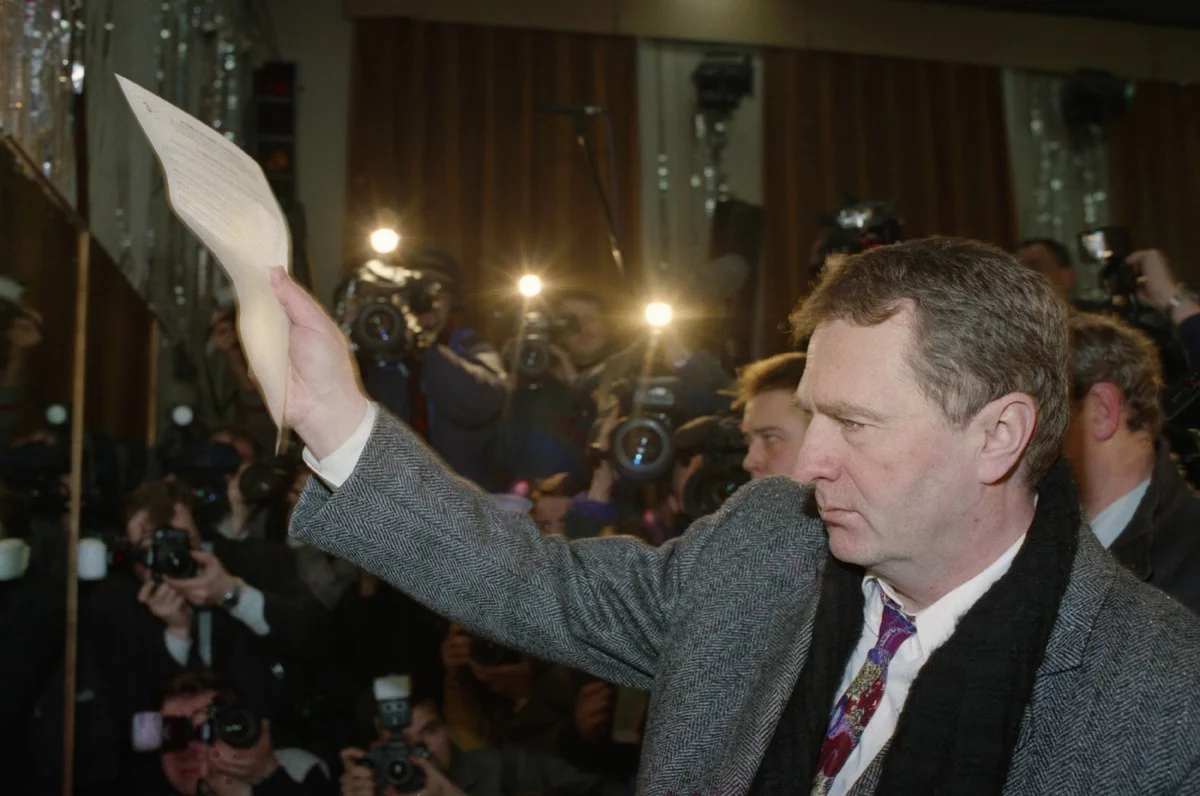
Победу на выборах в Государственную Думу 12 декабря 1993 года по спискам партий одержала
ЛДПР во главе с Владимиром Жириновским — 12 318 562 (22,92%) голосов.
Пропрезидентский «Выбор России» во главе с Егором Гайдаром получил 8 339 345 (15,51%) голосов.
КПРФ во главе с Геннадием Зюгановым — 6 666 402 (12,40%) голосов.
В Государственную Думу также прошли
«Женщины России» во главе с Алевтиной Федуловой — 4 369 918 (8,13%) голосов,
Аграрная партия России во главе с Михаилом Лапшиным — 4 292 518 (7,99%) голосов,
блок «Яблоко» во главе с Григорием Явлинским — 4 233 219 (7,86%) голосов,
Партия российского единства и согласия во главе с Сергеем Шахраем — 3 620 035 (6,73%) голосов,
Демократическая партия России во главе с Николаем Травкиным — 2 969 533 (5,52%) голосов.
С учетом мандатов, полученных в одномандатных округах, у фракции ЛДПР было 64 мандата (5 одномандатников), также 64 у «Выбора России» (24 одномандатника), 37 у Аграрной партии России (16 одномандатников), 42 у КПРФ (10 одномандатников), 27 у «Яблока» (7 одномандатников), 23 у «Женщин России» (2 одномандатника), 22 у партии Российского единства и согласия (4 одномандатника), 14 у Демократической партии России (без одномандатников).
Не прошедшие в парламент по спискам политические движения также смогли провести кандидатов в одномандатных округах:
10 депутатов были избраны от «Гражданского союза» Аркадия Вольского ,
5 от Российского движения демократических реформ Анатолия Собчака ,
3 от движения «Достоинство и милосердие» Константина Фролова ,
2 от движения «Будущее России — Новые имена» Вячеслава Лащевского ,
1 от экологического движения «Кедр» Любови Лымарь .
При этом 130 депутатов из 225 были избраны в одномандатных округах как самовыдвиженцы.
Против всех списков партий (было и такое голосование в 1993 году) проголосовали 2 267 963 (3,93%) избирателей, а 3 946 002 человек (6,84%) сделали свои бюллетени недействительными.
11 января 1994 года Совет Федерации и Государственная Дума, избранные 12 декабря 1993 года, начали работу (в только что приведенном в порядок после штурма здании мэрии Москвы).
Усилия по забвению
23 февраля 1994 года Государственная Дума РФ приняла постановление о политической амнистии участников октябрьских событий 1993 года, уклонившись от рассмотрения указа № 1400 и еще 64 указов, вынесенных Борисом Ельциным на рассмотрение Федерального Собрания для одобрения.
В связи с амнистией было прекращено расследование уголовного дела № 18/123669-93. Все следственные действия по событиям сентября-октября 1993 года были прекращены. Ни одно судебное заседание по делу так и не состоялось.
Генеральный прокурор Алексей Казанник и начальник Федеральной службы контрразведки Николай Голушко, выполнившие решение Государственной Думы об амнистии находившихся в СИЗО участников обороны Дома Советов, были уволены с должности указами президента.
Амнистия и прекращение уголовного дела позволили снять с повестки дня вопрос о юридической ответственности всех сторон конфликта и закрыли юридические пути для дальнейших движений по расследованию событий 1993 года.
По мнению бывшего руководителя следственной группы Леонида Прошкина , амнистия, похоронившая уголовное дело, устраивала практически всех, потому что «вопреки воле руководства следователи Генеральной прокуратуры расследовали действия не только сторонников Верховного Совета, но и правительственных сил, во многом повинных в сложившейся ситуации и в тяжких последствиях происшедшего». При этом сам Л. Прошкин признал, что «мы подчищали это дело».
После провозглашения Российской Федерации это был первый и ключевой для последующих событий момент, когда политическим решением властей было прекращено следствие по вопросу государственной важности, представлявшему первостепенный общественный интерес. Было прекращено следствие по делу, в рамках которого должна была быть расследована гибель не менее 158 человек, граждан России, и вынесено решение в том числе о законности действий властей, военных, милиции, спецслужб, определена мера персональной ответственности их руководителей и сотрудников.
Ни один человек с обеих сторон конфликта, принимавший в рамках своих полномочий или без всяких полномочий решения об использовании силы в сентябре-октябре 1993 года, не ответил на вопросы суда.
След крови и огня
Последствия событий 1993 года не просто существенны, они определили все дальнейшее политическое развитие России.
Танки и бронетранспортеры стали частью рабочего политического инструмента власти. Они уже были ими в СССР, но тогда, в 1993 году, всего два с небольшим года спустя после августа 1991 года, вошли и в российский политический обиход.
Это не было случайностью, конечно.
Еще в конце 1991 года, при обсуждении предстоящих радикальных экономических реформ правительства Бориса Ельцина один из будущих министров, после упоминания о неизбежном при таком сценарии обвальном обнищании людей, спросил: «А если народ выйдет на улицу?» Ему ответил Анатолий Чубайс : «Ничего, у нас есть танки». Для ликвидации последствий массового социального протеста танки не потребовались, народ в целом стерпел все происходившее, но при первой реальной угрозе самой власти танки были востребованы.
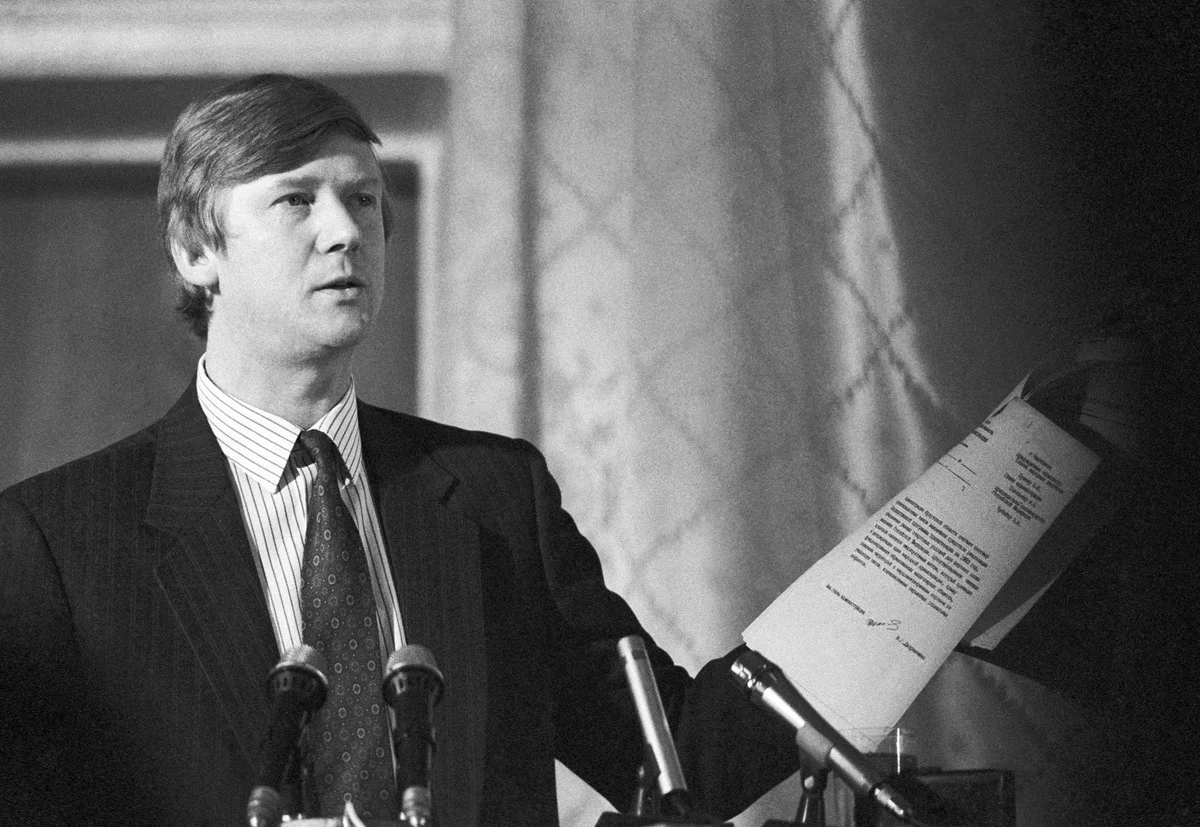
Стало ясно, что вооруженная сила и в новой России позволяет решить любой принципиальный политический вопрос. И решить достаточно быстро.
Именно после октября 1993 года был проложен путь «двум полкам, за два часа» штурмующим Грозный для «наведения конституционного порядка». Первая и вторая чеченские войны берут свои кровавые корни в октябре 1993 года. Именно тогда, в 1993 году, стало ясно, что армия в России не будет вне политики, и присяга на верность народу и государству будет предполагать в действительности присягу на верность конкретному государственному лицу.
А достичь мира всегда труднее, чем добиться войны. К миру восходят, к войне скатываются.
Вновь избранный российский парламент не был допущен в здание Верховного Совета, ставшее и в 1991, и в 1993 году, при всей разнице политических ситуаций, символом сопротивления действующей власти. Сначала Думу демонстративно загнали во взятое штурмом 3 октября сторонниками Верховного Совета бывшее здание Совета экономической взаимопомощи (СЭВ), где размещалась тогда мэрия Москвы, а потом — в глухие серые стены бывшего Госплана на Охотном Ряду.
Именно тогда, в крови и грязи, на костях и слезах, была вымучена новая российская Конституция — Основной Закон суперпрезидентской республики, где «власть принадлежит народу», но реальные властные полномочия — президенту. Именно тогда начали строить «вертикаль власти». Конституция 1993 года создала для этого все возможности, ими надо было только воспользоваться. Желающие только ждали очереди. Very not for long.
Российские суды после 1993 года хорошо поняли, что и кто является единственным реальным источником их полномочий. И чьи интересы они призваны охранять.
Именно тогда прошли первые информационные войны, когда целью средств массовой информации стало не информирование граждан, а дискредитация политических оппонентов, манипулирование общественным мнением, оболванивание людей. Когда перед кровью 1993 года Егора Яковлева во главе «Останкино» заменили на Михаила Полторанина , будущее российских государственных СМИ было предопределено.
Именно тогда начали «мочить в сортире».
Именно тогда стало ясно, что для новой российской власти цель всегда оправдывает средства. Любые средства.
Стало ясно, что если результаты народного голосования не устраивают власть, то официальные цифры по результатам голосования будут устраивать ее в полной мере.
Стало ясно, что власть готова платить за предательство. И за услуги. Те, кто поддержал власть в 1993 году и позже, получили в виде расчета через два года криминальные залоговые аукционы по крупнейшим кускам государственной собственности. Те, кто не поддержал, не получили ничего. А ваучеры для рядовых граждан разнес ветер экономического разорения, завершившийся дефолтом 1998 года.
И даже когда денег стало намного больше, по существу, не изменилось ничего, потому что не изменились приоритеты политики.
Именно в 1993 году стало ясно, что власть готова предпринимать любые усилия над обществом и совершенно никакие — над собой.
In fact, in these discoveries there was no and could not be anything new. All this was already, and the dirty policy in itself could not become a discovery.
Открытием стало то, что такая политика стала возможна в новой демократической России, которая начала свой государственный путь со слова «свобода».
Freedom became the first and most important victim of 1993.
They practically did not notice this, because against the background of blood and dirt, it is difficult to think about freedom. Более того, многие люди решили тогда, что кровь и грязь, нищета и произвол, насилие и воровство — это и есть результаты свободы. Because people did not see other results.
А после того, как все это «новое» им показали те, за кого они искренне и воодушевленно голосовали — впервые в жизни по-настоящему голосовали! — то и смысл выборов для многих людей оказался утрачен. Как фальшивка.
Свобода после 1993 года отступала по шагу, но только отступала — шаг за шагом, год за годом.
1993 год — это начало того насильственного пути, по которому Россия пришла в 2022 и 2023 годы.
Now you understand how speed all this happened and how quickly the little was lost that was suffered by society over 70 years of Soviet totalitarianism.
The 1993 vaccination did not vaccinate from the plague. Наоборот: прививка 1993 года заразила общество вирусом насилия и его кровным братом — вирусом страха, которые являются и сейчас самой масштабной политической инфекцией в нашей стране.
A society built on violence and fear is not stable. Мир в этом обществе — это иллюзия мира, богатство — иллюзия богатства, собственность — иллюзия собственности, закон — иллюзия закона. Потому что только свобода делает вещи самими собой, придает словам изначальный смысл и делает жизнь — жизнью, а не ее иллюзией.
Для того чтобы эти основы подлинной жизни вернулись в Россию, надо осмыслить, принять и понять уроки 1993 года.
ПРИМЕЧАНИЕ ОТ АВТОРА
Объем источников по событиям 1993 года огромен, их содержание очень противоречиво, практически все они пристрастны, потому что созданы участниками противостояния. В данном материале использована только небольшая их часть. Автор не ставил своей целью воссоздать в точности картину событий в Москве, чему посвящены многочисленные работы исследователей, самих участников и свидетелей. В рамках данного материала это не представлялось возможным.