
Translated material
Exodus
Photos and reports of Ilya Pilipenko from a column of Armenian refugees stretching from Stepanakert to Yerevan
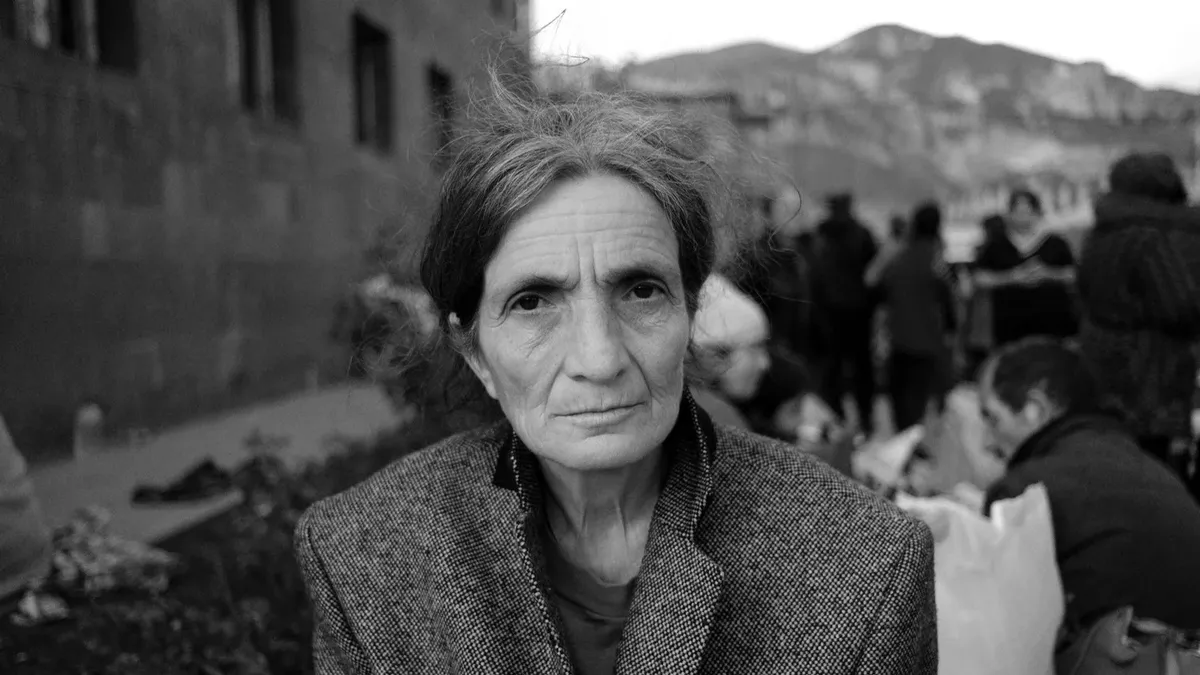
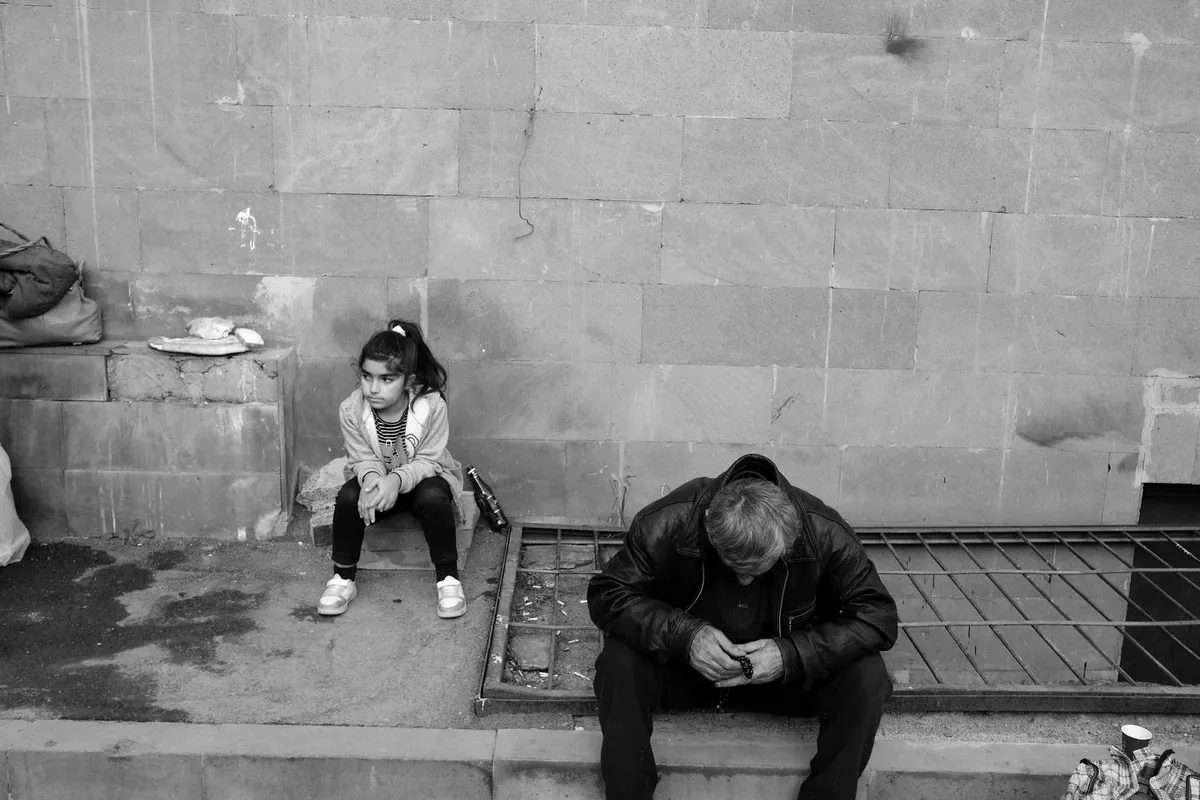
Refugee on Goris Square. Photo: Ilya Pilipenko
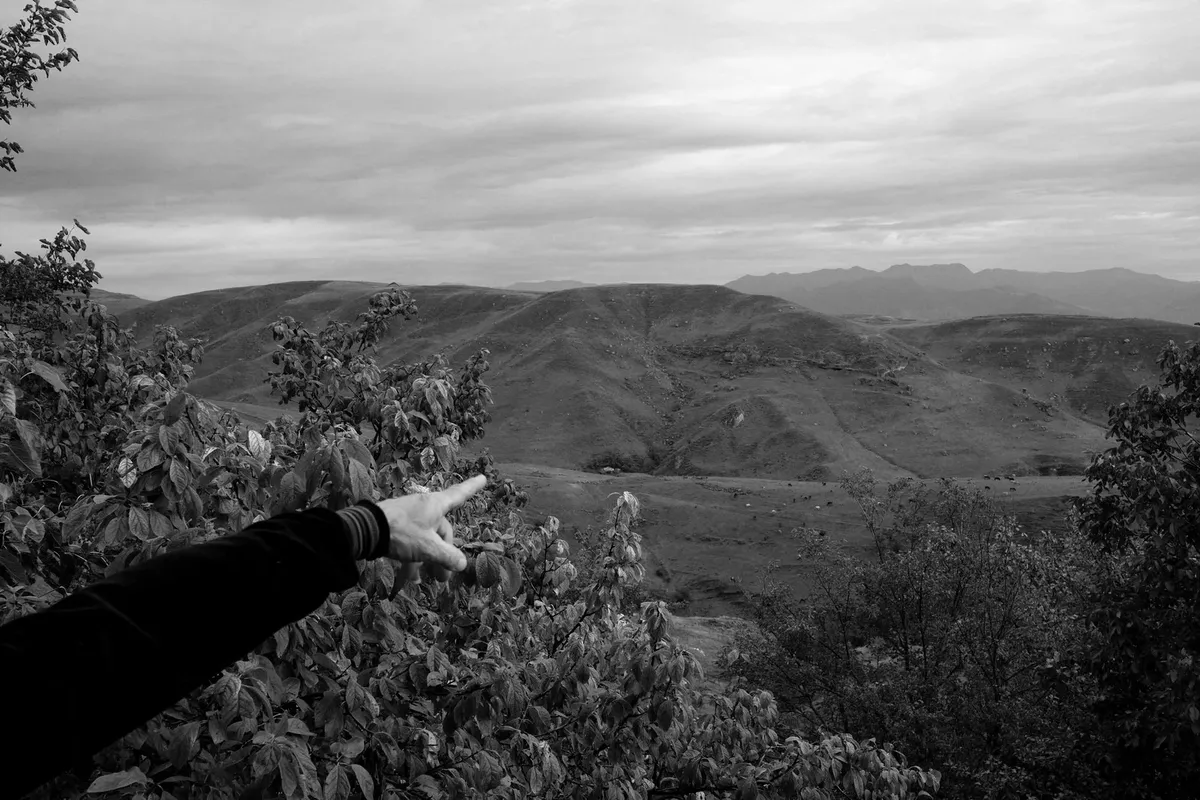
“Artsaha is no more,” the sixty -five -year -old nares squeezing a bag of blanket in his hands. Two days ago, he arrived in the border village to relatives and now came to the spontaneously arising point of issuing humanitarian aid. Narek carefully looks at how the volunteer fills the questionnaire, and to the question of the registration waves towards the Gray Mountains.
“All his life he was an Armenian, and now the gypsies,” he says, emphasizing the first syllable, and smiles, but in his tired eyes the smile does not linger for a long time.
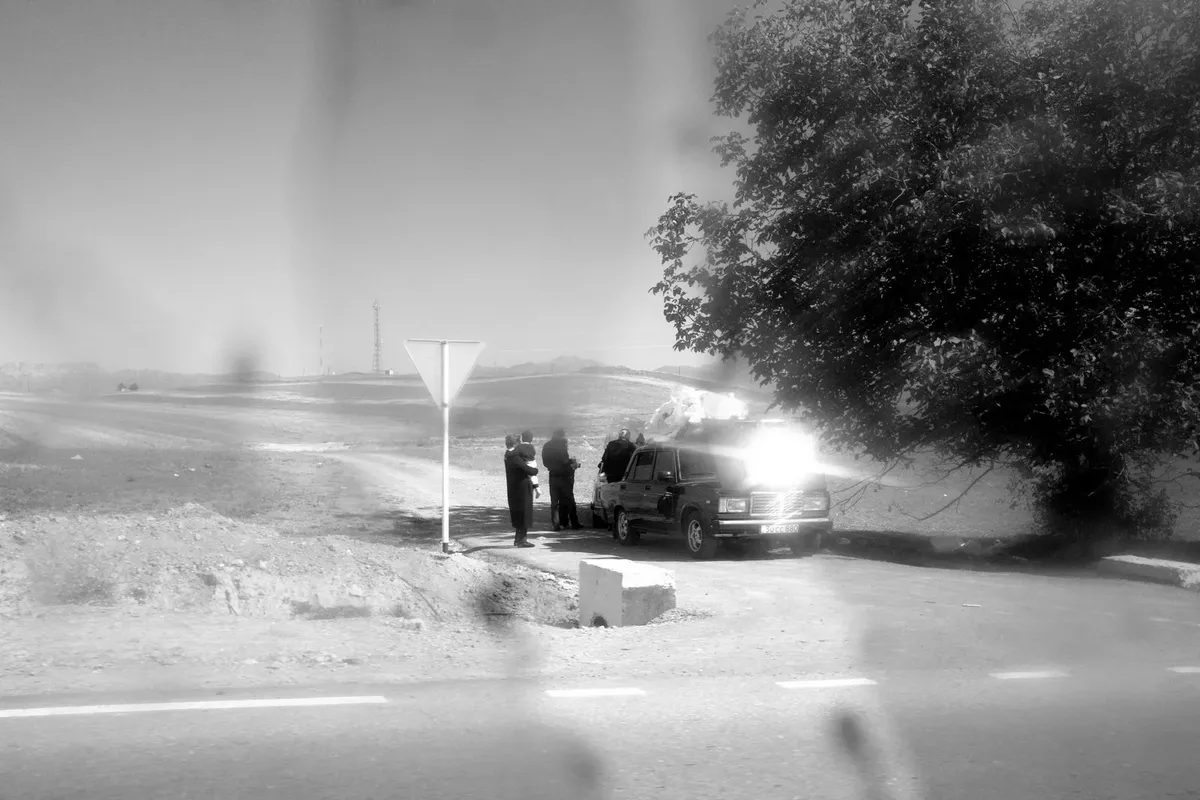
Next to the store at the gas station on the side of the road, several cars covered with bags and bags. In one of them, in the "tablet" without windows in the dark, four of different ages eat ice cream. The driver, a guy of about twenty, leaned toward the raised driver's chair. He refuses to help help with a gesture. Here, right on the ground, two women are sitting and looking at the children as if they want to remember them.
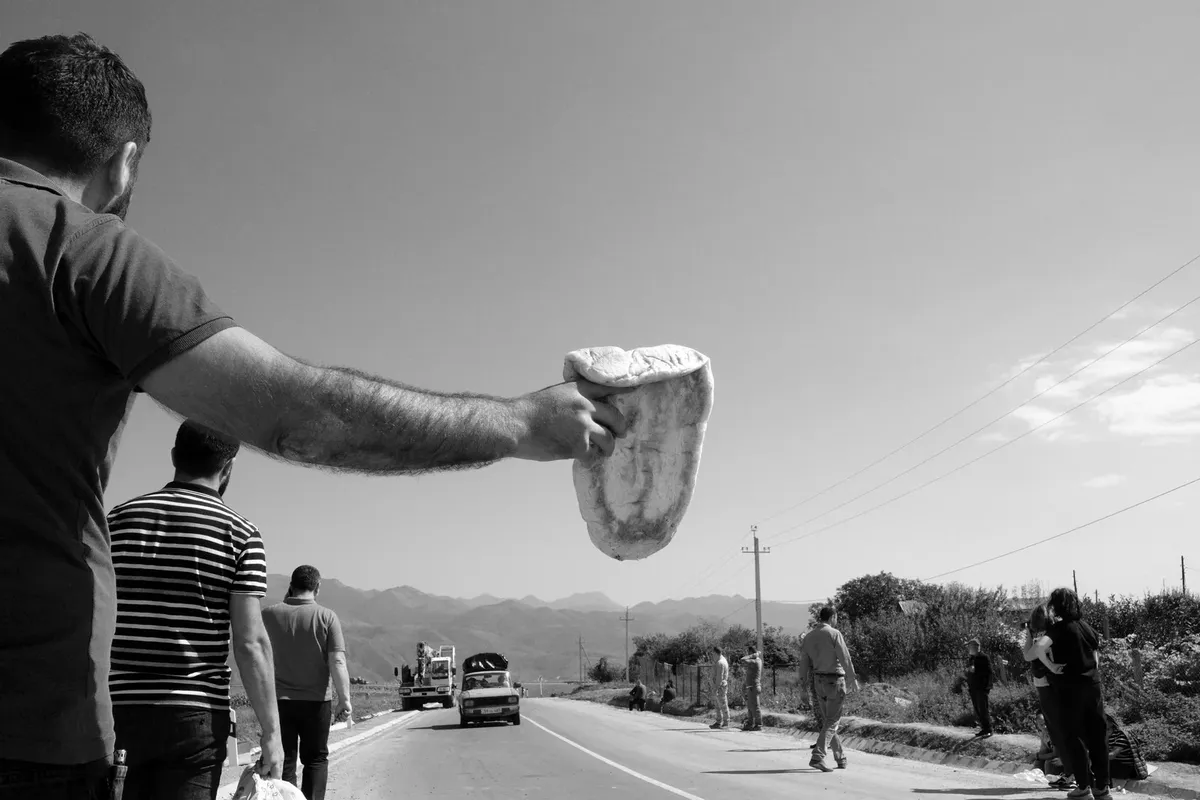
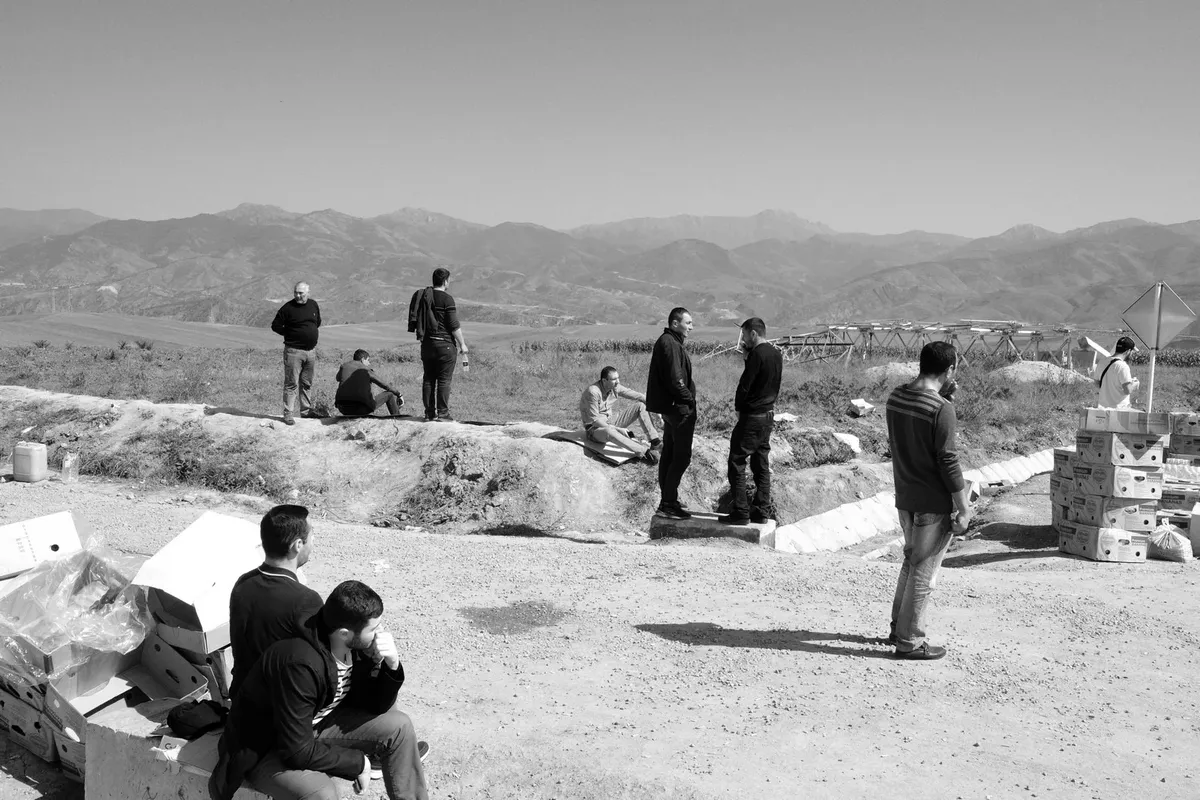
At the checkpoint in the cornidzor traffic jams, tractors, buses. People who got out of the cars go to the elevation next to the ostatic BMP and look to the side, to where they came from. Volunteers distribute food and water, police officers try to regulate movement.
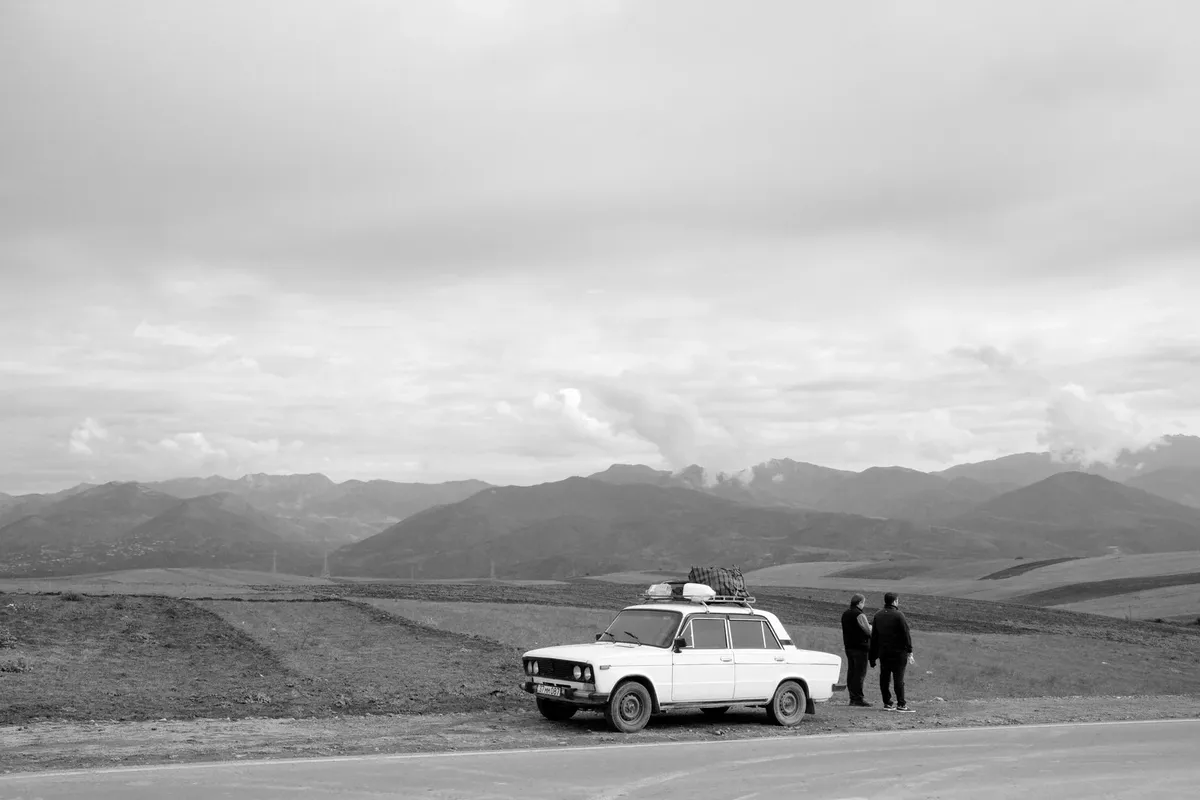
The eighty -five -year -old Cromwell stands leaning against a rumpled black car, on the roof of which huge bales with things covered with film are tied.
“There is no need for bread, if only this ...” he recalls the word, tobacco. - Cromwell lights up from matches.
“I know the Russian story well, I am old,” the caps shone in the shade of the visor.
His daughter comes with a bag in which waffles, cookies and water gives Cromwell waffle and goes further along the column of cars. Cromwell holds waffle in the palm of his hand and becomes confused and small.
- They didn’t eat all day. Thank you. On, take, - he holds out Waffle. - Take, take it, thanks. I love you, ”he says and begins to eat.
- Ara, Ara! - The police scream and with gestures stop the car that drives to the side of the road, trying to go around the cork.
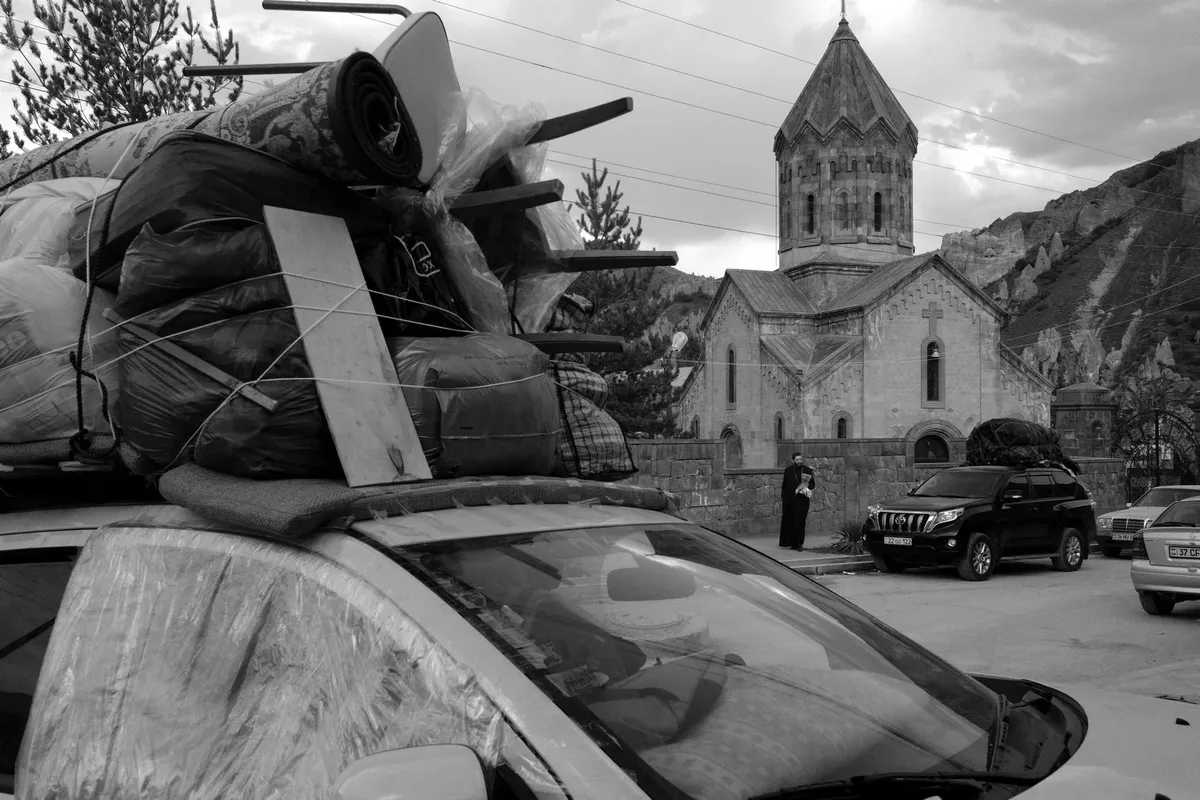
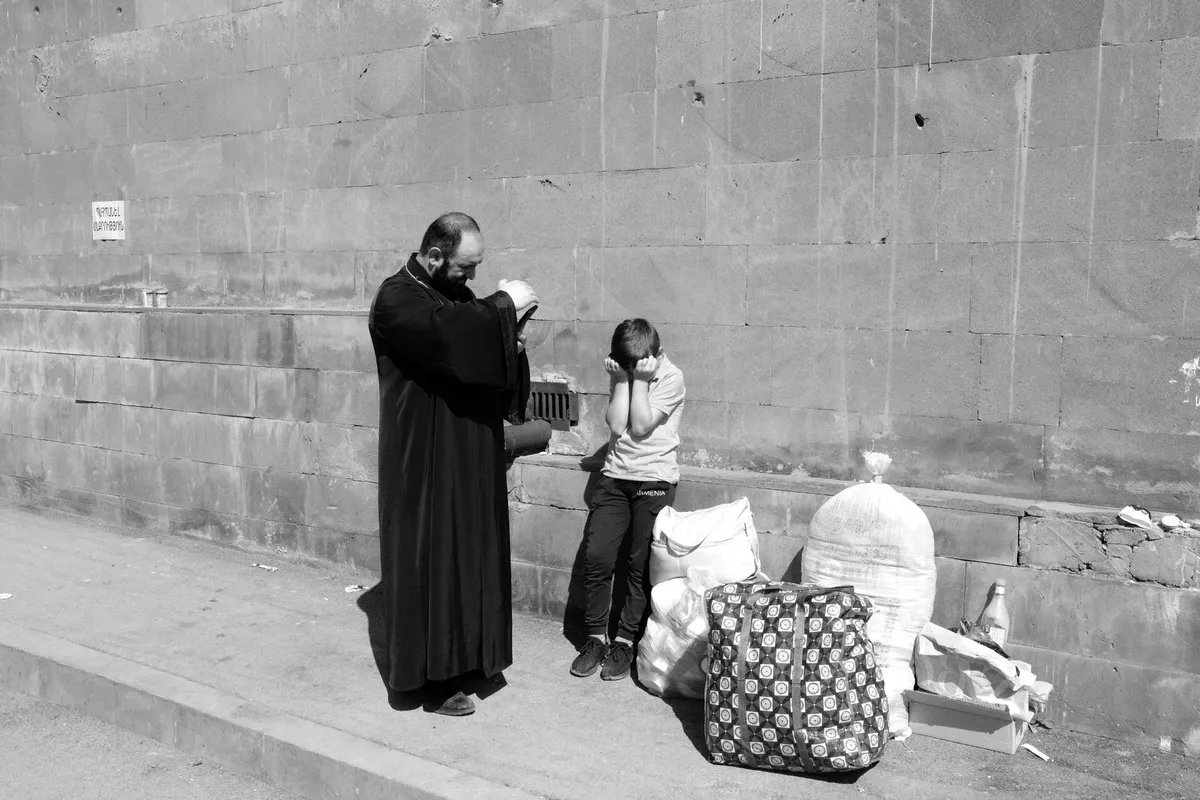
Fifty -year -old Narine goes into the car and returns with the printed icon of the Mother of God in a simple cheap frame:
- That's who helped me. Only took her. This is an old icon. “Narine, like many in this slowly moving column of cars, does not know where it will go further.”
“Only the fog saved,” says the forty -year -old Mashtots. - We went to the touch, but nothing. Everything has passed. We will now live. We will now live without pride. Go with your grandmother talk, ”he drags on with a cigarette and opens the door of the car.
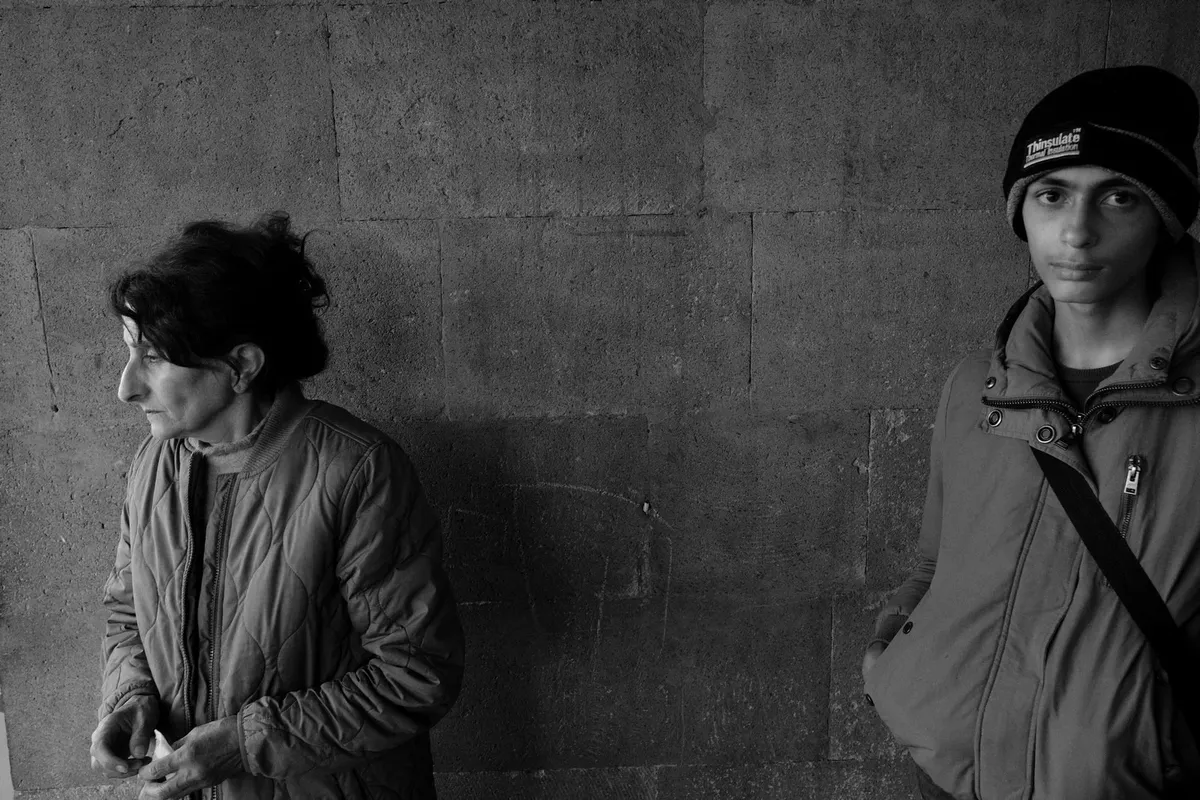
In the darkness of the salon littered with packages, a hundred -year -old Sona sits, shudders a little and holds the edge of the scarf at the watery eyes. It seems that she sees and does not hear anything, does not want to see and hear. Her great -granddaughter anat the apple extends an apple from the front seat, Sona takes it with a small hand -like hand and puts it on his knees, without stopping trembling.
SMS comes to the phone: “Welcome to Aiserbaijan! You are available ... "
The sixty -year -old Raphael stands based on a road sign.
“I fought, I have how to say it ...” shows me to the stomach, “wounds.” There was a castle commander. There was nothing left. Two sons in the mass grave there, in the last war. Everyone knows me there. I fought.
Raphael trims my glasses.
- Suitable, now I even see those trees. Do you have one more? Let's go, show the horse. I arrived at it, I wanted to sell there in Karabakh, but then I’ll sell it, where am I to the city with him? .. Buyan. Come on, I stopped here, in this village, what is it called?
A short woman with a teenage girl is suitable for Raphael and led him to the Red Cross tent.
A column of ambulance runs along a slowly crawling line of cars at high speed. The wind raises from the side of the page torn from the book. Text in Armenian. I take them with me, they are beautiful.
“In the mountains of Persia, it was still quite cold. Khosrov was driving with a codak and guta along the sandstone. Boredom and fatigue made them shut up. And in this silence, everyone was considering the arguments that he put forward against another. This reduced the length of the road. It was nice to hope that one day it would be possible to reach happier days over the corpse of a fallen enemy. ”*
The forty -year -old Liana and her husband Manvel arrived in the trailer of the tractor of their neighbor Artsvik. The Artsvik does not hear well and, like many over -sulfur people, speaks loudly.
“No problem,” he answers the request to get to Goris, closest to the border of the Armenian city. - But first eat. Three days did not eat anything.
They sit on the ground at the wheel of a tractor, and the Artswick unfolds a bag of food obtained from the Red Cross tent. Bread, cheese, sour cream, fruits. Manvel takes out a rumpled plastic bottle:
“Cognac, ours, Armenian,” pours himself and his wife.
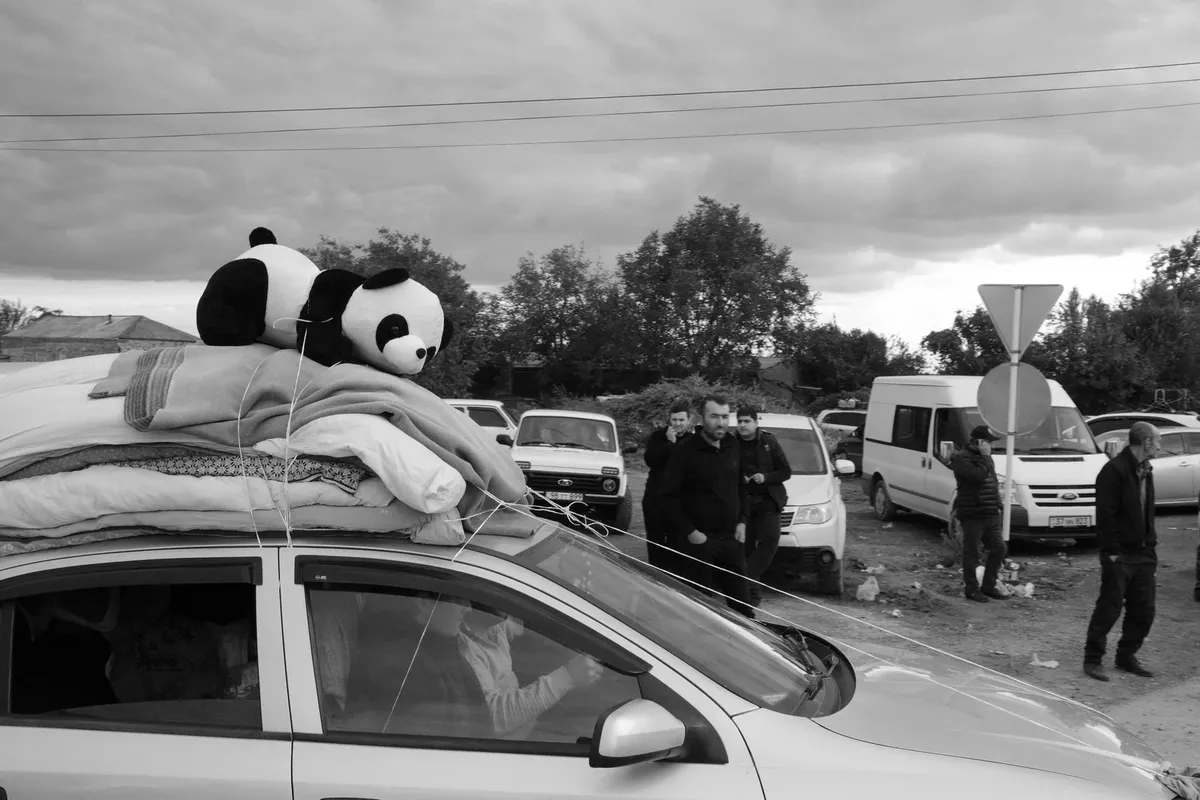
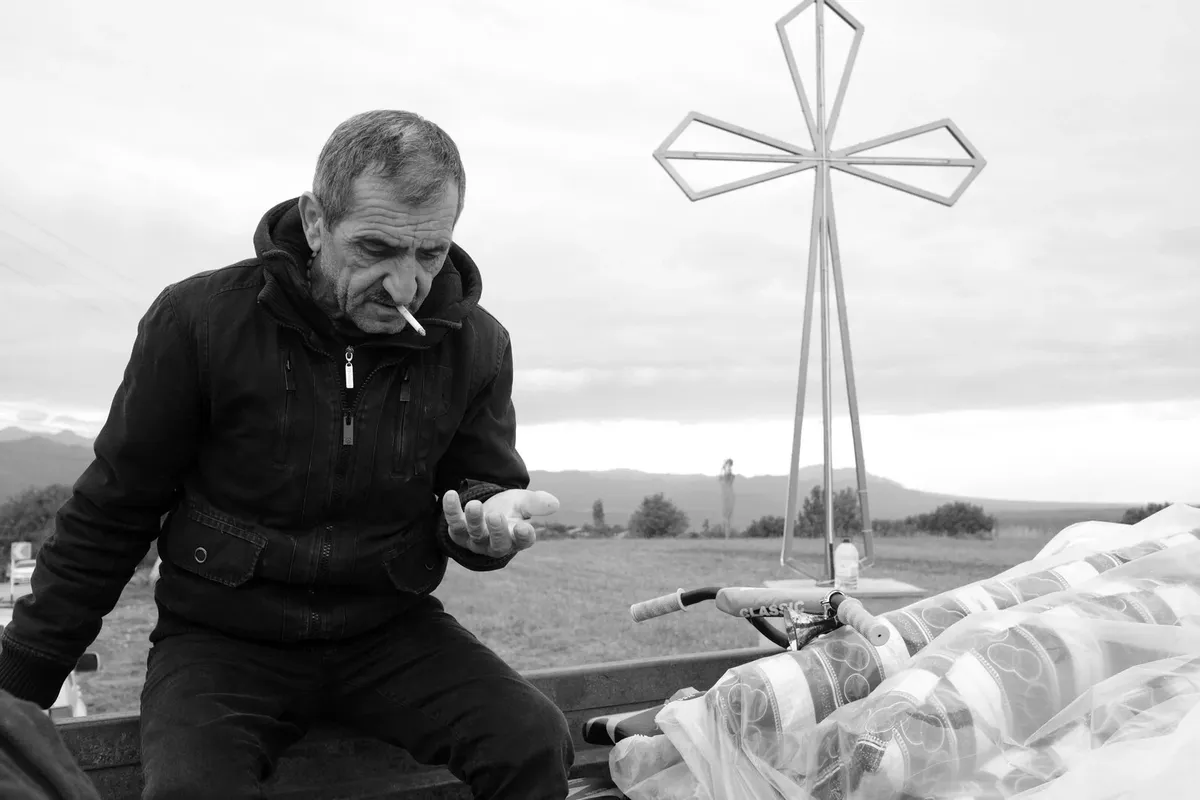
In the tractor trailer, we sit on the wet blanket after rain. It is cold, but somehow easier than on Earth. It seems that the trailer slowly flies over the clogged road, above the mountains, over the pass. From under the film, which things are covered, the steering wheel of a children's bicycle sticks out.
- There was nothing. There was no coffee, but I love coffee. The peas dried, frying and Tolkol, and drank instead of coffee. Everything remains: my chickens, chickens ... - Liana bends his legs and all is contracted either from the cold, or from memories.
Manvel sits on board the trailer, gestures and curses at Artsvik for not stopping at the village store. Manvela ended with cigarettes.
Entering the city, the couple revive and become similar to children in the entertainment park: they discuss shops and coffee machines, open cafes. Arriving at a gas station in the city, Manvel runs to a coffee machine and brings three cups of different coffee. Liana laughs.
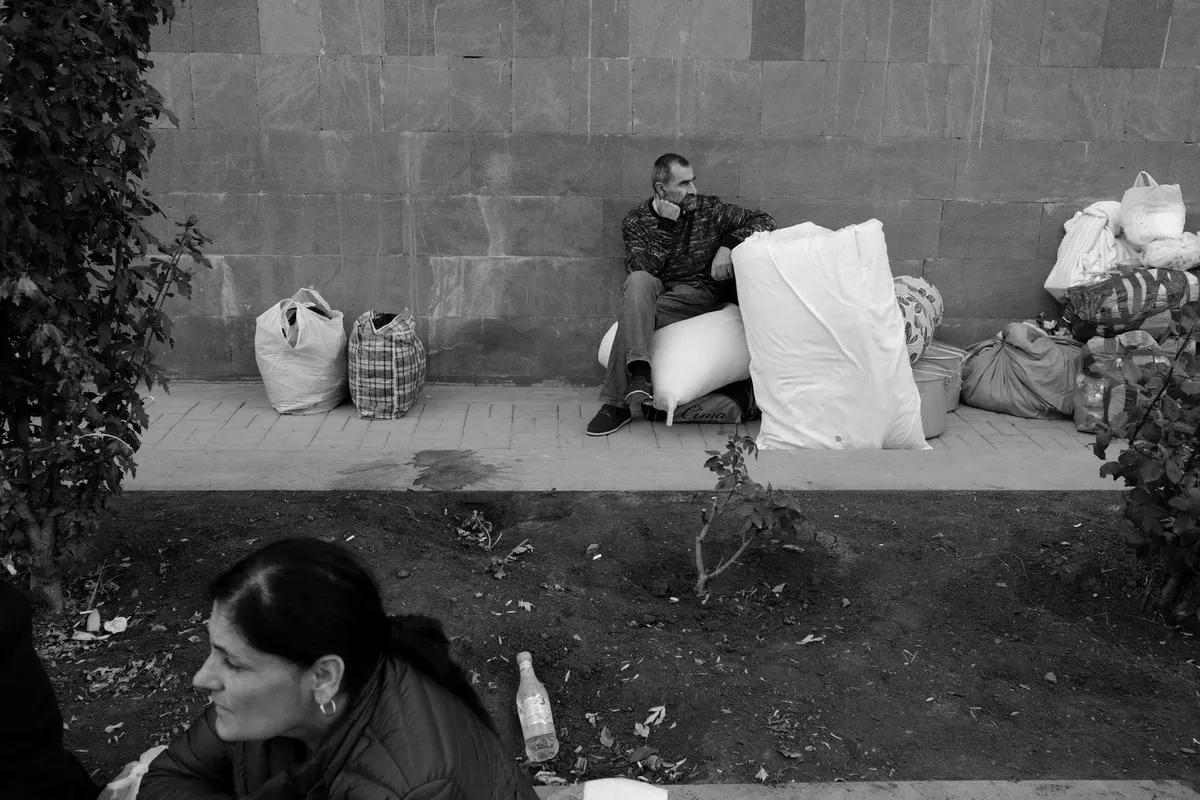
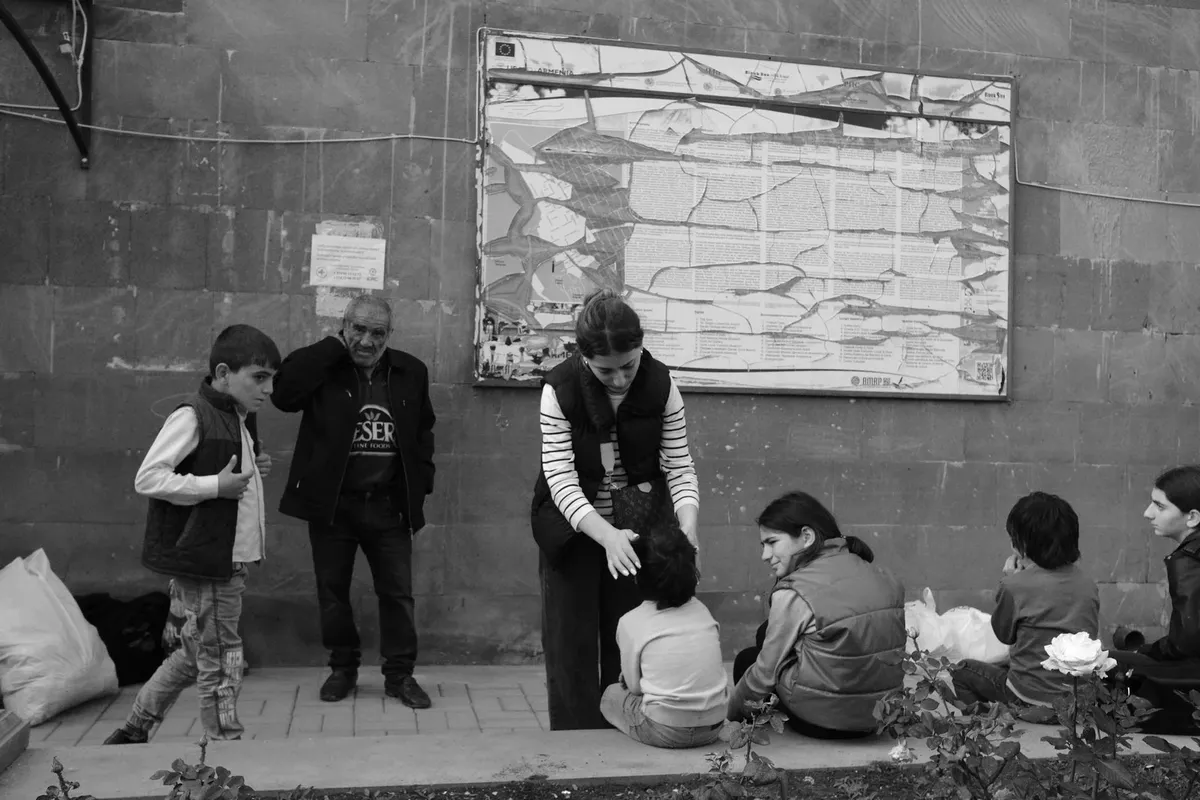
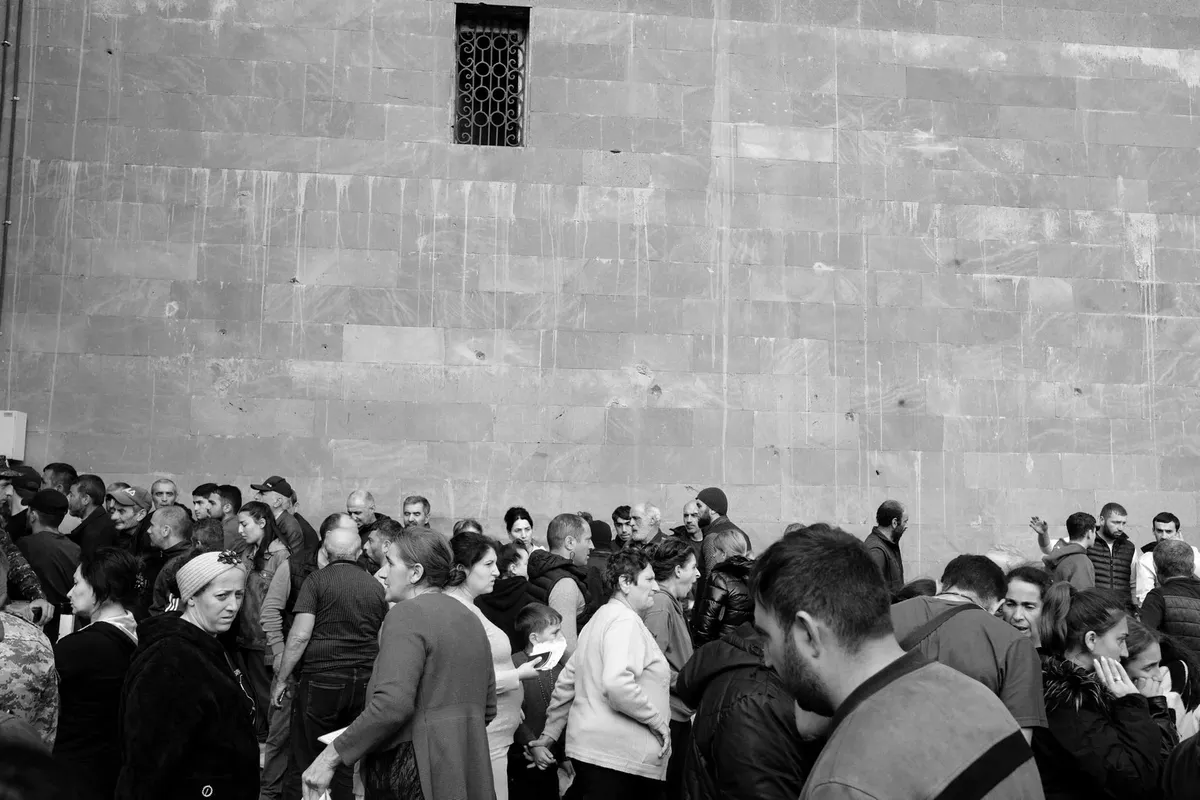
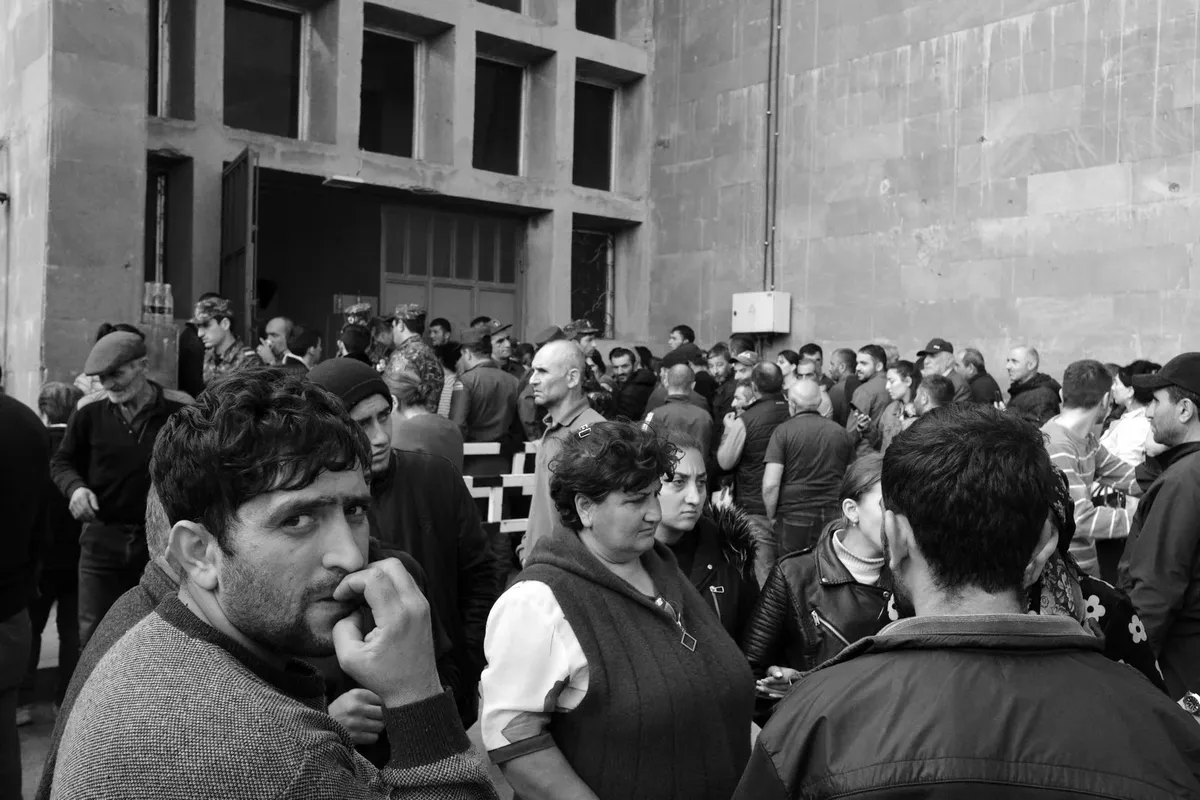
In Goris at the city theater converted to refugee registration, the line. Against the backdrop of the dark wall, people look locked in close space, and the whole area with the Eiffel Tower layout, the Mashtotsu and the Fountain monument, seems cramped. Arriving cars, buses, mountains of things, exhausted people sitting right on the grass, volunteers of the Red Cross, in appearance almost schoolchildren, screams, messages to MegaFon - all this does not fit into space and spilles over the edge, filling the adjacent streets.
Through the building from the square in the small church of St. Gregory of the Enlightener there is a service. There is almost no one in the church. The words of prayer are reflected from empty walls and do not go outside, to where the Old Testament outcome is repeated.
Two sisters, a thirty -year -old Asmik and forty -year -old waxes, come to the volunteer point.
“She helped me so much when we had a blockade, we are together all the time,” says Asmik and strokes his sister's hand. Waxing looks at packages with grocery sets. Asmik continues:
- We missed us normally. But when they went on the border and began to count us ... In Azerbaijani they started ... we understand a little ... everything turned upside down. If not for the sister ...
Waxes take bags of food, turns, goes to the exit, but stops:
“When all this ends, we will return,” she says coldly and firmly. Asmik looks at her with horror.
“I have another blanket,” says the elderly Malina. - I love blue. The volunteer convinces her that there is no way to choose.
“I want blue,” raspberries become at the entrance and waiting. Volunteers begin to disassemble the mountain of blankets dumped in the mail building until they find the right one.
“Thank you,” Malina leaves.
Above the square surrounded by mountains, a cross shines in the dark. The rain begins, and it becomes almost invisible.
At the end of the silent line at the humanitarian point there is a smiling boy.
- How old are you?
- Eleven.
- You are probably in the fourth grade?
- No, in the sixth. I went to school at six years old. I'm from Stepanakert.
- What is your name?
- Angel.
Waiting for his turn, the angel approaches the shoe box and chooses sneakers, without ceasing to smile.
At night, all tables are occupied in a roadside cafe near the city of Vaik. Children and women eat ice cream, buns and ice cream again, although it is cool at night. Men go from table to table, smile, drink beer. If it were not for the randomly parked, plunged cars and not the gray tired faces of silent women, it would seem that this is the final of some city holiday. In the noise of conversations and the ringing of dishes, the names are heard: Martakert, Martuni, Stepanakert. Cafe owners put bottles of water on the street, and they are almost immediately sorted out.
“I want no nations.” Let there be one, even if Azerbaijan, but one, - the taxi driver from Goris Samvel returns to his hometown after he took the family of refugees to Yerevan.
It is light, and gentle mountains appear from the darkness.
- Beautiful, right? I do not believe, but the one who created everything, he did everything for a man. Everything for a person: you will plant a seed, but two will rise. Live only. And people spoil everything. Do you know how I lost my leg?
Only now I notice that Samvel does not have a left leg above the knee.
- I was in the war, the last one, my friend came to bury and then got into an accident. It himself was to blame, he was very drunk. I did not go to the war. I would leave, I do not like a taxi, I am a builder. Is it true that in France there are abandoned villages?
In the early morning, two military trucks with the symbols of peacekeepers come to the square in Goris. A crowd of old people stomping at the body, trying to get their things as soon as possible.
“Let's drive them away, unload it ourselves,” says a Russian soldier with a torn voice.
- No need. So they will disassemble it, ”the other answers him just as hoarsely.
The police no longer pass personal transport to the area. Liana and Manvel return to spend the night in their trailer left at the gas station. Having recognized me, they nod in response.
By the night, a young man in a suit and turtleneck comes to the empty point of issuing humanitarian aid. It looks unusually neat among people, on whom several layers of clothing.
- I am the only man in the family. One among the roses, - Sreeps Sreeps. Red, swollen from lack of sleep, the eyes are watery. Sreeps falls silent, and then says:
- We do not need anything, only a blanket for a child. I have a son. A month and a half. It’s good that I was born in my homeland.