
Translated material
The compromise crushed
How the political strategy of the Serbian President Vucich crashed, and the gangster showdown and the “Kremlin threat” have to do with it

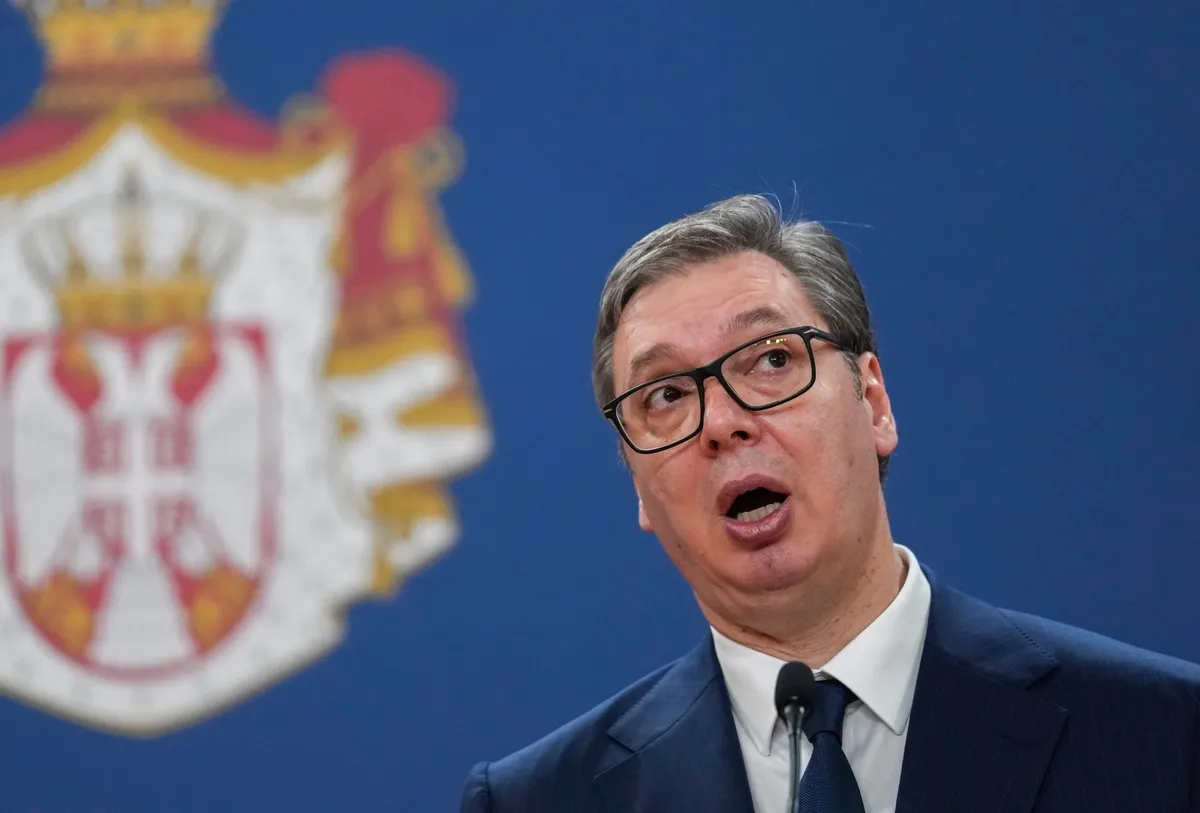
Belgrade. Portrait of Serbia President Alexander Vucich at a multi -thousandth anti -government protest. Photo: AP / TASS
A little more than a month ago, on August 22, Serbia President Alexander Vucich met with his colleague from Ukraine Vladimir Zelensky, and on September 29, the US -John Kirby Coordinator, John Kirby, announced that the United States monitors the deployment of Serbian military along the border with Kosovo.
These two scenes best illustrate how the Serbian Balancing Strategy between the West and Russia has suffered its logical collapse. If we take into account that this strategy of Vucich was structurally unstable, starting on February 24, 2022, you may even be surprised that it lasted until last week.
Vuchich missed a historical chance last year, when he could firmly connect the future of Serbia with the West and extract from this the benefit of both personal and the state. However, the official Belgrade decided not to make any decision on the armed conflict in Ukraine in the hope that divided Europe would return to its previous state, when the West was ready to cooperate with today's Russia, and Serbia could calmly use its support in the Safety Council of Kosovo.
Such a strategy was chosen thanks to one of the personal qualities of the Serbian President-indecency to risk, although the conditions for conducting foreign policy in the new Cold War at the European continent impose a risk, as well as due to the profitable financial ties of some Russian state companies (for example, Gazprom and Russian Railways) with senior Serbian officials from the series of the Serbian progressive party of Vuchich and the Socialist Party Serbia Minister of Foreign Affairs Ivitsa Dachich.
On the tactics of Vucich, to hide his head in the sand, the West reacted with his strategy aimed at closing two hot West Balkan issues: the unresolved status of the Republic of Kosovo and the dysfunctionality of Bosnia and Herzegovina.
In fact, Vuchich ignored the beginning of a new Cold War in the same way as the notorious president of Yugoslavia Slobodan Milosevich at one time did not want to recognize a new global environment after the end of the first.
Thus, Vuchich did not leave influential Western states interested in the world in the region of Western Balkans, no alternative, except to develop the final plan for solving the Kosovo problem.
This plan was adopted in March of this year, and it is called the "Ohrid agreement." The plan assumed that Kosovo would provide a certain level of political autonomy to the Serbs in Kosovo, and Serbia instead of Kosovo's entry into international organizations.
But the problem is that neither Belgrade nor Protina were going to fulfill this plan. Kosovo was afraid that Serbia would create another Republic of Serbian, this time in Kosovo, through which it would politically destabilize Kosovo and provide certain control for domestic political processes. For his part, Belgrade did not want Kosovo De Jure to become an international recognized state, because such a decision would not support the Serbian electorate.
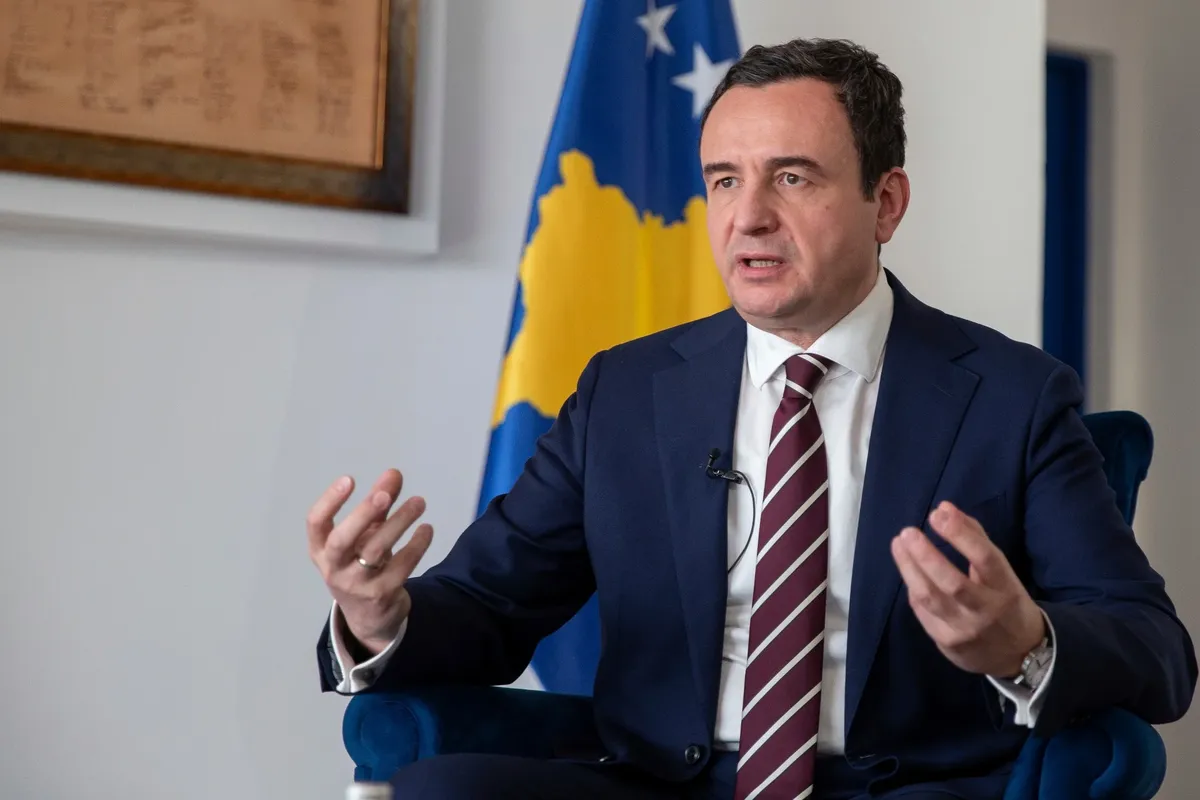
Both parties sabotaged the implementation of the contract. The Prime Minister Kosovo Albin Curty rejected the possibility of providing political autonomy by Kosovo Serbs before Serbia allowed Kosovo to join the UN. During this time, the Curtains planned and systematically increased the presence of Kosovo security agencies in the Serbian part of Kosovo - in the north of the state. To the steps of Kurti, Vucich reacted by led Serbs from all Kosovo institutes - government, parliament, municipalities, police, and ships.
Such a tense situation resembled a Mexican confrontation or fights from Hollywood films when equal opponents keep each other on the sight. Everything boils down to the one who is the first to blink.
And the first to make a mistake by Vuchich, or at least structures closely related to it. In Kosovo at the end of September, a gang was defeated, consisting of the Serbs of the North Kosovo, which made an unprovided attack on the Kosovo police patrol. The leader of this formation is Milan Radoichich, who officially held the post of deputy president of the party of the Serbian list - the main political organization of the Kosovo Serbs, consisting of a coalition with the President of the President Wucic. The US and Great Britain sanctions were introduced against Radozich. The reason was the reasonable assumptions that Radoichich is not only a politician, but also the head of the organized crime group.
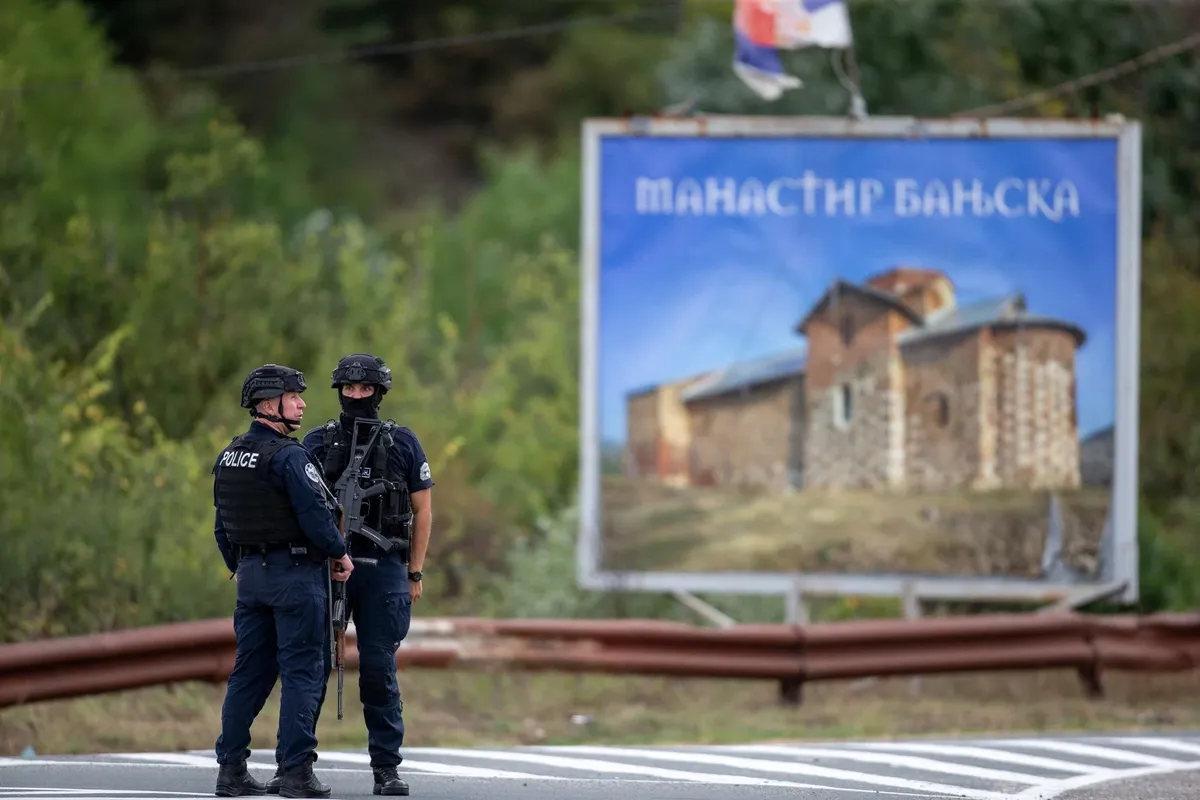
Until last week, Radozich imagined himself as an honest politician and a businessman, a man who is fighting for the rights of the Serbs in Kosovo, protects them from Courts. The point in this game was set up by events on September 24, when a group of Serbs with Kosovo attacked representatives of the Kosovo police and killed one of them, and subsequently hid in the Bansk monastery, exposing the risk of pilgrims that were there at that moment.
After the Kosovo police provided irrefutable evidence of Radoich’s participation in this attack, he, hiding in Serbia, publicly admitted to the organization of this unsuccessful action. On October 3, in Belgrade, he testified in the police, and now he is in the face of an official charge from the Serbian prosecutor's office.
The situation is repeated again when Serbia was forced to extradite its war criminals to the International Tribunal in the Hague in The Hague. Western countries will now try so that the process against Radoichich is not staged, and this is at best for Vuchich, and at worst, an international investigation of the described tragic events in the north of Kosovo will be carried out, and then Vucich will also have to extradite Radoichich to Provincial.
In parallel with this process, in the West, discussions are already underway about potential sanctions against Serbia due to the possible involvement of its security authorities in the action of Serbian militants.
And given the fact that Vucich was not ready to join the sanctions against Russia, President Kosovo Vyos Osmani can calmly accuse Serbia of an interview with CNN of having plans to start a war in the Western Balkans and that the Kremlin supposedly oversees it.
Perhaps its statements do not correspond to reality, but the Wucich Balancing Strategy allowed this narrative to use.
And in a year and a half, Vuchich has gone from an important guarantor of stability in the region to the suspect that he makes efforts to incite war and does not act on his own.
And Curtains, against which the EU and the USA began to impose sanctions because of his uncompromising position on the autonomy of Kosovo Serbs, tried to try on the role of a fighter against the Kremlin’s influence in the Balkans (according to the old Cold War recipe) and this was white for his image in the West. And Vuchich ... Vucich went from a teacher's favorite to a bully.