
Translated material
Israel under fire from Hamas
Mumin Shakirov and his guests are let down by the guests of the 40th week of 2023
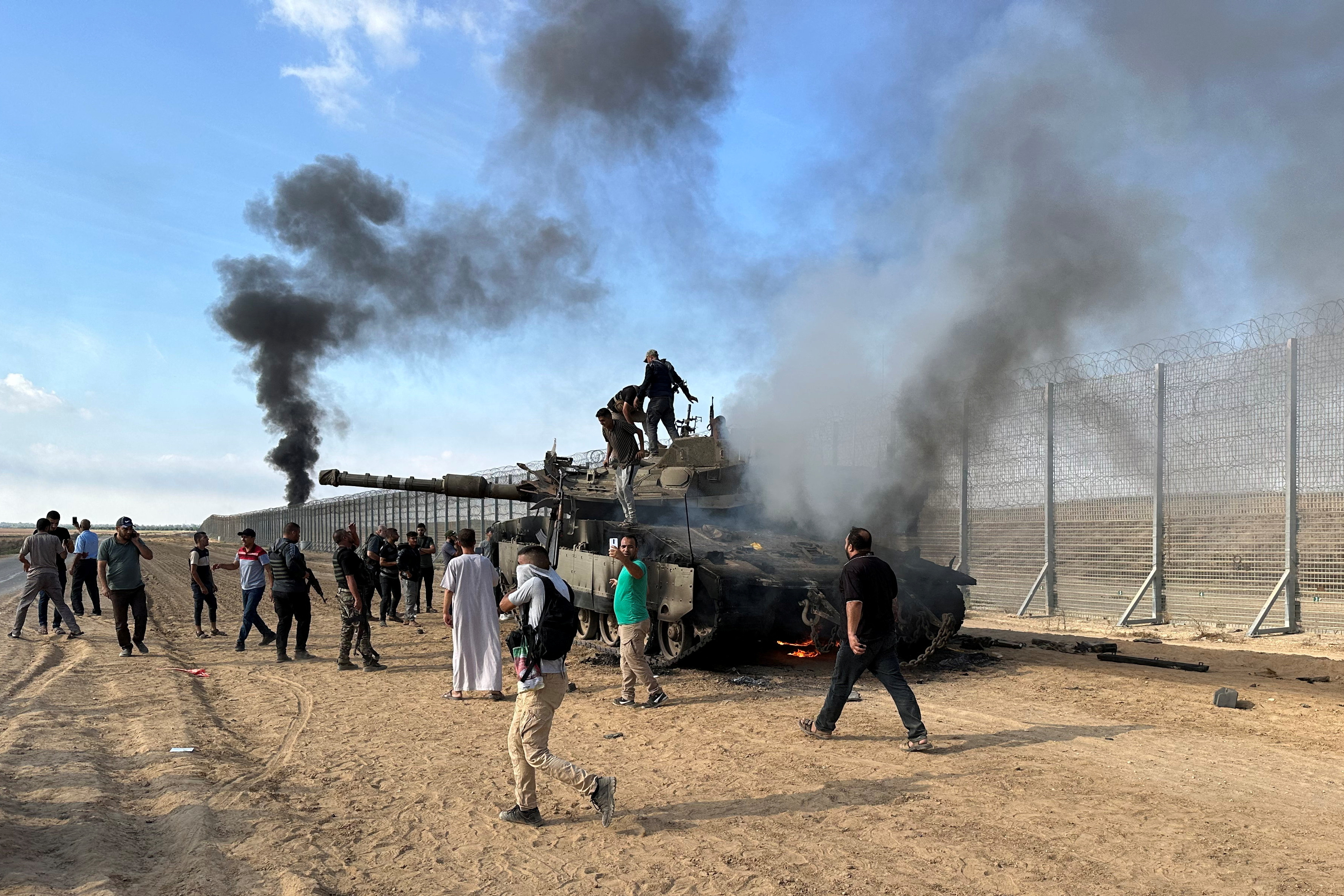
Massive missile attacks on Israel. Hamas militants in the country. Why did intelligence services sleep through the attack of a terrorist organization? New war in the Middle East?
Dark days in Ukraine. Missile strikes on Kharkov and the village of Groza: dozens of civilians killed at a serviceman’s funeral. How will the Ukrainian Armed Forces respond?
Living Putin against dead Prigozhin: cocaine, alcohol, billions of rubles in cash and a body with grenade fragments. A celebration of revenge. Is the dictator above suspicion?
Results of Nobel Week 2023: women in science and the fight for human rights, men in the intricacies of quantum dots.
UEFA returns Russia to international football, but Europeans are ready to boycott the games. The main team and clubs remain in isolation.
Mumin Shakirov sums up the week with political scientist Abbas Gallyamov (Israel), Ukrainian military expert Evgeniy Dikiy , Russian sports journalist Alexander Shmurnov and molecular biologist Irina Yakutenko .
Video version of the program
On the morning of October 7, a massive shelling of Israel began. Hamas announced a so-called “military operation.” Some of his militants entered the country. The Israel Defense Forces (IDF) recorded more than 2,200 rocket launches from the Gaza Strip and declared a state of readiness for war. The Minister of Defense approved the call for reservists.
Groza is a village in the Kharkov region of Ukraine. The distance to the Russian border is less than 100 kilometers, to the front line - less than 30. Population - about 300 people. The Iskander missile arrived in the afternoon at 13:25 on October 5. A shell hit the only rural cafe-shop. As a result of the strike, 52 people were killed, including a child, several villagers were missing, and seven people were injured. “Russia does not strike civilian targets in Ukraine,” said Russian Presidential Press Secretary Dmitry Peskov. Strikes on Kharkov - October 6. Two dead, one of them an infant, a dozen people were injured, several houses in the city center were destroyed.
Living Putin against dead Prigozhin: cocaine, alcohol, billions of rubles in cash and a body with grenade fragments. A celebration of revenge. Is the dictator above suspicion?
Mumin Shakirov discusses these and other topics and sums up the week with political scientist Abbas Gallyamov (Israel), Ukrainian military expert, former company commander of the Aidar battalion Yevgeny Dikiy ; science journalist, molecular biologist Irina Yakutenko and Russian sports journalist Alexander Shmurnov .
Israel is on fire
Mumin Shakirov: The attack on Israel took place on Shabbat and on a holiday. On the evening of October 6, Israelis began to celebrate two holidays at once - Shemini Atzeret and Simchat Torah, which should end on the evening of October 7. The confrontation began on the 50th anniversary of the outbreak of the Yom Kippur War in 1973. Hamas says it has captured more than 35 soldiers and settlers. Representatives of Israel and Palestinian factions are negotiating. Since the beginning of the attack by the Hamas terrorist group, at least 40 people have been killed, the Israeli television channel Channel 12 reports. But the numbers change every day. They are already talking about a hundred people.
Abbas Gallyamov is in direct contact with us. Where are you now? Where did you find the Hamas attack? Do you feel safe now?
Abbas Gallyamov: I am near Tel Aviv, everything is calm here. At least for now there are no personal threats, so I can allow myself to reason without emotion.
Mumin Shakirov: How could this happen? Many people ask this question and blame it primarily on the Israeli intelligence services. What do you think?
Now political differences in Israel are put aside, the country is more united than ever
Abbas Gallyamov: I would blame the government. The intelligence services are a private matter. The government itself created numerous political risks that must be dealt with politically, not by the methods of the special services. For about a year and a half, an extreme right-wing government has been in power here, with several ministers who are extremists in the literal sense of the word. European and American politicians, for example, often refuse to communicate with them. They have been escalating the situation all these year and a half. And it is surprising that these people were not prepared for the escalation to occur. That is, when some peacemaker is not ready for escalation, he tries to appease everyone, make peace with everyone, there is at least some logic in this. And when the person directly involved in this escalation is not ready for it, that’s a completely different story. Therefore, of course, there will be demand from this government, but not now. Now political differences in Israel are put aside, the country is more united than ever.
Mumin Shakirov: And we often ask each other the question: what is the ultimate goal of such terrorist attacks? After all, few civilized countries sympathize with Hamas and its supporters.
Abbas Gallyamov: They live by escalation, confrontation. Therefore, exacerbations always occur from time to time. But if you don’t do this, you’ll then have to retrain as a building manager, but you don’t want that. I don't want to reduce my standard of living. They built their lives on it. Money is allocated primarily by Qatar, Islamic funds, players working to aggravate the situation, and Iran. And sooner or later this had to happen. After all, the Israeli government itself makes the “gift”. I want to emphasize that the Israeli government's course does not enjoy the support of the majority. Netanyahu formed a coalition, but it behaved much more radically than was promised during the election campaigns. And looking at public opinion polls, you see that if elections were held right now, neither Netanyahu nor his coalition partners would have any chance. Nevertheless, this government policy exists, and it is a “gift” for these guys.
Formally, they proclaim the need to create a Palestinian state, their ancient goal, and so they escalated things.
Dark days in Ukraine
Mumin Shakirov: The war unleashed in neighboring Ukraine by Kremlin dictator Vladimir Putin is reaping its bloody harvest among the civilian population. On October 5, a missile simultaneously took the lives of more than fifty civilians from one small Ukrainian village in the Kharkov region. On the same days, adults and children of Ukraine died in their homes in Kharkov, Kherson and other settlements. While the West is recovering from the shock, Vladimir Zelensky at international meetings begs to give Ukraine air defense systems and weapons. At the same time, Vladimir Putin himself repeats his old and rather tired story: “The West and Ukraine are to blame for everything.” From the words of the Russian dictator in Valdai, it becomes clear that he is determined to play for the long haul.
I talked with Evgeniy Dikiy about how the Ukrainian Armed Forces can respond to attacks on civilian targets in Ukraine. What can be opposed, other than hatred, to these monstrous missile attacks on civilian targets in Kharkov and the region, where 51 people were killed and a dozen were injured in the village of Groza?
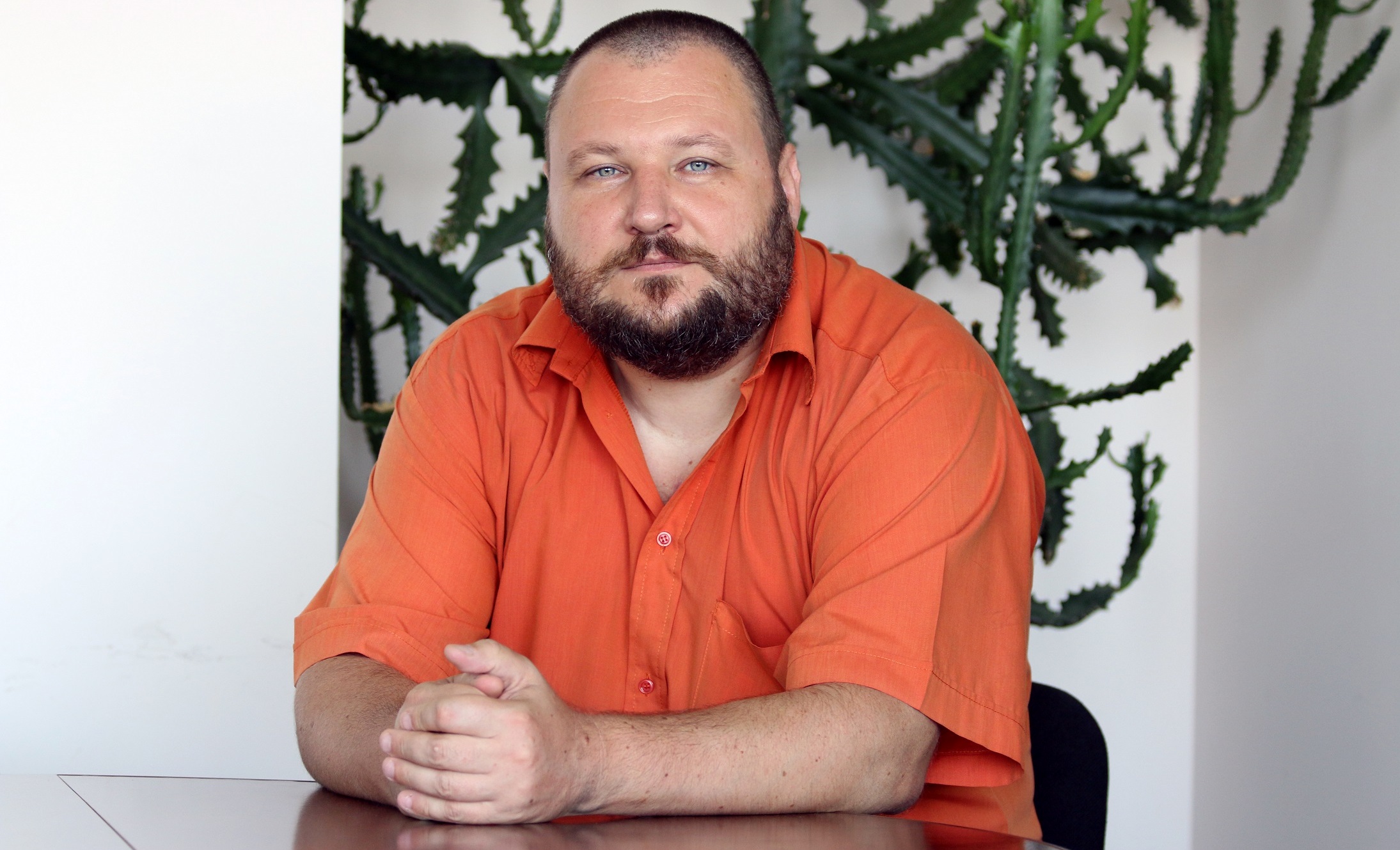
Evgeniy Dikiy: In my opinion, it’s time for us to step over one of the taboos that we did not invent for ourselves. We have a strict ban from our Western allies, and primarily from the United States, on actions on the territory of the Russian Federation. As long as we comply with this ban, such attacks will go unpunished, and they will continue all the time. Today we know all the Iskander installations that are deployed in the territories adjacent to us, there are only 36 of them. This is not only 36 that Russia has, but at the moment there are only 36 installations working specifically for us. We will have to work to ensure that these installations stop working, but this will have to be done on the territory of Russia and Belarus. I think that after these attacks we have no choice.
Mumin Shakirov: Forgive me, but any observer will tell you: “Ukraine has been attacking Russian territory for a long time.” From the latest: the airport in Pskov was attacked, Il-76 planes burned down, constant raids on the Kursk, Belgorod regions and other regions.
Evgeniy Diky: Of course, Ukraine is working, but every time it was done by some unidentified drones, we have never officially stated that we did it. They never refuted it, they just smiled mysteriously and shrugged. They said: “Something happened there.” But there is a nuance here. It’s one thing when drones are flying, but here, most likely, living people will have to work, that is, units will have to cross the border. In any case, I think this is already justified.
Mumin Shakirov: Is it possible to say: “We are witnesses to the freezing of the front until spring. Neither side is able to change the map of military operations. The entire war has been given over to missiles and drones, and then who will be luckier?”
Evgeniy Dikiy: Definitely not yet. The front is now very dynamic. And to say that there have been no changes in recent months is not to understand what is happening there. The fact is that the front is not a thin line drawn on a map. Especially the southern front is a huge complex of fortifications on the Russian side, since in the south the Russian army is now on the defensive... The so-called “Surovikin Line”, promoted by Russian military officers, is the largest complex of defense structures after the Second World War. There is a huge system of three lines of layered defense, each tens of kilometers long. Of these three lines of defense, the first simply no longer exists; it has been completely dismantled and passed through. The battles are taking place deep in the second line. That is, when one and a half out of three lines of defense have already been passed and broken through, this is very dynamic.
This is a war of ordinary guys and girls, who just yesterday were for the most part civilians, with unique exceptions
Mumin Shakirov: How is this reflected on the map?
Evgeniy Dikiy: This is reflected completely differently on the map. I often have to explain to civilians: you shouldn’t judge by how many hundreds of meters you walk in a day. And it doesn’t matter, by the way, which side – ours or the enemy’s. Distance in war is absolutely non-linear. It happens that one kilometer, which you have to walk for months, break through, gnaw through. And after that, an operational space opens up for you - and you travel tens of kilometers per day. There's gnawing going on right now. There we are not talking about forced marches or long-distance raids. It is there that they fight off landing after landing, high-rise after high-rise, and fighting back in the style of the First and Second World Wars. With all the use of drones, satellite images, communications equipment, with all modern technical innovations, this still remains a war of large masses of infantry. That is, this is a war of ordinary guys and girls, who just yesterday were for the most part civilians, with unique exceptions. We had a very small professional army. This is a huge number of “mobs”, yesterday’s civilians, in “armored armor”, in helmets, crawling on their stomachs, and sometimes running, standing under fire, at every landing, at every high-rise, with a machine gun in their hands, they jump into the enemy trench. And this is the only way promotion is carried out. Absolutely nothing has changed since Remarque's Im Westen nichts Neues. Judging by the fact that all the FSB officers are now leaving the city of Tokmak and taking out their archives, families, it seems that those closer to the front on the Russian side do not share Putin’s optimism and do not consider the offensive to have fizzled out back in July.
Mumin Shakirov: Severe critics say: “If the Ukrainian Armed Forces do not take Tokmak this fall, then the counteroffensive can be considered almost a failure.” Do you agree?
Evgeniy Dikiy: I would not use the word “failure”. It would have been a failure if what Putin said had been true: the counteroffensive was repulsed, we had huge losses, and the Russians remained where they were. No. Complete success of the summer-autumn offensive - access to the Sea of Azov. If (unfortunately, I am forced to use the word “if” and not the word “when”) we manage to take Tokmak, then access to the Sea of Azov, the liberation of Berdyansk and Melitopol, and, in fact, the transformation of Crimea into an island will become practically guaranteed. That is why now near Tokmak they are giving us the last and decisive one. Only in the last month, in addition to the forces that were already there, four airborne divisions were transferred there. According to some information, which I still cannot confirm one hundred percent yet, two of these four divisions are no longer combat-ready. But still, the enemy forces we have to deal with are very large. Therefore, after all, if they can stop us near Tokmak, this will mean that in winter or spring we will have to start from scratch (the Russians’ first line of defense no longer exists anyway). But in any case, this will mean that this year’s goals will have to be achieved next year. But I still have some hopes, there is no guarantee, but we have a chance to take Tokmak. And these occupation rear rats are already fleeing the ship. Apparently they do know something.
Living Putin versus dead Prigozhin
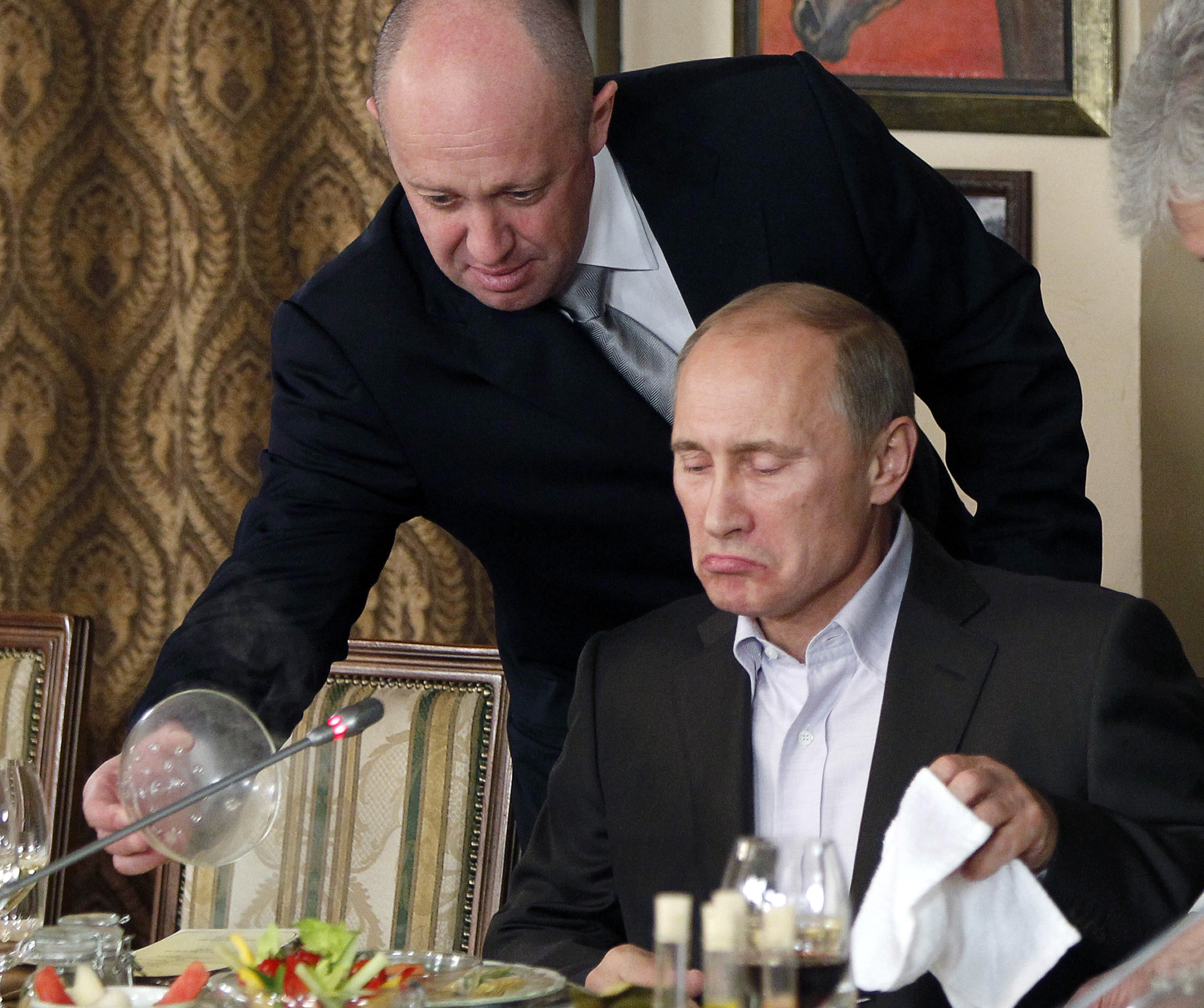
Mumin Shakirov: Cocaine, alcohol, billions of rubles in cash and a body with grenade fragments in the cabin of a business jet that crashed in broad daylight on August 23 in the Tver region. This is how the President of Russia remembers the once close acquaintance of the businessman, founder of the Concord company and the Wagner PMC, Evgeniy Prigozhin. Vladimir Putin remembered him this week in Valdai, where he annually gathers his admirers and ideological supporters from among international experts. What was the Kremlin dictator talking about? Again, “old songs about the main thing” from the cycle “they don’t love us, they don’t respect us, they impose their dubious values on us or make claims, they teach us how to live.” Putin, as always in such cases, asks himself a question and answers it himself in his favorite manner: “This is some kind of nonsense, nonsense.” And my favorite: “We didn’t start the war in Ukraine, we are ending it.”
In cinema there is a technique called “parallel editing”, when two parallel events develop on the screen. This method allows you to raise the level of the ongoing plot. The most striking example from the classics of world cinema is the story when Michael Corleone from the film “The Godfather” deals with his enemies. The baptism of a boy in a large, light-filled church is interspersed with shots of men preparing for something. They climb the stairs, put on a police uniform and take turns shooting competitors from other New York mafia families. A sea of blood, corpses. And here, in front of the altar in the temple, there is organ music, a prayer in Latin, and the gracious Don Corleone baptizes a child, renounces Satan and, as it were, establishes a new world order within the framework of one big city.
And Putin, on October 6, 2023, stands on the podium in Valdai, blames the West, America, and European leaders for all sins, speaks kindly speeches about peace, about helping the residents of Crimea. Meanwhile, missiles are flying towards Ukraine. And innocent people die during the wake of a serviceman in the small village of Groza in the Kharkov region. Many world media showed terrible pictures of the destruction of the cafe. And Iskander missiles also fly into Kharkov itself: dozens of destroyed houses, again dead and wounded. And Putin, to the applause of those gathered, talks about what a peacemaker he is and does not lay claim to other people’s territories at all, but only defends his own.
The President of Russia in Valdai performed several memorized hits and at the end - at the suggestion of a helpful moderator - touched on the topic of the private military company "Wagner" and Yevgeny Prigozhin, who died in a plane crash, along with his comrades.
Vladimir Putin: The head of the Investigative Committee reported just the other day: fragments of hand grenades were found in the bodies of those killed in the plane crash. There was no external impact on the aircraft. This is an already established fact, the results of an examination conducted by the Investigative Committee of the Russian Federation.
Mumin Shakirov: This is how he hammered the last nail into the coffin of his once cook and comrade-in-arms, Yevgeny Prigozhin. A celebration of revenge. The dictator, of course, is above suspicion. Saying goodbye, Fyodor Lukyanov, the leader of the meeting, uttered an almost routine phrase in which its political meaning was not very hidden: “Thank you very much, Vladimir Vladimirovich! We are waiting for you in a year at the 21st Valdai.” Putin responded: “And I am also waiting for you all at events of this kind. And I want to thank you for your participation." So, almost imperceptibly, the dictator informed the world about his inevitable participation in the upcoming elections. But against the background of the previous loud statement, almost no one noticed this. Curtain!
Results of Nobel Week 2023
Mumin Shakirov: The Nobel Committee announced the winners in five categories: medicine, physics, chemistry, peace prize and literature. In the latter category, the award went to the Norwegian writer Jun Fosse “for plays and prose that express the inexpressible,” as the Nobel Committee put it.
Irina Yakutenko is in touch with us. The 23rd Nobel Prize in Medicine was awarded to Katalin Kariko and Drew Weissman for their discoveries that led to the development of a new type of RNA-based vaccine. Would the authors have received this award if we had not all experienced the COVID epidemic?
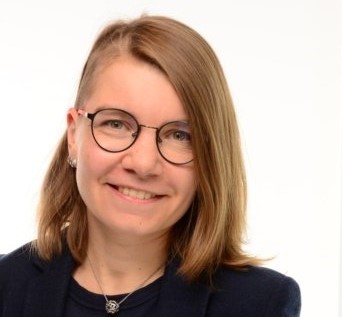
Irina Yakutenko: It seems to me that your question contains the answer. If we hadn’t survived everything, everyone would have died, then they wouldn’t have received it. As for if there had been no COVID, I think we would have received it, but after a few years. Because the original goal of developing mRNA technology was not only and not so much vaccines against infectious diseases, but “cancer vaccines.” In fact, this is simply a way to deliver mRNA copies of genes into cells, from which the proteins we need to treat various diseases, such as genetic ones, will be synthesized. If we have diseases associated with a breakdown in a gene, for example, some important protein is not synthesized from it, then using this technology we can add this protein to the cell by introducing the mRNA of this protein. After this, we will get cells that normally synthesize this protein.
Mumin Shakirov: How universal can new technology be? What else can be treated with RNA-based drugs or vaccines? Can HIV be eradicated in the future or not?
Irina Yakutenko: No one will tell you whether HIV can be eradicated or not. Drew Weissman worked on mRNA technology with an eye toward developing a vaccine for HIV. And hundreds of other groups have tried to develop a vaccine for HIV, but so far no one has succeeded. Of course they will try. But this technology can not only treat genetic diseases - it can be used to fight cancer. It can also be used in the same way as it was used in COVID, that is, as a vaccine, in order to protect us from certain diseases. And I am sure that the next vaccines, of course, will primarily be tested based on mRNA technologies.
The solution to the problem of getting a Nobel laureate is not so much in money as in the organization of the system
Mumin Shakirov: Will COVID always be with us or will it ever disappear?
Irina Yakutenko: Why would he suddenly disappear when he has such a huge food supply?.. The flu has disappeared from us? Has measles disappeared from us? Of course not. And COVID is now with us, just like other cold viruses. So far, its seasonality is not as pronounced as the flu, but it will settle down over time. And we will get, in addition to the flu, one more disease, which will be a nuisance, rather, for the majority of the population, but dangerous and deadly for risk groups, primarily for the elderly, as well as for those who have various serious diseases.
Mumin Shakirov: Are there any conventional calculations of how much the state needs to invest in science in order to get a Nobel laureate in 20-30 years?
Irina Yakutenko: The answer to this question is impossible. If you look at Nobel laureates, you will see a very large uneven distribution across countries. For many years now we have had an obvious bias towards the United States of America due to its university system and science funding. They attract the coolest researchers there, because the conditions there are often the best for them. And here it’s difficult to say how much money to invest, because before this there were a lot of Germans, at some point other countries were in the lead. Rather, it's not about how much money we invest. In Russia, at one time, a lot of money was actually invested in science, but the system of organizing science was very ineffective. Therefore, you can invest a lot of money and get a meager result. The solution to the problem of getting a Nobel laureate is not so much in money as in the organization of the system.
Mumin Shakirov: Why was the Russian scientist Ekimov, and not only him, given the prize only now, although the discovery was made back in the late 70s or early 80s? Several decades have passed. He was a young man then, but today he is already at a respectable age.
Irina Yakutenko: Let's start with the fact that he is still a Soviet scientist. The discovery was made in the Soviet Union. Second point. He was not the only one who received a prize for this; there were three laureates, and all of them worked in the 80s. This is a normal acceleration for the Nobel Prize. The story of mRNA vaccines is an exception. It is extremely rare that Nobel Prizes are given for discoveries that were made very, very recently. Much more often, a lot of time passes for the scientific community and the world as a whole to see that this is a really significant discovery, that its benefits are undoubted, that these people are worthy of the Nobel Prize. Rather, unconventionally, it is a prize in medicine, which was awarded for a discovery made just yesterday, one might say.
The Russian Federation is being returned to international football, the Europeans are against
Mumin Shakirov: The authorities of St. Petersburg have prohibited athletes, coaches and staff of the city's budget sports schools from traveling outside Russia without the approval of the committee. Russian sports have largely remained banned from international competition since the start of the full-scale war in Ukraine. This week, however, FIFA approved the participation of Russian junior football teams in its tournaments. At the same time, the organization announced a large-scale world championship in 2030 on three continents at once, timed to coincide with the 100th anniversary of the Cup.
The European community - global, democratic, Western - should under no circumstances perceive Russia as a completely consolidated, unipolar association
Alexander Shmurnov is in touch with us. How, in your opinion, will the confrontation between FIFA and UEFA on the one hand, and Ukraine and the support group on the other, end? We are talking about European countries. Boycott of young Russian football players at international tournaments.
Alexander Shmurnov: A very difficult question. Here's the story. I listen to the respected journalist Nabutov and understand that, in my opinion, there are flaws in the logic. When we say that Russia should be banned everywhere, we are grist to Putin’s mill. The European community - global, democratic, Western - should under no circumstances perceive Russia as a completely consolidated, unipolar association. Russia is heterogeneous. And children really should, in my opinion, from the point of view of humanitarian values and simple evacuation, get a chance to exist not in Russia, but in the international community. If it comes to sports, culture and anything else, this should be a chance. Nobody is saying that people who are addicted to “putting” should now be allowed into Europe to compete there. But the point is that young athletes who have already laid down their lives, choose to be involved in sports and do a lot, somehow take them from the state of North Korea to the state of Western Europe. Is this really bad? Is there really any other way to defeat internal Russian self-aggression, the destruction of everything humanitarian and cultural within one’s country through isolation, other than by pulling people out of there? I believe that Western society and journalists should first of all think about this: if young Russian football players (no matter what sports) perform at the European Championships - without symbols, without Putin’s support, without officials - then they will become completely different. They will get their chance, and Europe and the world will get their chance to penetrate Russia in this way. I don't see any problems with my logic.
Mumin Shakirov: How do you feel about the call of international sports organizations to condemn the war in Ukraine, and then the road to world sports will be open for individual Russian athletes?
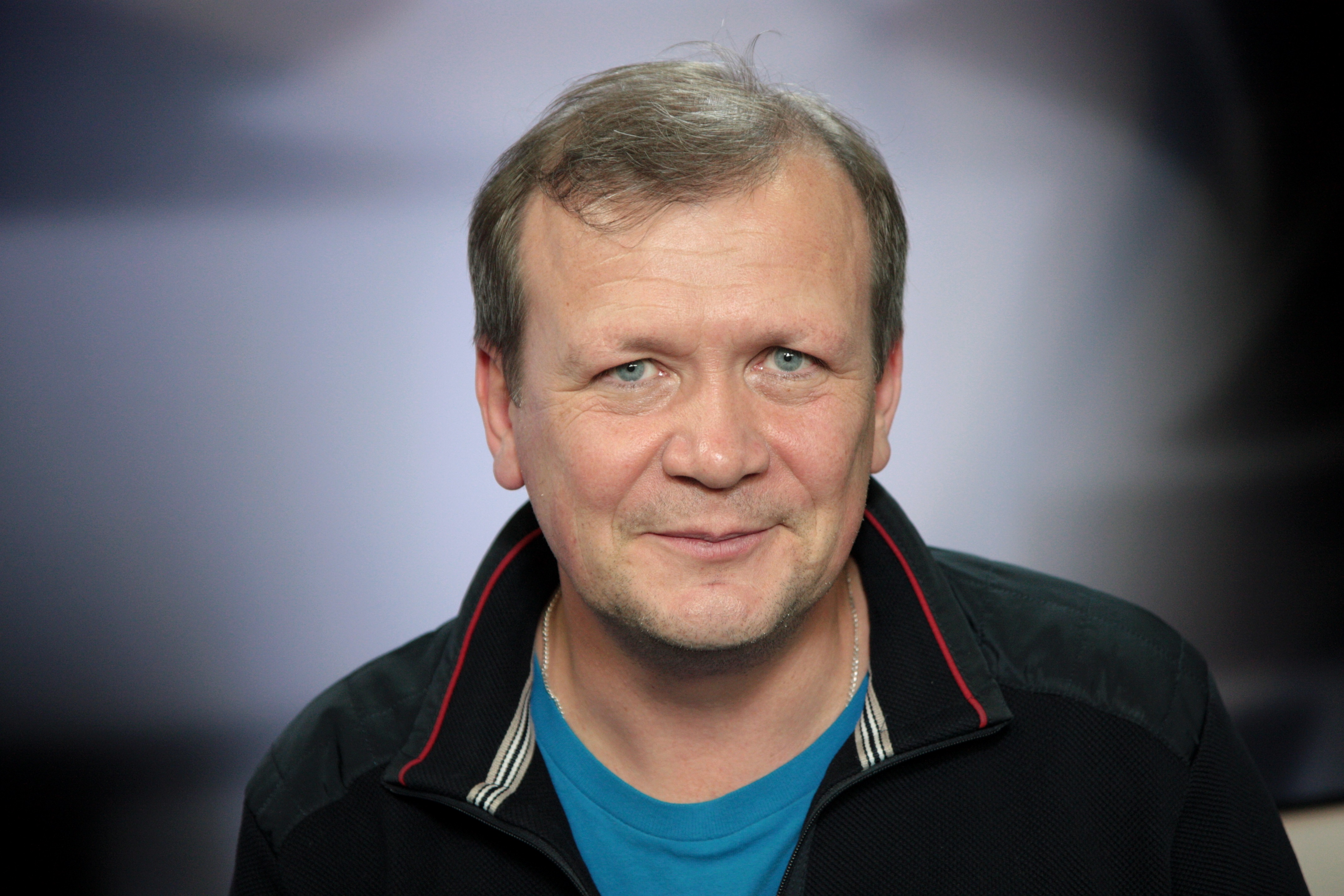
Alexander Shmurnov: Of course! Thomas Bach has repeatedly said that Russian athletes who do not represent the Russian flag, symbols or Putin should get their chances. They must comply with all conditions. The memorandum on these conditions must be published and understood by everyone. And in my opinion, as far as young people are concerned, additional conditions are not needed. There is no need to force young people to read some kind of declaration if they have not yet taken any part in the internal process. Remember Elem Klimov, remember the bayonet that pierces the portrait of Hitler: one, two, three, the young Fuhrer - and at the end it stops in front of the baby. Think about it.
Mumin Shakirov: The Olympic Games in Paris are at stake. Will Russian athletes be allowed into Paris in 2024?
Alexander Shmurnov: They will be allowed, I think, but through the sieve of full-fledged selection... This is a very ugly expression “good Russians”, we all rebel against it, because it reminds us of some kind of segregation. A good athlete, a decent person. If you want to participate in the Olympic Games, which are a symbol of sport and peace, you must be a decent person. To do this, you must not participate in many things and, probably, confirm your position. And these rules need to be written down as quickly as possible, because, among other things, there are also qualifications for the tournament. The same European Youth Championship. No one has yet said that the Russian national team will take part in it. For now we are talking about qualifications, which it must conduct without symbols, without a flag and play its home matches outside of Russia. By the way, and very importantly, Russian propagandists immediately took a stand against this UEFA decision and said: “We don’t need this. Are we going to go under the white flag? Our children will be kidnapped there.” And it’s very good that they made a stand. This suggests that the decision is most likely very correct, and it is one of those decisions, one of those kimberlite pipes through which the diamonds of the final decision can go. How do we, the world community, plan to end this conflict? Including with the help of Russians, who will understand that the world community, world life, world culture, world sports are happening here. And what is closed from the inside is served there, covered up, whipped by propagandists, why do we need to react to Russian propagandists? Let's respond to our own hearts.
Mumin Shakirov: The authorities of St. Petersburg have prohibited athletes, coaches and staff of the city's budget sports schools from traveling outside Russia without the approval of the committee. What is this?
Alexander Shmurnov: This is ordinary Putinism. Why are we discussing this? The point is that they will leave from there, and we will be grateful. I live in Europe, I hate aggression, I hate what is happening. I dream that Russia will somehow return... turn into a normal country... Russia is the country where I was born, grew up, where my children were born and raised and some of them still remain... We have a very difficult logistical situation. And if idiots prohibit people from competing because they want to put them in the conditions of North Korea, then we must stand as a whole world community to get someone out of there. They will participate in the football championship under certain conditions. And this is a very good step for Europe. I believe that Ukraine should also sort it out. Although we cannot not respect the opinion of Ukrainians, who immediately react sharply. But we need to talk about it.