
Translated material
Who killed the king of sweet lipsticks?
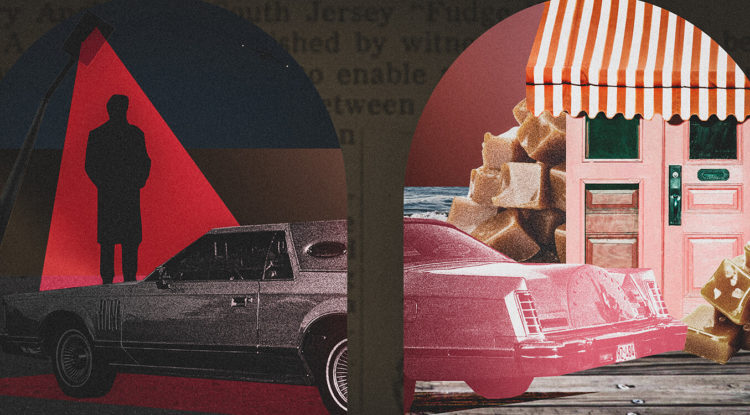
The murder of the confectioner Harry Englemeier was opened half a century later. Helped a journalist who loved his sweets 60 years ago
In the mid-1960s near the American city of Oshen City, the murder of the confectioner Harry Englemeier took place. His body was found near the nightclub. The murder managed to disclose only 60 years later - the journalist Tom Donahi helped, who many years ago loved Englemeier's sweets and, returning to his hometown, decided to find the guilty. Donahs published his investigation in Atavist Magazine, the “cold” retells the main thing.
In order not to miss the main materials of the "cold", subscribe to our Instagram and telegram .
In the early morning of September 7, 1964, an employee of the confectionery Copper Kettle Fudge Ramund Daily delivered a parcel with a sweet lipstick at work. Passing the small town of Egg Harbor, on the side of the Dun night club, he saw the car of his boss and stopped. Approaching the car, Delhi discovered the bloody body of the boss-37-year-old Harry Englmeier.
The autopsy showed that Englmeier died a few hours before he was found - from two fractures of the skull: above the left eye and behind the right ear.
The investigation lasted three years. The charge of the murder was brought by a participant in a local gang, but due to lack of evidence and testimony, the case was closed. The police returned to the death of Englemeier only 60 years later - instead of it, the investigation was conducted by a fan of sweets, which was sold by the confectionery Englmeier.
Candy from childhood
In the summer of 2020, the American journalist Tom Donahi came for his mother’s birthday in her hometown Jersey Schor. A child of Donahi often spent a summer vacation there. Walking along the streets of Jersey Schor, he recalled his childhood: warm summer air, the smell of the ocean and sweets from the Copper Kettle Fudge store, which his father bought him and his brother for good behavior.
Tom wanted to go to the Englemeier store and invited his brother to go together. He replied that the store was gone for a long time: his creator was killed back in the 1960s, and the case was never disclosed. Donahs decided to learn more about the Englmeier case and suddenly conducted his own investigation.
“At first I was just curious, but the more I learned about Harry as a person who was loved by both friends and strangers, the more I had the desire to find a killer,” writes Donahs.
For two years he collected information about the murder: he looked through blogs on social networks, studied newspaper archives and contacted the local police, which agreed to provide him with the case file. Despite the fact that more than 60 years have passed since the murder of Englemeier and most witnesses of those events were no longer alive, the Donahs managed to find eyewitnesses and reveal the name of the killer.
King of sweets
Harry Englemeier was born in 1927 in the city of Philadelphia, Pennsylvania. Two years before the end of World War II, he threw a school to go to military service. In 1947, he opened his own confectionery in the small resort city of Oshen City, which is known for the complete ban on the sale of alcohol (even today you can drink alcohol in the city only in special clubs).
Englmeier confectionery quickly became popular among local residents. People lined up for his sweets. Soon, Englmeier opened several stores in the neighboring Atlantic City, Sil-Ail City and Stone Harbor and became one of the richest people in the state.
Englemeier was not shy about demonstrating his wealth: his favorite accessory was a diamond ring worth about 10 thousand dollars (100 thousand at today's rate). Despite this, he was popular among local residents who considered Harry a generous and kind person: he donated money to charity organizations, was a member of the city development council and was a member of the local trade association.
In 1962, Englemeier began to fight the state authorities, actively opposed the “blue laws”, which for decades forbade commercial enterprises to work on Sundays, and called them “puritan restrictions”.
What are the laws?
Laws on trade that limit or prohibit the work of enterprises on certain days, usually on Sundays. They got their name from the color of the paper on which they were originally printed. These laws apply in some states of the USA and Canada, as well as in Germany, Austria, Norway and Poland.
He united with other businessmen and turned to the head of the city’s public security with a request to cancel the laws, but he refused. Then he turned to the city hall. The members of the public commission agreed to hold a referendum. In May 1963, the voting day came, the initiative of Englmeier supported the majority of residents and the laws were softened.
Three weeks after the referendum, local authorities arrested Englmeier because of complaints of “obscene behavior”. Englmeier was open gay and did not hide his orientation. At that time, according to the laws of New Jersey, homosexuality was considered a crime and Englmeier threatened up to 20 years. All the victims were civil servants, one of whom was the local policeman Dominic Longo. He claimed that Englemeier forced him to herself in his apartment.
Englemeier said that, despite the lawsuit, he would continue to achieve the complete abolition of “blue laws”. In response to the accusations, he wrote a complaint against Longo, which said that the policeman himself forced him to have sex. Despite the fact that at that time homosexuality was wary, local residents supported Englemeier.
When the case was referred to the court, the jury considered that the evidence was not enough, and justified Englemeier according to one of the accusations. There were meetings ahead of several more episodes, but he did not live before them.
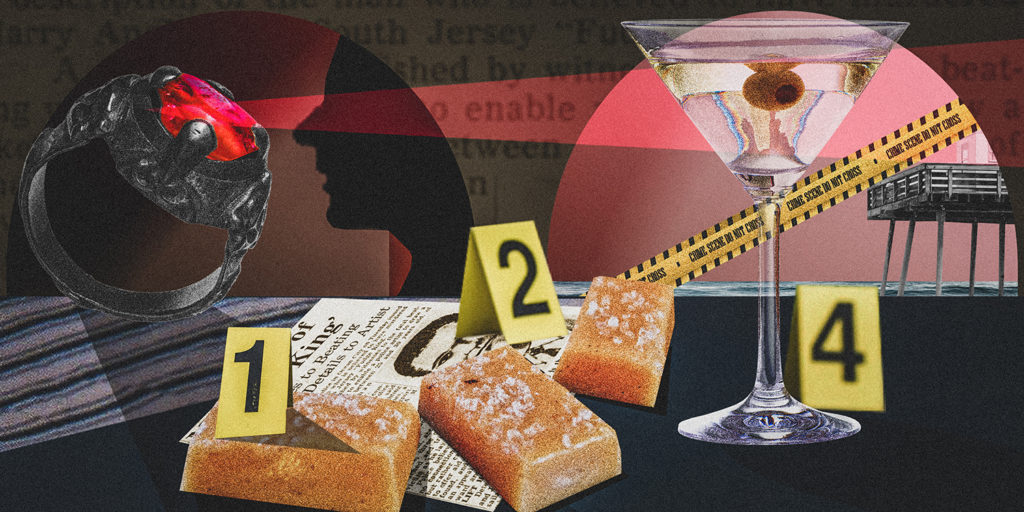
The murder of the king
On the night of September 7, 1964, Englmeier walked around the bars, and then went to the club. At about four in the morning, his dark-bearded Lincoln parked near the entrance. At the club, Englmeier continued to drink and talked with the owner of the institution. Closer to five in the morning, he left the club. A few hours later, the company Harry Raymund Daily discovered his body. An expensive diamond ring that he always carried with him disappeared.
The news of his death of the newspaper was printed on the same day. Residents of the city said that murder is revenge by the authorities. The police started an investigation.
There were no fingerprints in Englmeier's car. The first witnesses were found in 48 hours: a young couple, Joyce Likfeld and Kenneth McGinley, sat in a red convertible parked nearby. They said that Englmeier left the club with another man. They went to the car, then someone shouted: “Get out of here, the bastard!”,-and soon the couple heard the sound of the body falling on the sidewalk.
According to Likfeld and Mcginley, the man ordered Englmeer to get up, but he lay motionlessly up. Suddenly, two more men appeared from the darkness and ran to the body. They grabbed Englmeier's arms and pushed into the car. Witnesses helped the investigators make a portrait of the killer: a dark -skinned man 25-30 years old, with dark hair, fused eyebrows, medium physique and growth, dressed in a dark suit, a white shirt and a black tie.
The only suspect
The police found the first suspect only three years later.
The police detained the 27-year-old Christopher Brendan Hughes, who was in a federal prison for participating in a gang attacked by gays. The main clue was the Harry ring, which the investigators found at Hughes, but he himself denied his guilt.
In September 1969, the case was referred to court. The bloodied loafers, trousers, the Ban shirt and the Englemeier jacket, as well as the testimony of the witness-Ronnie Lee Murrey, who were the Khwuza concerned and supposedly heard him admitted the murder, were used as evidence. However, during the trial, Lee Murray refused to repeat his testimony under the oath. Hughes did not recognize Joyce Likfeld sitting in the next car. Hughes was justified, and the case was closed due to the lack of suspects.
Tom Donahi found out that there were many gaps in the case. For example, the police knew that on the eve of Harry's death he had a lot of parties in his house, where he invited barely familiar men, but none of them were called for interrogation.
Moreover, the inhabitants of Oshen City associated the death of Englemeier with the revenge of the participants in the case of “obscene behavior”. But in the case file there is no evidence that they were questioned.
During the investigation, New Jersey law enforcement agencies excluded all suspects except Hughes. According to Donahi’s information , Hughes took Harry’s ring to Chicago to hide it, and later, precious stones were removed from it, which became part of the wedding ring of one of the gang members. But the police failed to prove that one of the group was on the night of the murder in Dune.
Donahs also managed to talk with the witness Joyce Likfeld, who is now a little more than 80 years old. She said that for many years she felt guilty that the crime remained unsolved. She lived in fear and thought that Harry killers could come for her.
But the Donahs have already managed to find out the name of the killer. He was revealed by the lawyer of the acquitted Hughes, Leland Stanford. He agreed with the journalist only when he found out that all participants in this case were already dead.
During a conversation with Donah, he said that he recognized the name of the killer from his client. According to him, Hughes was really that night in the club and stole the ring of Englmeier, but his brother, Christopher Brendan Hughes, committed the murder.
Christopher had a long list of crimes: hacking theft, two flights, an armed robbery and attack and beating of a policeman. Donahs writes that, conducting her investigation, the police requested a photograph of Kevin, but whether she received her is unknown. The investigation did not pursue Christopher. In the spring of 2023, Donahi handed over the results of his investigation to the detectives of the Atlantic district, who agreed to revise the case.
“It's nice to realize that I may have a hand in the disclosure of an unsolved murder,” writes Tom Donahi. - I do not really believe in ghosts, but I can say that over the past two years I have felt a push more than once. As if Harry wanted the truth to finally open. ”