
Translated material
Shake the beard - and in jail!
How the Russian authorities intimidate clergymen opposing the replacement of Orthodoxy by the cult of war
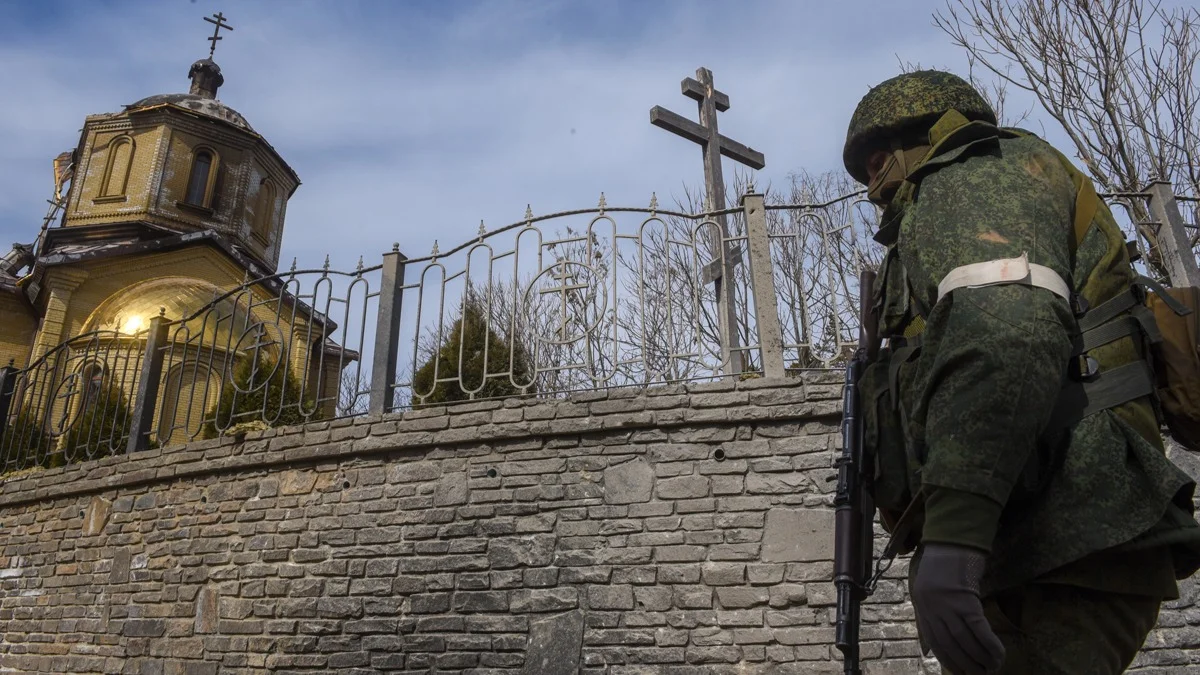
Photo: URA.ru / TASS
“On the territory of the Pokrovsko-Tikhonovsky church of the city of Slavyansk-on-Kuban, a search was searched with the participation of armed employees of the Sobr. Technology, church money, etc., objects were seized. The connection temporarily did not work, ”such a message appeared on October 7 on the official website of the South Russian diocese of the Russian Orthodox Church (RSPC)-one of the“ fragments ”of the Russian Orthodox Church abroad (ROCS) that did not recognize the ROC of the Moscow Patriarchate.
The events reported by the diocese took place on October 3, and conflicting information spread about them. Journalists could not establish a connection with the head of the diocese (and rector of the temple) by 86-year-old archbishop Victor (Pivovarov), nor with his assistant, hieromonk Iona (Sigida). Rumors were distributed that the archbishop was missing, and about. Iona was imprisoned. Today we can restore a more or less complete picture of what happened and understand the causes of the incident-the already first archbishop Victor in the history of this community and personally.
"People understand everything ..."
In the official message of the diocese, it is noted that the elderly clergyman warned of the prospect of the criminal case under Art. 280.3 of the Criminal Code of the Russian Federation - for the "re -discredit" of the Armed Forces of the Russian Federation. However, while the archbishop was not detained - he was seized from his phone, money and some documents. The authorities believe that Victor for the first time “discredited” the RF Armed Forces in his sermon on February 19 this year, when he spoke with the Amvon about the “injustice of aggressive wars”. During the preaching in the temple, there was a certain woman, whom the clergy and parishioners did not see either before or after. Hearing the words of the archbishop, she threatened him with troubles and left the temple. Soon, the police who drew up the protocol arrived there, and the local court appointed the hierarch a fine of 40 thousand rubles under Art. 20.3.3. Administrative Code of the Russian Federation ("Public actions aimed at discrediting the use of the Armed Forces of the Russian Federation in order to protect the interests of the Russian Federation and its citizens").
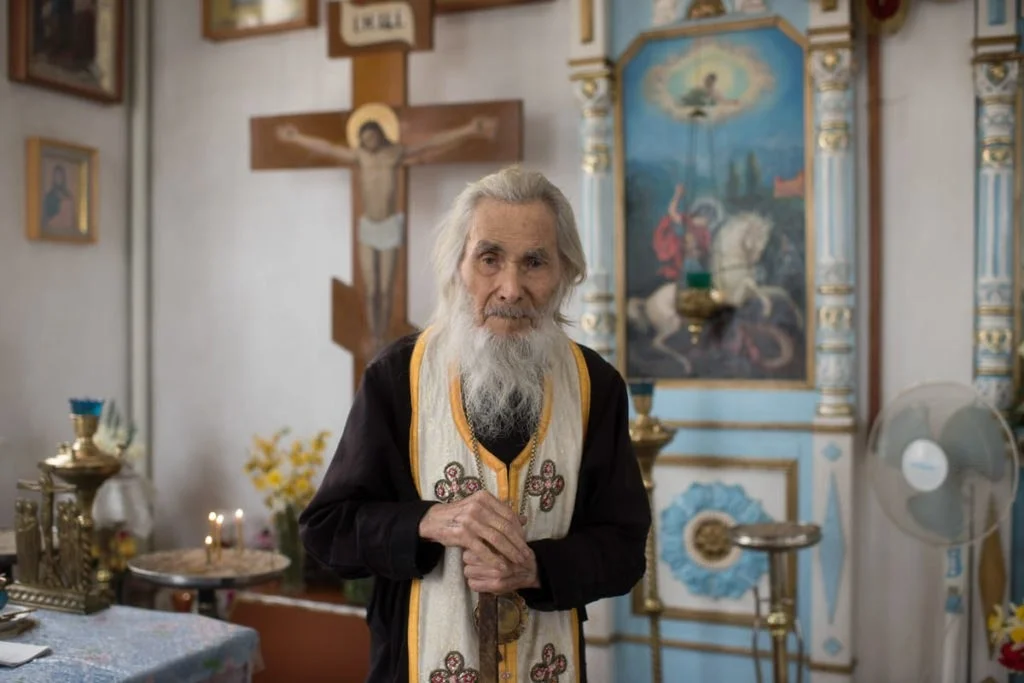
The anti -war position of the “alternative” hierarch is the logical fruit of its long anti -Soviet (wider - antisystem) life. He was born on the eve of the Great Stalinist terror, in February 1937, in a small village in Altai, he was baptized by a secret catacomb priest. In the 50s, the catacombnik Yakov Arkatov settled in the Pivovarov house, who, one might say, formed the worldview of the young man. Victor threw his studies at a technical school (so as not to join the Komsomol), served in the army and entered the Moscow Theological Seminary, and then to the Academy. True, they did not give it to the future hierarch - because he openly opposed the "agents of godlessness" and the KGB among the highest hierarchy of the Russian Orthodox Church.
His wandering path began along various dioceses and parishes, where he unofficially worked just a worker or a watchman: the path to ordination with a “wolf ticket” was closed, but Victor did not seek.
In 1984, the ROCZ anonymously published in Montreal his work “in the arms of the seven -headed serpent”, denouncing the Soviet power and the Moscow Patriarchate through the prism of the prophecies of the apocalypse. Victor still considers the interpretation of this mysterious book of the Bible to his main theological task.
After the legal parishes of the ROCZ appeared in Russia in the early 90s, which categorically did not recognize the Moscow Patriarchate at that time, at the age of 56, Victor finally accepted the ordination of the priest from the Emigrant Bishop Barnabas (Prokofiev). In the same years, about. Victor built a modest temple on a private section in Slavyansk-on-Kuban, in which he serves to this day. When at the beginning of the zero ROCZ began to break up under the influence of a “special operation” on its accession to the Moscow Patriarchate, Victor became a bishop of one of the “fragments” of the foreign church that did not accept this annex.
His bishop's chirotonia took place in 2003 in the temple of all saints, in the land of the Russian shot in Paris. As a result of further divisions of the “fragments” of the ROCZ, Archbishop Victor remained outside of any synodes-religious scholars distinguish his group consisting of a dozen communities, into a separate church jurisdiction-Rospts (B).
He simply explains his uncompromising position: “I am soon to the next world, I must warn my flock so that they would not be leaning to the left or to the right.” Remembering his communication with police and investigators in February-March, he claims that they are in solidarity with the archbishop. It is significant that not only parishioners, but also ordinary residents of Slavyansk-on-Kuban who did not go to his church were collected for a fine for the lords: “The people of unfamiliar people began to come from the city ... They say: here is the money-pay. They understand everything. "
Contacts with security forces, not very pleasant for an elderly clergyman, began in 2014, when Victor appropriately described events in Crimea. Now he is sharing with all his prophecies that are interested in the nuclear war and the archbishop is waiting for his arrest or murder. He says that he is not afraid of them at his age - on the contrary, if he becomes a martyr, then more people will hear his word and think about the “secret lawlessness”.
"I will not give a password - we will shake the beard!"
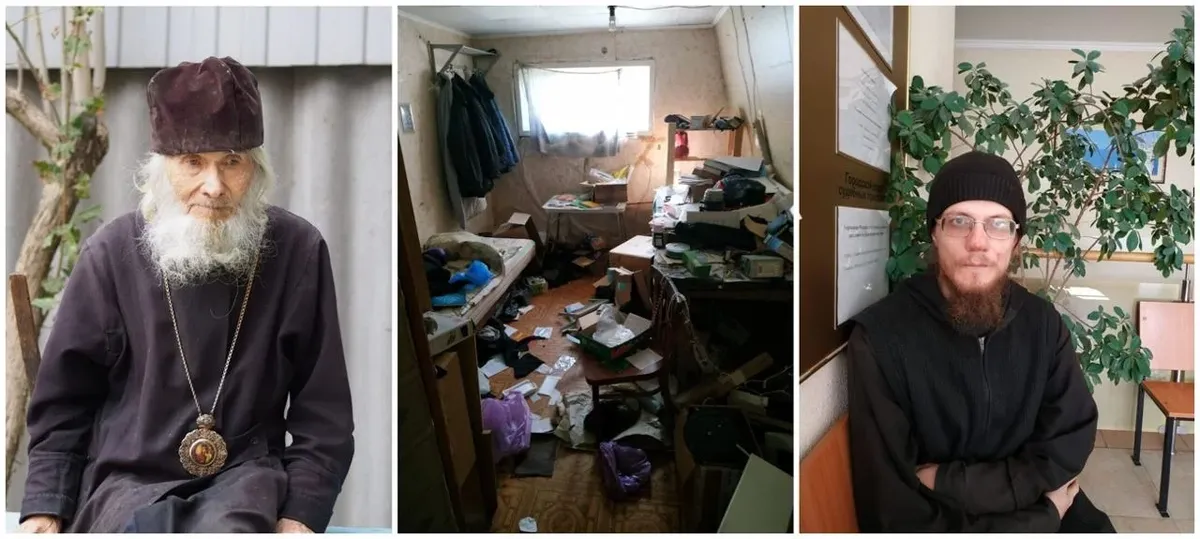
Let us return to the events in the Slavic church on October 3, whose main character was the assistant to the Lord, 40-year-old Hieromonk Jonah (Sigida). As he says, the security forces knocked on the temple at six in the morning. When about. Iona opened the doors, he knocked him to the floor, pressing his back with his knee - so that it became difficult to breathe. There were ten riot police, they were in body armor, with machine guns, they talked rudely. They unceremoniously entered the altar, threw sacred vessels from the throne and the altar on the floor. Then they led the hieromonk to the church house, where they hit him several more times, demanding to give all the phones and report the password from the computer. O. Iona tried to refuse, referring to the 51st article of the Constitution, which caused laughter and obscene replicas from law enforcement officers. Then they behaved non -standard, in the spirit of the Union of militant atheists:
The hieromonk turned his nose, brought scissors and a razor, threatening to deprive him of a beard and mustache. Having received access to the computer in this way, the security forces found that about. Iona visits Ukrainian news sites. This caused a new attack of aggression: "You are a Nazi, fascist!"
Having completed the search, which was carried out in emphasized hard style, the police brought Fr. Ion on the street, where two unknown young people who called the witnessed signed a protocol that Hieromonk "resisted the legal requirements of police officers." The hieromonk was taken to the IVS, and on October 4 they took them to the Slavic district court, where Judge Natalya Kovalchuk first returned the protocol to law enforcement officers, but then examined it and sentenced Fr. Ion (in the world - Ilya Sigid) by two days of administrative arrest under Art. 19.3.1 Administrative Code of the Russian Federation (“Disocation to the legal order of police officers”).
After the release of October 6, about. Iona said that the interrogations of the security forces were interested in the reasons and the purpose of writing the article “Cult of War”. Obviously, the question of the next charges - in the “discredit” of the RF Armed Forces - was not removed from the agenda.
When the correspondent of "New" called Fr. Iona, his voice was depressed and he spoke very hard. It can be seen that I had a shock and practically did not sleep the last three days.
"Cult of the War" against the remnants of Christianity
Anti -war article about. Iona appeared on the website of the diocese on September 28. She is not about politics, but about theology and biblical prophecies - from the book of the Prophet Daniel and from the Apocalypse. It is difficult not to notice how they come true before our eyes - even those that they had not paid attention to before.
Hieromonk puts forward the thesis “The cult of war is an integral part of all totalitarian anti-human regimes” and begins with the prophecy of Daniel (Dan. 11: 36-37) about the ruler who will introduce this cult: “And the king will act in its arbitrariness, and will be exalted and exalt beyond any deity ... and will be successful, he will not be done until the anger will not be committed: because it will not be done that the anger will be done. Predinated, it will be fulfilled. And he will not think about the gods of his fathers, and neither the desire of his wives, nor even the deity does not respect any deity; For it will be highlighted above all. ”
In the focus of criticism about. Jonah - Moscow Patriarchate. In his opinion, the rebirth of the Russian Orthodox Church occurred after the Great Patriotic War, when the demobilized Red Army soldiers became Soviet priests, who did not interfere with the KGB agents.
The current militarization of the Moscow Patriarchate began even before the events of 2014, when the Trebnik (liturgical book) with a very unexpected “rank of blessing of military weapons” was published.
He looks like this: “The weapon is entered into the temple, relies in front of the Amvon, that is, in front of the royal gates, on a table covered with a table, and a priest or a bishop, leaving the altar and giving a weapon crossly, begins to read prayers.”
Traditionally, according to this ritual, the church was consecrated only by sacred objects such as liturgical vessels, and forbade weapons to be brought into the temple. The Byzantine emperor Theodosius spoke at the third Ecumenical Council (431): "We, who are always the right number of state squires are surrounded and who do not befined to be without squires, when, however, we enter the temple of God, we leave weapons outside the temple." O. Iona draws attention to the words from the Trebnik about the use of weapons for the "protecting the truth of Christ", seeing in them "an attempt to turn the Church into an instrument of earthly violence."
The article notes that for the sake of neoimpersian militaristic ideology, the Russian Orthodox Church came up with a new rank of saints - “righteous warriors”, which was never in the church.
Yes, martyrs with the nicknames “Warrior” or “Stratilat” are found in the saints, but these nicknames are used only to distinguish them from other saints with the same names, and indicate their occupation before the Christian feat.
13th rule of St. Vasily the Great is excommunicated from the participle for three years of Christian warriors who returned from the war. The first representative of the new rank of Fr. Iona considers Admiral Fedor Ushakov, canonized the Russian Orthodox Church on the initiative of Metropolitan Kirill (Gundyaev) in 2004. Today, the Synod is already Patriarch Kirill, preparations for the canonization of Admiral Nakhimov and Generalissimus Suvorov, devalizing the church hires to a certain analogue of the Soviet list of national heroes.
More than small balance
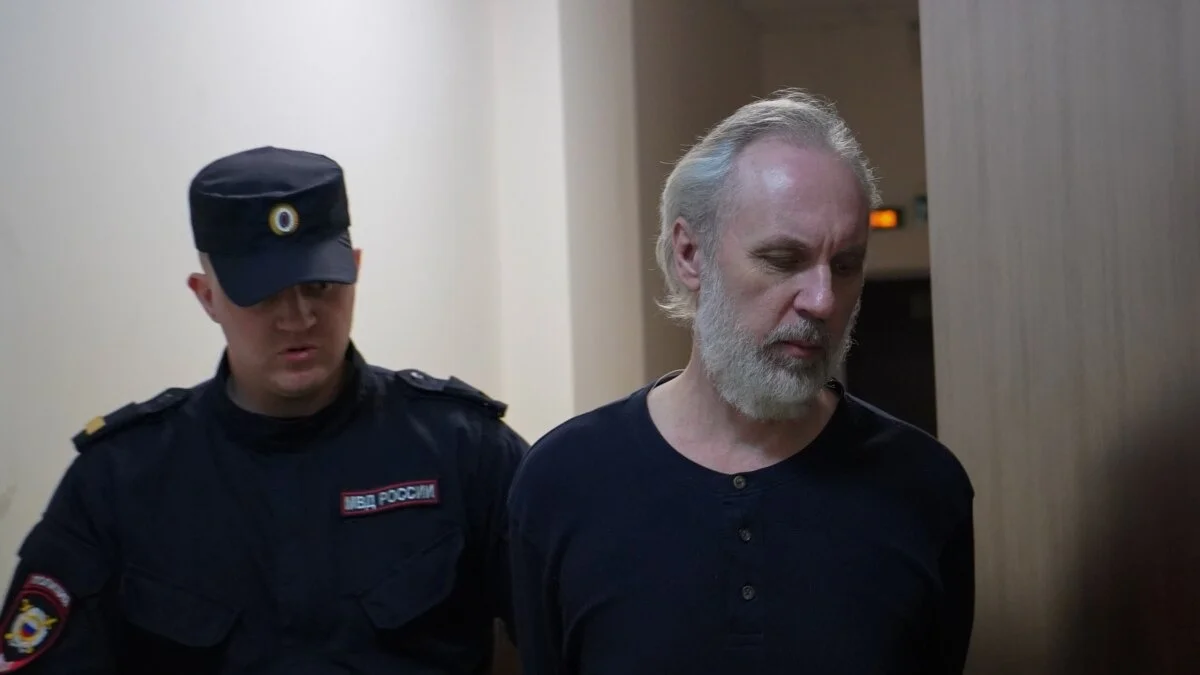
Over the past year and a half, about a thousand criminal cases have been instituted in Russia under articles on “discrediting the RF Armed Forces” and the “dissemination of inaccurate information” about the same Sun. Among their defendants, there are also representatives of “alternative” Orthodoxy. The most striking example of this kind is Hieromonk John (Kramoyarov) from St. Petersburg, belonging to the branch of the ROCZ, which has a center in Odessa (ROCZ (A)). Despite the repentance of the defendant, the Kalininsky district court of St. Petersburg sent Fr. John to the colony for three years. The “fake” is recognized as a purely religious judgment that blessed souls are in paradise, and “the peacekeepers are blessed”.
The bishop of another “alternative” church of Sergius (Ageeva) from the Pskov region is accused of “creating a religious association encroaching on life and health”.
The Russian Orthodox Church began to keep an official list of “False Priests, including Raskolnikov, which clearly appeals to law enforcement agencies.
Clearics affected by the commandment of “Blessed peacekeepers” are also available in the Russian Orthodox Church - as a rule, in their regard, the authorities are limited to administrative punishments. This, for example, is Priest John Burdin from Kostroma, Priest John Koval from Moscow and the famous disgraced protodiacon Andrei Kuraev. But in percentage terms, the number of Orthodox clergy faithful in Russia turned out to be negligible: the only church-antivisial appeal in February last year, written very carefully and loyally, signed only 294 cleric. This is approximately 0.5% of the total number of the clergy of the Russian Orthodox Church.