
Translated material
Abandoned Moscow
How the Chekists fled from the capital on October 16, 1941, waiting for the assault from the Wehrmacht
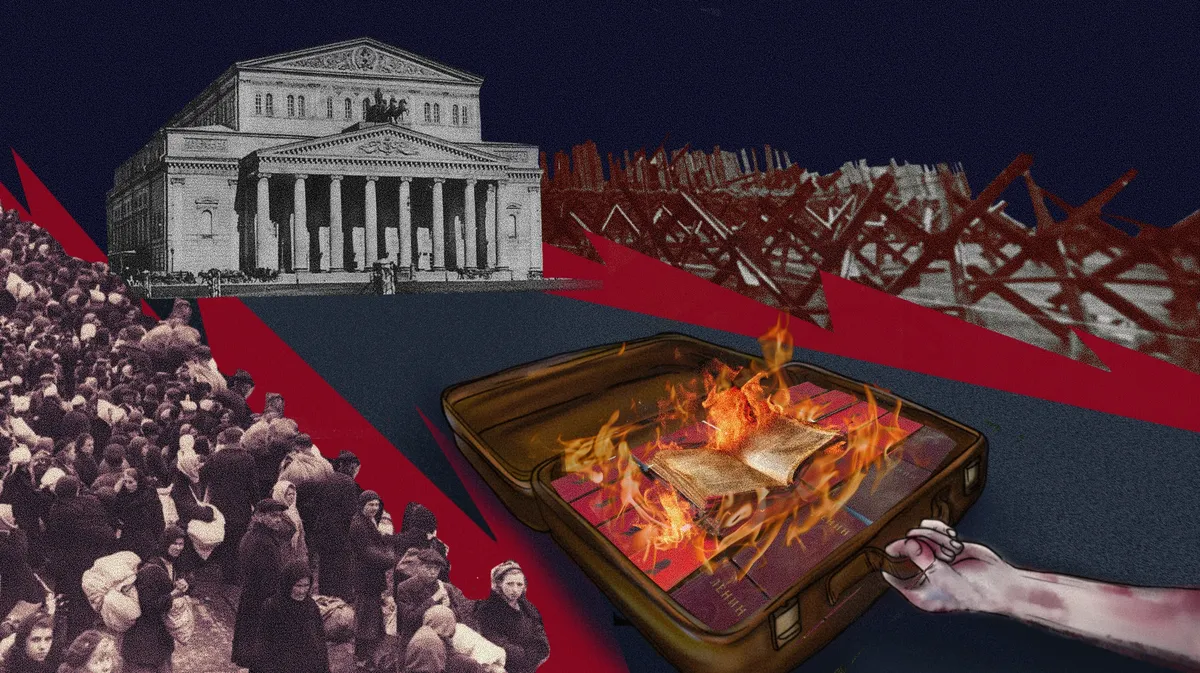
Illustration: Anastasia Kshishtof
On October 16, 1941 (more precisely - 15.16 and October 17) - this is the culmination of the first four -month period of the war.
On October 16, on the radio in the morning report of the Swinformburo, it was reported: "Over the past day, the situation on the Western Front worsened." After this radio - only it gave the country's population minimal information - fell silent. Complete information silence has come. The Wehrmacht stood on the threshold of Moscow, the city swept a panic. Soviet leaders and Chekists fled from the capital.
Speak witnesses on October 16
From the memoirs of the historian George Mirsky: “Only when I went out onto Gorky Street, I began to guess what really happened at the front. Black “Emki” raced along the street one after another. They sat officers with their families. On the roofs of the cars, suitcases, nodes and some boxes were tied. This was the officers of the headquarters of the Moscow Military District. Early in the morning, the district’s headquarters received a secret military summary, from which it followed that the Germans broke through the front and had already reached Mozhaisk 100 km from the capital. The headquarters, apparently, decided that the Germans could be expected in Moscow from an hour to hour. And the staff draped. "The writer Daniil Granin writes that the Soviet Prime Minister Alexei Kosygin told him about October 16, at that time the former deputy chairman of the Council of People's Commissars: “The government was evacuated to Kuibyshev. The Council of People's Commissars are empty. The doors are open wide. Phones called everywhere. Kosygin passed from the office to the office, picked up the phone, answered to show that the power was working. ”
The ambulance doctor, Alexander Drazer, recalled: “According to Sadovaya, they steal a myriad of pigs and cows somewhere. Dark personalities pull pigs almost in front of the shepherds. ” There is a newsreel - cows and pigs pass in front of a large theater.
Mass dismissals were underway at the enterprises. On October 16, they urgently distributed a salary, although not everyone and not everywhere. People who awaited the money saw how the authorities flee.
The deputy director of the Tochizmeritel plant named after Molotov by the name of Rygin, loading the car with a large number of food, tried to leave the factory territory. He was detained and beaten by workers.
The writer Arkady the first -born recalls: “We left Moscow along the Enthusiasts highways. It was broken by the crowd. Several people rushed to the steps, on the roof of the car. They stuck on the glasses. The windshield cracked and crumbled. Dozens of hands grabbed the car and stuck on the side of the road. Some man raised the hood and began to tear the wiring. The dozens of hands reached out into the car and pulled out my wife. "What do you need?" I shouted. In response, a hundred votes yelled: “I suppose you are taking the money? And we were thrown hungry! I suppose a party organizer or director, a bastard?”
I understood them. I looked at their failed cheeks, at black greasy coats and torn shoes and suddenly saw a terrible abyss that disconnected us, today's bar, and these people. I shouted that I was a Soviet writer, that I was removed from military registration due to illness, that my own car. I write books and bought myself a car. They decided to let us go. Before that, they still beat our car. They pulled out a jacket from his wife’s hands, took my wolf hunes. And that's it. We went. I saw how to rob another ZIS. Dozens of packs of cigarettes, dozens of steam socks and stockings flew from it. It was a car of one of the statesmen. He took out a whole store. Bread flew out of the car and fell on the road. Some man jumped to this bread, grabbed it and began to quickly eat it. ”
George Mirsky said: “On October 16, garbage boxes in Moscow yards made the greatest impression. They were full of red binding books to the top. These were Lenin's works. They did not fit in containers, they were dumped right on the streets and burned. The entire center of Moscow was in this smoke. On the Kuznetsk bridge, on Lubyanka, on Myasnitskaya there was black snow - the ashes of the burned documents. Papers with a “secret” stamp flew through the streets. ”
It was the climax of the beginning of the war, the main mood of which was a complete misunderstanding of what was happening, from the very top to the bottom.
The crash of Stalin's plans
On the morning of June 22, 1941, within seven hours after the German attack, the power was in such shock that it forgot to notify the population that the war had begun.
Molotov recalled: "On that day, in the fever of the conversation, telephone calls, someone said that it would be necessary to speak on the radio, tell the people about what had happened, and call to the enemy to recover."
Stalin refused to speak. At 12:15, eight hours after the start of the war, Molotov spoke.
After the radio, Stalin told him: “I called the front commander now, they do not even know the exact situation. It is simply amazing that such large military leaders - and suddenly were confused. They themselves must reflect the enemy, without waiting for our orders, they are the army. ”
It was useless to wait for orders on top 22. At the time of the attack of Germany, the Stalinist plan of a preventive, warning strike on Germany, suggested exclusively offensive operations in the enemy’s territory collapsed.

On May 5, 1941, Stalin spoke to graduates of military academies, party and military elite. At the then banquet, in response to the toast of one of the generals “For a peaceful Stalinist foreign policy”, Stalin gives a replica: “We are obliged to move from defense to military policy of offensive actions. The Red Army is a modern army, and the modern army is an offensive army. ”
Following this Stalinist performance, a plan of Zhukov-Timoshenko-Vasilevsky appeared. Marshal Zhukov about this in 1965 will say:
“The idea to warn Hitler appeared with Tymoshenko in connection with the speech of Stalin on May 5, 1941. A specific task was set by Vasilevsky. On May 15, he reported to the Directive project to the People's Commissar of Tymoshenko and me. ”
The main preemptive blow should be delivered in the southwest. German troops are cut off from the Balkans, primarily from Romanian oil. The subsequent task is to master the territory of the former Poland and East Prussia. Finally - the capture of Berlin.
The first reaction of Stalin to the plan of Vasilevsky-Zhukov is actively negative. He was afraid to provoke Germany and lose the initiative. Then Stalin changed his mind. It is in accordance with the plan of the preemptive strike that the entire regrouping of the Soviet troops in the early summer of 1941 is going on. Close to the border moves warehouses with combustible, ammunition and weapons. Aerodromes are deployed on the border. On June 22, the first blow of the German Luftwaffe will be delivered precisely on these airfields. New MIGs will not even have time to get into the air. In the first hours of the war, even before Molotov’s radio, 1,200 aircraft will be lost. 900 of them - right on the ground. Stalin planned his war for 1942. In the 41st, Stalin is not ready for the offensive or the defense. The country that has been attacked is actually left to itself.
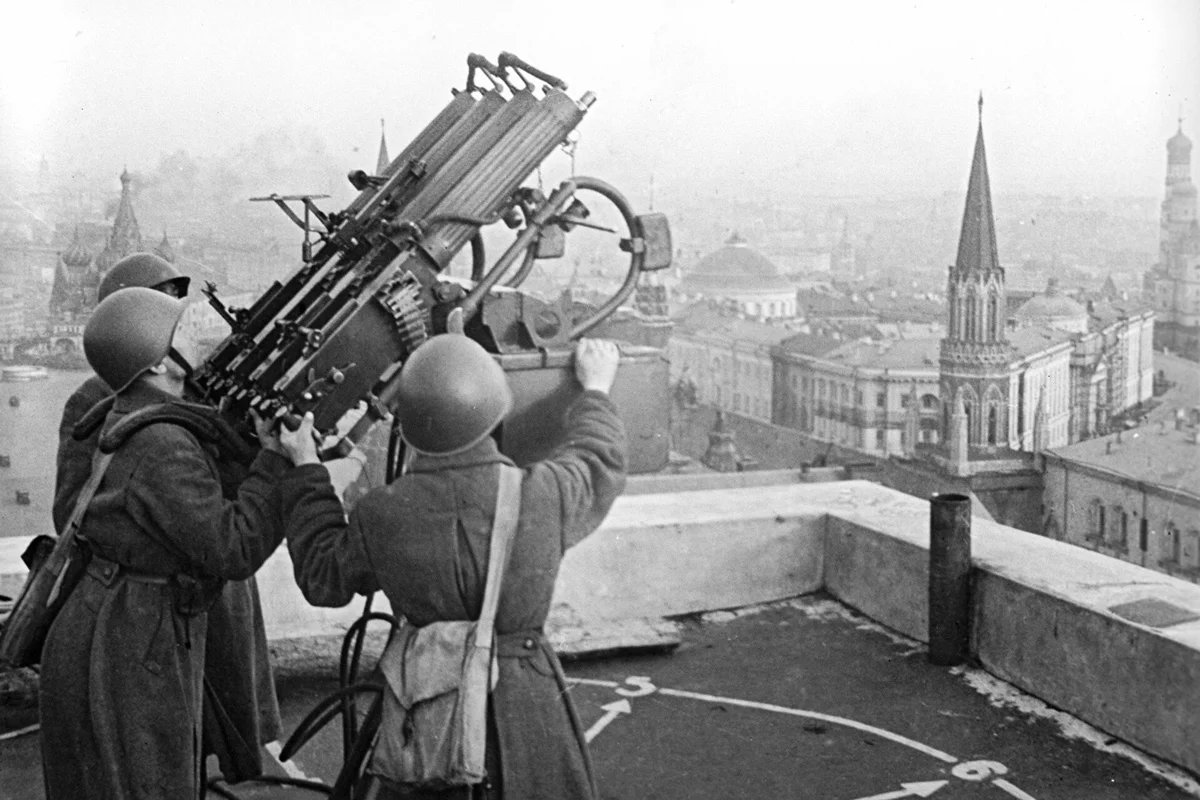
Oleg Knorring / Ria Novosti Archive / Wikimedia.org (CC-by-SA 3.0)
A grand migration begins from east to west and west to east. Trains going to Minsk on the third day of the war no longer reach the destination. The commanders of the Western District, in large quantities (contrary to information about the date of German attack), sent on vacation, cannot reach their parts. Mobilized young men go along the highway and country roads to the West, who do not want to be considered deserters, but do not understand how to get to their draft points, and do not know that the Germans are already close. Often they intersect with commanders returning from vacations, form companies and battalions, and independently build defense lines. There is no understanding, where the front line is, where the headquarters is.
Women, children, old people, girls with small knots go east. They go along the roadsides, cars are driving along the roads. German planes are chasing people and cars, firing from machine guns. People are flopped into dust, in roadside ditches. They are crossed by a machine gun queue.
At the edge of the field, four in military uniforms demanded documents from a person in civilian clothes. He replied that he had no documents.
They demanded again, then he shouted: “Documents to you? Catch Hitler! Anyway, you can’t catch him! "
The military silently pulled out a naga and shot. The civilian bent and fell. Maybe this was a saboteur, but most likely-just some mobilized, brought to despair with three-day orch in search of his draft point. Thousands of people from stopped and bombed trains were dug up these days to the draft points. As soon as the shot fell, the bomb exploded nearby. A moment later, a shot and shot at him, killed by a military fragment, lay nearby.
Minsk was left by the troops of the Western Front. The 3rd, 4th and 10th armies are already surrounded southwest of Minsk. This is the first large boiler. 330 thousand captured Soviet soldiers and officers. Then there will be more terrible boilers.
Retreating tankers throw tanks. The partisan detachment commander, the Belarusian writer Alexei Karpyuk, who lived in June of the 41st in the village near the Blovostok-Volkovsk-Lonim highway, recalled: “Soviet tanks remained on the highway-intact, painted with fresh paint, machine guns and guns.” Tankers without tanks recede with the infantry. There is no connection in the troops. Management is lost. On the roads of the crowd of people.
Konstantin Simonov, at that time, a military correspondent, who was on the Western Front, wrote in his diary: “The mood was desperate. Everything was still incomprehensible. The radio reported on the surrender of small towns at the border; Minsk was not mentioned. They talked about the capture of Kovno and Bialystok. Meanwhile, in Mogilev they said that the battles are already under Bobruisk. There was a feeling that in front, in the West, our armies are fighting, and between them and our other troops are Germans.
It really was. Only with the difference that our armies in the West were surrounded and went out in units. After terrible defeats on the borders in the first two days of the war, it was decided not to support everyone who remained, not to help surrounded units, not to throw new divisions to eat. They decided to leave everyone there, ahead, to the mercy of fate, to fight and die, and from everything that was in the rear, along the Dnieper and Berezin, organize a new line of defense. If not for this, the Germans would really have reached Moscow in 6 weeks. ”
On the country road near Mogilev, the policeman who came from from his own initiative gathers from the encirclement of loners. It stands on the road in the hope that some commander will pass. Nearby on the side of the road there are two, bursting out of the encirclement.
At all nearby, on July 12 and 13, there was a battle. The 12th battle lasted 14 hours, the 13th-10 hours. The 12th regiment under the command of [Semyon] Kutepov was the tanks of General Model. Tanks with open hatches, of which German officers stick out to the waist. Behind the tanks - an infantry with twisted sleeves. Kutepovtsy will destroy 39 tanks.
The brave man General Markov, the legend of the White Volunteer Army, and before that the hero of the German war, in 1915 spoke of such situations: "It is so scary that it is even fun."
The next day, the 13th, the Germans will take a mental attack. Their infantry will go with slender columns with deployed banners. Few will survive of these columns. After the reflection of the mental attack at the Kutepov, a strange expression on the face of Kutepov: at the same time, willingness to fight for a day and at the same time - the willingness to fall asleep at any second.
July 14 - silence. The German funeral team works. Kutepers do not interfere. A large plot of several hectares on the neutral strip is covered with birch crosses over German graves. On the night of the 12th to the 13th, during a respite between the battles, our and German funeral brigades worked together.
The Kutepovtsy decided among themselves: so that there it was around, whoever retreated there, and we are standing here by Mogilev, and we will stand while we are alive. From the very beginning, the war provided people with the possibility of an independent choice that they were deprived of in a pre -war life. Even so hard as standing to death. The command on its part could not offer anything, it was disastrously not ready for a planned, organized retreat.
How they left Smolensk
With the outbreak of war, primarily a communication system came out of the system. Not a single underground connection unit. Stalin and Zhukov are associated with the fronts through the central telegraph on Gorky Street. One bombing could deprive Stalin in general of all information.
On July 15, the mass outcome of the inhabitants from Smolensk began. Leonid Andreev, in the future, the professor, the dean of the Philfak MSU, recalled: “The streets were filled with refugees and troops. They traded ice cream at a broken house. German planes hung in a bright sky. In a store without windows and doors, there was a queue for sour cream. On the shore lay eight corpses of executed German paratroopers. Under the bridge were laid with explosives. On the bridge, the tractor drove along the head of a murdered teenager. Panic drove people to the station, deprived of his mind. The composition with open cargo platforms approached. Thousands of people rushed to them, overturning each other, dropping nodes and suitcases, screaming, crying and cursing.

A large -caliber anti -aircraft machine gun suddenly stood next to the composition. People darted to the walls of the station, under the platforms. The lost girl of about four years old cried uncontrollably. The machine -gun queue showered it with splashes of broken plaster. ”
By July 20, in the area of Smolensk, three of our armies are surrounded-the 16th, 19th and 20th. The Germans already occupied Yelnya, creating a bridgehead, nominated to the east.
The Soviet military leadership believes that this is not a German breakthrough at all, but simply a large landing, he thinks to recapture Yelnya in three to four days. They will free Yelnya after a month and a half. But when Zhukov steps on Yelnya, the Germans step on Kyiv.
Under Kyiv, surrounded in the boiler-five armies of the South-Western Front. According to German data, 665 thousand people turn out to be captured near Kyiv. According to the historian of General D. Volkogonov - 453 thousand people, including 60 thousand command staff.
In the Mozyr -Ghotel region, 78 thousand are captured, in the Uman boiler surrounded by two armies, 103 thousand prisoners.
From June to December 1941, up to 3 million 335 thousand Soviet soldiers and officers will be in German captivity.
On the Western Front, up to 300 thousand people are captured only during the Smolensk battle. Almost 300 thousand wounded, more than 200 thousand dead. Smolensky and the civilian population surrounded by Smolensk have the only way to exit - this is a narrow crossing across the Dnieper near the village of Solovyovo. The participant in the events Vasily Polzhenko recalled: “From west to east they flocked from a wide front to the Solovyovsky crossing. The crossing of the air had no crossing. Fascist pilots from a shaving flight shot human flows. At the crossing of human bodies, carts and dead horses, a dam was formed.
Typhoon operation
The Germans remain to Moscow 300 kilometers. The German offensive operation for the capital is called Typhoon. Its planning was completed by September 19. The command of the Western Front only reports to the bet on September 26, which, according to intelligence, is possibly a German attack on Moscow. The next day, a directive is published on the need to transition to “strict and persistent defense”, the creation of front -line reserves and the improvement of defensive structures. But these documents do not have time to reach the advanced parts.
The command post of the Western Front at that time is located near the Kasnya station, at the prevailing height in a bright white with the columns of the old mansion of the princes of the Volkonsky. All entrances to the house are sprinkled with yellow sand. The connection node - under light visors next to the estate. There is a lively movement of vehicles and military personnel.
On the first day of the Typhoon operation, October 2, 27 bombers strike at the command post of the Western Front. The building is destroyed, 73 killed.
The primary task of the German command is the environment and destruction of the Soviet troops in the areas of Bryansk and Vyazma. The solution to this problem opens the way to Moscow.
The eagle was taken on September 3, absolutely unexpected for the command of the Bryansk Front. When German tanks burst into the eagle, trams full of people go quietly in the city.
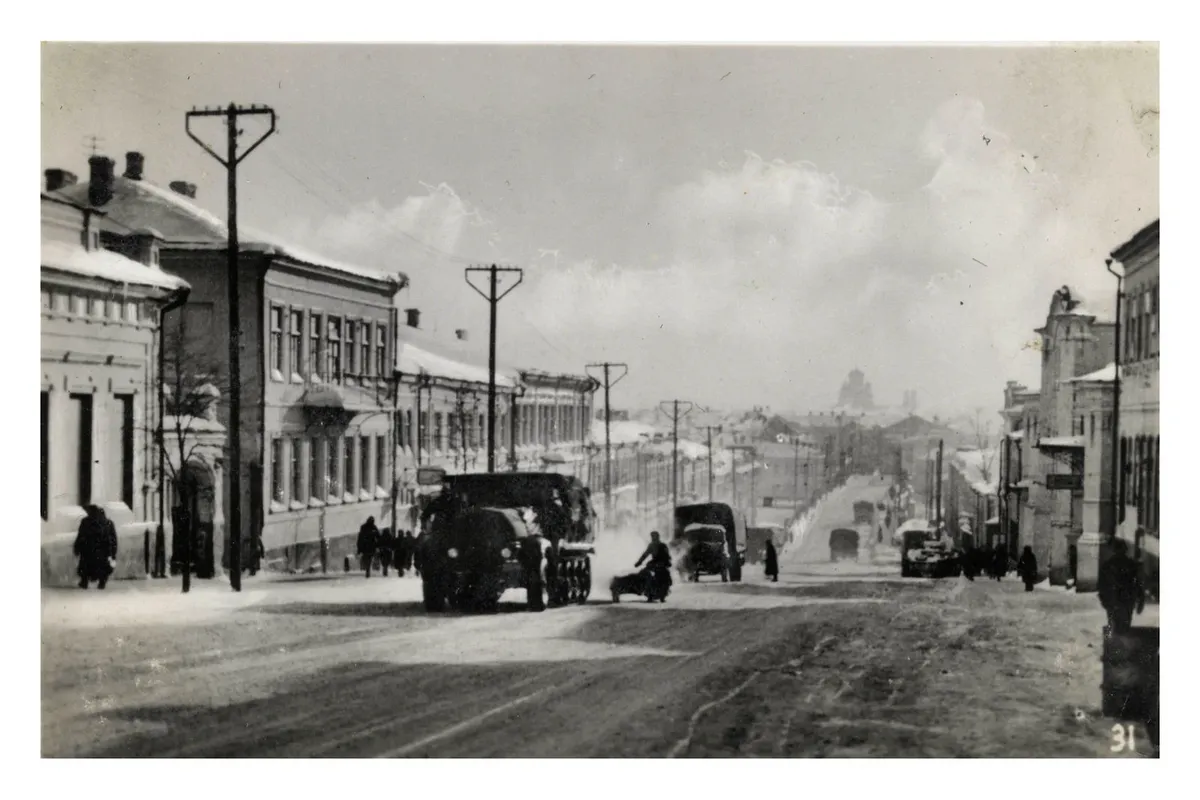
The commander of the Oryol Military District, Lieutenant General Tyurin, responsible for the defense of the city, learns about the capture of the city from the Disagrean, who runs to the headquarters with a cry that German tanks on the streets of the city. Three days later, October 6, Bryansk was surrounded and taken. Three armies are in the boiler. Less than 20% of personnel will come out of the environment.
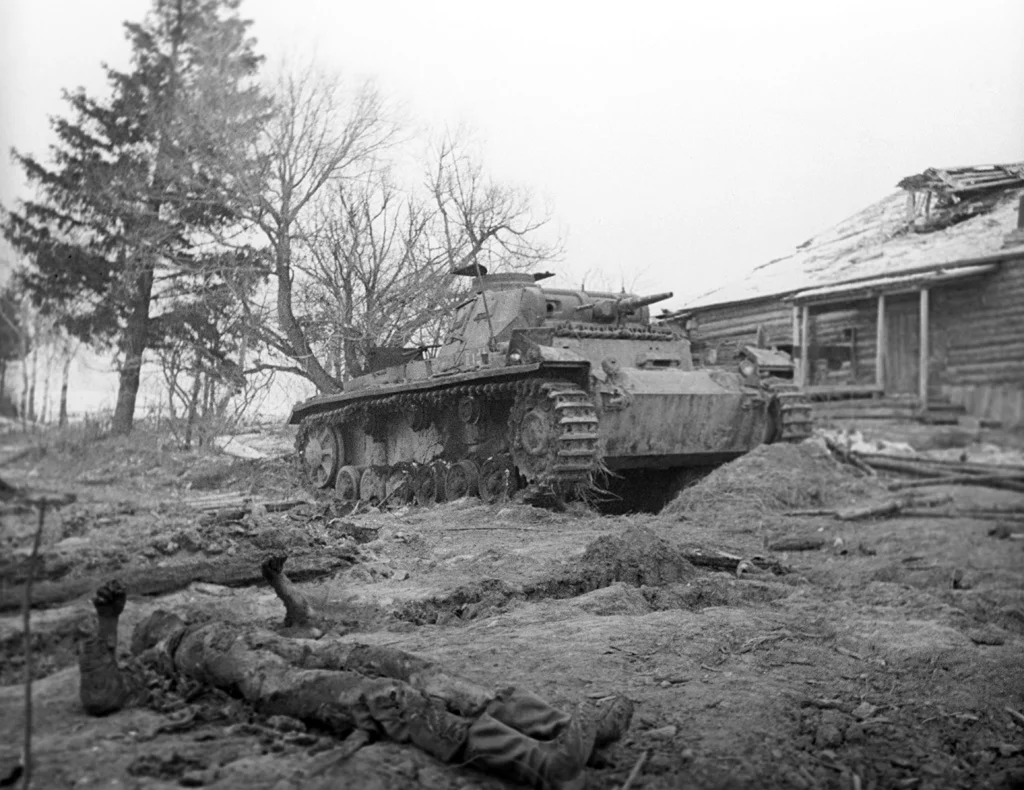
When it is decided to withdraw the troops to the Rzhev -Vyazma line, the militias will be covered by the departure. These are people of older ages and youth, unusable to the combat service. They have weapons from the First World War. One rifle for two, and on all - one machine gun. The combat training level is extremely low. But they are volunteers and show incredible resistance.
When a decision will be decided to withdraw the troops to the Rzhev -Vyazma line, these people will cover the withdrawal. And it was they who will be under the blow of the German armies of the Center group. And they will fall into the most terrible environment near Vyazma.
Ополченец Борис Фридман вспоминал: «1 октября 41-го года мы сидим с однополчанином, беседуем о том о сем, и он, регулярно бывавший в штабе полка, говорит мне: “Идут разговоры, что мы уже окружены”. Я ему в ответ: “Да что вы, Александр Николаевич, этого не может быть, была бы слышна стрельба, а кругом так тихо, так спокойно”».
Бомбардировка будет на следующий день, 2 октября. Операция «Тайфун» начинается с тотальной бомбардировки. Она полностью нарушает связь между советскими войсками. Немецкие танковые клинья по гигантским дугам двигаются в обход основных сил наших армий и уже 7 октября завершают полное окружение наших частей. Затем по магистрали Москва–Минск они рассекают окруженную группировку надвое и приступают к ее уничтожению. Предвидя катастрофу окружения, командующий Западным фронтом Конев еще 4 октября докладывает Сталину о ситуации. Всё решают часы и даже минуты, но 4-го Сталин разрешения на организованное отступление не дает. Только 5 октября Ставка утвердит приказ об отступлении. Реально оно начнется только 6-го. It will be too late. Окруженец военврач Иван Акопов вспоминал: «На глазах разваливалась вся организация отступления. Все части перемешались, никто не управлял движением. Карт у нас не было, не было их и у командиров других частей. Некоторые части стали сворачивать с главной дороги на прилегающие, чтобы ускорить продвижение. Попадались брошенные грузовики, видели отдыхающих, в одиночку и группами. На наш вопрос, куда они идут, отвечали, что идут куда глаза глядят, надеясь выйти к своим».
Ополченец Александр Леляичев: «Раненых взять нельзя, мертвых захоронить тоже. Отходим».
Еще из воспоминаний окруженца: «Когда я очнулся после бомбежки, вокруг было безлюдно. Только убитые. Я пошел по лесной дороге, меня нагнал военный грузовик. Мне помогли залезть. Проехали одну деревню. Not a soul on the street. Проехали еще две деревни — всюду тихо. И это стало успокаивать. И вот на полном ходу мы въезжаем в следующую деревню — и попадаем в кольцо немецких танков. Нас останавливают. Возникают немецкие автоматчики. Я — в плену. Новые группы пленных прибывали весь следующий день. Потом нас всех привели в транзитный лагерь для военнопленных в маленьком городке. Потом колонна военнопленных двинулась в долгий путь. Ни конца, ни начала ее видно не было».
ИЗ ВОСПОМИНАНИЙ БЫВШЕГО ПЛЕННОГО:
«В больших селах колонна ненадолго останавливалась. Деревенские старики сумрачно глядели на нас, и я не видел сочувствия в их глазах».
Вязьма в двухстах километрах от Москвы — это адский котел, в котором перемешалось всё: окружение, плен и невероятной ожесточенности, поистине героические бои окруженцев, на две недели сковавшие немецкое продвижение на Москву.
Вспоминает военврач Иван Акопов: «Погиб весь орудийный расчет действующей пушки. Вокруг орудия в разных позах лежало несколько трупов. Один возле самого колеса пушки с раскинутыми руками и широко открытыми глазами как будто смотрел в небо. Взгляд последнего живого артиллериста был полон ненависти и, я бы сказал, азарта. Он не чувствовал, что всё его лицо забрызгано кровью его погибших товарищей, и ничего не ощущал вокруг, кроме врага… Я заметил еще одного раненого, который лежал на спине и что-то громко говорил. Я подбежал к нему и ужаснулся: он был ранен в живот, вышел значительный отрезок кишечной петли, он вряд ли мог остаться в живых, я перевязывал его, а он смотрел на летящие над нами самолеты и с ненавистью твердил: ”Стреляй, строчи, фашистская сволочь! Мы еще повоюем с вами”».
Окружение под Вязьмой — это до 600 тысяч пленных и около 400 тысяч убитых. После войны Богородицкое поле под Вязьмой пахать было нельзя. Человеческие кости лежали на глубине штыковой лопаты.
Cталин, не давший своевременный приказ об отступлении, 8 октября шлет паническую радиограмму в штаб окруженной 19-й армии: «Из-за неприхода окруженных войск к Москве Москву защищать некем и нечем. Повторяю: некем и нечем».
Ожесточенные бои идут уже под Можайском. Они идут и прямо на Бородинском поле. Эти бои на неделю сдерживают немецкое наступление. А счет в это время идет на дни.

«Товарищ Сталин не предатель»
Это было как раз 16 октября, когда в Москве замолчало радио, и целый день не было ни одного спокойного голоса, который обратился бы к населению и сказал: «Надо защищать город».
Писатель Аркадий Первенцев вспоминал: «16 октября брошенный город грабился. Я видел, как грабили фабрику “Большевик” и дорога была усеяна печеньем. Грабили мясокомбинат имени Микояна. Сотни тысяч распущенных рабочих, сотни тысяч жен рабочих и их детей, оборванных и нищих, были брошены на произвол судьбы. Они вдруг поняли, что никому не нужны».
Главный инженер ГПЗ N 1 Сурнакин вспоминал: «Народ неожиданно остался ни при чем. Многие говорили: “Дали б нам оружие, мы б пошли воевать. А то получи расчет и уходи”».
Лишь к вечеру в уличных громкоговорителях раздался какой-то шорох и затем выступил председатель Моссовета Пронин. Он призвал население к спокойствию и пообещал навести порядок. Паника в городе продолжалась еще три дня. В один из этих дней Сталин позвонил командующему Западным фронтом Коневу.
Конев вспоминал: «Сталин позвонил с почти истерическими словами. Сталин говорил о себе в третьем лице: “Товарищ Сталин не предатель, товарищ Сталин не изменник, товарищ Сталин — честный человек, вся его ошибка в том, что он слишком доверился кавалеристам, товарищ Сталин сделает всё, что в его силах, чтобы исправить сложившееся положение”».
В критический момент, когда немцы подходили к Москве, Сталин был не в состоянии демонстрировать консолидирующую волю.

Маршал Иван Конев вспоминал: «В обстановке этого вакуума, растерянности надо было возмещать своими волями отсутствие воли сверху и делать всё возможное для спасения положения».
Сталинская истерика — не только страх за свою власть, но и за собственную жизнь, что на самом деле взаимосвязано: потеря власти означала бы для Сталина немедленное физическое уничтожение силами своего ближайшего окружения. Тем более, после всех провалов, окружений и жертв, после Пакта Молотова-Риббентропа с секретными протоколами, — Сталина легко могли бы объявить изменником родины и даже официально судить, и осудить, и приговорить к высшей мере. Кроме того, ему поставили бы в вину предвоенные массовые репрессии в армии. Именно поэтому в разговоре с Коневым Сталин говорит, что «он слишком доверился кавалеристам», тем самым желая переложить вину на Ворошилова с Будённым. Это они — те два из пяти советских маршалов, которым Сталин сохранил жизнь, расстреляв по ложным обвинениям куда более эффективных Тухачевского, Блюхера и Егорова. А вслед за ними были оклеветаны, арестованы и убиты тысячи и тысячи, составлявшие цвет армии. И нельзя забывать, что творилось в душах людей, оставшихся служить в армии, — в атмосфере подозрений, доносов, угрозы ареста и расстрела.
Эта атмосфера делала людей на командирских должностях беспомощными, не способными на решения, — худшее, что могло быть в преддверии войны. В 1941 году запрос оказался на прямо противоположные характеристики.
До 16 октября Сталин планировал отъезд из Москвы, но в результате не уехал. В сложившейся на фронте обстановке это было рискованно, но исключительно прагматично — для удержания власти в собственных руках. Люди, остававшиеся в Москве и гибнущие за Москву, не знали об этих личных сталинских мотивах, но чувство, что они окончательно брошены властью, отступило.
Спасение с Дальнего Востока
Новый этап немецкого наступления на Москву начинается 15 ноября. В конце ноября до Москвы остается не более 30 километров. Второго декабря немцы подтягивают орудия для обстрела города в район Крюково. Это всего в 10 км от нынешней кольцевой дороги.
На оборону Москвы прибывают части с Дальнего Востока, из Средней Азии и Сибири. Это стало возможным вследствие того, что Япония сохранила приверженность Договору о нейтралитете, подписанному с СССР весной 1941 года. А главное, в Токио, несмотря на уговоры Гитлера, предлагавшего разорвать с двух сторон Советский Союз, в качестве приоритетной цели были выбраны Соединённые Штаты, о чём разведка, разумеется, доложила Сталину.

Наша кадровая армия, встретившая наступление немцев, к этому времени была перебита. Возможность перекинуть с Дальнего Востока и из Сибири свежие кадровые части, сытые и обученные, сделала реальным наше контрнаступление под Москвой. О них будет писать домой немецкий солдат: «Русские при наступлении используют огромное количество живой силы, которую командование упрямо вводит в бой и этим добивается успеха. Русские всегда славились своим презрением к смерти. Коммунистический режим еще более развил это качество. Дважды предпринятая атака, будет повторена в третий и четвертый раз, невзирая на потери. Причем третья и четвертая будут проведены с прежним упрямством и хладнокровием. Пехота идет в атаку в сомкнутых строях. Она появляется словно из-под земли и идет как лавина. Огромные бреши от нашего огня немедленно заполняются. Волны пехоты катятся, одна за другой, по ковру трупов».
Это начало другого этапа войны. Она будет такой страшной, что 16 октября, которое могло стать черт знает какой датой в нашей истории, поблекнет в памяти даже у москвичей военного поколения. А ведь всё висело на нитке: отступающая армия, бегущее чиновничество, парализованное руководство, население Москвы, от отчаяния осмелевшее, не скрывающее ярости от беспомощности и трусости власти. Но последующая война, а главное, победа сделают события тех дней несущественными. Будут забыты и кошмары довоенных лет. Сталину простят и голод с людоедством, и массовые репрессии. А словосочетание «до войны» надолго окрасит тот трагический период в светлые, сказочно-пасторальные тона.
И всё это — на руку власти.