
Translated material
"Putin's regime may well hold out for another 10 years"
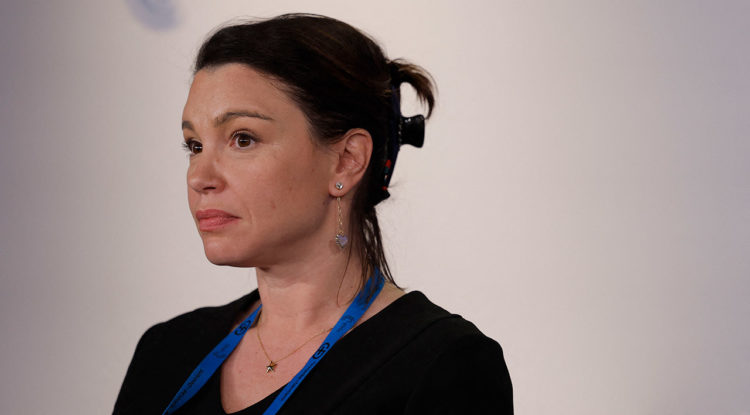
Zhanna Nemtsova launched a master's program about Russia at the Prague Carlov University. What will they teach there?
Since this fall, at Karlovy University - one of the oldest universities in the world - the Russian -speaking master's program “Russian Studies”, dedicated to the history of the country since 1991, has been operating. This is the program of the Boris Nemtsov Foundation for Freedom, whose president is his daughter Zhanna Nemtsov. The editor of Kholoda Maxim conspiration talked with her why Ukrainians and Belarusians opposed the Russian-speaking magistracy, that Nemtsova herself was thinking about the 1990s and for whom she would vote in the presidential election if they took place tomorrow.
In order not to miss the main materials of the "cold", subscribe to our Instagram and telegram .
This is an abbreviated and edited version of the interview from the new video project “Cold” “We are power”. In it, we are talking with politicians and public figures, who, it seems to us, will affect the future of Russia after Putin. The full version of the interview with Zhanna Nemtsova see on the YouTube channel "Cold".
Do you want to participate in the political life of Russia after the war and after Putin?
- I don't know. I do not build my life based on the fact that I will once return to Russia. I have been living in exile for a long time: I left Russia in 2015. In the courtyard of 2023, Putin in power, Russia is waging an aggressive full-scale war against Ukraine. If my return to Russia will take place, it will be in 10 years. I am 39 years old, and in 10 years it will be 49. I do not think about such a distant future.
Why 10 years?
- It seems to me that the Putin regime may well hold out for another 10 years. I do not see any prerequisites for its change: there is no split of the elites, no request from society for change. In addition, it is wrong to say that after Putin’s departure there will be inevitable democratic transit. There are many historical examples and scripts. Very often, some authoritarian regimes were replaced by other authoritarian regimes - and perhaps for us it is even a more likely development of events, because it is inertia. And democratic transit is revolutionary changes.
A simple example is not to walk is the change of Nazarbayev to Tokayev in Kazakhstan: one authoritarian leader to another.
But you do not take into account the factor of war here. War is Putin. And if you say that Putin is 10 years, then the war is 10 years old?
- I admit the situation in which the war will end, and Putin will remain in power - this time. Second: I believe that the current war is a war on exhaustion, that it will be long. It may change: it began with the annexation of Crimea in 2014, then continued to attack the east of Ukraine, and now there is a full -scale war. I see no reason for Putin to stop this war now. But I admit that even if it ends somehow, Putin can remain in power.
But do you really have any dream and visualized image of yourself after the war? Here is literally: who would you like to be. In the same project, we talked with politician Julia Galyamina, and she directly said: "I see myself in a red dress, the leader of the faction, behind the tribune of the State Duma." Do you have any such dream?
-Firstly, I realize my dreams. Secondly, I believe that you need to be a realist. When you live in captivity of fantasies - you have a risk of making many mistakes. I prefer to remain realistic.
Visualization is such a psychological practice for people who are in a stressful situation. Now it is very difficult to live in Russia to people who do not support the war, and in the case of Julia Galyamina it is also very dangerous. I understand her dreams: she needs to know why she remains in Russia.
And for what are you doing what you are doing? For what is the Russian Research program at the Karlov University, for which the Nemtsov Foundation? "
- I created the “Nemtsov Foundation” because I made a decision for myself - to maintain the political heritage of Boris Nemtsov. You know, in Russia there are practically no politicians who would leave behind some political heritage. People are weathercocks. They do not represent any certain values, but follow the power that is in power.
And my father had the opportunity not only to declare these values, not only to be an opposition politician, but also to realize his ideas in practice. This is something that not a single policy of my generation has. Father is the embodiment of the democratic tradition of Russia, which has not yet won our country.
For what did I create this fund? The preservation of human capital is always the right thing. The Nemtsov Foundation retains human capital. Through their educational, social projects. We give scholarships to Ukrainian and Russian students who are in the Czech Republic. We accredited a magistracy where representatives of any countries can study if they are interested in Russia and want to engage in Russia. This is an opportunity for teachers to continue their professional activities. In Europe and the United States, there is now a request for examination in Russia, for new approaches to its study.
And on our part - this is humanitarian activity. She is needed. I see meaning in my activity. If someone does not see the meaning in her-I do not know how to convince such people.
In Russia, there are practically no socio-political funds. There was a Gaidar fund - it closed and it was funded by the state. There is a Presidential Foundation Yeltsin - this is an attempt to make such an organization, but again, it is controlled and funded by the state. And there is a Nemtsov fund - it is registered in Germany.
And financed?
- From different non -state sources. Exactly not from the Russian Federation.
Do these sources affect the activities of the fund?
- No, in any case. I am a categorical opponent of the very possibility of this influence. The direction of the "Nemtsov Foundation" is determined by the founders of the fund and no one else. I have 60% of the shares - it means that I have a control package.
It is very important not to depend on one source so that you are not “explained” what to do. I also oppose financing from the so-called Russian oligarchs, because in Russia a culture has not been formed that you can maintain some kind of public initiative and at the same time not to try to buy its loyalty. Although there are exceptions. We openly say that we work with the Zimin Foundation is a wonderful organization that helps dozens of different initiatives. And so we have different sources, and there is not one that would affect the agenda of the Nemtsov Foundation.
And then explain why people finance anything without the possibility of influence? Here Putin said: “Whoever pays is ordered to music” - and many agree with him.
-Firstly, this should be controlled by the one who receives money. I repeat: it is necessary to diversify the sources of financing. This ensures independence. Secondly, it is necessary to exclude cooperation with people about whom you know that they can ask you for loyalty-in this sense you should not cooperate with rich people with political ambitions. By the way, I also wanted to say that the Nemtsov Foundation, although Boris Nemtsov, has no right to engage in political activities.
Well, answering your question: in Europe there is a whole foundation industry that support different projects. And you come up with a project, and not someone invents it for you. You come to different organizations and say: "Here, I have such a project, are you ready to support it?" The organization where you came is either ready or not ready. And if ready, she just supports. Not a single organization for all my enormous practice has intervened in our implementation. If only because it is very difficult for her: how much should people work there to control different funds that implement different projects?
Once again: buying loyalty is a bad practice. I speak against her. And I do not sell my loyalty.
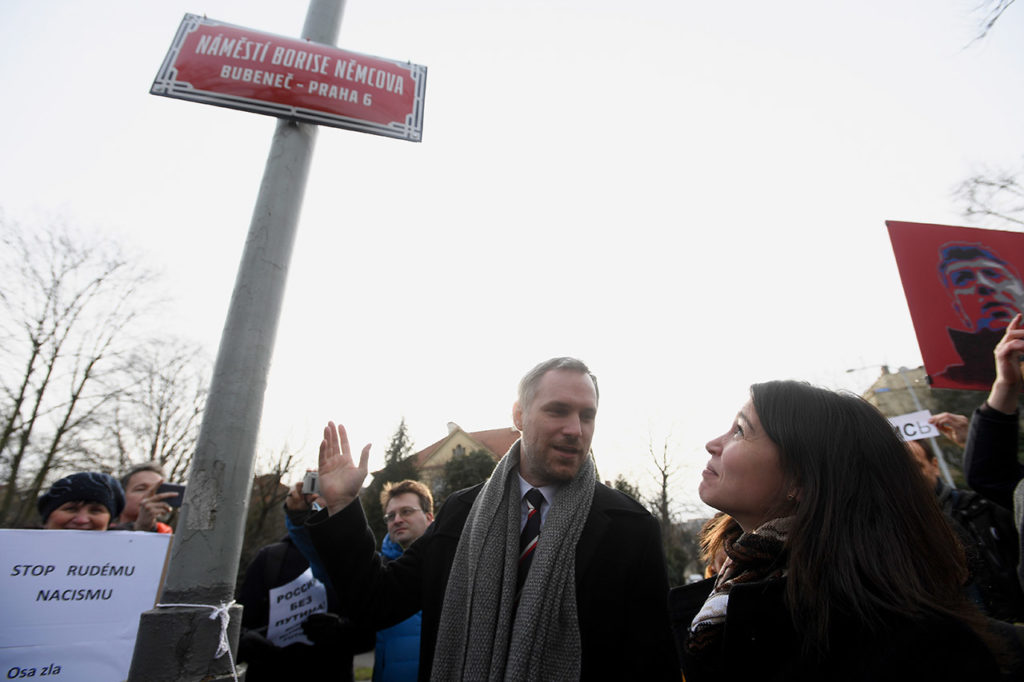
Photo: ONDREJ DEML / CTK / DDP / Vida Press
Let us return to the Russian Research program at the Karlov University that you launched. What is it?
- This is a two -year magistracy where teaching goes in Russian and English. This program is accredited at the Faculty of Philosophy of Karlov University with the support of the Faculty of Social Sciences. This is the first international program of the Faculty of Philosophy over many centuries of its existence: it is dedicated to Russia after 1991 in all aspects, from the evolution of the political system to economic transformation - failed, to democratic transit - failed, to the state of Russian society and the media. It is especially important for me, given that this program is focused on people who will change Russia in the post -Putin era, it is very important for them to understand that our students will study public administration - we call it Public Policy.
You know, everyone now writes what reforms will need to be carried out in Russia: judicial, such, I am. They write very correctly, but the question always arises how to do it. Public Policy courses answer this question.
This program is super -bending: we have only seven compulsory items, and all the rest are objects of choice that we can change based on the preferences of our students.
I repeat, this is a program for students from any countries. It will be very useful for people who in Europe, the USA, India or China will be responsible for the implementation of policy in relation to Russia.
What were the complaints about the program from Ukrainians, Belarusians and Chekhov?
- I would not really like to delve into it, because these are internal questions. When you refer to this, you mean the leaders of the Belarusian community in the Czech Republic, the leaders of the Ukrainian academic community, again in the Czech Republic, and in general the academic community of the Czech Republic.
There everyone has completely different reasons for distrust - I would not even call it claims. It must be understood that the distrust of Russian citizens is now quite large. For obvious reasons. This is the atmosphere in which we are, and despite all my background, I am no exception, because I continue to be a citizen of Russia.
What really excited them? Several things. In the Czech Republic, the difference from the United States, for example, does not have a large tradition of cooperation between non -profit organizations and universities. There was a fear that the Nemtsov Foundation was a political organization that we have a political agenda, that we will influence the maintenance of the courses and so on. I hope that I managed to clarify our position and reassure everyone.
The second reason for distrust I also understand. Although half of the subjects will be taught in English, we call our magistracy Russian -speaking. After the start of the war, a huge number of Ukrainian refugees came to the Czech Republic, the Czech Republic - one of the three countries that adopted them the most. And a reasonable question: why Ukrainians should learn the Czech language for a year, and then enter the educational programs in Czech, and for the Russian -speaking programs they made an opportunity to study immediately in Russian. Here discontent was connected with this.
And the very fact that this program appeared does not cause any idiosinocrazia, because everyone understands: Russia needs to be studied in a different way, study critically and, I hope that this is how we will study it in the magistrate named after Boris Nemtsov.
Study, as you said, will begin in the 1990s. We are talking to you almost in the 30th anniversary of Black October . And in general, now there is a lot of talk about the responsibility of that power for current events. That the war with Ukraine and Putinism are all from there. Do you agree?
- The execution of parliament - of course, the black page of the history of post -Soviet Russia, like the First Chechen War. But politically, what happened in Russia, say, until 2003? There was electoral democracy in Russia. What does it mean? Only one thing is that the ruling party can lose in the elections. And it seems to me that in 1993 this situation occurred. It was the triumph of Zhirinovsky. I was very small then, but I remember how at the banquet of the Gaidar party, which was sure that I would win, Zhirinovsky appeared. This is an apotheosis of electoral democracy.
Yes, electoral democracies are still not full democracies. And the omnipotence of the oligarchs in the 1990s led us to Putin’s victory in 2000. Material interests stood above values, and always, when this happens, everything ends poorly. It all ends with authoritarianism and war. This happens when money is more important than values. In this sense, it seems to me that everything was predetermined.
When were you disappointed in Putin?
- I never fascinated them, so there was no disappointment. I was horrified. Putin won the elections on March 26, I remembered this date for life - on March 26, 2000 I turned 16 years old.
But I was not fascinated by this politician, I never supported him, I did not support the so -called counter -terrorist operation in Chechnya. I was very young, but I never liked this politician intuitively. And the amount of suffering that Russia brought to Ukraine, Russia, Belarus-because if Putin had not been, Lukashenko would not be able to maintain power-Syria and many-many other countries, our country brought precisely because Vladimir Putin was at the head of it. It is impossible not to think about this.
But in 2009, in an interview with Elle magazine, you talked about Putin with sympathy.
“You will laugh, but I am very good about Putin. There are people who made an idol out of it, and for me he, of course, is not an idol. But he is a strong and extraordinary personality - he managed to maintain power, which is very difficult. He has done a lot for our country, including economically. <...> Vladimir Vladimirovich - a modern person, trained and terribly efficient - having come to power, he in a short time became a bright public politician. He leads a healthy lifestyle - his physical form causes exceptional admiration. He plays sports, does not smoke, does not drink - the first president of this level! "
From an interview with Jeanne Nemtsova Elle magazine: "Today I am out of politics"
- Did I talk about corruption there?
They said.
“There are, of course, the disadvantages, and I do not share some of his decisions. Everyone knows about mistakes: first of all, corruption. ”
From an interview with Jeanne Nemtsova Elle magazine: "Today I am out of politics"
- And “efficient”, “learning” - all this can be considered poor characteristics, given what a person he is. In general, it is amazing, this is my only interview that you read?
I remember that I said that he has no bad habits - it contrasted greatly with Boris Yeltsin. Well, she said and said. Did I support him? I never voted for him. You know, dictators are often “efficient”, “students” - most often they are exactly the same. And this is a problem. Read the book of Sergey Guriev and Daniel Traisman "Dictators of Deception." The 19th -century dictators relied on strength and repression, and the XXI -century dictators use less invasive tools.
Yes, "trained"! Yes, competent people are at the head of the financial block, not Shoigu. Yes! I agree with what I said then. But this does not mean that it is good.
And who do you like from Russian politicians now? Is there someone for whom you would vote, if, as they say, the presidential election took place tomorrow?
- For Alexei Navalny.