
Translated material
Stop-Drop
Law enforcement agencies of St. Petersburg continue to delight with new methods of combating telephone scammers
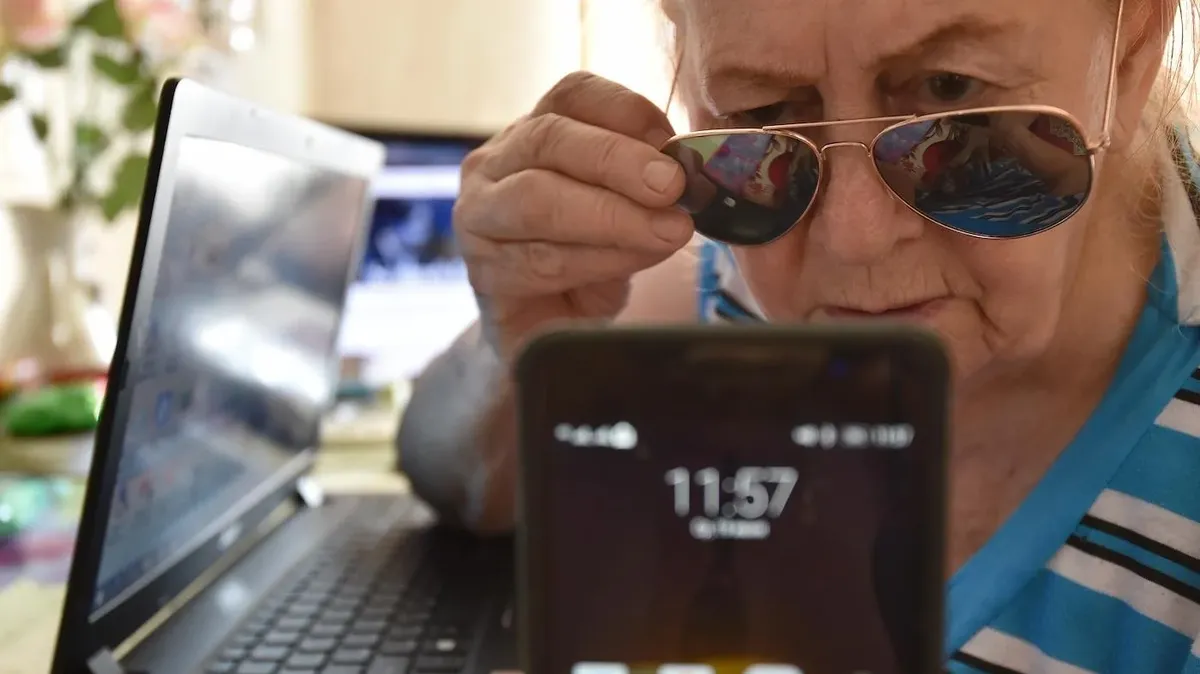
Photo: Anatoly Zhdanov / Kommersant
We have already written that the City Prosecutor's Office brought accountable to the company, representing fraudsters of Internet telephony services. Now the turn of the dropper - people who do not participate in the crime, but provide their personal data for transactions to transfer money obtained by criminal means.
As follows from the press service of the prosecutor's office of St. Petersburg, in July 2023, a 73-year-old pensioner appealed to the law enforcement agencies of the Primorsky district. She said that on July 3, a young man called her, introducing her as an employee of law enforcement agencies. He stated that it was at this moment that a loan is issued to the grandmother and it is urgent to prevent the criminals from doing this.
“The man said that my account is used as a loan security,” the pensioner explained to the prosecutor. - To prevent fraudsters, you urgently need to transfer money from my account to an internal banking. In this case, the bank will refuse criminals, since they will not have support.
The young man, like most scammers, was convincing. The grandmother believed him and transferred 392 thousand rubles to the account, which the calling called her. And only after a couple of days he realized that she was deceived.
The investigator “struck” the specified account and found out that he belongs to a 22-year-old student from the Krasnodar Territory.
“We immediately realized that this was a typical dropper,” the prosecutor's office explained. - Usually they do not participate directly in the crime and are not familiar with scammers personally. They require only personal data for bank cards, which scammers use to cash out money, or as an intermediate link in the transfer chain.
Droppers (from English dropping - dripping, falling) appeared in Russia more than 10 years ago. By 2020, the need for them disappeared, as scammers began to transfer money to foreign accounts, virtual cards or digital wallets. But after turning off Russia from the SWIFT banking system, the droppers were again in trend.
Deputy Chairman of the Board of Sberbank Stanislav Kuznetsov in an interview with RIA Novosti in April last year said that the number of dropper in Russia could reach 500 thousand people. The banker also said that the activities of droppears can be qualified as a crime under Article 174 of the Criminal Code of the Russian Federation (legalization of funds received by criminal means of up to 7 years in prison).
“It is quite problematic to prove in court the composition of the 174th article,” the source of “New” explained to the prosecutor's office of St. Petersburg. - After all, the dropper himself does not participate in the crime, does not cash out the money. Yes, even if it turns out to hold a dropper accountable, then the victims from scammers are unlikely to return their money. Dropper most often does not know true criminals. How does not know where the money went, which was transferred to a card or account issued in his name.
A completely different crankshaft, when Dropper is held accountable in the legal field of civil proceedings. In such cases, the prosecutor, acting in the interests of the victims, filed a lawsuit against unjust enrichment. In this case, nothing needs to be proved, you only need an extract on a banking operation. And no matter what Dropper declares in court, the court will not be on his side. The account or card is issued to it, the fact of transferring money to the card is proved by extract from the bank. And the fact that the money has been there for less than a minute is not so important. The allegations that, they say, did not know anything, but lost the card. If you have lost the card, block. If it received money unknown to you, declare to the bank or prosecutor's office. And if he did not make either one or the other, then he was illegally enriched and, be kind, return the money. If you do not want to return, then this debt will hang on you. This means to take a loan, nor a mortgage, even to buy a motor boat, because they can confiscate. A similar case occurred in the Vyborg district of St. Petersburg. There
Fraudsters convinced the 75-year-old pensioner to transfer 2 million rubles not one account, but by several. And he recorded all the numbers of accounts with which he came to the prosecutor's office.
The owner of one of the accounts, where the pensioner transferred 500 thousand rubles, was found in Omsk. It turned out to be a 19-year-old not working young man anywhere. The Kirovsky District Court of Omsk sent a lawsuit of the St. Petersburg prosecutor's office for a return of 500 thousand rubles, percent for the use of other people's money and compensation for non -pecuniary damage. In total, a resident of Omsk should return about a million.
For a preventive struggle with suspicious bank cards, some banks use the so-called antifrod system that allows identifying a client that carries out suspicious operations on the map. Such a suspicious Central Bank classifies the following:
more than 30 operations per day carried out by individuals;
less than a minute between the crediting of funds and their write -off;
Operations for the crediting of non -cash funds between individuals in the amount of more than 100,000 rubles per day or 1 million per month;
A large number of counterparties - individuals (payers and (or) recipients) - for example, more than 10 per day, more than 50 per month, etc.