
Translated material
I almost fell under the Jew's knife
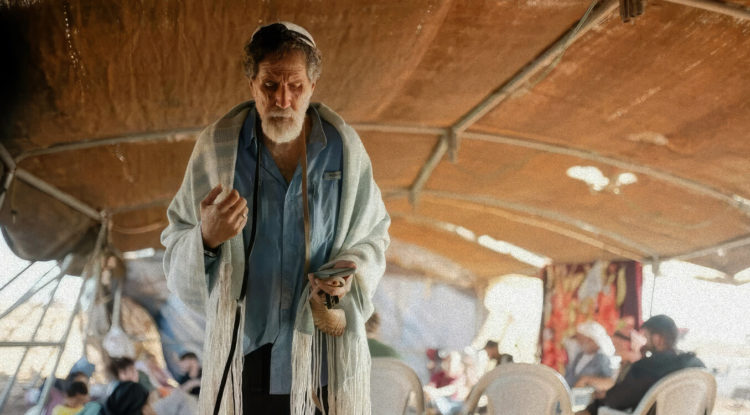
The rabbi from Israel has been fighting for the rights of the Palestinians for more than 25 years and continues to do this today, despite the attack of Hamas
Rabbi Arik Asherman has been traveling to Israeli regions for more than 25 years and tries to resolve interethnic conflicts. Asherman stood in front of the excavator to stop the demolition of the Palestinians' houses, was arrested for a protest rally, defended peaceful Palestinians from the attacks of the Israelis and almost fell under the knife of compatriots. Many Israelis despise Asherman for his help to the Palestinians - he himself replies that he lives in accordance with how the Lord bequeathed, and continues to help the Palestinians today, after the attack of Hamas. “Cold” spoke to Asherman and tells the story of his many years of struggle.
In order not to miss the main materials of the "cold", subscribe to our Instagram and telegram .
From the age of six I knew that I would become a rabbi. I always liked how Shabbat was celebrated in our family, and our family campaigns in the synagogue are still the warmest memory from childhood for me. Only Jews can become rabbis, and it also seemed special and tempting to me in childhood.
I was born and lived in the United States, in Pennsylvania and did not plan to move to Israel, especially since before that I was only a few times in the homeland of my ancestors. But in 1981, I joined the Interns for Peace program (“Little Artists”) and lived in Tamra, the city in the Lower Galilee - a historical area in the north of Israel near the Lebanese border. There I felt like a part of a very necessary movement and realized that this is a place where I could be as useful to people as much as possible.
In 1976, Interns for Peace was founded by the American rabbi Bruce Cohen and Israeli Arab Farhat Agbaria to improve relations between Israeli Muslims and Jews. As part of the program of graduates of American universities, Hebrew and Arabic were taught and sent to Israeli cities with a predominantly Arab population. There, volunteers held various events focused on rapprochement: for example, organized art festivals and initiatives to jointly land trees.
I thought that I knew a lot about the segregation of the Arabs in Israel, but this did not prepare me for what I heard in Tamra. Local residents said that from the very appearance of the state of Israel, they continuously encountered discrimination at work and in their studies. They shared their pain with me, and I decided that I would do everything in my power in order to facilitate it.
" Live shield"
In 1994, I moved to Israel, and a year later I joined the human rights organization Rabbis for Human Rights (“human rabbits”) and became its syarukuer. In this movement, rabbis from different directions of Judaism (reformist, reconstructivist, orthodox and conservative) were united to protect people's rights in the occupied territories together. We proceeded from the Judaist tradition, in which ideas about justice, equality and love for his neighbor were laid - and declared where people's rights were violated, and tried to help them.
Since 1997, we began to take part in promotions against the destruction of Palestinian houses in the occupied territories. Since in 1967, Israel took control of East Jerusalem and began to distribute the Jewish communities belonging to the Palestinians previously belonging to the Palestinians, many Arabs had to build houses in this territory illegally, because they simply did not give out construction permits. Such was the unspoken policy of our state to contain the growth of the Arab population.
We acted as a “living shield”: we came to Palestinian families, whose houses threatened to demolish the Israeli authorities, and stood between them and bulldozers. For such a campaign in 2004, I was arrested and condemned for civil disobedience. In the end, I managed to remove the criminal record (Asherman agreed to 120 hours of correctional labor. - approx. "Cold") .
One of the most famous actions was in 1997. I was not on it, but other activists from our team said that for them it was one of the saddest days in their life. Then they failed to stop the bulldozers, and the Palestinians' house was destroyed. Residents began to throw stones at the soldier, and they opened fire in response. The young Palestinian guy suffered.
It is symbolic that this happened on the eve of the ninth Ava - the day of national mourning for the Jewish people, when we recall the destroyed by the first and second Jerusalem temples.
What are we talking about?
On the ninth day of Ava - the fifth month of the Jewish calendar, which usually coincides with the late summer months of the civil calendar, the Jews mourn the shrines that fell on this day - the first and second Jerusalem temples. The first, also appearing in the Bible as the Solomon Temple, according to the scriptures, was burned by the Babylonians in 586 BC, later restored and again burned - this time by Roman legionnaires during the first Jewish war of the ninth AVA in 70 BC. In the Jewish tradition, it is believed that this day marked the era of persecution that fell to the share of the Jewish people.
The now deceased rabbi Max Pashkovsky, who was a partisan during the Second World War, also participated in that action and fought with the Nazis in France. He was very elderly, his family was worried about him and asked him to get him out of the fire, but he repeated that his duty to remain among these people, and refused to move.
After these sad events, the members of our organization helped the Palestinians re -rebuild the house.
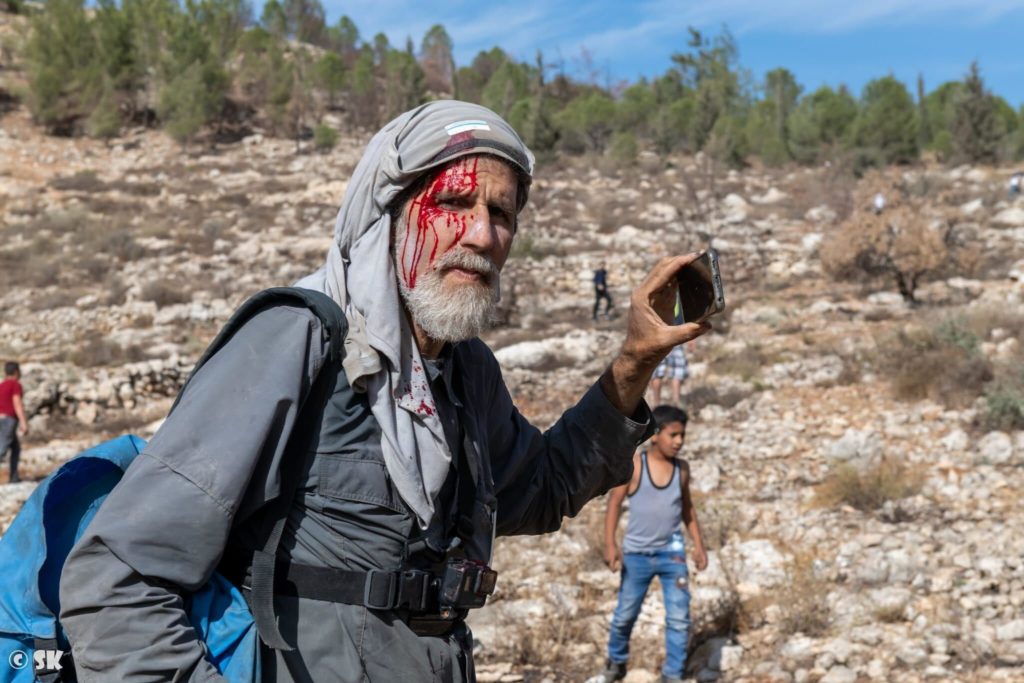
Violations of Palestinians' rights - spiritual problem
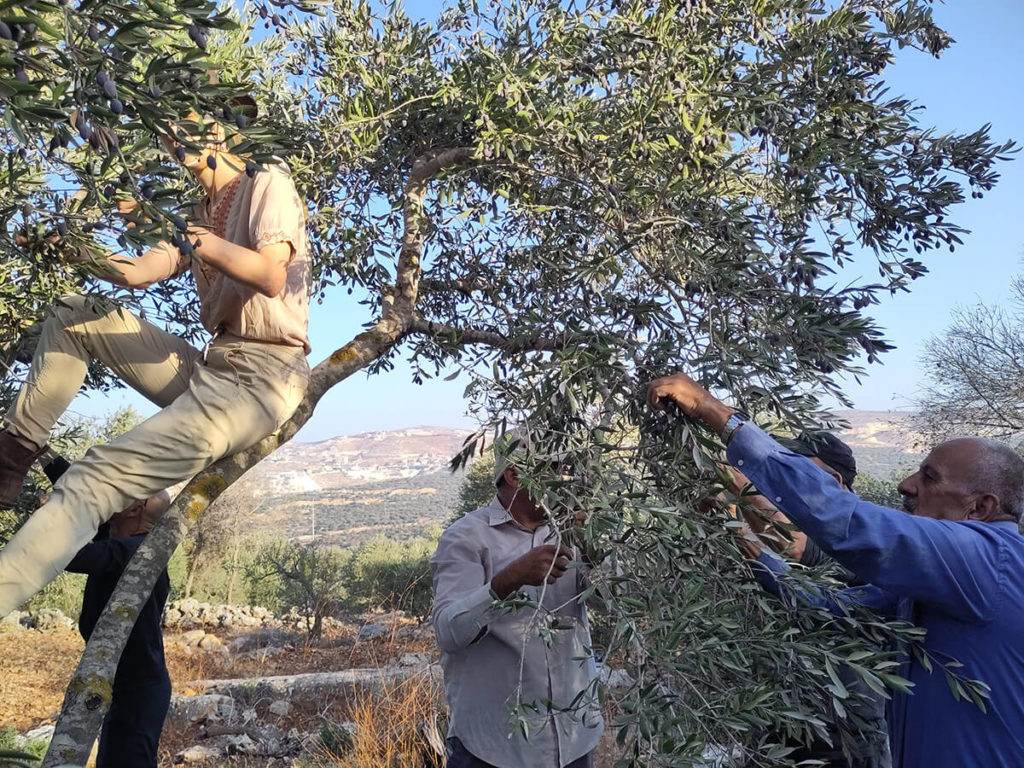
We also helped the Palestinian shepherds and farmers who are Jewish settlers ( the so -called Jews who live on the western bank of the Jordan River - Israel took this territory during the six -day war, and most of it is still under its military and civil control. territories. For example, we accompanied them during the harvest of olives and led the video so that the Jews would not attack, and attract the police, who, if they had not come in place, or would not have arrived at all, or would have sided with the attackers.
Skiing occurred in our presence: the settlers have repeatedly tried to beat our rabbis with a metal reinforcement. Once I was attacked by a settler with a knife. But nevertheless, the level of violence is not comparable with what would happen to the Palestinians, we would leave them alone: if one of us was seriously injured, this would instantly cause a resonance in the media and society, and when the Palestinians die in such skirmishes, this is not widely covered.
As a result, our struggle was crowned with partial success: in 2006, we won the iconic case in the Supreme Court of Israel and the court ordered Israeli security authorities to ensure the access of Palestinian farmers to the land and protect them from attacks. Unfortunately, this resolution is often violated. Especially now, when settlers revenge on farmers for the actions of Hamas.
From the very beginning, our movement greatly upset the Jews who advocate Israeli nationalism and believe that their understanding of Judaism is the only right one. They did not like that we pay attention to the discrimination of Palestinians and human rights violations that we urge people to think about it not as a political problem, but as a problem of moral, spiritual and religious.
For 21 years in the leadership of Rabbis for Human Rights, I heard a lot of accusations that we are the fifth column and traitors. But there were also positive reviews. In 2006, our team won the Nivano Prize (a prize that is awarded by the Japanese Nivano Foundation for Religious Initiatives, which made a valuable contribution to the strengthening of the world. - Approx. "Cold") received the Mahatma Gandhi Prize, and in 2017 we were nominated for the Kneset Speaker (the legislative body of Israel) For a contribution in the field of promoting the rule of law, values of democracy, protecting human rights and encouraging mutual respect and good neighborliness.
In 2016, I left Rabbis for Human Rights and soon founded my own human rights organization TZedek-Torah of Justice. Now only 10 people work for us - these are religious and secular Jews, but numerous volunteers also help us. We solve the same problems as Rabbis for Human Rights: we help to develop social housing for poor Jews and protect the rights of Palestinian farmers and shepherds. But we are developing previously little -studied directions, such as, for example, the help of the Bedouins - the indigenous inhabitants of the Negev desert.
"The son is only 10 years old, and he already wants to become a terrorist"
Israeli antioxation activism is now going through difficult times. We were convinced of this by our own example, when last week we realized that many volunteers began to refuse to protect the Palestinian shepherds. Some of them say that this is too dangerous, because attacks have become more frequent in the Arabs, others admit that they are experiencing conflicting feelings after the attack of Hamas and are not yet ready to help the Palestinians.
I do not share these emotions, although one day it was also emotionally difficult for me. This happened in the mid-2000s, when everywhere, even on the west coast of Jordan, representatives of Hamas began to win in the elections. I understood that many who supported them were not adherents of terrorist ideology and voted for Hamas in protest against the Fatha government (the movement for the national liberation of Palestine - a political party hostile to Palestine. - approx. “Cold”) , which diluted unprecedented corruption there. I understood that I would have to negotiate with them to help people in the territory subject to them, but still could not get rid of the sticky and unpleasant sense of involvement in real evil.
Soon I first met with the newly elected mayor of one of the Palestinian cities, a representative of Hamas. Then I had a choice in front of me: to shake his hand or turn around and leave. I chose the first because I thought that it would give a sign to the Palestinians. The Israeli Jew is ready to compromise with the authorities, which does not recognize his right to exist and wants to kill him and people like him, in order to be able to fight for their rights, which his state refuses to recognize.
I have never doubted the correctness of my choice. Many times, Palestinians brought to us, anticopulsing activists, their children. Mothers said: “My son saw how people in Israeli uniform humiliated his parents and destroyed our house, as people talking in Hebrew, wiped our olive trees with the roots so that we could not harvest from them. He is only 10 years old, and he already says that he wants to become a terrorist and take revenge on the Israelis for this shame. Please talk to him, so that he understands that not all the Israelis and Jews are engaged in such things, not everyone wants him and the way he is death. ”
At such moments, I understand how important our work is: after all, we not only try to save the souls of these people and etch anger from them, but also help to preserve the lives of our loved ones. As a person who has Hamas bombs near the house, I know that this is the best that I can do to protect my family. It would be naive to think that my words act on everyone, but such conversations, as well as help to the Palestinians in solving their problems, albeit a little, but help.
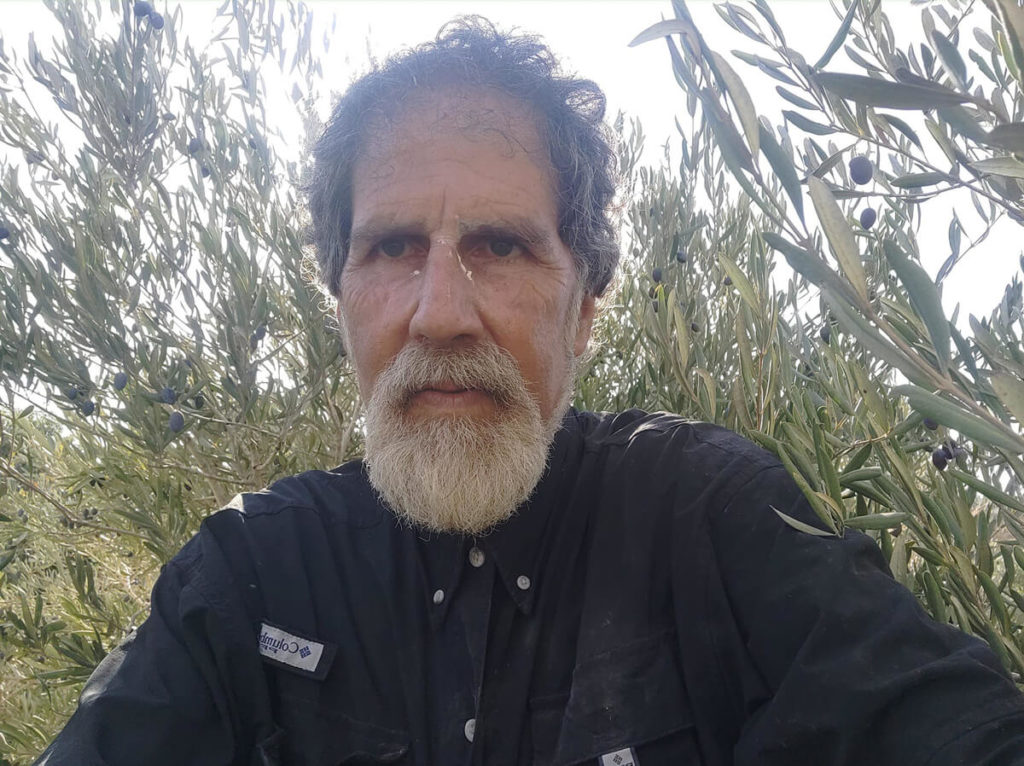
Do not punish a person - save God
Unfortunately, now it is not possible to avoid violence. Many Israelis are in this state of aggression and pain that they are not able to distinguish the terrorist group of Hamas from peaceful Palestinians, whom Hamas terrorizes for many years. My compatriots are now often talking about the right to self -defense. Many began to refer to the tract of SanHedrin (a treatise contained in many collections of Jewish exercises, which gives the foundations of Jewish law. - Approx. "Cold") , which teaches us to kill the first if we have come to kill, but they forget that the same treatise says that, let us protect ourselves, we have no moral right to kill an innocent person, even to preserve our own right life. And in Gaza now [from the blows of Israel], such innocent people die.
And if in the case of Gaza bombing there is a question, they say, what to do, if Hamas is about the terrible in the terrible inhabitants of the area, then in the case of aggression against Palestinian farmers and shepherds there are no excuses. Jewish settlers with silent consent, and sometimes with the active support of Israeli security agencies, apply violence to the Palestinians, thereby forcing the Palestinian communities to leave their lands.
Last week, we began to re -read the Torah (on October 6, Jews celebrated Smini Azerset - the day of the Holy Meeting, which coincides with the end of the annual Torah reading. After that, in the synagogues we began to study the sacred book. - approx. "Cold") . The first chapter in the 27th verse says that we were all created according to the likeness of the Lord. Jews, not Jews, rich and poor, men and women. And if we could not only in words, but in fact to learn this principle of equality and understand that in every person there is something more than himself, whether you call it God or something else, it would be easier for us to live at this unbearably complex moment of our history.
If each of us understood that, by killing a man, we kill and cripple God, according to whose likeness a person was created, this would probably have saved us from crimes, murders and abuse of power.
Back in the middle of the 19th century, one of the founders of modern orthodoxy, a German rabbi named Rav Shimshon-Rafael Girsch noted that in the Torah, many commandments are somehow indicated that we should respect the non-Jews living among us. As if God knew that this would be one of the most difficult in the fulfillment of his conditions, and therefore deliberately repeated him on the pages of the priesthood. One of the comments on the Torah states that the abomination of ancient Egypt was that he considered himself the right to enslave our people only on the grounds that he had power over us.
Torah seems to warn us that we will once have our own state and we will have a choice - to put people's rights dependent on their belonging, origin and wealth or to relate to everyone as people created according to God's likeness.
Psychologists have long proved that people who were beaten in childhood are more often than others later become rapists. The Jews, probably, the most tortured people in the world: we were decently beaten by the whole history of our existence and it is difficult for us to get rid of the behavior of behavior learned over thousands of years, to get rid of that pain and wounds. But the grief we suffered should not become an excuse for the grief that we carry to other people. Our pain does not give us the right to hurt others.
And this is the main challenge that faces modern Zionism - whether we can maintain our statehood without resorting to the experience of ancient Egypt, will we be able to translate the power given to us with the mind and not use the power given to us to enslave others. In my understanding, we still can not cope with this task.