
Translated material
"If people begin to use Chatgpt to search for truth, we will find ourselves in trouble"
The philosopher Gaspar Kenig has been investigating artificial intelligence for many years, and now he was disappointed in technology - and studies rainworms. "Medusa" talked to him
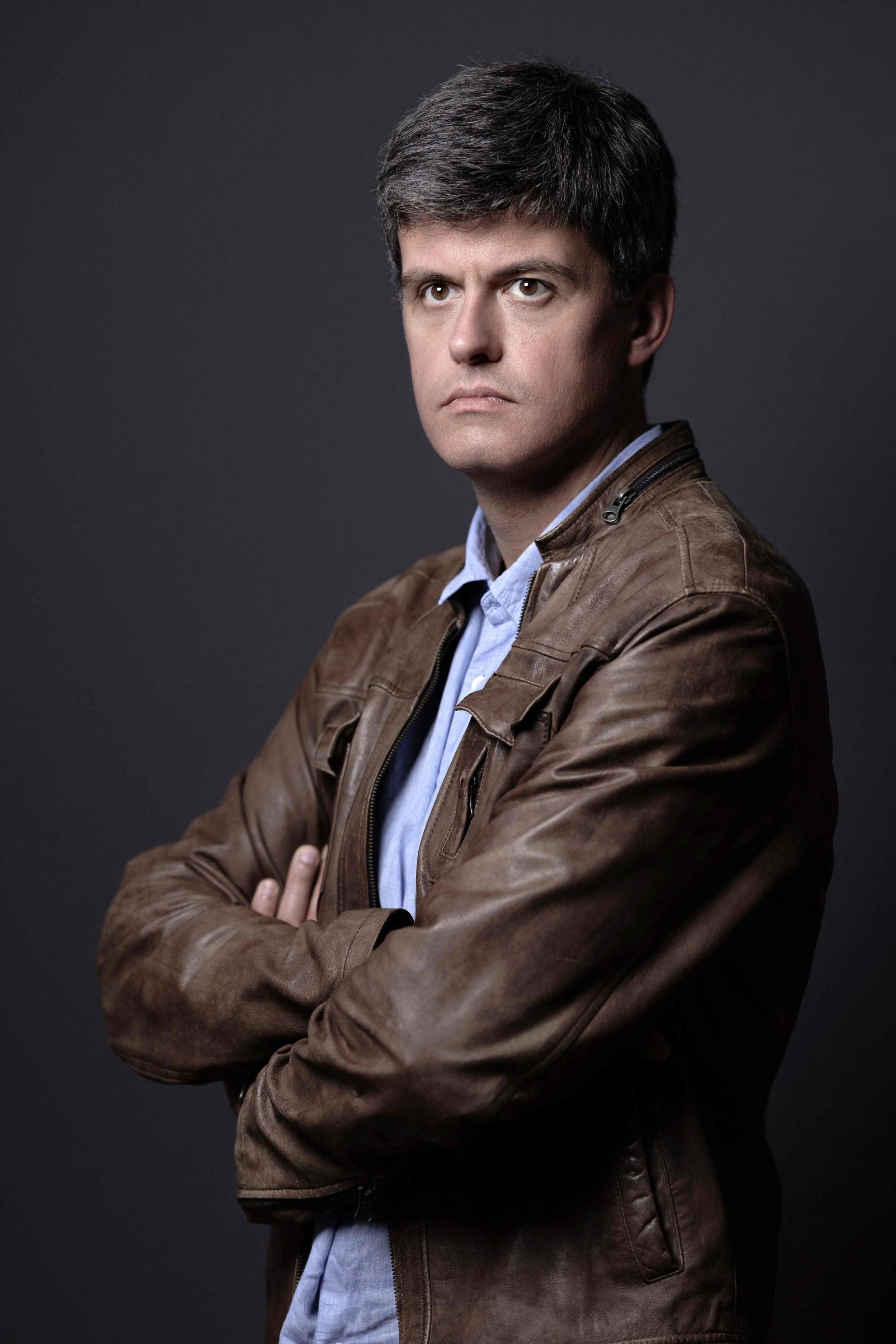
In the summer of 2023, the book of the philosopher Gaspar Kenig “The End of the Individual” was published in the publishing house of Individuum (the original was published in 2019). In his work, the philosopher studies the relationship of man and artificial intelligence (AI), based on an interview with experts around the world engaged in this technology. Koeniga cares not only the topic of potential unemployment due to the introduction of neural networks, but also the influence of technology on the work of a person and his free will. In the fall, Individuum releases the audiobook “The End of the Individual”. Medusa talked with Koenig about the conclusions that he made while studying artificial intelligence.
- What feeling do you feel when you see that your gloomy predictions made in 2019 in the book “The End of the Individual” came true? For example, about growing manipulations by users - fake news, scammers who use social networks to deceive people, dipfaces and so on?
- You know, after the release of the “end of the individual”, the technology began to interest me much less. Of course, I continue to monitor large events, but it depresses me that everything is only about this [artificial intelligence] and want to talk. When my name is to speak at some conference, in half the cases we are talking about AI. Probably, my book sets a certain frame for the perception of this topic as a whole, so it is convenient to apply it even to those technologies that did not exist at the time of its writing. But all this is more tired of me.
I just had a new novel “Ogrect” - he talks about the life of rainworms. This is a real story, and in order to write it, I had to study everything that was connected with the worms for a year. And I realized that such questions today concern me much more than talking about the influence of technology on our lives.
From an intellectual point of view, AI, of course, is very attractive, you can easily fantasize on this topic. But all this sounds superficially for me, too torn off from real problems. Hundreds of thousands of engineers, researchers, and doctors of sciences who can tell you all about algorithms work on AI issues. And rainworms study 10 people on the planet.
- You write in the “end of the individual” that in recent years, science with renewed vigor disputes the existence of human will, and technological companies do not take into account it at all. Nevertheless, in the book you argue that free will is the main difference between a person and AI. Now, four years after its release, freedom of will and moral morality are you still interested in?
- Yes, this is so, but these are universal concepts that can be used in other areas. I am glad that the European Commission decided to directly mention free will in its draft law on artificial intelligence. I don’t know how it will be observed, but the very fact of discussing in Europe such things cannot but rejoice.
- What position do you now take on the issue of free will?
- Recently, I re -read the “ethics” of Spinoza and once again became convinced of his deep rightness. Of course, it is necessary to accept the fact that human freedom as a given is an illusion. According to neuronacs, a person’s reactions depend on what information enters his brain. Technically, it is already possible to predict a person’s decision today even before he himself realizes him. But all this does not mean that freedom of will does not exist. Spinoza also wrote about this: no, we are not born with free will, but we are a link in the chain of causes and consequences. And we can gain freedom, exercising our thoughts, picking ourselves in our hands, commanding our emotions and feelings.
If you take well-known neurobiologists, such as Stanislav Dean, whom I quote in my book, then they reject freedom of will as a theological concept, which is seemingly magically inherent in people. But at the same time, Deas does not reject the fact that you can act independently. It is important how you force yourself to do something, how you make decisions, weigh for and against and trying to present the consequences. This is what makes us people.
- Can I offer you a small mental experiment? Imagine that a technology that allows people to teleport from place A to place B exists. It depends solely on the reconstruction of the entire system of atoms and molecules of your body in another place. But at first your body is erased, as it were, destroyed. What do you think, if you, for example, make a teleportation, then the person who will be in place B will still be you or your consciousness will be erased and someone else will walk in your body until the end of your life?
- This is exactly the mental experiment that [the American inventor and futurologist] Ray Kurzweil proposed in one of his books about the singularity . He says: if you accept the fact that your body loses molecules every second, and then acquires others that your personality is constantly changing with these elements, then you should, in principle, agree to “die” in such teleportation. I am inclined to the fact that almost no one will do this.
In a sense, it justifies it quite well that we have such a form of Conatus , returning to Spinoza, which makes you persist in your being. Persistence in being makes us active in relation to circumstances. And if you voluntarily abandon this conatus - this is, in my opinion, a sign of deep existential weakness. After all, this means that you do not really want to persist in your being.
- Do you think that Spinoza's ideas have a mystical background? After all, the task of teleport can be considered as a confrontation between faith in science and suspicion that not everything is laid out on atoms.
“The point of view of historiography is clearly not, because Spinoza was excommunicated from the Church. Contemporaries considered him an atheist. Although a certain share of the attitude to the world as Deus in Natura is equivalent to everything that exists - he can be found. This is what later [the French philosopher] Gilles Deleuz called "immanence" - all the existence in its entirety. Spinoza fought fiercely with the idea of the ultimate goals of existence, with moral concepts that divide things into good and bad. It is amazing that after so many centuries we live in captivity of even greater moralism and hobby with the final goals, even let us not believe in God.
- The possibilities of artificial intelligence are often considered in the context of the fact that it can change the whole universe until recognition. In these conversations, in these conversations, the longing of mankind is manifested by the existence of the Almighty God?
- In the last book of [the American anthropologist and anarchist] David Graber and [British archaeologist] David Hungarian “The Dawn of everything” shows how many religions were in the history of mankind - our desire to understand the world could take very different forms. We are still trying to comprehend what is happening around - people feel extremely uncomfortable when they do not find meaning in life, especially one that would be guaranteed by some higher and absolute authority.
In past centuries, this meaning was given at school and churches, but today everyone is forced to look for it on their own. For me, concern for the world around me was such a meaning. For other people, this is certainly a faith in artificial intelligence. But discussions about AI are presented to me retrograde. Firstly, because, speaking of artificial intelligence, we mean intelligence without a body-a similar dualism itself is already a rather unreliable thing. If we return to Spinoza for a while, then it was precisely that the mind and body are just two faces of the same essence. So, if there is no body, then it is also incorrect to call the predicting anything on the basis of big data.
Secondly, the obsession with singularity also reflects the mood of people who want a certain omniscient entity that would record their lived experience. So that everything was registered somewhere. Actually, this impulse pushes people to give all their data to technological companies. Of course, it does not smell like any eternity-in 50 years all these data will evaporate, there will be no trace of many date centers.
Do not leave traces is one of the great prospects of existentialism. I don’t really like Sartre, but he writes extremely interesting things in the book “Being and nothing”: to be mature means to accept that snowfall will notice traces from your skis, as if there were no. Such acceptance is a genuine way to live. The Bible says: you know, everything you do will be recorded somewhere. And this is alarming, because at the end you will be judged. But at the same time, it is very encouraging, because there is a hope that someone else will delve into our lives. But it is much more honest to accept that no one will understand. And that we do not leave traces in the snow. This thought can scare, but this is a step to a better understanding of human nature.
- How is the data market in France now regulated now? In the book you emphasize that the European Union has no chance to catch up with China in AI and digitalization. Did something have changed since its publication?
- Not really. These problems are not discussed at the national level. In any case, not in France and not in the UK. And because of this, of course, the Subtle Society loses its position. For example, in France to the Olympic Games [2024], cameras with the recognition technology of people who were previously prohibited in the country will be installed. They make an exception for the Olympic Games - and it can be assumed that then this practice will spread. Only rare radicals are discussing this, but basically people accept what is happening for granted.
However, at the pan -European level, the discussion is conducted. At this level, such things will ultimately be decided-France is not able to do anything with Chatgpt, but Europe can, as it did by adopting a GDPR -a law on the protection of personal data. As far as I know, discussions in Europe are in the right direction. Take at least the already mentioned concept of free will - it will probably remain in the text of the law on AI, as well as the idea that it is necessary to limit the manipulativeness of new technologies. Margret Westager, deputy chairman of the European Commission for Digital Technologies, works well and clearly imagines the scale of the upcoming problems. We see that the European Union holds on to the main European values, such as respect for a person, for his private life and in other way, this may well become a subject for pride.
- Recently, it has been heard that the progress in the field of AI needs to slow down and even, perhaps, close this box of Pandora from sin away from sin. How do you feel about them and is it possible?
- I am sharply against an absurd moratorium proposed by Ilon Mask and scientists [who adhere to the same position]. Obviously, this is how the number of applications can be limited and to prevent healthy competition. I firmly hold the position: the growth of the economy needs to be paid to maximum attention, this is due to the technology or not. Otherwise, we Europeans will lose on all fronts. The Chinese -Twestan futurologist Lee Kai - Fu considers Europe as a future playground for games, a kind of entertainment and rest park, which has already left the race of rival powers. I think he is in many ways right, but still why consider everything as a fight? Why should different countries have the same values and paths? Is it necessary to compete all the time?
Europe has its own moral identity and its values. I believe that the most important thing for us is to preserve them, to maintain respect for a person’s private life. We can call this free will or the right to celebrate, if you want. Maybe the Chinese civil society will understand that in a sense we have something to learn.
A similar story was with GDPR, the pan-European law on the protection of personal data: when it was adopted, critics said that Europe was shooting in the leg and that it would be tremendous from the United States in terms of IT infrastructure. And now the GDPR is copied in America and even partially in China, no one else considers it such a terrible obstacle to progress. And I do not see a problem for Europe in losing this race [development of AI], because I do not see any prize for arrival at the finish line first. There are different models of the development of society - and the digital gulag, which is built in China, is far from the most attractive of them. Let him promise a speedy breakthrough in the field of AI.
- In the spring of 2023, a wide circle of users gained access to Openai ChatGPT . Writing people - in the range from copywriters to writers - immediately worried that their style can be easily copyed with neural networks and used in inappropriate context or that the new technology would completely deprive them of their work. What do you think about this as an author?
-Firstly, if you are afraid that creativity imitates your style, then you have it. And this is great news, because it means that you are a full -fledged personality. The French thinker of Georges Louis Leclerc de Buffon said that the purpose of the life of any person is to develop a unique and belonging to you. So if you are imitated, then this is wonderful, you have already made yourself.
I do not think that there is some threat. Algorithms will replace those who are already behaving like a car. We live in very bureaucratic societies, and cars can help reduce this meaningless load on people. It is also important to remember that for the full operation of the algorithms, the constant creative efforts of people are needed, creating data, which then “fed” engineers. Without this raw material, no neural network can develop.
This really needs to be somehow adjusted, but I am sure that the decision is not far off. I am much more worried that these tools will fall into the hands of billions of people who will not use them for creative needs, but to search for truth. Here the real problems begin. “Wikipedia”, with all their shortcomings, was created by people who desperately argue about the reliability of the sources and in these debates come to the consensus, carefully checking the prerequisites for each statement. An appeal to a source is the basis of the Western concept of truth and knowledge. ChatGPT cannot quote the source, it can only “predict” something similar to truth, it uses only “probable sources”.
In this light, the concept of truth, which is something refuted and verified, evaporates. In her place comes that the [former Secretary of State and Nobel Laureate] Henry Kissinger - he wrote a very good article about artificial intelligence - calls "the accumulation of ambiguities." Everything is likely, but not completely true, but we do not know about it and are as if in a fog. And if people really begin to widely use ChatGPT or similar tools for everyday study of the world order and search for truth, then I think we will find ourselves in trouble. The very idea that there are some objective and generally accepted truths will disappear.
The idea of a post -truths world is extremely dangerous. Here the government should intervene. Indeed, if you provide consumers with an inadequate and in some way a fraudulent product, then obviously you expect that consumer protection agencies will intervene-as if fake foods consisting of a damn thing and precisely unsuitable for food appeared on the market.
I have my own story in this regard. Once I wrote a text about the intersection of philosophy and agriculture. At the stage of preparing the article, I could not find a single philosopher asking the question of compost, which was struck by, because this is a wonderful object for reflection, reflecting the infinity of rebirth cycles - how death replaces life and life arises from it again. And I could not find anything in Google and in glossary books available to me. Then I decided to ask Chatgpt whether some philosophers who mentioned compost in their books are known.
I received a very neatly compiled answer that referred to Jean-Jacques Rousseau and Henry Toro, which in general sounds very reliable. I requested a quote from Rousseau and her source and received a wonderful quote from the second volume of the book Emil, or “On Education”, very in the style of Rousseau. Then I even forgave Chatgpt for all the sins in which I accused him before. But here's the bad luck: “Emil” is at my house on the shelf, so I took the indicated book and found that this passage simply did not exist - it was entirely “predicted” by the algorithm.
The created illusion of truth, the illusion of scientific work impressed me. 99% of my students would say in response to this quote: “Oh, what is needed, thank you very much,” would bring her in their works - and then it would be registered as some confirmation of its existence and it would be spread further. Over time, it will be very difficult to check whether it is true or not. And then people will print Rousseau with this quote in the second volume of Emil.
Поэтому я думаю, что на сайтах вроде ChatGPT и подобных должно стоять предупреждение: «Осторожно! Перед вами великое изобретение, но все, что оно производит, — это подделка. Вы можете использовать его для искусства, для вдохновения, но не для поиска знаний».
— Как вы считаете, кому принадлежит продукт, произведенный алгоритмом: текст, картинки или код? Создатели алгоритма? Тот, чей стиль копируется? Тот, кто ввел промпт в систему и отобрал наиболее удачный результат? Или никто?
— Предоставить права алгоритму или его создателю — это примерно то же самое, что предоставлять авторские права на текст производителю пишущей машинки или ее изобретателю. Если вы заплатили за инструмент, то вы имеете право делать с ним все что угодно.
Автором точно не может быть сам алгоритм — это возвращает нас к вопросу о том, могут ли роботы обладать моральной личностью. Это своего рода забавный анимизм нашего века — думать, что машины, чтобы иметь какие-то права, должны обладать личностью, пусть даже в юридическом смысле.
Так что мой ответ: права должны либо принадлежать тому, кто ввел промпт, но с оговоркой, что он должен разделить доход с платформой, если пользовался ею бесплатно. Либо никому.
Важно также ввести какую-то систему обозначений, чтобы тексты и изображения, произведенные ИИ, соответствующим образом отмечались. Как мы видим, люди готовы платить больше за вещи, произведенные вручную, даже если они не такие опрятные или правильные, как те, что сделаны фабричным способом. В этом есть некоторая форма дистанционного контакта с человеком, сделавшим этот предмет своими руками, и людям приятно думать об этой связи. Если вы пометите все тексты и произведения искусства, созданные искусственным интеллектом, то, я думаю, на них придется давать огромную скидку. And this is fair. Контент, произведенный ИИ, будет использоваться в первую очередь для развлечения, для быстрого и эфемерного использования. А вот то, что делают люди, снова вырастет в цене.
— В финале «Конца индивидуума» вы предлагаете идею безусловного базового дохода, который бы опирался на налог на прибыль , связанную со сбором данных техногигантами. Вам не кажется, что идея безусловного базового дохода — это замаскированный неолиберальный трюк, который призван заменить социальную поддержку граждан государством некими «отступными»? И таким образом государства просто смогут стряхнуть с себя соответствующие статьи бюджета, передав ответственность за выплаты в руки частных предприятий?
— Я долго был сторонником концепции базового дохода, ездил наблюдать за экспериментами с ним в Бразилии, мы опубликовали много научных работ о том, как внедрить этот подход во Франции. Но вознаграждение за предоставление данных никак не связано с базовым доходом. Это скорее ваш заработок с вашей частной собственности — то есть с ваших данных.
Что до базового дохода, то тут я немного пересмотрел свои взгляды. Я не верю, что, если ИИ сможет заменить треть рабочих мест, людям будет нечем заняться. Люди будут работать, потому что им хочется иметь какое-то занятие и смысл в жизни, его нельзя просто так взять и заткнуть деньгами.
В основе идеи базового дохода лежит концепция личной свободы, которую стоит отличать от неолиберальных идей постоянной включенности в рынок. Она куда более фундаментальна. Если мы считаем, что человек может сам определять свои ценности и представление о хорошей, достойной жизни, то ему должен быть предоставлен некий минимальный порог дохода, который позволит ему сделать осознанный выбор этих ценностей. Если у вас нет минимальных средств к существованию, то вы несвободны — вы зависите от других людей, от их ценностей и идей, потому что они дают вам пищу и кров.
В наши дни лучший защитник базового дохода — Филиппе ван Парис, бельгийский философ, который сочетает либертарианский подход с марксистским, утверждая, что у свободы есть некое материальное начало. Очевидно, что один из основных компонентов этой теории — базовый доход, который позволяет людям самим определять свою концепцию достойной жизни и реализовывать ее на практике. Я нахожу привлекательной эту идею, потому что это способ осуществления социальной политики без патернализма. На мой взгляд, это позволит поощрять разнообразие в обществе, потому что люди смогут экспериментировать, думая: «Хорошо, я позанимаюсь этим два года, хотя на первых порах мне это не принесет денег». Это отличный способ поощрять эксперименты, неудачи, ошибки, прогресс и освобождать людей от социальной бюрократии, которая унизительна и загоняет нас в ловушку беспомощности.
— В начале 2022 года вы заявили, что будете баллотироваться в президенты Франции, однако не собрали нужного количества подписей — и до выборов вас не допустили. В чем заключалась ваша программа?
— Этот эксперимент закончился написанием книги, направленной против президентских выборов, — «Contrʼun» («Против одного»). В ней я разбираю, почему фигура универсального лидера нации — это ошибка. Участие в предвыборной гонке дало мне аргументы против самого принципа президентских выборов, который Франция как бы воскресила в 1962 году и тем самым повлияла на многие страны по всему миру.
С оглядкой на этот принцип Россия разработала свою конституцию, основанную на идеях Французской республики, что, наверное, было не к добру. Для меня это очевидный регресс по сравнению с парламентской демократией, которая существовала практически во всех демократических странах до Второй мировой войны. Идея большого человека [президента], который придет и решит все ваши проблемы, геополитически опасна.
Что до моей программы на тех выборах, то мы 10 лет продвигали разнообразные государственные реформы, включая регулирование обмена данными, базовый доход, местную автономию и прочее. Общественность оценила эти идеи, но этого не хватило для победы в политическом мире — во Франции он остается чрезвычайно якобинским и централизованным, а это ровно те вещи, которые мы хотели изменить. Идея была в создании политического движения, которое получило бы реальный отклик в обществе. Но проблема в том, что единственный способ создать политическую партию во Франции — это, к сожалению, баллотироваться в президенты. Именно в этот самый романтический и волнующий момент люди действительно обращают внимание на свои политические идеалы и программы кандидатов.
It was very fun. Мы объездили всю страну, некоторые люди нас поддерживали. Но в конечном счете это был политический провал. И я спросил себя, хочу ли я потратить 30 лет жизни, чтобы действительно создать политическое движение с нуля. По личным причинам я счел, что этого времени у меня нет. But the struggle continues. У меня же много других интересов, которыми я не готов жертвовать в пользу политики.
Наша программа основывается на идее простоты. Мы слишком усложнили свою жизнь во Франции, у нас чудовищная бюрократизация общества, простейшие задачи могут решаться годами и зависать на стадии согласований, потому что чиновники не справляются с постоянно растущей бумажной волокитой. Наше движение выступает против централизации и за большую автономность городов и регионов Франции.
— Вы не первый раз близко подбираетесь к фигуре президента — несколько лет назад вы сыграли младшего брата Джона Ф. Кеннеди и американского сенатора Теда Кеннеди в фильме чилийского режиссера Пабло Ларраина «Джеки». What was it?
— О, это чистая случайность. Кто-то из кастинг-команды фильма увидел меня по телевизору и обратил внимание на мое внешнее сходство с Тедом Кеннеди. Мне позвонили и пригласили в США на съемки, я не мог отказать. По-французски то, что я делал на площадке, называется словом «силуэт» — у меня была роль без слов, я просто появлялся в нужные моменты в кадре, и все. Но не обошлось без конфуза: когда я прилетел в аэропорт Вашингтона, сотрудник пограничного контроля, увидев мою актерскую визу, спросил, кого я буду играть. Я со своим сильным французским акцентом ответил, что я играю Теда Кеннеди. Он посмотрел на меня с подозрением, так что я поспешил его заверить: «Не волнуйтесь, я не буду говорить».
"Jellyfish"