
Translated material
Bobby
Watching his game was incredibly interested in how to watch the thought, for its development. He thought!
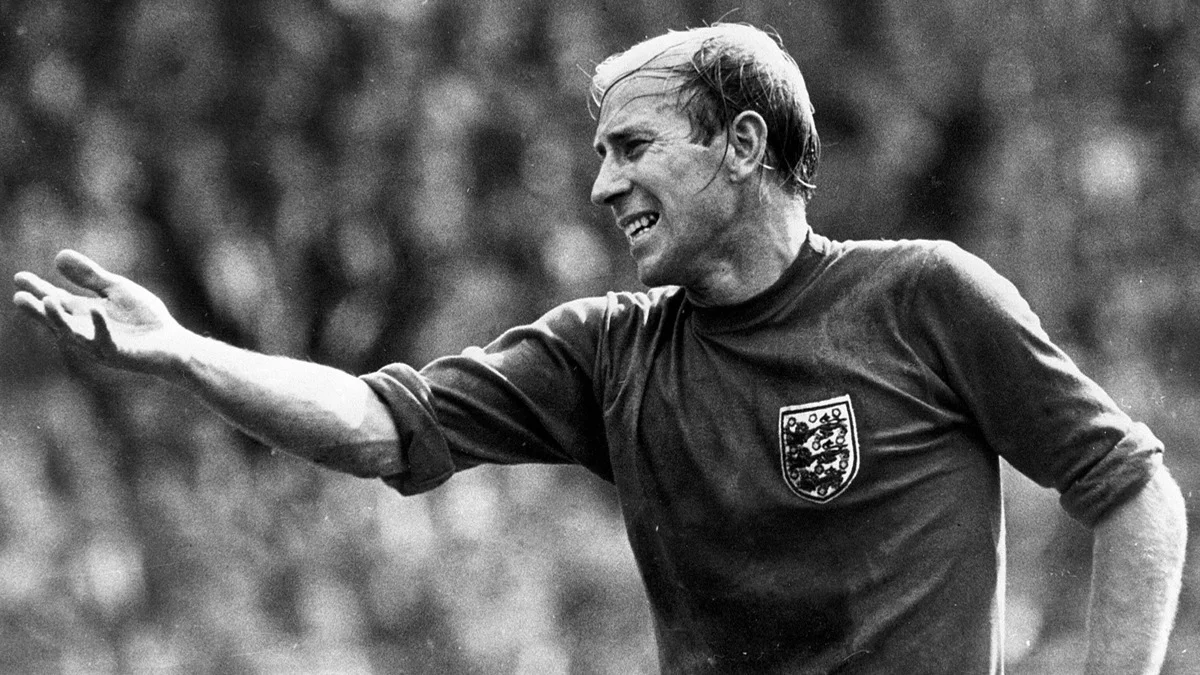
Bobby Charlton. Photo: Imago / TASS
I saw Bobby Charlton from the rostrum in the farewell match of Leo Yashin in Luzhniki in 1971. He played for the world team against Dynamo. At one point in the game, he was with the ball in the place of the left defender, facing his own gate. At such moments, it seems that nothing important can happen: now he will pass the goalkeeper, or will subtract his neighbor to give himself time to turn around, or something else like that. Instead, he suddenly spun in place and made a sharp pass by fifty meters, diagonally through the entire field, to the other edge, where at that time the extreme striker fled alone.
I remember immediately the rumble around and the person’s face nearby, who spoke with surprise and enthusiasm to all those around him, as if urging them to share their joy: “His eyes are on his back, or something!”
Bobby Charlton's back was thin and stooped. Today, there are no football players with such backs, today all athletes are on the field, everything is a slanting fathom in the shoulders, everyone has bags of muscles and legs, which you can trample the elephant. And Charlton was all some kind of inconspicuous, crookedly, the article was not different, growth, too. And still a bald head in his head. Now, when the part -time players are stars of glamor and instagram, go with gold iPhones, have personal hairdressers and stylists and travel to the “Cadillacs” and “Ferrari”, the phenomenon of such a plain bald man on the field would cause laughter. Uncle, whose? Where are you?
Who is he? The best English midfielder of the XX century? So some say. I don’t know, there were hundreds there, I didn’t see everyone, but among those I saw, Charlton is the best. And I saw Paul Hasqueun in his best times, saw his wrestling neck and fierce game, as well as what a cheerful gait he left the field when others barely dragged his legs. I saw Jerrard in the prime of age and effort, he was also always tireless and filled the whole middle of the field with a movement. And Milner? Here is a fire -breathing car in the center! And the red -haired Alan Ball - Alan Ball, a hereditary football player, for his father was also a player and coach - Ball, by the way, went to Charlton to replace and rushed like a mad, so his hair shone in ten places. But Charlton surpassed them all, all powerful and brutal, all runners and fighters, but why? Watching his game was incredibly interested in how to watch the thought, for its development. He thought!
Matt Basbie, the legendary coach of the legendary Manchester, saw this in an ugly boy running for some fifth to twenties. I saw what he was thinking in the game. This is not just to think when sitting on a couch with a book or behind a chessboard. With the book and in chess, the thought, as it were, is separated from the body, lives on its own, develops in the clean space of the spirit. In football, the thought is inseparable from the body, from its reflexes, and it itself becomes almost a reflex. In the chess, even in the blitz, there is time, in football, thought should be done in half a second, at that moment the player should see everything, understand everything, evaluate everything - and do everything. Like Charlton.
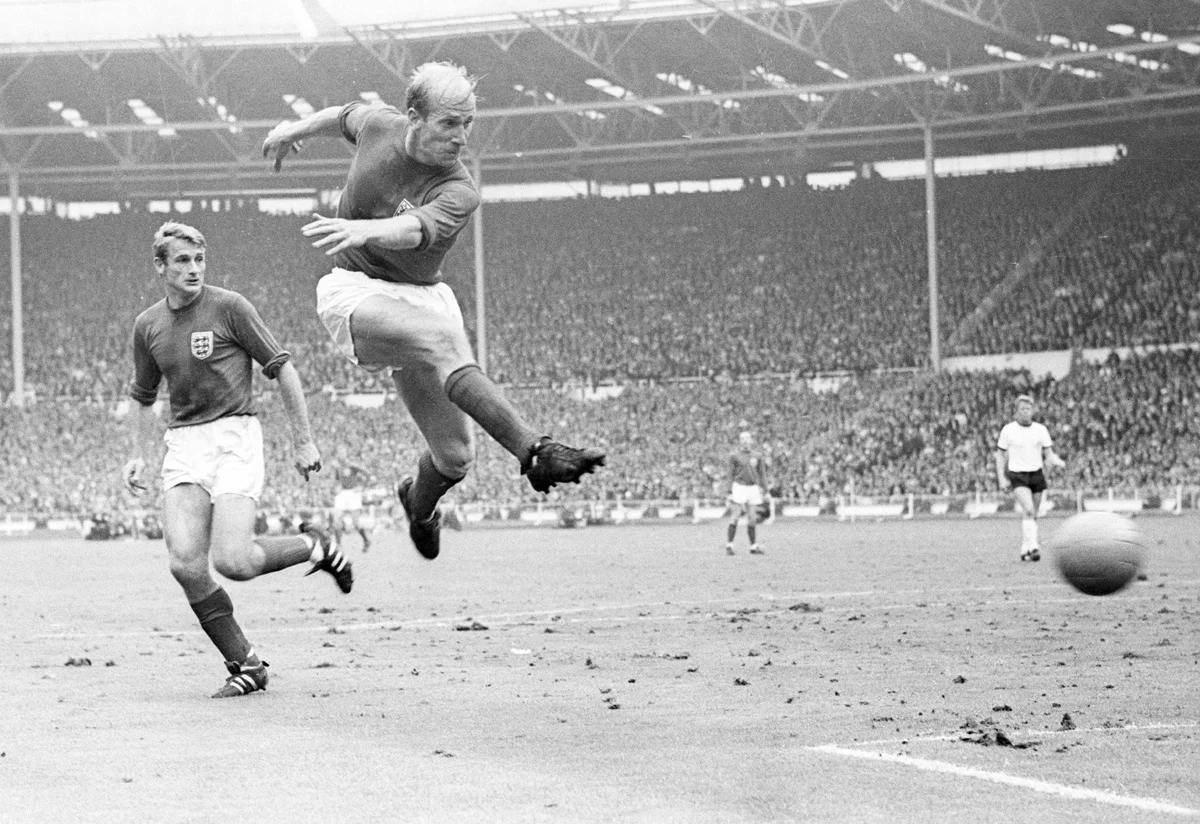
He did not shine with the technique how some artists of the ball and kings of dribbling shine with it. In his game, there was never an introduction and desire to please the public. The son of the wearer mine went out to do business, and his work was to tie the game of his team together, stretch the threads to all 120 meters of the field, connect the right and left, top and bottom, horizontal and vertical. With the technique, he was all right, she was not an end in itself, but a tool, rationally arranged for the case. There were no statistics in the modern sense, no one thought how many he gave forward and backward, exactly and inaccurately, but by feeling he was never mistaken in PACA, he was neat, valued with a ball, and his whole figure in the game always radiated diligence.
I think no one remembers Charlton Bobby, who is standing on the Bobby field, but whoever remembers him remembers the runner. He did not take a pause, this thin hardy football hard worker. The movement was his element, the tireless, constant, working movement of the midfielder, who continuously made something, tied, built something. It didn't work out? Come on again. He tied something in the center, moved to the edge, hugged the attacker, opened the defender, flashed his bald head in the middle, flashed with a skinny figure on the edge ... He never rushed with a furious face, with frantic eyes, never shouted anyone and did not trample anyone, and it was impossible with his weight and growth. He always played correctly, reasonably, smartly, simply, futile. And where to come from Paphos with the son of a miner, who from childhood knew that a man should work hard; And if I didn’t go to the mine, then work on the field, do not sink.
He was not eloquent and did not become famous for discussions about football or philosophy of football (like another great midfielder - Kruuff). Having finished, he could not become a coach, although he tried, but quickly realized that this was not for him. He did not know how to explain what he knew how to do so well.
In general, he was a man without statements and declarations, without a cod and without a pose, in the era of jeans, neck scarves and Hawaiian shirts wore strict costumes and modest ties, but loved him not for words, but for his quality, not only playing, but also human ones.
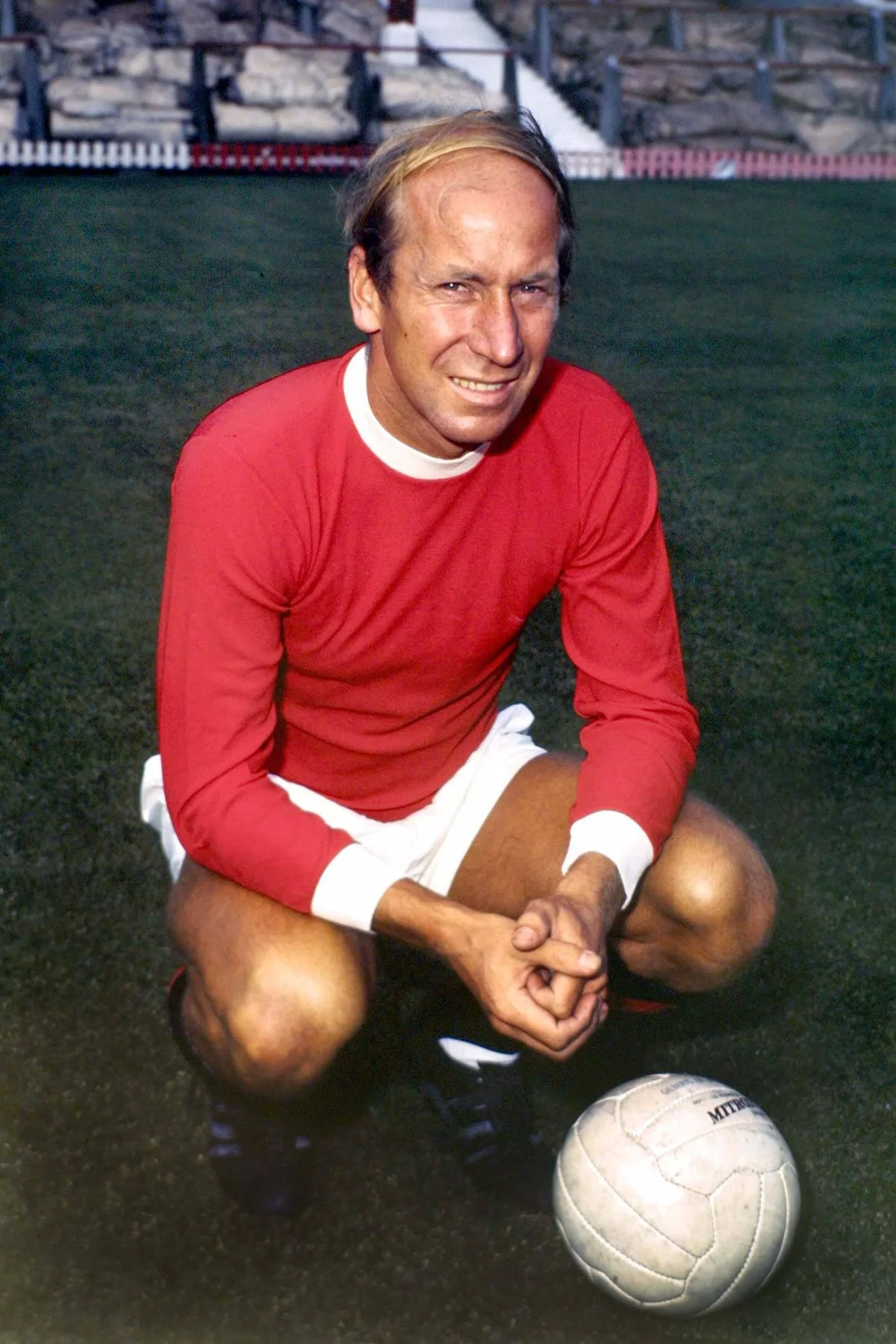
Starting to play for Manchester, he played for him until he was at a high level, and did not think about other clubs; Both in the Manchester and in the England national team he was always a captain, not because, as they say now, he was the “leader of the locker rooms”, but because other players without words felt his human strength and fidelity.
In the national team, which played in the farewell match Yashin against the national team of the Moscow, Tbilisi and Kyiv Dynamo in Luzhniki in 1971, he was also a captain.
When in 1958 in Munich, Manchester crashed in a plane crash, the young Bobby Charlton lost consciousness and woke up in a chair 50 meters from the plane. He saw how the goalkeeper Harry Gregg alone in the snow haze - firefighters have not arrived yet - he climbs into a burning fuselage and pulls out living and dead bodies from him. Then he found out that Gregg saved him too, dragging his chair from the plane.
From this day, he, Bobby Charlton, became survivor-one of those who was saved by the will of Providence and thanks to the courage of the goalkeeper Gregg, escaped to play and live a long-long life. He never forgot this day or the dead comrades.
Among the Charlton, in this large clan in the north of England, there were miners and football players, no less football players than miners. Dyuzha Uncle Bobby chased the ball, kicking him with tuberous legs, cousins made a glorious career in proletarian sports clubs and even climbed to Profi in “Leicester” and “Chesterfield”. The elder brother of Bobby, Jackie, went to serve the police, but then he went to football from the police and played the national team behind his brother, the central defender. He stood behind the younger as a wall, provided him with reliability from behind. To survive, to withstand - it was their family gift, their property, in which the post -war England, who still remembered the bombing, recognized itself. In 1966, after the final of the World Cup, where England with Bobby and Jackie missed the goal from the Germans in the last minute and still won the extra time, Queen Elizabeth told her mother’s brothers: “At the moment when Germany scored, I wanted you to have eleven sons, Mrs. Charlton.”