
Translated material
Call sign "darkness"
"New Europe" watched the play about the war with Ukraine staged in the Crimea
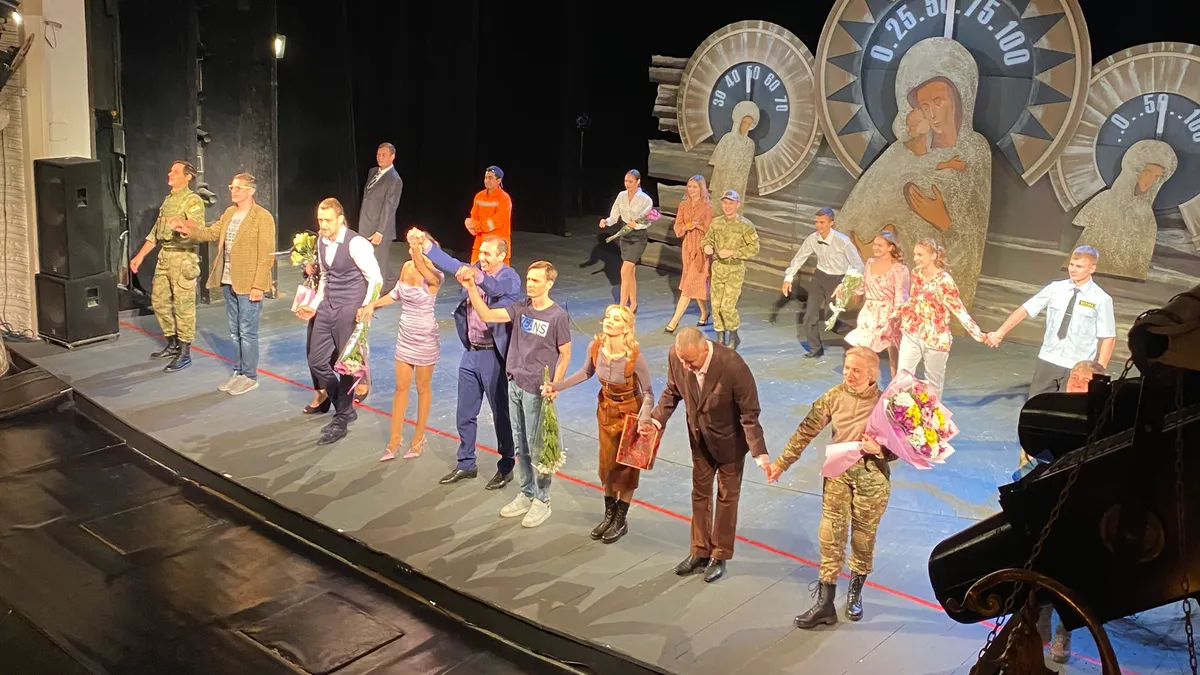
Photo: Eva Gagarina, especially for Novaya Gazeta Europe
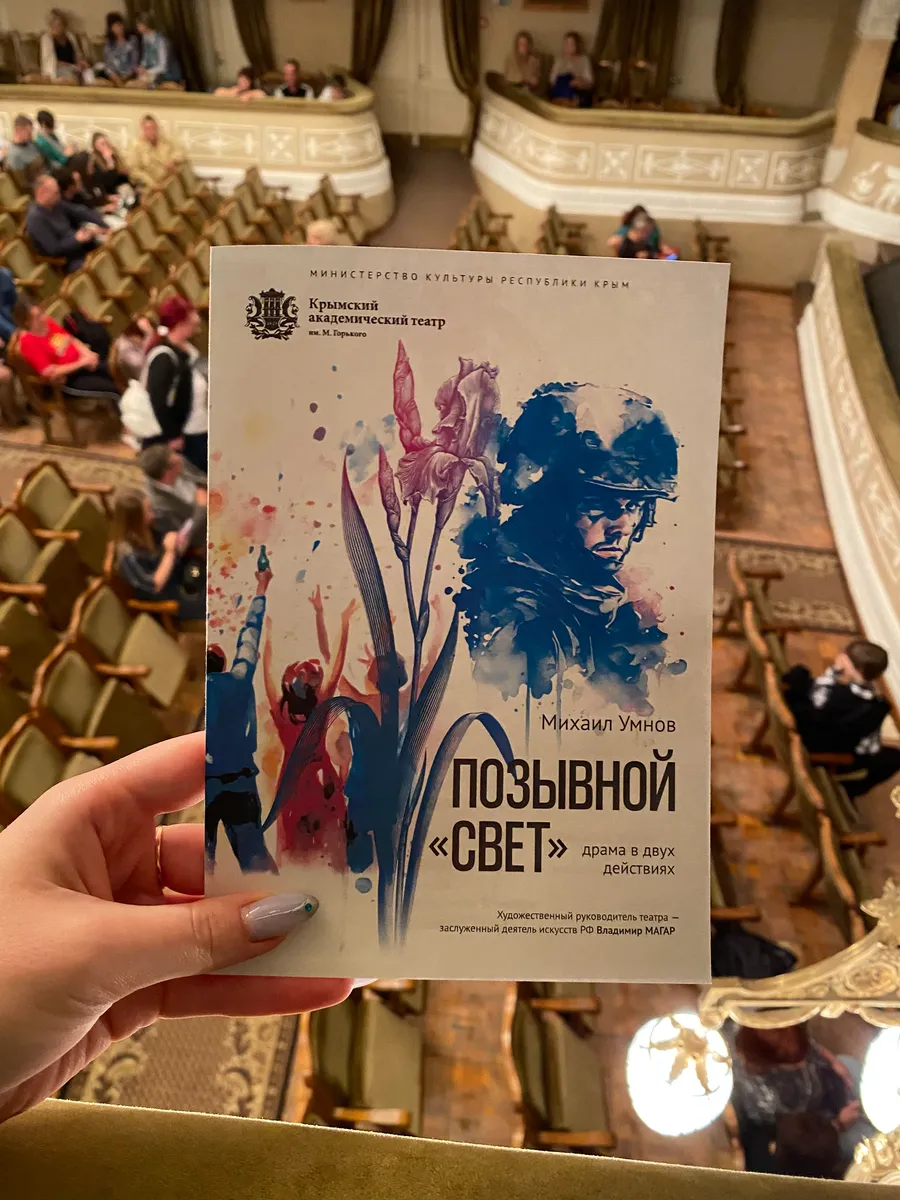
In the Crimean Academic Theater named after Maxim Gorky in Simferopol on October 21, the premiere of the play “The Calling of Light” - “The first performance in Russia” (not in fact is not) took place. Mikhail Umnov - the writer and author of the play - promised that, despite the coverage of the topic of war in Ukraine, there would be no “pathos and slogans” in the play. No propaganda is only a love story. The play received a reward from the Union of Theater Workers of Russia and became the finalist of the Hero-2022 front-line literature competition, held with the support of the Ministry of Defense. Our correspondent visited the premiere, watched a three -hour performance and talks about her impressions.
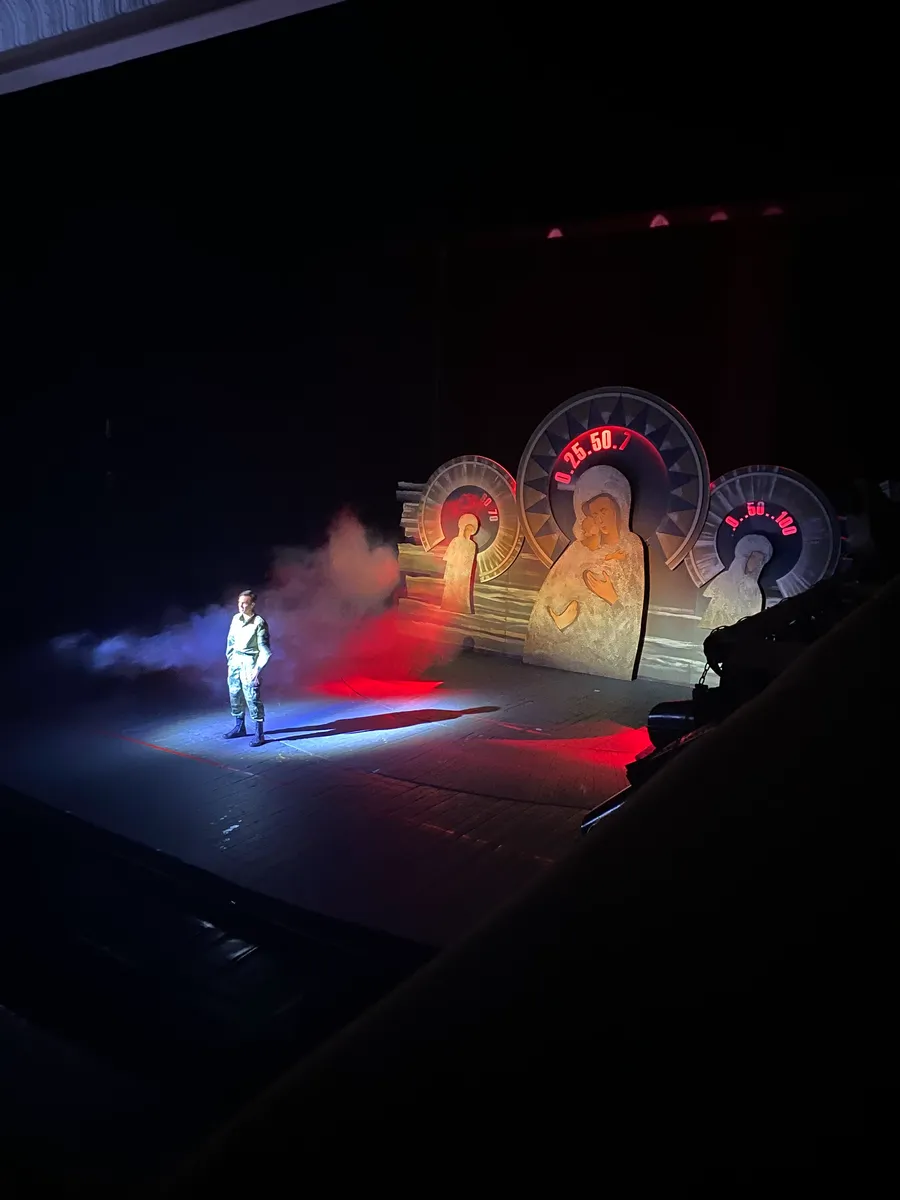
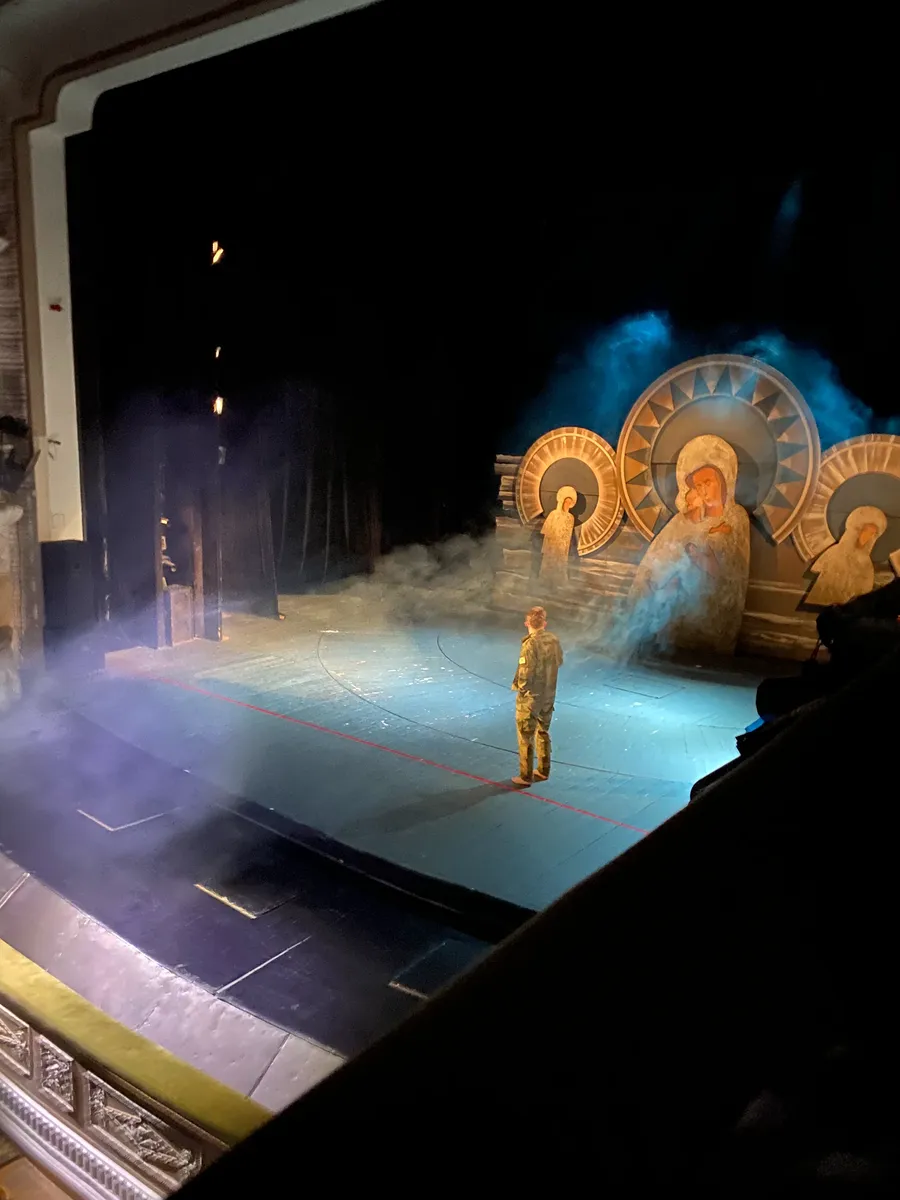
Almost half of the tickets for both days of the premiere-October 21 and 22 were bought out in the online cash desk. Before entering the theater, I meet cadets from some Crimean school (running ahead: they just liked the performance the least). The scenery in the form of icons can be seen from the stage, a guy appears in military uniform and barefoot. Anti -tank hedgehogs are added to the icons. A little later, they will explain to us that this is an artistic installation called “Rubicon”, and one of the first scenes just occurs in the gallery of contemporary art.
In the center of the plot is a love story, as the playwright says, in modern realities. The artist-steering from Moscow Alexei is engaged in volunteering: he supplies humanitarian aid to the Donbass. At home, his beloved girl is waiting for him. Their relationship is “more serious” and even a wedding is planned.
The play accelerates for a long time. Until the intermission, everything that happens resembles a long exposition. It even seemed to me that the author wants to introduce us as much as possible with the heroes who would later clap in the conflict with himself and others. But no, the most important moment remains behind the scenes - as if this step is already clear and obvious.
During the next volunteer trip, Alexei picks up weapons and gets into operation instead of a murdered fighter.
No spiritual torment about the bride left in Moscow, no doubt about the correctness of the decision.
Before that, Alexei faces a misunderstanding of Martha’s parents at a family dinner. Here we are shown that the main character is impeccably correct, and the bride’s parents do not have a clear civil position. Civil authors consider the only true desire: to help the people of Donbass. Moreover, on the traditional feast in Alexei's mouth, the authors put several conflicting phrases. For example, "no one needs a Russian world except us for nothing, but you need to fight for it, you can no longer retreat." At the most emotional moment, the protagonist reports that he brings the victory of the Russian army to the Donbass, and offers a toast for this victory. But no one supports him, and family happiness falls apart.
Everything breaks completely when Marta finally finds out what the groom is busy with. He not just disappeared or delayed, but fights, not telling her anything. Of course, the author draws this as a heroic act, and puts a girl with a selfish hysteria. At the same time, she even has a miscarriage according to the plot, but even then she is unlikely to deserve the author's compassion.
From grief and despair, Marta decides to connect his life with another - the antagonist of the protagonist, an official Andrei. The authors draw him with habalist, stupid and cowardly, because he does not dream of the "Russian world", unlike Alexei, and in every possible way tries to avoid calling. But the parents of Martha really like him. The playwright mocks the infantile and stupid Andrei: in order not to fall under mobilization, he has to fake a certificate with a shameful diagnosis of Enuresis.
It seems that Martha in these scenes should appear in the image of a bad and incorrect woman, because how it is: her lover risks her life there, and she is not ready to wait for him from the front alive or dead, she just wants to be “happy”. The parents of Martha and the bad guy Andrei should also not call the viewer anything but shame. These are frivolous jesters with a set of cliches: egoists that were not held in life, they endlessly drink and deaf to other people's experiences.
At the climax, Alexei calls already a tipsy March in the middle of the night: she does not understand what the person wants, who himself abandoned her, and the guy asks not to turn off. But thereby, he leads to Ukrainian artillery - a mobile signal. And by this he saves the column of colleagues. Against the backdrop of a conversation, the nimbates invariably present on the stage of the icons become the dashboard of the car. The arrows jump, and on the canvas of the curtain a first -person view appears: how the colleague of Alexei leads the truck.
The final scene of the play is not a very logical tear with some mystical elements. The artist who has lost his vision in an attempt to draw is seeing. Screaming - already a new lover - that "sees the light."
According to all the dramatic canons, the play looks so -so. The main characters have no development, Alexei at the end remains exactly the same as we saw him in the beginning, and Marta does not “seek” and chooses a happy life for himself, as he wanted initially. In general, it is not very clear which idea is subordinate to the general course of the plot.
It seems at first the hero conveys to everyone the idea that civilians need to help, and in the second part picks up weapons and participates in hostilities. And at the same time, his character does not change in any way.
He is not crushed by the horrors of hostilities, but is not inspired by his complicity in the "victory of the Russian army."
The plot has quite cheap engines: the actors often take and run away, they drink and sometimes smoke in the absence of other classes on stage, and when they do not do either one, they wobble aimlessly on the stage. The original cinematic nature of the narrative is visible: there is simply nothing to do on the theater scene.
The age rating of the performance 12+, while alcohol and cigarettes on the stage are abundant, and once even a female breast flickens (the cadets I watched, I liked such a plot turn). Heroes sometimes pray, and the play over its entire length is accompanied by a giant iconostasis, but at the end of the halo transforms into a speedometer, which causes conflicting feelings (are there any insults of someone's feelings?). Officials and officials act as cowardly lyso -observaces, but at the same time it is just that and chooses Marta’s husbands. The idea of the performance also remains in question. The viewer can only think of the motivation of the characters. What is the right thing? Fight as a volunteer? Help the peaceful people of Donbass? Hide from the bride his participation in the war? All together? Everything separately?
There really is really no direct propaganda in the play, but the pathos is in abundance. And to figure out what kind of a strange love story, which the author positioned as the main storyline, did not work out.