
Translated material
"War and prison is too much"
The situation with human rights in Chechnya is steadily improved, Swiss officials said, making a decision on the deportation of Ali Bataev
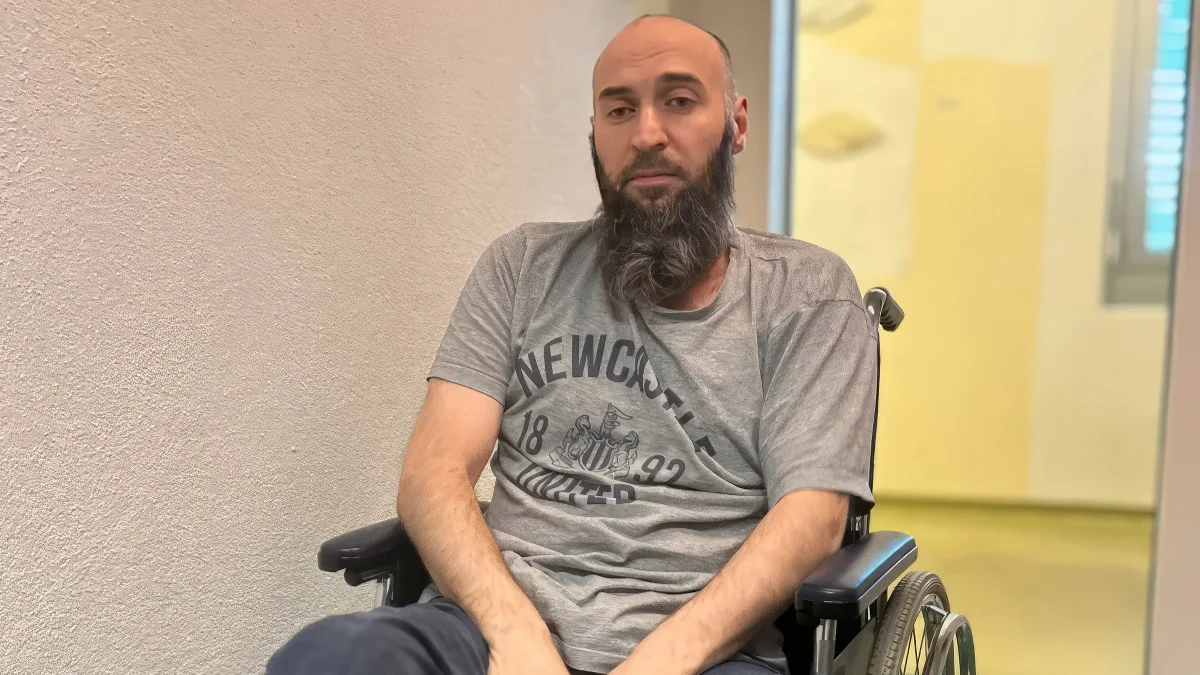
Ali Bataev in the hospital, where he was brought after 50 days of a hunger strike. Photo: Lachin Mamishov
Ali Bataev has been sitting in a Swiss prison for a year and is waiting for deportation to Russia. And at the same time he manages to help the Armed Forces - even from prison, even given the threat of many years of imprisonment in his homeland, even after the next refusal to appeal the decision to deport. “The situation with human rights in Chechnya has improved,” is the main argument of the Swiss migration service.
Novye Europe described the story of forty-year-old Ali Bataev in August-then he had been holding a hunger strike for almost two months. Recall: he is a native of Chechnya, left there in 2005 due to the political situation in the republic, then a donkey in Ukraine, got married, took up business. And after the start of a full -scale invasion, when all the accounts of Russian citizens were blocked in Ukraine, together with his wife Olga decided to temporarily leave Ukraine so as not to sit on his wife’s neck, but to get a trucker (Ali already worked as a truck driver in Europe, he has all the driver's categories) and help the Armed Forces.
But Switzerland refused him to grant the status of temporary protection and made a decision on deportation. In October last year, Ali Bataev was arrested and placed in prison. For two months he held a hunger strike. The Swiss human rights activists from the ASYLEX organization, together with Olga, turned to all authorities, explained that it was dangerous to return to Chechnya that he would definitely wait for a prison term there, especially considering the friendship with the fighters of the Shaikh Mansur battalion, who is fighting the international legion in Ukraine. Ali no longer asked for temporary asylum. He only asked for not to be deported to Russia, but gave the opportunity to return to Ukraine. But useless.
“Every morning after the shelling I have an irresistible desire to utter the Armed Forces of Ukraine,” Olga says, “and if before none of us thought about talking about it and even more so to advertise, now the checks for every 100 hryvnias that I send on behalf of my husband, I keep and is ready to present it as evidence of his APU assistance even from a Swiss prison.
He, in turn, is all the money that he manages to earn money (although he is not provided in prison now) is trying to transfer to me for further translation of the Armed Forces.
The jailers, by the way, with great difficulty learned to transfer money to Ukraine - it turned out that the Ukrainian banking system is much more advanced.
At the end of the second month of the hunger strike, after many letters sent to prison, to the migration service, to various Swiss newspapers and even the President of Switzerland, Ali Bataev was taken to the hospital.
“I was scared and rejoiced at the same time: I hoped that they would help him to leave the hunger strike in a hospital,” Olga recalls. -Then I found out that they took him to the car carrier, and he already barely walked from weakness (they walked the 60th day of the hunger strike), then dragged out of the car carrier and covered in the hospital. They made tests, kept in handcuffs in the corridor until the evening and sent back to jail. At the same time, neither the hospital nor the prison wanted to accept it - on the road the police found out what to do next with it. However, there is no thin one without good: this trip greatly affected her husband - he realized that no one was worried, he is alive or dead, and no one will help him. Then he decided to leave the hunger strike.
Olga sent him products from Ukraine. It sounds strange, of course, - transfers from a warring country to Switzerland. But our century promises to be the strangest of all since humanity has gained historical memory. All the parcels of Ali were transmitted, and he came out of a two -month hunger strike safely. And I also received the right to use a mobile phone. Olga was also able to find a “ring” without a camera. And now, after an end, Ali can talk with his wife from prison. They still hope that he will be able to return to Ukraine, and not be deported to Russia.
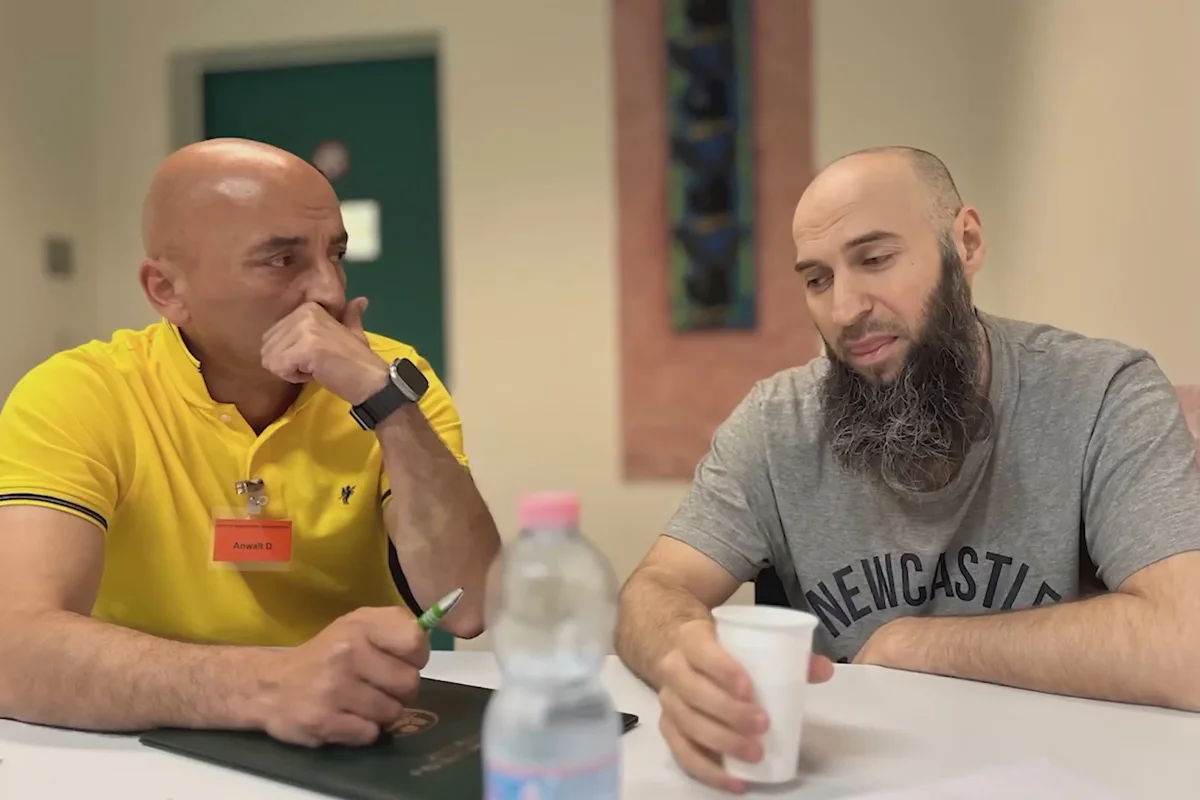
But the letter of the law is always in strict contradiction with the spirit of this very law. And the letter most often wins. In the papers issued by the Migration Secretariat of Switzerland (SEM) and the federal administrative court (all documents are as amended), it was written that the reason for the refusal is to improve the situation with human rights in Chechnya.
In the last - October - refusal, officials develop their thought: “Today there is no longer a situation of universal violence. In parallel with stabilization, human rights also develop positively. Rasisable detentions from the Russian military or Chechen security forces no longer occur. First of all, cases of violent disappearance and abductions of people were reduced.
According to the UN and the International Committee of the Red Cross, the humanitarian crisis in Chechnya has not been since 2007. ”
But do not think that these are Swiss officials so far from reality. They refer to the documents and reports of European and international organizations: a report of the Danish Migration Service of 2015, the text on the website of the UN Supreme Commissioner for Refugees of 2007 on the return of stability to the region and the annual Red Cross report for 2007.
ASYLEX lawyers attached their publication to their complaint, which tells the story of Ali: in the New Evrop and the Swiss Tagesanzeiger. But in the decision of the migration secretariat it is written that Ali Bataev does not criticize the Russian regime in articles, but Swiss justice, which means that they do not add anything new to the initial situation and do not make it more vulnerable, especially with a stable improving situation with human rights in Chechnya.
Another argument of the migration secretariat in favor of Ali Bataev’s deportation to Russia is the abolition of the institution of registration and freedom of movement within the country. Most Chechens explain Bataev in refusal, and do not live in Chechnya, but beyond its borders, so finding a safe place on one sixth of the land will not be found. And finally, Ultima Ratio is the lack of Ali profile in social networks, where he would criticize the Russian authorities. There is no profile on Facebook - there is no person. No Twitter - there is no civil position. There is no Instagram - there is no reason to arrest at home.
“When I read about improving the situation in Chechnya, I didn’t have enough heart attack,” says Olga, Ali's wife. - It’s very difficult for me to read this: we live here in a situation of shelling, anxiety, dying acquaintances and unfamiliar, destroyed beloved places in the city. The husband in prison holds better than I am in the wild. But every day he is getting harder. A year in prison for nothing - how can it be in a civilized world? The year of his and my health, life, plans and hopes. We do not appeal the refusal to the asylum - we will appeal only the decision to deport, because it is deadly for Ali. And if I can spend time for myself, for the country, for our army, then Ali does not have such an opportunity. After a hunger strike, they do not give him a job, but for him it is important to help loved ones and the army. War and prison is still too much.
The other day on Facebook, Ali Bataev knocked on my friends. This desperate Odessa citizen Olga started an account for him - since for officials a person exists only in the form of a profile in social networks, which means that Ali, who has been in prison, will have a profile in social networks. I would very much like him to have the status of “online” as soon as possible.