
Translated material
Supporters of the world with Palestine and small children
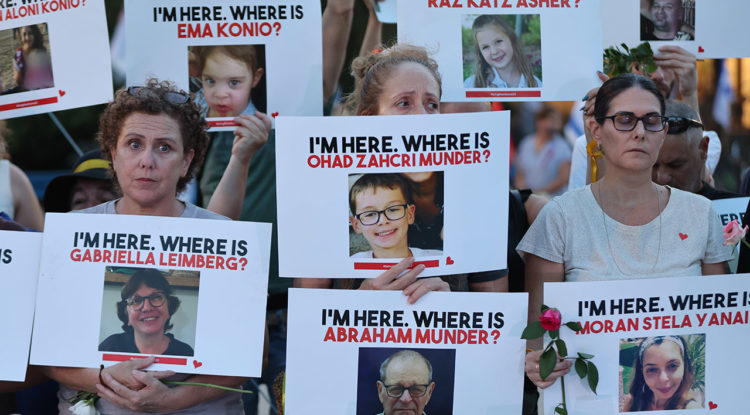
Who Hamas holds hostage and how they got there. The stories of prisoners
Israel has so far postponed a large -scale ground operation in the gas sector, focusing on small ones. Some analysts believe that any attacks only interfere with the return of at least 200 people from captivity, who were captured by Hamas militants during an attack on Israel. In addition to the Israelis, citizens of other countries are captured, some of which were stolen during the music festival, the other from their houses on the border with gas. However, one thing unites them - these are civilians whom the attack found for household chores or rest. Neighboring negotiations are difficult, some of the hostages have died, the rest have been in the dungeons of the gas sector for more than 20 days. The stories of those who have fallen from there - in the material of the "cold".
In order not to miss the main materials of the "cold", subscribe to our Instagram and telegram .
Hamas and Israel are not yet ready to conduct direct negotiations on the fate of the hostages. Hamas put an ultimatum : hostages in exchange for the release of thousands of Palestinians in Israeli prisons, restoration of fuel supply to Gaza, opening Rafach’s border crossing on the border with Egypt and the cessation of bombing. Israel refuses to fulfill most of the advanced requirements, so the negotiation process is extremely slow and through the intermediary - Qatar.
It is Qatar who agrees on the release of specific captives with the political leaders of Hamas. The militants have already released four people: 85-year-old Yoheved Lifshits , 79-year-old Narit Cooper and two US citizens -59-year-old Yegudit Raanan and her 17-year-old daughter Natalie. Media sources report that soon Hamas can free another 50 captives.
Qatar officials have a way out only on the political leaders of Hamas who live in Qatar. The final decision on the release of hostages is not made by them, but by military leaders in the gas sector. These people have their own interests and do not always agree with the arguments of their “political colleagues”; The commanders recently reported the death of 50 hostages. All of them allegedly suffered as a result of Israeli Aviation for Enclave.
Returning from captivity
According to the Israeli authorities, as a result of the Hamas attack on October 7, more than 1.4 thousand inhabitants of the republic were killed , about 200 people were captured. The response of Israel in the gas sector, according to the Palestinian authorities, claimed the lives of more than five thousand people. When Hamas took hostages, some wounded Israelis were loaded into a pickupa and taken to gas, others were forced to walk.
This happened with the already left captive of the 85-year-old Yoheuded Lifshits , who was taken hostage on the day of attack with her husband. The militants were on motorcycles, however, the lifers had to go to the Gaza of Lifshits - the members of Hamas insisted on this, who, in addition, beat the elderly woman with sticks. However, in the underground tunnels, from her words , they began to be better. The militants organized an acceptable life for hostages: a normal shower, a dream on mattresses, and fed them with the same food as they ate themselves.
What underground tunnels are we talking about?
Hamas built a whole network of concrete bunkers, which are reported among themselves underground tunnels. There are secret entrances and exits to these tunnels throughout gas, which allows the militants to hide in civilian quarters, and in bunkers theystore their weapons, and, apparently, they are now holding hostages.
Hamas released four hostages from "humanitarian reasons and due to their worsening health." In the video of the liberation of the hostages that Hamas led, it is clear that the lifshits in gratitude shook her hand briefly to one of the militants, although her husband is still among the hostages, whose fate is unknown. After the release, Yohewed Lifshits gave a press conference in which she said that, despite her health problems, Livshits slept with an oxygen mask and suffered from back pain -she managed to “go through hell”. Before the attack of Hamas, the spouses often helped the Palestinians get high -quality medical care in Israeli clinics.
59-year-old Yehudit Raanan and her 17-year-old daughter Natalie arrived in Israel from the United States for the anniversary of her grandmother-85-year-old Tamar Raanan, mother Yehudi. Grandmother and her partner managed to hide from the attacked militants in a home bomb shelter, and her mother and daughter were less fortunate. Yehudit has long moved to the United States, where she works as a cosmetologist, Natalie only graduated from high school and took a break in her studies a length of a year to travel around the world and enter the university with new vigor.
They are still captive
In the gas sector,there are now more than 200 hostages, among them 30 children and adolescents and 20 people of advanced age.Many of them are foreign citizens: Russians, Argentines, Americans, Thai, French, Germans, Italians, Portuguese and British. Another 50 people,according to Hamas, are hostage from other armed groups. Which militants do not specify.
Ada saga
75 years
Hamas’s attack was another severe test for the Saga Ada over the past year. Recently, she lost her husband, who died of cancer, and she herself underwent a complex operation on her thigh. The sagas collected suitcases for a trip to London, where she was going to celebrate her 75th birthday in the company of her son. At that moment, the militants of Hamas burst into her house in one of the southern kibbutsev and took her hostage.
“Father and mother lived 54 years together, and his mother was hard to recover from his loss,” the son of Ady Noah, who was waiting for her in his London, told reporters. Despite the loss of a loved one, the saga found the strength to live on. For example, she continued to teach Arabic to her neighbors in the community. She learned him 50 ago when she first arrived in Kibbuts as an 18-year-old girl from Tel Aviv. She considered it necessary to make friends with Palestinians, for which she began to learn their language and teach him to others.
Nooam hopes that knowledge of the language will help mother captivity, and believes that she will survive the Poles - the Poles through the Holocaust - she will survive in this tragedy and see her three children and six grandchildren.
Selin Ben David Nagar
35 years
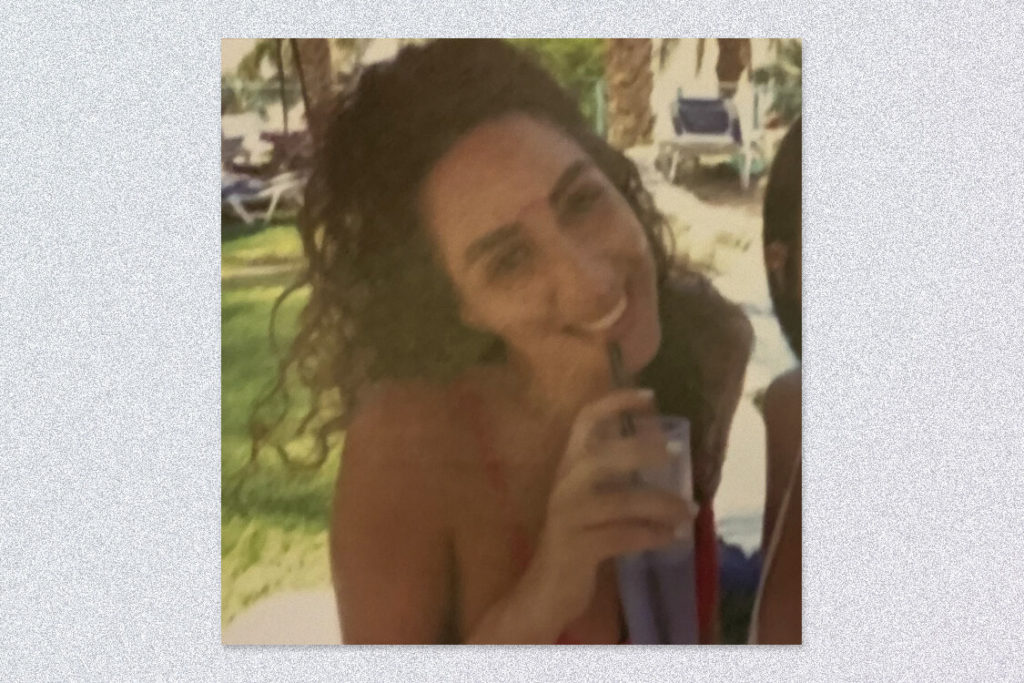
Six months ago, Selin first became a mother and in the last days of maternity leave decided to go with friends to the Supernova music festival. She left her little daughter Ellie at home with her husband Ido, who was supposed to take her from the festival at midnight the same day.
Arriving to the festival in the early morning of October 7, Selin heard explosions, realized that something was wrong, and launched the car. But she and her friends failed to leave the danger. She wrote to her husband that the soldiers were approaching the bomb shelter, and added: “God, it was a big mistake to come here.”
Having received this message, Ido went to the festival, but the Israeli military did not let him go there. Ido only saw his wife’s car riddled by bullets. Subsequently, he managed to talk with one of the saved visitors of the festival. He told him that he saw his wife and her friends in a bomb shelter. Selin's friends died from grenades explosions, which Hamas militants threw in a bomb shelter, but she herself survived and was hostage.
Ido told reporters that his wife had grown in France, worked as an assistant in his law firm and was a wonderful mother.
Hannah Peri, Poppluwell
79 years and 51 years old
The writer of British-Israeli origin, the writer of British-Israeli, Izheet Stavitsky, said that her mother Hannah Per and Brother Nadav Poppluella was captured in their homes (Hannah and Nadav lived on the same street) in Kibbutz Nirus. She found out that the militants of Hamas burst into the kibbutz, from the friends living there and called her mother, and then her brother to warn them about it.
At first, she phoned her mother and told her that she would rather go into a safe room , but hear extraneous sounds and English speech with an Arab accent-militants had already come home and told her something. Then Ayelet hung up and called her brother, but realized that she was late - their conversation was interrupted by male voices.
Soon, from her mother’s phone, she was sent a photo in which her mother and brother are sitting on the chairs in the peri living room, and opposite them there is an action movie with weapons. Later they were taken to the Gaza sector, and another Brother Aylet, Roy Poplwell, Israeli soldiers found the house killed in the vicinity of his house. He, like Nadav, lived near his mother.
Nadav, swarms and aelet are citizens of Great Britain, they were born in Western Yorkshire. Ayelet told reporters that she still failed to bury her brother because of the prolonged process of identifying his body, and asked the British authorities to do everything to save her relatives from captivity. Hannah and Nadav are diabetics. Mother in every day collars insulin, and the brother drinks pills, and Aylet does not know how long they can be without medicine.
Yarden, Shiri, Ariel and Kfir Bibas
34, 32 and 4 years, 9 months
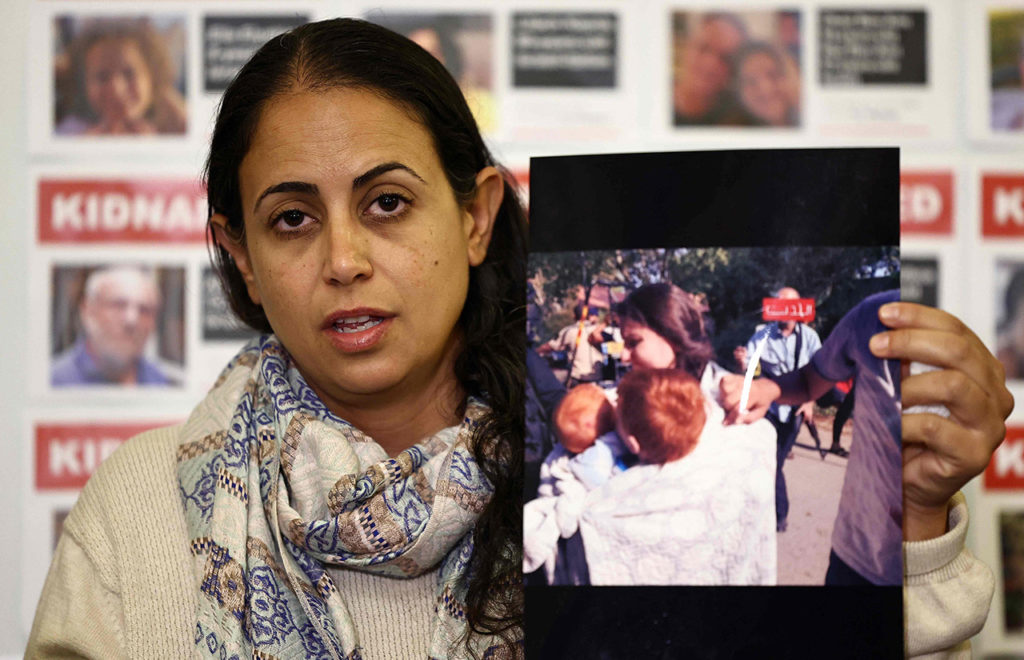
Yarden and the width for a long time wanted to move from Nir-Oza-Kibbutz in the south of Israel. “They are tired of living in fear, in the immediate vicinity of Gaza and its missiles,” said Sister Yarden Ofri to reporters.
On the morning of October 7, when the militants of Hamas entered the kibbutz, she corresponded with her brother. At first, Yarden wrote to her that he hears how missiles explodes nearby, then he said that terrorists entered kibbutz, that the sons Ariel and Kfir could not shut up and that all this is "like the end." In one of the last messages that came from Yarden Ofrei, her brother told her and her parents that he loves her. This message, as offrey later recognizes, he sent at the moment when Hamas militants sawed the front door of his house.
Subsequently, close bibas will see the frames on which Yarden, alive, but wounded, lies in a pool of blood at the legs of terrorists, and the width presses the frightened sons wrapped in a blanket. The video was shot in different places: the spouses, apparently, were disconnected.
Parents Shiri Margit Silverman Schneider and Josiy Silverman, whose house was in the same kibbutz, did not survive. The Israeli military found and identified their bodies among the remains of people killed by terrorists.
Or Levy
33 years
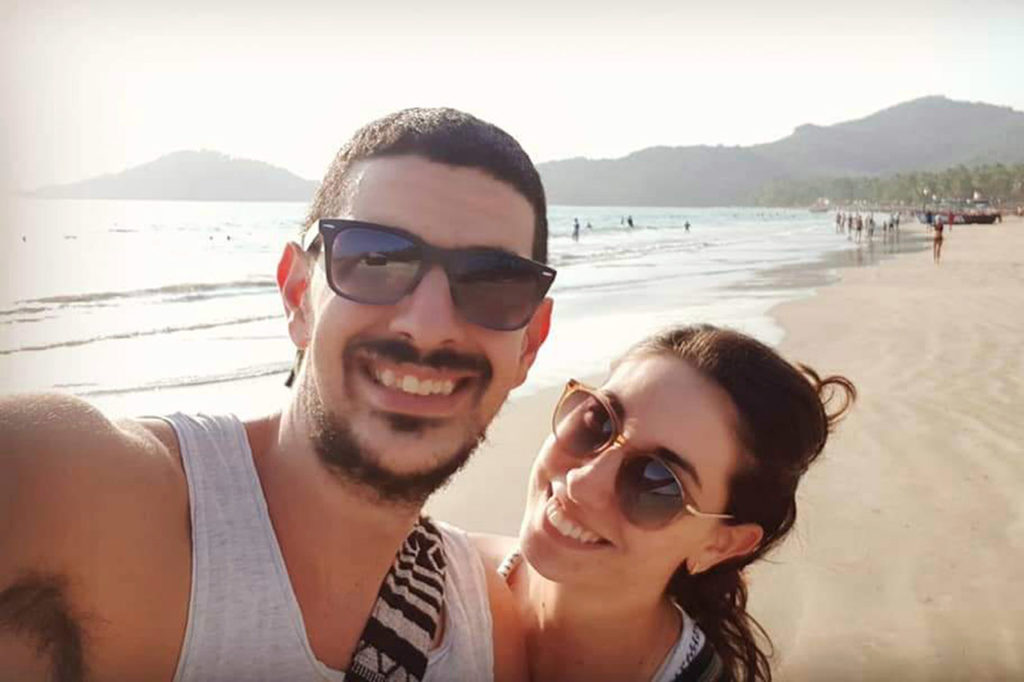
The Israeli OR Levy loved to spend time with his wife Einav Elkayam Levy. The couple kept a tent in the trunk of their car and often traveled together. During the trips, they left their two -year -old son Almore with the parents of Einav. On October 7, they fell into another adventure - we went to the Supernova music festival.
Having not reached the venue of the Rive, OR wrote to his mother that they were going back, because rockets fly over them. He later called her and said that they were hiding in the bomb shelter that was closest to them. It was there that the terrorists overtook them, and the Israeli military subsequently informed the relatives of the couple that Ainav had died, and OR was captured.
Brother Ora Michael Levy told reporters that his brother himself taught himself computer programming and joined a successful startup. Michael also showed reporters the joint photographs of his brother and his wife and said that Or always smiled next to Einav. The couple, according to him, dreamed of a large family and wanted to have more children. Michael also said that their son now lives with his grandparents and constantly calls his mother and dad, and they cannot find words to explain to him what happened to his parents.
Alex Danzig
75 years
Alex Danzig was also captured when the militants entered the nir-on. His ex-wife, with whom on the night of October 7, three Danzig’s grandchildren remained and who also lives in Nir-OZ, saved herself only because she managed to slam the door in the safety room of her house.
Danzig is a well -known Holocaust researcher in Poland. He wrote several articles on the killings of Jews during the Second World War, trained guides on the topic of the Holocaust and organized initiatives to improve relations between Israelis and Poles. For this in Poland, he was even awarded several prestigious humanitarian awards, including the second degree of insignia of the “Cross of Merit”.
Together with the Holocaust survivors, Danzig moved from Warsaw to Israel in 1957, when he was only 9 years old. He arrived in Kibbutz Nir-Oz after he served in the army, and since then he had not moved anywhere from there. He grew potatoes and peanuts in the garden.
Now the leading museums of the memory of the Holocaust victims, including the Aushvitz-Birkenau State Museum and the Memorial Complex of Yad Va-shim, have been around the campaign with an appeal to free Danzig, to which close scientists joined.
"I miss you. I miss our stunning conversations, according to your loving look, with which you give me and the girls, every time we come to you. Dear and beloved dad, return home soon, ” wrote his son Mati in a letter, which was read out on one of the Square of Warsaw, where people organized a spontaneous memorial to the victims of the Hamas attack on Israel.