
Translated material
Shard of joint history
The Rolling Stones released the first album in 18 years. He could become the perfect point in the career of Jagger and Richards. But only they want to play forever! (And we want!)

On October 20, the new album of The Rolling Stones “Hackney Diamonds” was released - the first studio recording of the group with original material over 18 years. This is the last record of the group, which is played by the drummer Charlie Watts , who died in 2021. The Rolling Stones invited many world stars - Elton John, Paul McCartney, Lady Gagu, Stevie Uander. Musical critic Lev Gankin tells why the most valuable in this record is still not star duets, but the music that Kit Richards and Mick Jagger continue to play.
Dear Aunt Pat, I'm sorry that I did not write for a long time. I have so much happened here! Do you remember that I'm trudging from Chuck Berry? I was sure that in the radius of many miles I am so alone, but here on the station. Dartford (I do not want to write a long word "station") a dude came up to me, whom I remember from the elementary school. It turns out that he has all the records of Chuck Berry and other real rhythm end-blouse! Jimmy Reed, Maddy Waters, Haulin Wolf, John Lee Hoker.
So in 1961, 18-year-old Kit Richards wrote to his beloved relative, and the “dude”, whom he met at “Art. Dartford ”and which carried a whole stack of cool American records, called Mick Jagger. In honor of the song with one of them, “Rolling Stone” by Maddy Waters, these two will soon call their group - The Rolling Stones; More than 60 years after those events, their own version of Rolling Stone Blues will summarize the 24th album of the ensemble, Hackney Diamonds.
24th-and, probably, the last: Miku is already 80, the whale will turn as much in December. True, Richards denies that The Rolling Stones say goodbye to us. “No, this is not a code -we just take off the hat in front of Maddy Waters and all the Chicago Bluesmen that were inspired,” he said in an interview with BBC . Nevertheless, it is difficult to believe that none of the “Hackney Diamonds” responsible for recording-neither the group members themselves, nor, for example, producer Andrew Watt-thought, for a test three times tapping wood, which, in which case, “Rolling Stone Blues” will become a beautiful epitaph of a great rock band, summing up her life cycle. And if the artists, in accordance with the popular memes (“It is time for us to think about what world we will leave the whale of Richards”), will really turn out to be immortal, then any of their next record can be called a post-script-or, if you adhere to a purely musical thesis, a bonus track.
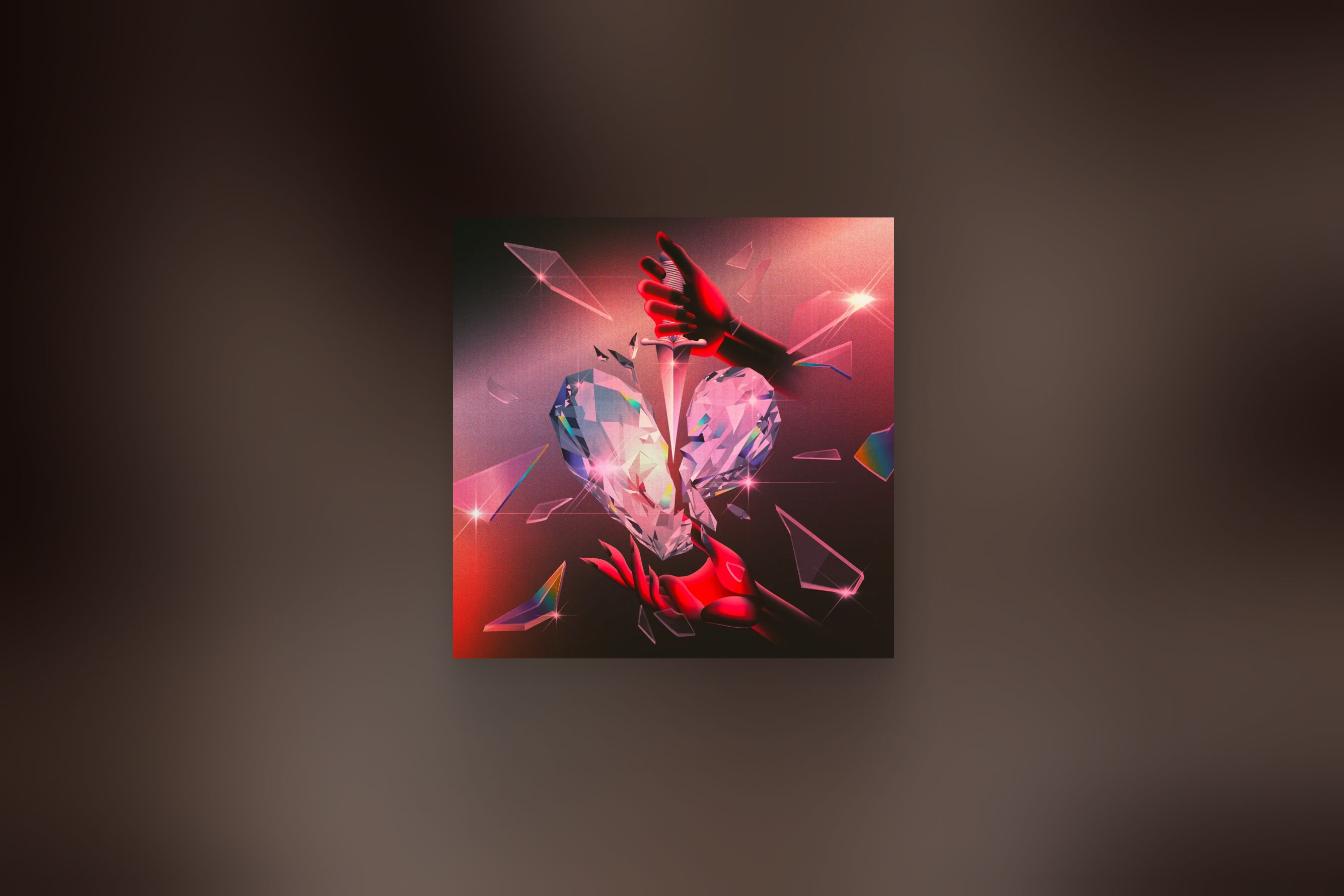
The rod image of the new album The Rolling Stones is a fragment. On a plate cover, a glass heart stylized under the 1970s, into which a knife sticks into, breaking it into small pieces. “Hackney Diamonds”, according to the stories of musicians, is a slang expression that does not mean precious stones at all, but a glass crumb, covering the sidewalk after the robbers under the cover of the night break the shop window (Richards also has an alternative version, however, also related to the fragments: this is, they say, broken glass that remains on the floor. After a quality drink).
Without the units forever in 2020s, the Rolling Stones themselves did not do: two years ago their permanent drummer Charlie Watts did not become. He managed to record his parties for two songs from the new album, “Mess It Up” and “Live by the Sword” , in the rest of the drums - Steve Jordan for a long time toured with the ensemble.
More importantly, however, that the group as a whole today seems to be a fragment - another world, another time. Despite the physical form almost incomprehensible to his age, Mick Jagger knows very well how old he is. “I am walking around the city at midnight, I carry my past behind my back,” he sings in the song “Close to You”. And in "Whole Wide World" the entire first verse nostalgically recalls youth:
The streets that I walked are covered with broken glass
Wherever I look, I see paintings from the past
Dirty apartment in Fulem
The smell of gas and sex
I never knew
Where I will sleep the next night.
And even Keith Richards, a person who is most resolutely brushing off the assumptions that the studio story of The Rolling Stones has just ended, in his traditional issue in Hackney Diamonds (one or two songs with its vocal since the beginning of the 1970s have been found on most of the records of the group) is expressed in a similar way:
Just tell me right
All my future is in the past?
Most of the compositions from the new album predictably find the twin brothers in the ensemble back-catalog: Angry , like the sequel to “Start me up” , “Driving me too Hard” -the “Tumbling Dice” echo, almost Pankovsky Riff “Bite My Head Offf” (from Paul McCartney on a bass guitar-however, this guest cameo could be brighter) forces to recall the compositions like “Respectable” , and the lingering state-scale rock “Sweet Sounds Heaven” is the heir, for example, “You can> get What your Want” .
However, by positioning his music in time, The Rolling Stones always has a rather subtle game - and continue to do this today. Having become the main keepers of the traditions of Rock-n Roll, after the decay of The Beatles, they seriously reacted to this role: no matter how parallel to popular music, Jagger, Richards and their associates were firmly kept in roots-composed capacious and intelligible songs with slander harmony (Kit Richards belonged to the game on the game on the game The tool seems to be about the same as writing letters: “Article” instead of “Station”, three or four exhausting notes instead of virtuoso chases that have been in fashion from the second half of the 1960s).
At the same time, The Rolling Stones kneaded to accidentally turn into a retrogroup, quickly fixing fresh trends - but not diving with their heads, but rather carefully trying the temperature of the water. In 1967, they allowed themselves a brief psychedelic experiment (Their Satanic Majesties Request), in the early 1970s, hanging out with Graham Parsons , carried away by a country, at the 1970-1980s in the albums "Some Girls" and "Emotional Rescue" Punk and disco passed, and already in the 1990s they built the modern hit "Anybody Seen My Baby?" With Semlod from the work of rapper Bisa.
This approach - one step forward, two back - saved in Hackney Diamonds. Stylistically there is nothing unusual for Jagger-Richards: the same blues, country, gospel, the same homeopathic doses of punk and disco. But the design of the album is certainly modern, with an abundance of “dear guests”, designed to increase the number of streams of songs rather than make some kind of significant contribution to the recording (the only one who is good is heard is Lady Gaga to “Sweet Sounds of Heaven”; however, her party does not go beyond what any professional professional sang in its place Back vocalist).
Sound is also modern, slightly pushed, digital, high -precision, striving to fill the entire frequency range. This is the approach of The Rolling Stones of the producer Andrew Watt, who seems to be mastered in the role of a person who selects fresh musical identity to elderly artists (among his recent customers - Ozzi Osbourne and IGGI POP). Hackney Diamonds starts with three songs in a row, in which Watt is listed as a co -author with Jagger and Richards - a sign of the highest confidence. True, his methods resemble not so much Rick Rubin , who at one time persuaded Aerosmith to write a joint track with the RUN-DMC rap group, and Johnny Kesh-to write off depeche mode and Nine Inch Nails, how, for example, a denmonde who worked with the same Aerosmith or Alice Cooper. Watt also makes the Sounds The Rolling Stones a purely cosmetic update, bringing it closer to the average rock-title today.
The internal dynamics of The Rolling Stones, which can be judged by numerous interviews, books and biographical chronicles, as if hinting that the agent of changes in the group has always been more likely Jagger - it was important for him to keep up to one degree or another, unlike Richards and Ronnie Wood, who, with the same will, would be the same with the rapture of the same Old blues. This, however, is nothing more than a stereotype - that Hackney Diamonds clearly confirms.
Of all the inalienable elements of the sound of the group, the voice of Jagger resists the efforts of Andrew Wata most successfully: this inspired nasal roar is too expressive, too young and impudent, despite the number of wrinkles on the face of his carrier. The song “Angry” opening the album is drawn out of the vise of mediocrity, not the powerful bit of Steve Jordan, not a typical guitar solo and not even a clip with the star of the series “Euphoria” Sydney Suini in the title role, namely the Performance of the Frontman, which arranges a whole audio spectacle in the microphone. Jagger is no less convincing in slow songs like “Dreamy Skies” . “I will not hear the crowd that is crazy, only the barking of the fox and the hog of Filin,” he indulges in the dreams of this infectious escape hymn and, it seems, for a moment he transforms into the mentioned representatives of the fauna.
But the semantic and emotional center of the album “Hackney Diamonds” is still the same “Rolling Stone Blues” in the final. Here, Jagger and Richards remain together, reflected in the fragments of their 60-year joint history. Without dear guests, without Lady Gaga, who opened her in the previous composition, and even without Andrew Watt, he just controlled that a lively entry on the film (the first of The Rolling Stones in a quarter century!) Successfully passed.
“In short, my mother told my father before I was born,” Maddy Waters, Jagger’s text in excitingly, “this will be a boy. And he will become a rolling stone. He will become a rolling stone. " In the records of the artists of The Rolling Stones status, which are able to use an almost unlimited budget, you can rarely encounter works of such crushing authenticity: “flickering twins”-the group leaders have been called this since the late 1960s-as if sitting in front of us in the kitchen surrounded by broken bottles and unwashed dishes. If, listening to “Rolling Stone Blues”, you experienced a strange feeling somewhere in the eyelids-this is normal: just a fragment in the eye hit.
Lev Gankin