
Translated material
From the Levashov wasteland in St. Petersburg, a monument was disappeared, which was erected in memory of the mined memorial to the repressed Poles
From the Levashovsky cemetery in St. Petersburg, a monument was lost, erected on the site of a previously demolished memorial to the repressed Poles. This was reported by the Society "Memorial".
“Our monument stood for exactly a day. Apparently, he was destroyed by the Hunweibons of the "volunteer company", who came today along with the Catholic community of St. Petersburg - on the day of all the saints and the commemoration of the deceased - in Levashovo, "the memorial writes. The society has published photos of activists who came to the cemetery with the Poles posters, the monuments to the Soviet soldiers are enough to demolish monuments.
The fact that the memorial to the repressed Poles was dismantled with the Levashov wasteland became known in July this year. Anatoly Razumov, the head of the Returned Names Center, suggested that he was taken for reconstruction, but officially the authorities and the administration of the cemetery were not reported about such plans.
On October 30, on the day of memory of the victims of political repression, the Memorial installed an installation in its place in the form of a silhouette of a missing monument. About 500 people took part in the “Return of Names” and the opening of the “monument to the monument”, including the Polish consul of Grzegozh Slyubovski, the Fontanka wrote .
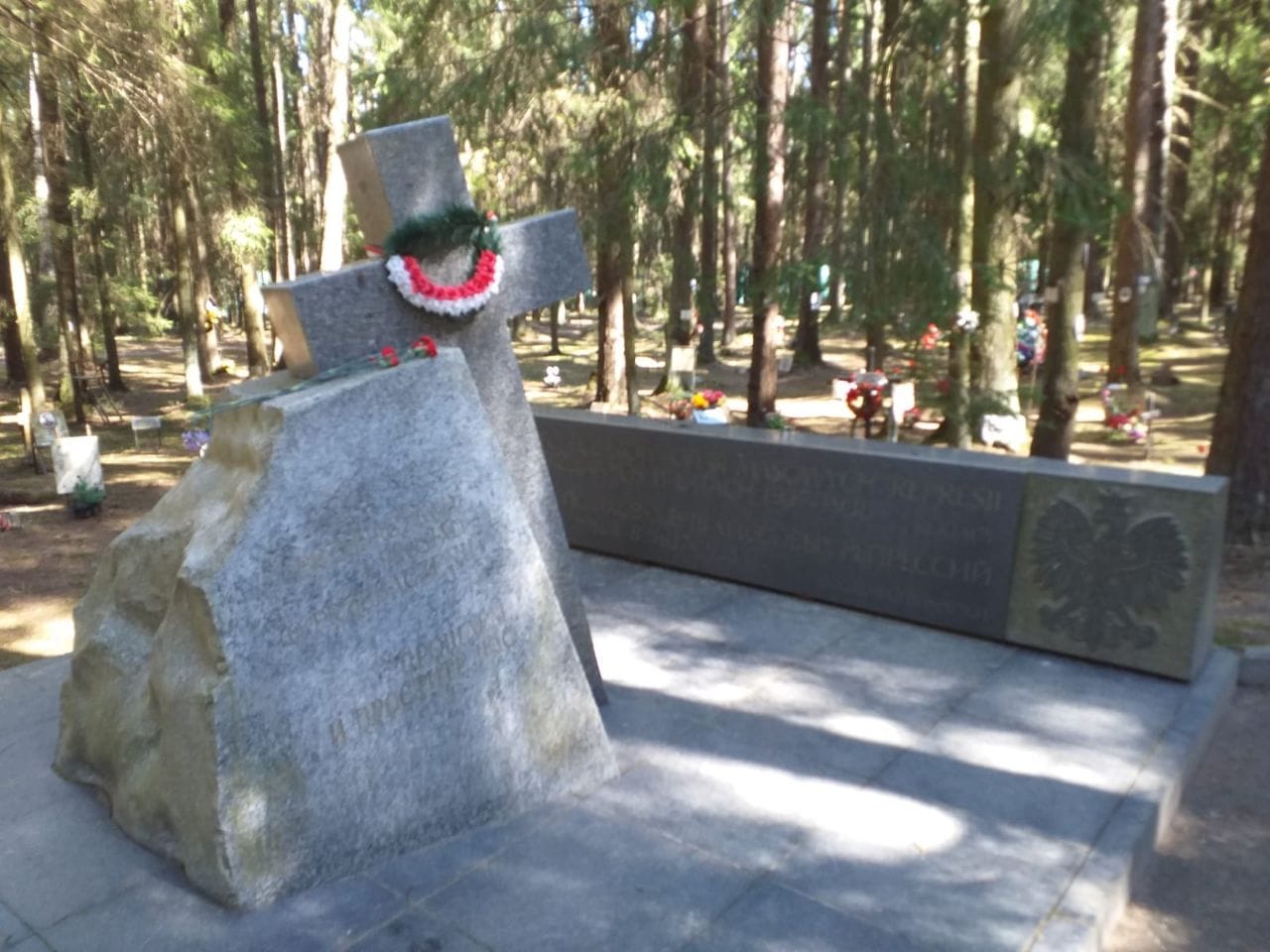
The original monument, which was removed from the Levashov wasteland in the summer of 2023. Photo: Anatoly Razumov
Monuments repressed during the years of the Stalinist terror are demolished and damaged by Lithuanians and Poles throughout Russia. In April, in the Kudymkarsky district of the Perm Territory, a stele with a Catholic cross of memory deported Poles and Lithuanians was demolished , and in the Galyashor tract in the Perm Territory, a concrete memorial was dismantled .
In September, the Moscow City Hall banned the Memorial society to hold the annual action “Return of Names” under the pretext of coronavirus restrictions. On October 30, the security forces protected Lubyanskaya Square and passages to the Solovetsky stone with fences. The people who came to lay flowers allowed three to four people to the monument under the pretext of "compliance with public order."