
Translated material
Money, Z -Pabliki and friends from Donbass. What motivates volunteers to go to fight with Ukraine: Date -study
Why do Russian citizens voluntarily go to fight with Ukraine? To answer this question, the “new newspaper Europe” studied the pages of the dead volunteers on social networks. One of the main reasons is the desire to make money. In addition, Z-Ploks, friends in the Donbass and the experience of military service influence the solution. At the same time, the portrait of a volunteer is completely different from a portrait of an active supporter of war, who prefers to love her at a distance. With the consent of the authors, the Mediazon publishes the main conclusions of this study. The full version can be read on the website of Novaya Gazeta Europe.
One of the main factors for volunteers is the opportunity to earn
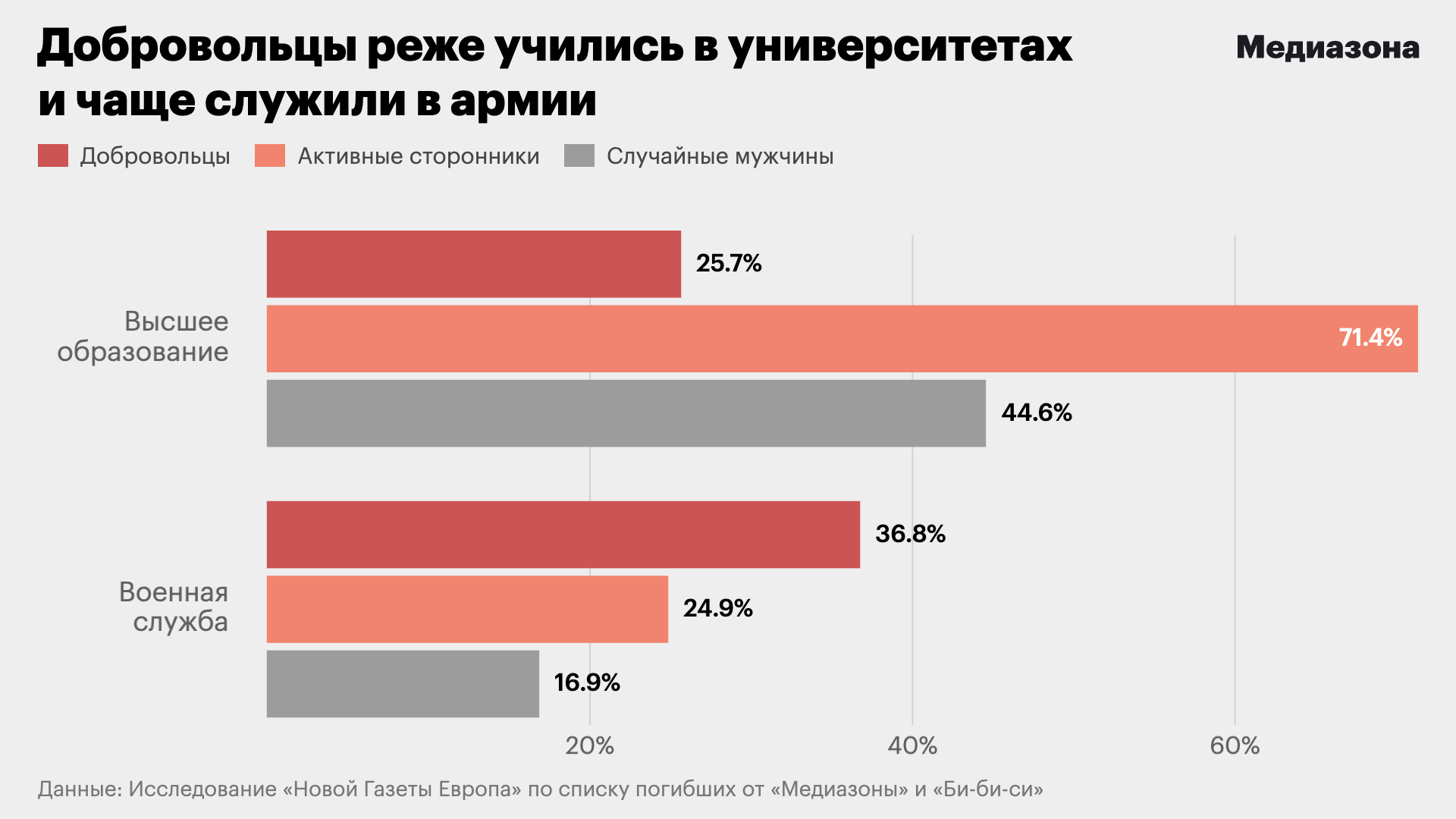
The average portrait of a volunteer is a man of about 40 years old, who was born and raised in a small city, and after school he served in the army.
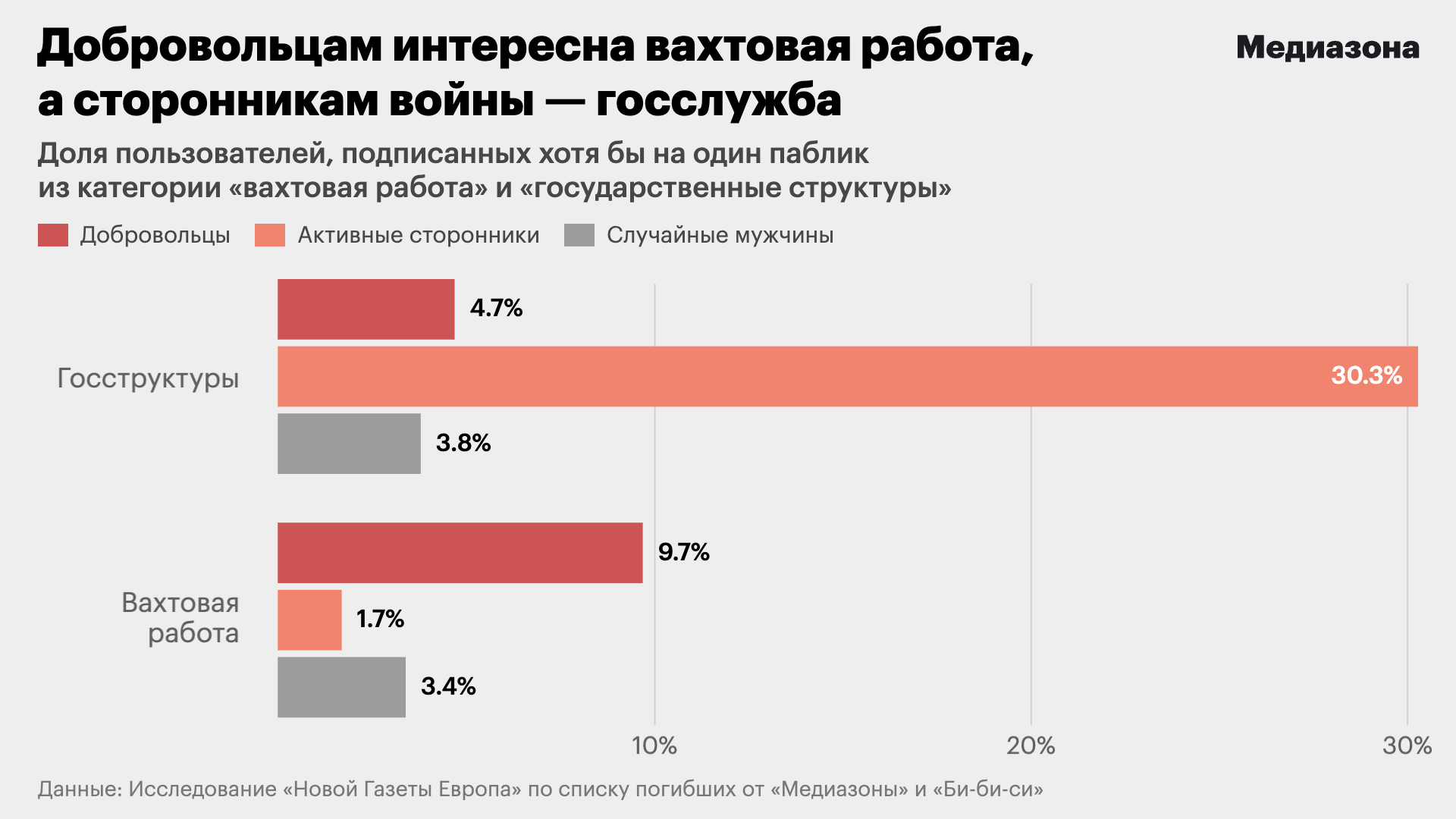
With such starting data, it can be difficult to find a highly paid job in the outback, and therefore volunteers were actively interested in earning a rotational basis. The analysis of their profiles showed that they are interested in shift work almost three times more often than ordinary men.
Andrei Tkachenko, an analyst at the Chronicle project, studying the attitude of Russians towards the war in Ukraine, says that this portrait is very well correlated with the results of hundreds of questions. “As part of research, we sometimes ask men 18–59 years old about whether they are ready to take part in his own in Ukraine. Respondents who are ready to participate in their own are less commonly of higher education and permanent work, often live in rural areas and in regions with low income, ”he says.
There is little in common between homemade Z-patriots and volunteers
Unlike volunteers, those who position themselves as active supporters of the war have settled in life more successfully: they work as deputies, officials and administration employees. Probably, public support for war for them, including the requirement of the employer.
Judging by the subscriptions to VKontakte publics, volunteers in their interests are not like active supporters of war, but are more like ordinary Russian men, for example, they are fond of fishing or cars.
There is still one common feature between volunteers and active supporters of war: both have many friends from Donbass.
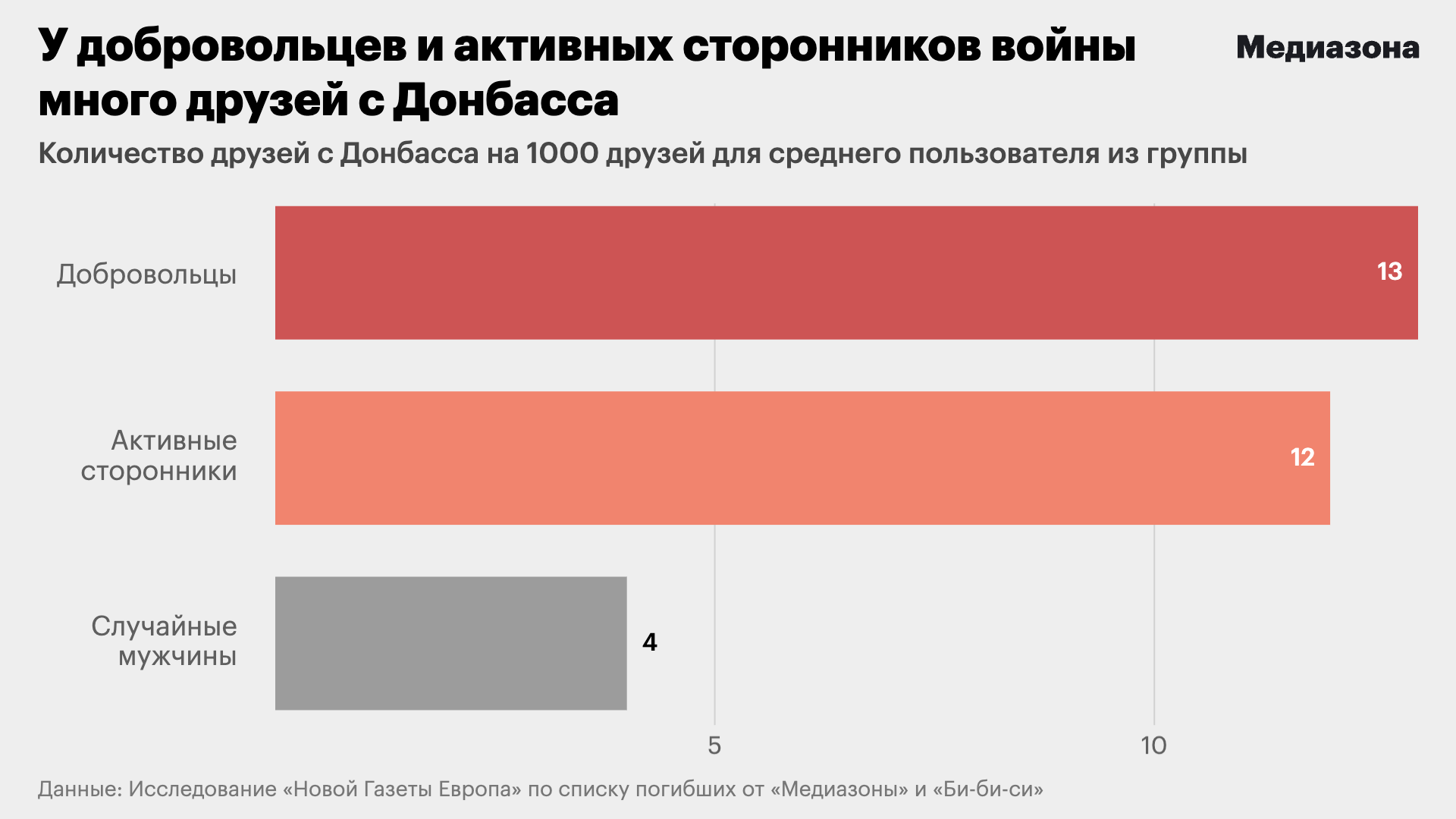
This observation is also confirmed by the analyst of the Chronicle project Andrei Tkachenko. According to their surveys, respondents who have relatives in Ukraine or LPR/DPR have much more often support the war and more often express their willingness to participate in it: their close eight years lived in hostile relations with Ukraine, and this forms the idea of a noble purpose.
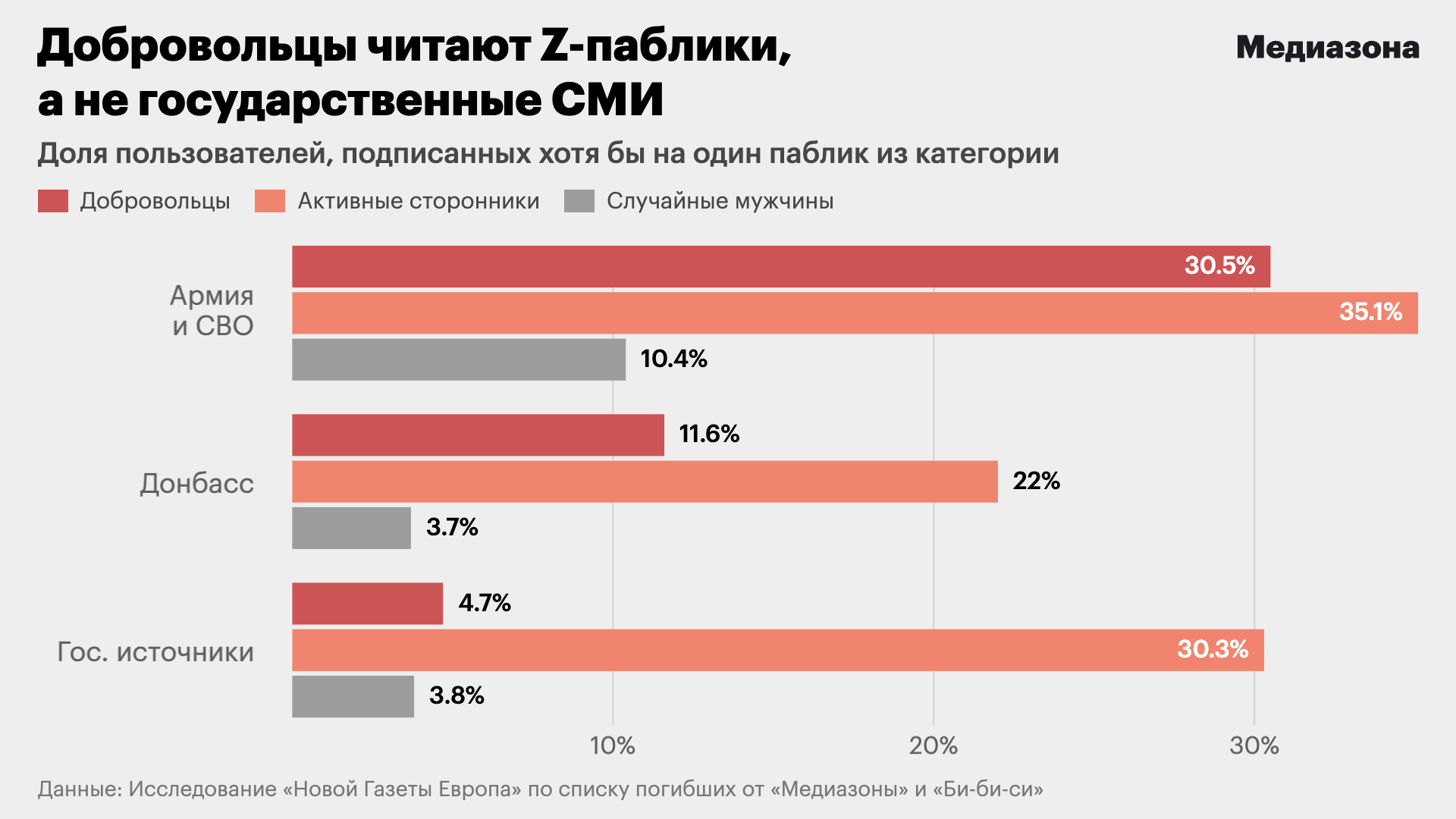
Volunteers read Z-Ploks instead of official sources
Ideptivity is also an important sign of volunteers. Before sending to the front, they can, for example, participate in the training camps for the military.
As a rule, volunteers rarely read official sources (State Duma, Ministry of Defense) or popular wire -packed analysts (Yuri Podolyak, Dmitry Abzalov). Such content is interesting to those who support the war from home.
Volunteers prefer anonymous publics with names like “polite people” and “Army Z ” that publish simple content - photos and videos from the front with short comments.
Editor: Maxim Litavrin