
Translated material
Diamond sieve
The EU is finally close to imposing sanctions against Russian diamonds. There is a chance that restrictions will even work - their introduction is now beneficial to Belgium
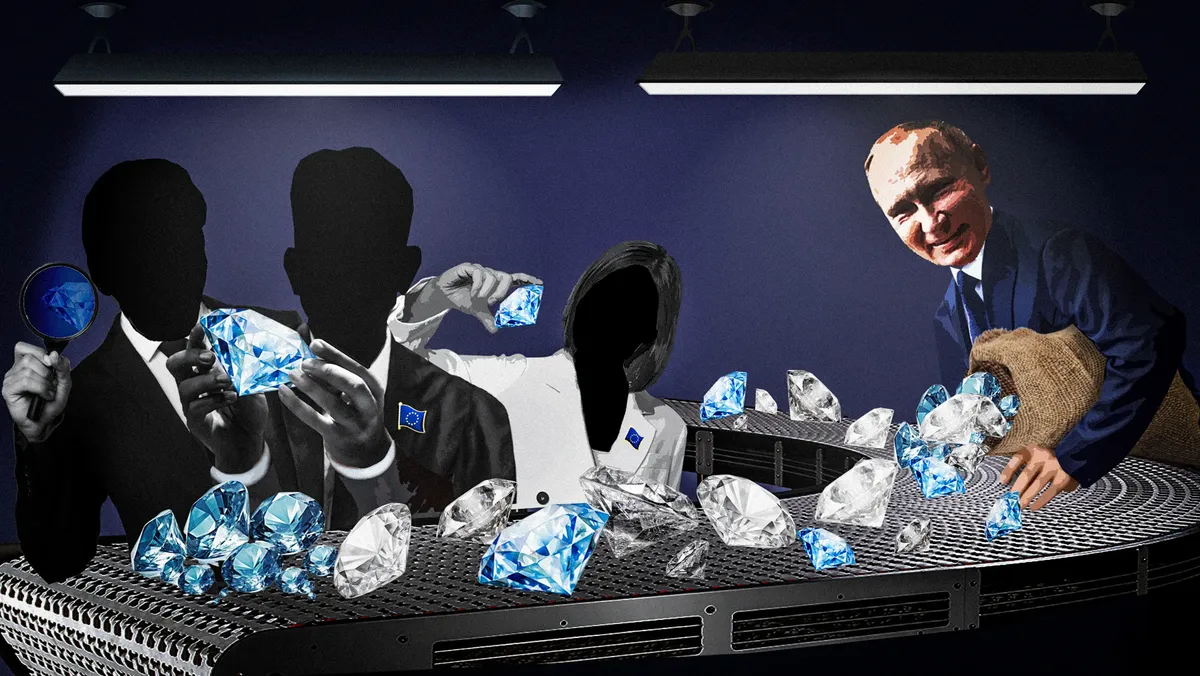
Illustration: "New Gazeta Europe"
The European Union and other Western countries are going to impose sanctions against Russian diamonds. This decision has been preparing for more than a year-mainly due to sharp criticism of the idea from Belgium, but also due to the complexity of the task itself. Sanctions will be aimed at restricting the export of Russian diamonds, which are, albeit not a key, but an important source of income for Russia and specifically for Yakutia.
Now the main players in the diamond market themselves offer different approaches to how they will look, and most importantly, to be monitored by future restrictions. And this can create a fundamental difference between “diamond” sanctions against Russia, for example, from “oil”. Belgium, India and other major players, quite likely, will benefit if the sanctions really work effectively. What measures of restrictions and what countries are proposed and whether the ban of Russian diamonds will ultimately be introduced at the G7 and the EU level, the observer of the international and European policy of Novaya Gazeta Europe Denis Loven was understood.
In October, a conversation was once again resumed about the imminent introduction of Western sanctions against the Russian diamond industry. In the spring of 2022, the United States was established for the import of Russian stones, they were followed by Canada and Great Britain , but Europe chose to stay away.
Now Reuters report that sanctions against Russian diamonds from the EU and the entire “large seven” (G7) will be introduced already in October-November. This is confirmed by EUOBSERVER sources - they claim that the ban will be adopted "from day to day."
The ban of Russian diamonds has been discussed in Europe almost from the very beginning of the war in Ukraine. But in the previous eleven packages of EU sanctions, this measure was not included, although Russia is the main manufacturer of unprocessed diamonds in the world, and European countries are large buyers in the diamond market.
Despite the fact that diamonds are not such a vital product as, for example, oil or gas, so that it was so difficult to refuse their supplies, the ban on their imports was blocked by Belgium for a long time, in which the world 's largest hub in the trade in diamonds and diamonds (robbed diamonds). It is located in Antwerp, where up to 1,600 enterprises for the processing, cutting and sale of diamonds operate , on which up to 30 thousand people are occupied.
However, now the EU is really close to blocking the purchase of Russian diamonds, since it was Belgium, which had previously against, which has reviewed its position.
The draft decision on the ban is being prepared by the G7 countries on the basis of several proposed approaches - the Belgian, French, Indian, as well as the project of the World Council for Diamonds - an industry association, which also includes the largest "diamond" corporations De Beers and Tiffany. It is assumed that the G7 decision will further spread to the EU countries: they are going to include a ban on the import of diamonds in the twelfth sanctions package, which can be adopted before the end of this year.
The main question is not so much in the presence of a consensus in Europe around the refusal to buy stones from Russia, but how exactly it is to do so that the ban really worked. Since the beginning of the Russian invasion of the EU and the United States, they have repeatedly encountered the schemes for bypassing the Kremlin in introduced restrictions. Enterly adopted by Washington, London and Otvava’s sanctions against Russian diamonds also almost do not work.
And although the ban on the import of the EU and the G7 diamond and G7 will not be able to undermine the Russian economy, it will probably cause an important, including at the symbolic level, a blow, demonstrating that even in such complex markets as diamond, the West is able to come up with an effective mechanism for the work of sanctions.
Moreover, several large players in the diamond market, including Belgium, should play a key role in this.
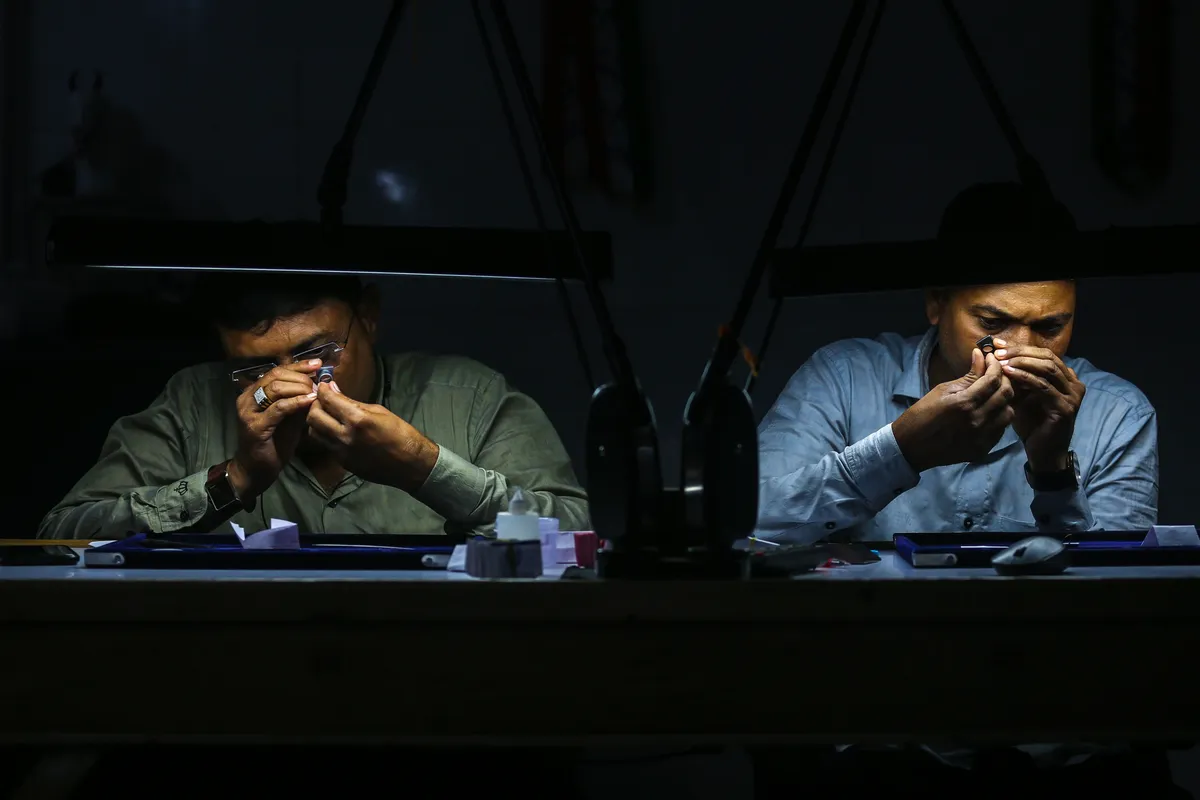
Corridgeal stone
Russia is one of the largest players in the global diamond market. In 2022, more than a third (34.95%) of unprocessed diamonds in the world were mined in Russia. In dollar terms, this is 22.19% of all world production - only Botswana has higher indicators.
Russia plays an important role in diamond exports. In 2022, it was in third place in terms of export in kind (11% of world exports) and in the fourth largest exports in dollar equivalent (8%). At the same time, 70% of demand in the diamond market form the G7 countries.
Most of the Russian diamonds somehow passes through India - a country where 90% of all stones are processed. There, Russian diamonds get not only directly, but most often through international exchanges-in Antwerp, Dubai, Tel Aviv. Therefore, the main buyers of Russian diamonds in 2021 were Belgium ($ 1.9 billion), the UAE ($ 1.2 billion), India ($ 886 million) and Israel ($ 387 million). So the potential ban on the import of diamonds of Russian origin hurts the interests of many parties.
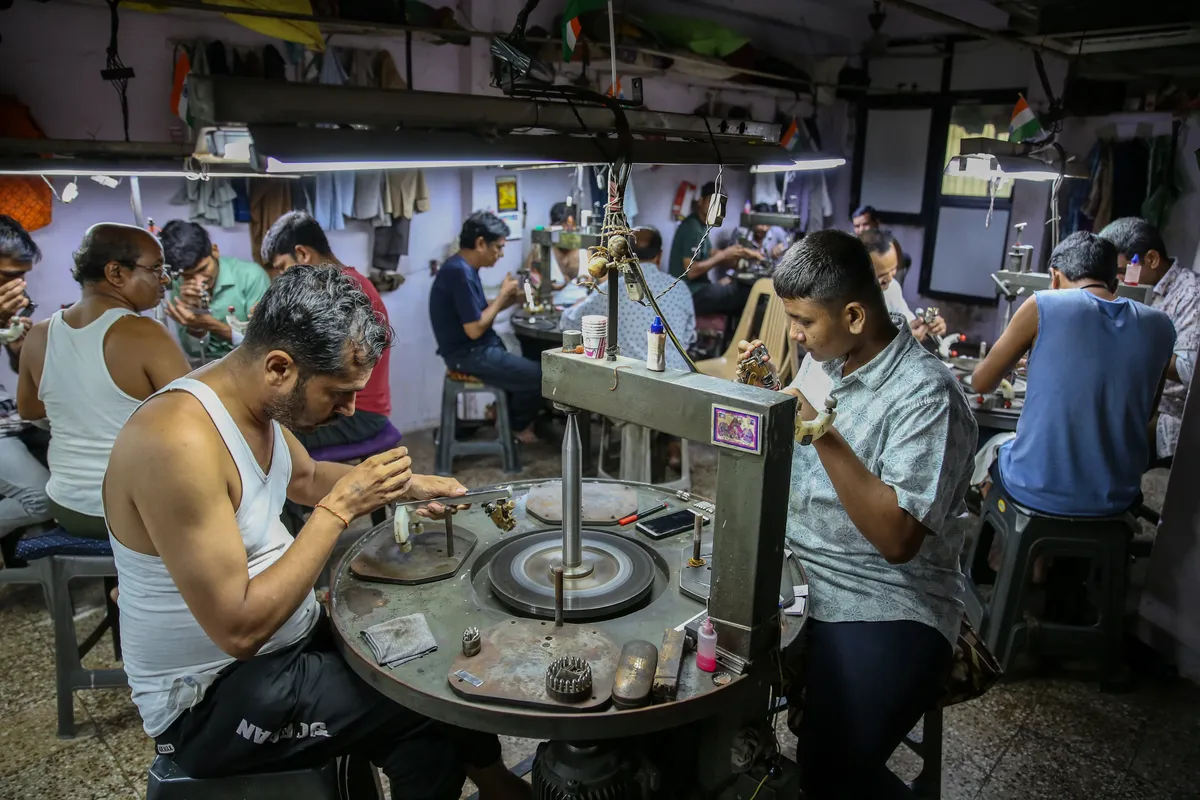
Despite the war begun by Russia, the world market continues to buy Russian diamonds, and the Russian diamond industry - to bring income to the country's budget. In 2022, the extraction of diamonds in Russia compared with 2021 increased by almost 3 million carats. In terms of 2024–2025, approximately the same target level is declared . And the revenue of the Russian state corporation Alrosa, which owns 90% of all diamond deposits in the country, only continued to grow in 2023. Nevertheless, the vast majority of Western countries did not impose sanctions against this industry.
For a long time, the ban on the import of Russian diamonds opposed Belgium - the main European center for trading diamonds and diamonds. However, after part of the jewelry companies, such as Cartier and Tiffany, publicly refused to buy Russian stones, the main hub for importing Russian diamonds moved from Antwerp to Dubai, Kyiv Independent investigators report . And with it the lobbying center also shifted -mainly to the Anglo-African Corporation De Beers and the organization of World Diamond Council (World Council for Diamonds).
The fact is that
A number of jewelry of the largest companies (the same Tiffany and Cartier) are basically made exclusively from Russian diamonds - small enough in size.
The movement of Russian exports from Antwerp to Dubai was caused primarily by the fact that in Belgium the rules of certification are much more serious, and intermediaries from diamond business in the UAE can effectively “wash” Russian diamonds, for example, delivering them to India and Europe as part of “mixed” bags with stones. Moreover, on exchanges one diamond can change “hands” up to 10–20 times. After getting into Dubai, Kyiv Independent sources in the industry emphasize, it may already be almost impossible to determine the “Russian -rate” of the diamond.
Such a scheme is very similar to a bypass of “oil” sanctions, when Russian oil or oil products mix with products of other origin, which allows them to sell them not as Russian. As a result, now Brussels does not block the introduction of sanctions against diamonds by the EU, but is ready to offer its solution to the problem of tracking Russian diamonds in the world market. But his interests are faced with the interests of other players.
Antwerp vs de Beers
According to Reuters sources, now there are four sanctions on the export of Russian diamonds on the table. The hardest of them is offered by Belgium, that is, Antwerp, the softest one is the worldwide council in diamonds, which includes representatives of the largest jewelry corporations and which promotes the interests of De Beers. India is also invited to participate in negotiations, in which, in the end, almost all diamonds will be processed.
Blockchain Antwerp
The Belgian project assumes that only diamonds of non -Russian origin - processed from 1 carat and unprocessed from 1.4 carats will be able to enter the market of the countries of the G7 (and the EU). To enter the market, each diamond must receive the G7-Settlement blockchain indicating origin. This will allow to record and subsequently track all the movements of the diamond inside the market.
Blockchain technology will allow you to record each transaction that occurs with each diamond. These records will be impossible to rewrite and, for example, change information about the origin of diamonds.
All transactions in blockchain systems are recorded in public access, so if desired, any person will be able to track them.
Of these conditions are also followed by important restrictions. Firstly, supplies with “mixed origin” will not be able to get to the G7 market-an exception is proposed only for the de Beers diamonds from Botswana. The reason for this, apparently, is that in Botswan there is the largest sorting station De Beers, where diamonds from a wide variety of deposits flow. Secondly, such a rigid system of verification and certification suggests that the G7 market will be a single entry point. It has not yet been pronounced aloud, but it is clear that the Antwerp actually refers to.
Such a project obviously allows you to return the streams of diamonds from Asian hubs to Belgium, which makes the introduction of sanctions beneficial for Brussels. In this case, the law enforcement and certification itself will be in the hands of national law enforcement or customs authorities of the country, which is the entry point for diamonds, that is, probably Belgium.
From India, in turn, this will require separation of deliveries for the G7 market and for the countries of the rest of the world.
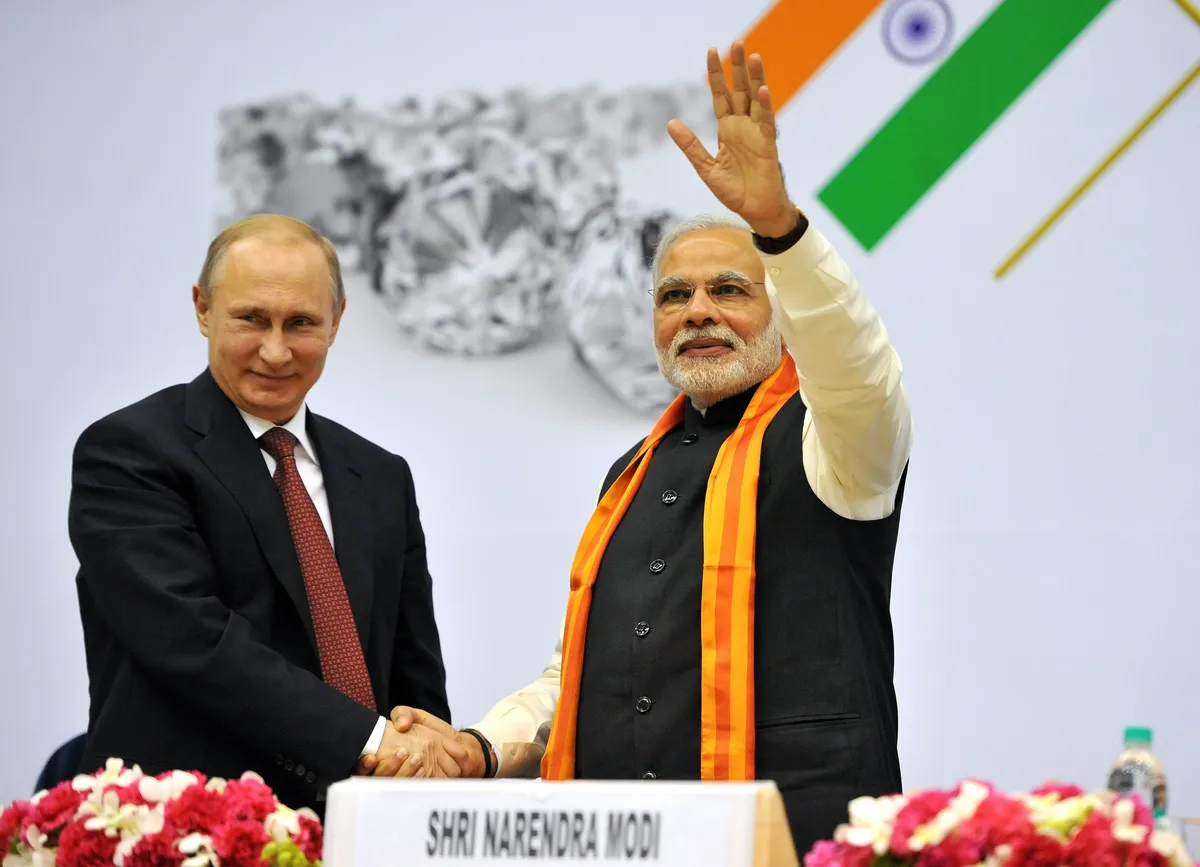
Entrance point - India
Since almost all Russian diamonds somehow pass through Indian processing and cutting, India put forward its own version of the project, offering to make an entry into the G7 market in the actual India.
Indian firms that want to export diamonds of more than 1 carat to the G7 countries will have to take certification annually in the Indian State Council for the promotion of exporting jewelry from precious stones (GJEPC). In addition, companies will have to share export to G7 and other countries.
GJEPC, in turn, will conduct regular random checks 5% of all companies supplying stones to the G7 countries. For independent control over the process in the Indian Surat or Mumbai, it is proposed to open the constantly working G7 office.
This scheme does not provide for a mandatory check of each diamond, unlike the Belgian project.
External audit of France
Paris also made its option of the sanctions project. According to the French plan, sellers of diamonds in the G7 will have to declare the country of origin themselves and share supplies. The exception is again made for diamonds De Beers from Botswana.
As a controlling body, France proposes to attract independent auditors. Probably, we are talking about large private companies, such as PWC or Deloitte. In addition, the plan involves the introduction of tracking systems - blockchain or its analogues - but not at the initial stage.
Lobby of Jewish corporations
The softest project was proposed by the World Council for Diamonds, that is, representatives of the largest jewelry corporations. In accordance with his plan, the companies will be required to independently declare that the diamonds that they sell do not come from Russia. The companies will also have to prepare the supply mechanisms themselves.
The task of this plan is to “balance” a strict Belgian approach in favor of jewelry corporations, since the draft World Council for Diamonds, in fact, does not offer any new measures - the origin of the diamonds is declared now.
Choice G7
Probably, the final solution will be a certain intermediate option between the proposals of Belgium, India and corporations. At the same time, both G7 and the EU understand that the final project should not only maneuver between the interests of the main players, but also solve key problems: how to track the origin and movement of diamonds, who can and should do and how to be with shadow export, which is quite common on the diamond market.
Moreover, the United States, Great Britain and Canada a year earlier have already imposed sanctions against Russian diamonds. And they do not work, as the economic indicators of the Alrosa company mentioned above are talking about. Russian diamonds continue to get to the United States, including one of the largest American jewelry companies in Tiffany. Only now this is done through an even greater number of intermediaries than before the introduction of restrictions last year.
Another problem that is characteristic of the sanctions regime as a whole is law enforcement, or rather the presence of an agent of law enforcement. Even if the G7 and the EU learn to track diamonds and identify them, it is not clear who will punish for violation of the sanctions regime and monitor its implementation.
As Novyevropa already wrote , at the level of European sanctions there is the problem of EnForCement GAP: sanctions are adopted by the EU, and their implementation falls on the shoulders of national law enforcement agencies. This implementation takes place again in accordance with national legislation. Moreover, if there is still a certain level of coordination and equalization of legislation between European law enforcement officers, then in the case of the G7 countries, this is not there.
Finally, sanctions imply a diplomatic task. Over a year and a half of the war, Russia has learned to use shadow imports through third countries. With these third countries you will have to negotiate so that they contribute to the observance of the sanctions regime. Moreover, in the case of diamonds, we are talking about states with which Russia has a good relationship.
First of all, it is, of course, India, through which almost all Russian diamonds pass. But this is also the UAE, where the Dubai hub is located, and the African diamond countries, such as Botswana or the Democratic Republic of the Congo. The President of the DRC was one of the leaders of the African countries who came to the Russia -Africa summer forum in 2023. The DRC and the Alrosa State Corporation itself have good relations. In 2021, the company signed a memorandum of understanding with the local state diamond company and increases its activities there.
The condition is stable
In the structure of Russian exports, diamonds do far from the most important place - less than a percent of the entire volume of exports in US dollars. The extraction of diamonds in Russia is a super -monopolized market: 90% of all deposits belong to Alrosa, 77% are located in the Republic of Sakha (Yakutia), and the remaining 23% are in the Arkhangelsk region.
For the Republic of Sakha, Diamond Master is an essential source of income. This, in particular, is due to the ownership structure of Alrosa. Thus, 33% of its shares belong to the Russian Federation, another 25% of the Republic of Sakha, 8% - eight uluses (1% each of the Anabarsky, Verkhneviluy, Vilyuysky, Lensky, Mirny, Nyurbinsky, Olenek and Suntar) republic, where prey is conducted, the remaining 34% are freely circulated.
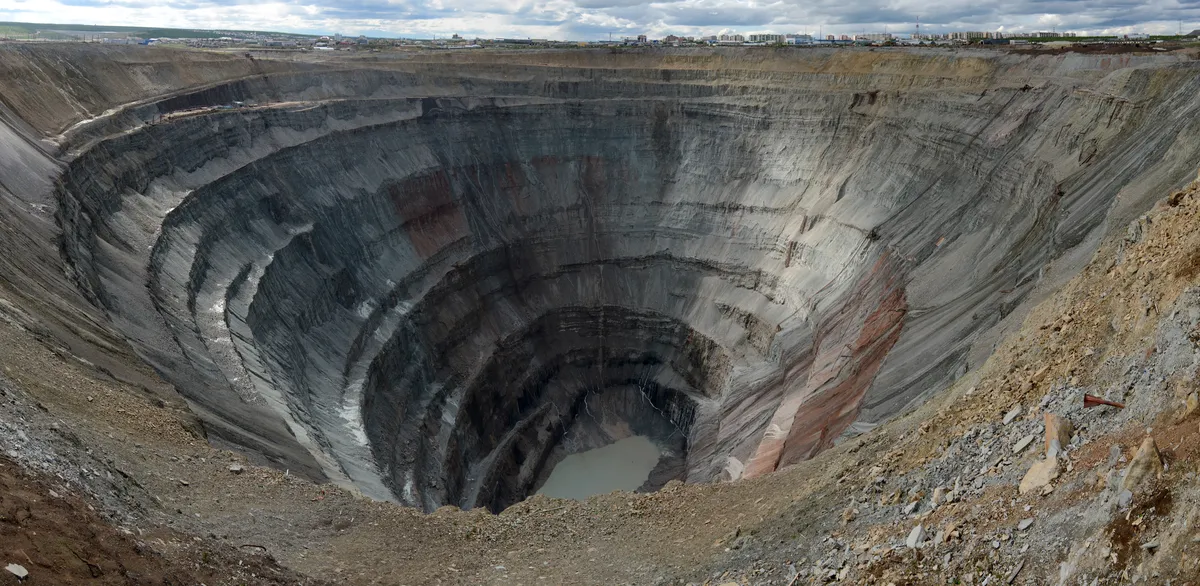
Revenues to the Yakut budget from the diamond industry go through two main channels: from the dividends of Alrosa and from taxes that it pays. Together, this is a large share of the revenue of the republican budget. So, in 2021, tax revenues from the company in the budget amounted to 45.3 billion rubles, non -tax - 49.7 billion rubles. In total, this covered 33% of the expenditures of the regional budget.
Also Alrosa is an important employer for the region. The number of its employees in the Republic of Sakha reaches 30 thousand people. At the same time, the number of employed residents of the republic in the company is growing - over the past five years, about 10 thousand people have received work there. For the half -million economically active population of the republic, this is a fairly noticeable part.
Although since the beginning of the war, the production of diamonds has not declined and does not plan to contract, Alrosa still experiences some problems. In the explanatory note to the budget of the Republic of Sakha for 2023 it is stated that the company's profit will be halved compared to 2022 and even more in 2024. As reasons, sanctions already imposed on Russia are indicated. In addition, in the second half of 2021 and in 2022, the company decided not to pay dividends.
In order to compensate for this shortage in the budgets, in the spring of 2023 it was necessary to adopt a law at the federal level, which increased the tax on mining for Alrosa by two months. Эта компенсация, однако, касалась только федерального и регионального бюджетов — до улусов она не дошла, что вызвало заметное недовольство среди региональной элиты. Так, депутат Госдумы от региона Сардана Авксентьева (партия «Новые люди») летом 2023 года направила депутатский запрос на имя вице-премьера Александра Белоусова с требованием провести анализ «упущенной выгоды» улусов от невыплаты дивидендов, а также предложить механизм компенсации.
Об ответе из правительства не сообщалось, но в конце сентября корпорация приняла решение выплатить дивиденды по итогам первого полугодия 2023 года. Размер дивиденда за одну акцию сократился более чем вдвое. Тем не менее глава республики Айсен Николаев остался доволен и заявил о хорошем положении дел в компании: «Мы внимательно анализируем состояние «Алросы» и оцениваем его сегодня как устойчивое». По итогам выплаты республика получила 6,94 млрд рублей, улусы — 2,22 млрд рублей.
Ожидаемый эффект
Ближайшая цель введения санкций против российской алмазной промышленности заключается в том, чтобы перекрыть каналы поступления выплат от компании «Алроса» в российские бюджеты, объясняет в комментарии «Новой-Европа» Ханс Меркет , исследователь в сфере природных ресурсов бельгийской Международной информационной службы по вопросам мира. Предполагается, объясняет эксперт, что санкции переведут компанию на более дешевые рынки сбыта, что негативно скажется на ее выручке, а значит, и прибыли. Это позволит снизить налоговые и дивидендные поступления в российский бюджет и в итоге сократить финансирование российской военной машины.
При этом с уверенностью говорить, что грядущие санкции окажут заметное влияние на положение дел в республике, пока нельзя, отмечает в комментарии «Новой-Европа» пожелавший остаться анонимным эксперт по вопросам экономик российских регионов. Опыт предыдущих санкций показывает, что их достаточно легко обойти, а сделать это точно будут пытаться, считает эксперт. Кроме того, алмазодобыча не единственная экономическая опора региона. Большое значение для республики имеет также нефтегазовая промышленность. Поэтому ожидать сиюминутных эффектов для якутской экономики не стоит.
В любом случае, каким бы ни оказалось решение G7, а затем и ЕС, оно не сможет полностью исключить попадание российских алмазов на западные рынки. И главная причина не в том, что механизмы будут несовершенны. Куда важнее, что сейчас рынок слишком сильно зависит от российского сырья — это стимулирует не только Россию, но и саму индустрию искать способы обхода санкций.
Проект ограничений, который выглядит наиболее проработанным и способным не исключить полностью, но сильно сократить возможности попадания российских алмазов на западные рынки, — бельгийский. Только предложение Брюсселя предполагает хотя бы какой-то реалистичный механизм для отслеживания происхождения алмазов. Правда, при этом он оставляет на откуп дипломатии контроль над наиболее сложными рынками обработки камней — в Индии и Ботсване.
Но важным отличием «алмазных» санкций Запада, например, от «нефтяных» является принципиально иной их дизайн. К процессу их разработки привлекли стороны, которые могут получить реальные преимущества от эффективного исполнения ограничений. Речь идет не только о Бельгии, которой, безусловно, выгодно перенаправить входящие алмазные потоки в Антверпен, но и об Индии, которая сможет извлечь выгоду, если станет центром проверки алмазов. Формирование дополнительной, пусть и меркантильной, мотивации к стремлению «наказать Россию» может существенно повысить шансы, что хотя бы эти санкции будут работать.