
Translated material
Day of the day: Sergey Lebedev
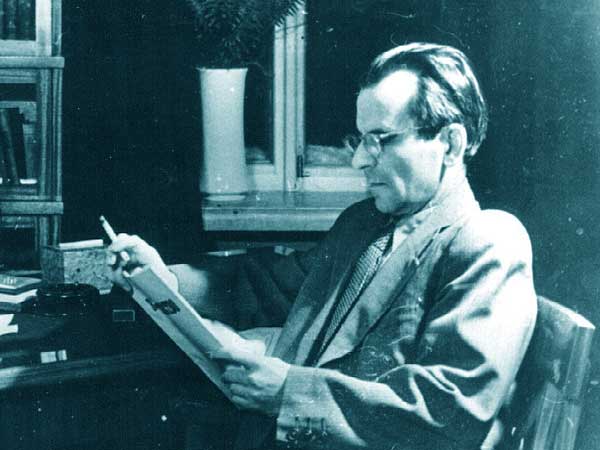
On November 2, 1902, Sergey Lebedev, the creator of the first domestic computers, was born.
Personal business
Sergey Alekseevich Lebedev (1902-1974) was born in Nizhny Novgorod in the family of teachers and writer Alexei Ivanovich Lebedev. Mother Anastasia Petrovna (in the girlishness of Mavrin) left the rich noble estate to become a teacher in an educational institution for girls from poor families. Sergey was the third child in the family. In 1920, the family moved to Moscow.
In April 1928, Lebedev graduated from the Higher Technical School. Bauman with a degree in an electrical engineer. The thesis was devoted to the problems of the stability of energy systems created according to the Goalro plan. He worked at the All -Union Electrotechnical Institute (VEI), where he soon headed the group, and then the laboratory of electric networks. After the allocation in 1930, the Faculty of Electrical Engineering at an independent Moscow Energy Institute, Lebedev became a teacher of MAI. In 1933, together with P.S.zhdanov, he published the monograph "Sustainability of the parallel operation of electric systems." In 1936 he received the title of professor. In 1939, Lebedev defended his doctoral dissertation without being a candidate of sciences. It was based on the theory of artificial stability of energy systems developed by him.
During the war, he switched to military topics - he worked on the creation of combat funds that are self -leading on a radiating or reflecting radiation target. In a short time, he also developed a rapidly adopted system for stabilizing the tank gun when aiming, which allowed to bring and shoot from the gun without stopping the car, which made the tank less vulnerable. For this work, Lebedev was awarded the Order of the Red Banner of Labor. The creation of such systems required a huge amount of calculations. It was this circumstance that led the scientist to understand the need to automate computational processes.
In 1945, Lebedev created the first electronic analog computing machine in the country to solve ordinary differential equations that are often found in problems related to energy.
In 1946 he was invited to the Academy of Sciences of Ukraine to the post of director of the Institute of Energy. A year later, the Institute of Energy was divided into two, and Lebedev became the director of the Institute of Electrical Engineering of the Academy of Sciences of Ukraine. Here, together with L.V. Tsuckernik, he completed research on power system management and the development of automation devices that increase their stability. For this work, Lebedev and Tsuckernik was awarded the Stalin Prize (1950).
Having reached recognition, becoming the director of the Academic Institute and having received the State Prize for Work to solve the problems of the trouble -free functioning of long power lines, Lebedev at 45 changes his whole life, deciding to begin the development of a digital electronic computing machine.
In 1947, a laboratory of modeling and computer technology was organized at the Institute of Electrical Engineering, which allowed Lebedev to move on to practical work on the basis of his theoretical calculations. At the end of 1947, the institute began to create a model of a digital electronic counting machine (MAMM). By the end of 1949. The principal diagram of the machine blocks was determined. In 1950, the MAMM was mounted in the two -story building of the former monastery in Feofania (near Kiev), which housed the Lebedev laboratory. The trial start took place on November 6, 1950. During the demonstration, the car calculated the factuals of natural numbers and solved the equation of the parabola. At that time, a similar machine worked only in England - the edsac of Maurice Wilks, and the arithmetic device was consistent in EdSAC.
At the end of 1951, the MAMSM passed tests and was commissioned by the commission of the USSR Academy of Sciences, and already in 1952 the most important scientific and technical problems from the field of thermonuclear processes, space flights and missile equipment, distant power lines and statistical quality control were solved by car.
In 1950, Lebedev was invited to the Institute of accurate mechanics and computer equipment (ITMIVT) of the USSR Academy of Sciences in Moscow, where he led the creation of BESM-1. After the delivery of BESM-1 from 1952, he was the director of ITMIVT.
In 1953, he was elected academician of the USSR Academy of Sciences for the separation of physical and mathematical sciences (score devices). He was awarded the title of Hero of Socialist Labor.
In the early 1970s, Sergei Lebedev, due to health reasons, could no longer lead ITMIVT, and in 1973 a serious illness forced him to leave the director of the director. But he continued to work at home. The Elbrus supercomputer is the last machine whose fundamental provisions were developed by academician Lebedev.
He died in Moscow on July 3, 1974. He was buried in the Novodevichy cemetery.
What is famous
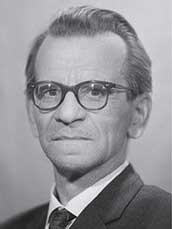 Sergey Lebedev
Sergey Lebedev is the founder of computing equipment in the USSR. He developed a small electronic score (MAMM) - the first computer in the USSR and continental Europe, became the founder of the Soviet computer industry. In the conditions of information isolation of those years, he came to the same conclusions as von Neumann, but six months earlier.
Under the leadership of Lebedev, 15 types of computers were created, starting with lamp (BESM-1, BESM-2, M-20) and ending with modern supercomputers on integrated schemes.
Sergey Lebedev was one of the initiators of the creation of the Moscow Physics and Technical Institute, the founder and head of the Department of Computing Technology of the MIPT.
What you need to know about
At the same time, in the USSR, the work on the creation of an electronic computing machine was simultaneously carried out by several groups-the Institute of Exact Mechanics (ITMIVT of the USSR Academy of Sciences), which created the BSAM, and the recently created SKB-245 of the Ministry of Engineering and Instrument Engineering of the USSR, which developed the SPARA computers.
On April 21, 1951, the State Commission was held for the acceptance of sketching projects of BESM (ITM and WT) and “Arrows” (SKB-245), which included academician M.V. Keldysh (chairman), Minister of Engineering and Instrumentation of P.I. Parshin, Academician A.A. Blagonravov and others. Member of the Commission A.A. Torodnitsyn was remembered A dispute that arose at one of the meetings. The chief designer of the Arrow Bazilevsky said that it, possessing a productivity of 2 thousand operations per second, will solve all the tasks available in the country in four months. Therefore, BESM with its high performance (8-10 thousand operations per second) is simply not needed. Sergey Lebedev sustained for this statement that, due to the low performance, the Strela would not have time to calculate the problem between the two failures and will make incorrect solutions, and the BESM will have time.
Both sides have successfully protected sketch projects. It was decided to create experimental samples of machines. If the creation of the sample ended successfully, then the BESM would be out of competition not only in the country, but also in the world. Its performance of 10 thousand operations per second would be five times higher than that of the Arrow. No car has reached such a speed of calculations at that time. For this, only one thing was needed - the supply of pot. However, the Ministry of Engineering and Instrument Engineering of the USSR, which belonged to SKB-245, provided only the development of the Arrow developers. In this regard, BESM had to work with memory on acoustic mercury tubes, which reduced its performance several times - just to the level of the “arrow” - and, moreover, there were still many additional problems.
As a result, the state commission was the “Strela” recommended for serial production. Its creators received three state prizes of the I, II and III degree, and the chief designer of the machine Yu.Ya. Bazilevsky - the title of Hero of Socialist Labor.
In February 1955, the Council of Ministers of the USSR adopted a resolution on the creation of the first computing center of the USSR Academy of Sciences where BESM and “arrow” were transferred. Both cars worked around the clock, but could not cope with the flow of tasks. The computer calculation plan was drawn up for a week and approved by the head of the Council of Ministers of the USSR N.A. Bulganin. According to eyewitnesses, often the number of businessmen who came to the computing center exceeded the number of full -time employees.
At the end of 1954 - early 1955, on the initiative of the Presidium of the USSR Academy of Sciences, a commission was created to compare the characteristics of BESM and “Arrows”. Her conclusions, which put an end to rivalry, were unequivocal: BESM is better and more promising. And only after that Itmivt began to receive potentialoscopes. The BESM finally earned at full capacity and even two years later remained the fastest in Europe, performing an average of 8 thousand three -day operations per second. Its most possible performance was 10 thousand operations per second.
In 1956, BESM was adopted by the State Commission a second time (already with memory on potentialoscopes). Sergei Lebedev was awarded the title of Hero of Socialist Labor, the main developers were awarded orders.
In 1958, BESM was also prepared for serial production. Memory on the potentialoscopes has already been replaced by ferritic ZU. The car was called BESM-2, produced by one of the factories of Kazan, most of the country's large computing centers were equipped with it.
In the end, in industrial conditions, only 7 pieces were produced. The copy, who worked in the computing center of the USSR Academy of Sciences, according to the memoirs of Boris Malinovsky, was eventually given to the Moscow film factory for making films.
Direct speech
“Ultimately, it can be expected that the entire central part of the computers will be performed in the form of one integral scheme that can fit in the Kazbek box - from the article by Sergey Lebedev “ computer through a computer ” of the late 1960s, which was never published during his lifetime.
“At all stages of work, Sergei Alekseevich showed a personal example of selflessness. After a busy day, he spent until 3-4 hours in the morning behind a remote control or an oscilloscope, actively participating in the debugging of the car. Working in a shift on a on -duty technician, I have repeatedly watched how Sergey Alekseevich picked up a soldering iron and reinforced the schemes, making the necessary changes to them. He invariably answered all the offers to help: "I will do it myself." After his departure, I "in my direct duties" checked his work, and, I must say, it was always fulfilled in conscience. I was struck by the simplicity, attentiveness and sensitivity of Sergey Alekseevich ” - Cand. tech. Sciences O.K. Gushchin (then technician-installer).
5 facts about Sergey Lebedev
- Sergey Lebedev was elected a full member of the USSR Academy of Sciences at the same meeting at which Andrei Sakharov was chosen by the academician.
- In different years, Sergey Lebedev became the laureate of the Stalin Prize of the third degree, the Lenin Prize and the State Prize of the USSR.
- Having familiarized himself with the first computers of the consistent action of TsM-1, Sergey Lebedev asked: "Do you not knock on it with a sledgehammer?" At the BESM of the sledgehammer was a regular tool, and it shots on the iron frame of the machine - one of the elements of the prevention.
- The Institute of Accurate Mechanics and Computing Technology (ITMIVT) is now named Lebedev. At one of the walls of the institute, the portrait of Lebedev is lined with a mosaic of multi -colored wood.
- Lebedev sharply opposed the IBM 360, which began in the 1970s, which began in the 1970s, which in the Soviet version was called the EU computer.
Materials about Sergey Lebedev
Sergey Alekseevich Lebedev. Life and creativity
A. Ivanov School of Academician S.A. Lebedev in the development of domestic computer technology
Article about Sergey Lebedev on Wikipedia