
Translated material
The scientist, fond of art, discovered three lost portraits of Theodore Gerico, created as a manual for psychiatrists
Authorship is doubtful among art historians, but the arguments of the lover were awarded the publication in The Lancet
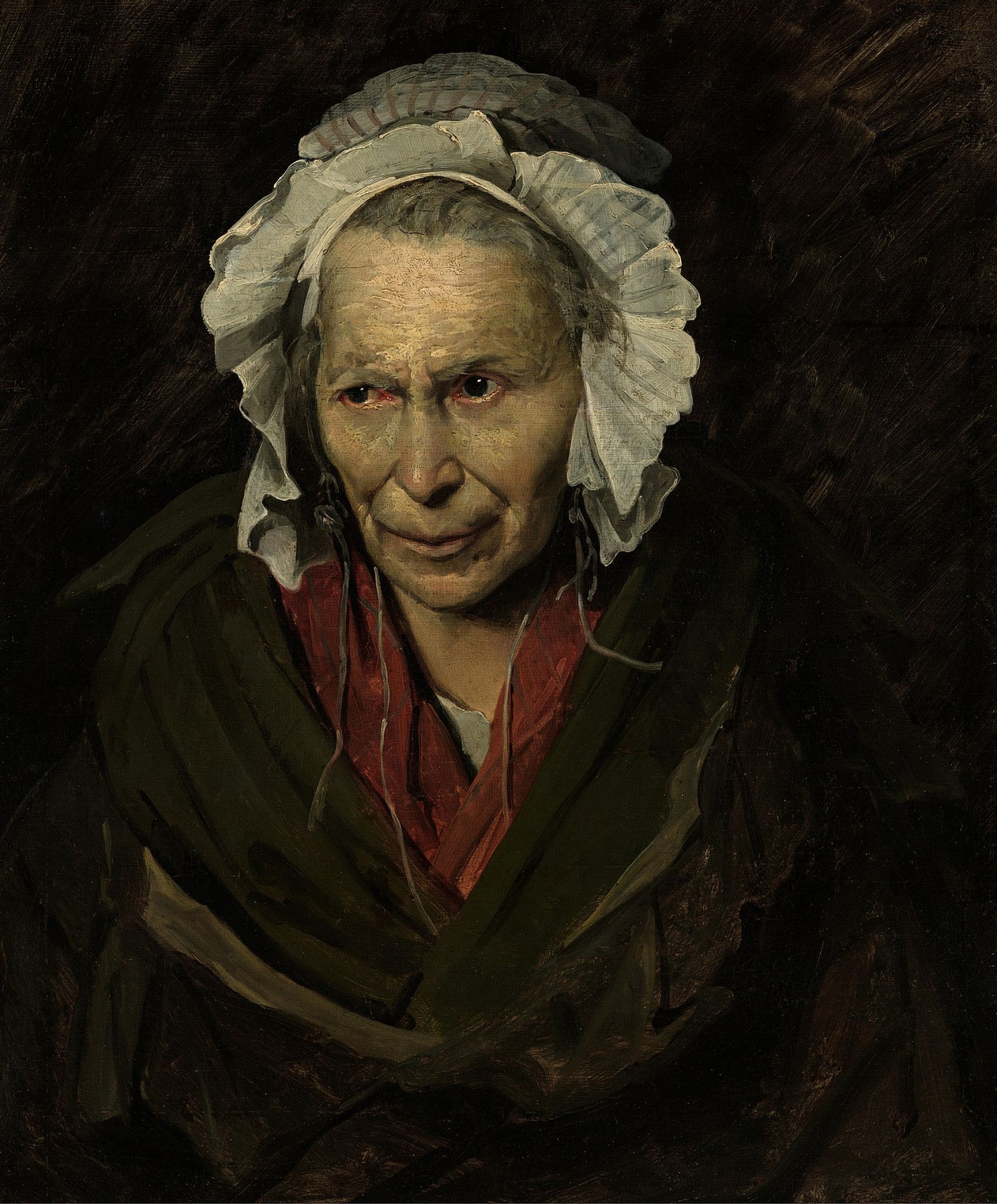
In June 2023, an unusual article appeared in the authoritative international medical journal The Lancet. Its author, the molecular biologist Javier Burgos, reported on the next find: he managed to discover the third lost portrait of the patient from the series, which the Romantic artist Theodor Jeriko wrote by order of the psychiatrist of the 19th century. Not all professional art historians agree with the attribution of an amateur, but even if it turns out to be erroneous as a result, the arguments of the burgos shed light on the history of psychiatry and allow us to recall how medicine looked at mental abnormalities in the early 19th century.
Who needed portraits of "Mad people"
Like any other science, modern psychiatry did not immediately appear. For centuries, the causes of mental disorders remained a mystery, and the hypotheses regarding their mechanisms of occurrence, in our modern opinion, sounded quite bizarre.
For example, in the 1820s the concept of monomania was popular . It was developed by the French psychiatrist Jean-Etienne Dominic Eskirol. He believed that madness is of two types: complete, when a person is completely insane and cannot be responsible for his actions, and partial-when a person is obsessed with some obsessive desire or idea, and otherwise it is quite normal and can be capable: in particular, he has the right to inherit property and is obliged to be responsible for his actions before the court . The insurmountable passion that turns a person into a madman, the French doctor suggested calling "monomania."
According to Eskirol, Monomania could be emotional-when a person is obsessed with a specific emotion like envy or anger, intellectual-when a person is covered by a delusional idea, for example, he considers a neighbor witch, or strong-willed-when a person is not able to overcome the craving for petty theft.
The modern psychiatrist would say that Monomania is a too uncertain clinical unit in order to put any psychiatric diagnoses on its basis. But in the days of Eskirol, doctors sought to find their main obsessive idea among their patients, since it was considered the key to the diagnosis.
As in modern psychiatry, the doctor could identify monomania through the patient's questions. But in the 19th century it was believed that obsessive ideas leave traces on the face . Eskirol himself wrote about this: “In general, the face of an idiot is stupid, devoid of meaning; The face of the manic patient is as excited as his spirit, often distorted and spasmodic; The facial features of the idiot are dull and devoid of expression; The facial features of melancholic are tense, marked with pain or extreme excitement; The monomaniac king has proud, inflated expression on the face; Religious fanatic, he exhidly, looking at the sky or fixing his gaze at the earth; An excited patient begs, glancing to the side, and so on. ”
The followers of Eskirol believed that a careful study of the patient’s features should also help to make a diagnosis. The photograph at that time still remained exotic technology, so that art portraits of patients with already diagnosed monomanias from the point of view of psychiatrists were an excellent textbook.
Therefore, it is not surprising that in the winter of 1822–1823, a friend and colleague of Eskirol, psychiatrist Etien-Jean Georges, ordered a well-known French artist theodor Gerico a series of 10 portraits of his patients . It was a very colorful company. Among the heroes of portraits were, for example, “kidnapper of children”, “a woman suffering from obsessive envy”, “kleptoman”, “a man suffering from the illusions of the military command” and “a woman addicted to gambling”.
On all portraits, the models are depicted against a dark background, on the chest, anfas, without hands. All heads on the surviving images are close to natural size, and facial expressions are spelled out extremely carefully and very expressive.
What happened to the portraits of Master Gerico
After the death of Etien-Jean Georges, five portraits went to his student Dr. Lashez. In February 1868, the artist Charles Jacques bought portraits, they were stored in his family until 1920. Then, the work of Gerico diverged in private collections, and to date were in five museums in Europe and the USA. For example, “a woman addicted to gambling” is stored in the Louvre , and “Kleptoman” is stored in the Genta Museum of Fine Arts .
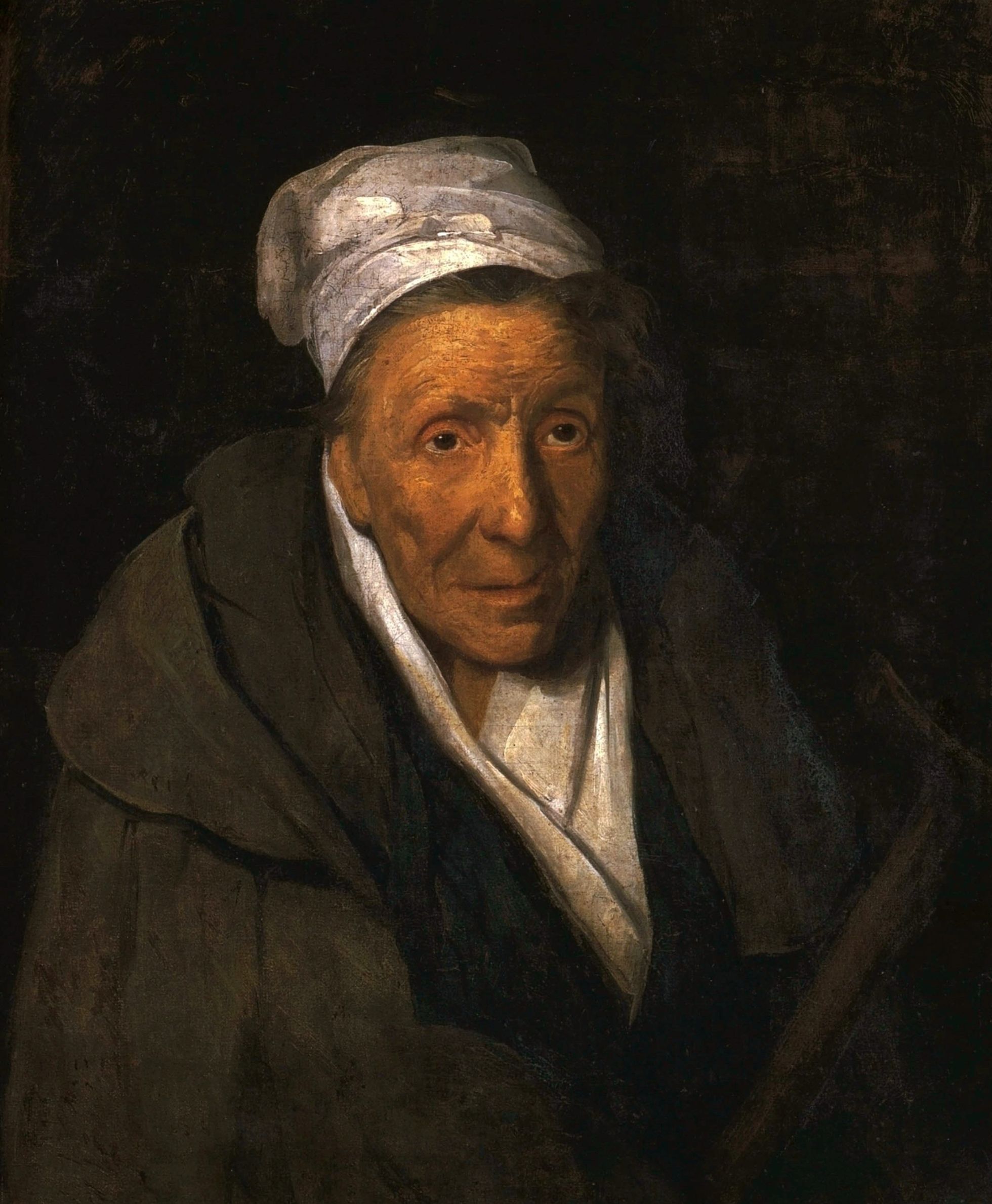
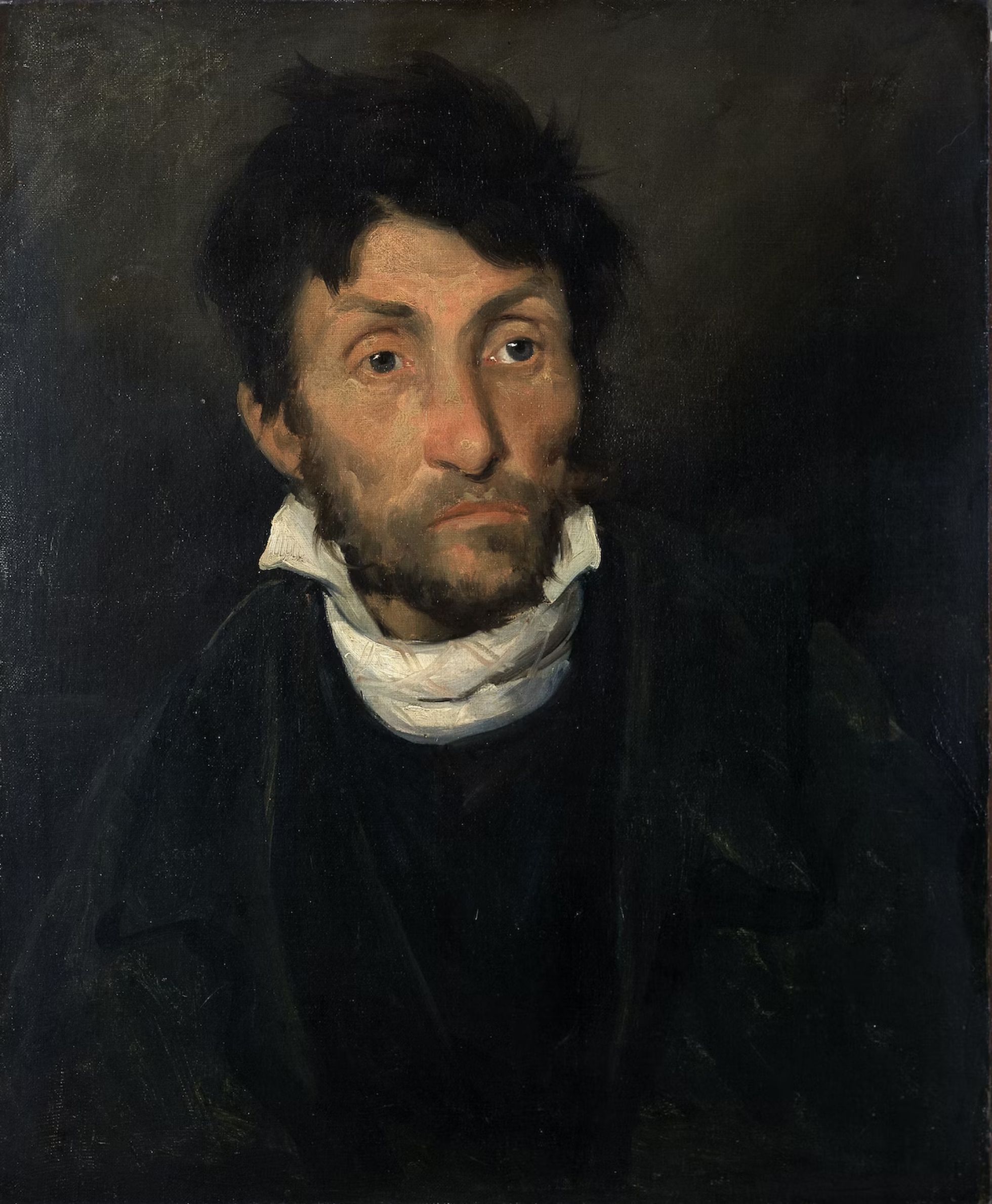
Until recently, five other portraits, which were acquired by the second student of Georges, Dr. Maresal, were considered lost. The search was complicated by the fact that no one knew who was depicted on them . Some art historians believed that the lost work were portraits of new patients, and some were the same heroes, but after treatment.
The first hypothesis was considered more convincing in art history circles. In her favor, the fact that Theodor Gerico died in January 1824, just two years after the five portraits known to us were written. This means that patients did not have much time left for recovery. In addition, Georges had two students. Therefore, it would be logical to assume that they will also share portraits equally. If the portraits were paired, most likely Lashez and Mareshal would have taken according to the set of each version “before and after”.
How Javier Burgos discovered lost portraits
Javier Burgos built his scientific career , examining the causes and looking for new pharmaceutical strategies for the treatment of neurodegenerative diseases, including Alzheimer's disease. He taught at universities, worked in national and international reference centers, and is currently headed by one of the departments in the Department of Health of Valencia.
Art is only one of his hobbies, along with literature and popularization of science. Nevertheless, Burgos is sure that thanks to his research he really managed to find three new portraits from the Georges series, which were previously considered lost. As it turned out, all this time the paintings were in a private collection and art galleries.
Javier Burgos discovered the first picture in 2021 , when he visited the exhibition in Ravenna, at which works from the private Italian collection were exhibited. The picture was presented along with another work by Jeriko, the “chief physician of the shelter Buffon” The name of the new portrait specified in the official catalog of the exhibition is “Portrait of a man. Homo melancholicus ".
Javier Burgos noticed that in size and composition the portrait is extremely close to the five preserved paintings of the “psychiatric” series. In addition, “Homo melancholicus” is depicted in monastic vestments of the same shade as the red scarf on the portrait of a woman suffering from intrusive envy. Even the very preserved name of the portrait suggests that it is associated with the concept of monomania of melancholy, as Jean-Etienne Dominic Eskirol described it.
The second missing portrait from the Mareshal series Javier Burgos discovered in the art gallery in France in 2022 . Another picture of Georiko was exhibited there, on which there was a partially torn label with the inscription: “This portrait of a madman, written by Gerico, was given to me by a widow ... D ... Mareshal in 1866, Paris, November 9 ... Louis Lemar.”
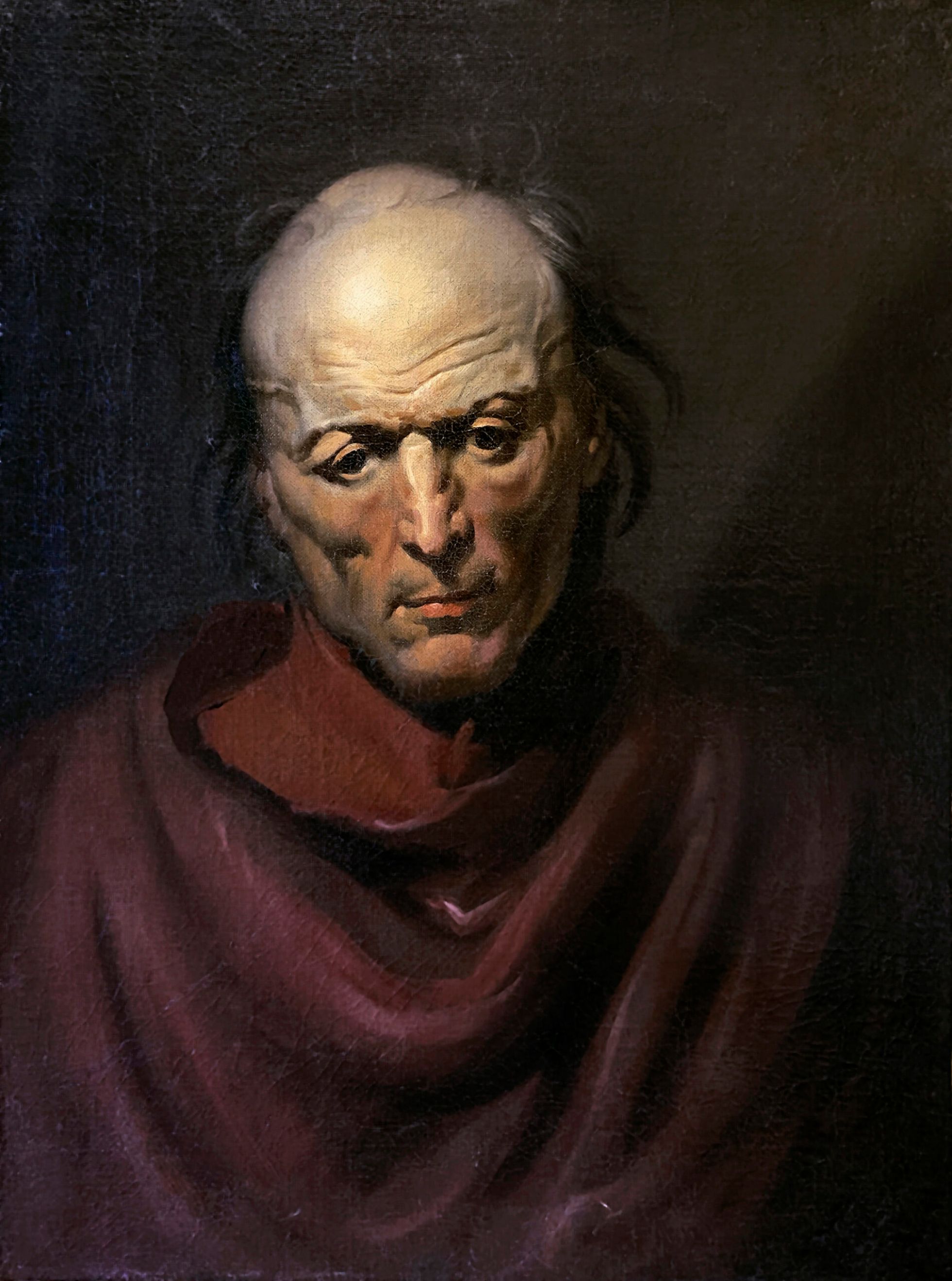
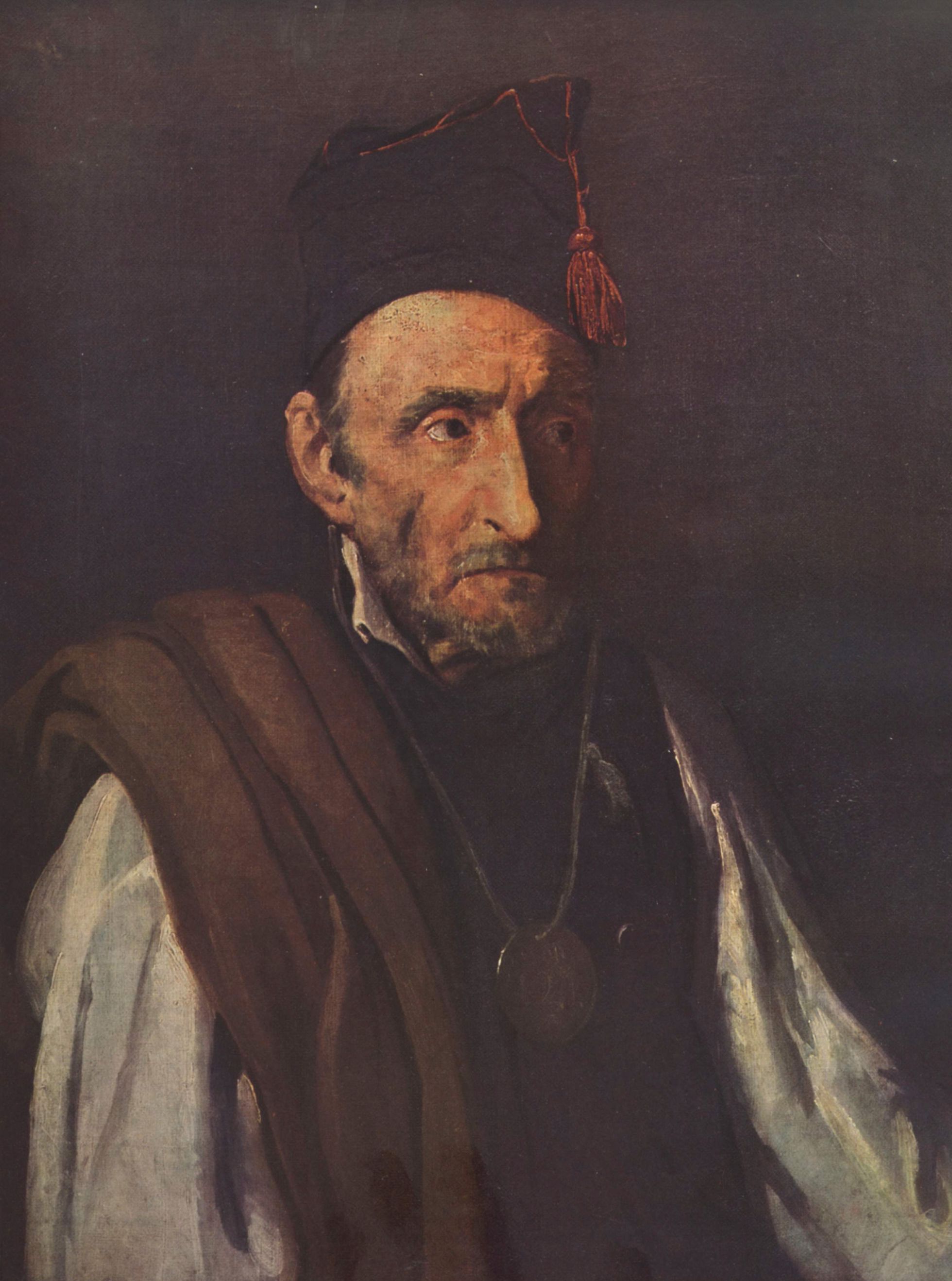
Like the other six portraits of the series, the seventh had a very close size and composition. In the picture, a bearded man was depicted in a winter hat and a white shirt. His clothes are depicted in a style that is used in the transfer of the other patients of the series, and the appearance of the man is well consistent with the description of the monomania of drunkenness, as Eskirol understood it. The man has red cheeks, an unbuttoned shirt indicating that he is hot in cold weather, and a bump and a hematoma on the left side of the forehead - apparently obtained when falling.
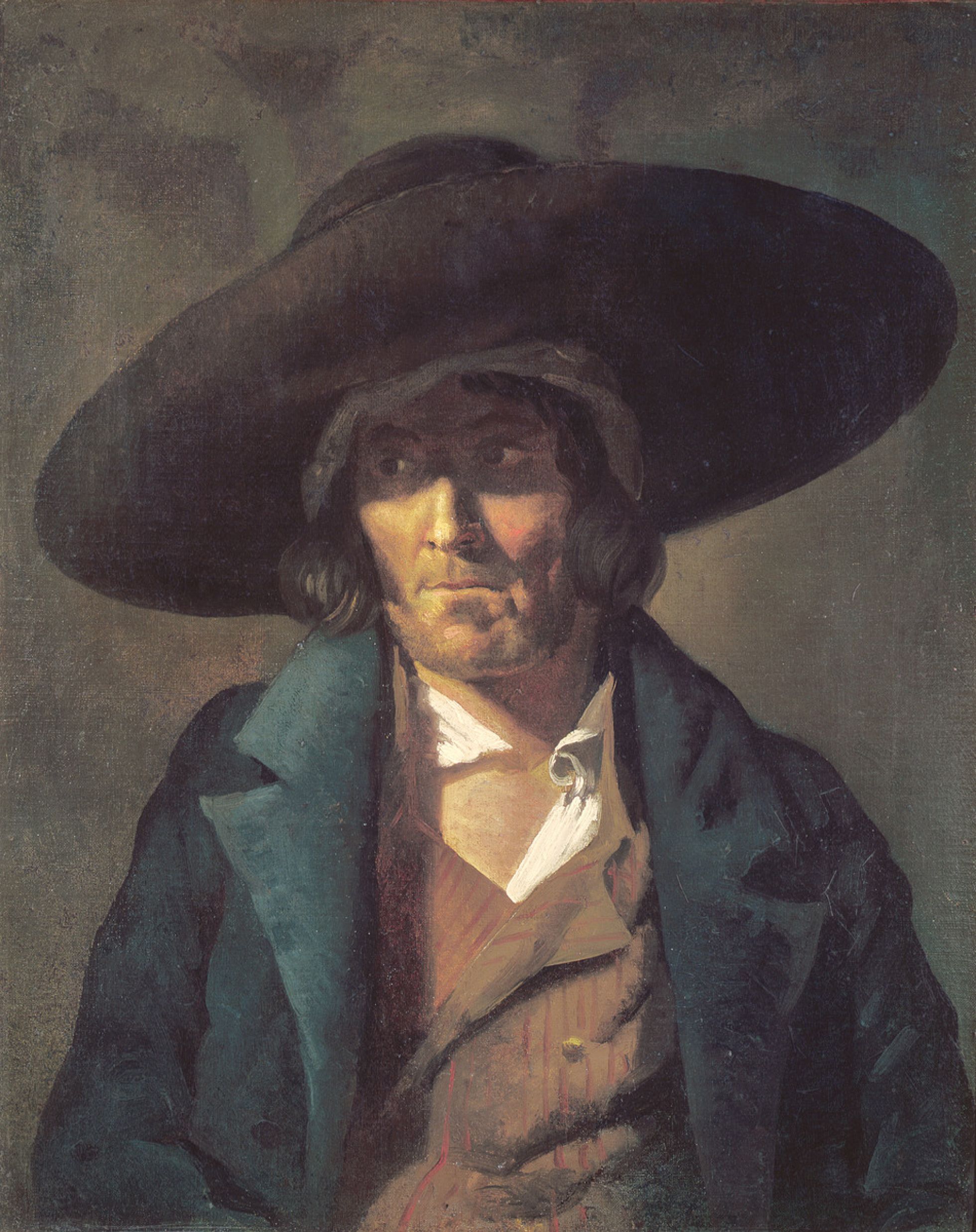
The third portrait, related, according to Burgos, to the same series, was found by him recently, in 2023 . The picture depicting a man of about thirty years, all this time hung in the Louvre, where it was called "a portrait of a man called a vandais." It also corresponded to the series for all three main attribution criteria used by burgos: size, composition, speaking style of clothing.
Apparently, Zheeriko dressed the hero into the costume of the Vandei region to emphasize the connection with his monomania: panic attacks. Between 1793 and 1796, one of the most bloody episodes of the French revolution, which led to mass casualties among the civilian population, broke out in Vandea. And since a similar patient appeared in the notes of Eskirol, Burgos made a reasonable assumption that it was the shock experienced in childhood and caused monomania.
Professional art historians do not confirm, but do not refute the attribution decisively proposed by Havier Burgos. In a conversation with The Guardian, Gregor Vedekind, professor of the history of modern and latest art of the Johann Gutenberg Mainz University, called this story “problematic” and questioned the authorship of the first two paintings. He claims that without additional information about their origin and more thorough analysis, they cannot be attributed to neither Yeriko nor the Monomania series.
Vedecind calls for “critical caution” in relation to the manuscript note, explaining that such documents are “very common and as unreliable as the alleged original signatures”. In addition, in his opinion, the examination and arguments of Burgos regarding Vandea is not enough to unequivocally attribute the picture of Monomania.
If competent art historians can confirm the conclusions of Burgos, he will have only two paintings from the series. Since it is possible that they are still hanging somewhere in a private collection or in the museum, it is possible that soon two new articles will appear in The Lancet.
Daniil Davydov