
Translated material
Will everyone remain with their own?
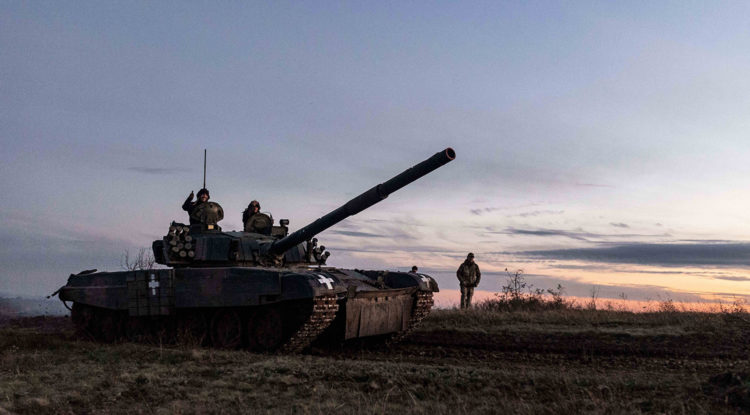
Military researcher Kirill Mikhailov - about how the wars of exhaustion end (and what history can teach Russia and Ukraine)
Observers call what is happening in the war of Russia and Ukraine with a new transition to the “war for exhaustion”. What does this mean and how can it end? “Cold” asked about this a military researcher, a former member of the Conflict Intelligence Team team, Kirill Mikhailov and asked to make out all the examples of past wars.
In order not to miss the main materials of the "cold", subscribe to our Instagram and telegram .
Let's explain what the stages of war are?
-The military theorists of the 1920s on the basis of the First World War identified two options for conducting military operations: to crush the enemy or for exhaustion. Most often, no one wants to enter the war for exhaustion - everyone wants to win quickly.
The maneuverable phase is the rapid destruction of significant enemy forces in the absence of large losses on his part. It can lead to the rapid end of the war. We observed an example of the maneuvering stage in the fall of 2022, when the Armed Forces of Ukraine were repelled by the Kharkov region.
But during the fighting, sometimes there is a situation when not one of the parties manages to break through the front and seize the initiative. Then the war goes to the phase of exhaustion.
The essence of the war on exhaustion is to apply a systematic damage to the enemy, not only on the battlefield, but also in the rear. This applies not only to shelling at the front, but also to the weakening of the enemy’s will to continue the war. At the same time, it is important that the losses of their own army are less significant. The Western Front of the First World War can be considered a textbook example: when the front line practically did not move for a very long time, but the parties depleted each other.
At the same time, the war on exhaustion and the maneuvering phase is not mutually exclusive. There are examples when, during a maneuverable war, one of the parties actively applies the opponent’s depletion strategy without trying to crush him. Such an example can be considered the course of World War I on the Eastern Front: in 1914 there were attempts by the Russian offensive, in 1915 a large-scale offensive of the central powers took place, in 1916-the Russian army undertook the famous Brusilovsky breakthrough, that is, in all this time there were many offensive maneuvers. But, despite this, Russia lost the war for exhaustion: the population was not ready to continue hostilities.
Another example of a combination of phases is the Eastern Front of World War II. Despite the fact that he was as maneuverable from the German army - there were classic encirclement, breakthroughs of troops - Soviet troops in 1941 struck counterattacks on flanks. Their goal was not so much the destruction as the application of the greatest damage, the attempt to detain the enemy as long as possible. And this strategy worked: by the time the German army reached Moscow, their tank reserves were significantly thinned, the army was exhausted and could not take Moscow.
Also at the beginning of a full -scale invasion, Ukraine also acted. It was clear that Ukraine had no way to defeat the advancing Russian troops with one decisive blow: they were too numerous and concentrated in certain directions. But damage to artillery shelling, the actions of individual groups, special forces or partisan movements - all this exhausted the enemy during his maneuverable offensive. And this strategy of the commander in chief of the Armed Forces of the Armed Forces General Valery Zaluzhny worked: the Russians had to leave the Kyiv, Chernihiv and Sumy regions of Ukraine. And then this all led to the fact that the Russian army suffered a serious defeat near Kharkov andwas forced to move away from Kherson.
But it is worth remembering that the war on exhaustion does not necessarily end with the surrender of one of the parties. Of course, opponents strive for this, but history knows such examples when the war ends, as it were, when both sides decide that it is more profitable for them to stop hostilities than to continue them.
The most famous example is the Iraq-Iraq war of 1980-1988. Both sides bombed the cities with rockets and tried to limit each other oil exports by attacking tankers. This war lasted nine years, there were quite powerful offensive and defensive operations, opponents suffered huge losses, hundreds of thousands of people died. As a result, both sides realized that they were not ready to continue. The war ended with the status quo and insignificant territorial changes.
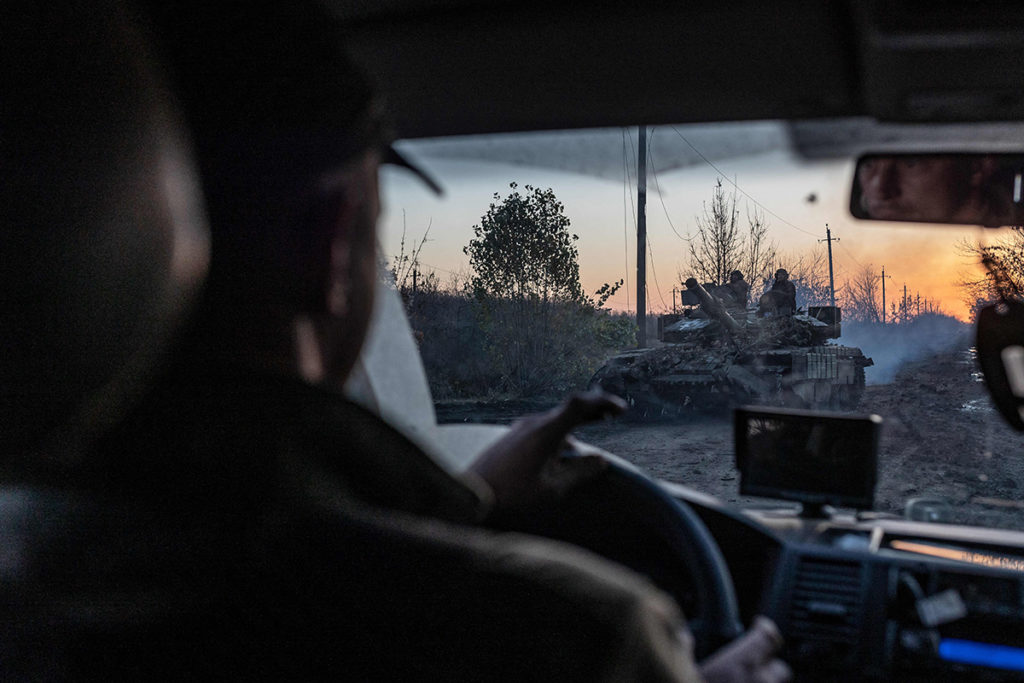
In general, is it possible, relying on the experience of previous wars, somehow plan or predict current wars? After all, new warfare technologies appear.
- The current war in Ukraine is in many ways an unprecedented case. This has not yet happened in recent history to fight countries for so long, one of which exceeds the other three times in terms of population and industrial production. For example, Finland lasted less than six months against the USSR, and made concessions. Other examples - so that a deliberately weaker country has been kept more than a year and a half in the conventional (and not in the partisan) confrontation and give such a rebuff - practically does not exist. A more or less close example is a civil war in the United States (of course, if you do not concern the political component of the conflict). The population of the North exceeded the Confederation by two and a half times. And despite the sea blockade, the numerical advantage and will to the victory of the Northern Army, which consisted mainly of volunteers, the south was able to last four years. Then they surrendered, but nevertheless they lasted for a long time.
Although this is probably impossible to compare this. Now the fighting has changed. Due to new technologies, including drones, high-precision artillery, large mechanized operations no longer work. Now the armies are faced with the fact that it was necessary to change the concept of battle, and they have to reinvent the strategy of warfare. Of course, you can draw some parallels with how the commanders of the north and south found that the Napoleonic tactics of massive attacks of infantry and cavalry, which they studied in the West Pontus, stops working due to the appearance of more long-range and deadly rifles and artillery, but still technological differences make any such comparisons incorrect.
Another significant difference between the former wars and those that go now are the possibilities of state interference in the economy and mobilization of people. Previously, there was no such powerful apparatus, now the state can find a person anywhere.
You said that usually no one wants to enter the war for exhaustion, everyone wants to win quickly. But is it not beneficial for Russia now tightening the war?
- Sometimes the strategy of the war for exhaustion is consciously chosen and this really leads to success. For example, this was during the civil war in the United States, which we have already discussed. At first, the parties tried to defeat each other, but at some point President Lincoln, the leader of the northerners, generals appeared who realized that it was enough for them to constantly beat the Confederates and it does not matter what the result would be. The population of the North was two and a half times more than the population of the Confederation - the northern states were much more industrially developed, which means that they could make up for weapons loss. In addition, the North established a sea blockade. It was very difficult for confederates to make up for losses; Having spent resources and losing will to further battles, the south began to lose on the battlefield. After one of the defeats, the confederates had to surrender.
The advantage here, as a rule, is on the side of those who have more resources - can be compared in terms of GDP. Obviously, countries that can produce more weapons and mobilize more people win in wars more often.
The country with such potential is now Russia, so we can see discussions that it is beneficial for the delay in the war. But these words should be treated with caution. It is worth remembering that the first days of the war showed that Russia expected a quick victory, and the failure of plans for the offensive is often justified by the fact that they tried to exhaust the enemy (they call it “grinding” in the Z-environment).
The classic example of such a substitution of concepts was during the First World War, when the head of the German General Staff Falkengine planned the battle of Verden. He believed that the enemy would be forced to conduct counterattacks in other directions of the front, which could be crushed. But nothing happened. And later, in his memoirs, he claimed that he initially had a plan to exhaust the French army.
The Battle of Verden is now comparing the battle for the Ukrainian Bakhmut, where the Russians, although they captured the ruins of the city, also failed to break through the front and develop success. Here, Evgeny Prigozhin has already claimed the existence of a plan for the depletion of the Armed Forces of Ukraine "Bakhmut meat grinder."
At the same time, we see that Russian commanders are trying to take maneuvers in one way or another - they want a quick war. What is happening under Avdeevka is a striking example of an attempt to maneuver. Or what was happening in the Kupyansky direction.
But there are also examples when a deliberately weaker side depleted the enemy until he lost his will to victory. Such an example is the US war in Vietnam either to the USA and the USSR in Afghanistan. But the big problem of this type of war is that this leads to disproportionate losses for the defending side.
It should be borne in mind that an important role is played by the will of victory, which even in large and powerful powers as a result of the war may dry out . Society can convey to the country's leadership that it is tired of continuing the war. In democratic countries, there are mechanisms for this. Actually, it happened, for example, in the United States, when the elected President Richard Nixon decided to withdraw troops from Vietnam.
In this sense, Russia, which objectively is a stronger opponent than Ukraine, seems to us a black box. It is impossible to assume that it should happen that Russian society said that he does not want to continue this war anymore. And how can it convey this to the heads of the state.
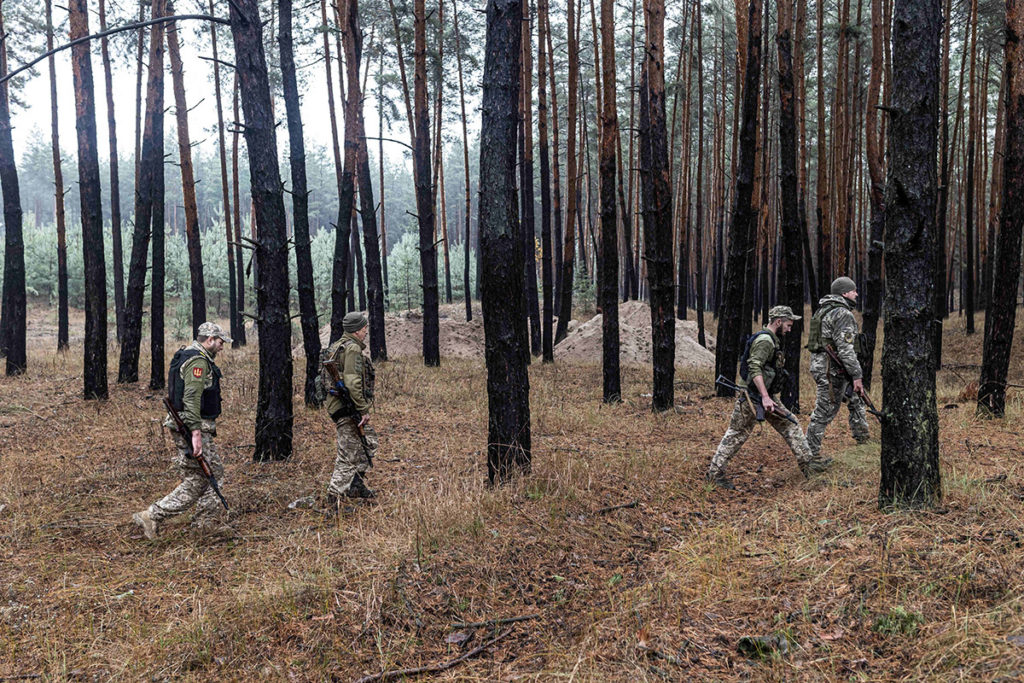
If I understood you correctly, there are two main factors that affect success in the war on exhaustion: the first is the opportunity to produce weapons and ammunition, and the second is the will to win. Is there anything else?
-In addition to the production of weapons and ammunition, do not forget about the importance of the production of consumer goods in some quantity. During the First World War, the German authorities convinced the population that Brutsya was something like a European pineapple. But the Germans did not want to live on the same trough of the third winter, and this became one of the factors that influenced the fact that Germany agreed to surrender.
In this sense, undemocratic Russia can be much larger than Europe and the USA that support Ukraine. Democracy, which do not participate in the war directly, cannot so quickly redraw budgets and reorient their production for military goals.
As an example, one can give, again, a civil war in the United States. The army of the North for the most part consisted of volunteers, and this, of course, influenced the will to win. But organizational capabilities for the production of shells, to build logistics, also played an important role. The North coped with organizational tasks much better (for example, due to the fact that he attracted the logistics of representatives of large business), so the Confederates were forced to surrender.
In this sense, Russia has an advantage, because countries supporting Ukraine have no single organ that would decide how to increase production. There is a Ramstein coalition in which more than 50 countries participate, but they only confer and make decisions on the allocation of support. However, practical issues, how all this will be done, they do not solve. As a result, we came to the fact that the EU promised Ukraine a million shells, more than half the term has passed, and so far only 300 thousand have been provided.
But Ukraine has some advantages. For example, innovative potential. Remember the Ministry of Digital Transformation, which lobbies of the production of drones. There are quite a lot of such innovative drivers in Ukraine. In addition, Russia has a significant drawback - the corruption component that should always be borne in mind. Large -scale production plans in reality often do not fully correspond to the idea.
At the same time, the longer the war lasts, the more risk that the Western countries will begin to abandon the military and financial support of Ukraine. This can especially happen as a result of the elections of new presidents and governments. Therefore, to hope for a war for exhaustion is a bad strategy for Ukraine, even if this phase is now working against the Russian army. I think that is why the hearing and says that we must strive to move on to a maneuvering war.
Do you have any forecast or understanding of how and when can the war in Ukraine end?
- I like the conclusion of Michael Kofman, I want to solidarize with him. He said that in fact, what was happening in Ukraine after February 24 can be divided into two wars. The first war was held in February, March and April 2022, and it was a war on the preservation of Ukrainian statehood. That is, then there was the question of whether Ukraine would exist as an independent state, and Ukraine won this war. Now it is already impossible to imagine that Russia will be able to capture Kyiv.
The second war that is going on now is for determining the boundaries of Ukrainian statehood. And here, roughly speaking, options are possible. The war can end with the de -captain of the Crimea and Donbass, can be restored by the restoration of the situation, which was February 23, 2022, can gain a foothold in the framework of the positions that the parties occupy now.
Either the war will be able to bring to a logical end when both sides decide, they say, thank you, there is enough for this, or it will lead to the defeat of one of the parties. I really want Ukraine to win and restore its territorial integrity. But I am not ready to make forecasts.