
Translated material
Wake up in fierce
Five auto -documentary books on life in Ukraine and Russia during the war
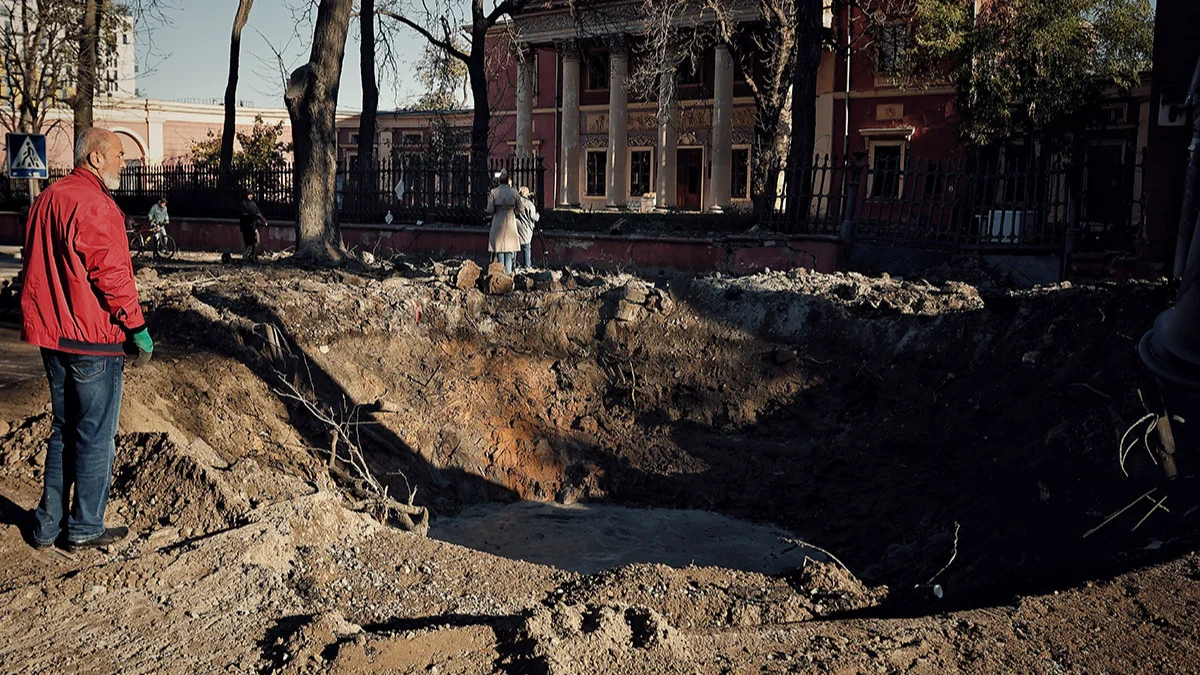
A man stands near the funnel, which remained after the attack of Russian missiles and drones on November 6, 2023 in Odessa. Photo: Jan Doball Images Ukraine / Getty Images
A year and a half of a full -scale war is a sufficient period of time to make books of witnesses of disaster, and from different sides of the front. How to survive when bombs fly on your house, there is no warmth and light? This is known by the authors from Kharkov, Kyiv and Odessa. "How not to be silent about what is happening?" - The anti -war Russia, crushed by a rink of repression, decides for himself. But the main question, which one or another has to look for an answer to all witnesses: how to recall themselves on new grounds in the collapsed world?
Maria Galina. Near the war. Odessa. February 2022 - Fierce 2023. Jerusalem: Library MG, 2023.
Maria Galina is a writer, poet, critic, laureate of a whole fan of literary awards. In January 2022, she and her husband, poet and translator Arkady Shtypel, in the foreboding of a great war and the complete awareness of her inevitability left the inhabited Moscow to Odessa. The life of both has always been closely connected with Ukraine, problems in order to stop somewhere and somehow organize life, they did not have, as there was no shadow of doubt in the choice made. “In general, I lost a city in which I lived for thirty years, an apartment, work and, it seems, citizenship. Yes, and hell with him. "
“Near the war” are auto -documentary notes made partly of the daily entries that Maria Galina made and continues to make on her Facebook page, partly for the reasons that appeared during the processing of records. The book reflects the year of the war - from February 2022 to February 2023 - and is divided into trimesters, although this division is very conditional: the events here are almost not tied to the dates. The main thing in their whirlpool is to stay in its place: in the city and house where there may not be light and warmth, but there is a dog, two cats and beliefs that dark times will someday end.
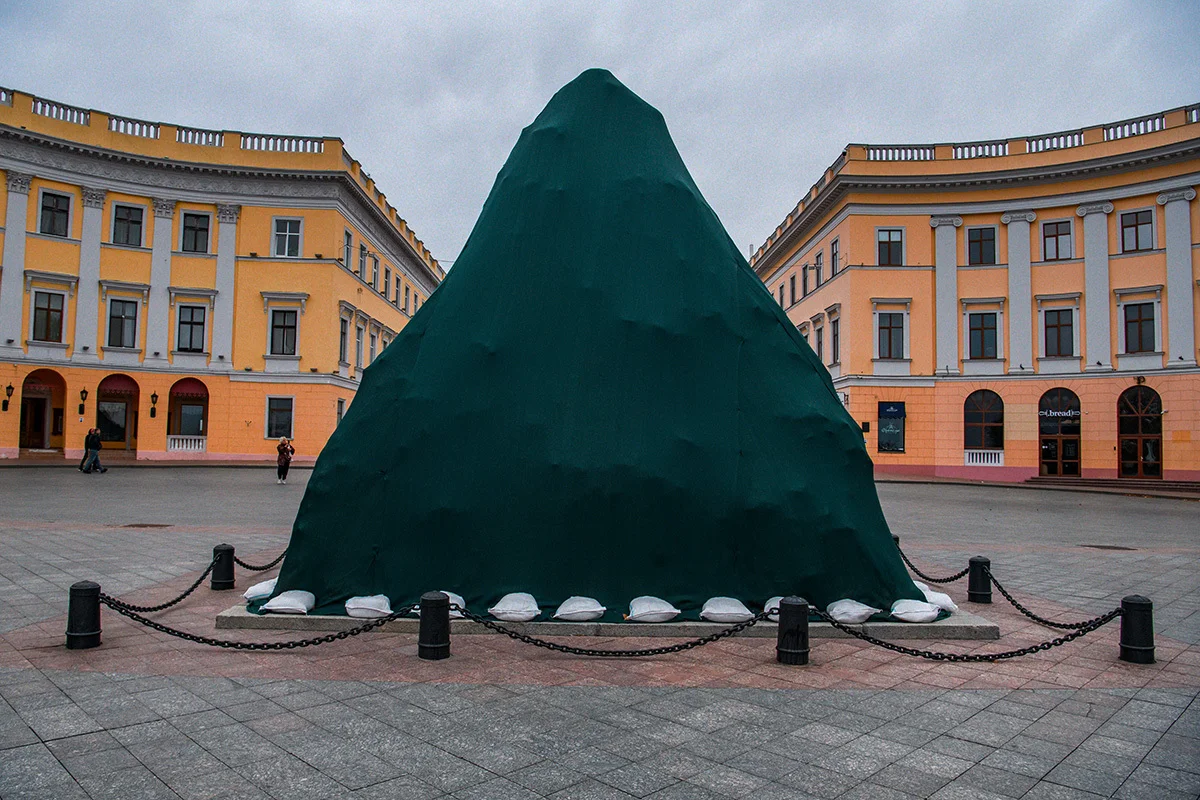
Life in the rear, so depending on the news at the front, the routine stabilizes. Odessans, refugees from Nikolaev, Kherson and other cities meet each day with each other and share the news “on the grids”, that is, where camouflage networks for the military are weaved. Rockets and drones flying to the city, explosions and air defense work at first scare everyone, and then become an everyday background. Campaigns to the market, the theater or on a literary evening are the same routine and at the same time inspiring practices as reading good news from the fronts. But the exotic becomes a bathing in the sea - you have to do this in fragments so that the police guarding the beaches from vacationers do not notice.
And the sea throws mines and dead dolphins ashore. Rare now and ships with grain leaving the port.
Maria Galina tenaciously fixes the changing launcher. “Again they hit the infrastructure, in the center there is neither light nor water. We have only light. High -rise houses in difficult times are completely unsuitable for life. How to carry water to the sixteenth floor when the elevators do not go? How to cook food if the kitchen is equipped only with electric stoves? In private houses, all the same, a certain autonomy, it helps. ” It also collects observations of human nature. “Everything suddenly came out. If there were stupidity and meanness in the rudiment, they became visible. If courage and nobility are too. For some reason, fools were especially clearly manifested. ”
But the main thing: the author manages to capture the transformation of Odessa from the imposing a resort city, where there is a lot of architecture, humor and literary glory, in a military hub and the formidable sea outpost. “The cult of Russian literature in Odessa (the South Russian school, Ilf -Petrov -Babel -Kataev -Olesha -Paustovsky -Ininber -Akhmatova -Kirsanov and the Mayakovsky joined them) and the Zhovial humor, which determined its image, was rather harmful, because it prevented the cultural field that was outside the framework Odessa is in the status of a provincial city, moreover, it is not known which province actually ... "
Odessa, like the whole of Ukraine, is trying to rethink the heritage of imperial culture - and war, that is, the situation, while the dead is enough living, is forced to abandon the past associated with the enemy. “A bitter joke. "How do you know Ukrainian so well?" “Very simple, we fell asleep on the twenty -third of February, and we threw ourselves in the two -year -old fourth fierce ...” ””
Henry Lyon Oldi. Invasion. Kharkov: Freedom Letters, 2023.
It is unlikely that I will reveal a secret if I say that the famous writer-fantasy Oldie is not one. In fact, there are two of them - co -authors working under a pseudonym, which have long become a literary brand. Kharkiv residents Oleg Ladyzhensky and Dmitry Gromov - namely, they are Olds - even lived in the same house, only on different floors. So it was before the Russian invasion of Ukraine.
The book dedicated to the first months of the war (published simultaneously in Russian and Ukrainian) consists of diary entries, poems and two stories. The stories are fantastic, the poems of Oleg Ladyzhensky and his father Semyon Ladyzhensky are lyrical, but the diary is not quite ordinary format, since it includes records of both co -authors, making up a kind of dialogue: when the same event can be described from two different points of view.
We are talking about Kharkov, which from the very first days of the war falls into the siege. The Russian army is trying to break into the city or take it surrounded. Dmitry Gromov, February 27, 2022: “I woke up at the beginning of the sixth in the morning. However, I often wake up at this time. I heard the sounds of an automatic shootout. First more or less intense for a couple of minutes. Then it subsided. Then they began to shoot again, but not for long: 30 or less seconds. After that it was completely subsided. I suspect, these are the defenders of Kharkov neutralized the Russian DRG. Someone from the DRG managed to leave, but a little later he was caught up. Later from the news it became clear that my guess was true. ”
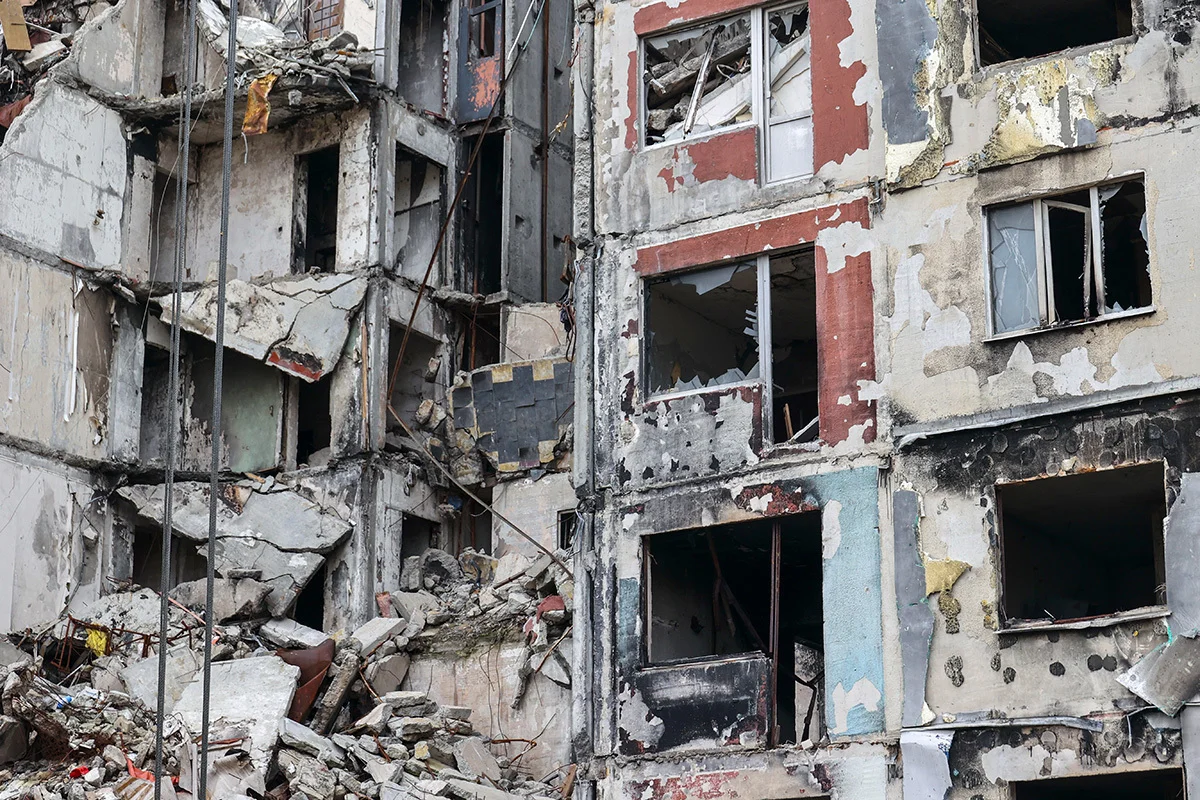
Kharkov is under constant shelling: shells fall into the city center, destroying historical architecture (eyewitnesses say that the Germans could not destroy during the Second World War, the Russian army destroyed). They fly to residential buildings, killing, cringing peaceful Kharkiv residents, demolish Northern Saltovka under the root. Families are forced to hide in the basements and bomb shelters, compact, accept relatives from more fired areas, as well as constantly think about products, medicines, food for pets ...
The war has changed everything sharply and irrevocably: life, people, circumstances. However, the general mood in the shot city is mutual understanding. People share information, life hacks, willingly volunteer.
Oleg Ladyzhensky, March 2, 2022: “Experienced people gave advice: what to do to reduce the risk of broken windows during the explosion? It is necessary to open the window, then close, but do not tighten the handle. And so that the window does not open with a draft, crush it with plastic eggplants with water. Then, if that, the eggplants fall to the floor, the window will open, but will not break. ”
The invasion continues. Kharkiv residents are forced to go into evacuation. In early March, both author with families move to Lviv, and only there they are able to return to full literary work.
The book ends in the fall of 2022, when, it seems, the war is about to end. Dmitry Gromov: “The Internet explodes long -awaited news: a large offensive by the Armed Forces! In our native Kharkov region! Well, finally! What films, what books?! Do not tear yourself away from front -line reports! I read them binge! The front is broken, the Russians run, throwing equipment and surrendering. Balaklia, Kupyansk, Izum, Volchansk, many towns, villages and smaller villages are liberated - almost the entire Kharkov region. In the north of the region, the Armed Forces of Ukraine reached the border with the Russian Federation. In the south, in the Kherson region, the Armed Forces also have successes ... "
And it seems that the time has come to think about returning. Oleg Ladyzhensky: “My mother -in -law returned to Kharkov. Need forced - there were problems with the apartment, which had to be urgently resolved. A shell flew into the courtyard of their house, in all apartments, all the glasses in the windows knocked out with an explosive wave. If in the summer we managed to solve this issue remotely - we contacted the builders, and they tightened the windows with a plastic film - now, when winter is on the threshold, the most difficult winter in our life, the film was no longer suitable ...
The next day the master arrived. Within an hour I did everything.
For free.
Here he is, Kharkov. "
Andrey Krasnychy. God +/-. Kharkov: Freedom Letters, 2023.
And again Kharkov under the sight. And again, the experience of survival in the city under the bombs and the history of evacuation. Auto -documentary stories and writer, laureate of the Russian Prize, as well as a teacher of Kharkov National University, a specialist in Joyce Andrei Krasnychikh, the same evidence of an eyewitness to the first days of the war, the siege of Kharkov, like Oldi's diaries.
The circumstances here are the same: daily shelling, interruptions with electricity and Internet, cold in apartments, instantly broken peaceful life. “On the fifth day, our anti -aircraft guns learned to distinguish. We no longer hide when they are beating. ” “Already laid down, flew around our area - at the tank school. It burned all night: it was visible from the window. You can hear the warehouses rumble. The aircraft flew low, we saw, they made three approaches. The explosion felt too, the house shuddered. The next morning they learned that, except for the tank, they bombed the flight. It is near ours with the daughter and wife of the house - where did we go from. ” “Everything is defeated near the house where we live, from where we moved to parents. University sports complex, student dormitories, shops, houses ... "
At the same time, the notes of reddening are more than that of Oldi are filled with people: acquaintances, colleagues, students, just passers -by and oncoming, as well as conversations and moods filling the city. “March 16. "How are you? Are you in Kharkov?" - "Yes, I'm in Kharkov. Everything is as usual, they bomb, but we are already used to it."
“I am in the Lviv region, in Chervonograd, my parents in Germany, will stay there because it is no longer at home, but the main thing is that everyone is alive.”
“I escaped from the horizon. Columns of the tanks at my entrance, and tanks in the Drobitsky Yar. ” “What should I put in a statement to the student who died? "Not Z'yavavi"? I can't do it. "
A month later, the author and his family go into evacuation. Poltava is not at all like Kharkov. Everything is different here. There is an almost peaceful life. Household habits are changing here. But Kharkov is so simply not letting go: “I can’t cope with the feeling of guilt for the abandoned house. Every time he arrives next to him, he makes me out that he abandoned him. ” “Kharkov, in which I lived and raised, where my daughter was born and grew, no longer. It will definitely be restored. He will become beautiful. New people who showed themselves in the war will come to power. They will not steal. They will have a sense of taste. Kharkov will blossom. It will be another Kharkov. ”
The author gigs intently into himself, trying to reflect in internal reassurance and gradually turning from a Kharkov citizen into a Poltava, from a university teacher into a gently loving father. He masters a new “telegraph” style for himself, resembling news reports. And the further, the more he refuses the usual Kharkov Russianness. “What are we leaving the war? With a margin of flashlights, batteries and powerbans for life. With aerophobia, claustrophobia and Russophobia, too, for life. ”
Natasha Vlashchenko, Evgeny Gorodetsky. At zero. Kyiv: Drukarsky DVIR Oleg Fedorov, 2023.
One of the functions of auto -documentary literature is psychotherapeutic. The book of letters from the Kyiv journalist and writer Natasha Ososhchenko and German entrepreneur of Ukrainian origin Yevgeny Gorodetsky is an attempt to accept what is happening. Natasha: “Two months after the outbreak of the war, my doctor, a sweet elegant woman, who had left for a while in London, told me:“ Natasha, you need to start drinking antidepressants ... ”By that time, I almost stopped sleeping.”
After a year and a half of despair and pain, Natasha finds the strength to write the book: “It was written in different ways: in business trips, under the bombing, in moments of joy and grief. I began my part of this book on the day, when my friend died at the front-a child who did not live until the 22nd anniversary of a week. ”
Letters, which, as it were, exchange Natasha and Zhenya in June -July 2023, are defeated by the topics: “On fear”, “On compassion”, “On betrayal”, “On the change of idols and landmarks”, “On the destruction of relations during the war”, “On Personal History”, “On the Future”, etc. However, they unite their experience of tense experience of injuries of war - because it would be that it would Neither the correspondence interlocutors were discussed, it all comes down to war and existence in its contexts.
The circumstances of the co -authors are different. Natasha has an evacuation from Kyiv, life in Lviv and Warsaw, Eugene has many years of life in Europe, volunteering, helping Ukrainians and the Armed Forces. Both have elderly parents who first agree to evacuate, but then very quickly return to their native Zhytomyr. Natasha’s mother eventually does not withstand stress and dies.
Through the letters there is a theme of a broken life, sometimes requiring heroism from the simplest people.
“Sometimes the past saves. As, for example, Rita Sichkar saved, who, having spent four weeks in the basement with children and her ex -husband, left GOSTOL in his car. Rather, he took them out. ”
“Boris Todurov did not leave his patients. On the most terrible days of siege and bombing of Kyiv, he operated on the basement of the institute of the heart. ”
“My friend from the first day of the war went to the front. I sent him the parcels, tried to help. On January 5, we corresponded. The next day, he died in Bakhmut. 38 years. Three children. "
Both author are trying to rationalize their thoughts and sensations and, frantically turning to the past, then to the present, then to the future, do not have time for what is happening. Actually, therefore, the output turned out to be an introspective and even intimate book. As Eugene writes, “the war has opened a huge number of problems for each of us, in our families, our Motherland. She posed before us a lot of questions to which we must give our own answers. And no one can help us with this. ” It is no accident that he ends his whole letter with poems - we saw the same endings in the diary notes of Oleg Ladyzhensky. Poems make it possible to express an irrational one, that which is difficult and sometimes impossible to formulate in prose.
And an important remark: Freedom letters, of course, did not publish the book of Oldie and Blinding in Kharkov, although this city announced on weekends, but Vlashchenko and Gorodetsky’s book accurately published in Kiev, where publishers continue to work.
*** *******. The Nazis have few paint. Gorky: Freedom letters, 2023.
Well, what about Russia? Is there only a conspiracy of silence and a culture of denunciations? If we turn to a book, the author of which decided to remain an unknown, hiding behind a pseudonym from typographic stars, it turns out that there is resistance in Russia. Yes, it is not able to stop the state aggression and operation of the military machine, but is a key component of public life, closed to war.
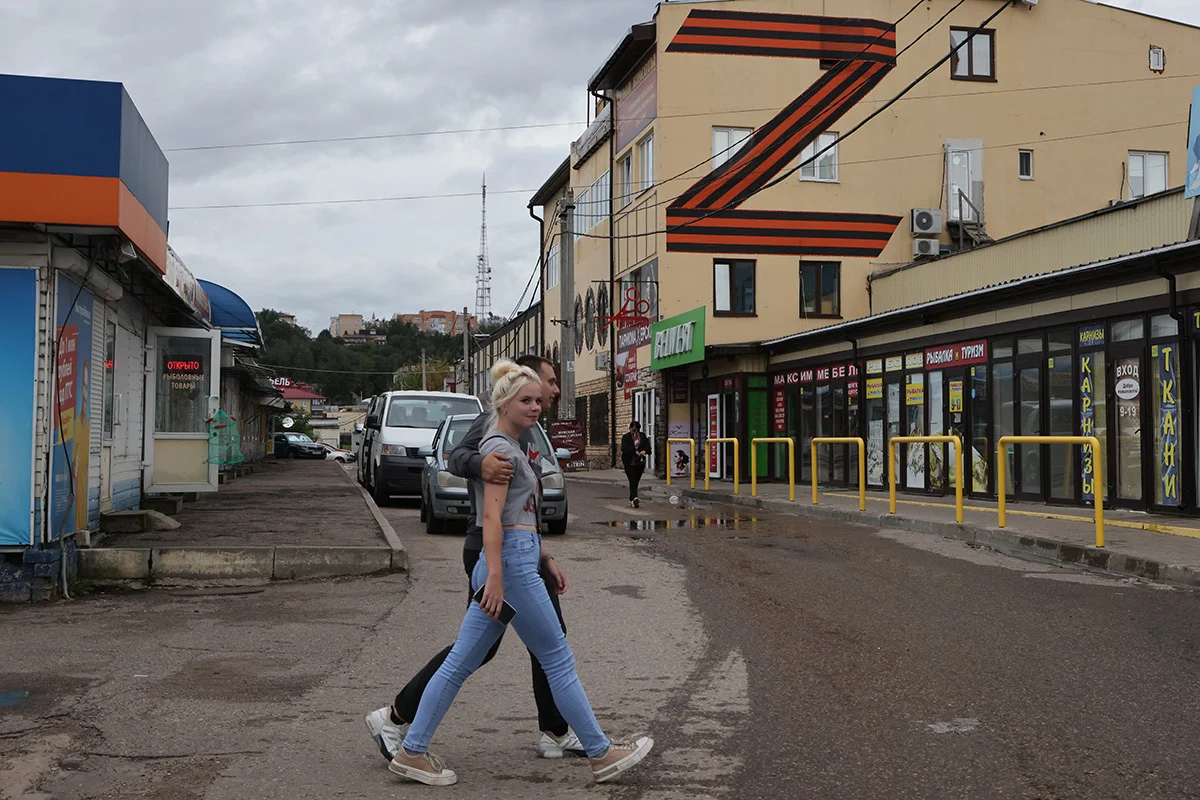
“The Nazis have few paint” - a documentary study, the author of which is wondering how anti -war ideas of mass in Russia. “It would seem, analyzing hundreds of stories, I had to go to the idea (or illusions) that almost the whole people in a single impulse ... - But only moved away from it, or rather, from an adequate idea of the scale,” he pretends. However, the book seems to give an answer. It represents a real chronicle of the struggle of a fragmented civil society with a state that unleashed an aggressive war with a neighboring state and with its people. The author has a lot of attention: from anti-war rallies in the first days of the war to the shares of Sasha Skochilenko and feminist anti-war resistance, from collective letters against the war to the lower struggle with the Z-symbolic, from the spontaneous performance of Marina Ovsyannikova on the live air of the Time program to the anti-war street art. Fines, detention, dismissal from work and deductions from universities, administrative and criminal cases - none of this is able to drown out the lower movement, which each time takes new forms.
The author works with open sources, interviews Daria Serenko and other protests, but no less important for him is a personal resistance history that began with rallies in 2011 and continued in time - up to the fall of 2022 (protests against mobilization) and June 2023 (complex emotions associated with Prigogin rebellion). “This book has become to me to some extent therapy,” he admits.
His book does not justify Russia, does not make a victim out of the aggressor, but gives a fairly wide idea of the true state of affairs in Russian society, generally rather sad and terrible. And at the same time, he answers the question, "as people in conditions of complete censorship and dictatorship of military ideology, contrary to everything, try to preserve themselves."