
Translated material
Priest Viktor Ostrovidov
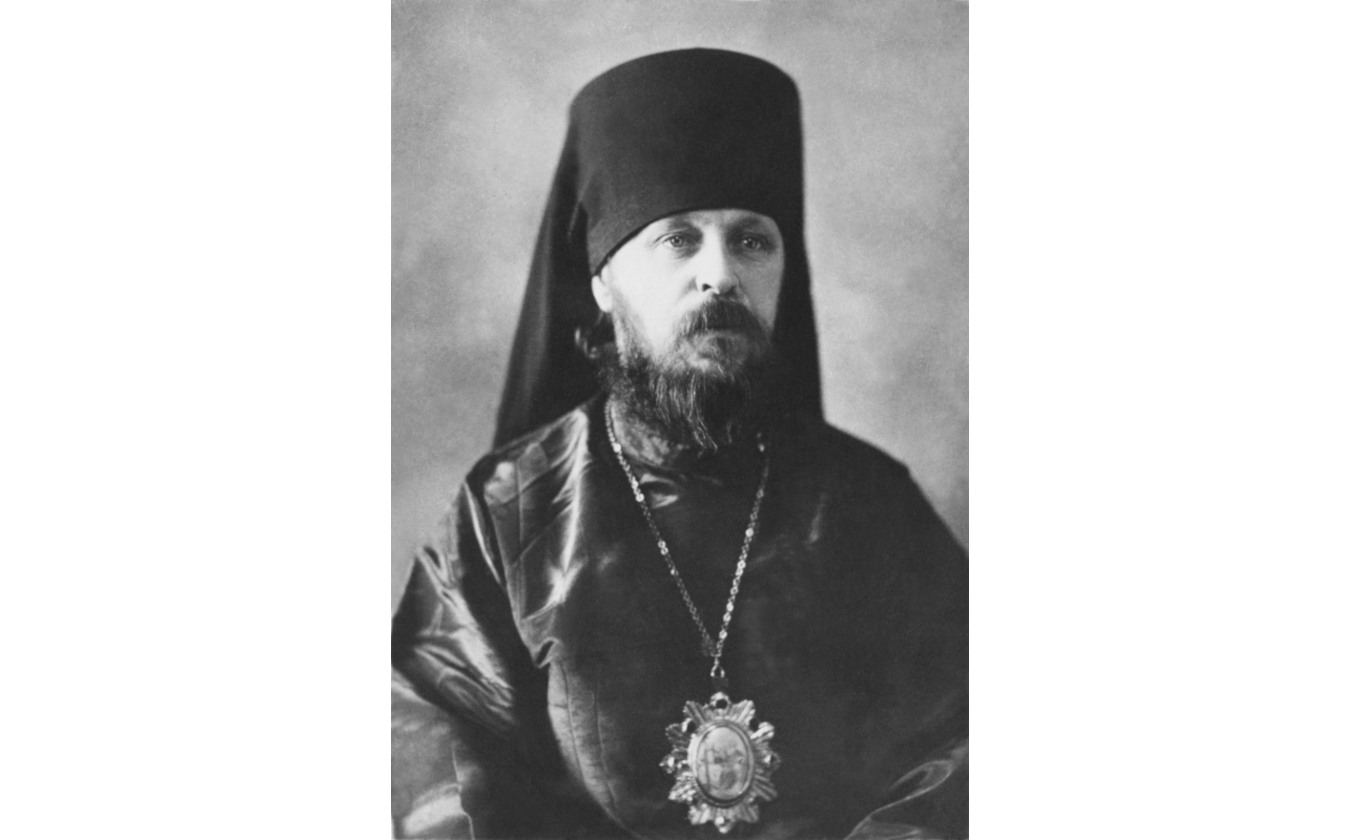
Konstantin Ostrovidov is the son of the psalmist of the Trinity Church of the village of Zolotoy Kamyshinsky district of the Saratov province. In 1888, when Konstantin was thirteen years old, he entered the preparatory class of the Kamyshin Spiritual School, and a year later he was accepted to first grade. After graduating from the school in 1893, he entered the Saratov Theological Seminary and graduated from the first category with the title of student in 1899. In the same year, Konstantin Ostrovidov entered the Kazan Theological Academy. He, as successfully withstanding the reception exams, was provided with a scholarship. In his student years, the humanitarian talents of Konstantin Alexandrovich, interest in domestic literature, philosophy and psychology, were clearly manifested. He became one of the active figures and a comrade of the chairman of the student philosophical circle.
For a candidate essay, he chose the topic "Marriage and celibacy." At the end of the Academy, he was awarded the degree of candidate of theology with the right to teach in the theological seminary.
On June 28, 1903, he was tonsured a mantle with the name Victor, the next day, June 29, was ordained a hierodeacon, and on June 30-to Hieromonk and appointed to the city of Khvalynsk by the rector of the Holy Trinity Transfigure of the Saratovsky Transfiguration Monastery.
In February 1904, during the Great Lent, in the hall of the Saratov Musical School, Hieromonk Victor gave three lectures. The first took place on Sunday, February 15, and attracted a lot of listeners, all the aisles between the rows, the choirs and the lobby were busy; The lecture was attended by Bishop of Hermogenes, the Saratov Governor Stolypin with his wife and daughter, the Catholic Bishop of ROOP, the rector of the Saratov Theological Seminary, the directors of the gymnasiums, the clergy and the laity. The lecture was on the topic "Psychology of" dissatisfied people "in the works of M. Gorky." On February 22, a second lecture was held on the topic “Life conditions for the appearance of“ dissatisfied people ””, which also gathered many listeners, and on February 29 - the third lecture on the topic “The possibility of updating“ dissatisfied people ”and the path to it”.
In 1905, the publication of the Belief and Knowledge bookstore in St. Petersburg came out lectures by Hieromonk Viktor on “dissatisfied people” in the works of Gorky and religious and philosophical brochure “Note on a Man”. In the same year, Hieromonk Victor was enlisted in the Jerusalem Spiritual Mission and went to Jerusalem.
Active pastor-missionary was struck by the absence of missionary activities in the mission:
“... Despite such a most important position of our mission, about it-about its tasks, goals and vital activity, it is completely impossible to say any specific, clear word, and this is after the fifty-year existence of the mission ... True, some of the pilgrims-pastens are greatly delighted with external wealth-I understand our holy places with the buildings of them, what are the lords. Jerusalem Mission ... But now, ask them what they will talk about, what greatness of the mission to preach, what to call their listeners to? “And they will immediately find themselves in the most difficult situation, because they can not say anything to the bright and definite about the real or the past spiritual life of the mission ... The only activity that the members of the mission always found for themselves is the ministry of prayers, the panachids, the execution of minor church trembs and the collecting of donations. This position of the mission - as a requirements - is more than sad. Yes, and this division for six months after the absence of pilgrims disappears and can easily abuse ... "
In July 1908, the senior hieromonk of the Jerusalem Theological Mission Victor was in Kyiv, where the IV All -Russian missionary congress was held for two weeks, from 12 to 26 to 26, July 12 to 26. At the congress, he made a report on the Jerusalem mission.
On January 13, 1909, he was appointed inspector of the Arkhangelsk Theological School. Without feeling a calling for spiritual and educational service, he gave a petition to dismiss him from the post of inspector of the theological school for admission to the fraternity of the Holy Trinity Alexander Nevsky Lavra, which was satisfied on October 15, 1909.
On November 22, 1910, he was appointed rector of the Zelenets Holy Trinity Monastery of the St. Petersburg diocese with the construction of Archimandrite. In September 1918, he was appointed governor of the Alexander Nevsky Lavra in Petrograd. Until the end of his life, he remained a student and admirer of Professor Viktor Nemelov, later the head of the Kazan branch of the True Orthodox Church.
In 1919 he was arrested. In conclusion, he did not stay long and was soon released. In December 1919, he was Hirotonisan at Bishop of Urzhum, Vicar of the Vyatka diocese. In January 1920 he arrived in the Vyatka diocese. On May 27, 1920, he was arrested on charges of “agitation against medicine”.
“The beginning of his activity,” wrote Bishop Nicholas (Pokrovsky), “did not like the Communists; His preaching, the preacher himself and the highest church authority, who discovered the Urzhum bishopia, became furious in the “rustic communist”, which, apparently, was not embarrassed by the Lord and continued his job, his sermon, which attracted the masses to the temple. On Wednesday, on the first week of the post, after the liturgy, Victor Vladyka was arrested in the church and sent in conclusion. ”
Bishop Victor was sentenced to imprisonment before the end of the war with Poland. Was in prison for 5 months and was released.
In 1920, he was appointed Bishop Slobodsky, Vicar of the Vyatka diocese. From April to September 1921 he temporarily ruled the Tomsk diocese. There are no documents confirming his arrival in Tomsk in 1921.
On September 14, 1921, he was appointed Bishop Glazovsky, Vicar of the Vyatka diocese, with a place of residence in the Vyatka Trifon Monastery on the rights of the abbot. In Vyatka, the Vladyka was constantly surrounded by a people who saw in a never -widening and solid archpastor to support for himself among the disorders and hardships of life. After each service, people surrounded him and escorted him to the cell in the Trifon Monastery. Dear, he slowly answered all the numerous questions that they asked him, always and, under any circumstances, maintaining the spirit of benevolence and love.
In May 1922, Bishop Pavel (Borisovsky) was arrested in Vladimir and accused that the values withdrawn from the temples did not correspond to the indicated in the official inventories. Temporarily, Bishop Victor entered the rights of the acting manager of the Vyatka diocese. On May 31, the chairman of the renewal Higher Church Administration, Bishop Antonin (Granovsky): sent his letter to him:
“I allow myself to inform you about the main leading principle of new church construction: the elimination of not only obvious, but also secret counter -revolutionary tendencies, peace and community with Soviet power, the cessation of all oppositions to it and the liquidation of Patriarch Tikhon, as a responsible inspirer of the ongoing intra -church adversities. The cathedral, which is entrusted with this liquidation, is supposed to be convened in half of August. The delegates of the cathedral should appear on the cathedral with the clear and distinct consciousness of this church and political task. ”
In response to the actions of the renovationist Vladyka, Victor compiled a letter to the Vyatka flock, which was approved and signed by Bishop Paul, who had been released by that time and sent to the temples of the diocese:
“My friends, this word of the Lord and His Apostles now, to our great sorrow, is fulfilled in our Russian Orthodox Church. Boldly rejecting the fear of God, who seemed to the hierarchs and priests of the Church of Christ, having made up a group of persons, contrary to the blessing of the Holy Patriarch and the Father of our Tikhon, are currently intensifying selflessly, thieves to take the control of the Russian Church into their own hands, impudently announcing themselves to some Provisional Committee for the Management of the Council of Orthodox ... ”
“I implore you, beloved in Christ, brothers and sisters, and the same one, shepherds and co-workers on the Lord’s field, are by no means following this self-proclaimed schismatic catfish, who calls himself a“ living church ”, but in reality the“ corpse of the stinging ”, and not have any spiritual communication with all the reckless lies of falsehoods and Falsers, from these impostors set. ” He categorically abandoned any cooperation with renovationists: Bishop Victor, an authorized person, did not even let him in to the threshold.
On August 25, 1922, Bishops Pavel (Borisovsky) and Victor and several priests were arrested and delivered to Moscow. During the interrogation on August 28, Vladyka Victor to the investigator’s question, who made a message against the renovationists, replied: “The appeal against the highest church administration and the Living Church, discovered during the search, was compiled by me and sent in the amount of five to six copies.”
On September 5, 1922, he was charged in connection with underground monarchical groups, the spread of illegal appeals of Patriarch Tikhon, Metropolitan Agafangel and the brotherhood of zealots of Orthodoxy.
From the questionnaire in the investigation:
“The composition of the family: brother Alexander - assistant to the head of the shipping campaign in Kamyshin, brother Nikolai - priest G. Dubovka, mother - Anna Ivanovna (70 years old, old man), her sister Maria Ivanovna (42 years old, a widow, patient) - live in a reed.”
On February 23, 1923, he was sentenced to three years in the Narymsky Tomsk province. The exile ended on February 23, 1926, and the exile bishops were allowed to return to the Vyatka diocese. In the spring of 1926, Vladyka Pavel, erected after the end of the link to the rank of archbishop, and Bishop Victor arrived in Vyatka. During the exile of the bishops-supervisors, the diocese came to the deplorable state. One of the Vicarians of the Vyatka diocese, the bishop of Yaransky Sergius (Korneev), moved to the Renovationists and carried away many clergymen. Some of them, well aware of the pernicipability of the renewal movement, were not able to resist the fear of the threat of arrest and exile, when the examples, how easily these threats were made, were before everyone's eyes; Going to the renovationists, they tried to hide it from their flock.
Arriving at the diocese, the supervisory bishops immediately set about the restoration of the destroyed diocesan administration, in almost every sermon they explained to believers about the perniciousness of the renewal schism. The bishops turned to the flock with a message in which they wrote that the only legitimate head of the Russian Orthodox Church is the locumer of the patriarchal throne Metropolitan Peter (Polyansky), and called on all believers to move away from the schismatic groups and unite around Metropolitan Peter.
The mass return of parishes to the Patriarchal Church began. Concerned renovationists demanded that the bishops stop activities against them, but the bishops refused to conduct any negotiations with them. On May 14 or 16, 1926, Bishop Victor was again arrested with the Archbishop of Vyatka and Slobodsky Paul (Borisovsky). Victor Vladyka was accused of contributing and helping Archbishop Paul in his events and pronounced sermons, which, in the opinion of the authorities, had counter -revolutionary content. Both bishops were transported to Moscow, to the internal prison of the OGPU. After some time, the bishops were transferred from an internal prison to Butyrskaya. The bishops were accused of "creating an illegal diocesan office."
A special meeting at the College of the OGPU dated August 20, 1926 decided to deprive them of the right to reside in Moscow, Leningrad, Kharkov, Kyiv, Odessa, Rostov-on-Don, Vyatka and the corresponding provinces, with attachment to a certain place of residence for a period of three years. The place of stay could be chosen to some extent himself, and Archbishop Pavel chose the city of Alexander Vladimir province, where he was once a vicar bishop, and Bishop Victor-the city of Glazov, Izhevsk province of the Votsky region, closer to his Vyatka flock.
During his brief stay in Moscow, after his release from prison, Vladyka met with deputy locomotor Metropolitan Sergius and, in accordance with his place, was appointed Bishop Izhevsky and Votkinsky, temporarily managing the Vyatka diocese. The OGPU, having learned that the Lord was still in Moscow, demanded that he leave the city no later than August 31. On this day, Bishop Victor went to Glazov.
In late August and early September 1927, the bishop of Izhevsky Victor received a declaration of Deputy Patriarchal Locumber Metropolitan Sergius (Stragorodsky), intended to announce to her clergy and believers of the Votkinsk EP. It is known that the Vladyka back in 1911 prophetically wrote to Archbishop Sergius then that he would shock the church with his error. Being deeply outraged by the content of the declaration and not wanting to announce it, Bishop Victor seized it into an envelope and sent it back to Metropolitan Sergius. The declaration was announced only in the Vyatka diocese, but it was practically not accepted anywhere, but they did not interrupt communication with the ruling Archeian Paul.
In October 1927, Bishop Victor turned to Metropolitan Sergius with a letter, trying to convince him to change his position of agreement with the Bogoborian power, requiring endless compromises with conscience. Vladyka warned that if M. Sergius does not revise his position, then "a great split will occur in the church." In response from the Synod, Bishop Victor was made a warning that he, like the Vicar of the Vyatka diocese, “knew his place” and in everything obey the ruling bishop.
Soon, Vladyka received the order of Metropolitan Sergius of the appointment of him by Bishop Shadrinsky, temporarily managing the Yekaterinburg diocese. Being administratively sent to Glazov, Bishop Victor could not leave his residence without the permission of the authorities and in October 1927 he asked Metropolitan Sergius to form a votsky diocese in accordance with the administrative borders of the Votsky region. A trip to Metropolitan Sergius with a request to cancel the decree of the Synod ended to no avail. In December 1927, Vladyka came to the decision to refuse to appoint Bishop Shadrinsky, which he wrote to Metropolitan Sergius on December 16.
On December 23, he was dismissed by Metropolitan Sergius from the Office of the Shadrinsky vicarism of the Yekaterinburg diocese and is prohibited in the clergy of "for discharge activities." However, the Vladyka did not recognize this definition: “It used to be often that the falling away from the truth made up the cathedrals, and they called themselves the Church of God, and, apparently careing about the rules, made prohibitions of the madness that had not noticed them,“ departed from the accusation of the right to their fidelity to the legitimate locomotive of the patriarchal, Metropolitan Peter (Polyansky), In the future, the opposition of the billet is called "Victorian.
On December 29, 1927, he sent a letter to Metropolitan Sergius (Stragorodsky) and a copy of the “Letter to the Middle”, in which he called the declaration of obvious “treason” and warned the flock that if the signathers did not show up, then “we must protect themselves from communication with them”. In a letter, he suggested that the flock not to be the “nightly reverers of truth”, but “to confess the truth of the Church” and through suffering to keep souls in the grace of salvation. Soon, a meeting of the spiritual administration of the Votkinsk bishopia was held, on which a resolution was adopted to terminate the diocese of prayer-channonic communication with M. Sergius (Stragorodsky) and like-minded bishops, as betraying the Church of God for reproach, until their repentance and renunciation of the declaration. The decision was approved by Bishop Victor and on December 16/29 was sent to Metropolitan Sergius.
At the end of February 1928, the bishop wrote “Epistle to the pastors”, in which he criticized the positions indicated in the declaration. In particular, he wrote: “Another thing is the loyalty of individual believers in relation to civil power, and another is the internal dependence of the Church itself on civil authorities. At the first position, the church retains its spiritual freedom in Christ, and believers are made by confessors when persuaded to faith; In the second position, the church is only an obedient tool for the implementation of political ideas of civil power, while confessors of faith here are already state criminals. After all, reasoning, we will have to consider the enemy of God, for example, St. Philip, who once exposed John the Terrible and for this a strangled from him, moreover, we must classify the enemies of God with the greatest forerunner, who denounced the Herod and for that, ascended by the sword. ”
On April 4, 1928 he was arrested in Glazov and transported to Vyatka, then to Moscow. In Moscow, the investigator presented him with the text of "Message to the shepherds."
- Do you know this document?
- This document was drawn up by me a month about about a month ago, or rather, a month before my arrest. The document presented is a copy of my document.
— В вашем документе встречается несколько раз термин «исповедничество», и в конце этого документа вы призываете группу верующих, называемую «Православною церковью», к тому же «исповедничеству». Разъясните, что вы под этим термином понимаете и что он должен означать?
— Документ обращен не ко всем верующим, а только к пастырям, как написано в начале моего документа, в обращении. Понятие «исповедничество» имеет общее для нас, верующих, значение и означает твердость в вере и мужество в своих убеждениях, несмотря на соблазны, материальные лишения, стеснения и гонения.
— У вас в документе приведены, очевидно, как примеры, достойные подражания, моменты из жизни христианских деятелей — Филиппа, митрополита Московского, и Иоанна так называемого «крестителя»; скажите, они подходят под понятия «исповедников»?
— Поскольку они были обличителями неправды, они являются исповедниками.
— Значит, такого рода деятельность также подходит под понятие исповедничества?
— Да, поскольку она связана с верой.
— Как видно из документа, «исповедничество» указанных выше лиц заключалось в их деятельности против представителей иноверной государственной власти, за что они и были подвергнуты репрессиям?
— Власть и тогда была одинаковой с ними веры. Они выступали против Ивана Грозного и Ирода как против неправильно поступающих, грешных людей, а не как против гражданской власти.
— Протестуя против лишения священнослужителей права что-либо сказать в защиту истины Божией против гражданской власти, вы являетесь защитником этого права?
— Да, поскольку гражданская власть будет касаться веры, то есть употреблять насилие над верующими в целях достижения собственных целей.
— Следовательно, как видно из всего текста данного места вашего документа, «исповедничество» понималось как выступление против советской власти, употреблявшей насилие над верующими?
— «Исповедничество» как выступление против гражданской власти возможно только в том случае, если последняя, то есть гражданская власть, употребит первая насилие над верой, причем само «страдание» за такое выступление и будет «исповедничеством». Оно носит пассивный характер. Эту мысль я и хотел выразить в данном месте.
— Я хочу спросить вас еще раз: значит, «исповедничество» рекомендуется только в случаях насилия власти над верующими в делах веры или при гонениях?
— Да, только при насилиях и гонениях; оно может быть и независимо от гражданской власти.
— Какая причина выпуска вами данного документа, трактующего о праве деятельности Церкви в защиту истины Божией против гражданской власти и с призывом к «исповедничеству»?
— Формальным поводом послужило выступление с посланием митрополита Сергия, по моему мнению, в угоду земным интересам. Я не хочу сказать, чтобы в данный момент оно было необходимо; некоторое утеснение (отсутствие правящих органов и так далее) со стороны гражданской власти было, и я считаю, что путь «исповедничества» был бы более правильным.
18 мая 1928 года Особым совещанием при Коллегии ОГПУ был приговорен к трем годам заключения в лагере. Перед отправкой в лагерь передал свои приходы в управление священномученику епископу Димитрию (Любимову).
В июле владыка прибыл на Попов остров и затем в Соловецкий лагерь особого назначения. Начался исповеднический путь святителя в узах. Епископа определили в 4-е отделение лагеря, расположенное на главном Соловецком острове, и назначили на работу бухгалтером канатной фабрики.
Участвовал в тайных богослужениях — «рискуя быть запытанными и расстрелянными, владыки Виктор (Островидов); Иларион (Бельский); Нектарий (Трезвинский); Максим (Жижиленко) не только часто сослужили в тайных катакомбных богослужениях в лесах острова, но совершали тайные хиротонии нескольких епископов. Совершалось это в строжайшей тайне даже от самых близких, чтобы в случае ареста и пыток они не могли выдать ГПУ воистину тайных епископов».
По воспоминаниям академика Дмитрия Лихачева, находившегося в лагере вместе с владыкой, «от него исходило какое-то сияние доброты и веселости. Всем стремился помочь и, главное, мог помочь, так как к нему все относились хорошо и его слову верили».
Профессор Андреев, находившийся в Соловецком концлагере вместе с владыкой, вспоминает: «Владыка Виктор был небольшого роста... всегда со всеми ласков и приветлив, с неизменной светлой радостной тонкой улыбкой и лучистыми светлыми глазами. „Каждого человека надо чем-нибудь утешить“, — говорил он и умел утешать всех и каждого. Для каждого встречного у него было какое-нибудь приветливое слово, а часто даже и какой-нибудь подарочек. Когда после полугодового перерыва открывалась навигация и в Соловки приходил первый пароход, тогда обычно владыка Виктор получал сразу много вещевых и продовольственных посылок с материка. Все эти посылки через несколько дней владыка раздавал, не оставляя себе почти ничего...
Беседы между владыками Максимом и Виктором, свидетелями которых часто бывали мы, врачи санитарной части, жившие в одной камере с владыкой Максимом, представляли исключительный интерес и давали глубокое духовное назидание... Владыка Максим был пессимист и готовился к тяжелым испытаниям последних времен, не веря в возможность возрождения России. А владыка Виктор был оптимист и верил в возможность короткого, но светлого периода, как последнего подарка с неба для измученного русского народа».
В 1929 году написал прошение с просьбой о досрочном освобождении. 24 октября того же года Коллегия ОГПУ приняла решение: в просьбе ему отказать.
Весной 1930 г. переведен на материк (командировка Май-Губа).
4 апреля 1931 года кончился срок заключения, но он не был освобожден, 10 апреля 1931 года Особое совещание Коллегии ОГПУ приговорило его к ссылке в Северный край еще на три года. Местом ссылки епископу была назначена деревня Караванная вблизи районного села Усть-Цильмы. В Усть-Цильме в это время находилось много ссыльных, в том числе священников и православных мирян. Незадолго до приезда в Усть-Цильму преосвященного Виктора власти закрыли в селе православную церковь, и ссыльные вместе с местными жителями пытались добиться разрешения на ее открытие. Уже найден был священник, у которого кончился срок ссылки и который дал свое согласие остаться в селе и служить в храме, если бы его удалось отстоять перед властями. Но пока служб не было, ключи от храма находились у верующих, и они пускали ссыльных священников и мирян в храм для спевок.
13 декабря 1932 года был арестован в ссылке, этапирован в Сыктывкар.
10 мая 1933 года Особое совещание при Коллегии ОГПУ за «участие в контрреволюционной организации» приговорило владыку еще к трем годам ссылки в Северный край. Владыка этапом был отправлен в тот же самый Усть-Цильмский район, но только в еще более отдаленное глухое село Нерицу. Его поселили в доме председателя сельсовета, помогал его семье в простых хозяйственных работах. Владыка беседовал с крестьянами о вере, часто удалялся в тайгу для глубокой молитвы. Весной 1934 года он простудился, заболел воспалением легких. В больницу его не смогли отправить из-за разлившейся реки.
Скончался 2 мая 1934 г. Был похоронен в с. Нерица на сельском кладбище. Хоронила его монахиня Мария.
Летом 1997 г. на сельском кладбище москвичи отыскали крест, на котором по дереву было выцарапано: «Епископ Виктор (Островидов)». 1 июля 1997 года были обретены мощи священноисповедника Виктора.
«Сельчане окружили могилу, с их стороны то и дело доносились насмешки, скептические замечания. Когда верующие дошли до крышки гроба, обнаружилось, что гвозди истлели, время не пощадило даже железа. Перед тем, как открыть домовину, отец Дамаскин отслужил панихиду, потом осторожно приоткрыл крышку. Мощи святителя Виктора явились нетленными в славе несказанной. Местные жители были тому свидетелями. Они стояли примолкшие, потрясенные, некоторые неумело осеняли себя крестным знамением. И тогда к отцу Дамаскину подошел Марьян Марьяныч и сказал: «Батюшка, народ желает креститься».
Останки епископа-исповедника препроводили в Москву, а 2 декабря 1997 г. состоялось перенесение мощей святителя Виктора в Александро-Невскую церковь Вятского Свято-Троицкого Макариевского женского монастыря.