
Translated material
Algorithm for space engines
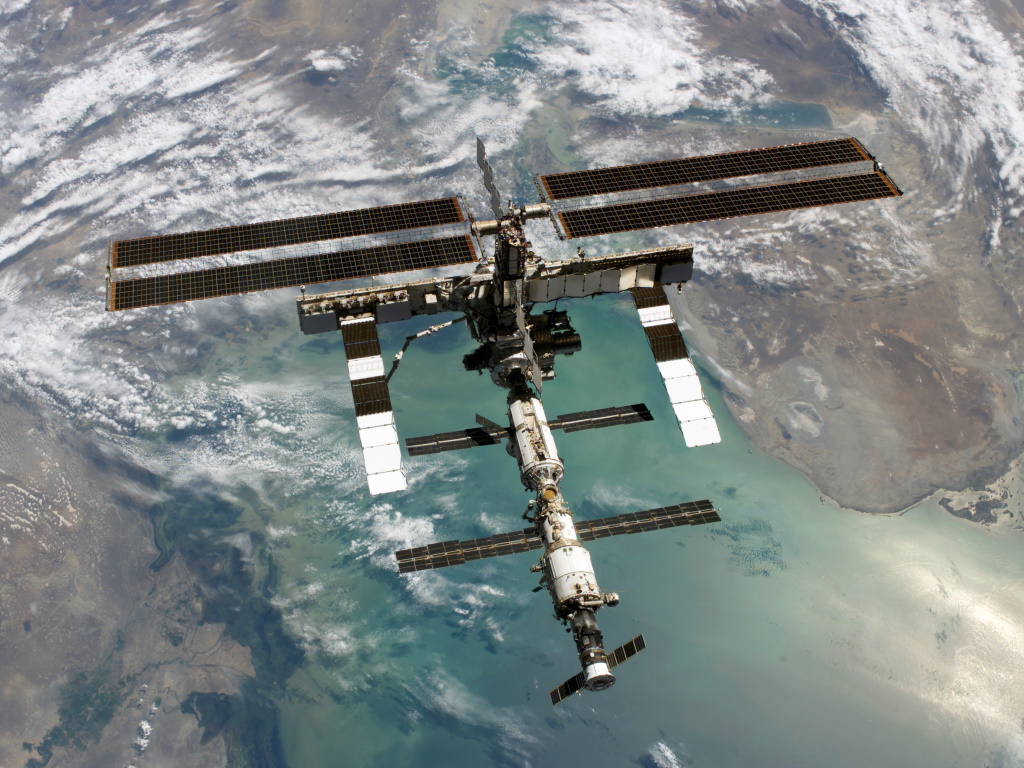
A scientist from the Moscow Physics and Technology Institute and RSC Energia named after S.P. Korolev developed the control algorithm of 40 engines of the Multi -purpose laboratory module "Science" for the flight to the International Space Station in 2021. The method allowed the module to successfully get to the ISS and fix it with it. The article dedicated to this algorithm and its testing published in September 2023 the Journal of Computer and System Sciences International, the MIFT press service briefly tells about the work.
International Space Station is a huge research complex located in orbit. From the moment the construction began on it, new modules are periodically added. They undergo the process of assembly and development on the surface of the Earth. A flight program is also being developed on Earth: what maneuvers should be performed for a successful mission. In order to safely join the international space station and perform a flight program, it is necessary to ensure the desired orientation of the device and be able to perform specified maneuvers. The engines that set the set of commands are responsible for this: what engines will be used in flight, how they should be turned. Previously, on Russian spaceships, for example, on the Soyuz transport ships and progress cargo ships, there was a special device that chooses the configuration of engines that would work during the flight. The choice of this device is limited, all possible parameters were calculated in advance on Earth. Such a solution is not optimal: sometimes in flight there are unforeseen circumstances in which another set of engines, different from a predetermined one, would better cope. Previous algorithms could not carry out such a replacement.
The key difference between the engines selection algorithm on the Science module is that the calculation of the optimal set of engines on is carried out directly in the on -board control algorithm. The optimal configuration is selected from 40 engines and in unforeseen situations can overfire a set of engines to continue the flight. In 2021, the Science module went to the ISS and fell into an emergency situation in which it was required to choose new engines to maintain a flight. The developed algorithm made it possible to cope with the task and also saved fuel.
“During the flight to the ISS, an automatic ban on almost a third of all engines took place on the module. But thanks to the possibility of the algorithm, to redistribute the load on other engines the module was able to maintain the desired orientation on the first day of the flight, ”explains Anton Sumarokov, the author of the algorithm, associate professor of the department of aerophysical mechanics and traffic control, an employee of the RSC Energia named after S.P. Koroleva.
The algorithm collects information from sensors about the angular velocity and deviation from the desired orientation of the module in space. Given these parameters and the desired type of movement, the algorithm forms control commands for engines. The program also automatically determines the set of engines that can be used for the desired movement, and from them chooses the optimal configuration to perform maneuver. The calculation occurs on the basis of data on the position of the module and the state of the module system. To calculate all these tasks, the algorithm compiles dynamic equations for which the optimal solutions need to be found. This algorithm uses a modified Simplex method.
Before introducing the program into the module, the researcher carried out mathematical modeling of the module movement and comparison using the previously used algorithm. Modeling showed that optimization of the choice of engines gives a win on fuel consumption and performs the task within the framework of the goals. As a result, the algorithm was introduced into the module control system, which went into flight. For nine days, he participated in the flight management and provided the docking with the ISS. After a successful mission, work began on a scientific article on the algorithm, and further developments to improve this method for new tasks.
“We want to modify the algorithm so that it not only solves the problem of turning on the set of engines to form control influences, but also that it is possible, turning off part of working engines (for example, to correct the orbit), simultaneously control the orientation, also solving the optimization task. It is planned that the algorithm reincarnation will be used on a promising transport ship and on the modules of the Russian orbital station, ”says Anton Sumarokov.