
Translated material
The magical means of communication
Aquarium re-released the album "Radio Africa"-based on records of 40 years ago. Lev Gankin tells how this version of the famous record appeared
One of the key albums of Aquarium - Radio Africa - in the summer of 2023 turned 40 years old. All this time there was a second version of the record, which can be called the author: back in the 1980s, Boris Grebenshchikov himself brought it up (without the participation of sound engineer Andrei Tropillo, thanks to which the well-known version of the album appeared). On November 11, Aquarium published on streams an updated version of Radio Africa. Musical journalist Lev Gankin tells which place the album occupies in the legacy of the group - and how it was possible to maintain a coil with the Grebenshchikovsky recording version.
The Australian air heater Dick Smith flew around the world by helicopter. A civil war broke out on Sri Lanka. Samantha Smith flew to the USSR - an American schoolgirl who entered into correspondence with Andropov. At the Vostok Antarctic station, the lowest temperature in the history of meteorological observations is registered - 89.2 degrees Celsius below zero. In Leningrad and other cities, there are raids on the parasites and truants of work, undermining labor discipline. The USSR government adopts a decree “On additional measures to expand the rights of industrial enterprises in planning and economic activity and to strengthen their responsibility for the results of work”.
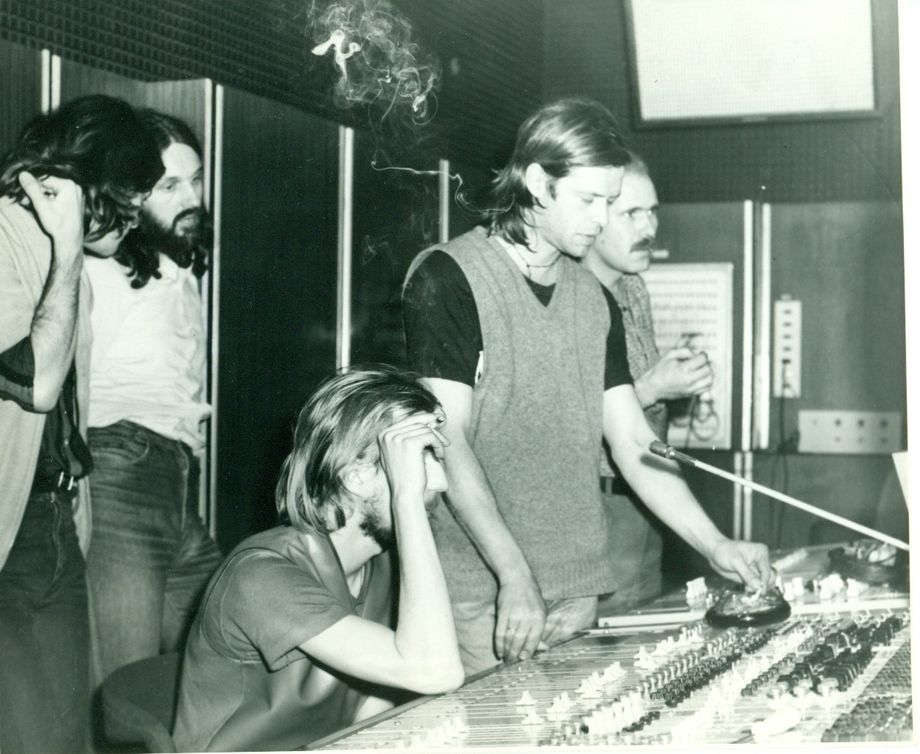
Here are just a few events that occurred in the world in the summer of 1983 - on the very days when the Aquarium group ended the record of the Album Radio Africa . Studio sessions, according to the recollections of the participants in the process, the quiet sapa started in the spring; At first, the headquarters at first became a well-known house of young equipment in the Krasnogvardeisky district of Leningrad (now bearing the proud name of the GBU to the Center Okhta ). It was there that, under the guise of a recording circle, the sound engineer Andrei Tropillo, who worked with the Aquarium and the previous plates: “Blue Album”, “Electricity”, “Triangle”, “Tabu”, equipped his studio.
The final stage, however, was held in a different location - it was a van belonging to the Melody company MCI , which, by a happy coincidence, stopped for several days right in the center of Leningrad, not far from the city Philharmonic.
“History is corresponding,” Vsevolod Gakkel shines his hands with his hands . - This is like a “raus” : from different points of view, the same picture is visible in different angles. I remember very well how the [guitarist] with the [guitarist] Sasha Lyapin went with the instruments on the white night and saw this van of an incomprehensible destiny. The door was ajar, we leaked there, met [the sound engineer of “Melody”] Vitya Glazkov and then informed everyone else about it. But Tropillo assures that he was the first to discover the studio, agreed with Glazkov and with an electrician of the Philharmonic, who needed to put a bottle of alcohol for not turning the switch at night. ”
In these conditions - and against this historical background - the “aquarium” recorded his lightest, cheerful and inventive plate. “It was probably the most Monti-Pighton album of everything that we did, although then, unfortunately, we did not know about Monty Python,” says the leader of the group Boris Grebenshchikov today. “This is the album of the best mood that we had in the whole history of album recording.”
Collective fooling. Radio Africa and Sergey Kurekhin
The crafty "music of silver knitting needles." Surrealistic "Captain Africa." The psychedelic mantras “Vana Hoya”, the mocking parody of “Your Star”, Spirichuel “The Arts of Being Smiry”, Regg “Walking Snow”, the musical Hall of “Boy Evgraf”. From today, the Web of Radio Africa is not easy to compare with the fact that we know about the year 1983 - about the harsh Andropov reaction, which replaced the senmatic late Brezhnev stagnation, about the ongoing war in Afghanistan, about endless censorship obstacles, which became the common place of all the annals of Soviet rock. However, from the inside the situation was perceived differently.
“It never occurred to none of our small company that there was some kind of policy,” the BG is afraid. “It is clear that we somehow took it into account, but who was there as a Kaiser, we did not even know.” It was simply accepted as an inevitable evil. ” “Youth does not allow you to pay attention to some obstacles,” Gakkel echoes him. - Nobody even noticed the death of Brezhnev at that moment. Yes, then the races on the carriages went further, but this was perceived as a curiosity - and nothing more. ” “Indeed, the black“ Volga ”stood in those years below, at the entrance,” recalls the Grebenshchikov. - So what? We just laughed. ”
Laughter is a healthy reaction to stimuli that you have no opportunity to exclude. By the time of the record of “Radio Africa”, the BG already had the experience of spontaneous avant-garde sessions with the experimenter Sergey Kurekhin and other artists who were brought to the studio, in particular, Vladimir Chekasin (Exrasions ”) and young Igor Butman (recording of the composition“ Dwarz Kur-Maif ”, made on June 7, 1983, 1983, made. After a couple of years, he will enter the “underground culture” ). Subsequently reprinted on the British jazz label of Leo Records, these records of Kurekhin and BG firmly entered the canon of the Soviet “free-improving” -but in reality they were primarily an exciting collective fooling. “It was funny to blue,” recalls the leader of the Aquarium. - Where I did not need to play, I simply lay, twisting with laughter. This attitude was brought into song creativity. Therefore, the earring was invaluable to me. ”
Kurekhin is not just a keyboard player on the recording of Radio Africa, but a full -fledged co -author of the album and, most importantly, an inspired co -organizer of all those mischievous undertakings that formed its basis. “This is the only person with whom we had a common field of interests,” recalls Grebenshchikov. - He was educated - very rare. And polite - in the sense of such aristocratic politeness: when you carefully listen to the interlocutor (what few were capable of), and then you interrupt him and carry such that hair on end! We did this. ”
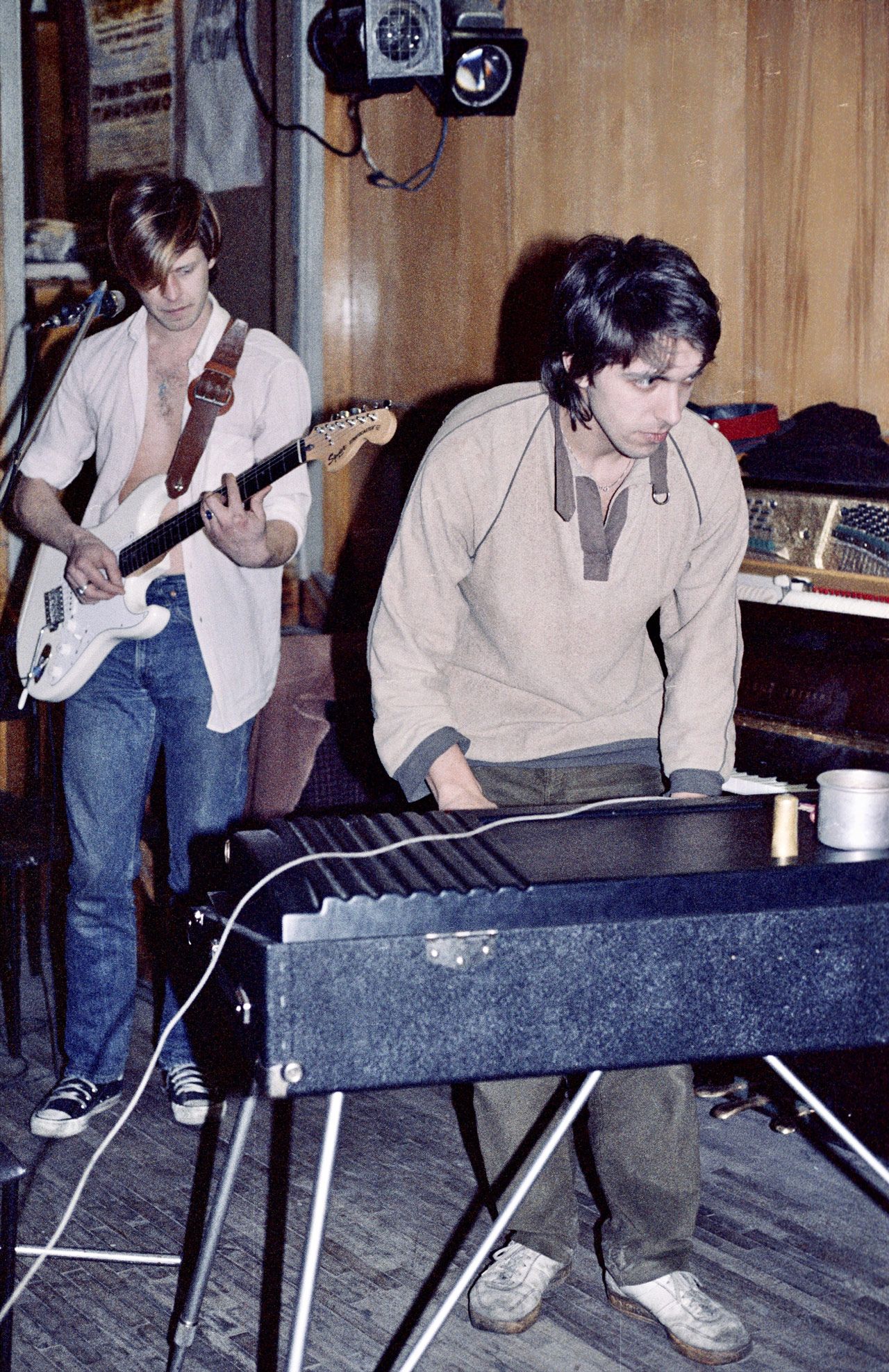
At the modern publications of Radio Africa, Kurekhinsky authorship is indicated opposite the composition “Tibetan Tango” , but in reality his recognizable eccentric is felt almost everywhere. And in carnival keyboards- on the saloon honik-ton- piano, whose hammers were pierced with buttons to achieve the corresponding sound effect ( “Boy Evgraf” ), or on a wild primitive synthesizer, which had to be specially going to the other end of the city ( “Moon Time” ). And of course, in a warped romance "Your Star."
Kurekhin’s influence is felt even in the name of the album: the mysterious “Radio Africa” is an insider joke and BG, which appeared from nowhere in the process of almost the daily vigils of the two musicians in the Grebenshchikovsky communal woman. “The main part of the work always took place at my place, because he [Kurekhin] lived on such seduckers, where it is impossible to get,” says the leader of the Aquarium. “Every evening I took the coil from the studio, after which we sat late in my room or in the kitchen and thought what to do next.”
“They had some kind of spike with Bob , they felt each other very well,” recalls Vsevolod Gakkel. It was a sucking symbiosis. “He kept me from falling into sentimentality, and I - from the desire to go out all the time,” says Grebenshchikov. -It is always easier to pour over something than to invent something from scratch, and he loved this process-therefore, there is not so many of his own, author’s music left from him. He often thought: better I am mocking [over the music of other musicians]. But at the same time he knew how to play fantastically lyrical. And much of what we did together shows that in him there was an incredible beauty inner beauty, which he was wildly shy. ”
Those who were free. How 15 musicians turned out to be on the record
If Kurekhin was in “Radio Africa” the carrier of the mischievous, Trickster principle, then the guitarist of the Aquarium Alexander Lyapin, on the contrary, was responsible for the classic rock and roll: for riffs, cuts and hodgepods. When recording the previous album of the group, “taboo”, between two virtuosos, blinded from completely different doughs, almost reached the assault. However, this did not stop Lyapin from entering the Kurekhinsk “pop-mee”-although BG recalls that he often tried to organize a studio time so that they crossed less often with each other.
Fortunately, this did not go against standard aquarium practices from the times of Radio Africa - according to Grebenshchikov, the record did not at all require an indispensable and constant presence in the studio of all musicians of the group. At that time, one could talk about the stable composition of the Aquarium only with a very big stretch: those who were free and accessible right now were involved in studio work. Kurekhin, for example, brought Butman, whose saxophone BG today calls the "hidden weapon of the album." And the flutist Dyush Romanov once appeared in the company of Alexander Titov, a bass player, who performed with groups of August and Earthlings (and later-Kino).
“I used to have intersections with the Aquarium,” Titov recalls. - Once in 1982, I even went with the guys for a concert in Moscow, because Fan then served in the army. Therefore, I was offered to learn a concert repertoire and play. We arrived, stopped at Sasha Lipnitsky , but at the last moment a fan appeared-and I merged: of course, I went to the concert, but I didn’t take part in it. ” Once on the record of Radio Africa, Titov earned universal respect by the fact that he perfectly performed the bass party in the song “The Time of the Moon”; Soon he will accept an offer to join the Aquarium on an ongoing basis. “He played perfectly there,” Gakkel agrees today. “But you know, this is such a song in which I just can’t imagine that it would be bad to play!”
Vsevolod Gakkel and himself had a chance to pick up the bass on Radio Africa - in addition to an indispensable cello. “In the song“ Vana Hoya ”, I played the melodic bass under the impression of the McCartney, whose sound recovery I have reveled all my life,” he says. -So it is not customary to play a bass, so only a cellist can play! ”
In total, a dozen musicians took part in the work - therefore, the album to this day resembles a colorful, exciting sound fresco. However, after the record was still a saturated stage of post -production: BG and Tropillo turned the films backwards, experimented with a variety of sound effects, and generally strictly engaged in a musical clock and sewing. Specific parties and the general sound panorama during this process sometimes changed beyond recognition.
"Revenge of Soviet power." Nights in the van of sound recording
Such studio care for the Soviet rock scene was not typical of the early 1980s. “Bob was always overwhelmed by the idea of recording the next album,” says Gakkel. “There was no songs or concepts in his head yet, but as soon as the recording of the previous album ended, he immediately began to enter this specific state.”
“We lived in conditions when the music that freed us, formed and served almost religious accompaniment of our lives, certainly existed only in the record,” explains Boris Grebenshchikov. In fact, neither the Beatles musicians, nor The Whose whose album “The Whul Sell Out” of 1967, like “Radio Africa”, vividly uses the metaphor of the radio, of course, did not come alive in the USSR. Their songs - in studio versions - made their way through the muffins on the waves of Western stations, and were also brought to the country with smuggling and then replicated by admirers.
Lyrical retreat of BG
Sometimes it was about the smuggling of genuine rarities: “Around 1984-1985, I drove to a distant acquaintance, and there was a certain wanderer from Siberia, who came almost from Ust-Ilymsk,” recalls BG. - He had a shoulder bag, and in it - 14 boots King Crimson! ”
The logical conclusion, which, however, not all Soviet rock musicians came simultaneously: if the music of The Beatles, The Who, King Crimson and other great ones makes such a stunning impression in the recording, then why not try and to evaluate the advantages of this medium in their own experience? “We were one of the first to insist on the need for sound recording,” says Grebenshchikov. - I remember how I was Andryusha Makarevich convinced that I needed to sign up, but he did not understand why. This did not occur to Muscovites: you can play the song alive - and that’s it! ”
No, not all: it is the record-the main unit of measurement of pop music (in contrast, say, from classical music, for which the musical text is primary). Since the producers of the 1950-1960s-Forests of Paul, Joe Mika, then Brian Wilson, George Martin with Beatles and many others-there was an idea that the studio version of the song is obliged to sound differently than the concert; That sound recording allows you to realize the most daring producing and arranging ideas.
Hence the euphoria, which covered the musicians of the Aquarium after the MCI studio with a 24-channel remote control was at their disposal. Still - how many opportunities immediately opens for a variety of experiments with multi -track records and impositions! True, there was almost no time: the “melody” soon threatened to complete the academic records for which the van came to Leningrad, after which the mobile sound laboratory would immediately leave back to Moscow. Under these conditions, the main characters - Grebenshchikov, Andrei Tropillo and Viktor Glazkov, who steamed studio - had no choice but to spend all night here.
“Tropillo was always in the studio,” BG recalled. - He seemed to be married then, but it was not even noticeable: both days and nights he recorded music. And absolutely free - in six years I seem to have bought dumplings just once. Once he explained to me his motivation: he said that this is his revenge of the Soviet regime, who did something bad with his parents. And he brilliantly took revenge, because, in fact, he ruined her. "
"It was monstrous." Why the musicians don't like Rock-n Roll Dead
Today, not all sounds that were born in the MCI studio delight their creators. “Unfortunately, I took part in that record, and it was monstrous,” Senses Vsevolod Gakkel. - We, as they say, reached for the forbidden fruit, but as it is, whether we need to clean the peel or put it in the mouth directly, with a shell and bones, did not know. If there was some kind of processing, of course, we wanted to use it immediately-and in the end we recorded the terrifying sound of the cello, either with a Feiser , or with a flanier , in the song “Another Fallen Downs” . ”
Hakkel’s questions are also raised today by one of the main hits of Radio Africa-the song “Rock-n Roll is dead”. “When I heard the Crosby group, Stills & Nash, it was struck by how owners of different votes are combined with each other. This is achieved by the fact that people not only rehearse and build a sound, but also sing in one microphone. And their voices are recorded in one acoustic space, with one processing. And our voice was recorded in the house of the young technique at Tropillo, after which the Duush and I settled down and, without hearing each other, sang with different speakers in different microphones. This is nonsense! But it remains. "
“Rock-n Roll” did not like Alexander Lyapin, who believed that he, as a guitarist, was capable of more here-and he regularly demonstrated it at the concerts of the Aquarium. "Nonsense! - BG is burning. - We really were disappointed immediately after he played his solo, I wanted a certain fireworks. But very soon it became clear that this is an absolute living classic, there is not a single bad note. ”
Compiled even during the Tabu, under the accompaniment of one of the many disagreements between Lyapin and Kurekhin, the song “Rock-n Roll” is slightly stand out from the general series of songs “Radio Africa”-and a powerful guitar sound and a pathetic text. Basically, this is a soft, flying, full of air, to a much more rural one than urban in the atmosphere. Her cloud of tags - snow, sand, water, river, night. “Then we rented a room in a country house in Solnechny, in a suburbs of St. Petersburg,” recalls Grebenshchikov. - And Sevka [Gakkel] had a cottage that he got from his ancestors. Therefore, we spent a lot of time and in the winter and in the summer outside St. Petersburg. We dangled on bicycles both day and night-on the bay, somewhere else. A lot of time was spent in normal life. ”
Two coils. How the second version of the album appeared and preserved
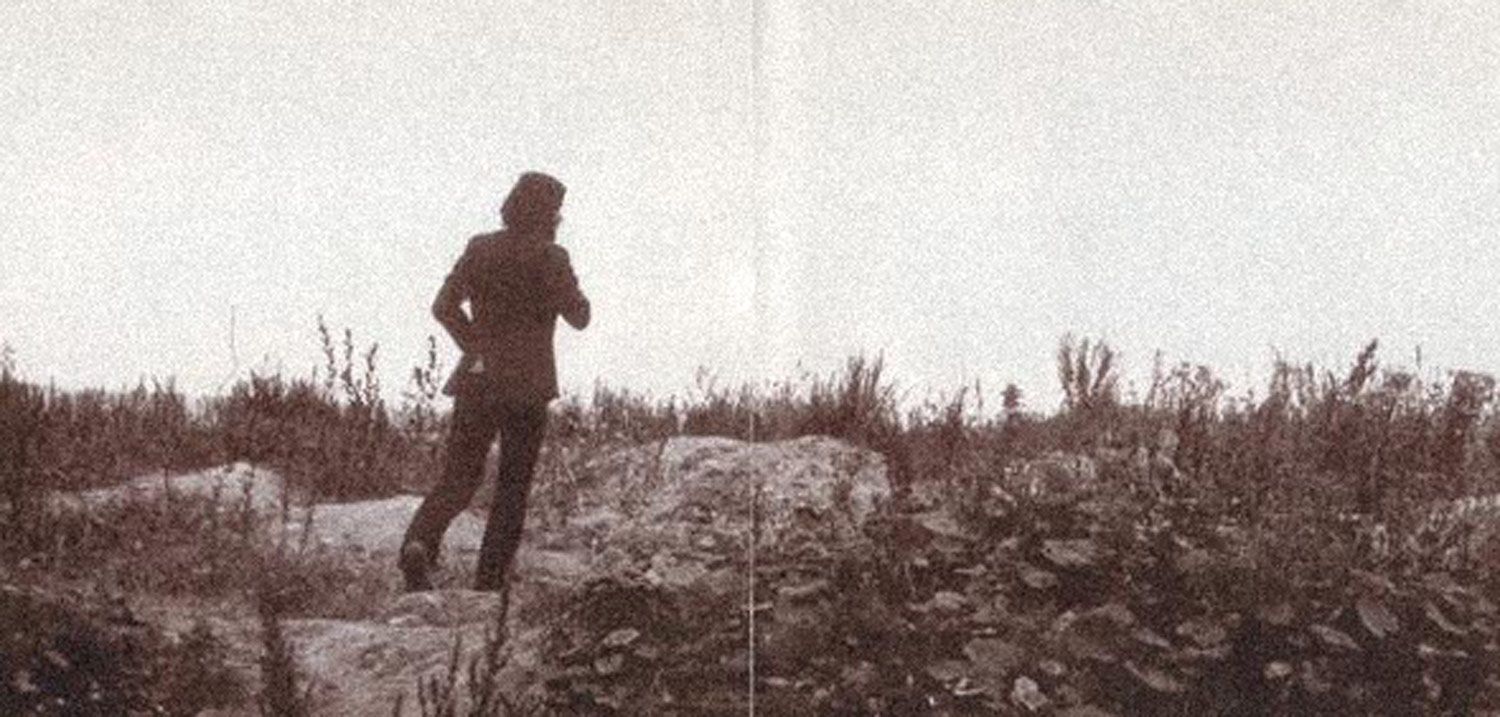
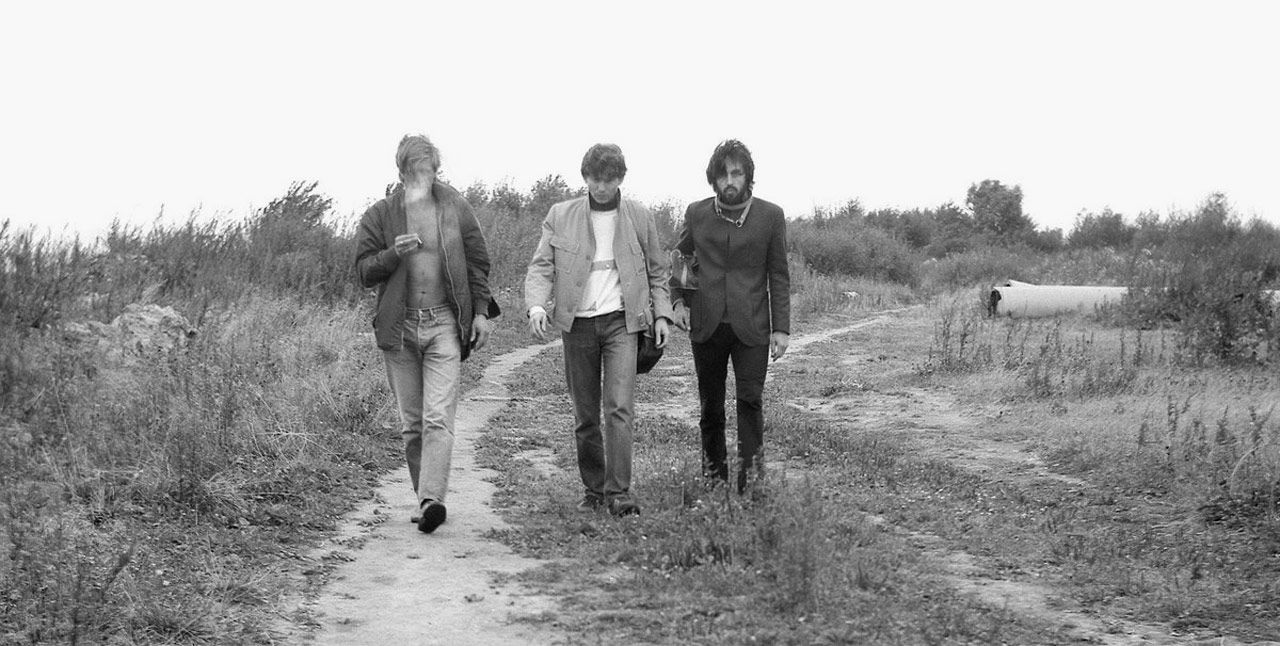
Обложка «Радио Африки», правда, получилась довольно мрачной: фотограф Андрей «Вилли» Усов снял Всеволода Гаккеля идущим по берегу Финского залива. Благодаря китаисту Сергею Пучкову название альбома удалось написать на конверте иероглифами, напоминающими, кроме всего прочего, загадочные символы с конверта четвертой пластинки Led Zeppelin . «Тогда был еще в черте города совершенно запущенный остров Голодай, — рассказывает Гаккель. — С загаженными подступами к воде, строительный мусор, железяки. Абсолютно фантастический ландшафт, напоминающий зону из „Сталкера“ Тарковского. Всегда интересно в таких местах что-то исследовать и находить». Поначалу предполагалось, что на передней обложке окажется другое фото — БГ, воздевающий руки к небесам ; первые копии «Радио Африки» оформлялись именно так. Но в конечном счете ту картинку вынесли на внутренний разворот, а на обложку попала съемка из «зоны».

Тиражировать запись надлежало вручную: в 1983 году альбом неофициального ансамбля не «выходил» на «лейбле», как сегодня, а переписывался в домашних условиях с катушки на катушку. Каждое копирование неизбежно сказывалось на качестве записи: со временем музыка «Аквариума» начинала звучать примерно так же, как песни The Beatles на волнах изо всех сил заглушаемых радиостанций капиталистического мира. Эфирные помехи, непременные спутники занимательного радиослушания советской эпохи, разумеется, стали частью и звуковой канвы аквариумовского альбома — они отделяют в нем песни друг от друга.
Эта специфика распространения музыки приводила к тому, что «релизы» (это привычное сегодня слово здесь нельзя не заключить в кавычки) зачастую существовали в нескольких разных версиях. Подобной судьбы не избежал и альбом «Радио Африка». Один его монтаж — видимо, первый, на скорую руку сделанный в студии в ту самую последнюю ночь перед отъездом фургона MCI в Москву, — остался у Андрея Тропилло: впоследствии именно он лег в основу всех официальных изданий на виниле и CD. Другой вариант со временем осел в домашней коллекции новобранца группы Александра Титова, да там и оставался — до сегодняшнего дня.
«Тот вариант, который был выпущен и всем известен, он немножко длиннее, там слегка по-другому оформлены шумы и переходы с шумов на песни», — рассказывает Титов. Разница — и в характере самих шумов (обрамляющие альбом колокольные звоны здесь, очевидно, просто основаны на другом «семпле» — если, опять-таки, пользоваться современной терминологией), и в их длительности, и в скорости, с которой в «Радио Африке» сменяют друг друга музыкальные картины: в некоторых композициях обрезаны долгие инструментальные «хвосты».
Всеволод Гаккель предлагает сравнение, понятное любому меломану: версия «Радио Африки», выходящая в свет сейчас, — это как альбомы The Beatles в английских изданиях на фирме Parlophone, а знакомый большинству из нас вариант записи — как те же альбомы, но в американских изданиях на фирме Capitol, с измененным трек-листом и порядком песен.
Установить точную дату происхождения катушки с альтернативной версией альбома «Аквариума» сегодня не представляется возможным — но обстоятельства ее появления примерно ясны. Хронист и архивариус группы Алексей Ипатовцев, сам позже занимавшийся распространением аквариумовских записей, утверждает, что на всех пленках, которые копировались в августе-сентябре 1983 года, фигурировал вариант, смонтированный Тропилло. Очевидно, вскоре после этого Борис Гребенщиков собственноручно изготовил новый, что было в те годы в порядке вещей: похожая история ранее произошла, например, с альбомом «Акустика». «Этот микс чище в плане идеи», — говорит сегодня БГ, что объяснимо: перед нами — именно авторский монтаж альбома, сделанный лидером «Аквариума» не наспех, по горячим следам, а по прошествии минимум нескольких месяцев после записи.
Уезжая в Англию (он перебрался туда на постоянное место жительства в 1996-м), Александр Титов взял катушку «Радио Африки» с собой, а недавно решил ее отреставрировать и оцифровать.
«Я отправился в Whitehouse Studio в Корнуолле — это специальная студия, которая занимается реставрацией старинных лент, — рассказывает он. — Процесс заключается в том, что они запекают ленту в определенном режиме при определенной температуре в определенной печке. В результате становится возможно эту ленту воспроизвести, потому что, вообще-то, лента 40-летней давности, будучи поставлена на магнитофон, просто рассыплется в прах. Поэтому и существует этот процесс запекания ленты. А дальше нужно совершить несколько прогонов [пленки от начала до конца для перезаписи], потому что со старой ленты зачастую или в канале каком-то вдруг пропадет звук, или верхние частоты уйдут. Из нескольких прогонов уже можно собрать оцифрованный вариант этого альбома».
Поборники жанровой чистоты. Как приняли «Радио Африку» в рок-клубе
«Нас обосрали полностью, — лаконично говорит БГ, вспоминая реакцию рок-общественности на „Радио Африку“. — Журналисты самиздата „Рокси“, который я к тому моменту уже отпустил от себя , как свободные люди написали, что качество отвратительное и музыка — абсолютный бред».
Можно предположить, отчего так: не оттого ли, что саунд «Радио Африки», невзирая на статус классики русского рока, весьма далек от рока как такового? Саксофоны, электроника, романсы, джаз, регги, барокко-поп и кафешантан . «Рок-клуб, тогда цветущий пышным цветом, нас не любил, — подтверждает лидер „Аквариума“. — В рок-кругах над нами издевались еще с 1970-х годов, потому что мы были не такие, играли не так, как надо. Вот когда есть тяжесть, риффы, свинг — это рок! А у вас что?»
Косным представлениям о рок-аутентичности не соответствовал ни саунд «Радио Африки», ни то, что сегодня, вероятно, назвали бы «методами продвижения релиза» — в 1984-м «Аквариум» появился на Ленинградском телевидении в самом первом выпуске «Музыкального ринга» (который тогда был одной из рубрик программы «Горизонт»). Под видом пародий было исполнено несколько композиций с альбома. «Какой же это теперь андеграунд?» — возмущались пуристы; БГ приходилось объясняться на концертах, что, мол, появление в эфире было не предательством идеалов, а наоборот, храброй вылазкой в тыл врага.
Словом, поборникам жанровой чистоты с «Аквариумом» приходилось нелегко — зато публике настроение «Радио Африки» пришлось по душе. «Через какое-то время вся страна этот альбом слышала и слушала, — без сомнений говорит Всеволод Гаккель. — Аудитория еще не достигла цифр времен гласности и перестройки, но уже уверенно росла. Кстати, первый круг общения „Аквариума“ — те, кто считал группу своим достоянием, жемчужиной, к которой они имеют персональный доступ, — по мере усиления популярности стал отскакивать». Теперь все было иначе: ансамбль вышел на совершенно новый уровень известности. По счастливому совпадению именно в 1983-м истек полугодовой срок запрета на концерты, наложенного на группу рок-клубом после докладной записки из Архангельска, в которой «Аквариум» обвиняли в «отрицательном влиянии на молодежь». Так что вслед за финальной бессонной ночью в студии MCI, едва заскочив на часок домой, музыканты понеслись на вокзал, чтобы тем же вечером успеть выступить на фестивале в выборгском парке Монрепо.
Одна из песен, родившихся уже на заключительной стадии работы над «Радио Африкой», — финальная «Еще один упавший вниз» . Как и «Рок-н-ролл мертв», это заметно выделяющийся по настроению фрагмент альбома. Сумрачный тон «Упавшего» оттеняет идиллическую атмосферу большинства предыдущих композиций, а «архангельский всадник», который «смотрит мне вслед», — вполне вероятно, аллюзия как раз на концерт в Архангельске, прозрачная метафора «компетентных органов», которые всерьез заинтересовались музыкой группы именно после поступившей оттуда кляузы.
В последующие годы «Аквариуму», ранее имевшему дело в основном с относительно травоядными местными худсоветами, приходилось учитывать вполне реальную угрозу оказаться за решеткой за неосторожное высказывание или движение, причем за примерами подобного развития событий не требовалось ходить далеко: так, в августе 1983-го в Москве был арестован Алексей Романов из группы «Воскресение», в итоге проведший более полугода в камере предварительного Conclusion. Даже через все монти-пайтоновское озорство в «Радио Африке» нет-нет да и пробивалась тягостная правда жизни.
Начало настоящего счастья
И все же в наши дни в воспоминаниях всех без исключения участников процесса доминируют иные эмоции. «Не будучи искусными музыкантами, мы в „Аквариуме“ к тому моменту создали свою сказку, — считает Всеволод Гаккель. — Была сформированная эстетика: по прошествии времени я могу сказать, что у нас было уникальное звучание. На горизонте не было других ансамблей с таким составом и с таким подходом. Я был абсолютно счастливым человеком, который играл в своей группе, — и даже не мог представить себе, что буквально через год сделаю первую попытку из этой группы уйти».

Для Гаккеля «Радио Африка» сегодня — пик истории ансамбля, время абсолютного расцвета, мощный заключительный аккорд того «Аквариума», который по сей день бесконечно ему дорог. «Дальше были и „День серебра“, и „Дети декабря“, и „Равноденствие“. Но там, по моему ощущению, уже исчезла интрига, — признается он. — Исчезло ощущение приключения, радости. Игра в группе — это приключение, игра на инструментах друг с другом — это невероятное счастье, и вот в последующих альбомах я стал чувствовать, что ощущение радости бытия постепенно уходит. Появилась какая-то тревога, какое-то несовпадение. А в момент „Радио Африки“ еще была интрига».
Борис Гребенщиков кривую развития «Аквариума», разумеется, видит по-другому — но и он со своей стороны считает альбом «Радио Африка» одной из вершин творчества группы. «Это начало настоящего счастья, — говорит БГ сегодня. — Мы вышли на тот уровень, за который уже было не стыдно. Я все 1970-е изыскивал возможности, как записываться, но не получалось. Появление Тропилло в 1980-м стало откликом на мои многолетние молитвы — но тем не менее даже за „Табу“ мне еще было стыдно, прежде всего из-за настроения: вся запись того альбома была страшной головной болью. А в „Радио Африке“ все наконец достигло своего воплощения абсолютного. И то, что мы потом продолжили в „Дне серебра“ и „Детях декабря“, было раскрытием этого потенциала. Более того, до сих пор все, что мы делаем, — это раскрытие этого же потенциала».
То есть «Радио Африка» — это одновременно и итог, и новое начало. И кульминация раннего этапа карьеры «Аквариума», периода первоначального накопления творческого капитала, и старт следующей, никоим образом не менее захватывающей главы. Каждый звук, вошедший в альбом — от стартового колокольного звона до, например, необъяснимого заклинания «Чуки-чуки-банана-куки», единственный раз возникающего в песне «Вана Хойя», — сродни фракталу: в нем в миниатюре отражен весь тот сокрушительный всплеск, Большой Взрыв вдохновения, который и позволил этой записи появиться на свет.
По архивам становится ясно, что альбом лишь по техническим причинам не стал двойным — БГ в 1983 году, мягко говоря, не испытывал недостатка песенных идей. Он как будто ловил их прямиком из воздуха, из эфира — подключившись к таинственным частотам не то Радио Африки, не то Радио Шаолинь. «Я воспринимаю себя как приемник, — утверждал Гребенщиков в одном из интервью тех лет. — Энергия все равно идет не от меня, а моя задача — как можно чище держать настройку, чтобы не было помех».
Радио — многозначный образ: на бытовом уровне это приспособление, позволявшее попасть в большой мир, услышать его пульс, ощутить его вибрации, физически оставаясь в пространстве условной коммуналки на улице Софьи Перовской . А на философском уровне это прежде всего магическое средство коммуникации, с помощью которого по незримым маршрутам информация, принадлежащая одной реальности, может быть воспроизведена в другой.
В том числе — и в реальности сегодняшней. «Меня приводит в столбняк, что то, что мы сделали 40 лет назад, до сих пор кому-то интересно, — говорит Гребенщиков. — Но мы действительно были удивительно, фантастически свободны. И видимо, давали хороший пример, судя по реакции сотен тысяч людей, если не миллионов». «Когда я сравниваю себя на [новой] обложке „Радио Африки“ с собой нынешним, то понимаю, что несколько изменился, по крайней мере внешне, — продолжает он. — А внутренне — ничуть».
Lev Gankin