
Translated material
Martyr Dimitri Vdovin
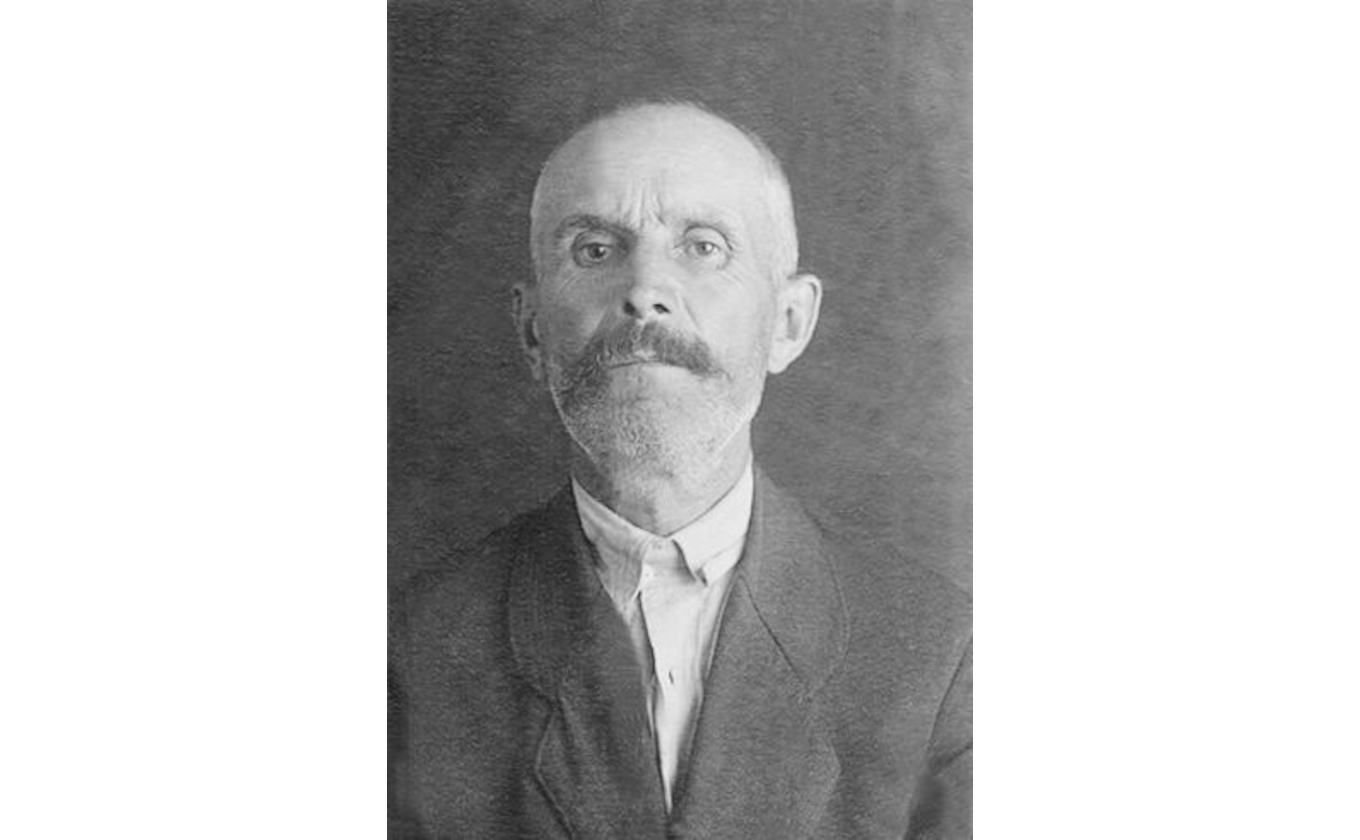
Dmitry Vdovin originally from the city of Kolomna of the Moscow province, his father was a cart, and according to other sources - a small one. He graduated from a four -class city school. At 21, in 1904, he entered the army as a clerk, served until 1906. Then he worked as a seller in a shop belonging to his brother.
In 1910 he married, he had three children: Eugene (1911), love (1912, for her husband - Lozovskaya), Vsevolod (1918). Since 1912-the owner of the store of the dishwasher. In 1918, he worked to hire an agent for supplying confectioners in the Kolomenskaya artel.
In 1919 - 1920, he served in the Red Army by a scribe in a reserve battalion on the Western Front. By demobilization, he worked as a clerk in the Kolomensk district health department.
From 1922 to 1928 - the headman of the Assumption Cathedral of the city of Kolomna, in 1928 - 1929, after the closure of the Cathedral, is a member of the Church Council of the Kolomenskoy Church of the Holy Trinity on Repne. According to the memoirs of relatives, he was a good family man, pious, kind, soft, responsive person. Often he took the children to serve in the Assumption Cathedral, brought them to Chros - wanted them to sing in the church choir.
In 1924, he became a co -owner of one fourth part of the Cossacks and Widow store, who was engaged in the trade of wooden products and dishes. Despite the insignificance of his own funds, in 1926 as the merchant was deprived of electoral rights. Since 1927, he began to manufacture and sell Sita and Reshet. In 1930, I had to leave a artisanal fishing and go to work in a state organization. Since 1931 - the worker of the sawmill workshop of the Kolomensky factory. Since 1932 - Color Mettlele packer.
On April 15, 1935, the Kolomna authorities ordered all the deprivation to go beyond the borders of the Kolomensky district within ten days, and from April 25, Dmitry Vdovin settled in the city of Lakes of the Moscow Region. He began to intensively achieve the abolition of an unfair decision, and on March 9, 1936, the All -Russian Central Executive Committee satisfied his petition, and he returned home. From 1935 to 1937 he worked as an agent for supplying at the Ozersky district district plant of the Moscow Region.
He was arrested on August 22, 1937. During the interrogation in the Kolomenskaya prison, the investigator charged him of dissatisfaction with the Soviet regime, with which the arrested did not agree. The next day, the investigator accused him of agitation against the Soviet regime.
- Well, tell me when and where were there cases of such agitation? - asked Dmitry Vdovin.
- Well, how where? Well, it is possible that in Moscow. After all, you are a supplier - probably, being in a case in Moscow, you could campaign.
Dmitry Vdovin protested, hearing such far -fetched accusations.
Two days later, at night, the investigator again called him for interrogation:
- Give testimony about your church activity!
-In 1928-1929, I was a member of the Church Council. Since 1929, I have not been a member of the Church Council, but remained an adherent of the Tikhon -orientation until today.
-You are arrested as a participant in the counter-revolutionary church-monarchical organization. Do you recognize this?
- I categorically deny.
- You lie before the investigation. The investigation has data that exposes you into participation in the counter -revolution. We demand a true testimony from you.
-I assert a second time that I have never been a member of the counter-revolutionary church-monarchical organization.
- We suggest that you stop cutting and proceed to comprehensive indications of your counter -revolutionary activity.
- Once again, I argue that I have never carried out any counter -revolutionary activity anywhere.
On August 28, the investigator staged a confrontation with Priest Stefan Mozhaev, who stipulated himself, Dmitry Widow and many clergymen during interrogations. At a full -time rate, he confirmed that in the spring of 1937 he allegedly recruited Vdovin into a counter -revolutionary organization.
- The accused Vdovin, do you confirm the testimony of Mozhaev Stepan Sergeyevich?
- I categorically deny Mozhaev’s testimony, since I never gave him consent in the counter -revolutionary organization.
And he noticed a false witness that how he was doing this, or did not think about what he said, that if Dmitry Vdovin was in his place, he would have acted exactly the same.
At the end of interrogations in Kolomna, on September 1, 1937, he was transported to the Taganskaya prison in Moscow, where the investigator again demanded that he testimony about counter -revolutionary activity, to which he received such an answer:
"I have not been in any counter -revolutionary organization and I do not find myself guilty."
On October 9, 1937, the Troika of the NKVD sentenced Dmitry Vdovin to ten years in a forced labor camp, and he was sent to Bamlag, where he arrived on November 16. At first he worked at the forestry. In February 1938, due to phlegmon, the legs were placed in Sangorod. In October, in connection with the defeat of the left leg and the loss of disability, he was assigned as a disabled person, and the camp authorities appointed him an economist in central workshops during the construction of the railway.
On January 30, 1939, he informed his relatives that he was in the Far Eastern Territory at the Laemen station (now the village of Laemers of the Obluchensky District of the Jewish Autonomous Region) in the village of Kuldur and works in a 53 column in a sewing workshop.
December 21, 1939 Dmitry Vdovin wrote to his relatives:
“Thank you for taking care of me and my health, I feel good for my age ... I go ... already without crutches, but with a key, that is, with a wand. You write that I am sparingly about my legs-no, I will not be bought, but I would not want to write about the bad, although there is no good one; Soon it will be twenty -five months, as I dropped out of you, and how much more it will pass, who knows ... ".
January 23, 1940 he wrote to his wife:
“You write and ask not to give in to despondency. In vain you think that. I myself know perfectly well that you can’t help with longing and sadness, and I feel very good-the spirit of a vigorous, although partly the flesh is weak, but for my age, it’s enough that I have, that is, health, and even more so where I am, the situation itself does not give a reason for great despondency, of course, not at home, I myself must understand, but still a team of people on our column is very good people who are pretty good people. I am also attributed to both others very carefully, even sometimes I think, as if I am not worthy, and therefore there is no reason to kill very much; In vain, you think so and judge by some phrase from the letter-of course, not at home, it is clear and understandable ... I wrote to you not even once that you don’t send parcels, also money: the costs are large, but there is a big need-I can do it, and you have it without that, especially this case is associated with such inconvenience in range. Reading the lines of your letter, I am very, very happy for you, that our children's friendship is the best feature in life, and I also wish them to stay closer to friendship in the future, knowing that a friendly family is more fun experiencing joy and experiences troubles ... ”
On January 26, Dmitry Vdovin sent a statement to the High Prosecutor of the RSFSR - asked to revise the case and release it from the camp, but received the answer to this for those years that there was no reason to revise the case.
In February 1940, the wife of Dmitry Vdovin turned to the NKVD with a request to revise his business. And on September 5, 1940, Dmitry Vdovin himself addressed the NKVD leadership with a statement:
“I consider the charges against me ... unfounded and not based on anything and not proven ... I am asking you to entrust the request of my arrest and the decision of the three to protest for its cancellation and liberation of me from further conclusion.”
Both statements were left without consequences.
The last letter received from Dmitry Vdovin was sent to him on May 28, 1941. The living conditions of prisoners with the outbreak of war have worsened significantly.
He died on April 23, 1942 in the Middle Belnary Labor camp of the Amur Region from pulmonary tuberculosis. Buried in an unknown grave.